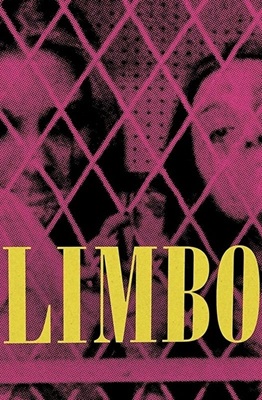
In 1999’s Limbo, Katherine (Jessica Krause) is a young woman who lives in a city, perhaps in an abandoned warehouse. At night, she goes to the bar, where the regulars eye her with a mix of suspicion and lust. Sometimes, she takes someone home with her. Every night, she appears back at the bar and almost the same dialogue is repeated by those who see her. She takes someone home. She kills them… or does she? The waitress (Tina Krause, who also directed) appears at Katherine’s home. Voices are heard. Sped-up images are randomly spliced through the film. The camera tracks down empty hallways and through desolate alleys. Sometimes, the images are so dark that you can’t even make out what’s happening onscreen. Voices are heard, but it’s not always easy to tell who is speaking or why. The imagery becomes increasingly bizarre. Are we seeing the inside of Katherine’s head, or are we seeing something else? The viewer will have to decide that for themselves…
Actually, for all of the bizarre imagery and strange dialogue, it’s not that hard to figure out what’s happening with Katherine. The film itself is called Limbo, and the film’s final twist isn’t really a surprise. But I also think it’s fairly obvious that this is a film that’s more about visuals and style than anything else. The story is less about what happens and more about how it’s all visualized. The film plays out in a frenetic, dream-like fashion, with the dream sometimes crossing the line and becoming a nightmare. The film’s visual style captures the feeling of being overwhelmed by sensation and giving yourself over to the chaos of everyday life. The film doesn’t always make sense because it takes place in a world that doesn’t particularly make sense. I’ve read a few online reviews that have compared this film’s imagery with the work of David Lynch. I wouldn’t go that far. Lynch may have been a surrealist, but regardless of how odd his films got, there was always a feeling that he was in control and that each image reflected something he wanted to say. Limbo, on the other hand, always feels like it’s one scene away from spinning away from both the cast and the director. Occasionally, that’s kind of exciting.
In many ways, Limbo represents everything I like about SOV filmmaking. It’s a passion project, one made free from the constraints of having to please the biggest possible audience. The stark images capture the grunginess of life on the outskirts of society, and the imperfect sound design fits in perfectly with the bizarre visuals. It’s a film that keeps you off-balance. When Jessica walks along city streets, more than a few passersby stop to stare straight at the camera. It gives the entire production a raw authenticity. Director Tina Krause was herself a veteran of many SOV horror films. For her directorial debut, she took the SOV format to its logical, self-indulgent extreme. The resulting film is occasionally compelling, occasionally annoying, sometimes shallow, and sometimes insightful. It’s a chaotic mess, but it’s also the type of statement that could never be made by a mainstream studio. It’s Limbo.

