“The thing that’s always worried me about being one of the few is the way we keep on getting fewer.” — Flight Officer David Campbell
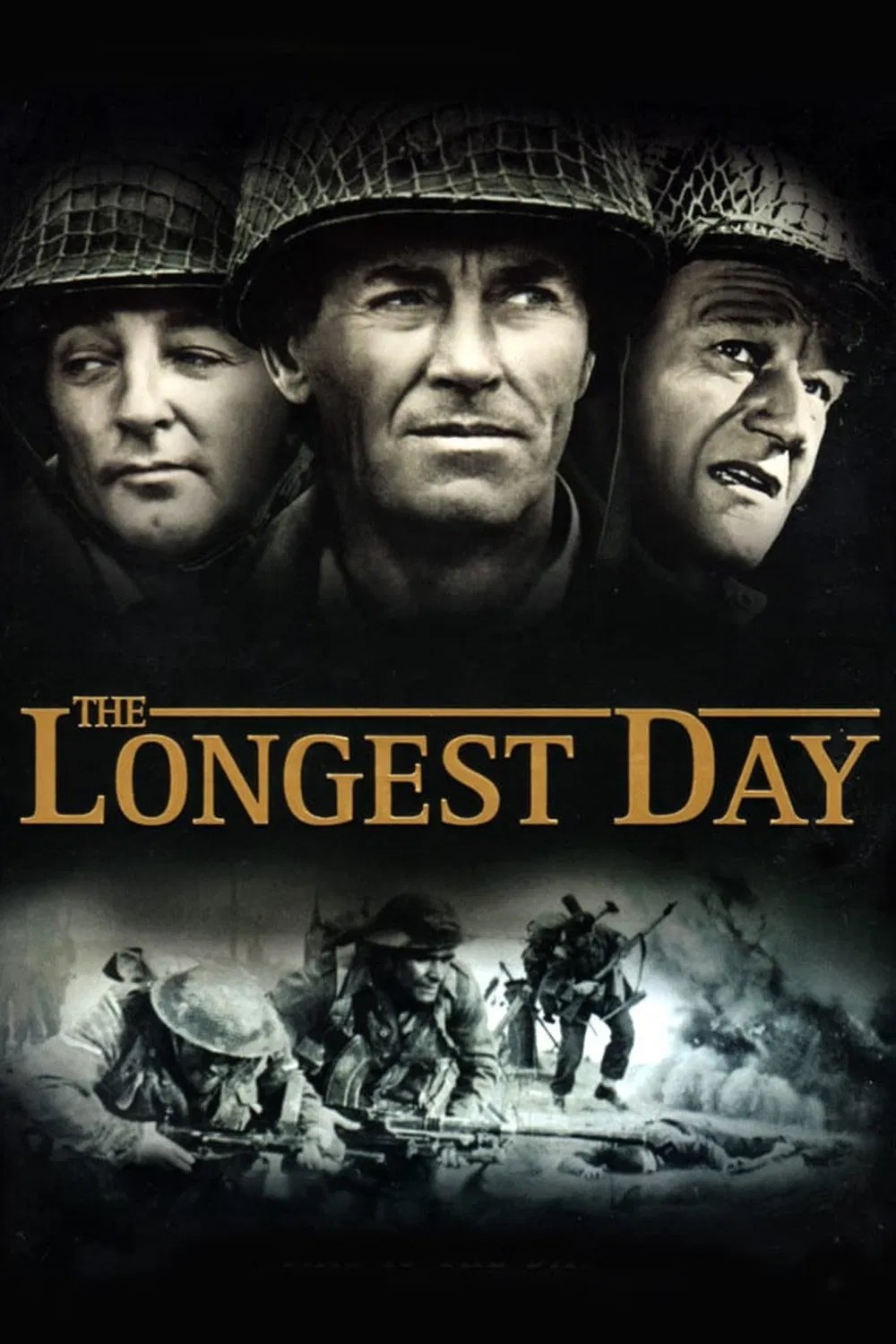
You could be forgiven for thinking that a three-hour black-and-white war epic from 1962 about the D-Day landings might feel like homework. The Longest Day sounds exactly like the kind of movie your history buff uncle would insist you watch, and you’d brace yourself for stiff acting, dated effects, and a flag-waving tone that hasn’t aged well. But here’s the surprise: this thing still cooks. It’s massive, messy in the best way, and surprisingly modern in its storytelling. Directed by a quartet of filmmakers—Ken Annakin for the British sequences, Andrew Marton for the Americans, Bernhard Wicki for the Germans, and with uncredited help from John Wayne’s own ego (more on that later)—The Longest Day isn’t one movie. It’s five or six movies crammed into a single sprawling canvas, and somehow that chaotic energy works perfectly for a story about the chaos of June 6, 1944.
First, let’s talk about the elephant in the room: the cast. It’s absurd. John Wayne, Robert Mitchum, Henry Fonda, Sean Connery, Richard Burton, Rod Steiger, Robert Wagner, Curt Jürgens, and a young Gert Fröbe (the future Goldfinger) are just the headliners. There are about forty other recognizable faces popping up for two minutes of screen time. You half expect a narrator to say “and that guy from that thing.” But here’s the trick: The Longest Day uses star power not as distraction but as shorthand. When you see John Wayne playing Lt. Col. Benjamin Vandervoort, you don’t need a backstory. You just know he’s the tough, unkillable leader. When you see Henry Fonda as Brig. Gen. Theodore Roosevelt Jr., you read quiet dignity and grit. The movie trusts that you’ll fill in the blanks, which allows it to jump between American, British, French, and German perspectives without pausing for emotional handholding. That’s a bold gamble, and it mostly pays off, though Wayne’s scenes are a prime example of the film’s one real weakness: occasionally, it lets the star overpower the story. His Vandervoort breaks his ankle jumping into Normandy and still leads his men—cool story, historically accurate—but Wayne plays it with that trademark swagger that feels more Rio Bravo than WWII. It doesn’t ruin the film, but it does remind you you’re watching a movie star, not a soldier.
Where The Longest Day truly earns its reputation is in its structure. The film opens with a ground-level view of the German defenders—foggy, tired, complacent. Rommel (Curt Jürgens) is home for his wife’s birthday. Junior officers are skeptical of the “invasion threat.” Then we cut to the Allied side, from Eisenhower’s agonized “go” decision to the paratroopers floating down into French nightmares. The film refuses to pick a hero. It bounces between a German machine-gunner mowing down Americans on Omaha Beach and a French Resistance fighter getting captured and executed. There’s no swelling music to tell you who to root for—the score by Maurice Jarre is often tense, percussive, or eerily quiet. That evenhandedness is shocking for an early-60s war film. The Germans aren’t cackling villains. They’re professionals, some cynical, some naive, all trapped in a bad situation. One scene shows a German officer calmly reporting the invasion to higher command while another weeps because his men have no air support. You don’t sympathize with them exactly, but you understand them. That’s rare for any war movie, let alone one starring John Wayne.
The set pieces remain jaw-dropping. Because this was made before CGI, every paratrooper you see actually jumped (with stuntmen and low altitudes). Every landing craft ramp dropping on Omaha Beach is filled with real extras who had to swim ashore in cold water. The famous shot of a lone French commando running across a bridge under fire? That’s a real explosion, real bullets (blanks, but still). The production employed thousands of military advisors and actual veterans as extras. You can feel that authenticity in the grain of the film. When American soldiers fumble with wet ammunition or a British glider crash-lands through a fence, it’s not slick Hollywood heroism. It’s clumsy, loud, and terrifying. The movie’s most quoted line—“The greatest thing about the greatest generation is they didn’t know they were the greatest”—isn’t in the film, but the spirit is everywhere. These guys aren’t quoting Shakespeare. They’re vomiting from seasickness, losing their gear, and crying for their mothers. Then they get up and climb a cliff. That contrast is what makes The Longest Day so effective: it’s a blockbuster that respects the small, undignified human moments.
If the film has a flaw beyond occasional star vanity, it’s pacing. The first hour is deliberately slow—building tension through radar stations, weather reports, and a French priest’s bicycle ride. That might bore viewers raised on Saving Private Ryan’s opening twenty minutes. But hang with it, because when the invasion starts, the deliberate pace pays off. You’ve been inside the German bunkers, heard their debates, seen their confidence. So when paratroopers land behind their lines with toy clickers (the actual “cricket” device from history), every crack of a twig feels tense. The other flaw is the film’s treatment of the French Resistance and civilians. They get a few noble moments—a girl running through gunfire to deliver a message—but overall, the French are sidelined. The movie is fundamentally Anglo-American, with German scenes as the “other” perspective. That’s honest to the command structure of D-Day, but it does mean the country being liberated mostly watches from the margins.
Still, The Longest Day achieves something that most war epics don’t: it’s a genuine ensemble piece without a single protagonist, and it never loses its moral clarity. There’s a scene where a German colonel (the wonderful Werner Hinz) looks at an American prisoner and says, “We fight for a monster. You fight for your homes.” That’s the whole movie in one line. It doesn’t demonize the Germans as evil—it shows them as humans who made terrible choices and are now paying for them. And it doesn’t sanctify the Allies—it shows them as scared kids with a just cause. The final image of the film is a lingering shot of the beach, littered with bodies and wreckage, as a narrator tells you the exact number of casualties on both sides. No music. No kiss. No flag. Just the silent aftermath. For 1962, that’s audacious. For today, it’s heartbreaking.
So should you watch The Longest Day? Yes, but not as a history lesson. Watch it as a time capsule of how we used to make movies: with real explosions, real extras, and a willingness to let a story breathe across three hours without a superhero or a snappy one-liner. It’s old-fashioned, sure. Some of the acting is stagey, and the black-and-white photography might feel like a relic. But once the landing craft doors drop and the bullets start kicking up water, you’ll forget the runtime. It’s not Saving Private Ryan’s visceral nightmare, and it’s not Band of Brothers’ intimate character study. It’s a reporter’s notebook of a film—raw, sprawling, and full of names you’ll never remember but faces you won’t forget. For a movie that’s over sixty years old, The Longest Day still has legs. And for a story about the longest day, it earns every single minute.
“I used to be a regular sheriff.” — Sheriff Ulysses
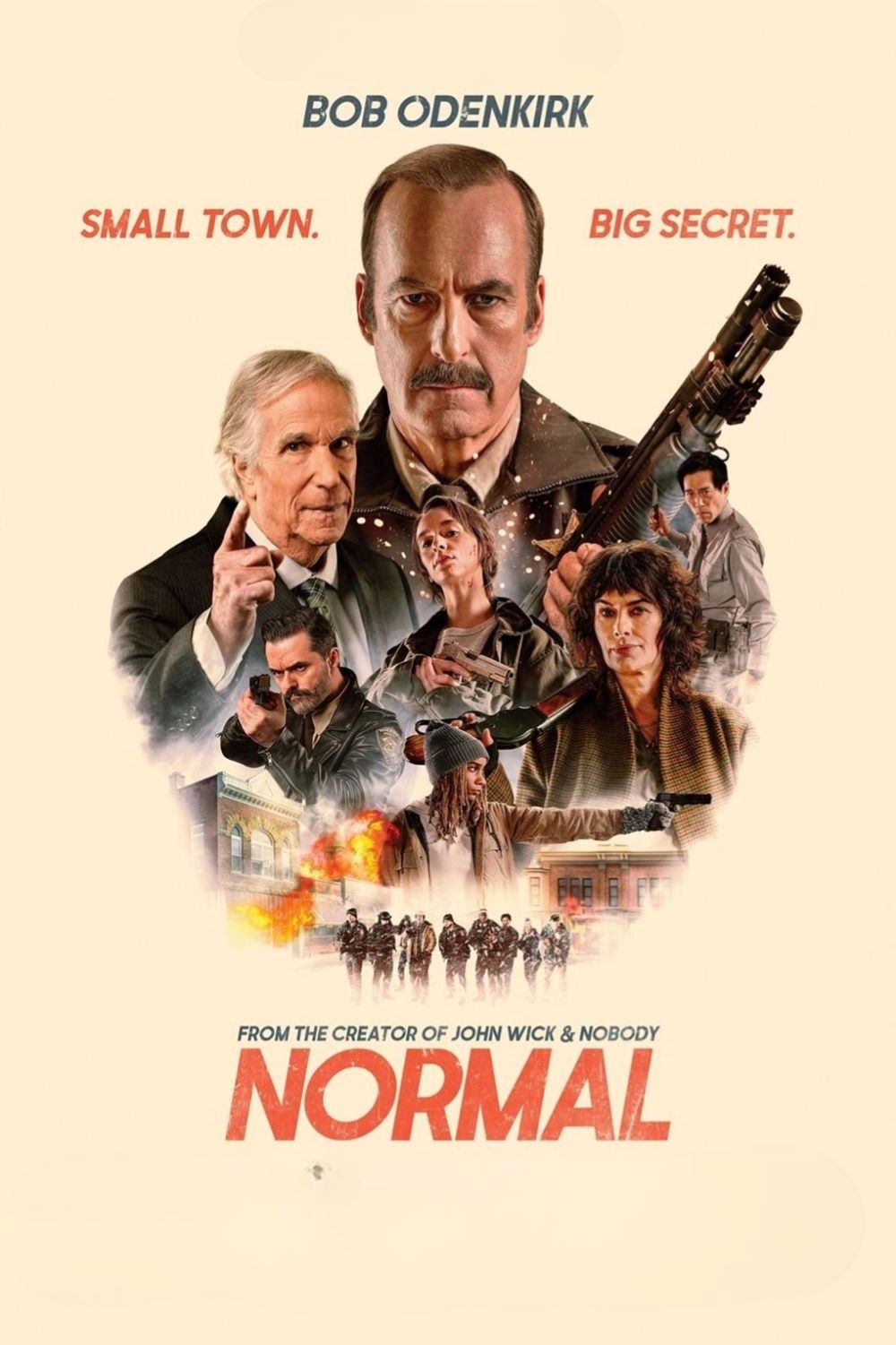
Ben Wheatley has built a career on making audiences uncomfortable. From the cultish dread of Kill List to the seasick chaos of Free Fire, he specializes in a specific kind of British miserablism that suddenly snaps into shocking ultraviolence. So, the idea of him directing a snowbound, American action-comedy starring Bob Odenkirk felt a little like hiring a surgeon to cater a birthday party. You know the food will be technically proficient, but you are terrified of what might be in the sauce. The 2026 film Normal, written by Derek Kolstad and Bob Odenkirk, is exactly that catering job: it is messy, bloody, surprisingly filling, and leaves you with a weird stomach ache if you think about it too long. But in a summer movie season often defined by joyless CGI sludge, Normal is a blast of R-rated, mid-budget freshness that knows exactly how stupid it is, even if it stumbles on its way to the finish line.
The premise is a beautiful piece of elevator pitch simplicity. Odenkirk plays Sheriff Ulysses, a haunted, world-weary interim sheriff who takes a short-term gig in the tiny, freezing Minnesotan town of Normal. The previous sheriff died under mysterious circumstances (ice fishing accident, sure), and Ulysses is just looking for a quiet place to drink coffee, ignore his wife’s phone calls, and heal. The problem is that Normal, Minnesota, is anything but. As Ulysses walks the beat, he notices the quiet desperation of rural America has been replaced by a strange, Stepford-like prosperity. The knitting store sells AR-15s. The diner’s walls are lined with loaded rifles. The town has somehow raised sixteen million dollars for a new town hall. It turns out that the citizens of Normal have sold their souls—and their town—to the Yakuza, acting as a quiet, frozen Swiss bank account for Japanese organized crime. When a pair of bumbling out-of-town robbers (Reena Jolly and Brendan Fletcher) hits the local bank, the bulletproof glass shatters, and Ulysses finds himself trapped in a blizzard, fighting for his life against an entire town of friendly, flannel-wearing killers.
Having Odenkirk as co-writer explains a lot about why Normal feels different from Kolstad’s other work. Where John Wick and the first Nobody are lean, machine-tooled scripts, Normal has a looser, more character-obsessed texture. The dialogue is full of weird pauses, non-sequiturs, and the kind of conversational detours that defined Odenkirk’s television work on Better Call Saul. You can feel the actor’s hand in every scene where Ulysses just stares at a absurd situation and mutters something mundane like “Well, that’s not ideal.” If you have seen the Nobody films, you know the rhythm Odenkirk plays as a performer. But what makes Odenkirk so fascinating to watch in Normal is how he continues to solidify an idea we haven’t really seen since Liam Neeson stumbled into Taken: the deeply unconventional action hero. Think about it. Before Neeson, action stars were Schwarzenegger, Stallone, Willis—men built like refrigerators. Then Neeson showed up at fifty-six, all grief-stricken eyebrows and theatrical training, and suddenly audiences realized that a sad dad with a “particular set of skills” was just as terrifying as any bodybuilder. Odenkirk is the spiritual successor to that twist.
No one ever looked at the guy who played slimy lawyer Saul Goodman or the hapless comic from Mr. Show and thought, “There is our next great screen fighter.” Yet here we are, years after the first Nobody, and Odenkirk has quietly become the most believable everyman action lead of his generation. Unlike Neeson’s brooding intensity, Odenkirk brings a specific, almost pathetic vulnerability. In Normal, he excels at playing the “sad dad” action hero—the guy whose joints pop when he stands up, who looks like an accountant but moves like a bar fight. Ulysses isn’t a retired assassin; he’s just a cop who is very, very tired. When he dispatches a thug with a fire extinguisher, there is no cool one-liner, just a wheeze and a wince. That grounded exhaustion is the Odenkirk brand, and because he co-wrote the part, it fits him like a tailored suit. He sells the physicality without losing that “I’m too old for this” shuffle, making you believe a middle-aged man could survive a gauntlet of killers purely out of stubbornness and regret. Henry Winkler, as the smarmy Mayor Kibner, chews the frozen scenery with glee, playing a man so polite and effervescent that you want to punch him immediately. Lena Headey shows up as a barkeep with a shotgun, and while she doesn’t get enough to do, she brings the necessary grit.
However, the secret weapon here is actually Ben Wheatley and his “anti-action” philosophy. In a recent interview, Wheatley described the violence in Normal as being akin to Final Destination. That is the smartest thing about this movie. In a typical John Wick movie, the hero is a force of nature; he actively kills people with surgical precision. In Normal, Ulysses doesn’t so much defeat the town as survive it. In one fantastic set piece, a character slips on ice and impales themselves on their own bayonet. In another, a massive sign falls and crushes a gunman mid-monologue. The town itself becomes a hostile, slippery, glass-strewn deathtrap. This gives Normal a chaotic, Looney Tunes energy that separates it from its cousins. You never know who is going to die next or how, and Wheatley directs the carnage with a blackly comic eye. The sound design of bones crunching against frozen asphalt is disturbingly hilarious. This isn’t the graceful ballet of assassination; it’s the slapstick of murder, and it is refreshing. And Odenkirk’s performance is the perfect anchor for this chaos because he always looks slightly surprised to still be alive—a quality Neeson, for all his skills, rarely conveyed. The fact that Odenkirk helped write the script means those reactions of shock and reluctant disgust feel genuine rather than performed.
But let’s address the moose in the room. Normal desperately wants to be Fargo, but it only has the vocabulary of a comic book. The Coen Brothers’ masterpiece works because the quirky dialogue masks a terrifying emptiness. Normal wears its quirk on its sleeve like a cheap souvenir. The film tries to weave in social commentary about the death of rural America, gun culture, and even features a subplot involving a trans nonbinary teen (Jess McLeod) who was the child of the previous sheriff. These moments are handled with a surprising amount of grace—they aren’t preachy, just present. However, the film is moving so fast (the runtime is a lean 91 minutes) that it forgets to give these themes any weight. You get a five-second shot of a wall of guns, and then someone blows up. The commentary is there, but it’s just set dressing for the explosion.
Furthermore, the plot structure is lopsided. The film opens with a cold sequence in Japan with the Yakuza cutting off fingers and looking menacing. It feels like a contractual obligation to remind you this is from the John Wick universe, and it’s hard not to wonder if that was a Kolstad-driven choice while Odenkirk might have preferred more mystery. It completely spoils the slow-burn reveal of the town’s corruption. Imagine The Wicker Man if the first scene showed you the villagers burning the wicker man. The tension of Ulysses realizing that “the call is coming from inside the house” is neutered because we, the audience, already know the Yakuza are lurking in the basement. Also, for a movie called Normal, it is incredibly predictable within its own lane. Once the shooting starts, you know exactly where Ulysses is going to end up (spoiler: a hardware store and then the police station). The film devolves into a familiar Assault on Precinct 13 siege scenario, and while the kills are inventive, the geography of the action gets muddy. Wheatley shoots the snowy exteriors beautifully—the white landscape makes the red blood pop like neon—but during the frantic third act, the editing gets choppy, and you lose track of who is shooting whom. For a movie that prides itself on “anti-action,” it relies heavily on the generic rhythms of action in its final twenty minutes.
Despite these structural hiccups, Normal works because it never overstays its welcome. At a brisk hour and a half, it gets in, blows up a town, and gets out. Bob Odenkirk continues to prove that he is the most relatable action hero of the 2020s—the natural heir to the “unlikely badass” throne that Liam Neeson occupied for a solid decade. Where Neeson brought Shakespearean tragedy to the genre, Odenkirk brings a frustrated accountant’s fury. He looks like he just finished paying his taxes, and you believe he is furious about it. Having co-written the film only deepens that authenticity; this isn’t a star merely showing up to say lines, but an actor who has shaped the material to his exact strengths. Ben Wheatley manages to smuggle just enough British cynicism and nasty violence into the frame to keep genre fans on their toes.
Is Normal a great film? No. It is too shallow and too structurally messy for that. But is it a great time at the movies? Absolutely. It is the cinematic equivalent of comfort food laced with hot sauce. You know what you are getting, but the kick is still satisfying. For fans of Odenkirk’s grumpy charm and Wheatley’s chaotic tendencies, Normal is a perfectly abnormal way to spend an evening. Just don’t go looking for the heart that the title promises; this one is all viscera. And frankly, in an era where most action movies are built from the same digital spare parts, watching a former comedy writer freeze his way through a Yakuza invasion feels like the most refreshing kind of normal we could ask for.
“In the field we had a code of honor: you watch my back, I watch yours. Back here there’s nothing!” — John Rambo
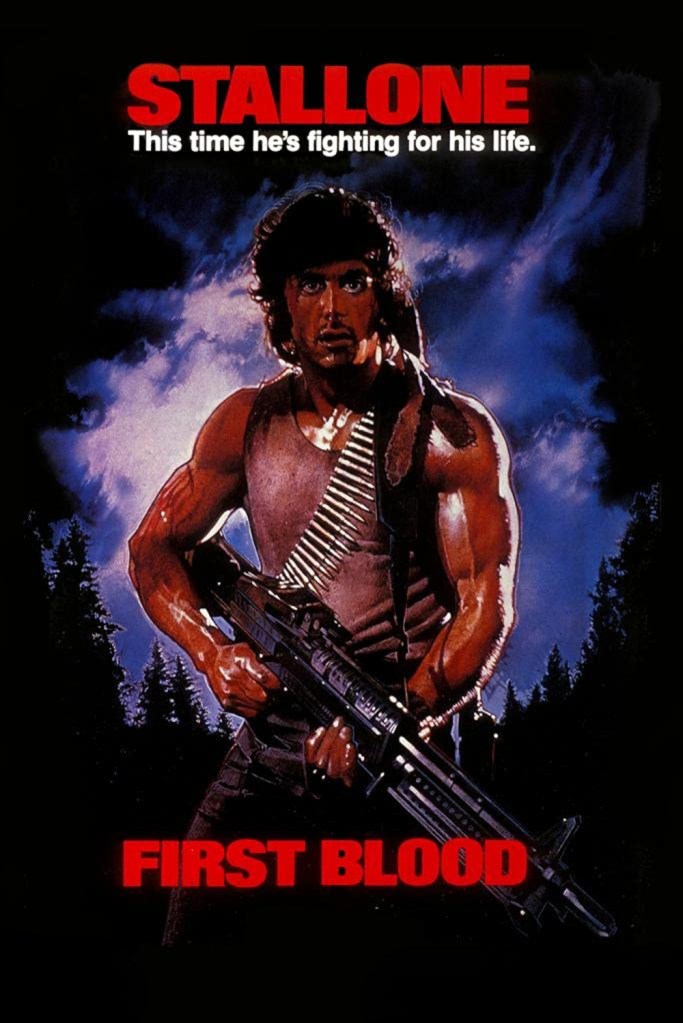
You sit down expecting a brainless 80s action flick, and instead you get a meditation on trauma, bureaucracy, and the American wilderness. That’s First Blood for you. Directed by Ted Kotcheff and released in 1982, this is the movie that introduced the world to John Rambo, but don’t go in hoping for a body count or one-liners. What you actually get is a lean, gritty, and surprisingly sad drama about a guy who just wants to eat a hot meal and ends up accidentally declaring war on an entire small-town police force. And honestly? It holds up to this day. The film is adapted from David Morrell’s 1972 novel of the same name, but if you’ve read the book, you’ll notice some serious tonal differences right away. Morrell’s novel is bleak, brutal, and deeply nihilistic—a product of its era’s raw disillusionment with Vietnam. Kotcheff and Stallone sanded down some of those rougher edges, not to sell out, but to make Rambo a more sympathetic figure. The bones are the same, but the spirit is just a little warmer, and that choice changes everything.
Let’s break down the plot, because it’s deceptively simple. Sylvester Stallone plays John Rambo, a former Green Beret and Vietnam War hero who wanders into the town of Hope, Washington, looking for a fellow soldier he served with. He finds out the guy died of cancer from Agent Orange exposure. That’s the first gut punch. Rambo, already drifting and clearly struggling with PTSD, just wants to grab some food and keep moving. But the local sheriff, Will Teasle (a perfectly cast Brian Dennehy), takes one look at Rambo’s long hair, army jacket, and tired face and decides he’s a vagrant who needs to be run out of town. From a structural standpoint, Teasle isn’t a cartoon villain—he’s a classic dramatic antagonist: a rigid, small-town authoritarian who sees drifters as a threat to his orderly world. That realism makes the whole thing sting because you can almost see both sides. Almost.
When Teasle tries to escort Rambo to the city limits, Rambo walks back into town. That’s his big crime. He gets arrested, and at the station, the deputies start pushing him around. One of them, a veteran deputy named Galt (played with sneering menace by Jack Starrett), is the real problem here. Galt isn’t some young hothead. He’s an older, seasoned deputy who’s clearly been in his role for years, and he’s become entitled on the power of his badge. You can see it in the way he leans into the booking process, the casual cruelty in his eyes, the way he treats Rambo like a stray dog he’s finally allowed to kick. During the shaving scene, as deputies try to clean Rambo up after the arrest, Galt is the one who holds Rambo down, restraining him while another deputy wields the straight razor. He’s not waving the razor himself, but that almost makes it worse—he’s the enforcer, the guy who pins you in place while someone else does the dirty work. It’s a veteran cop who knows exactly how to exert control without getting his own hands bloody. That makes Galt far more chilling than some screaming bully. He represents the rot of unchecked authority, the way small-town power can curdle into casual sadism over time. And that whole humiliating process—being held down, having a straight razor brought to his face—triggers a full-blown flashback for Rambo. Then something clicks. Rambo explodes, beats down half the station, and escapes into the nearby mountains.
Now the hunt begins. Teasle calls in the State Patrol, the National Guard, and eventually his old mentor, Colonel Trautman (Richard Crenna), who knows exactly what kind of animal they’re chasing. Trautman warns Teasle that Rambo isn’t just a drifter; he’s a trained killer with a “purple heart, a silver star, and a congressional Medal of Honor.” And here’s the core irony: Rambo doesn’t want to hurt anyone. He just wants to be left alone. But the chase escalates, people die, and by the end, you’re not cheering for the hero to win—you’re hoping he gets some peace.
From an analysis perspective, where First Blood really earns its stripes is its restraint. The action sequences are tense but never escalate into cartoon violence. Rambo uses the forest like a ghost, setting traps, crawling through mud, and surviving on raw squirrel meat. He doesn’t mow down dozens of cops with a machine gun. In fact, the only person he kills is Galt, who falls to his death while hanging off a helicopter because Rambo throws a rock at the chopper. And Rambo immediately looks horrified. That’s the key. Even Galt, as entitled and cruel as he is, isn’t a villain Rambo wants to execute. The kill is accidental, a desperate act of survival. The movie takes its time showing how the very skills that made Rambo a hero in Vietnam—his survival instincts, his aggression, his ability to turn anything into a weapon—now make him a monster in peacetime America. The local cops are out of their depth, but aside from Galt, they’re mostly just scared men doing a job. Nobody else is pure evil. Just broken systems and broken people.
But let’s talk about that novel, because the comparison is crucial for understanding the film’s choices. David Morrell’s First Blood is a much darker animal. In the book, Rambo is more feral, less a wounded hero and more a walking death sentence. He kills multiple cops, not by accident or in self-defense, but with cold, tactical efficiency. The novel has no Colonel Trautman to serve as a moral anchor—Trautman is there, but he’s just as ruthless. And the ending? Devastating. In Morrell’s version, Rambo and Teasle essentially murder each other in a final, bloody standoff. Trautman finishes Rambo off with a shotgun blast to the gut. There’s no catharsis, no plea for understanding. Just bodies and regret. The tone is nihilistic to the core: the system destroyed these men long before the first page, and there was never any hope. Kotcheff’s film pulls back from that abyss. It keeps the violence lean and mostly off-screen. It gives Rambo that famous final monologue where he sobs about his friend dying next to him, about protesters spitting on him, about not being able to turn off the war inside his head. That scene isn’t in the book—not like that. The movie says, “This man is suffering, and maybe he can still be saved.” The novel says, “This man is already dead, and he’s taking everyone with him.” Both are valid responses to Vietnam, but the film’s slightly toned-down approach is why Rambo became an icon instead of a footnote.
From a performance standpoint, Stallone gives the work of his career here. Forget the grunting one-liners of later sequels. In First Blood, he barely speaks, and when he does, his voice cracks. Watch his eyes during that final monologue. After Trautman finally talks him down, Rambo dissolves into a sob. “Nothing is over!” he screams at Trautman. “You don’t just turn it off!” It’s raw, uncomfortable, and genuinely moving. You realize that the whole movie has been one long panic attack for this character. The Rambo that pops up in Rambo: First Blood Part II is a cartoon superhero. The Rambo here is a guy who needed a therapist and a hug about thirty years ago. That vulnerability is the film’s great deviation from the source material. Morrell’s Rambo never asks for understanding. Kotcheff’s does. And that small shift in tone—from nihilism to wounded humanity—is what elevates the film from a grim exploitation picture to a legitimate character study.
On the technical side, Ted Kotcheff’s direction is patient and atmospheric. He shoots the Pacific Northwest like a character—vast, wet, dark, and full of hiding places. The chase scenes are grounded, with long takes and practical stunts. When Rambo jumps off a cliff into a tree and lands with a thud that sounds real, it hurts. There’s no CGI safety net. Jerry Goldsmith’s score is mournful, with lonely woodwinds and a simple, haunting main theme that never pumps you up for a fight. It just makes you sad. The movie even has the guts to end on a downer—but not as brutal as the book’s. Rambo surrenders, crying in Trautman’s arms, and the final shot is him walking away in handcuffs into the rain. No freeze-frame high five. No sequel tease. Just rain. And yet, compared to the novel’s blood-soaked finale, that rain feels almost like mercy. That’s tonal balancing at its finest: the film acknowledges the darkness without drowning in it.
Of course, the cultural memory of First Blood has been completely buried by its sequels. Most people under thirty know Rambo as the muscle-bound machine gun guy from memes and video games. But the original is closer to a western like The Deer Hunter meets a paranoid 70s thriller like The French Connection. It’s a movie about a country that used its soldiers and then discarded them. Teasle represents the willful ignorance of middle America—“I don’t care about your war” is basically his attitude. And Rambo represents the bill coming due. Galt, as that entitled veteran deputy, represents the everyday cruelty of those who’ve held power too long and forgotten what it’s for—the guy who doesn’t need to swing the blade because he’s the one holding you still. That theme hits even harder today, decades later, when veterans are still fighting for basic support and stories of badge-heavy misconduct still dominate headlines. The novel took that theme to its logical, horrific conclusion: no survivors, no lessons learned. The film pulls back just enough to let you breathe, and that one small change turned First Blood from a bleak cult artifact into a mainstream classic. You can argue which version is more honest. But you can’t argue that Stallone and Kotcheff made the right call for the screen.
First Blood rules. It’s a rainy, sad, surprisingly smart action movie that will stick with you longer than any explosion-fest. It’s also a masterclass in adaptation, showing how a slight shift in tone—from nihilistic to wounded—can transform a story without betraying its core. Brian Dennehy is perfect as the stubborn but not evil sheriff. Jack Starrett makes Galt a quietly terrifying portrait of bureaucratic sadism, a veteran deputy who’s learned to love the leash and the privilege of pinning a man down while someone else does the cutting. Richard Crenna brings real weight as Trautman, a father figure who knows he helped raise a weapon he can no longer control. And Stallone acts his soul out. When he whispers “I could have killed them all” in the final scene, he’s not bragging. He’s confessing. That’s why First Blood is a classic. It’s not a recruitment poster. It’s a eulogy—just a little less hopeless than the novel that birthed it. Four stars, easily. Just don’t go in expecting explosions every five minutes. Go in expecting to feel bad, and you’ll leave feeling like you watched something real.
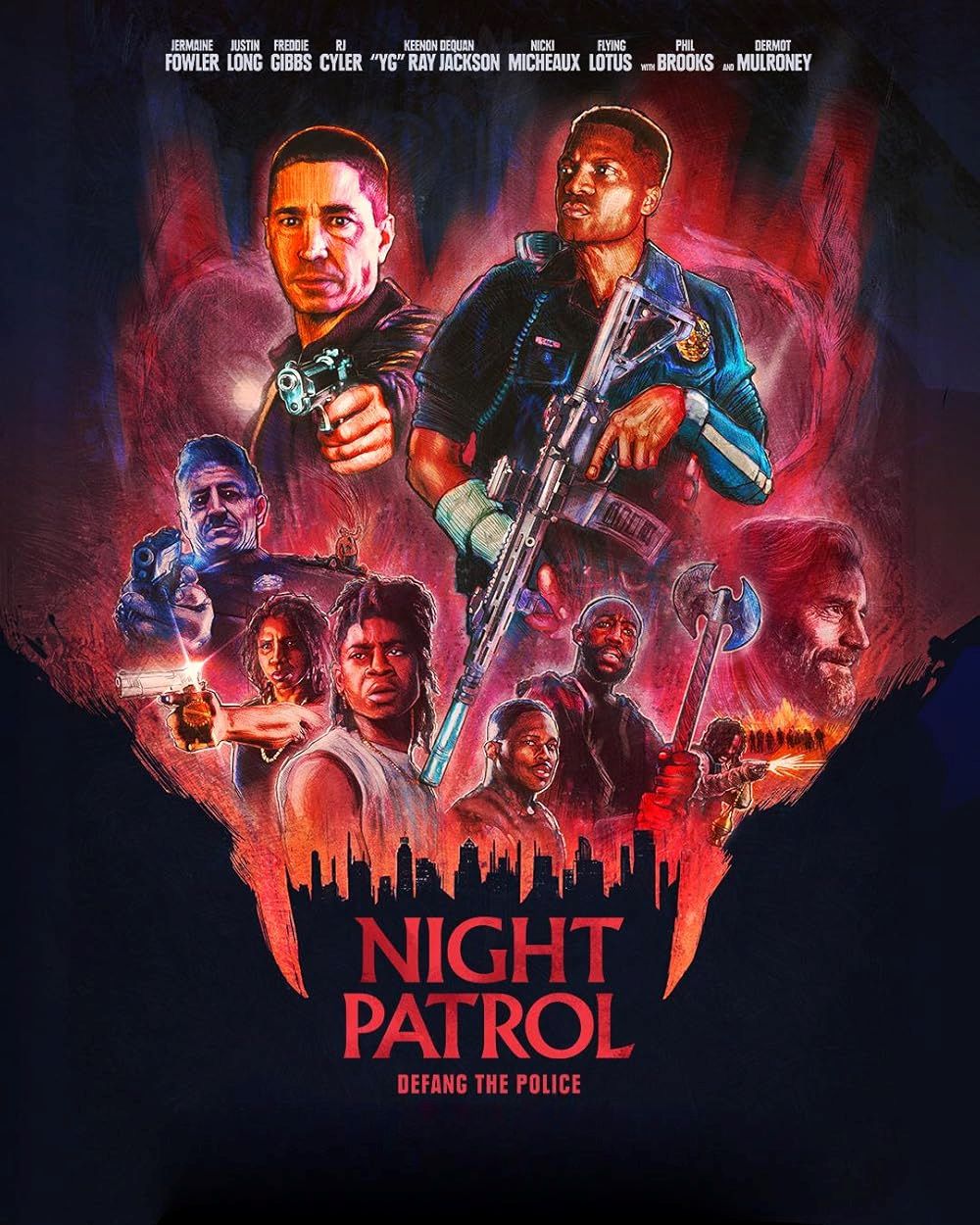
You know the feeling of digging through a forgotten VHS bin and finding a movie that looks like it was beamed in from a parallel universe where grindhouse cinema never died? That’s Night Patrol in a nutshell. Directed by Ryan Prows, this scrappy, bloody genre mashup has a raw, politically charged energy that mixes social outrage with lurid horror tropes. And honestly, streaming services like Shudder have become the bargain bin of the 21st century—the place where genre films of dubious budget and quality get a new life, or in some cases, their only life. Night Patrol is a perfect example of that ecosystem: too weird for a wide theatrical release, too ambitious to be dismissed outright, and exactly the kind of movie you stumble upon at 1 AM, three scrolls deep into a streaming queue. The core idea is audacious: what if the most elite, secret unit of the LAPD wasn’t just crooked, but was actually a coven of vampires using gang violence as a cover for their midnight snacks? It’s the kind of premise that feels like it was dreamed up at 2 AM after a Super Fly and The Warriors double feature—and I mean that as a high compliment.
If you lean in, you’re in for a bumpy but often thrilling ride. The film centers on two LAPD partners: Ethan (Justin Long) and Xavier (Jermaine Fowler). Ethan is the legacy kid, the son of a legendary cop (Dermot Mulroney), who finally gets the nod to join the secretive “Night Patrol.” Xavier, who grew up in the very housing projects the unit is supposedly “cleaning up,” is left on the outside looking in, suspicious of everything. Naturally, Ethan quickly discovers that his new colleagues aren’t just trigger-happy; they’re literally heartless monsters with metal-plated fangs and a thirst for the residents of the neighborhood Xavier calls home.
Meanwhile, on the streets, Xavier’s brother Wazi (RJ Cyler) and his mother Ayanda (Nicki Micheaux) are realizing that the gang war heating up isn’t just about turf—it’s about survival against the undead. The film’s greatest strength is how it throws these characters into a blender. You have the buddy-cop tension between Long and Fowler, the street-level horror from Cyler’s perspective, and this ancient mystical element brought by Micheaux, who plays a matriarch dabbling in Zulu magic to fight the monsters. It’s a lot, but for the first hour, Prows manages to balance these plates relatively well. There’s a hint of that old-school exploitation energy here: Micheaux’s Ayanda refuses to rely on a broken system and instead arms herself with ancestral power, which gives the film a satisfying underdog-revenge backbone.
Let’s talk about the cast, because this is where Night Patrol either fires on all cylinders or sputters, depending on the scene. Justin Long, our reigning scream king, is perfectly cast as the moral compass who suddenly realizes he’s sold his soul to the corporate office. He plays the “good apple” realizing the whole barrel is rotten with a kind of weary, panicked authenticity. Jermaine Fowler is the secret weapon here; he’s grounded, funny, and provides the emotional anchor the film desperately needs when the visuals go off the rails. Think of him as a reluctant warrior caught between two worlds—the badge he wanted to trust and the community he can’t abandon.
Then, there’s C. M. Punk. The WWE champion plays a vicious white supremacist vampire sergeant, and I have to hand it to him—he’s terrifying. He doesn’t chew scenery so much as he drains it dry of all warmth. He has a physical presence and a cold, dead stare that works perfectly for a monster hiding in a uniform. On the flip side, while rapper Freddie Gibbs and Flying Lotus bring a fun, playful swagger to their gang-heavy roles, some of the other supporting performances—specifically among the vampire coven—feel stiff and amateurish. It creates an uneven texture where one scene feels like a gritty HBO drama and the next feels like a student film. That inconsistency is part of the movie’s scrappy charm, but it also keeps it from feeling fully polished—exactly the kind of rough edge you expect from a bargain bin discovery.
Visually, director Ryan Prows (who previously directed the segment The Subject in V/H/S/94) knows exactly how to make Los Angeles look like a sun-bleached hellscape during the day and a neon-drenched deathtrap at night. The cinematography is gritty and grainy, giving it that ’90s VHS vibe that makes every alleyway feel dangerous. It echoes the cheap, hungry look of independent cinema from decades past, which fits the movie’s B-movie ambitions perfectly. However, style only gets you so far, and Night Patrol hits a serious wall in its final act.
The pacing, which was already a slow burn, starts to drag heavily. There is a lot of talking. A lot of sitting in rooms explaining the “ancient lore” of the vampires, and honestly, the rules get so convoluted that you stop caring who the original evil vampire was and just want to see somebody get staked. The movie tries to have its cake and eat it too—it wants to be a serious critique of the “Thin Blue Line” ideology, an action-horror romp, and a mystical family drama. Usually, it ends up being a muddled version of all three. A tighter script would have known exactly how long to linger on a metaphor before cutting to the chase, but Night Patrol often forgets that lesson. This is where the bargain bin analogy really stings: you can feel the ambition straining against the budget and the runtime, and not every swing connects.
When the action finally does hit in the last twenty minutes, it’s brutally fun. There are guts ripped out, decapitations, and a final boss form for the villains that looks like something out of a heavy metal album cover. It’s just a shame it takes so long to get there. The social commentary is loud and clear—cops as gangs, systemic racism, the failure of the “few bad apples” defense. It’s not subtle, but for a movie where a guy gets thrown through a window in slow motion, subtlety isn’t really the goal. Night Patrol has teeth, and when it remembers to bite, it draws blood. It just spends too much time trying to decide what flavor of juice it wants to suck. And yet, without a service like Shudder, a movie like this probably never sees the light of day. It’s too rough for festivals, too niche for Netflix’s algorithm, and too weird for traditional distributors. Streaming has become the digital equivalent of the $5 DVD barrel outside a video store—full of misfires, hidden gems, and everything in between.
It’s a C+ effort that gets a B+ for sheer ambition, and honestly, in the wasteland of January genre releases, that’s more than enough to warrant a watch—if only to see Justin Long react to C. M. Punk turning into a bat-demon while Jermaine Fowler tries to talk sense into everyone. You can’t get that anywhere else, and that’s exactly why the bargain bin still matters.
“Just because you chose this for her doesn’t make it less real.” — Phone Operator
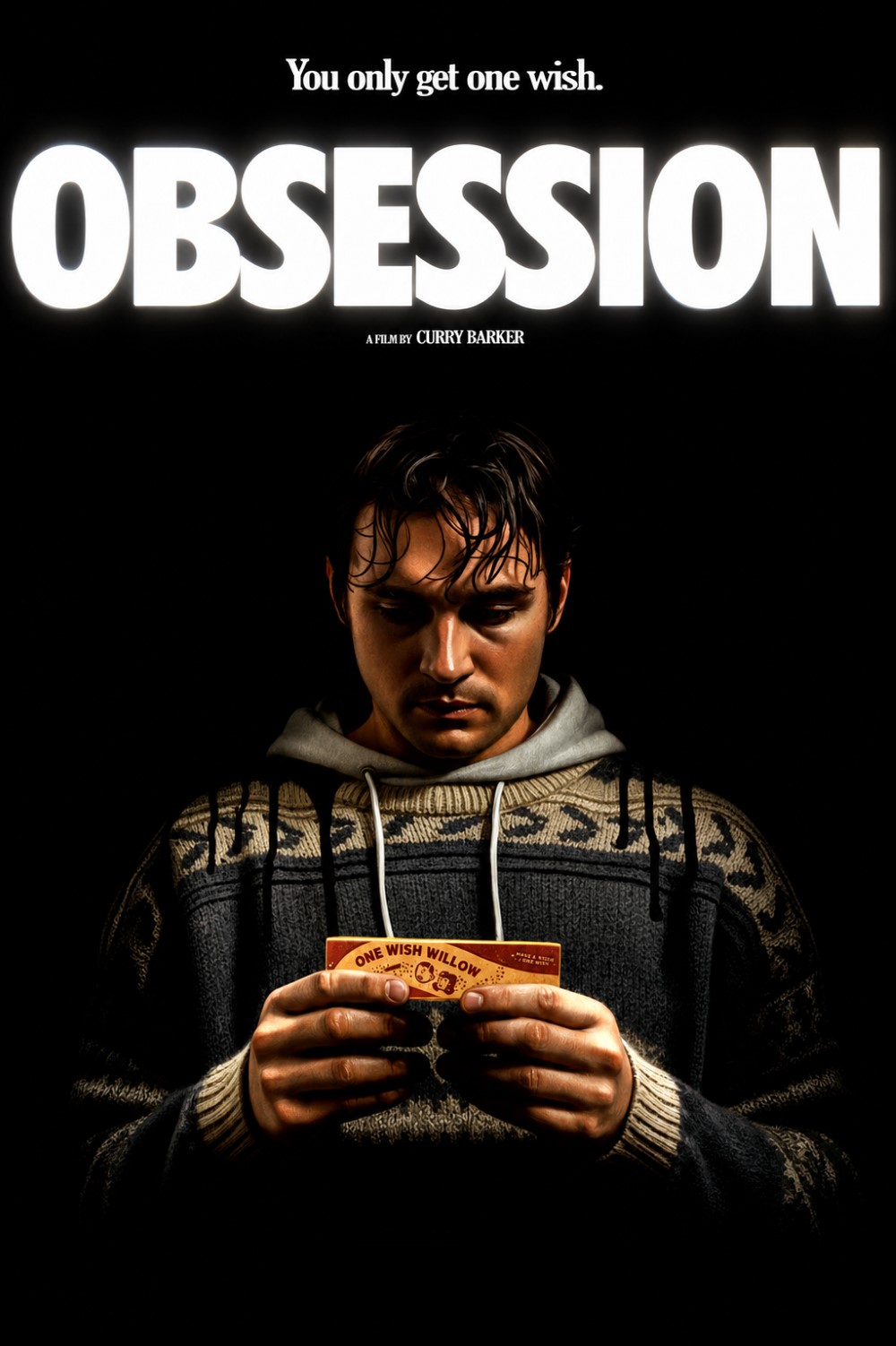
There is something especially unsettling about horror films that begin with a simple emotional truth. Obsession, written and directed by Curry Barker, starts with a feeling most people understand: wanting someone to love you back. Barker takes that universal desire and twists it into something ugly, tragic, and terrifying. The result is a horror film that works both as a supernatural nightmare and as an uncomfortable examination of loneliness, entitlement, and emotional dependency.
The premise sounds deceptively simple. Bear, played by Michael Johnston, is a socially awkward young man hopelessly in love with his longtime friend Nikki, played by Inde Navarrette. Bear convinces himself that if circumstances were just slightly different, Nikki would finally realize he is the right person for her. When he discovers a supernatural object known as the “One Wish Willow,” he makes the disastrous decision to wish that Nikki would love him completely. Naturally, the wish mutates into something horrific, transforming Nikki’s affection into a violent and all-consuming obsession.
At its core, Obsession feels like an old-fashioned monkey’s paw story updated for the modern age. Barker takes the familiar “be careful what you wish for” premise and dials the nastiness up to 11. The film fully commits to the emotional ugliness of its concept, giving the well-worn trope a vicious bite that makes the movie far better than it has any reason to be. Instead of treating the supernatural element like a gimmick, Barker roots the horror in emotional selfishness and the terrifying consequences of trying to control another person’s feelings.
What makes the film work so well is that Barker avoids turning the story into a heavy-handed moral lecture. The script trusts the audience to understand the disturbing reality underneath Bear’s actions. Bear is not portrayed as a cartoon villain. He is insecure, lonely, emotionally immature, and quietly resentful. That complexity makes him far more unsettling because he feels recognizable. The film taps into a very modern type of “nice guy” entitlement, where affection is viewed less as mutual connection and more as something owed or deserved.
Michael Johnston gives an impressively layered performance as Bear. He never plays the character as openly monstrous right away. Instead, Johnston leans into Bear’s passivity and self-pity, making him seem like someone convinced life has unfairly denied him happiness. Even as events spiral out of control, Bear continues rationalizing his decisions instead of fully confronting the damage he has caused. Johnston manages to make the character pathetic, frustrating, and disturbing all at once.
Inde Navarrette delivers the film’s strongest performance as Nikki. Once the wish begins taking hold, Navarrette shifts between affection, emotional collapse, desperation, and outright menace with remarkable control. What makes her performance especially effective is that Nikki never stops feeling human beneath the horror. There is a lingering sadness to the character because the film makes it clear she is losing her autonomy piece by piece. That loss of agency becomes one of the movie’s most disturbing ideas.
More than anything, Obsession is about the horror of emotional suffocation. Barker exaggerates toxic relationship dynamics into supernatural horror, but the emotions underneath everything feel believable enough to sting. The film understands how frightening dependency can become when love starts turning into possession. In many ways, the supernatural curse almost feels secondary to the emotional damage unfolding between the characters.
One of the film’s biggest surprises is how confidently Barker handles tone. Considering his background in online comedy and internet content, it would have been easy for the movie to lean too heavily into irony or self-awareness. Instead, Obsession balances dark humor and psychological dread remarkably well. There are genuinely funny moments throughout the film, often rooted in painfully awkward social interactions, but the comedy never weakens the horror. If anything, it makes scenes more uncomfortable because the characters and situations feel recognizable.
Visually, the film punches far above its apparent budget. Barker and cinematographer Taylor Clemons create an atmosphere that feels claustrophobic and emotionally oppressive. The framing often leaves characters isolated within empty spaces, subtly reinforcing the loneliness and discomfort driving the story. The lighting also deserves praise, frequently bathing scenes in dim yellows, reds, and shadows that gradually make ordinary environments feel increasingly hostile.
The sound design is equally effective. Barker wisely avoids relying only on loud jump scares. Instead, the film builds tension through silence, distant noises, and subtle audio distortions that make scenes feel emotionally wrong before anything overtly frightening even happens. Combined with Rock Burwell’s unsettling score, the movie maintains a lingering sense of dread that hangs over nearly every scene.
When the horror finally erupts into violence, Barker shows admirable restraint. The graphic moments land hard because the emotional groundwork has already been carefully established. Some scenes are genuinely difficult to watch not simply because they are bloody, but because the violence feels directly tied to desperation, obsession, and loss of control. The film understands that emotional discomfort can often be more disturbing than gore itself.
If the movie has weaknesses, they mostly stem from Barker occasionally pushing the central metaphor a little too hard. Some later scenes become slightly obvious in their symbolism, and a few supporting characters feel underdeveloped compared to the leads. Still, those flaws never seriously damage the film because the central performances and atmosphere remain compelling throughout.
What ultimately makes Obsession stand out from many modern horror films is how emotionally specific it feels. Rather than chasing broad social commentary, Barker narrows his focus onto a very particular kind of emotional dysfunction. The film is less interested in making sweeping statements about relationships and more interested in examining the terrifying consequences of confusing love with ownership.
In that sense, the “One Wish Willow” works less as a magical object and more as a representation of selfish fantasy. Bear wants love without vulnerability, rejection, or reciprocity. He wants an easy shortcut to emotional fulfillment. The horror comes from realizing that genuine love cannot exist without freedom.
There are traces of earlier psychological horror films throughout Obsession. The movie occasionally recalls the obsessive fixation of Misery and the emotional body horror of Possession, though Barker filters those influences through a distinctly modern lens shaped by internet-age loneliness and social isolation. Yet despite those influences, the film never feels derivative. Barker’s voice as a filmmaker comes through clearly in both the emotional discomfort and escalating supernatural chaos.
Perhaps the most impressive thing about Obsession is how assured it feels for a filmmaker still early in his career. Barker directs with confidence, gradually tightening the emotional pressure until the movie becomes almost suffocating by its final act. By the end, the film reaches a level of tragic inevitability that feels earned rather than forced.
Obsession succeeds because it recognizes how frightening loneliness and emotional dependency can become when mixed with entitlement and fantasy. Beneath the supernatural premise is a painfully human story about people confusing obsession with love. Curry Barker turns that idea into a disturbing, darkly funny, emotionally bruising horror film that lingers long after the credits roll.
For a filmmaker making such an ambitious leap into feature-length horror, Barker delivers something remarkably confident and emotionally sharp. Obsession is creepy, uncomfortable, tragic, and surprisingly insightful. More importantly, it feels like the arrival of a filmmaker who understands how modern horror can reflect real emotional anxieties while still delivering an entertaining and deeply unsettling experience. In many ways, Barker joins the recent wave of younger horror filmmakers like Oz Perkins and Zach Cregger who have proven that horror, dread, and dark comedy do not have to work against each other. Like those directors, Barker understands how to blend discomfort, absurdity, and genuine emotional tension into a cohesive whole, creating a film that is as unsettling as it is unexpectedly funny.
“For here on this river, God never finished his creation.” — Balthasar
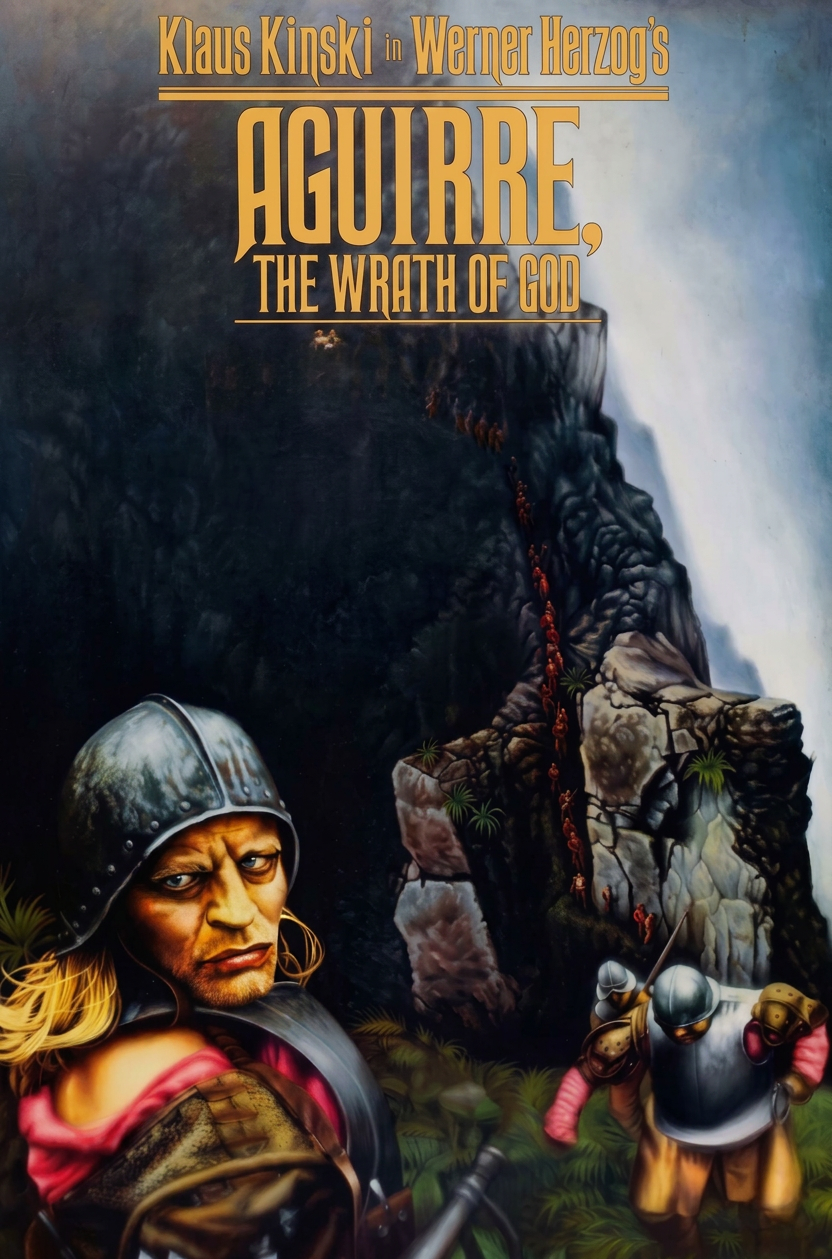
Werner Herzog’s Aguirre, the Wrath of God opens with one of the most hypnotic sequences in cinema: a column of Spanish conquistadors and indigenous slaves snaking down a fog-shrouded Andean pass, cannon winched separately. From that first frame, you sense you’re watching not a historical adventure but a fever dream. The film is loosely based on the real-life Lope de Aguirre, a Basque mutineer who searched for El Dorado in the 1560s. But as Herzog later confirmed, historical accuracy was never the point. Aguirre is fiction—a myth sculpted from jungle heat, river currents, and one actor’s maniacal commitment. Remarkably, the production itself became a hellish mirror of the narrative: shot deep in the Peruvian rainforest under conditions so brutal that the line between making a movie and surviving an ordeal vanished.
The plot is simple. In 1560, a Spanish expedition descends into the Amazon basin, searching for the golden city of Manoa. When rapids prove too treacherous, a smaller party is sent ahead under the noble but hapless Don Pedro de Ursúa (Ruy Guerra). Among them is Aguirre (Klaus Kinski), a wiry, half-mad soldier who immediately undermines authority. After Ursúa is murdered, Aguirre seizes control, declaring himself “the Wrath of God” and proclaiming a new monarchy. What follows is not a rousing conquest but a slow hallucinatory unraveling: rafts stuck on looping rivers, starvation, arrows from invisible natives, and the collapse of every civilizing impulse. This is one man’s battle against nature and his personal crisis of faith—a crisis the production team would come to know intimately.
Herzog’s storytelling prioritizes mood over plot. The narrative drifts through long takes of jungle canopy, close-ups of Kinski’s hollow eyes, and Popol Vuh’s otherworldly score. But the film’s raw authenticity comes from its production: a near-literal trek through jungle hell. Herzog took a small cast and crew into the Peruvian rainforest with no insurance, no backup equipment, and no evacuation strategy. The Urubamba River was unpredictable, with hidden rocks and stretches local guides refused to navigate. Rafts capsized. Food spoiled. Actors began unraveling for real. When a soldier in the film announces, “We are walking in circles,” it is both scripted and a genuine observation from an extra who’d passed the same fallen tree three days running. Herzog left that take in. The boundary between fictional madness and documentary collapse dissolved completely.
And then there was Klaus Kinski. If the jungle was one monster, Kinski was another. The conflict between Herzog and his star is the stuff of legend. Kinski arrived volatile, prone to screaming fits, threatening to abandon the production. At one point, a native chief offered to kill Kinski for free. Herzog declined—he still needed the actor alive. On another occasion, Herzog reportedly held Kinski at gunpoint during an attempted walkout. Kinski stayed. That friction bleeds into every frame. Kinski’s rage and paranoid stillness aren’t simulated; they’re the genuine product of a man frayed by heat, isolation, and his own demons. That is not method acting in a safe studio. It’s a man on the edge, pointed at a director who refused to flinch.
What lifts Aguirre into high art is its philosophical dread, earned through real suffering. And at its heart is Aguirre himself, a character who feels less like a historical figure and more like a literary archetype. As played by the manic Kinski, Aguirre is a remarkable fusion: the tragic Miltonian rebel and the obsessive Melvillean monomaniac. Like Satan in Paradise Lost, Aguirre defies divine and imperial order, preferring to reign in hell than serve in heaven. His self-coronation and final soliloquy echo Milton’s antihero—magnificent in defiance, hollowed by pride. But Herzog drains the grandeur, leaving only the fall without the poetry. Simultaneously, Aguirre is pure Ahab from Moby-Dick: another obsessive dragging a reluctant crew into the void on a suicidal quest. El Dorado is his white whale, an obsession that obliterates loyalty, love, and sanity. Both are swallowed by their obsession—Ahab by the sea, Aguirre by the jungle. But where Melville gives Ahab a thunderous final confrontation, Herzog gives Aguirre a whimper: a circle of monkeys, a drifting raft, and a whispered promise of a dynasty that will never come. Kinski holds both archetypes in suspension—Satan’s pride and Ahab’s fixation—and grinds them into something unrecognizable, belonging only to Herzog’s fever dream.
In the film’s most famous scene, Aguirre stands alone on a raft littered with corpses, small monkeys crawling over his armor, and whispers, “I will be the Wrath of God. Who else is with me?” No one. The jungle has swallowed everyone. Herzog frames this as the logical end of both the Miltonian and Melvillean arcs: absolute power in absolute isolation. The scene was shot in one take—not for artistry but because the raft was about to be swept away. The monkeys were real, biting the crew and defecating on Kinski’s armor. He didn’t break character. He couldn’t afford to. That’s the difference between a film that describes madness and one that embodies it.
Visually, Aguirre is a masterclass in low-budget grandeur. Cinematographer Thomas Mauch’s handheld camera glides through the jungle like a ghost. The opening descent feels supernatural. Rivers fill the frame until you lose direction. A galleon stuck in high branches—a leftover from a previous flood—becomes the film’s central metaphor: even empire is helpless against nature’s chaos. That chaos was logistical as well as thematic.
If there’s a weakness, it’s that the pacing can feel punishing. This film doesn’t build to a climax; it decays. Characters die offscreen or vanish. There is no redemption, no final battle. Some viewers may find this anticlimactic, but that’s the point. Herzog isn’t telling a story about winning or losing. He’s documenting a psychic meltdown from the inside, and meltdowns don’t follow three-act structure. The production’s own meltdown—hunger, disease, screaming matches on muddy riverbanks—only reinforces that vision. Aguirre is not a film about a man battling nature and losing his faith. It’s a film that became that battle, in real time, with real stakes, and somehow survived.
Years after release, Herzog clarified that Aguirre bears only the loosest resemblance to the historical Lope de Aguirre. He claimed he dreamed the film during a hike in the Alps. That dream-logic explains why Aguirre feels less like a period piece than a prehistoric vision. History is just a costume; the real subject is the human capacity to mistake madness for destiny. And that destiny, filtered through Kinski, is neither strictly Miltonian nor Melvillean but a nightmare hybrid: a fallen angel who keeps hunting the whale long after the ship has sunk.
In the end, Aguirre, the Wrath of God remains a towering, unsettling achievement. It influenced everything from Apocalypse Now to Resident Evil 4, but no imitation has matched its specific, waterlogged power. Despite the leeches, dysentery, gun threats, and screaming, the film that emerged is haunting, mesmerizing—a surreal trip into one man’s battle against nature and his crisis of faith. Herzog wanted “ecstatic truth” rather than mere fact. Aguirre is ecstatic truth: a fiction that feels more real than reality, a portrait of a madman that makes you understand why sanity is fragile, and a warning about conquest that remains urgent half a century later. Watch it on the biggest screen you can find, late at night, alone. The monkeys will be waiting. And somewhere in the jungle, Herzog and Kinski are still arguing.
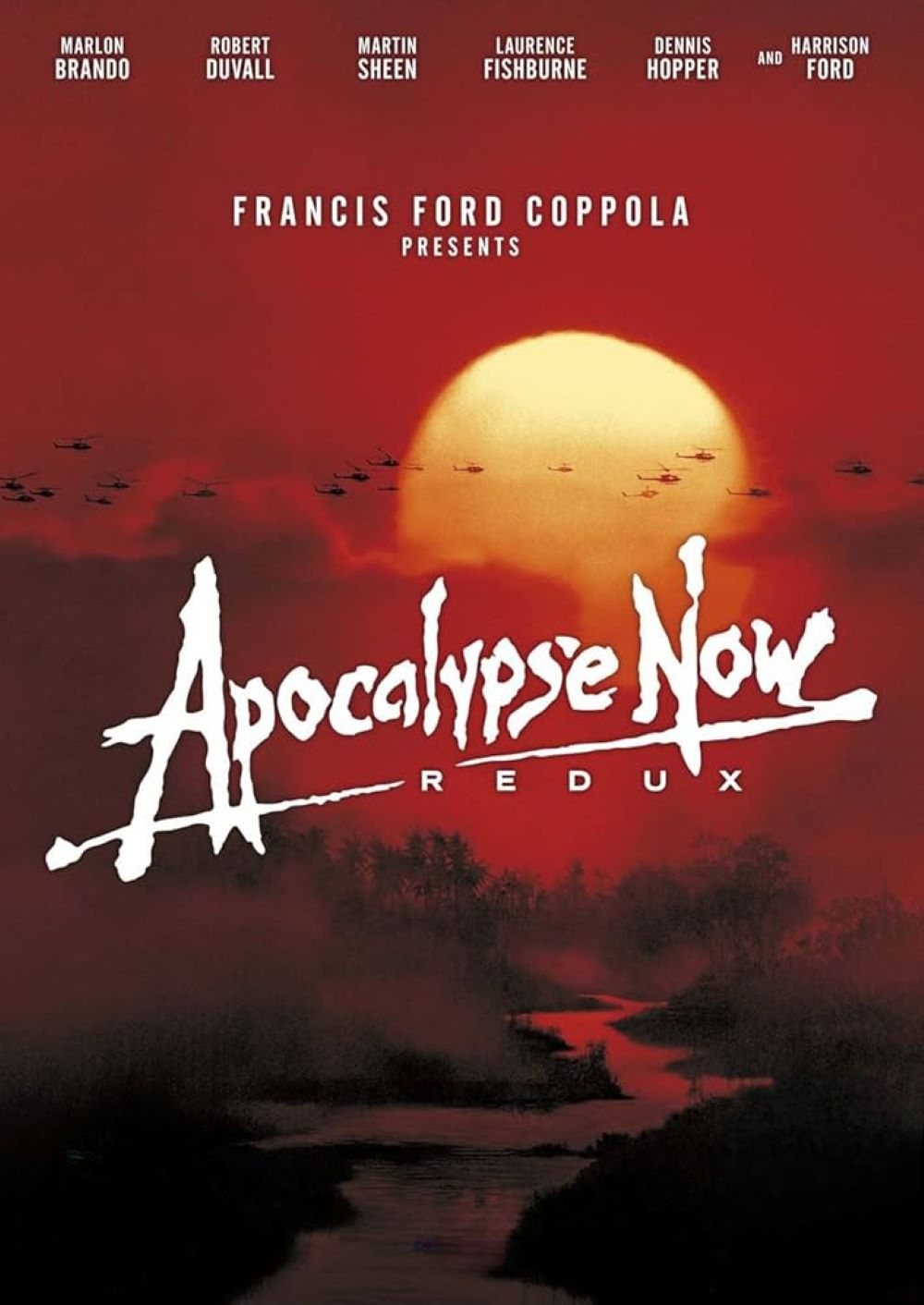
There is a specific kind of cinematic fever dream that only war, isolation, and a touch of madness can produce, and Francis Ford Coppola’s Apocalypse Now remains its gold standard. Co-written by Coppola and John Milius (the latter a colorful, larger-than-life figure in 1970s Hollywood), the film’s screenplay originally leaned harder into Milius’s romantic vision of martial will before Coppola reshaped it into something more hallucinatory and morally ambiguous. When we talk about the Redux version, released in 2001, twenty-two years after the original, we are not just revisiting that fever dream; we are plunging back into an even more hallucinatory, bloated, and revealing cut of the material.
At over three hours and twenty minutes, Apocalypse Now Redux is both a gift and a test of endurance. For those who only know the theatrical cut, this version feels less like a director’s tweak and more like unearthing a lost, more indulgent diary entry from Coppola’s own heart of darkness. The core remains the same: Captain Benjamin Willard (Martin Sheen), a morally hollowed-out assassin, is sent upriver during the Vietnam War to terminate Colonel Walter Kurtz (Marlon Brando), a once-brilliant Green Beret who has gone rogue and set himself up as a demi-god in the Cambodian jungle. The structure is a loose but unmistakable adaptation of Joseph Conrad’s classic 1899 novella Heart of Darkness, transposing Conrad’s grim critique of Belgian colonialism onto America’s own imperial overreach in Southeast Asia. Conrad’s journey up the Congo River becomes the Navy patrol boat’s crawl up the Nùng River, with each stop revealing a new layer of absurdity, violence, and spiritual decay.
The most immediate thing to address is what Redux adds, because those additions fundamentally alter the rhythm of the film. The theatrical cut is a lean, relentless descent. Redux is a meandering, hypnotic, and sometimes frustratingly pensive journey. Several major extended sequences distinguish this cut from the original. The first involves the Playboy Playmates. In the theatrical cut, we see them briefly at a chaotic USO show. In Redux, we get an extended sequence where Willard’s crew trades a canister of fuel for two hours with the stranded bunnies after their helicopter runs low on fuel. Later comes the brutal, psychedelic chaos of the Do Lung Bridge, which is extended in Redux to emphasize the utter breakdown of command and reality. And finally, deep in the journey, after surviving a tiger attack, Willard and the crew stumble upon the French rubber plantation, where a family of colonial planters refuses to leave their dying world. Each of these sequences grinds the forward momentum in different ways—the bunnies through desperate transaction, the bridge through absurd chaos, the plantation through nostalgic rot.
But to truly appreciate what Coppola is doing in Redux, you have to stop thinking of the Nùng River as a simple journey and start seeing it as a vertical descent—a layered, infernal funnel where each stop corresponds to a different circle of moral decay, much like the structure of Dante Alighieri’s Inferno, the first part of his epic narrative poem The Divine Comedy. The patrol boat is not just transport; it is a cramped, filthy ferry crossing the River Styx, and the further Willard and his crew go, the thinner the veil between civilization and savagery becomes. The Redux version, with its extended sequences, actually sharpens this Dantesque geometry rather than diluting it, because each added stop becomes another hellish layer, another specific flavor of corruption rotting under the jungle canopy. And importantly, the order of these stops tells a specific story of descent. Willard first encounters raw, commodified desire at the USO show, then plunges into the absurd mechanical chaos of the Do Lung Bridge, and finally drifts into the refined, decaying nostalgia of the French plantation—each circle deeper, stranger, and more spiritually corrosive than the last.
Consider the first major stop after leaving the relative order of the Delta: the extended Playboy Playmate sequence. In Dante’s Inferno, the early circles punish the lustful and the gluttonous—sins of appetite and passion that still acknowledge desire, however distorted. This stop is the hell of commodified desire, and it functions as the upper circle of Redux’s inferno. The bunnies are not seductresses; they are air-dropped promises of home, stranded and forced to barter their presence for fuel. The crew’s transaction—a canister of gas for two hours of the bunnies’ company—is transactional depravity laid bare. There is nothing refined here. The soldiers who swarm the boat are not conquering heroes; they are starving ghosts pawing at a mirage of femininity. The corruption is the commodification of intimacy, the way the war machine grinds up even fantasy into a trade good. In Dante’s Inferno, the lustful are eternally swept by winds, never at rest. Here, the winds are helicopter rotors, and no one finds peace. This stop still has energy, still has motion—it is desperate, ugly, and pathetic, but not yet defeated. It is the first circle: sin as transaction.
Further upriver, deeper into the jungle, you hit the second major stop in Redux’s order: the Do Lung Bridge. In Dante’s structure, the middle and lower circles punish the violent, the fraudulent, and the sowers of discord—those whose sins actively tear apart the fabric of order. The bridge is a sustained vision of the eighth circle—the Malebolge, the evil ditches of the fraudulent. This is the hell of absurd, endless combat, and it sits far below the bunnies’ desperate lust because it has abandoned desire altogether. The bridge is supposed to be a strategic point, but no one in command knows who is fighting whom or even which side holds which trench. Soldiers fire blindly into the dark; engineers build and rebuild sections of bridge that are destroyed every night by an invisible enemy. The wounded groan, a psychedelic light show of flares and tracers turns the sky into a flickering carnival of death, and a dazed soldier informs Willard that this place has been “crazy” for days. There is no front line, no objective, only endless, repetitive, pointless construction and destruction. The corruption here is systemic: the war has become an autopilot nightmare where violence generates nothing but more violence. Unlike the bunnies, who still want something, the soldiers at the bridge don’t even know what they are doing anymore. They simply perform the same broken task for eternity. Willard’s only reaction is a numb observation that he should inform his superiors, but he never will. The bridge is the point where any remaining belief in order or purpose dissolves into white noise. It is the second circle: sin as automation.
Then, after the bridge’s chaos, the crew drifts into the third major stop: the French rubber plantation. In Dante’s Inferno, the deepest circles before the frozen center punish heresy and treachery—sins of the intellect and will, where belief becomes a cage. The plantation functions exactly like this. It is the hell of nostalgia and colonial rot, a step deeper than the bridge’s chaos because it has calcified into ideology. After the raw transaction of the bunnies and the absurd violence of the bridge, the crew stumbles upon a walled pocket of denial. Here, the French family sips wine, argues geopolitics, and pretends the war is a tragic inconvenience rather than a total collapse. This is the hell of the static dead—people who refuse to acknowledge that their world has already ended. The rubber trees themselves, planted in neat, tyrannical rows, symbolize extractive cruelty made mundane. Willard sleeps with a widowed French woman, a moment of hollow lust that feels more like a funeral rite than passion. The corruption here is polite, intellectual, and almost seductive—but it is still decay wearing a starched shirt. Unlike the bunnies’ squalid desperation, the plantation has manners. Unlike the bridge’s chaotic noise, the plantation has quiet arguments. That makes it more insidious, and therefore deeper in the infernal funnel. This is the third circle: sin as denial.
By the time Willard finally reaches Kurtz’s compound, he has descended past all these preparatory circles into the ninth and final circle of Dante’s Inferno—Cocytus, the frozen lake of treachery, where Satan himself is trapped in ice. Kurtz is no longer a man but a fixed point of absolute darkness. His compound is a Cambodian nightmare of severed heads, pagan rituals, and whispered monologues. Unlike the bunnies’ desperate transaction, the bridge’s absurd chaos, or the plantation’s nostalgic denial, Kurtz’s hell is complete stillness. He has murdered and been worshipped for it. He has rejected every prior layer—commerce, command, colonialism—and arrived at a nihilistic truth: that horror is the only moral absolute. Willard’s task is not to understand Kurtz but to kill him, and in doing so, to become him. That is the final descent: not into fire, but into the ice of total moral withdrawal. The Redux version emphasizes this by making Kurtz more verbose but also more inert. He is trapped not by chains, but by his own unbearable clarity. The three stops before him—the bunnies, the bridge, the plantation—are all failed attempts to build meaning in the jungle. Kurtz is the place where meaning dies entirely.
What remains unchanged, across both cuts, is the technical majesty. Vittorio Storaro’s cinematography still haunts the soul. The opening shot—a napalm-blasted jungle dissolving into the slow rotation of a ceiling fan in a Saigon hotel room, with The Doors’ “The End” whispering over the soundtrack—is one of the great tone-setters in cinema history. The Redux cut luxuriates in these images even longer, letting the heat and humidity seep through the screen. The attack on a Vietnamese sampan, where an innocent family is slaughtered in a burst of trigger-happy panic, remains devastating. Laurence Fishburne’s young, wide-eyed Clean, Dennis Hopper’s jittery, sycophantic photojournalist (a role that feels like pure id), and Robert Duvall’s iconic Lieutenant Colonel Kilgore, who loves the smell of napalm in the morning, all deliver performances that feel less like acting and more like channeling. Duvall’s surf-obsessed madman is even more absurdly perfect in Redux because the added length makes his brief screentime feel like a welcome blast of cold air before the suffocating final act.
Which brings us back to Marlon Brando as Kurtz. Here is where Redux both helps and hurts. The theatrical cut gives Kurtz a mythic, almost abstract presence—shadowy, whispering, half-sculpted. Brando showed up overweight and unprepared, so Coppola shot him mostly in shadow. In Redux, those shadows remain, but the added material includes a longer, more discursive monologue where Kurtz reads from a Time magazine article about the war and rambles about the horror of administering lethal injections to polio-stricken villagers. It is more Brando, which is never nothing, but it also demystifies the monster. The terror of Kurtz in the original cut is that he is an idea, a reflection of Willard’s own potential. In Redux, he becomes a sweaty, slightly boring philosopher. The famous “the horror, the horror” death scene still lands, but getting there feels like you have already been swimming in his rhetoric for too long. The added footage makes Kurtz more human but less terrifying, which may or may not be an improvement depending on your tolerance for Brando’s mumbling.
The casual viewer might find Redux interminable. Let’s be honest: three and a half hours of madness, helicopters, and nihilism is a lot. There are stretches in the plantation sequence where you might check your phone. The pacing is deliberately, almost arrogantly slow. Coppola is not trying to entertain you; he is trying to drown you. And in those moments of slog—when the French family drones on about geopolitics, when the bunnies’ desperation overstays its welcome, when the bridge’s chaos becomes repetitive rather than shocking—you might be tempted to declare the whole Redux experiment a failure. But here is the uncomfortable truth that separates Apocalypse Now Redux from mere indulgent director’s cuts: the film’s occasional sluggishness, its bloated digressions, its refusal to maintain a clean narrative spine, are not flaws so much as they are the correct representation of the very thing the film’s themes and narrative ideas were trying to explore. This is a movie about a journey into moral rot, about the collapse of linear purpose into circular nightmare, about men who have stared too long into the abyss and lost the ability to tell a clean story. Why should the film itself be clean? The theatrical cut is a masterpiece of compression, yes—but compression is an act of control, and Apocalypse Now is ultimately about the loss of control. The Redux version, for all its unevenness, is the more honest artifact because it refuses to polish the madness into neat dramatic beats. The original film is a nightmare you cannot wake from; Redux is the insomnia that precedes it, the sweaty, bored, terrifying awareness that there is no ending, only more jungle.
This is why, despite its longer running time and the areas where the pacing sometimes slogs through, the film overall succeeds as not just a fever dream of the filmmaker, writers, and actors who survived its legendary production—the typhoons, the heart attacks, Brando’s chaos, Sheen’s breakdown—but as the correct representation of the very thing the film’s themes and narrative ideas were trying to explore. Apocalypse Now is about the impossibility of remaining sane in an insane environment. The Redux cut, by refusing to be efficiently sane, becomes a more immersive simulation of that condition. The theatrical cut tells you about the horror; the Redux cut makes you live inside its tedious, exhausting, occasionally boring reality. And boredom is part of horror, too—the long stretches between atrocities, the waiting, the pointless arguments, the nights that won’t end. Coppola, Milius, Sheen, Brando, and everyone else who survived the Philippines shoot did not emerge with a clean story. They emerged with scars, footage, and a kind of shell-shocked awe. The Redux version honors that survival by refusing to pretend the experience was anything other than a mess. It is the director’s cut as wound, not as polish.
For the obsessive, for those who want to see the entire messy, unfinished vision behind one of the great artistic catastrophes (the documentary Hearts of Darkness is essential companion viewing), Redux is invaluable. It reveals that the original 1979 cut was a miracle of editing—a salvage job that turned a troubled production into a masterpiece. Redux is the rough draft of that miracle. It has a bloated, novelistic quality, more concerned with atmosphere than narrative efficiency. As a loose adaptation of Heart of Darkness, it is oddly more faithful than the original cut—because Conrad’s novella is also meandering, digressive, and filled with colonial asides that do not advance the plot. But faithfulness is not the same as greatness.
The Redux version is a flawed, overstuffed, hypnotic masterpiece that sometimes trips over its own ambition. It earns its runtime not through tight storytelling, but through sheer, oppressive mood. And in the end, that is the point. You are not supposed to leave Apocalypse Now feeling satisfied. You are supposed to leave feeling like you have stared into something ancient and ugly. The Redux version just makes you stare longer, dragging you down through each Dantesque circle—from the desperate, transactional depravity of the Playboy bunnies, through the absurd, autopilot chaos of the Do Lung Bridge, past the polite, rotting nostalgia of the French plantation, and finally into the frozen stillness of Kurtz’s compound—until there is nothing left but the ice and the horror. And in those moments when the film slows to a crawl, when you check your watch and wonder why we are still at the plantation, that is not a failure of art. That is the art itself, reminding you that hell is not a nonstop carnival of screams. Hell is also a long, boring dinner with people who refuse to die. Whether that is luxury or punishment is for you to decide. But Apocalypse Now Redux succeeds precisely because it trusts you to sit with that discomfort and recognize it for what it is: the truth.
“And I looked, and behold a pale horse. And his name that sat on him was Death. And Hell followed with him.” — Megan Wheeler
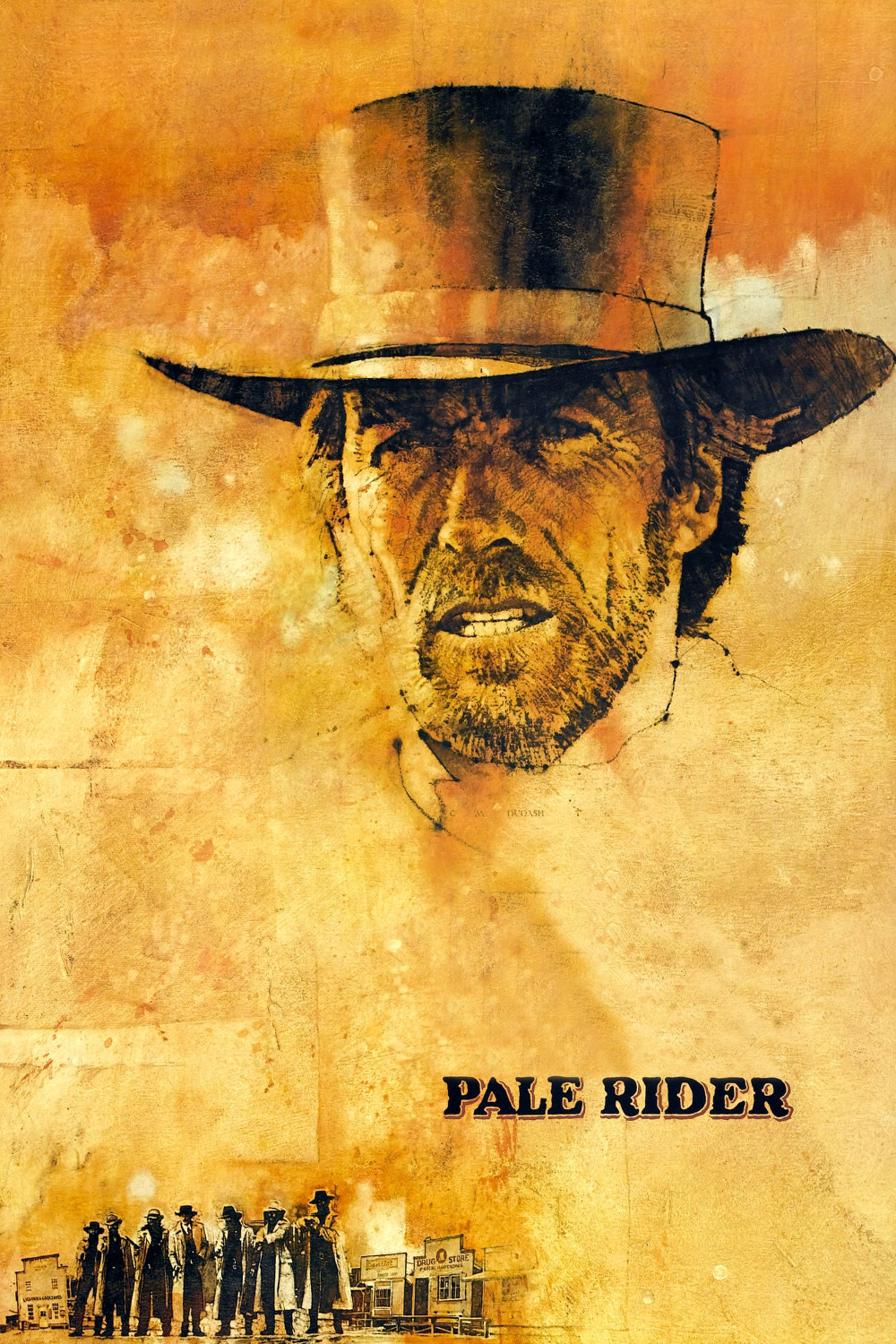
Clint Eastwood’s Pale Rider occupies a fascinating space within the Western genre—both a reverent homage to the traditions that shaped classic frontier storytelling and a quiet dismantling of the myths those stories often upheld. Released in 1985, the film arrived during a period when the Western had largely faded from mainstream prominence, regarded by many as a relic of an earlier cinematic era. Yet Eastwood, by then already firmly associated with the genre through his work in Sergio Leone’s Dollar Trilogy and films like High Plains Drifter and The Outlaw Josey Wales, proved that the Western still had room for reinvention. With Pale Rider, he crafted something that feels both deeply familiar and subtly haunting: a film that embraces the iconography of the Old West while draping it in an almost supernatural atmosphere, creating one of the most enigmatic and compelling entries in his directorial career.
In many ways, Pale Rider also feels like a spiritual successor—or even an unofficial companion piece—to High Plains Drifter. Both films center around a mysterious outsider who seemingly emerges from nowhere to confront a corrupt and morally rotten community. In both stories, Eastwood plays a figure who feels less like an ordinary man and more like an embodiment of vengeance itself, a ghostly gunslinger whose true nature is never fully explained. The similarities in narrative structure are impossible to ignore: isolated frontier settlements under siege, powerful men abusing authority, and Eastwood’s near-mythic drifter arriving as a reckoning for buried sins. But where High Plains Drifter leans into bitterness and outright surrealism, portraying the Old West as a place consumed by cruelty and hypocrisy, Pale Rider takes a more restrained and spiritual approach. The Preacher is still intimidating and otherworldly, but he possesses a moral center that the Stranger in High Plains Drifter deliberately lacked. It feels almost as if Eastwood revisited the earlier film’s core ideas over a decade later with greater maturity and reflection, transforming the wrathful ghost story of High Plains Drifter into something more meditative about redemption and justice.
On its surface, Pale Rider follows a relatively straightforward Western premise. A group of struggling gold prospectors in the mountains of California are being terrorized and pressured by a wealthy mining magnate, Coy LaHood, who seeks to drive them off their land so he can exploit the area’s resources for himself. Into this conflict rides a mysterious preacher, played by Eastwood, whose sudden appearance seems almost divinely summoned after a young girl prays for deliverance. This unnamed “Preacher” becomes the reluctant protector of the miners, standing against LaHood and the corrupt marshal Stockburn and his deputies. The bones of the story echo classic Western structures—outsiders defending vulnerable settlers from ruthless power—but Pale Rider imbues this framework with a somber, spiritual weight that elevates it beyond genre familiarity.
One of the film’s most striking strengths is Eastwood’s central performance. By this point in his career, Eastwood had perfected a specific screen persona: laconic, observant, physically economical, and quietly threatening. Yet the Preacher in Pale Rider may be one of his most mysterious variations on that archetype. Unlike the swaggering Man with No Name or even the wounded determination of Josey Wales, the Preacher seems almost detached from ordinary human concerns. His calm demeanor and sparse dialogue give him an ethereal quality, and Eastwood plays him with just enough warmth to avoid complete abstraction. There is kindness in his interactions with the miners, especially the young Megan Wheeler, but it always feels measured, as if the character is passing through rather than fully participating in the world around him. The film deliberately hints at something supernatural—his sudden arrival after prayer, his unexplained scars, his near spectral presence—and Eastwood wisely resists any definitive explanation. The ambiguity is what gives the character his power.
This supernatural undercurrent is central to what makes Pale Rider unique. The title itself references the Four Horsemen of the Apocalypse, specifically Death riding a pale horse, and the biblical symbolism permeates the film without overwhelming it. Eastwood uses religious imagery sparingly but effectively, allowing viewers to wonder whether the Preacher is simply a man with a violent past or something more symbolic: an agent of justice, vengeance, or divine reckoning. The film never commits fully to fantasy, but it constantly suggests that the Preacher exists somewhere between myth and mortal reality. This ambiguity transforms ordinary Western confrontations into something more unsettling and poetic.
Visually, Pale Rider is one of Eastwood’s most beautiful films. Shot by cinematographer Bruce Surtees, whose work with Eastwood had already become legendary, the film makes remarkable use of natural landscapes. The mountainous terrain, dense forests, and rugged mining camps provide a setting that feels less romanticized than the sweeping deserts often associated with traditional Westerns. There is a chill to the environment, both literal and emotional. The forests seem shadowed and secretive, and the mining settlements feel fragile, temporary, vulnerable to destruction. Surtees’ lighting contributes significantly to the film’s tone, bathing many scenes in muted, earthy colors and allowing darkness to linger at the edges of the frame. The result is a Western that often feels ghostly, as though the past itself is haunting every image.
Eastwood’s direction demonstrates his confidence and restraint. He avoids excessive spectacle, choosing instead to let tension build gradually through atmosphere, silence, and careful pacing. Action scenes are brief but impactful, and the violence carries genuine consequence. Unlike many earlier Westerns that glorified gunfights as heroic climaxes, Pale Rider treats violence as something grim and almost inevitable. When the Preacher finally unleashes his skills, it feels less like triumphant empowerment and more like a dark necessity. Eastwood understands that his character’s power is amplified by how sparingly he uses it.
Still, despite how effective the film is overall, Pale Rider is not without flaws. Some viewers may find the pacing overly deliberate, particularly in the middle section where the story spends considerable time with the miners and their daily struggles before major plot developments occur. Eastwood prioritizes mood and atmosphere over narrative momentum, which works artistically but can occasionally make the film feel slower than necessary. The supporting characters, while likable, are also somewhat thinly sketched compared to the larger thematic ideas surrounding them. Hull Barret, Sarah Wheeler, and several of the miners are defined more by their place within the story’s moral framework than by deeply layered characterization. They are ordinary people standing against corruption, but the script does not always give them enough individuality or complexity outside of that central conflict.
What ultimately compensates for this is the strength and sincerity of the performances themselves. Michael Moriarty gives Hull Barret a gentle awkwardness and vulnerability that make him feel genuinely human rather than simply “the good-hearted miner.” There is an understated sadness in the way Moriarty carries himself, as if Hull already expects to lose against forces larger than himself, which makes his gradual courage more affecting. Carrie Snodgress similarly brings warmth and grounded realism to Sarah Wheeler, helping the character feel emotionally authentic even when the screenplay does not explore her inner life in great detail. The miners as a collective also benefit from Eastwood’s direction, which emphasizes camaraderie and shared hardship through small interactions and visual storytelling rather than extensive dialogue or backstory.
In many respects, the relative simplicity of the supporting characters may even be intentional. Pale Rider operates less like a conventional ensemble drama and more like a mythic folk tale or ghost story, where ordinary people encounter a figure who seems larger than life. The miners are not meant to overshadow the Preacher’s mystery; they function as representatives of vulnerable frontier communities trapped between survival and exploitation. Their emotional straightforwardness creates a contrast with Eastwood’s enigmatic presence. Because the supporting cast plays these roles with sincerity and restraint rather than melodrama, the film avoids feeling emotionally hollow even when some characters are not deeply developed on the page. The performances ground the story just enough to keep the supernatural and allegorical elements emotionally believable.
The film’s thematic concerns are nevertheless surprisingly rich. At its heart, Pale Rider is a story about greed and resistance. Coy LaHood represents industrial expansion and unchecked capitalism, using wealth and intimidation to crush smaller, independent prospectors. The miners symbolize ordinary people fighting to preserve their livelihoods and dignity. This conflict gives the film a subtle populist edge, framing the Western frontier not merely as a site of adventure but as a battleground between concentrated power and communal perseverance. Eastwood does not overstate these themes, but they lend the story a resonance that extends beyond genre convention.
There is also an interesting undercurrent of moral ambiguity. The Preacher protects the innocent, but he is hardly a traditional moral hero. His past appears stained by violence, and the scars on his back suggest suffering, punishment, or perhaps sins that remain unresolved. The film implies that redemption may be possible, but only through confrontation with one’s own darkness. This is where Pale Rider aligns with Eastwood’s broader body of work, which often interrogates the mythology of masculine heroism. His protagonists are rarely clean symbols of virtue; they are damaged, haunted men whose capacity for violence complicates their acts of justice.
Richard Dysart makes Coy LaHood more than a simple villain, imbuing him with entitlement and cold pragmatism rather than cartoonish cruelty. But perhaps most memorable among the antagonists is John Russell as Marshal Stockburn, whose quiet menace and personal history with the Preacher add another layer of mystery and inevitability to the film’s final act. Stockburn in particular feels almost like a mirror image of the Preacher himself—another ghost from a violent past returning for unfinished business.
What makes Pale Rider endure is its ability to function on multiple levels simultaneously. It works perfectly well as a classic Western, complete with horseback arrivals, frontier justice, and dramatic showdowns. It also succeeds as a meditation on mortality, redemption, and the fading mythology of the American frontier. Eastwood understands the genre deeply enough to honor its traditions while gently questioning them. The Preacher is both an embodiment of the old Western hero and a ghostly reminder that such heroes may never have truly existed outside of legend.
In many ways, Pale Rider feels like a bridge between Eastwood’s earlier Westerns and the more explicit deconstruction he would later achieve with Unforgiven. Where Unforgiven strips away nearly all romanticism, Pale Rider still allows for mystery and myth, but it tempers them with melancholy and introspection. It recognizes the allure of the gunslinger while quietly suggesting that such figures are often defined by pain and isolation.
Nearly four decades after its release, Pale Rider remains one of Clint Eastwood’s most compelling achievements, both as actor and director. It is a Western that understands the power of silence, shadow, and suggestion. It trusts its audience to sit with uncertainty and to appreciate heroism that comes wrapped in ambiguity. More than just a revival of a fading genre, it is a thoughtful and atmospheric meditation on justice, violence, and the strange figures we summon when ordinary courage is no longer enough. In the vast landscape of Eastwood’s Western legacy, Pale Rider stands as one of his most haunting and quietly profound works.
“I’m not a good person. I’m not a bad person. I’m just not a person that things happen to.” — Ronnie Barnhardt
There’s a specific kind of whiplash that comes from watching Observe & Report, Jody Hill’s 2009 dark comedy about a bipolar mall cop named Ronnie Barnhardt. On its surface, the film invites comparisons to Paul Blart: Mall Cop, which came out the same year, but that’s like comparing a punch to the gut with a tickle fight. Where Paul Blart plays it safe with slapstick and heart, Observe & Report dives headfirst into uncomfortable, ugly, and strangely profound territory. This is not a movie for everyone, and that’s precisely why it has earned a cult following over the years. It’s a film that hides a serious character study inside a dirty joke, and depending on your mood, it’s either a misunderstood masterpiece or a mean-spirited mess. Honestly, it’s a bit of both.
The plot, such as it is, follows Ronnie (played with terrifying commitment by Seth Rogen), the head security guard at the Forest Ridge Mall. Ronnie sees himself as a warrior-poet of law enforcement, constantly vying for the respect he feels he deserves from the local police, specifically the smug Detective Harrison (Ray Liotta). When a flasher starts terrorizing the mall, Ronnie sees his chance to prove his worth. But the film is less about catching the pervert and more about Ronnie’s slow, volatile unraveling. He pops antipsychotic meds, lives with his alcoholic mother (Celia Weston), and harbors a delusional crush on a makeup counter girl named Brandi (Anna Faris), who is openly using him. It’s a recipe for a tragedy, but Hill frames it as a comedy so deadpan and abrasive that you’re never quite sure when you’re allowed to laugh.
Let’s talk about performance, because Rogen does something here that he’s rarely done before or since. He sheds the lovable stoner schtick entirely. Ronnie is not charming. He’s awkward, prone to violent outbursts, and genuinely frightening in his conviction. When he goes off his medication, the film shifts from quirky indie comedy to something closer to Taxi Driver. Rogen plays Ronnie with a straight-backed, chest-out posture that suggests a man holding himself together with duct tape and delusion. There’s a scene where he interrogates a group of teenagers—pulling one kid’s pants down and pepper-spraying another—that is so uncomfortably realistic in its abuse of authority that you might wince instead of chuckle. That’s the point. Hill isn’t interested in making Ronnie a hero. He’s interested in the gap between how Ronnie sees himself (a lone crusader for justice) and how the world sees him (a dangerous liability).
The supporting cast deserves a shout-out here. Anna Faris is pitch-perfect as Brandi, a shallow, cocaine-snorting mess who treats Ronnie’s affection as a minor inconvenience. She never plays for sympathy, which makes her character brutally honest. And it’s in her most uncomfortable scene with Ronnie that the film’s entire thesis snaps into focus. Without spoiling exactly what happens, Brandi invites Ronnie to her apartment after a long night of drinking and using. For a brief, hopeful moment, the film seems to be offering him a genuine connection. But Brandi is too self-absorbed to notice Ronnie’s desperate, medication-starved sincerity, and Ronnie himself misreads every signal she doesn’t bother to send. What unfolds is a hollow, mechanical act that Ronnie mistakes for intimacy and Brandi barely registers as an inconvenience. The scene is shot flatly—no music, no punchline, just the awful silence of two broken people failing to see each other. Ronnie sees a fantasy of Brandi that doesn’t exist. Brandi sees a tool she can use and discard. It’s a car crash you know you shouldn’t slow down for, but you do anyway, and when you get close enough to see the human damage, the film refuses to let you look away. That moment is emblematic of Observe & Report as a whole: it dares you to laugh, then makes you feel gross for even considering it. Most dark comedies use shock for a quick gag. Hill uses it as a mirror.
Michael Peña shows up as Ronnie’s loyal but dim partner Dennis, providing the film’s few genuine moments of warmth. And then there’s Ray Liotta, practically playing a parody of his Goodfellas persona, but in a way that underscores the film’s central irony: the real cops are just as arrogant and flawed as Ronnie, but they have badges, so it’s allowed. Liotta’s Detective Harrison isn’t a hero; he’s just a bully with better legal standing.
From a craft perspective, Observe & Report is deceptively smart. Jody Hill, who came from the brilliant but uncomfortable HBO show Eastbound & Down, directs with a strange kind of sincerity. The mall is shot like a battlefield or a Western town, all wide angles and lonely corridors. There’s a scene where Ronnie imagines a slow-motion shootout set to a cover of “Rocket Man,” and it’s both hilarious and deeply sad. Hill uses music ironically but not cruelly. The film’s climax, which I won’t spoil, involves a literal parking lot confrontation that descends into shocking, bloody violence—and then immediately undercuts it with a joke so tasteless it almost works as social commentary. This is where the film splits audiences. Some see a juvenile attempt to shock. Others see a pointed satire of vigilantism and the American male ego.
The biggest critique of Observe & Report is its tonal chaos. The movie can’t decide if you’re supposed to laugh at Ronnie’s mental illness or cry for him. In one scene, he’s horrifically mean to a genuinely kind love interest (played by Collette Wolfe). In the next, he’s delivering a surprisingly vulnerable monologue about being a “security guard for his own heart.” The Brandi apartment scene sits right at the center of this chaos, a perfect little engine of discomfort that powers everything around it. If you walk in expecting a stoner comedy, that scene will leave you unsettled. If you walk in expecting a gritty character study, the dick jokes and mall-cop absurdity surrounding it will feel out of place. That’s the point. The film deliberately rubs its contradictions in your face, and the Brandi scene is where those contradictions burn hottest.
That said, the film’s final act is where it earns its cult status. Without giving too much away, Ronnie essentially achieves his goal—but the victory is hollow, pointless, and tinged with tragedy. The very last shot is a freeze frame that asks you to reconsider everything you’ve just watched, including that awful night in Brandi’s apartment. Is Ronnie a hero? A monster? A pathetic man who got lucky? Hill refuses to label him, which is rare in mainstream American cinema. Most movies would either punish or redeem a character like this. Observe & Report simply watches him continue, the same broken person he always was, now with a slight bump in self-esteem. That’s either a brilliant subversion of the “loser succeeds” trope or a cop-out. I lean toward brilliant, but I wouldn’t argue with someone who hated it.
So, final verdict? Observe & Report is not a film I can recommend easily. If you need your comedies to be warm, predictable, or morally clear, stay far away. But if you’re interested in a movie that uses the mall-cop setup to ask uncomfortable questions about masculinity, mental health, and the thin line between community guardian and domestic terrorist, this is a fascinating artifact. It’s messy, mean, and occasionally transcendent. Seth Rogen has never been braver, and Jody Hill has never been more himself. Just don’t watch it back-to-back with Paul Blart unless you want emotional whiplash. This is the dark, spiky, unapologetic alternative—the film that says the quiet part out loud, then laughs at you for being surprised. For better or worse, you won’t forget it.
“As I was going up the stairs, I met a man who wasn’t there. He wasn’t there again today. I wish, I wish he’d go away.” — Malcolm Rivers
There’s a certain kind of movie that thrives on a rainy Sunday afternoon or a late-night cable scroll—something pulpy, clever, and self-contained, with a cast that makes you sit up a little straighter. James Mangold’s Identity from 2003 is exactly that breed of thriller. It’s not trying to reinvent the wheel, but it’s having a damn good time spinning it through mud, rain, and a whole lot of psychological fog. On the surface, Identity is a slasher-adjacent whodunit set in a deserted Nevada motel during a biblical storm, and it wears its debt to Agatha Christie’s And Then There Were None like a bloodstained badge of honor. That classic novel—where strangers are lured to an isolated island and picked off one by one according to a nursery rhyme—provides the blueprint. Mangold swaps the island for a rundown motel, the nursery rhyme for room keys, and adds a thick layer of rainy noir atmosphere. But underneath the jump scares and dripping dread, Identity is also a sly, shaggy-dog meditation on identity, trauma, and the stories we tell ourselves to survive. Mangold, who’d go on to direct Walk the Line and Logan, shows his genre dexterity here—he treats the material with just enough seriousness to keep you invested, but not so much that you can’t laugh at the absurdity when the twist finally snaps into place.
The setup is classic Christie with a tar pit of dread. A motley crew of strangers gets stranded at a rundown motel when a flash flood washes out the roads, just as the guests in And Then There Were None find themselves cut off from civilization. There’s a former cop turned limo driver (John Cusack), a has-been actress (Rebecca De Mornay), a newlywed couple, a cop escorting a prisoner, a nervous motel manager, a prostitute with a heart of gold (Amanda Peet), and a few others who might as well have target silhouettes painted on their backs. The storm rages, the power flickers, and one by one, they start turning up dead. The killer leaves behind clues—room keys, specifically—and the survivors realize the bodies are being dropped in the order of the motel’s room numbers. It’s a wonderfully cheap gimmick that works because the film leans into its own artificiality. The rain never stops. The Nevada landscape is featureless and black. The motel feels less like a real place and more like a diorama in a psychiatrist’s office. Which, as it turns out, is almost exactly what it is.
Now, here’s where the review has to carefully step around spoilers, because Identity lives and dies on its midpoint rug-pull. But seeing as the movie is over twenty years old, a gentle acknowledgment is fair: the motel carnage is intercut with scenes of a criminal psychologist (Alfred Molina) arguing with a judge during a late-night hearing about a convicted serial killer’s sanity. That killer, Malcolm Rivers, is awaiting execution, and the defense is presenting new diary evidence. You don’t have to be a detective to start connecting dots. Mangold and screenwriter Michael Cooney aren’t interested in subtlety; they want you to squirm as the two storylines begin to converge. The motel guests, we gradually realize, are not random travelers. They are fractured pieces of a single damaged psyche—personalities inside Rivers’ mind, duking it out for survival as his body faces a real-world lethal injection. The killer in the motel isn’t a man in a mask; it’s the most malevolent alter among them, systematically erasing the others. Where Christie’s novel uses a hidden murderer working through a fixed list, Identity twists that formula by making the setting itself a psychological construct.
On a technical level, Identity is a masterclass in low-budget atmosphere. Phedon Papamichael’s cinematography drenches every frame in gray-blue gloom, and the sound design makes every creak and drip sound like a gunshot. Mangold directs the ensemble with a steady hand, and the cast clearly knows what movie they’re in. Cusack brings his usual blue-collar soulfulness to Ed, the ex-cop with a guilty conscience. Ray Liotta, as the suspicious cop, chews scenery in the best way—he’s all twitchy aggression and bad intentions. But the real standout is Amanda Peet as Paris, a call girl who just wants to start over on a Florida orange farm. She’s smarter and tougher than the archetype usually allows, and her final scene in the motel’s office carries an unexpected tenderness. That’s the trick of Identity: it makes you care about figments. For a good hour, you’re genuinely invested in whether the newlyweds survive or if the motel manager will finally clean that damn room 6.
Where the movie loses some people is in the execution of its twist. When the narrative finally snaps from the motel to the real-world courtroom, there’s a jarring shift that feels almost like a different film. The last fifteen minutes become a race to explain the rules of this shared-mind universe, and here the logic gets wobbly. How exactly does a personality “die” inside a system? Why does the motel order matter? And without giving too much away, the film’s famous final reveal—which involves a third-act twist on the twist—pushes credibility to the breaking point. Some viewers will throw their hands up and groan. Others will grin and applaud the audacity. I land somewhere in the middle. On one hand, the final image is genuinely chilling, a perfect little joke about evil’s persistence. On the other hand, the film spends so much time setting up the motel’s internal rules that it forgets to make the real-world stakes feel as urgent.
Still, Identity works best if you don’t overthink it. Think of it as a B-movie with an A-movie haircut, or as And Then There Were None filtered through a late-night cable dream about multiple personality disorder. Mangold directs the violence with a knowing wink—there are no gratuitous gore shots, just quick, sharp cuts and clever misdirection. One death involving a baseball bat and a laundry machine is as goofy as it is brutal, and that tonal tightrope is hard to walk. The film also has a sneaky thematic resonance beneath the pulp. At its heart, Identity asks whether people can truly change. Every character is trapped not just by the storm, but by their own backstory: the cop who failed a case, the actress past her prime, the prostitute who dreams of orange groves. In the motel of the mind, these backstories are just narratives the personality uses to justify itself. When Paris pleads, “I get to start over,” she’s speaking for anyone who’s ever wished they could delete a bad version of themselves. The film’s bleak final twist suggests that some stories are stronger than we think—the ones we tell ourselves about who we are, and who we’ve always been.
For a thriller that runs just over ninety minutes, Identity has surprising legs. It’s not a masterpiece, but it’s a tight, well-oiled machine of suspense with a gimmick that still feels fresh if you haven’t been spoiled. The dialogue crackles with noir-lite attitude, and the pacing never sags—once the bodies start dropping around the twenty-minute mark, you’re locked in. The biggest flaw is that the movie is so proud of its puzzle-box structure that it forgets to breathe between twists. You never get a quiet moment to sit with the characters as real people because, well, they’re not real people. But that’s also the point. Identity is a movie about a metaphor, and like most metaphors, it works until you poke it too hard. If you’re looking for a rainy-night thrill ride with a cast that commits to the bit and a final shot that’ll stick in your brain like a bad dream, check in. Just maybe avoid room 6.