Scenes That I Love: Sheriff Teasle Arrests John Rambo in First Blood


Director Ted Kotcheff has passed away.

Kotcheff directed a lot of classic films but perhaps the most influential was 1982’s First Blood.  In today’s scene that I love, John Rambo (Sylvester Stallone) is arrested by Sheriff Will Teasle (Brian Dennehy).  Teasle may think that he’s keeping his community safe and teaching Rambo a lesson about respecting authority but, needless to say, he’s making a huge mistake.

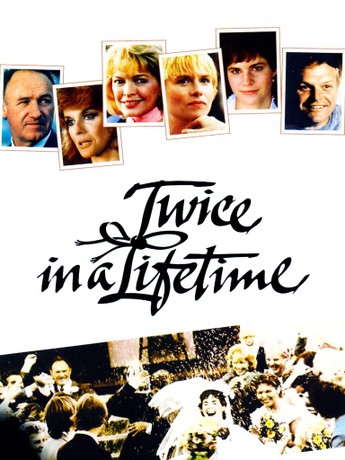
Twice In A Lifetime (1985, dir by Bud Yorkin)


Today, for obvious and tragic reasons, people everywhere have been thinking about their favorite Gene Hackman performances.  Hackman was an actor who always brought his all, even when he was appearing in a lesser film.  I think you could ask five different people for their five favorite Hackman performances and they would all give five different answers.  His performance as Lex Luthor in Superman and Superman II has always been one of my favorites.  Others will undoubtedly cite his award-winning performance as Popeye Doyle in The French Connection or his great work as Norman Dale in Hoosiers or his work in classic neo-noirs like The Conversation and Night Moves.  Let’s not forget his most unexpectedly great turn, as the blind man in Young Frankenstein.  Hackman gave so many great performances that some of them were for films that are not even remembered today.

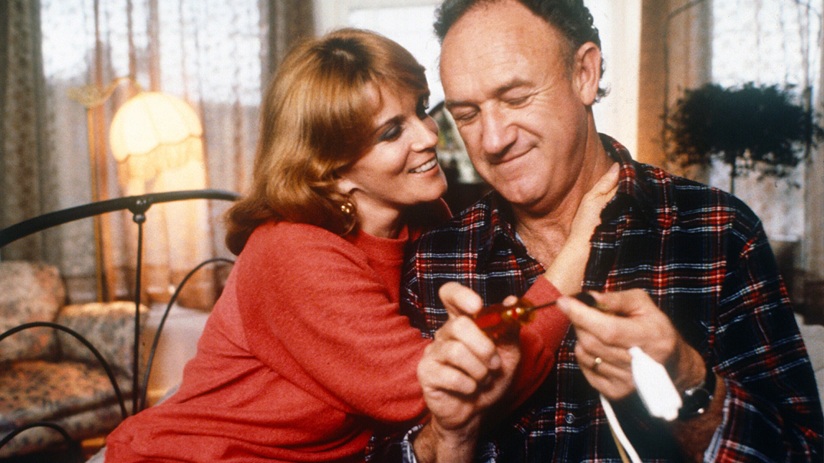
Twice In A Lifetime is one of those forgotten films but I think it features one of Hackman’s best performances.  He plays Harry Mackenzie, a steelworker who is married to Kate (Ellen Burstyn, made up to look frumpy) and who has two daughters (Amy Madigan and Ally Sheedy).  Harry is the type of everyman that Hackman excelled at playing.  He’s a hard worker, a good family man, and a good friend.  What no one, not even Harry realizes, is that he’s also having a midlife crisis.  On his 50th birthday, he goes out to the neighborhood bar with his buddies and falls for the new barmaid, Audrey (Ann-Margaret).  Harry ends up leaving his wife for Audrey, pursuing the spark that his marriage no longer gives him.  The movie follows Harry and Kate and their daughters as they adjust to their new lives and they plan for the younger daughter’s wedding.

Twice In A Lifetime was one of many 80s films that dealt with divorce and it has the same flaws that afflicted many of them.  These films, which were often made by middle-aged directors who had just gone through their own divorces, rarely played fair when it came to depicting why the marriage failed.  Twice In A Lifetime stacks the odds in Harry’s favor just by suggesting that Ann-Margaret would end up working at a bar frequented by steelworkers.  Harry has to choose between his plain and boring wife and Ann-Margaret.  That’s going to be a difficult choice!  The twist that Harry’s decision was ultimately the right thing for Kate doesn’t feel earned.

But damn if Gene Hackman isn’t great in this film.  Even though he was one of the most recognizable actors in the movie, Hackman is totally believable as both a steelworker and a man who worries that he’s destroyed his family.  It’s not just one moment or scene that makes this a great performance.  It’s the entire performance as a whole, with Hackman portraying all of Harry’s conflicted emotions both before and after leaving his family.  Hackman gives a performance that is more honest than the film’s script or direction.  The movie believes Harry did the right thing but Hackman shows us that Harry himself isn’t so sure.  Hackman captures the middle-aged malaise of a man wondering if his life is as good as it gets.  When the movie works, it is almost totally due to the emotional authenticity of Hackman’s performance.  Twice in a Lifetime may be a forgotten film but it’s also proof of how great an actor Gene Hackman really was.  There will never be another one like him.

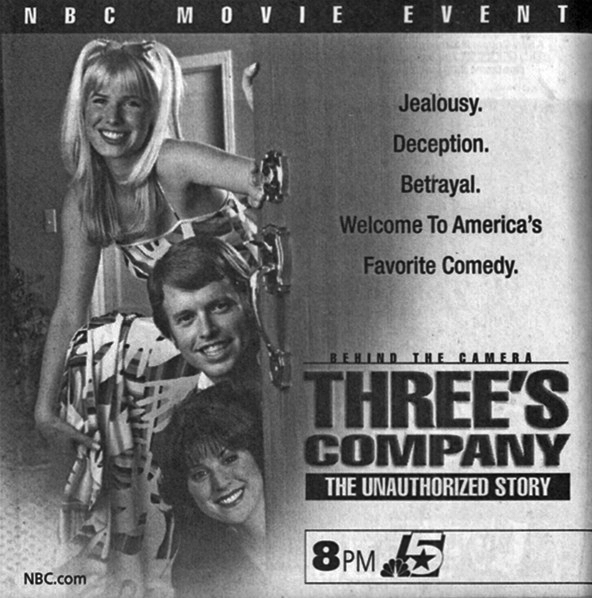
Behind the Camera: The Unauthorized Story of Three’s Company (2003, directed by Jason Ensler)


Do you remember Three’s Company?

The sitcom was a big hit when it aired in the 70s and 80s and it still gets a lot of play in syndication today.  Based on a British sitcom (and you would really be surprised to how closely the first season followed the original series), Three’s Company starred John Ritter as Jack Tripper, an aspiring chef who moved in with two single women, Janet (Joyce DeWitt) and Chrissy (Suzanne Somers).  Because their impotent landlord (Norman Fell) didn’t want people of the opposite sex living with each other unless they were married, Jack pretended to be gay.  Every episode centered around a misunderstanding, though it was Suzanne Somers’s performance as the perpetually bouncy and braless Chrissy Snow that made the show a hit.  The show fell apart when Somers asked for more money, Ritter and DeWitt got angry with her, and the studio bosses lied to everyone.  Today, the show is legendary as an example of how backstage tension can end even a popular series.

Behind The Camera: The Unauthorized Story of Three’s Company attempts to dramatize the success and eventual downfall of Three’s Company.  Joyce DeWitt appears at the beginning and the end to talk about how important she thinks the show was.  In the movie, she is played by Melanie Paxson.  John Ritter is played by a lookalike actor named Bret Anthony while an actress named Jud Taylor plays Somers.  Brian Dennehy plays ABC president Fred Silverman and other executives are played by Daniel Roebuck, Wallace Langham, Gary Hudson, and Christopher Shyer.  The movie recreates all of the drama that went on during Three’s Company without offering much insight or really anything new to the story.  Even though the movie was co-produced and hosted by Joyce DeWitt, Suzanne Somers is really the only sympathetic character in the movie.  DeWitt comes across as being jealous while Anthony plays John Ritter as being a bland nonentity who chooses his own success over being honest with his costars.  The network executives are more interesting, just because watching them provides a glimpse into how real producers and showrunners picture themselves.  They just wanted to make a good show about a sex addict pretending to be gay so he could live with two attractive, single women but the agents and the network presidents just keep getting in the way!  Won’t someone please think of the mid-level network executives?

Bland though this recreation was, it was enough of a rating hits that NBC went on to produce several more Behind The Camera films.  Three’s Company was only the beginning.

Silverado (1985, directed by Lawrence Kasdan)


In the old west, a cowboy named Emmet (Scott Glenn) teams up with a reformed outlaw named Paden (Kevin Kline) and they bust Emmet’s wild younger brother, Jake (Kevin Costner), out of jail.  After Mal (Danny Glover) helps the three of them escape from a posse, they all end up going to the town of Silverado, where all four of them have business.  Emmett and Jake want to protect their sister from the corrupt son (Ray Baker) of a cattle baron who was previously killed by Emmett.  Mal wants to save his sister Rae (Lynn Whitfield) from an evil gambler (Jeff Goldblum).  Paden discovers that Cobb (Brian Dennehy), his former partner-in-crime, is now the sheriff of Silverado and working for the cattle barons.  When Paden tries to protect the new settlers (including Rosanne Arquette), it leads to a confrontation with his former partner.

In the 80s, when he wasn’t directing films like The Big Chill and The Accidental Tourist, Lawrence Kasdan specialized in paying homage to the films of Hollywood’s golden age.  He started his directorial career with Body Heat, a modern film noir.  He worked on the screenplays of both Empire Strikes Back and Raiders of the Lost Ark.  With Silverado, Kasdan tried to resurrect the western.

Silverado is a traditional western with a few modern touches, like casting Jeff Goldblum as a gambler and John Cleese as the sheriff who wants to execute Kevin Costner.  Silverado also has more humor than a typical western, largely thanks to Kevin Kline.  Silverado starts out as a comedy before turning serious and grim once the four heroes finally reach Silverado.

Kasdan’s love of the genre is obvious in every frame of Silverado but, in trying to tell multiple stories at once, the movie spreads itself too thin.  I like that Kasdan tried to shake things up by casting actors who most people wouldn’t expect to see in a western but both Kevin Kline and Brian Dennehy seem miscast in their roles and their final confrontation never becomes the epic moment that it needs to be.  Scott Glenn and Kevin Costner are far more believable in their roles.  Danny Glover is also believable but his character is underused.

Silverado was obviously a labor of love for Kasdan and it shows that, if nothing else, Kasdan understood the appeal of the genre and the beauty of the wide open frontier.  The movie has its flaws but fans of westerns will appreciate his effort.

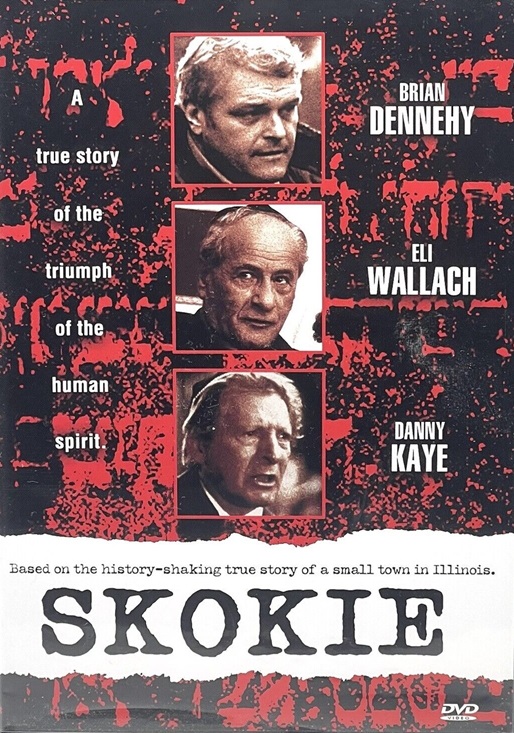
Made-For-Television Movie Review: Skokie (dir by Herbert Wise)


Skokie, a 1981 made-for-television movies, opens in a shabby Chicago office.

A group of men, all wearing brownshirts and swastika armbands, listen to their leader, Frank Collin (George Dzundza).  Collin says that they will be holding their next rally in the town of Skokie.  Collin explains that Skokie has a large Jewish population, many of whom came to the United States after World War II.  Collin wants to march through their town on Hitler’s birthday.

If not for the swastika and the brownshirt, the overweight Collin could easily pass for a middle-aged insurance salesman, someone with a nice house in the suburbs and an office job in the city.  However, Frank Collin is the head of the American National Socialist Party. a small but very loud group of Nazis who specialize in marching through towns with large Jewish populations and getting fee media attention as a result of people confronting them.  Making Frank Collin all the more disturbing is that he isn’t just a character in a made-for-television movie.  Frank Collin is a real person and Skokie is based on a true story.

The Mayor (Ed Flanders) and the police chief (Brian Dennehy) of Skokie are, needless to say, not happy about the idea of modern-day Nazis marching through their city.  Though they inform Collin that he will have to pay for insurance before he and his people will be allowed to hold their rally, they know that the courts have been striking down the insurance requirement as being a violation of the First Amendment.  While the mayor and the police chief worry about the political fallout of the rally, the Jewish citizens of Skokie debate amongst themselves how to deal with the Nazis.  Bert Silverman (Eli Wallach) and Abbot Rosen (Carl Reiner) argue that the best way to deal with Collin and his Nazis is to refuse to acknowledge them, to “quarantine” them.  As Rosen explains it, Collin is only marching to get the free publicity that comes with being confronted.  If he’s not confronted, he won’t make the evening news and his rally will have been for nothing.  However, many citizens of Skokie — including Holocaust survivor Max Feldman (Danny Kaye) — are tired to turning their back on and ignoring the Nazis.  They demand that the Nazis be kept out and that, if they do enter the city, they be confronted.

With the support of the ACLU, Collin sues for his right to march through Skokie.  The ACLU is represented by Herb Lewishon (John Rubinstein), a Jewish attorney who hates Collin and everything that he stands for but who also feels that the First Amendment must be respected no matter what.  When Lewishon is asked how he, as a Jew, can accept a Nazi as a client, Lewishon relies that his client is the U.S. Constitution.

Skokie is a thought-provoking film, all the more so today when there’s so much debate about who should and should not be allowed a platform online.  (Indeed, Collin and his Nazis would have loved social media.)  Lewishon argues that taking away any group’s First Amendment rights, regardless of how terrible that group may be, will lead to slippery slope and soon everyone’s First Amendment rights will be at risk.  Max Feldman, and others argue that the issue isn’t free speech.  Instead, the issue is standing up to and defeating evil.  The film gives both sides their say while, at the same time, making it clear that Frank Collin and his Nazis are a bunch of fascist losers.  It’s a well-acted and intelligently written movie, one that rejects easy answers.  Needless to say, at a time when so many people feel free to be openly anti-Semitic, it’s a film that’s still very relevant.

As for the real Frank Collin, he would eventually be charged with and convicted of child molestation.  After three years in prison, he changed his name to Frank Joseph and became a writer a New Age literature.  He’s looking for Atlantis but I doubt they’d want him either.

Retro Television Review: Pigs vs. Freaks (dir by Dick Lowry)


Welcome to Retro Television Reviews, a feature where we review some of our favorite and least favorite shows of the past!  On Sundays, I will be reviewing the made-for-television movies that used to be a primetime mainstay.  Today’s film is 1984’s Pigs vs. Freaks!  It  can be viewed on YouTube.

In the late 1960s, a small town is divided between the conservative older generation and their rebellious hippie children.  Former high school football star Doug Zimmer (Patrick Swayze) has just returned from fighting in Vietnam and, unlike many of his former classmates, he is firmly on the side of the establishment.  He wears his hair short.  He has a job as a cop.  He tries to keep his younger sister, Janice (Penny Peyser), from hanging out with hippies like his former best friend, Neal (Grant Goodeve).

Neal is also the son of the local police chief, Frank Brockmeyer (Eugene Roche).  Though Frank and Neal have different political beliefs and Frank is always telling Neal to get a haircut, they still have a respectful relationship.  When Neal complains that cops like Doug and his partner, Sgt. Cheever (Brian Dennehy), are always harassing the hippies who want to play football in park, Frank suggests a football game between the hippies and the police.  When Neal agrees, the game becomes known as “Pigs vs. Freaks.”

While Frank coaches the Pigs and signs a few former athlete as police reservists, Neal recruits his former little league coach, a bearded guru who now goes by the name of Rambaba Organimus (Tony Randall) to serve as the Freak’s coach.  He also places a call to a former football star named Mickey South (Adam Baldwin) and talks him into coming down from Canada to play in the game.  Of course, Mickey is wanted by the FBI for dodging the draft so it might not seem like a great idea for him to risk federal prison for an exhibition football game but no matter!  Who cares that there are now two federal agents watching the Freaks practice?  There’s a game to be won!

Pigs vs. Freaks is an amiable mix of comedy and drama.  Some of the comedy, like Tony Randall’s bearded guru and Stephen Furst’s perpetually frantic hippie linebacker, is a bit too broad but there’s enough moments of dramatic insight that it’s easy to overlook those flaws.  I appreciated the fact that both the Freaks and the Pigs are treated fairly, with both sides getting a chance to make a case for themselves.  When they first appear and start harassing the hippies for playing football in the park, it’s easy to dismiss both Doug and Cheever as fascists but a later scene, which is very well-played by both Brian Dennehy and Patrick Swayze, establishes them as just being two men who are confused by the direction of the world.  Swayze, in particular, gives a strong performance that reveals the vulnerability underneath Doug’s tough exterior.  As for the hippies, Mickey South is no self-righteous crusader but instead someone who feels the Vietnam War is wrong but who is also someone who both misses and loves his home country.  Adam Baldwin does a wonderful playing him and is well-matched with Grant Goodeve, who plays the most reasonable hippie that one could hope to meet.

It’s a likable film and well-intentioned, a portrait of two opposing groups brought together by the love of one game.  Some will cheer for the Pigs.  Some will cheer for the Freaks.  I cheered for both.

10 Oscar Snubs From the 1980s


Ah, the 80s! Ronald Reagan was president. America was strong. Russia was weak. The economy was booming. The music was wonderful. Many great movies were released, though most of them were not nominated for any Oscars. This is the decade that tends to drive most Oscar fanatics batty. So many good films that went unnominated. So many good performers that were overlooked.  Let’s dive on in!

1980: The Shining Is Totally Ignored

Admittedly, The Shining was not immediately embraced by critics when it was first released.  Stephen King is still whining about the movie and once he went as far as to joke about being happy that he outlived Stanley Kubrick.  (Not cool, Steve.)  Well, none of that matters.  The Shining should have been nominated across the board.  “Come and play with us, Danny …. AT THE OSCARS!”

1981: Harrison Ford Is Not Nominated For Best Actor For Raiders of the Lost Ark

Raiders received a lot of nominations.  Steven Spielberg was nominated for Best Director.  The film itself was nominated for Best Picture.  (It lost to Chariots of Fire.)  But the man who helped to hold the film together, Harrison Ford, was not nominated for his performance as Indiana Jones.  Despite totally changing the way that people looked at archeologists and also making glasses sexy, Harrison Ford was overlooked.  I think this was yet another case of the Academy taking a reliable actor for granted.

1982: Brian Dennehy Is Not Nominated For Best Supporting Actor For First Blood

First Blood didn’t receive any Oscar nominations, not even in the technical categories.  Personally, I think you could argue that the film, which was much more than just an action film, deserved to be considered for everything from Best Actor to Best Director to Best Picture.  But, in the end, if anyone was truly snubbed, it was Brian Dennehy.  Dennehy turned Will Teasle into a classic villain.  Wisely, neither the film nor Dennehy made the mistake of portraying Sheriff Teasle as being evil.  Instead, he was just a very stubborn man who couldn’t admit that he made a mistake in the way he treated John Rambo.  Dennehy gave an excellent performance that elevated the entire film.

1984: Once Upon A Time In America Is Totally Ignored

It’s not a huge shock that Once Upon A Time In America didn’t receive any Oscar nominations.  Warner Bros. took Sergio Leone’s gangster epic and recut it before giving it a wide release in America.  Among other things, scenes were rearranged so that they played out in chronological order, the studio took 90 minutes off of the run time, and the film’s surrealistic and challenging ending was altered.  Leone disowned the Warner Bros. edit of the film.  Unfortunately, in 1984, most people only saw the edited version of Once Upon A Time In America and Leone was so disillusioned by the experience that he would never direct another film.  (That said, even the edited version featured Ennio Morricone’s haunting score, which certainly deserved not just a nomination but also the Oscar.)  The original cut of Once Upon A Time In America is one of the greatest gangster films ever made, though one gets the feeling that it might have still been too violent, thematically dark, and narratively complex for the tastes of the Academy in 1984.  At a time when the Academy was going out of its way to honor good-for-you films like Gandhi, it’s probable that a film featuring Robert De Niro floating through time in an Opium-induced haze might have been a bridge too far.

1985: The Breakfast Club Is Totally Ignored

Not even a nomination for Best Screenplay!  It’s a shame.  I’m going to guess that the Academy assumed that The Breakfast Club was just another teen flick.  Personally, if nothing else, I would have given the film the Oscar for Best Original Song.  Seriously, don’t you forget about me.

1986: Alan Ruck Is Not Nominated For Best Supporting Actor For Ferris Bueller’s Day Off

Poor Cameron!

1986: Blue Velvet Is Not Nominated For Best Picture

Considering the type of films that the Academy typically nominated in the 80s, it’s something of a shock that David Lynch even managed to get a Best Director nomination for a film as surreal and subversive as Blue Velvet.  Unfortunately, that was the only recognition that the Academy was willing to give to the film.  It can also be argued that Kyle MacLachlan, Laura Dern, Isabella Rossellini, and Dean Stockwell were overlooked by the Academy.  Dennis Hopper did receive a Supporting Actor nomination in 1986, though it was for Hoosiers and not Blue Velvet.

1987: R. Lee Ermey Is Not Nominated For Best Supporting Actor For Full Metal Jacket

One of the biggest misconceptions about Full Metal Jacket is that R. Lee Ermey was just playing himself.  While Ermey was a former drill instructor and he did improvise the majority of his lines (which made him unique among actors who have appeared in Kubrick films), Ermey specifically set out to play Sgt. Hartmann as being a bad drill instructor, one who pushed his recruits too hard, forgot the importance of building them back up, and was so busy being a bully that he failed to notice that Pvt. Pyle had gone off the deep end.  Because Ermey was, by most accounts, a good drill instructor, he knew how to portray a bad one and the end result was an award-worthy performance.

1988: Die Hard Is Not Nominated For Best Picture, Actor, Supporting Actor, or Director

Die Hard did receive some technical nominations but, when you consider how influential the film would go on to be, it’s hard not to feel that it deserved more.  Almost every action movie villain owes a debt to Alan Rickman’s performance as Hans Gruber.  And Bruce Willis …. well, all I can say is that people really took Bruce for granted.

1989: Do The Right Thing Is Not Nominated For Best Picture

Indeed, it would take another 30 years for a film directed by Spike Lee to finally be nominated for Best Picture.

Agree?  Disagree?  Do you have an Oscar snub that you think is even worse than the 10 listed here?  Let us know in the comments!

Up next: It’s the 90s!

Monday Live Tweet Alert: Join Us For Cyborg Cop and Best Seller!


As some of our regular readers undoubtedly know, I am involved in hosting a few weekly live tweets on twitter.  I host #FridayNightFlix every Friday, I co-host #ScarySocial on Saturday, and I am one of the five hosts of #MondayActionMovie!  Every week, we get together.  We watch a movie.  We tweet our way through it.

Tonight, for #MondayActionMovie, the film will be 1993’s Cyborg Cop!  Selected and hosted by BunnyHero, Cyborg Cop stars David Bradley and John Rhys-Davies.  It’s a film about a cyborg who is a cop! The movie starts at 8 pm et and it is available on YouTube.


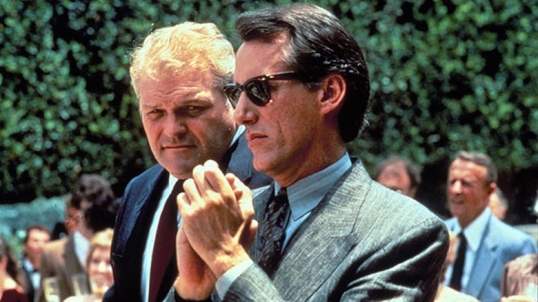
Following #MondayActionMovie, Brad and Sierra will be hosting the #MondayMuggers live tweet.  We will be watching 1987’s Best Seller, a classic thriller starring James Woods as an assassin and Brian Dennehy as the cop-turned-author who Woods wants to tell his story.  Both Dennehy and Woods give excellent performances in this conspiracy-themed thriller.  It is available on both Prime and Tubi and it starts at 10 pm et.


It should make for a night of intense viewing and I invite all of you to join in.  If you want to join the live tweets, just hop onto twitter, start Cyborg Cop at 8 pm et, and use the #MondayActionMovie hashtag!  Then, at 10 pm et, start Best Seller and use the #MondayMuggers hashtag!  The live tweet community is a friendly group and welcoming of newcomers so don’t be shy.  And reviews of these films will probably end up on this site at some point over the next few weeks. 

What If Lisa Picked The Oscar Nominees: 2020 Edition


With the Oscar nominations due to be announced tomorrow, now is the time that the Shattered Lens indulges in a little something called, “What if Lisa had all the power.” Listed below are my personal Oscar nominations. Please note that these are not the films that I necessarily think will be nominated. The fact of the matter is that the many of them will not. Instead, these are the films that would be nominated if I was solely responsible for deciding the nominees this year. Winners are listed in bold.

I should also point out that I’ve only nominated films that were actually released in 2020.  Undoubtedly, Nomadland, Minari, Judas and the Black Messiah, and The Father will do very well with the Academy tomorrow but, as far as I’m concerned, they’re 2021 films and not eligible for my nominations.  They will be eligible next year, when I do my 2021 edition of What If Lisa Had All The Power.

It should also go without saying that I’ve nominated films that I’ve actually seen.

You’ll also note that I’ve added four categories, all of which I believe the Academy should adopt — Best Voice-Over Performance, Best Casting, Best Stunt Work, and Best Overall Use Of Music In A Film.

Click on the links to see my nominations for 2019, 20182017201620152014201320122011, and 2010!)

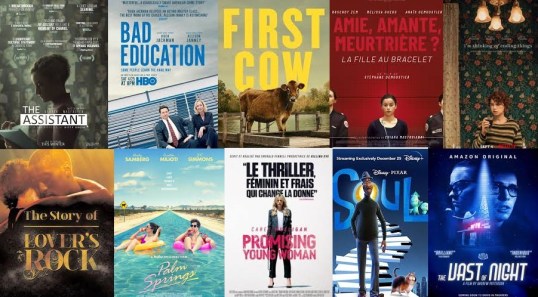
Best Picture

The Assistant
Bad Education
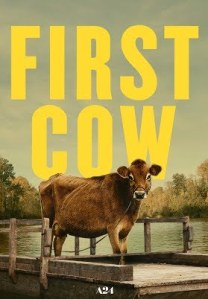
First Cow
The Girl With A Bracelet
i’m thinking of ending things
Lovers Rock
Palm Springs
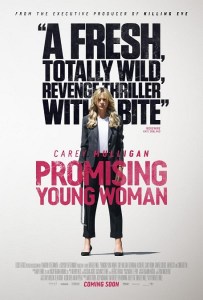
Promising Young Woman
Soul
The Vast of Night

Best Director

Stéphane Demoustier for The Girl With A Bracelet
Emerald Fennell for Promising Young Woman
Charlie Kaufman for i’m thinking of ending things
Steve McQueen for Lovers Rock
Andrew Patterson for The Vast of Night
Kelly Reichardt for First Cow
Best Actor

Ben Affleck in The Way Back
Riz Ahmed in Sound of Metal
Chadwick Boseman in Ma Rainey’s Black Bottom
John Boyega in Red, White, and Blue
Hugh Jackman in Bad Education
Delroy Lindo in Da 5 Bloods

Best Actress

Alison Brie in Horse Girl
Sidney Flanigan in Never Rarely Sometimes Always
Julia Garner in The Assistant
Melissa Guers in The Girl With A Bracelet
Sophia Loren in The Life Ahead
Carey Mulligan in Promising Young Woman
Best Supporting Actor

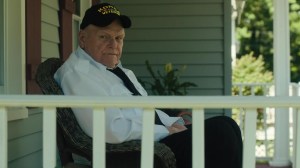
Brian Dennehy in Driveways
Aldis Hodge in One Night In Miami
Orion Lee in First Cow
Clarke Peters in Da 5 Blood
Paul Raci in The Sound of Metal
J.K. Simmons in Palm Springs
Best Supporting Actress

Jane Adams in She Dies Tomorrow
Glenn Close in Hillbilly Elegy
Olivia Cooke in Sound of Metal
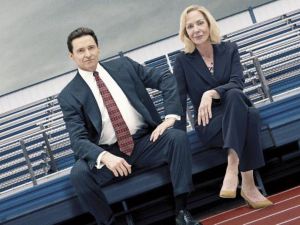
Allison Janney in Bad Education
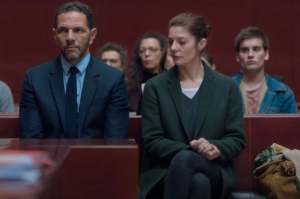
Chiara Mastroianni in The Girl With A Bracelet
Talia Ryder in Never Rarely Sometimes Always
Best Voice Over Performance

Jack Cruz in What Did Jack Do?
Bruce Davis in The Vast of Night
Tina Fey in Soul
Jamie Foxx in Soul
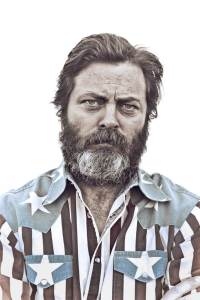
Nick Offerman in Frances Ferguson
Chris Pratt in Onward

Best Original Screenplay

The Assistant
Palm Springs
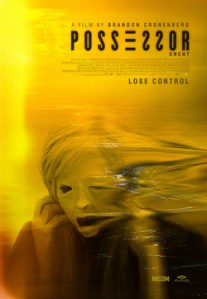
Possessor
Promising Young Woman
Soul
The Vast of Night
Bad Education

Best Adapted Screenplay

Bad Education
Emma
First Cow
The Girl With A Bracelet
i’m thinking of ending things
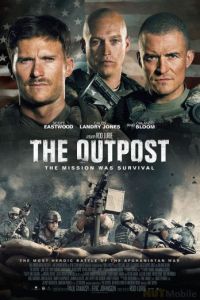
The Outpost
Best Animated Feature Film

A Shaun The Sheep Movie: Farmageddon
Onward
Red Shoes and the Seven Dwarfs
Soul
Best Documentary Feature Film

Alabama Snake
Athlete A
The Mystery of D.B. Cooper
Natalie Wood: What Remains Behind
The Social Dilemma
Tread

Best International Feature Film

Figurant
The Girl With A Bracelet
Gunpowder Heart
The Hater
The Life Ahead
The Shock of the Future
Best Live Action Short Film

Basic
Figurant
Host
Run/On
Waffle
What Did Jack Do?
Best Documentary Short Film

Betye Saar: Taking Care of Business
John Was Trying To Contact Aliens
Lions in the Corner
Quilt Fever
Best Animated Short Film

Canvas

If Anything Happens I Love You

Best Original Score

Call of the Wild
First Cow
Mangrove
Possessor
She Dies Tomorrow
The Shock of The Future
Best Original Song

“Boss Bitch” from Birds of Prey
“Diamonds” from Birds of Prey
“Everybody Dies” from The Outpost
“Future Shock Work in Progress” from The Shock of the Future
“Gratia Plena” from Fatima
“Husavik” from Eurovision Song Contest: The Story of Fire Saga
“Jah Jah Ding Dong” from Eurovision Song Contest: The Story of Fire Saga
“Metamorph” from Gunpowder Heart
“The Spirit of Christmas” from The Christmas Chronicles 2
“True Love’s Flame” from What Did Jack Do?
Best Overall Use of Music

Bill & Ted Face The Music
Eurovision Song Contest: The Story of Fire Saga
Lovers Rock
Proising Young Woman
The Shock of the Future
Soul

Best Sound

Eurovision Song Contest: The Story of Fire Saga
Lovers Rock
The Outpost
Possessor
The Shock of the Future
Sound of Metal

Best Production Design

Eurovision Song Contest: The Story of Fire Saga
Emma
First Cow
i’m thinking of ending things
Possessor
The Shock of the Future
Best Casting

The Assistant
First Cow
Lovers Rock
Palm Springs
Promising Young Woman
The Vast of Night
Best Cinematography

First Cow
i’m thinking of ending things
Lovers Rock
Mank
She Dies Tomorrow
The Vast of Night

Best Makeup and Hairstyling

Bill & Ted Face The Music
i’m thinking of ending things
Eurovision Song Contest: The Story of Fire Saga
Hillbilly Elegy
Ma Rainey’s Black Bottom
Promising Young Woman
Best Costume Design

Emma
Eurovision Song Contest: The Story of Fire Saga
Fatima
First Cow
Ma Rainey’s Black Bottom
Tesla
Best Film Editing

Extraction
i’m thinking of ending things
The Outpost
Palm Springs
Promising Young Woman
The Way Back
Best Stuntwork

Bad Boys For Life
Birds of Prey
Bloodshot
Extraction
The Hunt
The Outpost
Best Visual Effects

The Christmas Chronicles 2
The Midnight Sky
The Outpost
Possessor
Radioactive
Tesla

Films By Number of Nominations

8 Nominations — First Cow, Promising Young Woman

7 Nominations — Eurovision Song Contest: The Story of Fire Saga, i’m thinking of ending things

6 Nominations — The Girl With A Bracelet, Lovers Rock, The Outpost, Shock of the Future, Soul, The Vast of Night

5 Nominations — Palm Springs, Possessor

4 Nominations — The Assistant, Bad Education, Sound of Metal

3 Nominations — Birds of Prey, Emma, Ma Rainey’s Black Bottom, She Dies Tomorrow, What Did Jack Do?

2 Nominations — Bill & Ted Face the Music, The Christmas Chronicles 2, Da 5 Bloods, Extraction, Fatima, Figurant, Gunpowder Heart, Hillbilly Elegy, The Life Ahead, Never Rarely Sometimes Always, Onward, Tesla, The Way Back

1 Nomination — Alabama Snake, Athlete A, Bad Boys For Life, Basic, Bettye Saar: Taking Care of Business, Bloodshot, Call of the Wild, Canvas, Driveways, Frances Ferguson, The Hater, Horse Girl, Host, The Hunt, If Anything Happens I Love You, John Was Trying To Contact Aliens, Lions in the Corner, Mangrove, Mank, Midnight Sky, The Mystery of D.B. Cooper, Natalie Wood: What Remains Behind, One Night in Miami, Quilt Fever, Radioactive, Red Shoes and the Seven Dwarfs, Red White and Blue, Run/On, A Shaun The Sheep Movie: Farmageddon, The Social Dilemma, Tread, Waffle

Films By Number of Oscars Won

3 Oscars — The Girl With A Bracelet, Promising Young Woman

1 Oscar — The Assistant, Bad Education, Driveways, Eurovision Song Contest: The Story of Fire Saga, Figurant, First Cow, Frances Ferguson, If Anything Happens I Love You, i’m thinking of ending things, John Was Trying To Contact Aliens, Lovers Rock, Ma Rainey’s Black Bottom, The Outpost, Palm Springs, Possessor, Shock of the Future, The Social Dilemma, Soul, Sound of Metal, The Vast of Night, What Did Jack Do?

Tomorrow, the Oscar nominations will be released and we’ll see if how much or, more likely, how little the Academy and I agree upon!
Nomadland Wins At The Satellite Awards


Here’s what won at the Satellite Awards on the 15th.  I apologize for being a bit late in posting this but the weather conspired to keep me from watching the Satellite Awards.

Actually, did anyone watch the Satellite Awards?  Does anyone even know who is even giving these things out?

Well, regardless, here’s what won in the film categories:

SPECIAL ACHIEVEMENT AWARD RECIPIENTS

Mary Pickford Award: Tilda Swinton
Tesla Award: Dick Pope
Auteur Award: Emerald Fennell – Promising Young Woman
Best First Feature: Channing Godfrey Peoples – Miss Juneteenth
Stunt Performance Award: Gaëlle Cohen
Humanitarian Award: Mark Wahlberg
Ensemble Motion Picture: The Trial of the Chicago 7
Ensemble Television: The Good Lord Bird

Actress in a Motion Picture Drama
Carey Mulligan – Promising Young Woman
Frances McDormand – Nomadland
Vanessa Kirby – Pieces of a Woman
Viola Davis – Ma Rainey’s Black Bottom
Kate Winslet – Ammonite
Sophia Loren – The Life Ahead

Actor in a Motion Picture Drama 
Anthony Hopkins – The Father
Delroy Lindo – Da 5 Bloods
Riz Ahmed – Sound of Metal
Steven Yeun – Minari
Chadwick Boseman – Ma Rainey’s Black Bottom
Gary Oldman – Mank

Actress in Motion Picture, Comedy or Musical 
Meryl Streep – The Prom
Rashida Jones – On the Rocks
Margot Robbie – Birds of Prey
Michelle Pfeiffer – French Exit
Maria Bakalova – Borat Subsequent Moviefilm
Anya Taylor-Joy – Emma

Actor in Motion Picture, Comedy or Musical
Andy Samberg – Palm Springs
Lin-Manuel Miranda – Hamilton
Dev Patel – The Personal History of David Copperfield
Sacha Baron Cohen – Borat Subsequent Moviefilm
Leslie Odom Jr. – Hamilton

Actress in a Supporting Role
Amanda Seyfried – Mank
Olivia Colman – The Father
Yuh-Jung Youn – Minari
Ellen Burstyn – Pieces of a Woman
Nicole Kidman – The Prom
Helena Zengel – News of the World

Actor in a Supporting Role
Brian Dennehy – Driveways
David Strathairn – Nomadland
Sacha Baron Cohen – The Trial of the Chicago 7
Chadwick Boseman – Da 5 Bloods
Kingsley Ben-Adir – One Night in Miami
Bill Murray – On the Rocks

Motion Picture, Drama
Nomadland
The Trial of the Chicago 7
The Father
Promising Young Woman
Minari
Ma Rainey’s Black Bottom
Tenet
Sound of Metal
One Night in Miami
Miss Juneteenth

Motion Picture, Comedy or Musical 
On the Rocks
Hamilton
Borat Subsequent Moviefilm
Palm Springs
The Personal History of David Copperfield
The Forty-Year-Old Version

Motion Picture, International
Another Round
Tove
A Sun
Two of Us
Jallikattu
I’m No Longer Here
Atlantis
My Little Sister
La Llorona

Motion Picture, Animated or Mixed Media
Over the Moon
Soul
Wolfwalkers
Demon Slayer-Kimetsu No Yaiba-The Movie: Mugen Train
Accidental Luxuriance of the Translucent Watery Rebus
No. 7 Cherry Lane

Motion Picture, Documentary
Collective
Crip Camp
MLK / FBI
The Dissident
A Most Beautiful Thing
The Truffle Hunters
Acasa, My Home
Coup 53
Gunda
Circus of Books

Director
Aaron Sorkin – The Trial of the Chicago 7
Chloé Zhao – Nomadland
David Fincher – Mank
Darius Marder – Sound of Metal
Lee Isaac Chung – Minari
Florian Zeller – The Father

Screenplay, Original
Lee Isaac Chung – Minari
Aaron Sorkin – The Trial of the Chicago 7
Jack Fincher – Mank
Pete Docter, Mike Jones & Kemp Powers – Soul
Andy Siara – Palm Springs
Emerald Fennell – Promising Young Woman

Screenplay, Adapted
Ruben Santiago-Hudson – Ma Rainey’s Black Bottom
Christopher Hampton & Florian Zeller – The Father
Jessica Bruder & Chloe Zhao – Nomadland
Kemp Powers – One Night in Miami
Edoardo Ponti – The Life Ahead
Luke Davies & Paul Greengrass – News of the World

Original Score
Ludwig Goransson – Tenet
Trent Reznor & Atticus Ross – Mank
Alexandre Desplat – The Midnight Sky
James Newton Howard – News of the World
Emile Mosseri – Minari
Terence Blanchard – One Night in Miami

Original Song
“Io Si” – The Life Ahead
“Hear My Voice” – The Trial of the Chicago 7
“Rocket to the Moon” – Over the Moon
“Speak Now” – One Night in Miami
“Everybody Cries” – The Outpost
“The Other Side” – Trolls World Tour

Cinematography
The Midnight Sky
Nomadland
Mank 
News of the World
One Night in Miami
Tenet

Film Editing
Nomadland
The Father
The Trial of the Chicago 7
Mank
One Night in Miami
Minari

Sound (Editing and Mixing)
Sound of Metal
Tenet
Mank
The Prom
The Midnight Sky
Nomadland

Visual Effects
The Midnight Sky
Mank
Tenet    
Birds of Prey
Greyhound
Mulan

Art Direction and Production Design
The Personal History of David Copperfield
One Night in Miami
Mank
The Midnight Sky
The Prom
Mulan

Costume Design
Mulan
Emma
Ma Rainey’s Black Bottom
Mank
The Personal History of David Copperfield
One Night in Miami