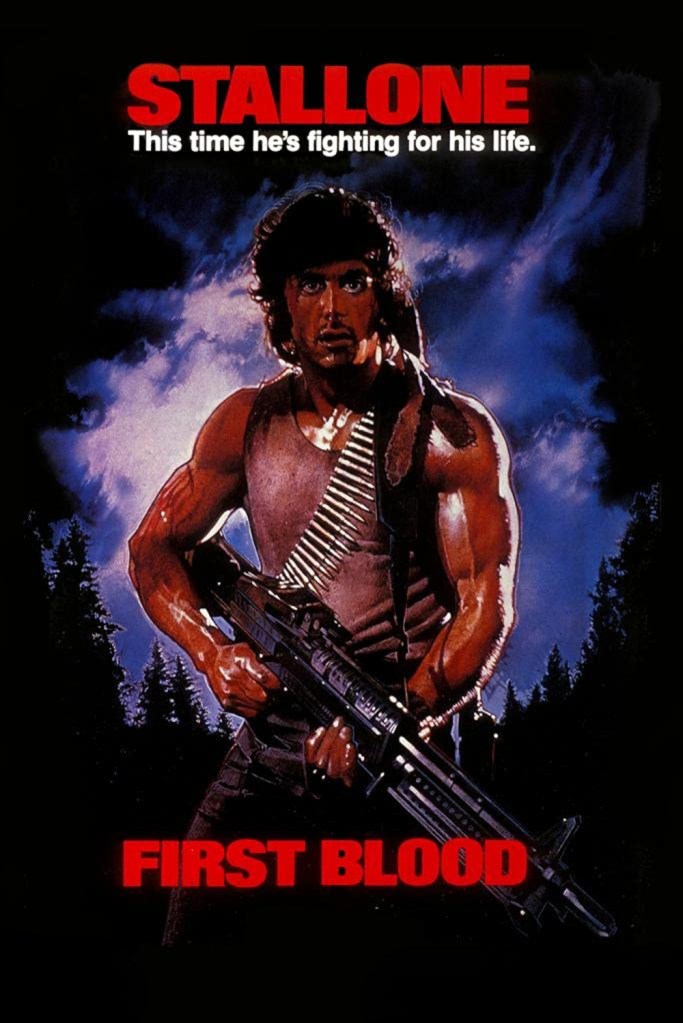
First published in 1972, David Morrell’s First Blood tells the story of two men who go to war in what was then contemporary Kentucky.
Police Chief Wilfred Teasle runs Madison, Kentucky. He’s a Korean War veteran trusted with keeping his town quiet. When he spots a young, long-haired drifter, he harasses him and tries to run him out. When the drifter keeps coming back, Teasle arrests him. What Teasle doesn’t understand is that the young man is Rambo, a Vietnam veteran and former Green Beret still carrying the PTSD from his time as a POW. Triggered by a claustrophobic cell and the deputies putting hands on him, Rambo escapes into the mountains. One deputy dies in the station. Three more die on the first pursuit. Teasle becomes obsessed with taking him down even as his own injuries mount. Rambo knows he could slip the net and keep walking. The fight feels too good to leave. Many more people die before the novel reaches its tragic conclusion.
First Blood the novel is not a novelization of the film it later inspired. Rambo is not the misunderstood victim of the movie. He’s a mentally unstable man who kills numerous deputies and National Guardsmen. Teasle is not the snarling cartoon sheriff of the movie. He’s a stubborn, decorated chief who develops a strange respect for Rambo and feels a kinship because both of them served overseas. The difference is that Teasle was welcomed home. Society treats Rambo as a pariah, the walking symbol of an unpopular war.
Before we get into why this belongs in the horror column, First Blood is a very well-written novel. The chapters cut back and forth between Rambo and Teasle; both men are vividly drawn. The ending is dark and feels earned. Readers who expect the Stallone movie on paper will be surprised, and hopefully pleased.
As for the horror: you can read First Blood as Vietnam brought home. The same way Last House on the Left dragged overseas atrocity onto American porches, Morrell imagines the war fought in Kentucky hills. Rambo uses what the jungle taught him. Teasle becomes the stand-in for generals who cannot understand the enemy they created. The deputies and Guardsmen Rambo kills become the local version of the bodies left in the trees. Rambo is a monster. Like Frankenstein’s creature, he was shaped by the arrogance and carelessness of the people who made him.
Hi, everyone! Tonight, on Mastodon, I will be hosting the #TubiThursday watch party! Join us for 1982’s First Blood!
You can find the movie on Tubi and you can join us on Mastodon at 9 pm central time! (That’s 10 pm for you folks on the East Coast.) We will be using #TubiThursday hashtag! See you then!
“In the field we had a code of honor: you watch my back, I watch yours. Back here there’s nothing!” — John Rambo
You sit down expecting a brainless 80s action flick, and instead you get a meditation on trauma, bureaucracy, and the American wilderness. That’s First Blood for you. Directed by Ted Kotcheff and released in 1982, this is the movie that introduced the world to John Rambo, but don’t go in hoping for a body count or one-liners. What you actually get is a lean, gritty, and surprisingly sad drama about a guy who just wants to eat a hot meal and ends up accidentally declaring war on an entire small-town police force. And honestly? It holds up to this day. The film is adapted from David Morrell’s 1972 novel of the same name, but if you’ve read the book, you’ll notice some serious tonal differences right away. Morrell’s novel is bleak, brutal, and deeply nihilistic—a product of its era’s raw disillusionment with Vietnam. Kotcheff and Stallone sanded down some of those rougher edges, not to sell out, but to make Rambo a more sympathetic figure. The bones are the same, but the spirit is just a little warmer, and that choice changes everything.
Let’s break down the plot, because it’s deceptively simple. Sylvester Stallone plays John Rambo, a former Green Beret and Vietnam War hero who wanders into the town of Hope, Washington, looking for a fellow soldier he served with. He finds out the guy died of cancer from Agent Orange exposure. That’s the first gut punch. Rambo, already drifting and clearly struggling with PTSD, just wants to grab some food and keep moving. But the local sheriff, Will Teasle (a perfectly cast Brian Dennehy), takes one look at Rambo’s long hair, army jacket, and tired face and decides he’s a vagrant who needs to be run out of town. From a structural standpoint, Teasle isn’t a cartoon villain—he’s a classic dramatic antagonist: a rigid, small-town authoritarian who sees drifters as a threat to his orderly world. That realism makes the whole thing sting because you can almost see both sides. Almost.
When Teasle tries to escort Rambo to the city limits, Rambo walks back into town. That’s his big crime. He gets arrested, and at the station, the deputies start pushing him around. One of them, a veteran deputy named Galt (played with sneering menace by Jack Starrett), is the real problem here. Galt isn’t some young hothead. He’s an older, seasoned deputy who’s clearly been in his role for years, and he’s become entitled on the power of his badge. You can see it in the way he leans into the booking process, the casual cruelty in his eyes, the way he treats Rambo like a stray dog he’s finally allowed to kick. During the shaving scene, as deputies try to clean Rambo up after the arrest, Galt is the one who holds Rambo down, restraining him while another deputy wields the straight razor. He’s not waving the razor himself, but that almost makes it worse—he’s the enforcer, the guy who pins you in place while someone else does the dirty work. It’s a veteran cop who knows exactly how to exert control without getting his own hands bloody. That makes Galt far more chilling than some screaming bully. He represents the rot of unchecked authority, the way small-town power can curdle into casual sadism over time. And that whole humiliating process—being held down, having a straight razor brought to his face—triggers a full-blown flashback for Rambo. Then something clicks. Rambo explodes, beats down half the station, and escapes into the nearby mountains.
Now the hunt begins. Teasle calls in the State Patrol, the National Guard, and eventually his old mentor, Colonel Trautman (Richard Crenna), who knows exactly what kind of animal they’re chasing. Trautman warns Teasle that Rambo isn’t just a drifter; he’s a trained killer with a “purple heart, a silver star, and a congressional Medal of Honor.” And here’s the core irony: Rambo doesn’t want to hurt anyone. He just wants to be left alone. But the chase escalates, people die, and by the end, you’re not cheering for the hero to win—you’re hoping he gets some peace.
From an analysis perspective, where First Blood really earns its stripes is its restraint. The action sequences are tense but never escalate into cartoon violence. Rambo uses the forest like a ghost, setting traps, crawling through mud, and surviving on raw squirrel meat. He doesn’t mow down dozens of cops with a machine gun. In fact, the only person he kills is Galt, who falls to his death while hanging off a helicopter because Rambo throws a rock at the chopper. And Rambo immediately looks horrified. That’s the key. Even Galt, as entitled and cruel as he is, isn’t a villain Rambo wants to execute. The kill is accidental, a desperate act of survival. The movie takes its time showing how the very skills that made Rambo a hero in Vietnam—his survival instincts, his aggression, his ability to turn anything into a weapon—now make him a monster in peacetime America. The local cops are out of their depth, but aside from Galt, they’re mostly just scared men doing a job. Nobody else is pure evil. Just broken systems and broken people.
But let’s talk about that novel, because the comparison is crucial for understanding the film’s choices. David Morrell’s First Blood is a much darker animal. In the book, Rambo is more feral, less a wounded hero and more a walking death sentence. He kills multiple cops, not by accident or in self-defense, but with cold, tactical efficiency. The novel has no Colonel Trautman to serve as a moral anchor—Trautman is there, but he’s just as ruthless. And the ending? Devastating. In Morrell’s version, Rambo and Teasle essentially murder each other in a final, bloody standoff. Trautman finishes Rambo off with a shotgun blast to the gut. There’s no catharsis, no plea for understanding. Just bodies and regret. The tone is nihilistic to the core: the system destroyed these men long before the first page, and there was never any hope. Kotcheff’s film pulls back from that abyss. It keeps the violence lean and mostly off-screen. It gives Rambo that famous final monologue where he sobs about his friend dying next to him, about protesters spitting on him, about not being able to turn off the war inside his head. That scene isn’t in the book—not like that. The movie says, “This man is suffering, and maybe he can still be saved.” The novel says, “This man is already dead, and he’s taking everyone with him.” Both are valid responses to Vietnam, but the film’s slightly toned-down approach is why Rambo became an icon instead of a footnote.
From a performance standpoint, Stallone gives the work of his career here. Forget the grunting one-liners of later sequels. In First Blood, he barely speaks, and when he does, his voice cracks. Watch his eyes during that final monologue. After Trautman finally talks him down, Rambo dissolves into a sob. “Nothing is over!” he screams at Trautman. “You don’t just turn it off!” It’s raw, uncomfortable, and genuinely moving. You realize that the whole movie has been one long panic attack for this character. The Rambo that pops up in Rambo: First Blood Part II is a cartoon superhero. The Rambo here is a guy who needed a therapist and a hug about thirty years ago. That vulnerability is the film’s great deviation from the source material. Morrell’s Rambo never asks for understanding. Kotcheff’s does. And that small shift in tone—from nihilism to wounded humanity—is what elevates the film from a grim exploitation picture to a legitimate character study.
On the technical side, Ted Kotcheff’s direction is patient and atmospheric. He shoots the Pacific Northwest like a character—vast, wet, dark, and full of hiding places. The chase scenes are grounded, with long takes and practical stunts. When Rambo jumps off a cliff into a tree and lands with a thud that sounds real, it hurts. There’s no CGI safety net. Jerry Goldsmith’s score is mournful, with lonely woodwinds and a simple, haunting main theme that never pumps you up for a fight. It just makes you sad. The movie even has the guts to end on a downer—but not as brutal as the book’s. Rambo surrenders, crying in Trautman’s arms, and the final shot is him walking away in handcuffs into the rain. No freeze-frame high five. No sequel tease. Just rain. And yet, compared to the novel’s blood-soaked finale, that rain feels almost like mercy. That’s tonal balancing at its finest: the film acknowledges the darkness without drowning in it.
Of course, the cultural memory of First Blood has been completely buried by its sequels. Most people under thirty know Rambo as the muscle-bound machine gun guy from memes and video games. But the original is closer to a western like The Deer Hunter meets a paranoid 70s thriller like The French Connection. It’s a movie about a country that used its soldiers and then discarded them. Teasle represents the willful ignorance of middle America—“I don’t care about your war” is basically his attitude. And Rambo represents the bill coming due. Galt, as that entitled veteran deputy, represents the everyday cruelty of those who’ve held power too long and forgotten what it’s for—the guy who doesn’t need to swing the blade because he’s the one holding you still. That theme hits even harder today, decades later, when veterans are still fighting for basic support and stories of badge-heavy misconduct still dominate headlines. The novel took that theme to its logical, horrific conclusion: no survivors, no lessons learned. The film pulls back just enough to let you breathe, and that one small change turned First Blood from a bleak cult artifact into a mainstream classic. You can argue which version is more honest. But you can’t argue that Stallone and Kotcheff made the right call for the screen.
First Blood rules. It’s a rainy, sad, surprisingly smart action movie that will stick with you longer than any explosion-fest. It’s also a masterclass in adaptation, showing how a slight shift in tone—from nihilistic to wounded—can transform a story without betraying its core. Brian Dennehy is perfect as the stubborn but not evil sheriff. Jack Starrett makes Galt a quietly terrifying portrait of bureaucratic sadism, a veteran deputy who’s learned to love the leash and the privilege of pinning a man down while someone else does the cutting. Richard Crenna brings real weight as Trautman, a father figure who knows he helped raise a weapon he can no longer control. And Stallone acts his soul out. When he whispers “I could have killed them all” in the final scene, he’s not bragging. He’s confessing. That’s why First Blood is a classic. It’s not a recruitment poster. It’s a eulogy—just a little less hopeless than the novel that birthed it. Four stars, easily. Just don’t go in expecting explosions every five minutes. Go in expecting to feel bad, and you’ll leave feeling like you watched something real.
Three years after blowing up the town of Hope, John Rambo (Sylvester Stallone) is …. workin’ on the chain gang…. (I hope you sang it.) However, Colonel Sam Trautman (Richard Crenna) has a suggestion for Rambo. He can get a full pardon if he infiltrates Vietnam and investigates what might be a POW camp….
So begins 1985’s Rambo: First Blood Part II!
When viewers first met John Rambo in 1982’s First Blood, he was a drifter who was obviously uncomfortable with dealing with other people. Haunted by both his experiences in Vietnam and the way he was treated when he returned to his own country, Rambo was someone who largely wanted to be left alone. He was the ultimate outsider. When he asked Brian Dennehy’s Sherriff Teasle where he could get a cop of coffee, Teasle told him to go over the border and have his coffee in Canada. (Is there anything more insulting than to tell a Vietnam veteran to go to Canada like a draft dodger?) Rambo was someone who could take care of himself. He was someone who knew how to survive in the wilderness. But, in the first movie, he was not superhuman. Rambo was considerably banged up by the end of First Blood. The other thing that is sometimes overlooked is that, as far as his time in Hope was concerned, Rambo never deliberately killed anyone. The only person who died in First Blood was a sadistic police officer who was so determined to get a shot at Rambo that he accidentally tumbled out of a helicopter. When Rambo fought, it was in self-defense. Rambo had plenty of opportunities (and, by today’s cultural standards, reasons) to kill Sheriff Teasle and his deputies but he didn’t. Things are a bit different in the sequel. Rambo: First Blood Part II transforms Rambo from a relatively realistic character into the comic book action hero that everyone knows today. Rambo’s gone from being a hulking drifter to being a muscle-bound warrior.
The film doesn’t waste any time getting Rambo out of prison and over to Thailand. The obviously duplicitous Murdock (Charles Napier) tells Rambo that his mission is solely to take pictures and not to engage with the enemy. (You may be wondering why anyone would recruit Rambo for a mission that doesn’t involve engaging with the enemy and it’s a fair question.) Soon, Rambo is in the jungles of Vietnam, meeting up with a rebel named Co (Julia Nickson), and heading up river with a bunch of pirates. Needless to say, Rambo is soon engaging with the enemy.
Rambo: First Blood Part II is an undeniably crude film. Clocking in at 96 minutes, the film makes it clear that it doesn’t have any time to waste with characterization or debate. Sylvester Stallone rewrote James Cameron’s original script and he gives a performance that has little of the nuance that was present in the first film. And yet, the film has an undeniable hypnotic power to it. It’s pure action. Rambo exists to blow up his enemies, whether it’s with a gun or an explosive arrow or the missiles fired from a stolen helicopter. Because the bad guys are all arrogant sadists who exist to remind American viewers of the humiliation of its first military defeat, there’s an undeniable pleasure in watching them get defeated by one motivated warrior who refuses to be held back by the paper pushers in charge. Murdock tells Rambo not to rescue any POWs. Rambo responds by machine gunning Murdock’s office. It’s pure wish fulfillment and it is cathartic to watch. It’s perhaps even more cathartic to watch today, after the twin traumas of the COVID lockdowns and the chaotic withdrawal from Afghanistan. Murdock becomes a stand-in for every incompetent bureaucrat who ever let America down. The Murdock who tells Rambo not to rescue any Americans is little different from the men who told business that they had to close and who tried to dictate whether or not people could leave their homes. The Murdock who was prepared to leave American behind is the same person who did leave Americans behind in Kabul. Rambo’s anger is the anger of everyone who values freedom above obedience.
Rambo kills a lot of people in the sequel but none of them are American. He’s a patriot, albeit an angry one who will never forgive his country for not caring about its veterans as much as they cared about it. “Do we get to win this time?” Rambo ask Trautman and it’s a moment that, like much of the movie, is both crudely simplistic but is powerful in its refusal to be complicated. Rambo: First Blood Part II is a fantasy but it’s also a plea to be allowed to succeed. Forget the rules. Forget the regulations. Just allow the people to win.
Rambo: First Blood Part II (1985, dir by George Pan Cosmatos, DP: Jack Cardiff)
4 Shots From 4 Films is just what it says it is, 4 shots from 4 of our favorite films. As opposed to the reviews and recaps that we usually post, 4 Shots From 4 Films is all about letting the visuals do the talking.
4 Shots From 4 Holiday Films
Three Days of the Condor (1975, dir by Sydney Pollack)
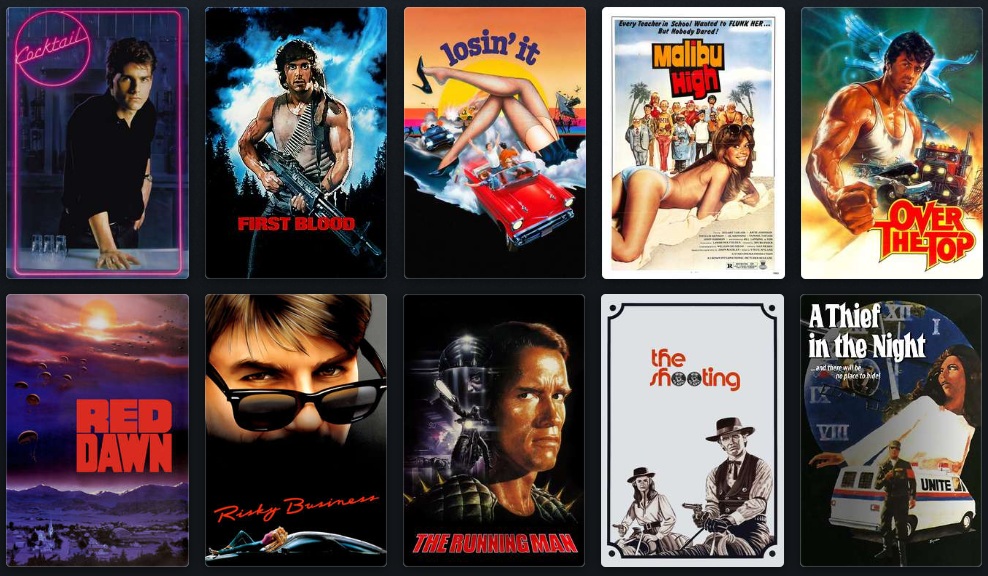
As I always do, I celebrated Independence Day by watching one of the greatest films ever made, the original Red Dawn (1984). The communists land in America and try to take over and, sadly, they succeed to a large extent. However, a group of high school students led by Patrick Swayze and Charlie Sheen refuse to go down without a fight. Say it with me, “Wolverines!” This film really doesn’t get the respect that it deserves. Not only is it well-acted but, despite it’s reputation, it doesn’t glamorize war. Most of the Wolverines do not survive. C. Thomas Howell, the most committed of the Wolverines, loses a bit of his soul and goes from being a fresh-faced high school student to someone who can execute a former friend without a moment’s hesitation. While evil Russian William Smith plots to destroy the rebels, Ron O’Neal comes to respect their dedication. Still, in the end, the best thing about this film is that it’s shamelessly patriotic and unapologetically anti-communist. “Avenge me!” Harry Dean Stanton yells and you better do it. The film can be found on Max.
Warren Oates, Hell Yeah!
Yesterday was the birthday of the great character actor Warren Oates. Brad reviewed two of his films and Jeff shared a scene from Strips. I would like to recommend the enigmatic 1966 western The Shooting (1966). Deliberately paced and philosophically-minded, this film features Oates in a leading role. Millie Perkins and Jack Nicholson (who wrote the screenplay) make for a wonderfully menacing duo of villains. The Shooting can be found on Tubi.
Sylvester Stallone, Hell Yeah!
Today is Sylvester Stallone’s birthday. As far as I’m concerned, Stallone’s best performance was in First Blood (1982). The sequels, which were a bit more simplistic and jingoistic than the first film, have tended to overshadow just how good Stallone was as a troubled veteran who just wanted to get a cup of coffee and who found himself being thrown in jail for refusing to “go across the border.” Of course, it’s not just Stallone who is great in FirstBlood. Brian Dennehy and Richard Crenna were, arguably, never better than when they played Sheriff Teasle and Col. Troutman. FirstBlood was one of the first films to really be sympathetic to the plight of the Vietnam veteran. Rambo may snap and destroy an entire town but, after what he’s put through, you won’t blame him. First Blood is on Tubi!
Of course, if you really want a fun and wonderfully absurd Stallone film, check out the arm wrestling epic, Over The Top (1987). Stallone is Hawk, a truck driver who makes his living as an arm wrestler. Robert Loggia tries to Stallone’s son away so Stallone has to prove himself to be the world’s greatest arm wrestler. I distrust anyone who doesn’t love Over The Top. It can be viewed on Tubi.
Tom Cruise, Hell Yeah!
If you’re still in the mood to celebrate Tom Cruise’s birthday, Losin’ It (1982)features Cruise as a teenager in the 60s who goes down to Mexico with his friends so that he can …. well, lose it. While the comedy is often predictable, Losin’ It is still an amiable enough film and Cruise gives a likable performance and his character has a really sweet romance with Shelley Long. The great John Stockwell is also in the film. Director Curtis Hanson went on to do L.A.Confidental. Losin’ It is on Tubi!
It’s become fashionable to criticize Risky Business (1983), released a year after Losin’ It, for being a materialistic film but …. eh, screw that. Between the soundtrack, the surreal direction, Guido the Killer Pimp, and Tom Cruise bringing out the sunglasses at night, Risky Business is one of the best films of the 80s and it can be viewed on AMC+’s Prime Channel.
Saturday was National Bikini Day. If you missed your chance to celebrate, you can make up for it be watching Malibu High (1979), a film from the legendary production company, Crown International. It’s all fun and games the beach until a young woman is dumped by her boyfriend and decides to become a professional assassin. Malibu High can be viewed on Tubi.
4 Or More Shots From 4 Or More Films is just what it says it is, 4 shots from 4 of our favorite films. As opposed to the reviews and recaps that we usually post, 4 Shots From 4 Films lets the visuals do the talking!
Today, the Shattered Lens wishes a happy birthday to Sylvester Stallone! It’s time for….
4 Shots From 4 Sylvester Stallone Films
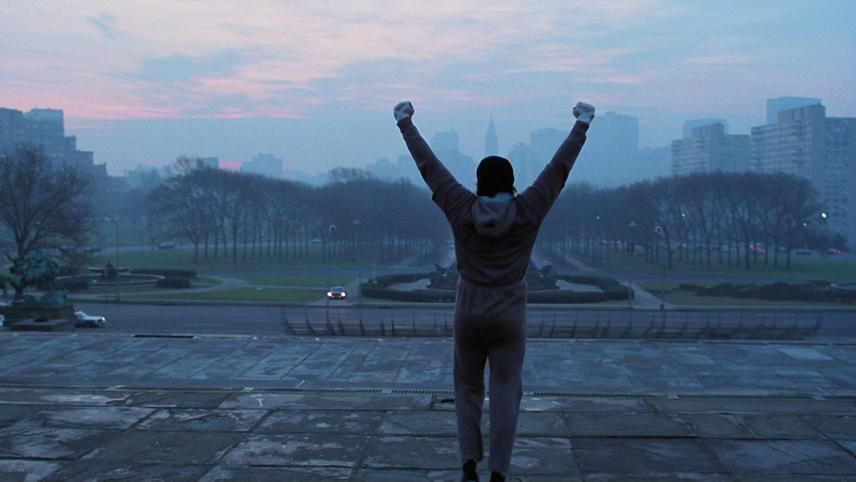
Rocky (1976, dir by John G. Avildsen, DP: James Crabe)
First Blood (1982, dir by Ted Kotcheff, DP: Andrew Laszlo)
Rocky III (1982, dir by Sylvester Stallone, DP: Bill Butler)
Rambo: First Blood Part II (1985, dir by George Pan Cosmatos, DP: Jack Cardiff)
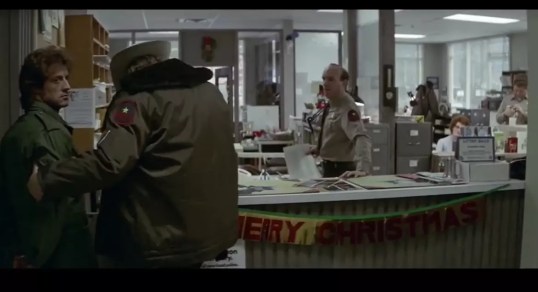
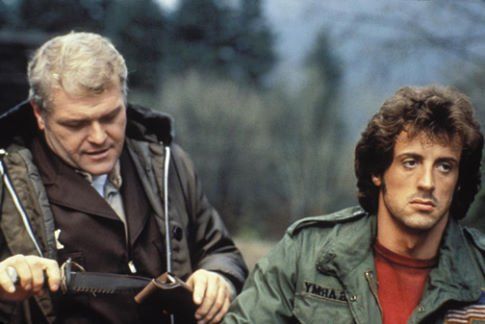
Kotcheff directed a lot of classic films but perhaps the most influential was 1982’s First Blood. In today’s scene that I love, John Rambo (Sylvester Stallone) is arrested by Sheriff Will Teasle (Brian Dennehy). Teasle may think that he’s keeping his community safe and teaching Rambo a lesson about respecting authority but, needless to say, he’s making a huge mistake.