Late Night Retro Television Review: CHiPs 6.10 “Fallout”


Welcome to Late Night Retro Television Reviews, a feature where we review some of our favorite and least favorite shows of the past!  On Mondays, I will be reviewing CHiPs, which ran on NBC from 1977 to 1983.  The entire show is currently streaming on Prime!
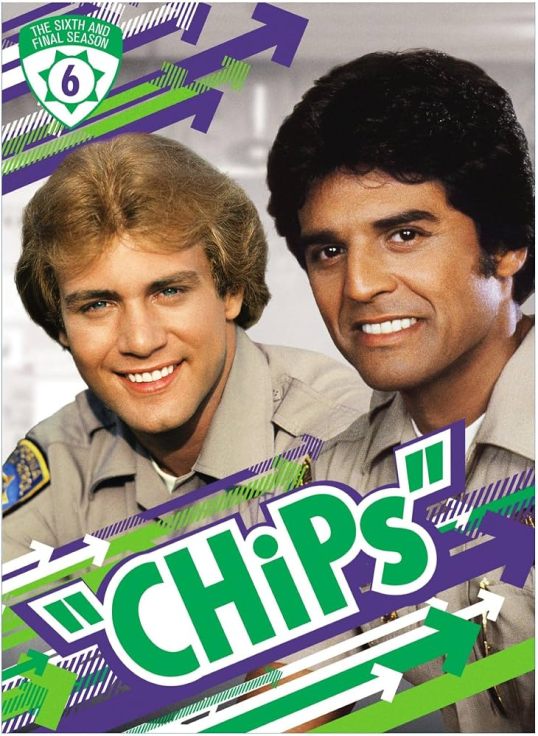
This week, Bobby learns a lesson and the Getraer family has a crisis!

Episode 6.10 “Fallout”

(Dir by Nicholas Sgarro, originally aired on December 19th, 1982)

Ellen Getraer (Lynn-Holly Johnson), the never-before-mentioned daughter of Sgt. Getraer, has fallen in with a bunch of Episcopalians and is planning to protest a nuclear plant with them. The only problem is that the church bus has bad brakes, and it keeps causing accidents on the highway. Personally, I would have thrown that smarmy Rev. Porter (John Elerick) in prison, but instead the Highway Patrol just gives him a ticket at the first accident and, at the second, they help him and the protesters escape from their burning bus. (Ellen helps too.) At the end of the episode, both Porter and Ellen do get arrested while sitting in front of the nuclear plant, but they’re released soon afterwards. Sgt. Getraer is proud of his daughter for sticking up for what she believes in. And I’m sure he’ll probably remove the arrest from her record when no one’s watching.

This episode was actually more about Bobby Nelson learning how to control his temper while performing crowd control. At a training exercise, for instance, he throws a fit when Bruce brings up the name of his ex-girlfriend. All of this probably would have been more effective if we had previously seen any evidence of Bobby having any sort of temper. Ever since he was first introduced, Bobby has come across as something of a mellow airhead. Anyway, Bobby learns how to control that supposedly fearsome temper, and he does a good job at the nuclear protest. He makes his arrests politely and courteously. As a result, the plant workers (one of whom is played by a young Dennis “Mr. Belding” Haskins) can go to work.

The other big storyline was Ponch and Nelson arriving at the scene after young Louis Hindall (Adam Rich) is hit by a car. You would think this would be especially difficult for Ponch, seeing as how his fiancée was hit and killed by a drunk driver just two weeks ago. But Ponch never mentions her. Instead, he gets upset when he sees the bruises on Louis’s back and realizes that the boy is being abused by his mom’s new boyfriend, Hal (Paul Tulley).

Later, at the hospital, Hal overhears Ponch and Bobby talking about how Hal is an abuser, and he promptly takes off in his car. This leads to a high-speed chase and a fairly impressive stunt where Hal’s car somehow goes airborne and rolls across the top of a trailer. It’s kind of amazing that, while being chased by the cops, Hal’s first instinct was to turn into a lot full of cars that he could crash into.

Finally, upon learning that the LAPD has changed their height requirements, mechanic Harlan Arliss (played by 5’2″ Lou Wagner) puts in for a transfer. Unfortunately, he fails the physical because his eyesight isn’t 20/20. Ponch tells him that with the LAPD, he would have just been another cop. But with the Highway Patrol, he’s the world’s greatest mechanic. Awwww!

At one point, Ponch opens his locker and the inside of it is covered with pictures of women. But there’s no picture of his dead fiancée. Have you no heart, Ponch!?
Retro Television Review: Crime Story 1.21 “Ground Zero”


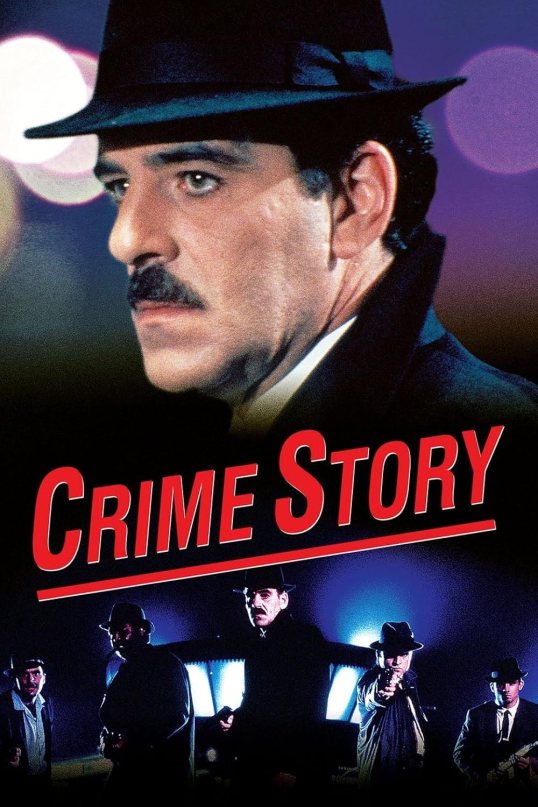
Welcome to Retro Television Reviews, a feature where we review some of our favorite and least favorite shows of the past!  On Mondays, I will be reviewing Crime Story, which ran on NBC from 1986 to 1988.  The entire show can be found on Tubi!

This week, the first season comes to a close.

Episode 1.21 “Gound Zero”

(Dir by Peter Medak, originally aired on March 13th, 1987)

In Las Vegas, the media is focused on two things: the upcoming atomic bomb test at Yucca Flats and the trial of Ray Luca.

Pauli, the star witness, is being kept in an underground bunker at an Air Force base. Danny comments on the fact that, if America and Russia do go to war and an atomic missile hits Nevada, Pauli would probably be the only survivor. It would be up to Pauli to repopulate the planet. Torello eventually allows Pauli’s girlfriend, Donna (Audrey Matson), to start visiting him. Donna says she loves Pauli. Torello shrugs.

Pauli keeps his end of the deal. He testifies against Luca. However, Frank Holman gives an interview outside the courtroom and tells the press that Luca was the king of organized crime in Las Vegas. The next day, the headline of the local newspaper announces that Luca was the “king of crime.” Disguising himself as the waiter assigned to deliver room service to the sequestered jury, Holman makes sure that the jurors see the headline. The trial judge has no choice but to declare a mistrial. As he walks out of the courtroom, Luca stops in front of Pauli and tells him, “You did what you had to do,” and apologizes for raping Donna.

In Vegas, Luca is upset to discover that gangster Nat Martino (James Russo) is moving in on his territory. Luca is prepared to go to war, but Manny Weisbrod informs Luca that he is to work with Martino. Weisbrod no longer has any confidence in Luca’s abilities. At the same time, Torello learns that Martino is actually an informant. Torello arranges for that information to get leaked to Luca. When Luca heads over to Martino’s favorite brothel, Torello and the other members of the MCU are waiting for him.

Breaking into Martino’s room, Luca manages to shoot and kill Martino before taking several bullets himself. Wounded, Luca escapes through a back window. Pauli, having decided that his place is with Luca, is there to pick him up and drive him out of town.

The next day, a bandaged Luca discovers that Pauli has driven him out to his latest hideout, a seemingly abandoned house in the desert. The house is full of mannequins. Luca looks at a chair and sees that it is the property of the Atomic Energy Commission. Realizing that they’re at Yucca Flats, Pauli and Luca run out to Pauli’s car. As they drive through the desert, a mushroom cloud blossoms in the distance.

And the episode ends!

Did Luca and Pauli escape the nuclear test? Hopefully, we’ll find out next week. I hope they did because it’s hard to imagine Crime Story without them. They were a great pair of villains.

The first season was good, if uneven. The pilot was outstanding, but some of the subsequent Chicago episodes seemed to lose their focus. Torello’s domestic drama was never as interesting as the show wanted it to be, and it took me a while to really warm up to David Abrams and his abrasive idealism. The other members of the MCU often felt like ciphers. (Even after 21 episodes, I still don’t feel like I know much about any of them beyond their almost cult-like loyalty to Torello.) But when the show moved to Vegas, things improved immeasurably. The glitz of Vegas worked perfectly for the show’s hyperreal style, and Stephen Lang’s performance in the role of David Abrams improved as well.

That said, Dennis Farina was the main strength of the first season. Farina played Torello as being intense, ruthless, and maybe just a little unhinged. The only real difference between Luca and Torello is that Torello carries a badge and Luca doesn’t have the Constitution holding him back. Otherwise, Luca really does represent Torello’s own dark side. In his pursuit of Luca, Torello isn’t just trying to enforce the law. He’s also trying to destroy the man that, had Torello not joined the police force, he could have become.

Next week, we’ll start the second season!

The Adventures of a History Nerd: Season Finale: The Unexpected Rise and Fall of the WB and UPN by Susanne Daniels and Cynthia Littleton


I miss the WB.

The so-called fifth television network launched in 1995 and ceased operations in 2006. That’s when the WB merged with the sixth television network, UPN, and became known as the CW. (The CW still exists, even though I haven’t watched it since they canceled Dynasty in 2022.) The WB never got much respect from the critics, even though some very important shows aired on the network. Buffy the Vampire Slayer was a WB show. So were Angel, Charmed, Felicity, One Tree Hill, Supernatural, Gilmore Girls, 7th Heaven, Roswell, Smallville, and What I Like About You. Most critics usually considered those shows the exception to the rule. They were the shows that aired in between stuff like Beauty and the Geek and Nick Freno: Licensed Teacher. Well, that’s fine. For those of us of a certain age, it didn’t matter that the WB aired a lot of shows that only lasted a few weeks. What mattered is that the network was home to the shows we planned our nights around.

Critically, UPN got even less respect than the WB. I associated the channel with Star Trek and professional wrestling, neither of which held much appeal for me in the aughts. However, when Buffy switched from the WB to UPN, I followed it to its new network. I watched Veronica Mars and idolized the title character. I watched America’s Next Top Model and cheered for any model who had the guts to talk back to the judges.

The 2006 merger between the two networks hit me harder than it probably should have. I had grown up with the WB and UPN as scrappy rivals, two networks that were continually battling for fifth place. They were the networks that aired shows that seemed to actually speak to what I was going through in my life at the time. It almost felt like a sacrilege to have the two networks come together. Even though some of my favorite shows continued on the CW, things just never felt the same. If the WB and UPN felt like cocky upstarts, the CW seemed like something that had been born out of defeat.

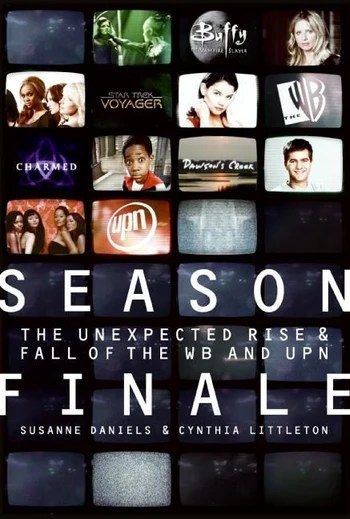
First published in 2007, Season Finale: The Unexpected Rise and Fall of the WB and UPN is a look at the short but colorful history and rivalry of the WB and UPN. Co-author Susanne Daniels was the president of entertainment at the WB, so it’s not surprising that the book tends to go into more detail about the WB’s operations than UPN’s. It makes for an entertaining read. Daniels writes like someone who truly loves television, and the book has plenty of behind-the-scenes information about the shows I grew up with. If nothing else, the WB sounds like it was a fun place to work. UPN, meanwhile, sounds like it was a place where everyone was continually jealous of the WB and also stressed over having to defend programming like Shasta McNasty and The Secret Diary of Desmond Pfeiffer.

The book is only 19 years old, but there are times when it feels like an artifact from a distant age. It was written before #MeToo, before woke, even before the rise of streaming. When I recently reread it, I found myself cringing when I reached the section about the creation and casting of 7th Heaven. The original choice for the role of the saintly Reverend Camden was Beau Bridges, but Bridges turned out to be too expensive. When an executive mentions Stephen Collins, the response is: “I’ve always liked him.”

AGCK!

Of course, today that’s not something anyone would voluntarily say about Stephen Collins. But in 2007 he still had that image of being the type of nice, down-to-earth guy you’d be happy to have as a neighbor. Reading the book reminded me of just how shocked almost everyone was when Collins’s ex-wife first released the tapes of him admitting to inappropriately touching a minor. At the time, I think a lot of people assumed Collins was somehow being set up because that just wasn’t the image he had at all. Of course, Collins himself later admitted it was true.

The book is full of people who have since fallen from grace, and as such it becomes very tempting to try to read between the lines. Joss Whedon is described as being talented but intense, and reading about him reminded me of just how much some of us used to really respect Whedon and his shows. (For the record, I grew disenchanted with Whedon in December of 2016 when he tweeted that it was offensive to say “Happy holidays” because, for him, “they won’t be.” Get over yourself, Joss.) Les Moonves shows up toward the end of the book, and there are frequent references to his reputation for being a hard-driving boss. Even Harvey and Bob Weinstein make a cameo appearance, sending two of their goons down to basically hold Dawson’s Creek creator Kevin Williamson hostage until he finished a rewrite on Scream 2. Reading about Collins, Whedon, and Moonves serves to make you appreciate people like Williamson, Amy Sherman-Palladino, and even Aaron Spelling, all of whom come across as relatively well-adjusted creative people.

Toward the end of the book, Susanne Daniels writes about going to the Emmys with her husband, producer Greg Daniels. The Office wins its only Emmy for Outstanding Comedy Series and Suzanne watches as Greg joins his college friend Conan O’Brien on stage. It’s a sweet moment but also one that, when read today, reminds us of just how much things have changed over the past two decades. Network shows no longer win Emmys. The Office fell apart after NBC boss Jeff Zucker (in a move that feels like it could have been lifted from the early days of UPN) decided not to offer Steve Carell a new contract. The Office was eventually rediscovered when it started streaming on Netflix, and even today people are more likely to remember it as a show they binged online than one they watched every week on NBC. When the book first came out, I shared Susanne Daniels’s frustration over the WB becoming the CW. Today, when I read it, I feel bad for whoever decided to launch a new network right on the edge of the streaming era.

Season Finale is a compulsively readable portrait of the way things once were. Thanks for the memories.


Scenes That I Love: Tony Soprano Dreams Of A House In The Sopranos


With our annual Horrorthon starting in three days, I thought that this would be an appropriate time to share a creepy scene that I love from The Sopranos.

The Sopranos was well-known for its dream sequences. For me, this dream from the season 4’s Calling All Cars is one of the best and scariest of the series. It’s full of menace and ominous atmosphere, from the minute we see Tony being led to the house by the deceased Ralphie. And then, when that mysterious shadow appears on the staircase — AGCK!

I look forward to inviting you inside the TSL House of Horrors this October.

Late Night Retro Television Review: Degrassi: The Next Generation 3.12 “Holiday: Part Two”


Welcome to Late Night Retro Television Reviews, a feature where we review some of our favorite and least favorite shows of the past!  On Sunday, I will be reviewing the Canadian series, Degrassi: The Next Generation, which aired from 2001 to 2015!  The series can be streamed on YouTube and Tubi.

This week, we finish up Christmas in Canada!

Episode 3.12 “Holiday Part Two”

(Dir by Philip Earnshaw, originally aired on December 17th, 2003)

Craig has no idea how to cheat.

It’s Christmas and he currently has two girlfriends.  He’s scheduled to perform in Degrassi’s holiday pageant with Ashley.  At the same time, he’s told Manny that he and Ashley have broken up.  For Christmas, he buys gifts for both Ashley and Manny.  Ashley gets a badass Ramones t-shirt.  (Ashley reminds me a lot of myself).  Manny gets a pink sweater and a skating bracelet.  Foolishly, Craig leaves Ashley alone in his room and Ashley discovers the gift bags.  She sees all of the gifts.

Later, at the Christmas pageant, she notices that Manny is wearing the bracelet.  And she has a gift bag with the sweater in it!  When Ashley asks Manny who gave her the gifts, Manny refuses to say.  However, she does tell Ashley that she hopes Ashley can move on after losing Craig.  Agck!

The holiday pageant does not go well for Craig.  Ashley walks out on stage and slaps him.  So much for their deut of All I Want For Christmas Is You.  Joey later finds Craig sulking in the hallway.  Joey tells him about the time that he cheated on Caitlin with Tessa Campanelli.  Craig responds be telling Joey that he’s obviously still in love with Caitlin.

*sigh*

(By the way, that’s a sigh of frustration, not romance.)

Yes, this is the episode where Joey realizes that he’s still in love with Caitlin and dumps Sydney on Christmas Eve.  The first time I saw this episode, I thought that the way that Joey rushed down to the airport and caught Caitlin before she left for Montreal was romantic.  Rewatching it, I realized just how self-absorbed both Caitlin and Joey are.  Joey treats Sydney like dirt, despite the fact that Sydney has spent months looking after his daughter, taking care of the house, and devoting almost all of her time to him.  The show tries to turn Sydney into a villain but all she did was ask Joey’s ex-girlfriend to start trying to break into his house.  To me, that seems pretty reasonable.

As for Caitlin, it’s hard to know where to even begin.  When this show started, Caitlin was portrayed as being a largely down-to-Earth, mature human being.  With this episode, Caitlin is suddenly transformed into a neurotic klutz.  Suddenly, she’s slipping a love note through Joey’s mail slot and then getting stuck in the kitchen window when she tries to break in to retrieve it.  That’s not the Caitlin who was previously on the show.  I assume the show’s writers were trying to make her into an adorkable romantic comedy lead but, as it is, she just seems like someone who has an unhealthy hang-up on a guy who cheated on her in high school.

Oh well.  I do appreciate that this was a Christmas episode.  All of the snow looked lovely.  That said, I will always feel bad for Ashley and Sydney.  They both deserved a better holiday.


Retro Television Review: Law & Order 8.6 and Homicide 6.5 “Baby, It’s You”


Welcome to Retro Television Reviews, a feature where we review some of our favorite and least favorite shows of the past!  On Sundays, I will be reviewing Homicide: Life On The Street, which aired from 1993 to 1999, on NBC!  It  can be viewed on Peacock.

This week, Homicide crosses over with Law & Order.

Law & Order 8.6 “Baby, It’s You”

(Dir by Edwin Sherin, originally aired on November 12th, 1997)

Homicide 6.5 “Baby, It’s You”

(Dir by Edwin Sherin, originally aired on November 14th, 1997)

In New York City, Lennie Briscoe (Jerry Orbach) and Rey Curtis (Benjamin Bratt) find themselves investigating the death of a 14 year-old model named Brittany Janeway.  The daughter of plastic surgeon Steven Janeway (Tom Tammi) and his wife Gayle (Maureen Anderman), Brittany died after complaining to her father about abdominal pain.  The medical examiner determines that, two weeks before her death, Brittany was sexually assaulted with such severity that it resulted in internal injuries that led to toxic shock.

When the detectives learn that Brittany was in Baltimore two weeks earlier, they call Lt. Giardello and ask if he can send two of his detectives to check on the family’s Maryland home.  The job falls to Detective Munch, who is still angry over the fact that Briscoe once slept with his first wife.  Munch asks Falsone (ugh!) to accompany him.  When Munch and Falsone learn that the son of the Janeways’s New York housekeeper was seen in Baltimore on the night that Brittany was raped, they have a suspect.  Danvers sends them to New York with one mission.  Arrest the guy and bring him back to Baltimore to stand trial.  Jack McCoy (Sam Waterston) is not happy about that.  Because Brittany died in New York, he feels that it’s his case to prosecute.  Because the rape that led to Brittany’s death happened in Baltimore, Danvers claims that it’s his case.

Of course, once the suspect is arrested, it turns out that he wasn’t the perpetrator.  Instead, he was a witness.  According to him, Brittany had already been raped by the time he arrived at the house.  The suspicion immediately shifts to Dr. Janeway.  When the doctor is arrested in Baltimore, McCoy heads down to Maryland to argue that the case should be tried in New York.  Judge Andahl (Sagan Lewis), who was last seen getting Elijah Wood off of a murder charge, disagrees.  However, she allows McCoy to be co-counsel with Danvers.

In a twist that will not surprise anyone who has ever seen an episode of Law & Order, it turns out that Brittany was not assaulted by her father.  Instead, she was assaulted by her mother.

The last time Law & Order and Homicide did a cross-over, the emphasis was on Pembleton and Bayliss and their unorthodox interrogation technique running up against McCoy’s need for admissible evidence.  This time, when McCoy goes down to Baltimore, he quickly befriends and starts to discuss life with — you guessed it! — Detective Paul Falsone!  In fact, Pembleton and Bayliss are barely present in this cross-over.  While Munch does get to engage in some fun passive-aggressive banter with Lennie Briscoe, this cross-over is ultimately all about Paul Falsone, the super detective who never makes a mistake.

Good Lord, why?  WHY DOES EVERYTHING HAVE TO BE ABOUT FALSONE?  Falsone is a boring character.  We are five episodes into the sixth season and Falsone has been a major part of four of them.  The veteran Homicide actors were pushed to the side so that Jon Seda could wander around and mutter his lines.  I get that show was trying to appeal to fans of more action-orientated cop shows with the character of Falsone but, in what I’ve seen so far, Seda has not shown a hint of charisma in the role. The fact that Homicide keeps insisting that Falsone is the greatest detective in the history of detectives does not make the character any more intriguing.

This crossover was a disappointment,  The story, which was obviously based on the JonBenet Ramsey case, was sordid simply for the sake of being sordid and the big reveal that the murderer was the mother was not quite the shocking moment that it was bult up to be.  Anyone familiar with Law & Order could have guessed who the murderer was going  to be.  And then, on top of everything else — FALSONE!

This was not a good one.

Late Night Retro Television Review: Saved By The Bell 3.7 “Check Your Mate”


Welcome to Late Night Retro Television Reviews, a feature where we review some of our favorite and least favorite shows of the past!  On Saturdays, I will be reviewing Saved By The Bell, which ran on NBC from 1989 to 1993.  The entire show can be purchased on Prime!

This week, Screech is actually good at something!

Episode 3.7 “Check Your Mate”

(Dir by Don Barnhart, originally aired on October 5th, 1991)

Bayside has got chess fever!  Screech Powers has advanced to the all-city chess finals, where he will be facing off against Valley High’s Russian exchange student Peter Breschnev (Matt Kaminsky), the grandson of a legendary player.  Screech fears that he won’t have a chance but then he remembers that he never seems to lose as long as he’s wearing the lucky red beret that Violet purchased for him.

Around the same time that Zack and Slater place a bet on the outcome of chess match, Allison (Hillary Hayes) shows up.  She says that she’s from a chess magazine and she wants to do a profile of Screech.  She even invites Screech to the magazine’s mansion so that he can swim in the pawn-shaped pool.  However, it turns out that Allison is actually a spy from Valley High and she’s been sent to sabotage Screech’s game.  Allison steals his lucky beret.  How can Screech win now!?

Usually, I can’t stand any episode that revolves around Screech and Violet but I have to admit that I do like this one.  Yes, Dustin Diamond and Tori Spelling are just as bad as usual (and Diamond really goes overboard with the goofy faces in this one) but, luckily, Mark-Paul Gosselaar and Mario Lopez are also present and they do some of their best work in this episode.  Zack and Slater, for instance, kidnap the Russian and tie him up in a broom closet.  Zack then pretends to be the Russian and forfeits the match after making one move.  Meanwhile, Slater reports on the match for Bayside’s radio station and he does so with just the right amount of earnest enthusiasm.  (Jessie: “And now the Russian is hopping out onstage in his underwear!?”  Slater: “What an exciting match so far!”)  Slater knows nothing about chess but he does know that he wants to see “that commie” defeated.  Amongst the guest stars, Hilary Hayes and Matt Kaminsky are perfectly cast and score some laughs of their own.  (“I’ll see ya …. at the Galleria.”)

In this episode, Screech nearly loses Violet when he lets his chess fame go to his head.  Violet forgives him but this would still be her final episode.  I guess dating a chess jock wasn’t all it was cracked up to be.

Lisa Marie’s Week In Television: 9/20/26 — 9/26/20


Again, this week was largely about getting ready for Horrorthon.

I did take the time to watch Big Brother.  I’m so excited.  Only a few more days to go and then this season will be over with and I’ll never have to think about it again!  We are now down to the final three houseguests.  I imagine that next Thursday, Devens will defeat Drew by a vote of 6-1.  I’ve written a little about Big Brother over at the Reality TV Chat Blog.

I was happy to see Survivor return.  I wrote about my thoughts on the first episode of season 51 here.  I’m looking forward to the start of The Amazing Race on Wednesday.

On Netflix, SCTV continues to bring me happiness.  This week, I watched a parody of The Godfather and I got to know Sammy Maudlin and his favorite guest, Bobby Bittman.

I also watched and reviewed episodes of Saved By The Bell, Hunter, 1st & Ten, Degrassi, and Sledge Hammer!


Retro Television Review: Baywatch 2.21 “Game of Chance”


Welcome to Retro Television Reviews, a feature where we review some of our favorite and least favorite shows of the past!  On Saturdays, I will be reviewing Baywatch, which ran on NBC and then in syndication from 1989 to 2001.  The entire show can be viewed on Tubi.

This week, Harvey has a gambling problem.

Episode 2.21 “Game of Chance”

(Dir by Georg Fenady, originally aired on May 11th, 1992)

Harvey (Tom McTigue), the lifeguard who always appears in the opening credits but rarely does anything in the actual show, actually gets a storyline in this episode.

Harvey is on a boat in the ocean, taking part in a floating poker game. Mitch kayaks out to the game so he can tell Harvey to “fold” and get to work. Harvey, however, has a great hand. He wins everyone’s money. Unfortunately, a masked man then shows up and steals all the money for himself. (Whoever put this poker game together should have splurged a little on security.) Mitch and Harvey investigate the robbery and eventually discover that the thief owns an amphibious jeep. This leads to a less-than-exciting chase scene and Hasselhoff making jokes about a talking car.

Meanwhile, Shauni is frustrated because her father doesn’t approve of her dating Eddie. Even after Eddie saves Shauni’s older sister from drowning, her father continues to look down on him. Shauni finally decides to defy her father and move in with the man she loves. This would be really touching except for the fact that Shauni and Eddie have supposedly been living together for a while now. Just last week, someone asked Shauni what it was like to live with Eddie. I’m going to guess that this episode was originally meant to air earlier in the season but, for some reason, got pushed to the back.

This was all pretty silly, and the script itself felt like something left over from the first season, when Shauni was still a spoiled princess, Eddie was a rough-edged former delinquent, and John Cort was the resident trouble-making lifeguard.

Next week, the second season comes to an end.

Late Night Retro Television Review: Sledge Hammer! 1.7 “All Shook Up”


Welcome to Late Night Retro Television Reviews, a feature where we review some of our favorite and least favorite shows of the past! On Fridays, I will be reviewing SLEDGE HAMMER!, a cop comedy which ran on ABC from 1986 to 1988. The entire series can be found on Prime!

Trust him.  He knows what he’s doing.

Episode 1.7 “All Shook Up”

(Dir by Jackie Cooper, originally aired on November 7th, 1986)

15 Elvis impersonators have been murdered in the city.  Doreau wonders how anyone can be so evil.  Sledge Hammer wonders about the person who draws the chalk outlines at crime scenes.  “What type of life is that?”

Captain Trunk, who spends this episode dealing with a migraine, is upset that there aren’t more clues as to the identity of the murderer.  Hammer suggests that it will be easier to solve the case once more Elvises have been murdered.  To Trunk’s disappointment, Hammer turns out to be right.  A woman witnesses the 16th murder and reports that the killer was not only dressed like Elvis but he was also carrying a golden microphone!

It’s time for Sledge Hammer to go undercover!  Doreau enrolls him in a school for Elvis impersonators and then accompanies him to the National Elvis Impersonator Semi-Finals.  The highlight of the episode is Sledge Hammer imitating Elvis.  He can’t do the voice and he can’t do the dance moves but he’s totally convincing when he draws a gun and shoots it.  Later, he shows off his karate moves and wins a trophy.

As for the murderer, he turns out to be the janitor (Raymond Ma) at the Elvis school.  He feels that he’s the best Elvis in the world.  Unfortunately, for him, he’s electrocuted when he accidentally holds his golden microphone too close to a live wire.  With the city safe for Elvis impersonators, Sledge announces that he’s going to Graceland.

This week’s episode was just ludicrous enough to work.  Between the Elvis puns and all of the bad singing and dancing, it kept me laughing (or, at the very least, smiling).  As usual, David Rasche’s enthusiastic performance more than made up for any jokes that didn’t quite land.  This was also a good episode for Anne-Marie Martin, who played Doreau’s relationship with Hammer with just the right combination of frustration and affection.

Sledge Hammer has left the building but he’ll be back next week.