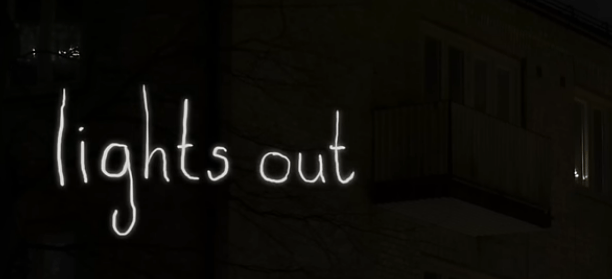
Lights Out is a short film that asks the question: how did you live this long? Even if there were no ghosts, how did you survive with NEGATIVE survival skills?
A woman in her pajamas turns her lights out and sees a monster. So, she does what any person who has the IQ of a rabbit would do, she turns the lights on and off several times, watching the creature get closer to her. Does she run? No. Does she get out of the apartment? No. Does she call for help? No. She goes to be and waits for the monster to kill her.
The short was scary, but did the protagonist just get drunk on stupid juice before she ended her day?
In 2o2o’s One Nation Under God, David Gutierrez (Isaak Presley) is a new student at an exclusive private school. (He was selected via a lottery of intelligent but economically disadvantaged kids.) On the first day of school, David makes a point of saying “One nation under God,” while reciting the Pledge of Allegiance. His classmate, Gordon (Thomas Kasp), corners him outside of class and tells him that he’s not allowed to say that in school. Since Gordon’s father happens to Headmaster Kingsley (Casper Van Dien), David’s first day is not off to a good start.
However, the debate coach, Mr. Truman (Kevin Sorbo), hears about what David said and decides that David should definitely be on the debate team. The topic for the semester is whether or not “God should be in schools.” Gordon is already prepared to argue the negative. Can David argue the positive?
But first, presidential candidate Sen. Viera (Antonio Sabato, Jr.) stops by the school for an assembly. He’s a graduate from the school and it’s felt that appearing there will be a good PR move for him. He’s accompanied by one of his strongest supporters, former football player and U.S. Senate candidate Herschel Walker. When David stands up and asks Viera about his own beliefs, Viera stumbles over the question and his aides quickly end the assembly.
Stunned by David’s question and ashamed of his own inability to answer it, Sen. Viera decides to make his religious faith the center of his campaign. His wife is happy but his campaign aides are freaking out. They’ve got a big debate coming up with Governor Palabra (Summer Selby) and they just know that she’s going to accuse Viera of wanting to legislate morality.
Meanwhile, David has his own debate to prepare for. Fearful that Gordon will lose the debate and also whatever chance he may have to attend an Ivy League college, the Headmaster plans to bribe David to lose. David’s single mother could really use the money. Will David sell out or will he stick to his beliefs?
As you can see, there’s a lot going on in this movie but, ultimately, every subplot serves the same purpose, which is to tick off any liberal who happens to watch it. Sure, there’s a lot of talk about the importance of faith and also the importance of freedom of speech but the main purpose of this movie is to upset liberal viewers. Judging from some of the reviews of this film that were posted on Letterboxd, the film appears to have accomplished that. My personal opinion is that, if you spend more than an hour composing an angry review about a relatively obscure film starring Kevin Sorbo, you’ve already lost the war. I always find the frenzied reaction to these type of films to be a bit amusing because they’re really not any more heavy-handed or one-sided than the typical mainstream film. It’s just they’re attacking from the right instead of the left.
And make no mistake, One Nation Under God is heavy-handed and one-sided. Nothing about its portrayal of the inner workings of a major presidential campaign feels authentic and quite a few of its subplots fall flat. That said, I actually liked some of the songs on the soundtrack and the film itself looked like a real movie, which definitely set this film apart from a lot of other faith-based films. Kevin Sorbo is properly authoritative as the debate coach. Casper van Dien is properly villainous as the evil Headmaster. In the end, though, the main purpose of the film is to annoy liberals and it accomplishes that goal.
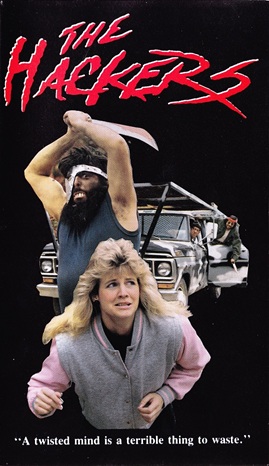
Shot in Michigan, 1988’s The Hackers lives up to its name in two ways.
First off, it’s about a family that actually does have the surname of Hacker. Pa Hacker (Howard Coburn) drives around Michigan with his two sons, Arnie Hacker (Dale Caughel) and Eldon Hacker (Steven Picharo). They drive around Michigan and make a living by doing odd jobs. They claim that they can build and fix just about anything, even though they don’t seem to be particularly effective once they show up at their work site. Pa is gruff and kind of ornery. You can tell that he’s old school and he expects everyone to carry their weight. Arnie and Eldon are a little bit more goofy. They like to wear masks and they like to go fishing. They’re the type who will invade your personal space without even realizing why that would upset anyone. They are hicks and they’re proud of it.
Pa, Arnie, and Eldon also live up to their name in that they enjoy hacking people up. They’re the Hackers and they are really into hacking. When they see a man hitchhiking, they chop off his thumb as they drive by. When they pick up another hitchhiker, they end up strangling her. When a fisherman tells them to find another place to fish, Arnie and Eldon put an abrupt end to his fishing days.
Pa, Arnie, and Eldon have been hired to fix up the barn on a nearly deserted property. Marcie (Michelle Rank) is house-sitting and she soon finds herself being menaced by the Hackers. And while that’s definitely a scary situation, Marcie does have one big fact on her side: Arnie and Eldon are idiots. They’re the type who accidentally lose a finger while using a radial saw. Really, I’m surprised that Pa keeps them employed. If Pa simply did the job by himself, he’d probably get finished and get paid a lot quicker. Instead, he spends a lot of time dealing with Arnie and Eldon’s messes.
This is pretty much the epitome of a late 80s SOV slasher film. This was pretty much the only film that the majority of the cast appeared in, and it only has a 70-minute runtime. It’s hard to believe that a 70-minute movie could have any wasted moments, but this one does. There are scenes in which Arnie and Eldon seem to literally spend hours arguing about nothing. There’s no real suspense. The special effects are definitely on the cheap side. It’s a regional film, through and through.
And yet, there’s something oddly likable about a film like The Hackers. It’s an amateur film that was made by some guy in Michigan in 1988, and yet, I’m sitting here in Texas and I’m reviewing it in 2026. Because the film was shot on location and it was made by a bunch of amateurs, there’s an authenticity to the film that you wouldn’t necessarily get from a more professionally shot film. When it was made, it may have just been another regional horror flick. Today, though, it’s a time capsule. Watching a film like The Hackers is about as close as any of us are going to get to using a time machine.
I think for most people, that will be the main appeal of 1988’s Demonwarp. Bill (George Kennedy) lives in a cabin in the woods with his daughter. After a Bigfoot-like creature kills his daughter, Bill grabs a shotgun and starts wandering around the woods, looking for revenge. And while I’m calling the character Bill, I should make clear that George Kennedy comes across as if he’s playing George Kennedy. If you’ve watched enough TCM, you know George Kennedy as the big, burly guy who might be in his 50s but still looks like he could beat up an army of young punks if he had to. He’s gruff and plainspoken and he doesn’t have much patience for people who aren’t willing to man up and work hard. And so, when Bill declares that he’s going to kill Bigfoot, it’s the equivalent of George Kennedy declaring it. It’s nice to see that, even after winning an Oscar for Cool Hand Luke, George Kennedy still had what it took to keep the woods safe.
Unfortunately, George Kennedy is only a supporting player here. The main characters are a group of teenagers who end up hanging out at a cabin of their own and who soon fall victim to Bigfoot themselves. It takes them a while to accept the help of George Kennedy and, for that, they have only themselves to blame. Obviously, they hadn’t watched Cool Hand Luke or they would have known that George Kennedy is exactly the guy you want to listen to in an extreme situation. If only they had binged the Airport films, as I do every time before I go on any type of vacation, things would have worked out much better for them. Let Joe Patroni in the cockpit and he’ll land that plane right on top of that monster. Problem solved.
Demonwarp is an extremely silly film that I happen to like. Some of that is because I don’t really like camping but I do enjoy going to my family’s lakehouse and every stupid mistake that the teenagers make in Demonwarp is one that I’ve made in real life. Reacting to a scary sound by running outside half-naked or just in a towel? I have lost track of the number of times I’ve done that. Usually, it was because I thought I heard a catfight going on outside. When you hear two cats yelling at each other, you don’t have time to worry about getting fully dressed. Modesty can be the difference between scaring off the other cat or having to take your cat to the vet. I imagine the same is true when it comes to Bigfoot intrusions. Yes, the characters in Demonwarp did some foolish things but they’re all pretty much the same things that I would do.
The other good thing about Demonwarp is that the final 20 minutes features a twist that is so out there and downright weird that it simply has to be seen to be believed. Demonwarp is a thoroughly ludicrous horror film and that’s the main reason to watch it.
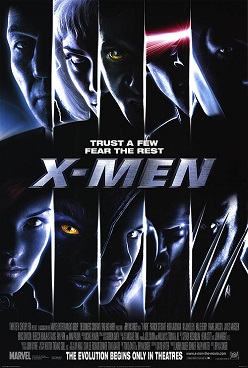
I saw X-Men on the first day that it opened in theaters. Actually, I saw it twice.
The first time I saw it was by myself. I had been planning on waiting to see it in the evening with my friends Johnny and Kyleigh, but I actually found myself with a few hours to spare, so I decided to go ahead and see it. I watched it in the later afternoon and, after that showing got out, I met up with Johnny and Kyleigh outside the theater and went straight back in.
It’s hard to describe what a big deal the X-Men movie was in 2000. This was before there was a new Marvel movie or show every three months. It was also at a time when comic book movies, following the failure of Batman and Robin, were no longer considered to be a sure thing. Johnny and I were lifelong Marvel fans and, having survived the trauma of The Phantom Menace, were very much looking forward to the X-Men movie. We knew that both Patrick Stewart and Ian McKellen were the perfect choices for Professor X and Magneto. Anna Paquin seemed like a good choice for Rogue. But would Hugh Jackman, an actor neither of us had heard of before, be able to bring Wolverine to life?
Even though we both rolled our eyes when we heard that Rogue’s name was apparently Marie, Johnny and I were shocked at how good X-Men was. Today, we take it for granted that comic books can be turned into movies, but in 2000, X-Men took us by surprise by being well-acted, well-directed, and surprisingly entertaining. Kyleigh was not a fan of comic books in general and she liked the movie considerably less than we did. (“Dr. Wheelchair” was her name for Charles Xavier.) But for Marvel fans, X-Men was the anti-Phantom Menace.
Looking back, the plot felt like it could have been lifted from the pages of the comic book. Sen. Robert Kelly (Bruce Davison) is leading a national political movement against the mutants. Magneto has created a machine that will induce mutations in human beings. (The movie opens with a flashback that establishes Magneto as a survivor of the Holocaust. Today, everyone knows his backstory, but in 2000, people were stunned that a comic book movie could also deal with reality.) Magneto and Professor X both try to recruit Rogue to their side, and Wolverine, as Rogue’s protector, reveals his claws and reluctantly becomes a member of the X-Men.
When X-Men was first released, Hugh Jackman was the big question mark, but he turned out to be the perfect choice for Wolverine, even if he did seem to be too tall for the role. Jackman was tough and surly and somehow, he looked credible with claws. He was everything that fans like me wanted out of Wolverine and, once he showed up, I knew it was going to be a good movie. Not surprisingly, Patrick Stewart and Ian McKellen were perfect for Xavier and Magneto, as was Anna Paquin as Rogue. Though they’re overshadowed by Stewart, McKellen, Jackman, and Paquin, the other members of the X-Men are played by James Marsden (Scott), Famke Janssen (Jean Grey), and Halle Berry (Storm). Ray Park plays Toad, Tyler Mane plays Sabretooth, and Rebecca Romijn-Stamos excited male viewers everywhere by playing the naked and blue Mystique.
A lot of time has passed since 2000. An entire Marvel Cinematic Universe was created that did not initially include the X-Men, though that has since changed. Bryan Singer is no longer on the A-list. But I still always look fondly on the day that I watched X-Men twice.
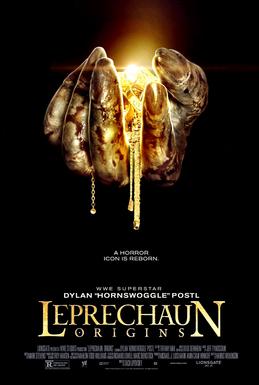
Two young American couples are hiking through Ireland when they come across a small town that is under the control of the Leprechaun (now played by wrestler Dylan “Hornswoggle” Postl). Long ago, the villagers stole all of the Leprechaun’s gold. In order to make it up to the Leprechaun, they have to sacrifice at least two humans a year. Usually, they sacrifice travelers that no one will miss, but at least one villager has become disillusioned with the practice. As for the Leprechaun, he’s finally escaped from where he was being held prisoner.
Nope.
AfterLeprechaun: Back 2 tha Hood, it took eleven years to make another Leprechaun movie, and this is what they came up with. There’s no Warwick Davis, even though he was (and is) still alive and working. There’s none of the humor that, in the previous films, provided a distraction from how stupid the plot usually was. There’s really not even a Leprechaun, or at least not the type of leprechaun who was in the previous movies. This one is just a generic monster. None of the past Leprechaun movies were that good, but most of them were watchable because of Warwick Davis and his scary but campy leprechaun makeup. Even setting the film in Ireland doesn’t help things. As dumb as it was to have the Leprechaun showing up in places like North Dakota and outer space, at least it was enjoyably weird.
Jennifer Aniston did not risk her life fighting Warwick Davis just for a movie like this to be made 21 years later.
Black Friday! It’s an unofficial holiday, or at least it was until the COVID lockdowns screwed up everyone’s spending priorities. After spending Thanksgiving with family, eating turkey, and maybe watching a football game or two, people gather outside of their favorite stores and wait for the doors to open. When those doors open, the crowd rushes into the store with the energy of a riot. Getting in the store first presumably means that you’ll be the first to clear all of the marked-down merchandise off of the shelves. It’s your chance to get a good start on shopping for Christmas. If anyone gets in your way, knock them down. If anyone tries to grab what you’re trying to grab, beat them over the head with Junior’s future Christmas gift. Black Friday is a time when you have to be ruthless. Sure, you could just do all of your shopping online, but then you have to hope that your gifts actually arrive on time and without anyone else opening them. My sisters and I used to love Black Friday, though it’s been a while since we’ve participated. To be honest, I imagine it’s one of those traditions that will soon end. New generations will never know the joy of fighting over a silverware set.
That said, as much as customers love Black Friday and as much as business executives enjoy the extra money, I imagine it really has to suck for the poor people who actually work at the stores. I mean, you’re basically giving up your holiday weekend so that you can deal with a bunch of entitled jerks who think that the world is going to end unless they get the perfect gift, and they’re willing to get into a fight and potentially damage merchandise to do it. It has to suck, cleaning and straightening up after a human tornado has torn through your store. That’s why my sisters and I always went out of our way to not make too much of a mess and to pick up after ourselves on Black Friday.
That said, I don’t think that there’s much that we could have done to help out the crew in 2021’s Black Friday. The employees of We Love Toys already know that, as a toy store, they’re going to get hit hard. What they don’t expect is that a virus is going to break out and it’s going to turn the shoppers and anyone bitten by a shopper into the equivalent of a bloodthirsty zombie. The employees soon find themselves trapped in their store, forced to use toys as weaponry. Fortunately, their manager is played by Bruce Campbell, but Bruce isn’t playing Ash Williams here. Instead, he’s just playing a store manager who made the mistake of opening the doors on Black Friday.
Black Friday is occasionally amusing. I liked the fact that it was occasionally difficult to tell the difference between the infected lunatics and the crazed shoppers. I imagine the film itself would be a bit of wish-fulfillment for anyone who has ever worked in a store on Black Friday. It’s not a classic by any means. Some of the characters are a bit underwritten. But it does have Bruce Campbell, and you can’t go wrong there!
Anyway, this Black Friday, remember to be polite to the people who are just trying to collect a paycheck. They deserve to enjoy their holiday too.
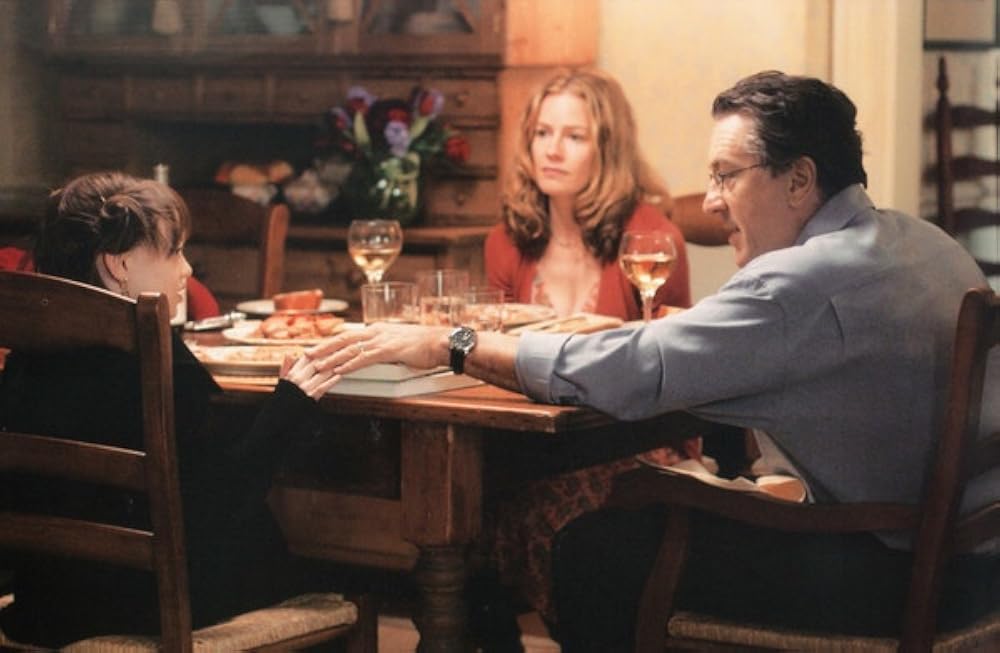
I’m a big fan of Robert De Niro, and I think it all started because of the movie MIDNIGHT RUN (1988). I was only 14 years old when it came out, but it was everything I wanted in a movie, which was primarily great action, with a dash of fun comedy. I was soon seeking out all of his great work, whether it be with Coppola, Scorsese, De Palma, or even Roger Corman. Well, just this evening, as I was browsing through Amazon Prime’s selection of horror films, I came across HIDE AND SEEK. Since I’d never seen it before, and it looked kind of creepy, I thought I’d give it a chance.
De Niro plays David Callaway, a psychologist who is struggling to cope with the death of his wife. He moves with his young daughter, Emily (Dakota Fanning), to a house out in the country in upstate New York, hoping that a change of scenery will help them both recover from their loss. Unfortunately, Emily begins acting strangely, talking about an imaginary friend named Charlie. Before long, David finds himself dealing with a series of increasingly disturbing events that seem to have something to do with this mysterious friend.
I’ve always enjoyed a good psychological thriller, especially one that keeps you guessing about what’s going on. HIDE AND SEEK is one of those movies that wants to freak you out and make you question whether or not you can trust what you’re seeing, or any of the people involved. Of course this being a psychological thriller, you can’t really trust anyone, especially the people who pretend to care the most.
Dakota Fanning is excellent as Emily. I’ve always held her performance in the great Denzel Washington film, MAN ON FIRE (2004), in high regard as an example of how great a child actress can be. Here, I think she does a good job of making Emily seem both vulnerable and a little scary at times. De Niro is also effective, particularly as the story gradually reveals more about the relationship between him and his daughter. The supporting cast, which includes Famke Janssen, Amy Irving, and especially Elisabeth Shue, adds to the mystery surrounding the film. I just like seeing Elisabeth Shue in any film, because I’ve had a crush on her since the fifth grade.
HIDE AND SEEK is the kind of thriller that depends on its twists and turns, and whether or not we’re willing to go along. I will say that I enjoyed the watching the story unfold, even when the ending doesn’t come off quite as clever as the filmmakers had hoped. My final verdict is that it’s an entertaining film with strong central performances from De Niro and Fanning. I enjoy movies that give me something to think about while I’m watching them, and this one kept me interested in finding out what was really going on. It was a fun watch on dark night in October.
“Sometimes I think about when you and I were one person, and it makes me so happy, I cry. Do you remember that?” — Other Mommy
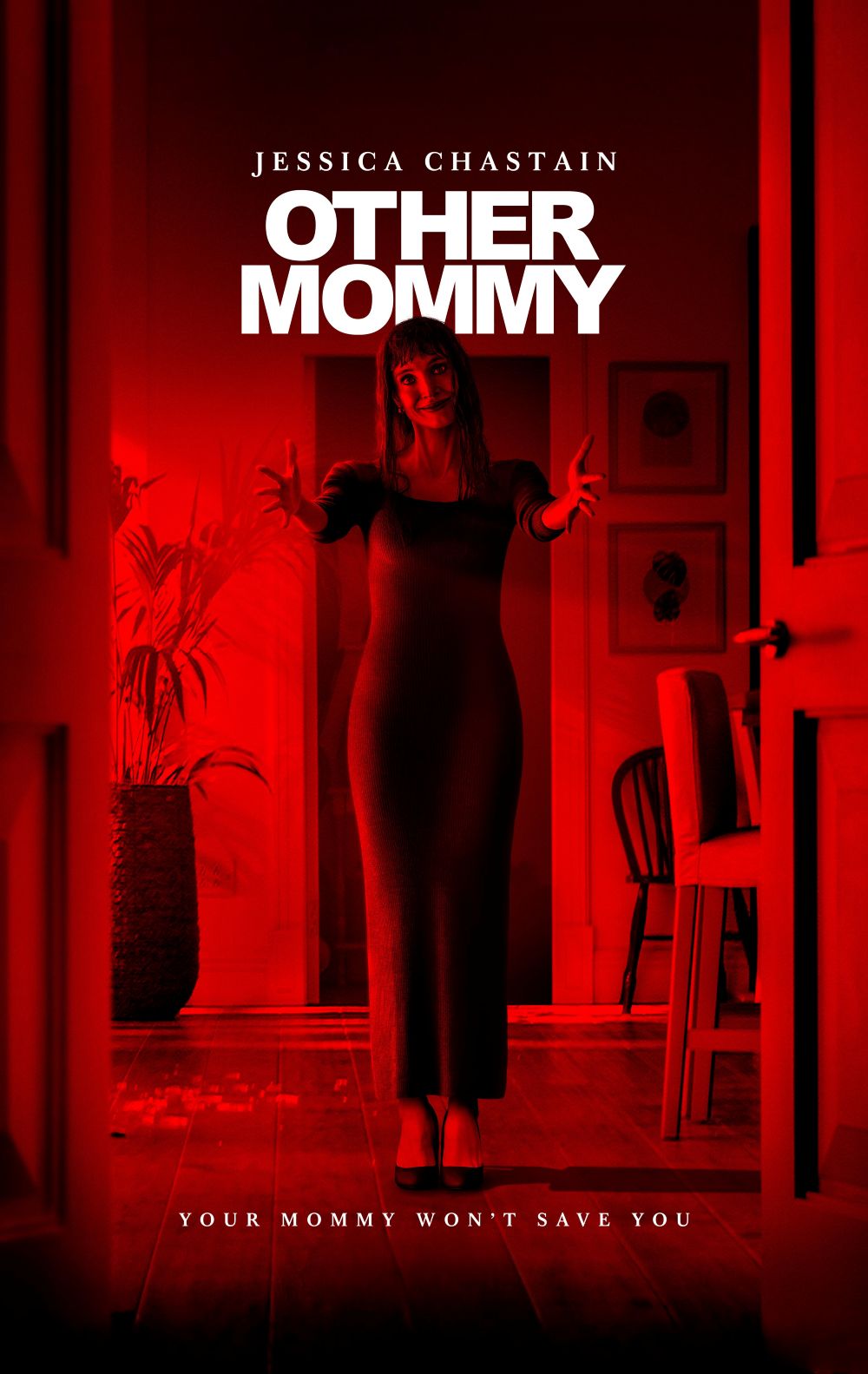
Jessica Chastain is the only reason Other Mommy works at all, and even she cannot quite save a horror movie that turns a genuinely strong premise into something silly through its own adaptation. Rob Savage’s 2026 film is based on Josh Malerman’s novel Incidents Around the House, and the source material’s central idea—a young girl discovers that the entity haunting her house looks exactly like her mother—is legitimately creepy and emotionally rich. The novel understands that a child’s fear of losing her mother, and a mother’s fear of being replaced, can carry an entire horror story. The movie takes that same foundation and rushes through it, leans into chaotic scares, and never finds a consistent tone, until the premise starts to feel ridiculous rather than frightening. What keeps it from being a total loss is Chastain’s double performance as both the struggling mother Ursula and the grotesque creature impersonating her. Without her, this would be an easy movie to forget. With her, it becomes a frustrating watch—good enough to keep you interested, bad enough to make you wish it had been better.
The story follows Bela, an eight-year-old girl played by Arabella Olivia Clark, who lives with her parents Ursula and Russ, played by Chastain and Jay Duplass. Their home is already unstable. The marriage is strained, the parents are distracted, and Bela is left to make sense of it all on her own. Into that environment comes Other Mommy, an entity that emerges from the closet wearing Ursula’s face. She does not simply attack Bela. Instead, she asks to be let into her heart, promising love and closeness while making it clear that refusal will have consequences. In Malerman’s novel, that setup works because the book takes its time exploring the psychological weight of it: a child caught between a mother who cannot fully show up for her and a monster who will happily pretend to. The film has the same ingredients but treats them more like a starting point for increasingly ridiculous scares than something it actually wants to sit with, and that is where the adaptation starts to lose the plot.
Chastain is the reason any of it works at all. Playing Ursula and Other Mommy gives her a chance to show two very different sides of the same face, and she makes the contrast convincing. As Ursula, she is tired, brittle, and emotionally unavailable in a way that feels believable even when the plot around her falls apart. She loves her daughter, but she is too overwhelmed and angry to show it consistently, and Chastain plays that failure without turning Ursula into a villain. As Other Mommy, she gets to go full nightmare fuel. The creature performs motherhood like someone who has studied it from the outside, smiling too widely, speaking in a warm but slightly off register, and moving with an unnatural confidence that makes every interaction feel wrong. Chastain understands that the scariest version of the monster is not the one that growls or lunges, but the one that almost gets the role right. She knows the words. She does not understand the feeling behind them.
That performance is what gives the film its few genuinely effective moments. When Other Mommy pleads with Bela to accept her, the scene works because the creature is both terrifying and pitiful. She wants to be loved, believed, and chosen, and she cannot comprehend why Bela would resist. There is something sad about that, and Chastain finds it without softening the character’s menace. She makes the entity feel like a desperate, needy thing wearing a mother’s face, and that is a much more interesting horror idea than the movie’s actual plot delivery system. If the film had leaned harder into that emotional contradiction and given it room to breathe, it might have come closer to capturing what makes the novel’s premise so effective. Instead, it keeps rushing past the interesting parts to get to the next loud, chaotic set piece.
That pacing is one of the movie’s biggest problems. At 93 minutes, Other Mommy moves fast, and not in a good way. It introduces the family’s problems, brings in the monster, and starts escalating the scares before the audience has had much time to connect with anyone. We understand that Ursula and Russ are unhappy, but we do not feel the specific weight of that unhappiness. We know Bela is lonely, but the film does not give her enough quiet moments to show what that loneliness looks like day to day. The result is a movie full of confrontations with the entity but very little emotional buildup between them. The family feels more like pieces in a horror machine than people whose survival actually matters, and that makes it hard to care when things go wrong. The novel earns its scares by making you care about the people first; the film skips that step and wonders why the scares do not hit as hard.
Savage’s direction does not help. He clearly likes big visual ideas, sudden movements, and scares that come out of nowhere, but the execution often feels more frantic than frightening. The creature design has some inventive moments—Other Mommy can stretch, contort, and squeeze herself into spaces no human body should fit—but the film rarely trusts quiet dread. It piles on noise, fast editing, and chaotic CGI effects until the tension flattens out. A scare that might have landed with a little patience becomes one more startle in a long line of startles. When the entity lingers at the edge of the frame, half-seen through a doorway or reflected somewhere she should not be, the movie creates real unease. Those moments are too rare. Most of the time, the film would rather show you everything immediately and hope volume substitutes for atmosphere, which is exactly the kind of choice that turns a creepy premise into a silly one.
The tonal swings make things worse. Other Mommy wants to be sad, scary, funny, and ridiculous all at once, and it does not know when to switch gears. There are sequences where the creature’s behavior becomes so exaggerated that it tips into camp, including a ball-pit scene that pushes the film into full-on absurdity. That campiness might work in a movie that fully embraces it, but this one keeps trying to have it both ways. It wants you to laugh at the monster’s physical comedy one minute and feel genuine dread the next, and the shifts are jarring rather than effective. The result is a film that never settles into a consistent identity. It is too silly to be truly scary and too serious to be fun camp, and that in-between space is where it lost me—and where it drifts furthest from the novel’s more controlled, unsettling tone.
The supporting cast does not do much to help. Duplass gives Russ a believable sense of helplessness, but the character is thinly written and mostly reactive. Karen Allen, Arian Moayed, and Dichen Lachman show up in roles that serve the plot rather than add dimension. Clark is better than the material deserves, bringing a real vulnerability to Bela that makes her more than just a screaming kid. She holds her own opposite Chastain, which is no small feat given how much the older actress is doing in every scene. But even a good child performance cannot fix a screenplay that does not know what it wants to say about the family at the center of the story.
In the end, Other Mommy is a movie with one great performance and an adaptation that takes a strong, genuinely unsettling premise and makes it feel silly through rushed pacing, chaotic direction, and tonal confusion. The idea of a mother-shaped entity trying to replace a child’s real mother is not the problem—Malerman’s novel proves it can be genuinely frightening. The problem is that Savage’s film does not know how to translate that idea to the screen without turning it into a series of loud, inconsistent set pieces. Chastain plays both sides of the dynamic with total commitment, and she is the only reason the movie stays watchable. It is not the worst horror movie of the year, but it is a disappointing one, because you can see the better version of this story trying to get out. If you watch it, watch it for her. Just do not expect the movie around her to hold up the way the book’s premise deserves.
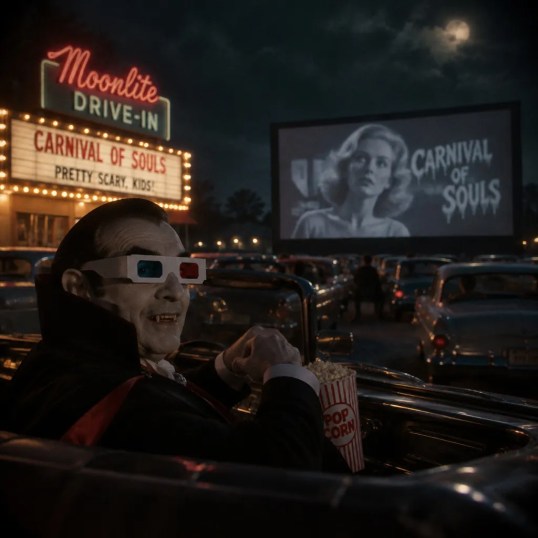
1962’s CarnivalofSouls was the only feature film to be directed by Herk Harvey. It was made on a budget of $33,000 and was filmed in Kansas and Utah, often without permits. The film was also the feature acting debut of model Candace Hilligoss, cast here as a emotionally withdrawn church organist who is involved in a serious car accident and then finds herself haunted by pasty-faced ghosts and surreal visions.
When it was initially released, CarnivalofSouls was dismissed by American critics. Indeed, it would a little over twenty years before the film started to be appreciated as both a classic independent film and also a truly eerie horror movie. Today, it’s recognized as a classic of the genre, an expressionistic ghost story that also works as a character study of a woman who is haunted by not just physical death but also emotional malaise.