In The Werewolf of Washington, Dean Stockwell plays an aide to the President of the United States who, during an assignment in Hungary, meets some gypsies, and ends up getting attacked by a werewolf. Soon, Stockwell is back in Washington and turning into a wolf under the glow of the full moon…
The Werewolf of Washington features a memorable performance from Stockwell and the werewolf effects are fairly effective. However, The Werewolf of Washington is mostly memorable as a document of its time. The film was first released in 1973 and it’s meant to be a social and political satire along with being a traditional werewolf movie. Admittedly, this is a low-budget and frequently uneven film but it’s worth seeing just for the scene where Stockwell gets his finger stuck in a bowling ball.
Hi, everyone! Tonight, on Mastodon, I will be hosting the #TubiThursday watch party! Join us for The Horror of Party Beach!
You can find the movie on Tubi, YouTube, and Prime and you can join us on Mastodon at 9 pm central time! (That’s 10 pm for you folks on the East Coast.) We will be using #TubiThursday hashtag! See you then!
If you’ve ever watched The Horror of Party Beach, you’ll definitely remember this song, which was performed by a Patterson, New Jersey band called The Del-Aires!
As proof that any movie — regardless of genre, storyline, or budget — has room for a dance number, check out this dance scene that I love from Friday the 13th: The Final Chapter!
4 Or More Shots From 4 Or More Films is just what it says it is, 4 shots from 4 of our favorite films. As opposed to the reviews and recaps that we usually post, 4 Shots From 4 Films lets the visuals do the talking!
4 Shots From 4 Horror Movies
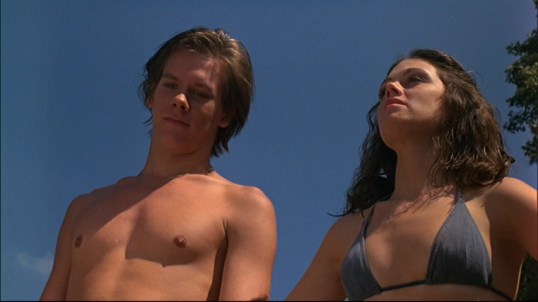
Friday the 13th (1980, dir by Sean S. Cunningham, DP: Barry Abrams)
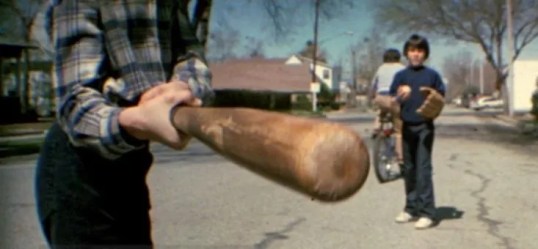
Friday the 13th Part II (1981, dir by Steve Miner, DP: Peter Stein)
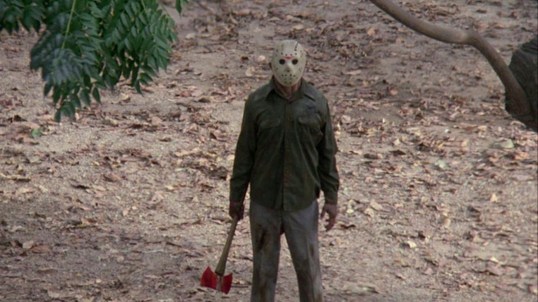
Friday the 13th 3D (1983, dir by Steve Miner, DP: Gerald Feil)
Friday the 13th A New Beginning (1985, dir by Danny Stienmann, DP: Stephen L. Posey)
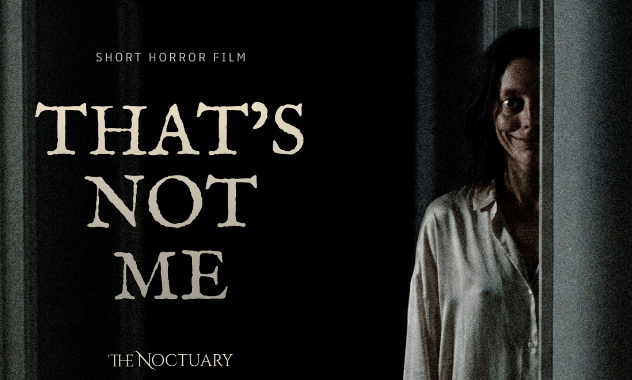
“That’s Not Me” is proof that you don’t need a lot of time to build concern and suspense for your protagonist. Honestly, I’m not sure why I like short films so much. It’s obvious why I like AI films- I’m a NERD like a REAL NERD like, studies math for fun, NERD! I think I like short films because I like instant gratification sometimes. It’s fun to enter a world, exit it, and be moved in less than thirty-minutes.
The mirror scare is a cliche and is inherently in a private/vulnerable space. Think of ALL of the things that you have done in a bathroom; now, imagine if you did the exact things in a hotel lobby, 4/5 of the people there would be upset.
Our protagonist is brushing teeth, but the reflection is not hers. It’s a predator and it’s hunting her. “That’s Not Me” delivers a good quick scare!
2026’s The Fort opens with a group of children and teenagers huddled in what appears to be an empty classroom. The atmosphere is gray and bleak. One gets the feeling that this is a place where they have been hiding for a long time.
Billy Magnus (Kevin Sorbo) enters the room and sits down in front of the children. The viewer notices the graffiti written on the walls and the dry erase boards behind him. “2×4=7?” someone has written. As I watched the film, I have to admit that I had a hard time looking away from 2×4=7. Was that meant to indicate that the educational system had collapsed or was it an homage to Orwell’s claim that followers of the State will convince themselves that one plus one equals three? Or was it a call back to the numerology of the Bible, in which seven is presented as the perfect number?
Billy tells a story about what life used to be like, before whatever happened to send everyone into hiding in abandoned buildings. He talks about how normal society collapsed under the weight of financial hardship, civil unrest, and a pandemic that was used as an excuse to strip people of their civil liberties. (Hmmm …. sounds familiar.) Billy tells how a former army chaplain named Cooper (Tim Perez-Ross) lost his family to the pandemic and how he subsequently defeated Aamon (Richard Grieco), who claimed to be a follower of a group of people who called themselves the “Light Bringers.” Ammon died in his encounter with Cooper but was later brought back to life by a demon named Balthazar (Dean Cain) and then….
Okay, okay. I hear you snickering out there. Dean Cain as a demon? Richard Grieco as a wandering enforcer of evil? Yes, it’s easy to mock and I should point out that this is definitely a low-budget production so Balthazar brings Aamon back to life involves a very small electrical charge. And yet, it was more effective than I was expecting. The blank-eyed look of the demons was effectively creepy and Richard Grieco’s wasted appearance captured the character’s self-destructive energy.
Eventually, Cooper ends up leading a group of people to The Fort, a village that he runs with a firm but benevolent hand. Unfortunately, some citizens of The Fort chafe under all of Cooper’s rules and Cooper himself often doesn’t seem as if he truly wants the burden of being in charge of everyone. When a fallen priest shows up with a doctor (Eddie McClintock) who claims that he has the curse for the latest pandemic, the people of the Fort are tempted to reject Cooper’s rules.
The Fort is another low-budget film from Jason Campbell. That budget is noticeable in the film’s sometimes risible special effects. At the same time, there are other moments that effectively capture the isolation of being separated from the rest of the world. Tim Perez-Ross gives a pretty good performance as Cooper, playing him as a man who struggles with his own anger and doubts. In the end, I appreciated that this film was more about redemption and forgiveness than punishment. That’s an important theme that a lot of end-of-the-world films tend to miss.
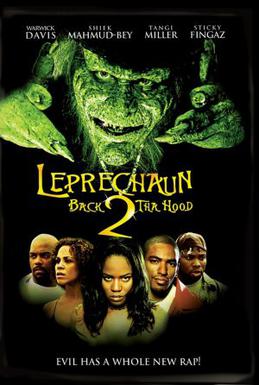
In Los Angeles, four friends are hanging out at an abandoned youth center when one of them falls through a hole and discovers a fortune in gold coins. The friends take the gold for themselves, which gets them on the bad side of the Leprechaun (Warwick Davis).
It’s the same old song and dance. From the title and the urban setting, you might think that this is a straight sequel to Leprechaun in the Hood, but this film actually contradicts that film by having the Leprechaun get trapped underground during the same time that, in the previous film, he was terrorizing Jennifer Aniston in North Dakota and existing as a statue in Ice-T’s office.
This was the first Leprechaun film to be produced by Lionsgate and the first to go straight to video, and it’s obvious that it was a rush job done on the cheap. The kills are uninventive and the blood is CGI. (Would Karo syrup have really cost that much?) With the exception of Warwick Davis, the casting is uninspired. Sticky Fingaz is not a good enough substitute for Ice-T.
Sadly, this was also Warwick Davis’s final outing as the Leprechaun, and the movie doesn’t even let him go out on a good note. No rhymes, no puns, and no bad jokes, nothing that really made the Leprechaun anything more than just someone in an elaborate costume. Did Lionsgate think that people were watching the Leprechaun films for some reason other than the title character? Considering that Warwick Davis was really the only reason any of these movies were watchable, he definitely deserved better.
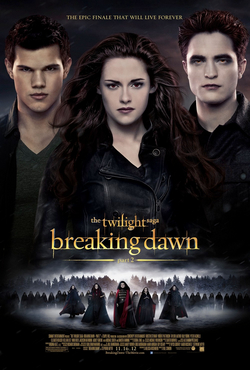
Earlier today, Lis and I finished up the Twilight Saga with Breaking Dawn Part 2.
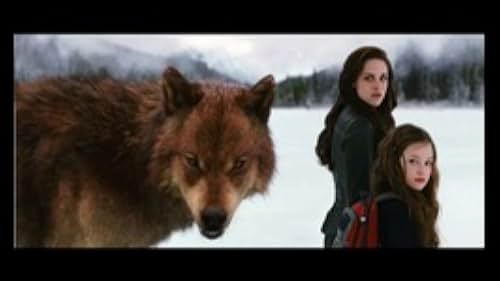
Bella (Kristen Stewart) is now a vampire and a mother to Renesmee (Mackenzie Foy), who is developing quicker than a normal child because she is half-vampire. Before Edward (Robert Pattinson) even lets Bella see her daughter, he takes her hunting, and he has to stop her from attacking a mountain climber who has scratched his arm on a rock. While Bella adjusts to being a vampire, Jacob (Taylor Lautner) adjusts to being Renesmee’s soul mate, and the Volturi prepare to make their move against the Cullens.
I’m going to get in trouble with my sister for saying this, but I was a little disappointed with the second Breaking Dawn movie. It bothered me that the entire movie was about the Cullens bringing together allies for their inevitable battle with Aro (Michael Sheen) and the Volturi, but then, when the big battle finally happens, it turns out that it was just one of Alice’s visions, and they end up deciding not to fight. After two hours of everyone talking about this huge battle and how everyone had to be prepared to fight for the lives, it was anticlimactic not to have a real one. It seemed like the whole movie could have just been 30 minutes long without really losing anything important. I really didn’t see the point of splitting the book into two movies because hardly anything happened during the second one.
Breaking Dawn Part 2 might not work as a standalone movie, but it does work as an end to the saga. After four movies and the longest senior year on record, Bella and Edward are finally together and they’re happy. And Jacob is happy too. At the end of the movie, when they showed everyone who had appeared over the course of the entire saga, I was really touched.
And that’s it for the story of Bella, Edward, and Jacob.
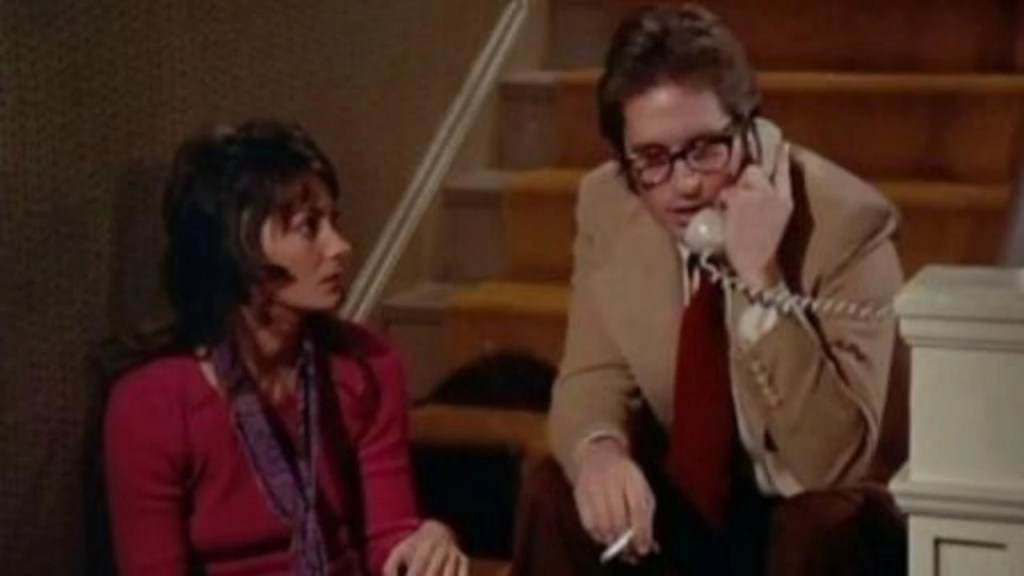
Today, I was browsing the “scary movie” titles on Amazon Prime when I came across SHATTERED SILENCE, with Michael Douglas featured prominently on the cover. Being a big fan of Douglas, I decided to investigate a little further. I went to my Internet Movie Database app on my phone, input “Shattered Silence,” and it pulled up the 1972 TV movie WHEN MICHAEL CALLS. The premise actually sounded interesting and creepy, and the running time was less than 90 minutes, so I thought I’d check it out.
Based on a 1967 book of the same name from author John Farris, the simple story focuses on Helen Connelly (Elizabeth Ashley), a woman who begins receiving telephone calls from her nephew, Michael. There’s just one problem… Michael died fifteen years ago! Even worse, Michael seems to know that bad things will happen to the people that Helen loves. When her loved ones start dying in horrific accidents, Helen reaches out to her surviving nephew, and Michael’s brother, Craig (Michael Douglas). Craig’s a therapist who tries to help her understand what’s really going on. What starts out seeming like a cruel prank turns into something much worse!
During the opening credits of WHEN MICHAEL CALLS, I was surprised to see that its screenplay was by James Bridges. Bridges was born in Paris, Arkansas, and he’d go on to write and direct movies like THE PAPER CHASE (1973), THE CHINA SYNDROME (1979), which also starred Michael Douglas, and URBAN COWBOY (1980). One of the reasons I really love Bridges is the fact that he wrote and directed the 1977 film SEPTEMBER 30, 1955, which was filmed in the Arkansas towns of Conway and Toad Suck, the very community I was raised in. Here, he crafts a creepy little story that makes good use of something as ordinary as a telephone to create a sense of dread. It’s a simple concept, but it’s darn effective.
The cast of this TV movie is very good, especially Elizabeth Ashley, who does most of the heavy lifting. Ben Gazzara (ANATOMY OF A MURDER, ROAD HOUSE) is also good as her estranged husband, but looking back now, the main attraction is “guest star” Michael Douglas as her therapist nephew who helps her deal with these crazy phone calls. It was a lot of fun seeing him this early in his career, even before THE STREETS OF SAN FRANCISCO. Knowing the heights his stardom would eventually reach, the novelty of this appearance is all the more interesting.
At the end of the day, I enjoyed spending an hour and a half of my life with WHEN MICHAEL CALLS. It delivers a creepy little story, and I enjoyed seeing it through to its ending. I’m almost ashamed that I didn’t figure it out a little bit quicker, but I guess that’s all part of the fun. I won’t pretend it’s a masterpiece, but it is an effective television thriller, and I recommend it.
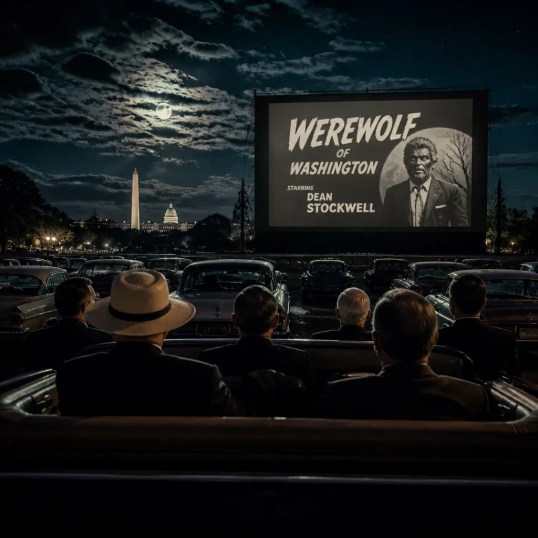 In The Werewolf of Washington, Dean Stockwell plays an aide to the President of the United States who, during an assignment in Hungary, meets some gypsies, and ends up getting attacked by a werewolf. Soon, Stockwell is back in Washington and turning into a wolf under the glow of the full moon…