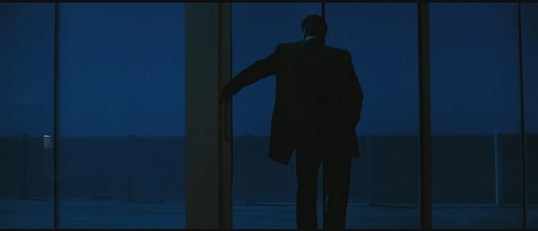
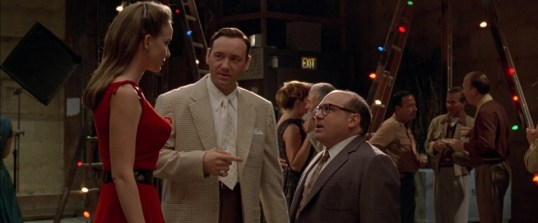
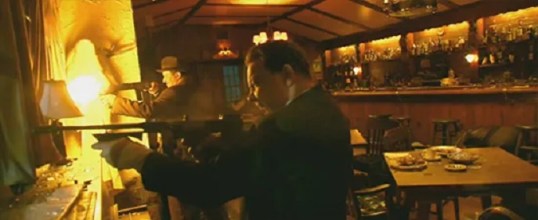
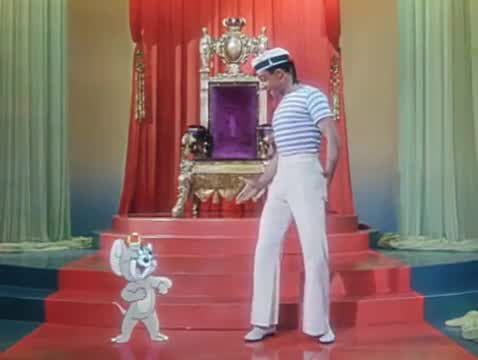
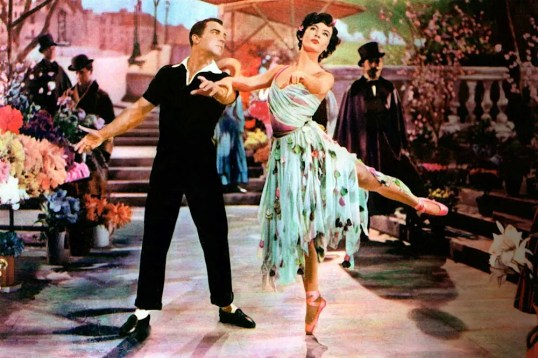
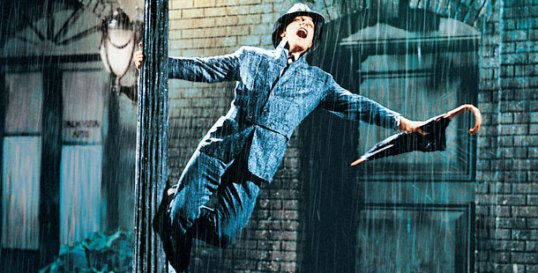
6 Shots From 6 Films: Special Gordon Willis Edition


4 Or More Shots From 4 Or More Films is just what it says it is, 4 shots from 4 of our favorite films. As opposed to the reviews and recaps that we usually post, 4 Shots From 4 Films lets the visuals do the talking!

Today the Shattered Lens celebrates what would have been the 95th birthday of the great cinematographer, Gordon Willis.  Willis was the master of using shadow and underexposed film to create some of the most haunting movie images of the 70s and 80s.  He was also one of the first cinematographers to take advantage of the so-called “magic hour,” that moment when the sun is setting and everything is bathed in a golden glow.  Today, everyone does that but Willis was the first.

Willis has often been cited as one of the most influential cinematographers of all time but, amazingly, Willis would receive only two Academy Award nominations (for Zelig and The Godfather Part III) and he would never win a competitive Oscar.

In memory of Gordon Willis, here are….

6 Shots From 6 Gordon Willis Films

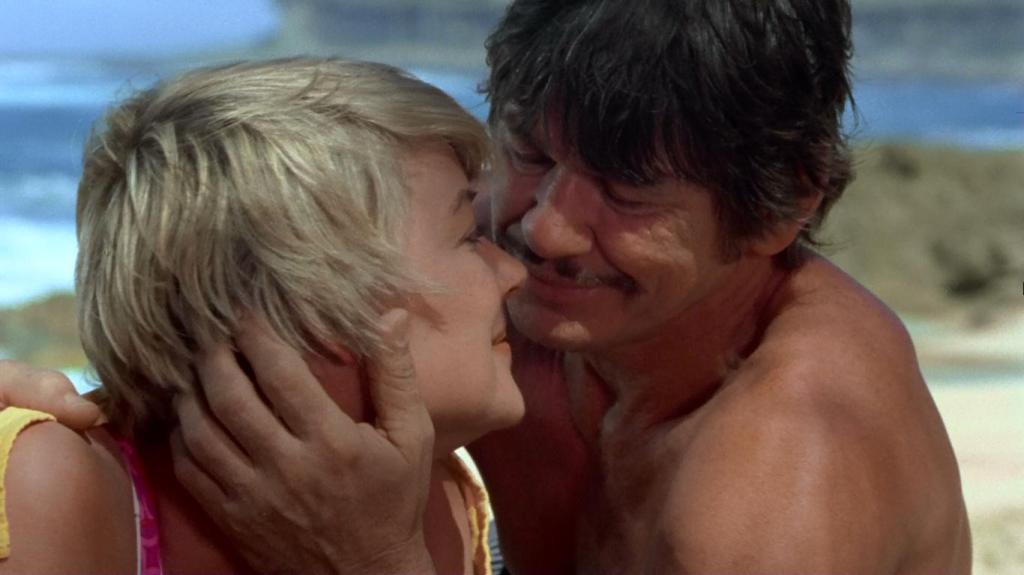
End of the Road (1970, dir by Aram Avakian, Cinematography by Gordon Willis)

The Godfather (1972, dir by Francis Ford Coppola, Cinematography by Gordon Willis)

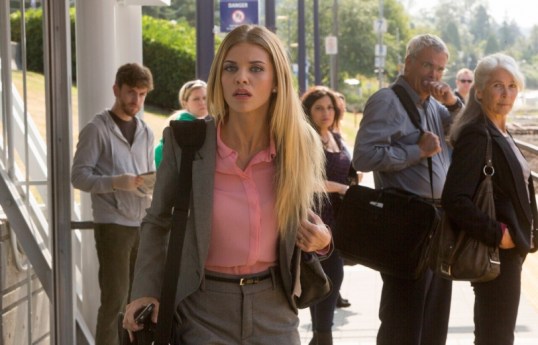
The Parallax View (1974, dir by Alan J. Pakula, Cinematography by Gordon Willis)

The Godfather Part II (dir by Francis Ford Coppola, Cinematography by Gordon Willis)

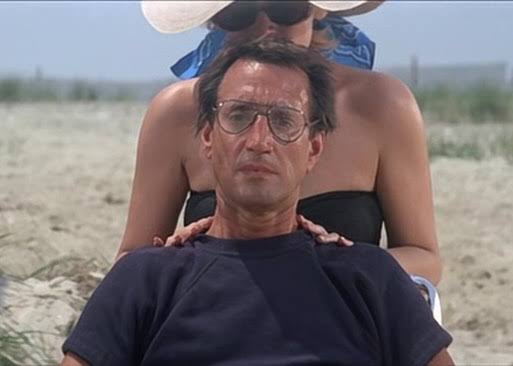
All The President’s Men (1976, dir by Alan J. Pakula, Cinematography by Gordon Willis)

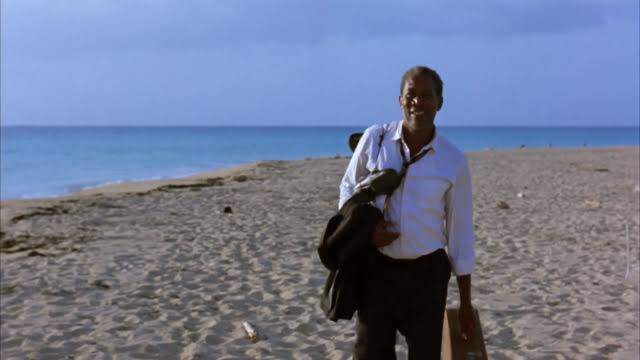
Manhattan (1979, dir by Woody Allen, Cinematography by Gordon Willis)

Cinemax Memories: Sins of Desire (1993, directed by Jim Wynorski)


Kay Egan (Tanya Roberts) goes undercover as a nurse at a sex clinic because she thinks that Dr. Scott Callister (John Henry Robertson) and his wife, Jessica (Delia Sheppard), are responsible for the suicide of her sister.  Working undercover leads to Jessica meeting private detective Barry Mitchum (Nick Cassavetes), whose partner Monica (Gail Harris) died under mysterious circumstances while she was working undercover at the clinic.  Is there anyone working at the clinic who isn’t undercover?

This is a Jim Wynorski film, which means the plot is mostly just an excuse for the female members of the cast to disrobe.  Like many of Jim Wynorski’s films, it’s trashy but entertaining.  It’s a sex clinic where therapy comes in the way of hallucinations, strobe lights, and choreographed stripping.  Kay falls in love with Barry but, when she realizes that Jessica is into her, she used that to her advantage and buys Barry some extra time for his investigation.  Jan-Michael Vincent plays Warren Robillard, a twitchy associate of the Callisters.  It’s a Wynorski film all the way.

Jim Wynorski later said that he had a difficult time working with Tanya Roberts, who brings little of her old Charlie’s Angel spice to her role.  But John Henry Robertson and Delia Sheppard are a blast as the evil sex clinic owners.  Adult film actress Gail Harris is so sexy and likable as Monica that it’s a shame that she’s only has a few minutes of screentime.

Sins of Desire is a perfect example of why you couldn’t have late night Cinemax without Jim Wynorski.

Brad reviews AN UNFINISHED LIFE (2005), starring Robert Redford! 


Recently, I was sitting on the back deck of my parents’ house visiting with my family. Of course, when I’m around movies are always a topic of conversation, and my sister brought up the fact that she had just watched AN UNFINISHED LIFE and really liked it. My sister has always loved Robert Redford, and when she brought him up, it was fun hearing my mom get on her case about her long-ago recommendation of UP CLOSE AND PERSONAL, that came without the appropriate warning of the movie’s tearjerker of an ending. That’s a no-no with my mom, and we all had a good laugh. When my wife and I got home, we were browsing the Paramount Plus streaming service, and lo and behold, there was AN UNFINISHED LIFE, so it just seemed like the right time to watch it! 

The movie centers in on Einar Gilkyson (Redford), a Wyoming rancher who still hasn’t properly dealt with the death of his son about a decade earlier. He blames his daughter-in-law Jean (Jennifer Lopez) for the accident that killed him. When Jean shows up at his ranch, because she’s on the run from her abusive boyfriend Gary (Damian Lewis), Einar tells her that he doesn’t want her there. His heart softens though as she introduces him to Griff (Becca Gardner), the granddaughter that he never knew he had. This sounds like a setup for big-time melodrama, but director Lasse Hallstrom is able to keep things somewhat grounded as we watch this broken family attempt to reconnect. 

It’s time for a confession… I’ve never been the biggest fan of Robert Redford. Now don’t get me wrong, that doesn’t mean that I don’t like him. It’s just that he’s so perfect, maybe too perfect?! My favorite actors are not perfect looking human beings, but they do have an undeniable charisma and screen presence. Actors like Charles Bronson, Roy Scheider, and James Woods immediately come to mind. As such, I’ve never made it a priority to watch all of Redford’s movies, although I’ve watched most of his best at some point in my life. I will say that I think he’s excellent in AN UNFINISHED LIFE. He’s still undeniably “Redford,” but age has a way of evening up the playing field, and this performance relies on his ability to embody a character slowly opening his heart after years of shutting himself off. His scenes with his granddaughter are especially strong, without seeming excessively manipulative. I may look more closely into his later career based on his work here. 

I’m also not the biggest fan of Jennifer Lopez. I loved her in SELENA, the film that kickstarted her career, but other than OUT OF SIGHT and ANACONDA, I haven’t enjoyed much else in her filmography. With that said, I think she’s good here. Her character has made one bad decision after another since her husband died, but I can’t help but root for her to find some happiness. In real life, it would have taken a lot of courage to ask someone like Einar for help, and I do appreciate that she’s willing to humble herself for her daughter’s sake.

Have I mentioned that Morgan Freeman is also in the film in the role of Mitch Bradley, Einar’s injured ranch hand and closest friend? He brings his warmth and wisdom to the proceedings even though his character’s unique storyline, which revolves around being mauled by a bear, doesn’t always work. The characters played by Damian Lewis and Josh Lucas also don’t land that strongly. Lewis is Lopez’s abusive boyfriend, but his awful behavior is ultimately dealt with in a way that’s more cartoonish than you might expect in a serious drama. Lucas, who was born in my home state of Arkansas, is fine here as “Crane” Curtis, but he doesn’t have that much to do. 

The Wyoming setting for our story is beautiful, but it was actually filmed in British Columbia. My wife spent 18 years of her life in Wyoming, and it’s generally not as green as the “Wyoming” presented here. That’s just a minor nitpick, because for the uninitiated, the setting is beautiful and makes you feel like you’re part of a modern day western. There’s just something romantic and comforting about that, and the wide-open spaces seem to offer endless chances for a new beginning.

Overall, while I don’t think AN UNFINISHED LIFE is a great movie, I enjoyed watching it. It’s a movie that understands the importance of forgiveness by showing us wounded characters who are willing to open themselves up to imperfect people who are just trying to be better. At the end of the day, if any of us want meaningful connections to the people in our lives, we’d better be willing to do the same. 

Scene That I Love: Christopher Lee and Peter Cushing Play Pool In The Skull


104 years ago, on this date, Christopher Lee was born in London.  After serving in the secret service during World War II and reportedly inspiring his cousin, Ian Fleming, to create the character of James Bond, Christopher Lee went on to have a legendary acting career.  Though he was best known for playing Dracula, Lee appeared in almost every genre of film and he always gave a good performance.  Even when the film was bad, Lee was good.

Today, for Lee’s birthday, I’m sharing a scene between him and Peter Cushing in 1965’s The Skull.  Though The Skull isn’t one of the strongest films that the pair made for Amicus, it’s worth watching for the performances of Cushing and Lee.  Often cast as rivals on screen, the two were, in reality, the best of friends and Lee often said that he never really emotionally recovered from Cushing’s death.

In the scene below, Lee and Cushing are obviously having a ball trying to outact one another while playing simple game of pool and discussing slightly esoteric concerns.

4 Shots From 4 Films: Special Vincent Price Edition


4 Shots from 4 Films is just what it says it is, 4 shots from 4 of our favorite films. As opposed to the reviews and recaps that we usually post, 4 Shots from 4 Films lets the visuals do the talking!

Today is Vincent Price’s birthday!  This edition of 4 Shots From 4 Films is dedicated to him, his memory, and his career!

4 Shots From 4 Vincent Price Films

The Last Man on Earth (1964, dir by Ubaldo Ragona)

The Masque of the Red Death (1964, dir by Roger Corman)

Dr. Goldfoot and the Girl Bombs (1966, dir by Mario Bava)

The Witchfinder General (1968, dir by Matthew Reeves)

Cinemax Memories: Mortal Passions (1990, directed by Andrew Lane)


Todd (Zach Galligan) is married to Emily (Krista Errickson), who was previously involved with Todd’s brother, Berke (Michael Bowen).  When Berke comes by for a visit, he discovers that Emily is cheating on Todd with Darcy (Luca Bercovici).  A confrontation between Emily, Berke, and Darcy ends with Darcy dead.  While covering up the murder, Emily is also plotting to take all of Todd’s money for herself.  David Warner appears as the therapist who struggles to keep straight who is double-crossing who.

In the 90s, where could you see the lead of Gremlins being betrayed by both his sexy wife and his no-good brother?  Where, in the 90s, could you see the star of Hello Larry try to reboot her career as a Kathleen Turner film fatale?  Where, in the 90s, could you see the man who would one day play Buck in Kill Bill playing Zach Galligan’s long-haired brother?  Only on Cinemax!

Mortal Passions was an attempt to do a modern noir and it has all of the expected tropes, from the clueless husband to the morally gray relative to the wife who is planning on betraying everyone.  Krista Errickson is sexy and dangerous as Emily, ruthlessly plotting Todd’s downfall while walking around in lingerie.  Errickson’s femme fatale is never as clever as she thinks she is but fortunately, for her, all the men around her are idiots.  Galligan and Bowen are both believable as two of the most easily manipulated people that you’ll ever meet.  And then there’s David Warner, phoning it in and getting away with it because he’s David Warner.

Mortal Passions is Late Night Cinemax at its trashiest best!

Review: Normal (dir. by Ben Wheatley)


“I used to be a regular sheriff.” — Sheriff Ulysses

Ben Wheatley has built a career on making audiences uncomfortable. From the cultish dread of Kill List to the seasick chaos of Free Fire, he specializes in a specific kind of British miserablism that suddenly snaps into shocking ultraviolence. So, the idea of him directing a snowbound, American action-comedy starring Bob Odenkirk felt a little like hiring a surgeon to cater a birthday party. You know the food will be technically proficient, but you are terrified of what might be in the sauce. The 2026 film Normal, written by Derek Kolstad and Bob Odenkirk, is exactly that catering job: it is messy, bloody, surprisingly filling, and leaves you with a weird stomach ache if you think about it too long. But in a summer movie season often defined by joyless CGI sludge, Normal is a blast of R-rated, mid-budget freshness that knows exactly how stupid it is, even if it stumbles on its way to the finish line.

The premise is a beautiful piece of elevator pitch simplicity. Odenkirk plays Sheriff Ulysses, a haunted, world-weary interim sheriff who takes a short-term gig in the tiny, freezing Minnesotan town of Normal. The previous sheriff died under mysterious circumstances (ice fishing accident, sure), and Ulysses is just looking for a quiet place to drink coffee, ignore his wife’s phone calls, and heal. The problem is that Normal, Minnesota, is anything but. As Ulysses walks the beat, he notices the quiet desperation of rural America has been replaced by a strange, Stepford-like prosperity. The knitting store sells AR-15s. The diner’s walls are lined with loaded rifles. The town has somehow raised sixteen million dollars for a new town hall. It turns out that the citizens of Normal have sold their souls—and their town—to the Yakuza, acting as a quiet, frozen Swiss bank account for Japanese organized crime. When a pair of bumbling out-of-town robbers (Reena Jolly and Brendan Fletcher) hits the local bank, the bulletproof glass shatters, and Ulysses finds himself trapped in a blizzard, fighting for his life against an entire town of friendly, flannel-wearing killers.

Having Odenkirk as co-writer explains a lot about why Normal feels different from Kolstad’s other work. Where John Wick and the first Nobody are lean, machine-tooled scripts, Normal has a looser, more character-obsessed texture. The dialogue is full of weird pauses, non-sequiturs, and the kind of conversational detours that defined Odenkirk’s television work on Better Call Saul. You can feel the actor’s hand in every scene where Ulysses just stares at a absurd situation and mutters something mundane like “Well, that’s not ideal.” If you have seen the Nobody films, you know the rhythm Odenkirk plays as a performer. But what makes Odenkirk so fascinating to watch in Normal is how he continues to solidify an idea we haven’t really seen since Liam Neeson stumbled into Taken: the deeply unconventional action hero. Think about it. Before Neeson, action stars were Schwarzenegger, Stallone, Willis—men built like refrigerators. Then Neeson showed up at fifty-six, all grief-stricken eyebrows and theatrical training, and suddenly audiences realized that a sad dad with a “particular set of skills” was just as terrifying as any bodybuilder. Odenkirk is the spiritual successor to that twist.

No one ever looked at the guy who played slimy lawyer Saul Goodman or the hapless comic from Mr. Show and thought, “There is our next great screen fighter.” Yet here we are, years after the first Nobody, and Odenkirk has quietly become the most believable everyman action lead of his generation. Unlike Neeson’s brooding intensity, Odenkirk brings a specific, almost pathetic vulnerability. In Normal, he excels at playing the “sad dad” action hero—the guy whose joints pop when he stands up, who looks like an accountant but moves like a bar fight. Ulysses isn’t a retired assassin; he’s just a cop who is very, very tired. When he dispatches a thug with a fire extinguisher, there is no cool one-liner, just a wheeze and a wince. That grounded exhaustion is the Odenkirk brand, and because he co-wrote the part, it fits him like a tailored suit. He sells the physicality without losing that “I’m too old for this” shuffle, making you believe a middle-aged man could survive a gauntlet of killers purely out of stubbornness and regret. Henry Winkler, as the smarmy Mayor Kibner, chews the frozen scenery with glee, playing a man so polite and effervescent that you want to punch him immediately. Lena Headey shows up as a barkeep with a shotgun, and while she doesn’t get enough to do, she brings the necessary grit.

However, the secret weapon here is actually Ben Wheatley and his “anti-action” philosophy. In a recent interview, Wheatley described the violence in Normal as being akin to Final Destination. That is the smartest thing about this movie. In a typical John Wick movie, the hero is a force of nature; he actively kills people with surgical precision. In Normal, Ulysses doesn’t so much defeat the town as survive it. In one fantastic set piece, a character slips on ice and impales themselves on their own bayonet. In another, a massive sign falls and crushes a gunman mid-monologue. The town itself becomes a hostile, slippery, glass-strewn deathtrap. This gives Normal a chaotic, Looney Tunes energy that separates it from its cousins. You never know who is going to die next or how, and Wheatley directs the carnage with a blackly comic eye. The sound design of bones crunching against frozen asphalt is disturbingly hilarious. This isn’t the graceful ballet of assassination; it’s the slapstick of murder, and it is refreshing. And Odenkirk’s performance is the perfect anchor for this chaos because he always looks slightly surprised to still be alive—a quality Neeson, for all his skills, rarely conveyed. The fact that Odenkirk helped write the script means those reactions of shock and reluctant disgust feel genuine rather than performed.

But let’s address the moose in the room. Normal desperately wants to be Fargo, but it only has the vocabulary of a comic book. The Coen Brothers’ masterpiece works because the quirky dialogue masks a terrifying emptiness. Normal wears its quirk on its sleeve like a cheap souvenir. The film tries to weave in social commentary about the death of rural America, gun culture, and even features a subplot involving a trans nonbinary teen (Jess McLeod) who was the child of the previous sheriff. These moments are handled with a surprising amount of grace—they aren’t preachy, just present. However, the film is moving so fast (the runtime is a lean 91 minutes) that it forgets to give these themes any weight. You get a five-second shot of a wall of guns, and then someone blows up. The commentary is there, but it’s just set dressing for the explosion.

Furthermore, the plot structure is lopsided. The film opens with a cold sequence in Japan with the Yakuza cutting off fingers and looking menacing. It feels like a contractual obligation to remind you this is from the John Wick universe, and it’s hard not to wonder if that was a Kolstad-driven choice while Odenkirk might have preferred more mystery. It completely spoils the slow-burn reveal of the town’s corruption. Imagine The Wicker Man if the first scene showed you the villagers burning the wicker man. The tension of Ulysses realizing that “the call is coming from inside the house” is neutered because we, the audience, already know the Yakuza are lurking in the basement. Also, for a movie called Normal, it is incredibly predictable within its own lane. Once the shooting starts, you know exactly where Ulysses is going to end up (spoiler: a hardware store and then the police station). The film devolves into a familiar Assault on Precinct 13 siege scenario, and while the kills are inventive, the geography of the action gets muddy. Wheatley shoots the snowy exteriors beautifully—the white landscape makes the red blood pop like neon—but during the frantic third act, the editing gets choppy, and you lose track of who is shooting whom. For a movie that prides itself on “anti-action,” it relies heavily on the generic rhythms of action in its final twenty minutes.

Despite these structural hiccups, Normal works because it never overstays its welcome. At a brisk hour and a half, it gets in, blows up a town, and gets out. Bob Odenkirk continues to prove that he is the most relatable action hero of the 2020s—the natural heir to the “unlikely badass” throne that Liam Neeson occupied for a solid decade. Where Neeson brought Shakespearean tragedy to the genre, Odenkirk brings a frustrated accountant’s fury. He looks like he just finished paying his taxes, and you believe he is furious about it. Having co-written the film only deepens that authenticity; this isn’t a star merely showing up to say lines, but an actor who has shaped the material to his exact strengths. Ben Wheatley manages to smuggle just enough British cynicism and nasty violence into the frame to keep genre fans on their toes.

Is Normal a great film? No. It is too shallow and too structurally messy for that. But is it a great time at the movies? Absolutely. It is the cinematic equivalent of comfort food laced with hot sauce. You know what you are getting, but the kick is still satisfying. For fans of Odenkirk’s grumpy charm and Wheatley’s chaotic tendencies, Normal is a perfectly abnormal way to spend an evening. Just don’t go looking for the heart that the title promises; this one is all viscera. And frankly, in an era where most action movies are built from the same digital spare parts, watching a former comedy writer freeze his way through a Yakuza invasion feels like the most refreshing kind of normal we could ask for.

Hero Of The Day: Leo Kessler (Ten To Midnight)


“Jerry, I’m not a nice person. I’m a mean, selfish son-of-a-bitch. I know you want a story, but I want a killer and what I want comes first!”

— Detective Leo Kessler (Charles Bronson) in Ten To Midnight (1983)

At first, Detective Leo Kessler seems like exactly the type of cop that you would expect to find in a film about a serial killer who knows how to manipulate the system to his advantage.  Kessler is tough, plain-spoken, a blue collar warrior who is trying to keep the streets of Los Angeles safe for citizens of every age.

“I remember when the legal meant lawful,” Kessler says, “Now, it means loophole.”

Kessler isn’t thrilled that his new partner, Paul McAnn (Andrew Stevens), is a graduate of Berkley and that he’s got a degree in sociology.  Kessler’s doubts are actually justified.  One of the first things that McAnn does is drop a wad of chewing gum on the ground at a crime scene.  Kessler also knows that Warren Stacy (Gene Davis) is the psycho who has been targeting young women and making obscene phone calls to his daughter, Laurie (Lisa Eilbacher).  When McAnn discovers that Kessler has planted blood evidence on Warren’s clothes, McAnn is torn about what to do.  “Forget what’s legal,” Kessler says, “and do what’s right.”

But here’s the thing with Kessler.  He may say that he’s a mean son of a bitch but he’s not.  He’s actually a pretty nice guy.  He even discovers that he likes and becomes a mentor to McAnn.  Kessler just doesn’t think that someone like Warren Stacy should be wandering around, free to kill.  Charles Bronson never gets nearly enough credit for his acting.  Leo Kessler isn’t just a touch cop.  He’s an old-fashioned guy in a changing world.  He’s someone who doesn’t understand why the system is suddenly more worried about the Warrn Stacys of the world than the victims.

He’s also a father.

Leo: “I hate quiche.”

Laurie: “Why did you get it?”

Leo: “I thought it was pie.”

As violent and exploitive as From 10 To Midnight is, I have to admit that I have a sentimental attachment to the film.  The difficult-but-loving relationship between Leo and Laurie Kessler reminds me of my own relationship with my Dad.  I see a lot of my Dad in Leo and I also see a lot of myself in Laurie.  There’s a scene early on where McAnn mentions to Laurie that she’s a lot like her father.

“You think so?” Laurie replies, “I don’t.”

That scene gets me every time because I’ve had people say the same thing to me about my Dad and I used to have the same response.  Everyone else picked up on it long before I realized it.  For all of Laurie complaints about Leo having always been too busy for her, she’s there to comfort him after he gets kicked off the force.  “I’m getting drunk with my old man,” Laurie says.  Leo replies that she’s not.

It’s rare to see Charles Bronson cast as a family man.  Usually, he played loners, the type of solitary warriors who seemed to have nothing in their lives beyond doing accomplishing whatever their mission happened to be.  The Death Wish films did give Bronson a family but they were all dead by the end of the second film.  10 To Midnight features Bronson as not just a tough cop but also Bronson as a father with an independent and intelligent daughter.  I think that’s the main reason why 10 to Midnight is my favorite Bronson films.

“No, we won’t.”

— Detective Leo Kessler

Bronson only fires his gun once in 10 To Midnight but he definitely makes a statement with that shot.  And after spending 101 minutes watching Kessler trying to stop Warren Stacy, there’s definitely something very cathartic about the simple brutality of the film’s ending.  Trying to analyze or understand evil, the film tells us, is pointless.

Sometimes, you just need someone who is willing to say, “No, we won’t.”

Hero of the Day

Scenes That I Love: The Steak Scene From The Man Who Shot Liberty Valance


Since today is the 119th anniversary of the birth of John Wayne, it only seems right that today’s scene should come from the 1962 classic, The Man Who Shot Liberty Valance!

The famous steak scene features three of the greatest screen icons of Hollywood’s golden age: James Stewart, John Wayne, and Lee Marvin.  Lee Marvin is the bully who is terrorizing the entire town.  James Stewart is the idealist who thinks that the law, and not violence, is the answer.  And John Wayne is …. well, he’s John Wayne.  He’s the only man in town who can stand up to Lee Marvin but, at the same time, he’s also aware that his time is coming to a close.  In the scene below, all three of the characters display their different approaches to life and a disagreement with steak nearly leads to violence.

This scene — and really, the entire film — features these three actors at their best.  John Wayne is an actor who is often described as having “just played himself” but that’s really not quite fair.  While Wayne’s outsized persona definitely does influence how the audience reacts to any character that he plays, he was a better actor than he’s often given credit for being.  That’s especially evident in The Man Who Shot Liberty Valance, in which Wayne plays a confident man’s man who knows that fate is closing in on him.  The coming of civilization (represented by James Stewart) will be great for the town of Shinbone but it will also leave men like Wayne’s Ton Doniphon with nowhere to go.  The coming of civilization means that the heroes of the past are destined to become obsolete.

Enjoy this scene from The Man Who Shot Liberty Valance:

4 Shots From 4 Films: Special Peter Cushing Edition


4 Shots from 4 Films is just what it says it is, 4 shots from 4 of our favorite films. As opposed to the reviews and recaps that we usually post, 4 Shots from 4 Films lets the visuals do the talking!

Today is Peter Cushing’s birthday!  This edition of 4 Shots From 4 Films is dedicated to him, his memory, and his career!

4 Shots From 4 Peter Cushing Films

Hamlet (1948, dir by Laurence Olivier)

Doctor Who and the Daleks (1965, dir by Gordon Flemyng)

Frankenstein Must Be Destroyed (1969, dir by Terence Fisher)

Star Wars (1977, dir by George Lucas)