4 Or More Shots From 4 Or More Films is just what it says it is, 4 shots from 4 of our favorite films. As opposed to the reviews and recaps that we usually post, 4 Shots From 4 Films lets the visuals do the talking!
Today would have been the 86th birthday of author Anne Rice. It’s time for….
4 Shots From 4 Anne Rice Adaptations
Interview With A Vampire (1994, dir by Neil Jordan, DP: Phillippe Rousselot)
Exit to Eden (1994, dir by Garry Marshall, DP: Theo van de Sande)
Queen of the Damned (2002, dir by Michael Rymer, DP: Ian Baker)
The Young Messiah (2016, dir by Cyrus Nowrasteh, DP: Joel Ransom)
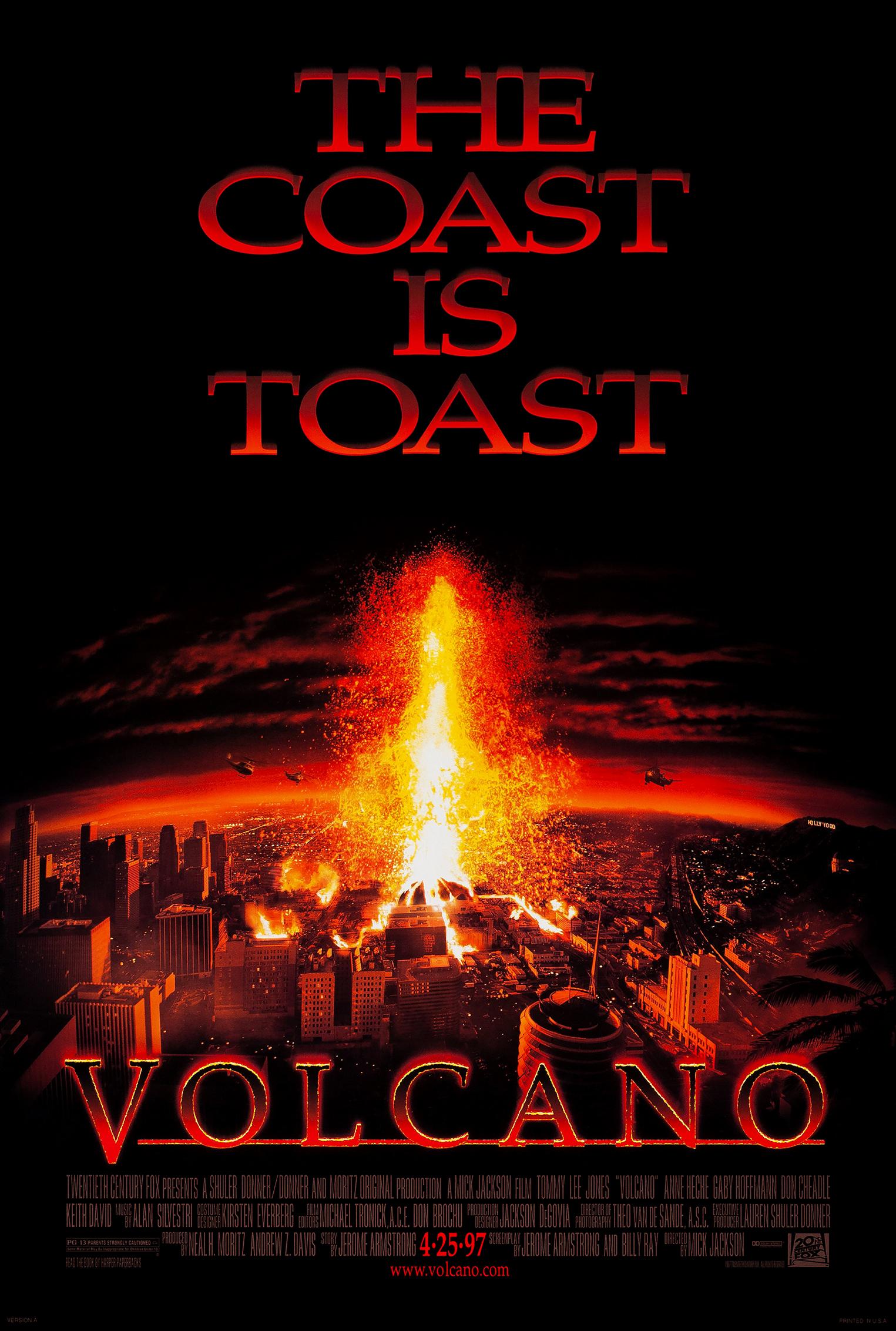
In Volcano, Los Angeles does not just face an earthquake, fire, or some ordinary civic emergency—it finds itself threatened by a river of lava tearing through the heart of the city. Directed by Mick Jackson, the 1997 disaster movie takes a premise that is almost impossible to accept on paper and sells it through speed, scale, and the sheer force of Tommy Lee Jones barking orders at people. A volcano erupting beneath Los Angeles, near the La Brea Tar Pits no less, is not exactly a model of scientific credibility. Still, the film is energetic enough to make its absurdity part of the entertainment.
The setup is wonderfully direct. An earthquake rattles Los Angeles, workers begin dying in underground tunnels, and a strange source of extreme heat is discovered beneath the city. Before long, lava is spilling into the streets, buildings are catching fire, and the city’s Emergency Management director Mike Roark, played by Tommy Lee Jones, has to coordinate an increasingly desperate effort to keep downtown Los Angeles from being wiped out. Anne Heche plays Dr. Amy Barnes, the geologist who realizes that the city is dealing with more than an earthquake or a gas leak. Together, Roark and Barnes become the film’s central problem-solving team: he is the practical, politically frustrated municipal leader, while she is the scientific expert trying to explain the impossible thing happening under everyone’s feet.
What makes Volcano enjoyable is that it does not waste much time pretending to be a subtle character drama. The movie’s main concern is escalation. Every time the heroes think they have contained the problem, the lava finds another way to spread. It comes through the subway. It crashes through pavement. It turns a normal Los Angeles intersection into a landscape from hell. The film understands the simple pleasure of watching ordinary urban infrastructure become a weapon or a liability. A train tunnel, a concrete barrier, construction equipment, storm drains, and even a city block all become parts of an enormous improvised plan to redirect molten rock.
Mick Jackson directs the action with enough urgency that the movie often works even when the science is wobbling badly. The special effects are very much of their era, combining practical fire, miniatures, digital lava, and lots of actors reacting to bright orange light. Some of the CGI has aged about as gracefully as one would expect from 1997, but the physical effects still have impact. The lava itself has a thick, almost muscular quality in the film. It does not just look like glowing liquid; it moves like an unstoppable wall that eats concrete, cars, and people. The images of lava flooding Los Angeles streets remain the reason to watch the movie. They are absurd, but memorably absurd.
The film also benefits from treating the crisis as a citywide emergency rather than simply a personal survival story. Roark is not a scientist, soldier, or superhero. He is basically a city official who has to make decisions under impossible conditions, manage multiple agencies, argue with politicians, and keep people from panicking. Tommy Lee Jones is perfect casting for that role. He has the right mixture of exhaustion, irritation, authority, and reluctant decency. Jones does not play Roark as a polished action hero; he plays him like a man who had plans for a quiet weekend with his daughter and instead ends up trying to stop Los Angeles from being buried under lava. His natural gruffness gives the movie more weight than it might otherwise have.
Anne Heche brings a different energy as Amy Barnes. Her character is often stuck delivering exposition, explaining volcanic activity, underground pressure, and why everyone is probably about to die, but Heche commits to it. She gives Amy enough urgency and intelligence that the scientific dialogue feels less like a lecture and more like another kind of emergency response. The relationship between Roark and Amy is also refreshingly restrained. The movie could have forced a big romantic subplot between them, but it mostly keeps their connection professional. They respect each other because they are both good at their jobs, which is more interesting than a last-minute disaster-movie love story.
The supporting cast is solid as well. Don Cheadle has a memorable role as Emmit Reese, a subway supervisor who becomes one of Roark’s most important allies. Keith David also adds welcome presence as a police lieutenant helping coordinate the response. Gaby Hoffmann plays Roark’s daughter Kelly, and while the daughter-in-peril material is fairly standard, it gives Jones’s character an emotional stake outside the command center. The film occasionally leans hard on familiar disaster-movie formulas, including separated family members, skeptical officials, and civilians making terrible decisions near obviously dangerous lava, but that is part of the package. Volcano is not trying to reinvent the genre. It is trying to make the genre run hot and fast for 104 minutes.
It is hard not to compare Volcano with Dante’s Peak, the other major volcano disaster movie released earlier in 1997. Dante’s Peak at least tries to ground its eruption in recognizable volcanic warning signs, scientific procedure, and the danger of officials ignoring experts until it is too late. Even when it becomes exaggerated, the film wants viewers to feel that its disaster could plausibly grow out of real geological conditions. Volcano, on the other hand, does not have much interest in maintaining that kind of credibility. Its premise is already much wilder: molten lava suddenly emerging beneath one of the largest cities in the United States. Rather than fight that inherent silliness, Mick Jackson’s film leans into it. Where Dante’s Peak aims for science-flavored suspense, Volcano goes for spectacle, turning Los Angeles itself into a giant disaster-movie set piece.
The biggest issue is that the movie never really decides how seriously it wants to take itself. At times, it is a grim urban catastrophe film in which people die in horrifying ways. One scene involving a transit worker trying to rescue another man from the lava is still surprisingly brutal and sad. At other times, Volcano is close to accidental comedy, especially whenever the film attempts to explain its geology with complete confidence. The idea of a full-scale volcanic eruption beneath Los Angeles is already a major stretch, but the movie goes beyond that into a kind of aggressively convenient science. The lava moves where the plot needs it to move, barriers hold until they need to fail, and the city seems able to mobilize massive engineering projects at a speed that would make any real emergency planner laugh.
Still, questioning the realism too closely misses the appeal. Volcano belongs to that specific 1990s era when major studios were throwing big budgets at destruction spectacles with recognizable stars and high-concept premises. The movie is essentially a monster film where the monster is a river of lava rolling through Los Angeles. Instead of a creature smashing buildings, it is molten rock swallowing streets, derailing infrastructure, and forcing ordinary people to run for their lives.
The movie is also unintentionally revealing about late-1990s disaster filmmaking. It has a strong faith in public-service workers, engineers, transit employees, firefighters, police officers, and regular people doing dangerous jobs because somebody has to do them. Roark’s strategy is not to defeat nature through one genius solution. It is to coordinate an enormous group effort, with people hauling concrete barriers, driving equipment, evacuating neighborhoods, and taking risks to buy the city more time. That civic-minded quality gives the film a little more heart than its reputation as a silly lava movie might suggest.
In the end, Volcano is neither a great disaster movie nor a completely disposable one. It is too scientifically goofy to be taken seriously as a realistic thriller, and its dialogue can be very blunt. Yet it has pace, personality, some genuinely effective spectacle, and a reliably entertaining Tommy Lee Jones performance at its center. It is the kind of movie where a man can face a molten river in downtown Los Angeles and somehow make you believe that yelling louder might solve the problem. For viewers in the mood for a big, fiery, unapologetically 1990s popcorn movie, Volcano remains a fun eruption of chaos.