Review: Normal (dir. by Ben Wheatley)


“I used to be a regular sheriff.” — Sheriff Ulysses

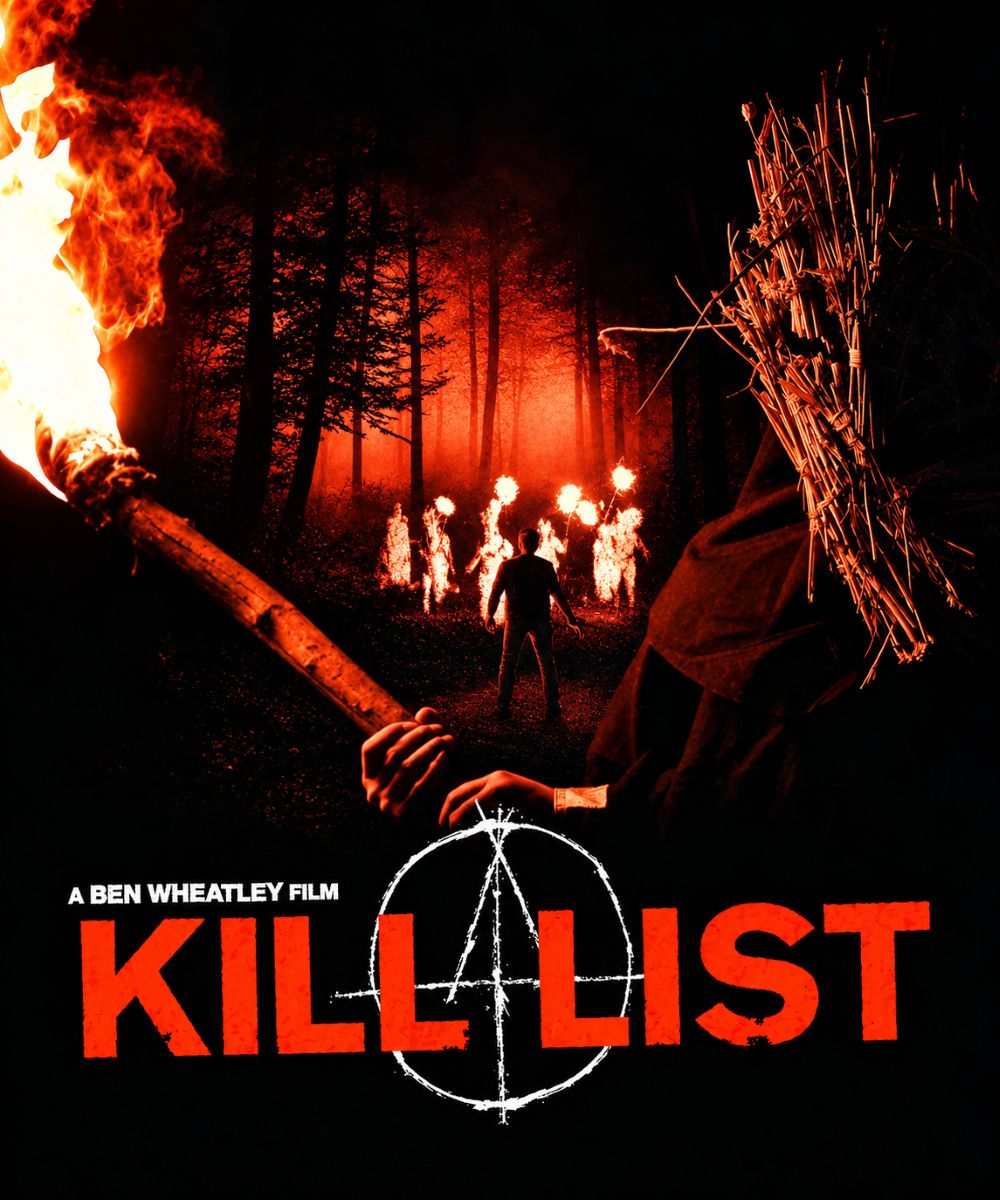
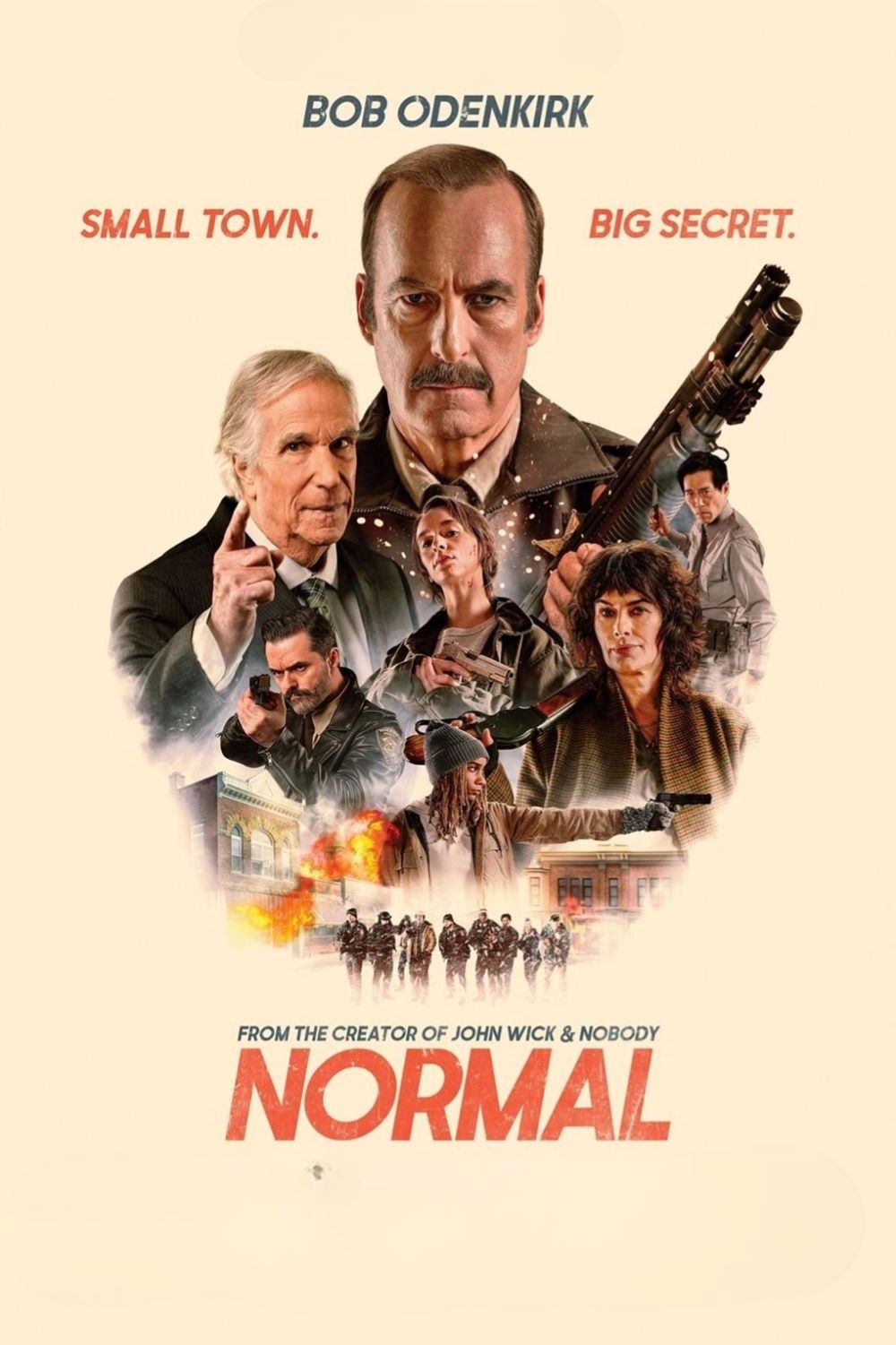
Ben Wheatley has built a career on making audiences uncomfortable. From the cultish dread of Kill List to the seasick chaos of Free Fire, he specializes in a specific kind of British miserablism that suddenly snaps into shocking ultraviolence. So, the idea of him directing a snowbound, American action-comedy starring Bob Odenkirk felt a little like hiring a surgeon to cater a birthday party. You know the food will be technically proficient, but you are terrified of what might be in the sauce. The 2026 film Normal, written by Derek Kolstad and Bob Odenkirk, is exactly that catering job: it is messy, bloody, surprisingly filling, and leaves you with a weird stomach ache if you think about it too long. But in a summer movie season often defined by joyless CGI sludge, Normal is a blast of R-rated, mid-budget freshness that knows exactly how stupid it is, even if it stumbles on its way to the finish line.

The premise is a beautiful piece of elevator pitch simplicity. Odenkirk plays Sheriff Ulysses, a haunted, world-weary interim sheriff who takes a short-term gig in the tiny, freezing Minnesotan town of Normal. The previous sheriff died under mysterious circumstances (ice fishing accident, sure), and Ulysses is just looking for a quiet place to drink coffee, ignore his wife’s phone calls, and heal. The problem is that Normal, Minnesota, is anything but. As Ulysses walks the beat, he notices the quiet desperation of rural America has been replaced by a strange, Stepford-like prosperity. The knitting store sells AR-15s. The diner’s walls are lined with loaded rifles. The town has somehow raised sixteen million dollars for a new town hall. It turns out that the citizens of Normal have sold their souls—and their town—to the Yakuza, acting as a quiet, frozen Swiss bank account for Japanese organized crime. When a pair of bumbling out-of-town robbers (Reena Jolly and Brendan Fletcher) hits the local bank, the bulletproof glass shatters, and Ulysses finds himself trapped in a blizzard, fighting for his life against an entire town of friendly, flannel-wearing killers.

Having Odenkirk as co-writer explains a lot about why Normal feels different from Kolstad’s other work. Where John Wick and the first Nobody are lean, machine-tooled scripts, Normal has a looser, more character-obsessed texture. The dialogue is full of weird pauses, non-sequiturs, and the kind of conversational detours that defined Odenkirk’s television work on Better Call Saul. You can feel the actor’s hand in every scene where Ulysses just stares at a absurd situation and mutters something mundane like “Well, that’s not ideal.” If you have seen the Nobody films, you know the rhythm Odenkirk plays as a performer. But what makes Odenkirk so fascinating to watch in Normal is how he continues to solidify an idea we haven’t really seen since Liam Neeson stumbled into Taken: the deeply unconventional action hero. Think about it. Before Neeson, action stars were Schwarzenegger, Stallone, Willis—men built like refrigerators. Then Neeson showed up at fifty-six, all grief-stricken eyebrows and theatrical training, and suddenly audiences realized that a sad dad with a “particular set of skills” was just as terrifying as any bodybuilder. Odenkirk is the spiritual successor to that twist.

No one ever looked at the guy who played slimy lawyer Saul Goodman or the hapless comic from Mr. Show and thought, “There is our next great screen fighter.” Yet here we are, years after the first Nobody, and Odenkirk has quietly become the most believable everyman action lead of his generation. Unlike Neeson’s brooding intensity, Odenkirk brings a specific, almost pathetic vulnerability. In Normal, he excels at playing the “sad dad” action hero—the guy whose joints pop when he stands up, who looks like an accountant but moves like a bar fight. Ulysses isn’t a retired assassin; he’s just a cop who is very, very tired. When he dispatches a thug with a fire extinguisher, there is no cool one-liner, just a wheeze and a wince. That grounded exhaustion is the Odenkirk brand, and because he co-wrote the part, it fits him like a tailored suit. He sells the physicality without losing that “I’m too old for this” shuffle, making you believe a middle-aged man could survive a gauntlet of killers purely out of stubbornness and regret. Henry Winkler, as the smarmy Mayor Kibner, chews the frozen scenery with glee, playing a man so polite and effervescent that you want to punch him immediately. Lena Headey shows up as a barkeep with a shotgun, and while she doesn’t get enough to do, she brings the necessary grit.

However, the secret weapon here is actually Ben Wheatley and his “anti-action” philosophy. In a recent interview, Wheatley described the violence in Normal as being akin to Final Destination. That is the smartest thing about this movie. In a typical John Wick movie, the hero is a force of nature; he actively kills people with surgical precision. In Normal, Ulysses doesn’t so much defeat the town as survive it. In one fantastic set piece, a character slips on ice and impales themselves on their own bayonet. In another, a massive sign falls and crushes a gunman mid-monologue. The town itself becomes a hostile, slippery, glass-strewn deathtrap. This gives Normal a chaotic, Looney Tunes energy that separates it from its cousins. You never know who is going to die next or how, and Wheatley directs the carnage with a blackly comic eye. The sound design of bones crunching against frozen asphalt is disturbingly hilarious. This isn’t the graceful ballet of assassination; it’s the slapstick of murder, and it is refreshing. And Odenkirk’s performance is the perfect anchor for this chaos because he always looks slightly surprised to still be alive—a quality Neeson, for all his skills, rarely conveyed. The fact that Odenkirk helped write the script means those reactions of shock and reluctant disgust feel genuine rather than performed.

But let’s address the moose in the room. Normal desperately wants to be Fargo, but it only has the vocabulary of a comic book. The Coen Brothers’ masterpiece works because the quirky dialogue masks a terrifying emptiness. Normal wears its quirk on its sleeve like a cheap souvenir. The film tries to weave in social commentary about the death of rural America, gun culture, and even features a subplot involving a trans nonbinary teen (Jess McLeod) who was the child of the previous sheriff. These moments are handled with a surprising amount of grace—they aren’t preachy, just present. However, the film is moving so fast (the runtime is a lean 91 minutes) that it forgets to give these themes any weight. You get a five-second shot of a wall of guns, and then someone blows up. The commentary is there, but it’s just set dressing for the explosion.

Furthermore, the plot structure is lopsided. The film opens with a cold sequence in Japan with the Yakuza cutting off fingers and looking menacing. It feels like a contractual obligation to remind you this is from the John Wick universe, and it’s hard not to wonder if that was a Kolstad-driven choice while Odenkirk might have preferred more mystery. It completely spoils the slow-burn reveal of the town’s corruption. Imagine The Wicker Man if the first scene showed you the villagers burning the wicker man. The tension of Ulysses realizing that “the call is coming from inside the house” is neutered because we, the audience, already know the Yakuza are lurking in the basement. Also, for a movie called Normal, it is incredibly predictable within its own lane. Once the shooting starts, you know exactly where Ulysses is going to end up (spoiler: a hardware store and then the police station). The film devolves into a familiar Assault on Precinct 13 siege scenario, and while the kills are inventive, the geography of the action gets muddy. Wheatley shoots the snowy exteriors beautifully—the white landscape makes the red blood pop like neon—but during the frantic third act, the editing gets choppy, and you lose track of who is shooting whom. For a movie that prides itself on “anti-action,” it relies heavily on the generic rhythms of action in its final twenty minutes.

Despite these structural hiccups, Normal works because it never overstays its welcome. At a brisk hour and a half, it gets in, blows up a town, and gets out. Bob Odenkirk continues to prove that he is the most relatable action hero of the 2020s—the natural heir to the “unlikely badass” throne that Liam Neeson occupied for a solid decade. Where Neeson brought Shakespearean tragedy to the genre, Odenkirk brings a frustrated accountant’s fury. He looks like he just finished paying his taxes, and you believe he is furious about it. Having co-written the film only deepens that authenticity; this isn’t a star merely showing up to say lines, but an actor who has shaped the material to his exact strengths. Ben Wheatley manages to smuggle just enough British cynicism and nasty violence into the frame to keep genre fans on their toes.

Is Normal a great film? No. It is too shallow and too structurally messy for that. But is it a great time at the movies? Absolutely. It is the cinematic equivalent of comfort food laced with hot sauce. You know what you are getting, but the kick is still satisfying. For fans of Odenkirk’s grumpy charm and Wheatley’s chaotic tendencies, Normal is a perfectly abnormal way to spend an evening. Just don’t go looking for the heart that the title promises; this one is all viscera. And frankly, in an era where most action movies are built from the same digital spare parts, watching a former comedy writer freeze his way through a Yakuza invasion feels like the most refreshing kind of normal we could ask for.

8 Shots From 8 Films You Should Watch In 2022


4 Or More Shots From 4 Or More Films is just what it says it is, 4 shots from 4 of our favorite films. As opposed to the reviews and recaps that we usually post, 4 Shots From 4 Films lets the visuals do the talking!

Today is the start of a new year and it’s also a day to start thinking about which film you’re going to discover over the course of the next 12 months!  Below are my suggestions for 8 films that, if you haven’t already watched them, you should definitely make time to watch before 2023 rolls around!

8 Shots From 8 Film For 2022

It (1927, dir by Clarence Badger, DP: H. Kinley Martin)

The Rules of Game (1939, dir by Jean Renoir, DP: Jean Bachelet)

Portrait of Jennie (1948, dir by William Dieterle, DP; Joseph H. August)

Chappaqua (1966, dir by Conrad Rooks, DP: Etienne Becker, Robert Frank, and Eugene Schufftan)

An American Hippie in Israel (1972, dir by Amos Sefer, DP: Ya’ackov Kallach)

Strange Behavior (1981, dir by Micahel Laughlin, DP: Louis Horvath)

The Two Orphan Vampires (1997, dir by Jean Rollin, DP: Norbert Marfaing-Sintes)

A Field in England (2013, dir by Ben Wheatley, DP: Laurie Rose)

The Things You Find on Netflix: Rebecca (dir by Ben Wheatley)


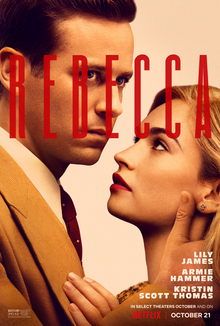
Ben Wheatley’s new film, Rebecca, is the second cinematic adaptation of Daphne du Maurier’s classic gothic romance.  It was first adapted by David O. Selznick and Alfred Hitchcock in 1940.  That Rebecca was the only Hitchcock film to win the Oscar for Best Picture, though Hitchcock himself reportedly felt that Rebecca was more indicative of Selznick’s style than his own.

Ben Wheatley, as one might expect from the brilliant director of A Field in England, takes his own idiosyncratic approach to the material.  From the start, he gets two things right when he casts Lily James as the second Mrs. de Winter and Armie Hammer as the enigmatic Maxim de Winter.  James and Hammer are ideal for these roles because they’re both so achingly pretty that they seem like they belong on the cover of a gothic romance.  That’s especially true of Armie Hammer, who has never been that interesting of an actor but who still has the type of chiseled screen presence that makes him ideally suited for roles like the one that he plays here.  He’s tall, handsome, a bit dull, and undeniably upper class.  He’s an appealing slab of beef and that makes him perfect for the role of Maxim de Winter.

Directing in vibrant color and taking advantage of the fact that the films stars two of the best-looking people working in the movies today, Wheatley brings an erotic charge to the story that was missing from Hitchcock’s more sedate (and Production code-restricted) version of the story.  When Maxim and the woman who will became the second Mrs. de Winter embark on their whirlwind romance on the French Riviera, there might as well be a title card that announces, “Yeah, they’re fucking.”  There’s nothing subtle about it but, at the same time, it provides a definite contrast to the second part of the film, in which Maxim and Mrs. de Winter return to the grand but chilly mansion of Manderley and Maxim goes from being charming and sensual to being cold and withdrawn.

It’s also at Manderley that we meet Mrs. Danvers (Kristin Scott Thomas), who is obsessed with preserving the memory of Maxim’s first wife, Rebecca.  Scott Thomas is perfect casting for Mrs. Danvers.  In fact, at first, she seems almost too perfect for the role.  She’s so imperious and passive aggressively hostile when we first meet her that I was worried that Scott Thomas wouldn’t be able to bring much more to the role beyond what she had already shown.  However, as the film progresses, Scott Thomas turns Danvers into a surprisingly vulnerable character, with the film suggesting that she’s as much of a victim of Rebecca’s toxic legacy as anyone else at Maderley.

Wheatley’s Rebecca is all about the journey of the second Mrs. de Winter and her transformation from being meek and somewhat mousey to being someone who refuses to be cast in anyone else’s shadow.  When Maxim says that Mrs. de Winter is no longer the innocent girl that he meet on the Riviera, Maxim is disappointed but Mrs. de Winter is not.  By the end of the film, the de Winters resemble none other than Henry and June Miller, searching the world for their place and casting seductive glances at the audience.

Visually, it’s a stunning film.  The colors are vibrant.  The sets are ornate.  The costumes are to die for.  That said, the film itself is never quite as engaging as it should be.  Despite the strength of the cast, the film still leaves the viewer feelings somewhat detached.  It’s all wonderfully produced by the film still feels more like an intellectual exercise than an emotional one.  Wheatley is a brilliant filmmaker but, when the second Mrs. de Winter announces that everything she’s been through is worth it because she’s found love, you don’t believe her and you don’t get the feeling that, deep down, Wheatley believes her either.  Instead, it’s hard not to feel that this version of Rebecca is a romance that doesn’t believe in love.  It’s interesting but it’s not particularly satisfying.

Here’s The Trailer For Ben Wheatley’s Rebecca!


Ben Wheatley is one of the most interesting directors working today.  As I’ve stated many times, I consider A Field In England to be one of the best films of the last ten years.

Wheatley’s next film is going to be an adaptation of Daphne du Maurier’s classic gothic tale, Rebecca!  Alfred Hitchcock adaptation of du Maurier’s novel was named the Best Picture of 1940.  Wheatley’s version has been described as a “modern” updating of the classic story.

Rebecca will be released on Netflix on October 21st and it will star Lily James, Armie Hammer, and Kristin Scott Thomas in the roles that were previously played by Laurence Olivier, Joan Fontaine, and Judith Anderson.  Here’s the trailer:

6 Good Films That Were Not Nominated For Best Picture: The 2010s


Concluding our look at good films that were not nominated for best picture, here are 6 films from the 2010s.

Exit Through The Gift Shop (2010, dir by Banksy)

This wonderfully subversive documentary was my second-favorite film of 2010, right behind Black Swan.  Was it real or was it all a hoax?  In then end, does it matter?  This brilliant film definitely deserved to be the first documentary to be nominated for best picture.  Instead, sadly enough, it was only nominated for Best Documentary Feature and it lost to the rather boring Inside Job.

Upstream Color (2013, dir by Shane Carruth)

Shane Carruth’s haunting and enigmatic Upstream Color was a film unlike any others.  This brilliant film was my favorite of 2013 but, sadly, it was totally snubbed by the Academy.

A Field In England (2014, dir by Ben Wheatley)

Speaking of haunting and enigmatic, A Field In England may not be for everyone but it’s still one of the most memorable films released over the past 6 years.  Was it a horror story?  Was it a historical heist film?  Was it all a hallucination, inspired by eating mushrooms found in the field mentioned in the title?  Your guess is as good as mine but you’ll never forget about it, even if the Academy saw fit to snub it.

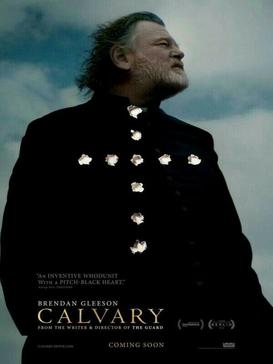
Calvary (2014, dir by John Michael McDonagh)

This Irish meditation on sin and salvation featured one of Brendan Gleeson’s best performances, a brilliant script, and an unforgettable ending.  Sadly, not only was Gleeson snubbed but the Academy ignored the rest of the film as well.  Still, it’s one of the best films ever made about being Catholic and Irish in the 21st Century.

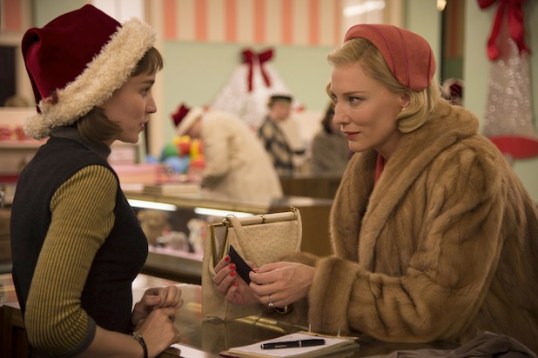
Carol (2015, dir by Todd Haynes)

How this film was not nominated for best picture, I’ll never understand.  Cate Blanchett and Rooney Mara have never been better.  This is a moving and poignant film about two women who, in the end, refuse to allow society to dictate who they are and who they love.

American Honey (2016, dir Andrea Arnold)

In American Honey, Andrea Arnold creates an unforgettable portrait of life on the fringes and she gets a star-making performance from Sasha Lane, as well.  Even Shia LaBeouf is tolerable in this film!  American Honey was perhaps too long and, narratively, too loose for the Academy’s a taste.  That’s a shame because American Honey is a film that future historians will look at when they want to know what America was like in 2016.

And that concludes our look at good films that were not nominated for best picture!  Enjoy the Oscars, everyone!


Film Review: Free Fire (dir by Ben Wheatley)


Last night, I saw Free Fire, the latest film from the visionary British directing-and-screenwriting team of Ben Wheatley and Amy Jump.

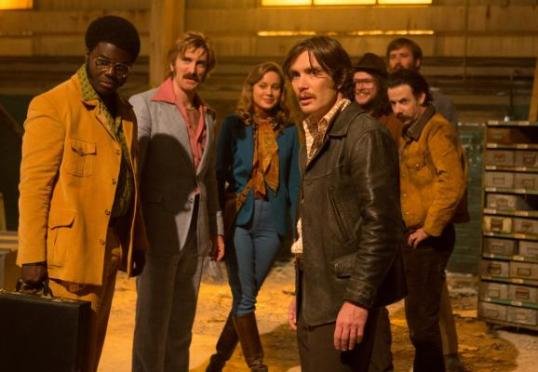
Free Fire takes place in Boston in the 1970s.  We know it’s the 70s because of all the wide lapels, the flared jeans, and the impressive facial hair.  In short, everyone looks like an extra from Thank God, It’s Friday.  Note that I said Thank God, It’s Friday and not Saturday Night Fever.  None of the characters in Free Fire could pull off John Travolta’s white suit.  As much as they try to pretend otherwise, everyone in this film is low rent.  No one is as clever or street smart as they believe themselves to be.  Even more importantly, no one is as good a shot as they think.

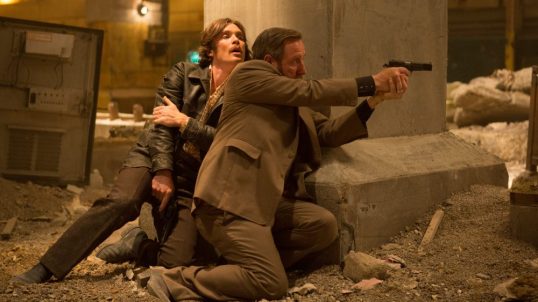
The film takes place in a decrepit warehouse, the type of place that is strewn with rats and hypodermic needles.  Chris (Cillian Murphy), Frank (Michael Smiley), Steve-O (Sam Riley), and Bernie (Enzo Cilenti) are members of the Irish Republican Army and they’ve come to the U.S. to purchases weapons.  Chris and Frank are no-nonsense professionals.  Bernie is a well-meaning moron.  Steve-O is a drug addict who, the previous night, got beaten up after he smashed a bottle across the face of a 17 year-old girl.

Working as intermediaries are Justine (Brie Larson) and Ord (Armie Hammer).  Justine specializes in keeping jumpy people calm.  She and Chris flirt as they wait for the guns to arrive.  As for Ord — well, let’s just say that Ord was my favorite character in the film.  He’s always calm.  He looks really good in a suit.  And, whenever things get intense, he’s always quick to light up a joint and make a sarcastic comment.  This is probably the best performance of Armie Hammer’s career so far.  (Or, at the very least, it’s the best performance of his that I’ve seen.  I hear that he gives an excellent performance in the upcoming Call Me By Your Name.)  Certainly, this is the first film that I’ve seen, since The Social Network, in which Hammer seemed to be truly worthy of the hype that has surrounded his career.

Finally, there’s the gun dealers themselves.  There’s Martin (Babou Ceesay), who seems to be fairly low-key professional.  There’s Gordon (Noah Taylor), who is a henchman who looks disconcertingly similar to Chris.  And then there’s Vernon, who is from South Africa and who is constantly talking and smiling.  Not surprisingly, Vernon is played by Sharlto Copley.  Finally, Harry (Jack Reynor) is a driver who desperately wants to impress Ord.  Harry loves John Denver and he also loves his cousin.  In fact, he loves his cousin so much that, when he recognizes Steve-O as the junkie who smashed a bottle across her face, Harry pulls a gun and starts firing.

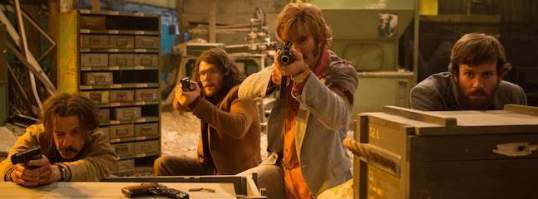
The rest of the film deals with the resulting gun fight, which is complicated with two mysterious snipers (Patrick Bergin and Mark Monero) suddenly open fire on both of the groups.  Who hired them and why?  That’s a mystery that could be solved if everyone stops shooting and yelling at each other.  Of course, that’s not going to happen because 1) no one is a good enough shot to actually get the upper hand and 2) almost everyone in the warehouse is an idiot.

At it’s best, Free Fire mercilessly parodies the excessive violence of modern crime cinema.  When it comes to crime films, most people just remember the shoot outs so Free Fire takes things to their logical extreme by just being a 90-minute gun fight.  At its weakest, Free Fire occasionally becomes exactly what it’s parodying.  The film’s structure — one night in one location — proves to be limiting.  At times, you find yourself really wishing for a flashback or at least a little exposition to explain who everyone is outside of that warehouse.  The cast is full of good actors and they all give good performances but the characters are, at best, thinly drawn.  At times, it was difficult to keep track who was who.  I especially found myself mixing up Michel Smiley and Sharlto Copely.  It was all the facial hair.

About 30 minutes into Free Fire, I was already composing a bad review in my head but, by the final shot (and yes, the double meaning is totally intentional), Free Fire had won me over.  It’s an experiment that doesn’t really work but it’s so relentless and dedicated to seeing its story to its conclusion that I couldn’t help but appreciate the film’s efforts.  When the guns finally did stop firing and the end credits started, I was shocked to discover that, without even realizing it, I actually had gotten just a little caught up in the film’s story.

Ben Wheatley and Amy Jump previously gave us one of the most memorable films of the decade (so far), A Field in England.  Free Fire might not quite work but I’ll always make the time to see the latest from Wheatley and Jump.


Here’s The Red Band Trailer For Free Fire!


Hi, everyone!

When Jeff and I went to see Logan on Thursday night, one of the many trailers that played before the film was this red band one for Free Fire.  Free Fire is an action comedy, one that I think is meant to satirize the ultra violent heist films of the 90s and early aughts.  Seriously, there are parts of this trailer that should make Guy Ritchie cringe.

That said, this trailer is also about a minute too long.  At first, everyone in the theater thought it was kind of funny but then, around the two minute mark, the yawns started to kick in.  “Are they just going to shoot at each other for the entire trailer?” someone asked.

The answer is yes.  And you know what?  The trailer probably doesn’t do Free Fire justice because this movie was directed by Ben Wheatley and I’m still having dreams inspired by his oddly hypnotic A Field in England.  I’ll follow him anywhere!

Free Fire has a March 31st release date in the UK and an April 21st release date in the States.

Anyway, here’s the red band trailer for Free Fire!

4 Shots From 4 Films: Inland Empire, Borgman, A Field In England, Goodbye to Language


4 Shots From 4 Films is just what it says it is, 4 shots from 4 of our favorite films.  As opposed to the reviews and recaps that we usually post, 4 Shots From 4 Films is all about letting the visuals do the talking.

Inland Empire (2006, dir by David Lynch)

Inland Empire (2006, dir by David Lynch)

Borgman (2013, dir by  Alex van Warmerdam)

Borgman (2013, dir by Alex van Warmerdam)

A Field in England (2013, dir by Ben Wheatley)

A Field in England (2013, dir by Ben Wheatley)

Goodbye to Language (2014, dir by Jean-Luc Godard)

Goodbye to Language (2014, dir by Jean-Luc Godard)

For Your Consideration #1: A Field In England (dir by Ben Wheatley)


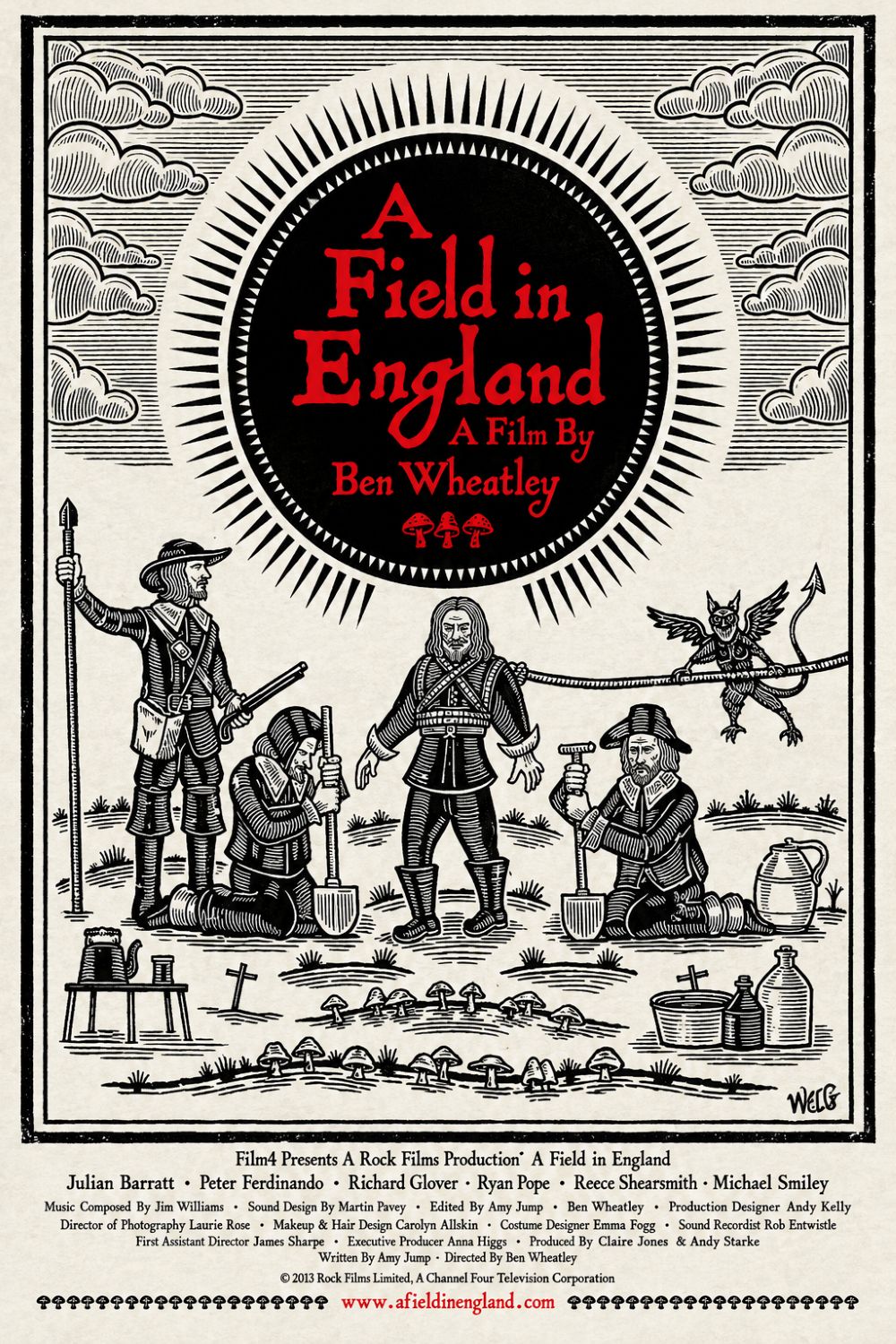
A_Field_in_England_poster

With this being awards season, a lot of attention is being given to a small handful of films.  That’s not necessarily a bad thing because I love some of those films.  However, with all the focus being some narrowly directed, we run the risk of forgetting that Boyhood, Birdman, and Whiplash weren’t the only memorable films released this year.  With that in mind, I’ve decided to post 10 quick reviews of some other films that, if I was in charge of things, would be given some awards consideration.

We start things off with Ben Wheatley’s haunting and psychedelic period piece, A Field In England.

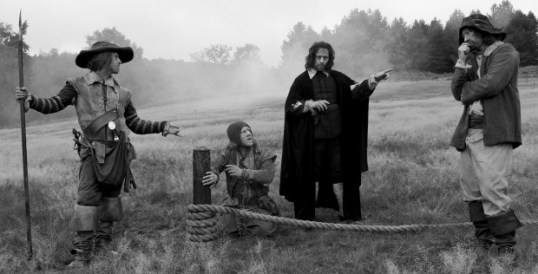
As you might be able to tell from the above trailer, A Field In England is not necessarily an easy film to describe.  The film takes place in the 17th Century, during the English Civil War.  Reece Shearsmith plays Whitehead, who is an apprentice to a never-seen alchemist known as The Gentleman of Norwich.  Fleeing from a raging battle, Whitehead meets three deserters, Cutler (Ryan Pope), Jacob (Peter Ferdinando), and Friend (Richard Glover).  Cutler offers to lead them to a nearby ale house but instead, he takes them to a desolate field where Cutler secretly drugs them with hallucinogenic mushrooms and then demands that they pull on a rope that appears to be attached to a stake in the middle of the ground.  Pulling on the rope leads to the sudden appearance of Cutler’s boss, the haughty and sadistic O’Neill (Michael Smiley).

O’Neill, it turns out, is also in some way connected to the Gentleman of Norwich.  He claims that there is a treasure buried in the field and only Whitehead — as the apprentice to an alchemist — will be able to find it.  At first, Whitehead refuses to help O’Neill but then O’Neill takes Whitehead into a tent and does …. well, he does something.  The film never makes explicit what happens in that tent and the result is one of the most hauntingly disturbing scenes that I’ve ever seen.

And from there, things only get stranger.  Jacob and Friend are forced to dig for the treasure while Whitehead consumes more and more mushrooms.  The characters occasionally freeze in place, creating a painterly tableaux.  A character dies and then repeatedly returns to life.  Most ominously of all, a black sun appears in the sky, seeming to grow with each new outrage.

Obviously, A Field in England is not a film for everyone.  That’s what makes it a truly memorable and brave cinematic experience.  At a time when so many movies are ruthlessly designed to take absolutely no risks, A Field In England is willing to run the risk of being incomprehensible.  However, the film itself is so well-directed and acted and the black-and-white cinematography is so hauntingly gorgeous that it doesn’t matter whether or not it makes any sense.  In fact, after a while, you start to truly love the fact that it does not.  This is pure cinema and therefore, it’s exactly the type of film that not only deserves but demands to be seen and honored.

Unfortunately, it’s also a film that has been ruled ineligible for any Oscar nominations, which is a pity.  However, regardless of what the Academy may say, it still deserves the consideration of film lovers everywhere.

A Field in England