February is almost over and I’m sure those who celebrated Valentines Day a couple weeks back are either flying high on love or becoming bitter by the day at things not turning out the way either party have imagined.
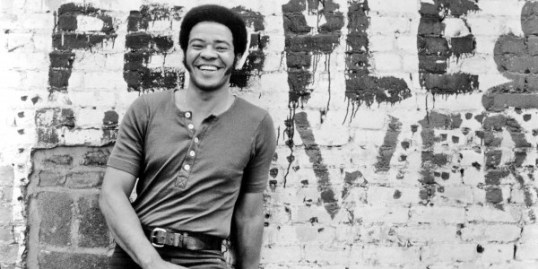
The latest “Song of the Day” puts into words such a a scenario that those in the latter might be going through right about now. It’s a song by soul and blues singer Bill Withers. He’s better known for classic soul hits such as “Lean On Me”, “Just the Two of Us” and “Ain’t No Sunshine”.
“Who Is He (And What Is He To You)” is a song of infidelity and betrayal. I just love the bass line that goes throughout the song. The song’s lyrics also hints at a sense of malice and and built-up rage at the betrayal. One could almost imagine how things will erupt after the final note and lyric has faded in the background.
Who Is He (And What Is He to You)
A man we passed just tried to stare me down And when I looked at you, you looked at the ground I don’t know who he is but I think that you do
Dag gummit Who is he and what is he to you
I have something in my heart and in your eyes Tell me he’s not someone just passin’ by And when you cleared your throat was that your cue
Dag gummit dag Who is he and what is he to you
Now when I add the sum of you and me I get confused and I keep coming up with three You’re too much for one man but not enough for two
Dag gummit Who is he and what is he to you
Hey you tell me man don’t have not much for intuition That what you really think or are you wishin’ Before you wreck your old home be certain of the new
Last summer, we saw the return of the giant monster genre on Western screens with Guillermo Del Toro’s Pacific Rim. This summer we see the return of the King of the Monsters back on the big screen where he belongs.
Gareth Edwards’ Godzilla looks to bring back the King to lay massive destruction on humanity. The trailers haven’t shown whether Godzilla will be the villain of the film or back to fight other monsters. Either as protector or destroyer he will cause much collateral damage on the cities of mankind.
This latest trailer seems to intimate that Edwards’ film will actually be a sequel to the original 1954 film of the same name.
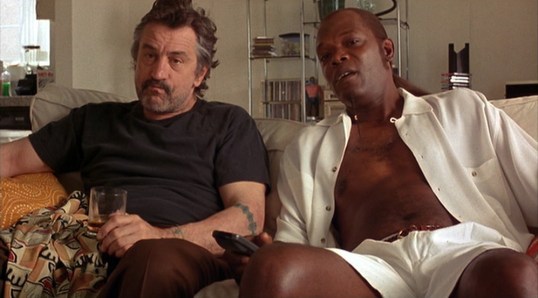
Latest “Scenes I Love” comes courtesy of Quentin Tarantino and Samuel L. Jackson.
There’s nothing else to say other than: “AK-47, the very best there is. When you absolutely, positively, got to kill every motherfucker in the room; accept no substitutes.”
Now, that is true since the venerable rifle designed by the late and great Mikhail Kalashnikov sprays all over the place like a freshman seeing a naked girl live for the very first time. Now, his comments about the .45 was a tad misleading. The .45 will jam once in awhile, but not more than any other firearm and the fact it’s still one of the most sought after and popular handguns in the world speaks to the creative genius that is John Browning.
This pick for song of the day marks the fifth time the “Bards” from Germany has made an appearance. This song marks the third track to be chosen from their latest album, At The Edge of Time. To say that I am a fan of Blind Guardian would be just a tad bit of an understatement.
“Valkyries” is the latest song of the day and it’s Blind Guardian at their most progressive metal. As a band they’ve grown from a German speed and thrash metal band then became one of the progenitors of the power metal subgenre. For the past dozen or so years they’ve evolved their sound to incorporate progressive, melodic, symphonic and orchestral stylings to their basic power metal sound.
This song has lead bard Hansi Kürsch writing about Norse mythology, specifically the concept of the Valkyries who fly and roam above the battlefield to take those…
Since Arnold Schwarzenneger left the California governor’s office and politics he’s gone back to doing what he was good at (or at least good at during the 80’s and 90’s). His first couple of films since getting back in front of the camera has been average at best (though I must say that Last Stand was pretty fun).
Now, we have him back in another film, but this time around one that’s a very hard, gritty R-rating that he hasn’t done since ever. He’s always had rated-R films, but they had a certain fun tone to them. With David Ayer’s Sabotage it looks like Schwarzenneger is trying to flex his hardcore bones. It’s definitely a surprise to hear him curse like a sailor during the red band trailer.
Sabotage is set for a March 28, 2014, release date.
Ever since the premiere of the first official trailer for Marvel Studio’s Guardians of the Galaxy this song has embedded it’s catchy claws into my brain. I’ve even caught myself humming the song at work.
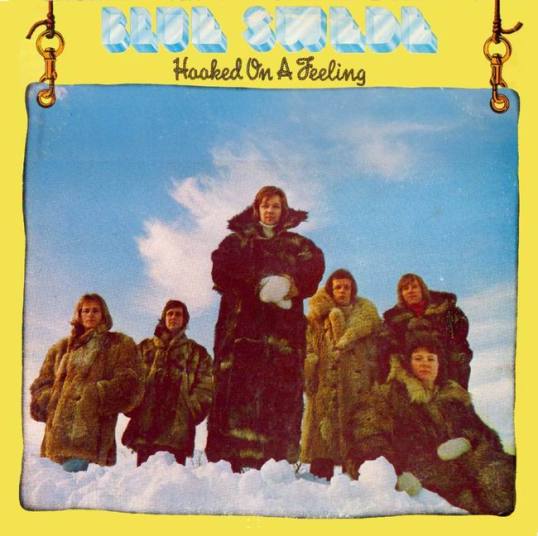
“Hooked on a Feeling” is a song I’ve heard and enjoyed in the past but never as more than a passing fancy. Maybe it’s how well the song fit in with James Gunn’s trailer for his space opera film. It’s so out of place that one cannot but fall in love with it.
So, while I let this musical virus work its way through my system I thought I’d share it with everyone else as “Song of the Day”.
Hooked on a Feeling
Ouga Chaka ouga! ….
I can’t stop this feeling Deep inside of me. Girl, you just don’t realize What you do to me. When you hold me In your arms so tight, You let me know, Everythings alright, ahahah
I’m hooked on a feeling, I’m high on believing, That your in love with me.
Lips as sweet as candy. Their taste stays on my mind. Girl, you keep me thirsty for another cup of wine.
I got it bad for you girl, But I don’t need a cure, I’ll just stay addicted, If I can endure All the good love, when we’re all alone Keep it up girl, yeah you turn me on.
I’mmm, I’mmm Hooked on a feeling. I’m high on believing that your in love with me. All the good love, when we’re all alone Keep it up girl, yeah you turn me on.
Ahaha I’m hooked on a feeling, I’m high on believing, That your in love with me.
I’m hooked on a feeling, I’m high on believing, That your in love with me.
I say I’m hooked on a feeling, And I’m high on believing, That your in love with me. I’m hooked on a feeling.
The ratings numbers for the mid-season premiere of The Walking Dead was again shocking critics and fans both. Ratings for the show just stupefies critics of the show who can’t seem to get a handle on why this show has gone beyond popular and into pop icon status. By now we can honestly say that the show’s writing will never reach the status of other current popular shows like True Detective, Game of Thrones or that of Breaking Bad. Yet, the show continues to appeal to millions of fans not just in the US but worldwide.
The Walking Dead is basically a horror soap opera that’s airs on a basic cable network. But each and every week the show airs a new episode it beats everything put up against and more than holds its own with NBC’s Sunday Night Football. It’s a show that has had and continues to have issues with it’s writing and some of its characters, but for some reason the whole affair resonates with the millions who wait with anticipation for each new episode and news to appear.
Even detractors and strong critics of the show (some of who, vehemently hate the whole thing’s success and popularity) manage to still watch the show if just to poke fun and tear it down. It’s almost as if by doing so they can find that secret ingredient as to why the show remains so popular and successful.
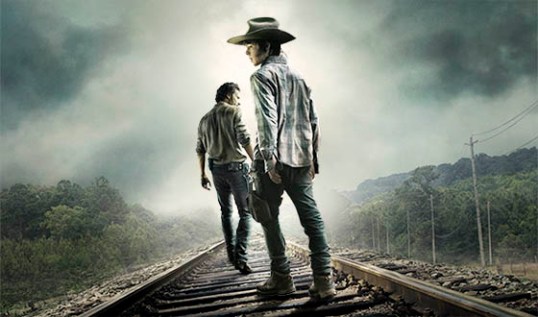
Tonight’s episode focuses on the rest of the prison group who fled their sanctuary after the battle with the Governor’s forces. Last week it was more on the fleeing Rick, Carl and Michonne and their journey from the brink of despair to at least a semblance of hope and acceptance. We begin with the duo of Daryl and Beth who fled the prison on foot.
It’s an odd pairing that puts together one of the show’s most badass and pragmatic characters with one of it’s most hopeful (at least now with Hershel Dead). It’s a cold opening and section of the episode which includes diary readings by Beth of her renewed faith and need to continue to live after the group arrives at the prison. Once again we see the ghost of Hershel looming over all the survivors like a shade trying to give them hope to live for the next day despite the travails and horrors they’ve just left behind and still looking forward to.
The same goes for pretty much all the little groups who made it out of the prison. We see each and everyone of them not just fleeing for their lives, but also trying to get find a reason to continue on. With Tyreese and his group of Lizzie, Mika and Baby Judith it’s to continue on if just for the sake of keeping the girls alive. His road seems to be the toughest with three little girls to keep safe which makes his reaction to seeing Carol alive (at this time Rick hadn’t told Tyreese about Carol’s confession in regards to Karen’s death) was one of relief.
With Sasha, Bob and Maggie we see a trio dealing with the events they’ve just fled in their own ways. Sasha seems to be the most pragmatic with wanting to keep moving forward, scavenge for food and find a shelter. On the opposite end of the spectrum we see Maggie still dealing with the murder of her father (Hershel) and not knowing if her younger sister is still alive and, worst yet, if her husband (Glenn) made it out. It falls to Bob to find a middle ground between the two women’s agendas. Ironic considering that Bob, in the first half of the season, who was always unsure whether he truly belonged in the group and if his own personal demons meant he was a liability (yes and, to a degree, yes also). When they come across the prison bus that Maggie thought Glenn was in full of zombies and its passengers either turned or devoured one could almost see the light of hope fading from Maggie’s eyes. So, it was such a relief (again finding relief of any kind seems to be one of tonight’s theme) when Glenn wasn’t on the bus in one form or another.
Then there’s the final section of the episode where we find out that Glenn definitely survived the attack on the prison, but was left behind (due to the fact he left the bus to try and find Maggie during the battle) all alone in the ruins of their former sanctuary. He doesn’t know whether anyone else made it out and if his wife was amongst them. For a moment when back in their cell room he breaks down and seems to want to just shutdown and not deal with this new world anymore, but once again his time spent with Hershel brings him back from the brink.
Even new to the gang, Tara Chalmers, looks like she’ll fit in with Rick and his gang. She seems to survive when everyone else around her dies. Tara also harbors her own demons with the biggest being her participation in attacking the prison and getting pretty much everyone in her group killed. She’s troubled and hurting emotionally which makes her a perfect fit for Rick’s group.
Yet, the episode tonight all ended it’s three different sections with a sense of hope. The biggest being news that a new sanctuary might just be close enough for them to find shelter and safety once more. The biggest reveal of all in tonight’s episode is the arrival and introduction of three new characters whose impact on Rick’s people may just be as important and game-changing on the show as it was in the comics.
With the group slowly finding their bearings it looks like the apocalyptic battle that sent them all in different directions wasn’t the end. Things are definitely not over for Rick and his people. Will this new sanctuary hinted at in tonight’s episode become a new Woodbury or will it be something that Rick and his people can turn into something even better than the prison. The prison was sanctuary but was never an ideal place to restart whatever form of civilized society the survivors were hoping for. Maybe this new place they’re headed to will be that place.
Notes
Tonight’s episode was written by Matthew Negrete & Channing Powell and directed by Tricia Brock.
At least now the question of what happened to baby Judith has now been answered.
Lizzy looks like she’s turning out to be the very proper sociopath.
We get some resolution as to what happened to Tara’s sister, but only through Tara’s recollection of her being swamped by zombies after killing the Governor.
Some very fine work by Greg Nicotero’s wizards over at KNB EFX with the zombie kills and flesh-eating (I think these two things are part of why people continue to return to this show despite detractors and critics yelling to everyone and no one why it’s stupid to do so).
Ladies and gentlemen, let me introduce to you all Sgt. Abraham Ford, Rosita Espinosa and Eugene Powell played respectively by Michael Cudlitz, Christian Serratos and Josh McDermitt.
Talking Dead Guests: Alanna Masterson of The Walking Dead, Joe Kernen of CNBC Squawk Box and Jim Gaffigan
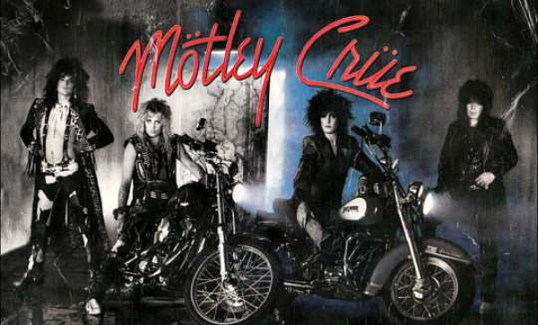
For some this is the height of hair metal at it’s raunchy. Some even call this song one of the best metal songs out there (though that’s stretching the term metal like it was Plastic-Man). I, for one, call this one of the guiltiest pleasures to come out of the hair metal scene of the 1980’s.
I’ll just let the lyrics speak to the cheesetastic and raunchirific pleasure this song was and remains (especially in strip clubs) to this very day.
Girls, Girls, Girls
Friday night and I need a fight My motorcycle and a switchblade knife Handful of grease in my hair feels right But what I need to make me tight are those
Girls, girls, girls Long legs and burgundy lips Girls, girls, girls Dancin’ down on Sunset Strip Girls, girls, girls Red lips, fingertips
Trick or treat, sweet to eat On Halloween and New Year’s Eve Yankee girls, you just can’t be beat But you’re the best when you’re off your feet
Girls, girls, girls At the Dollhouse in Fort Lauderdale Girls, girls, girls Rocking in Atlanta at Tattletails Girls, girls, girls Raising hell at the Seventh Veil
Have you read the news In the Soho Tribune? Ya know she did me Well, then she broke my heart
I’m such a good good boy I just need a new toy I tell you what, girl Dance for me I’ll keep you overemployed Just tell me a story You know the one I mean
Crazy Horse, Paris, France Forgot the names, remember romance I got the photos, a ménage à trois Musta broke those French’s laws with those
Girls, girls, girls At the Body Shop and the Marble Arch Girls, girls, girls Tropicana’s where I lost my heart Girls, girls, girls
Vince: Hey Tommy, check that out, man!
Tommy: What Vince? Where?
Vince: Right there, man! Hey baby, you wanna go somewhere?





 Through the Shattered Lens