Review: Ready or Not (dir. by Matt Bettinelli-Olpin & Tyler Gillett)


“This is some Lord of the Rings bullshit!” — Grace

Ready or Not is a sharp, nasty, and often very funny horror-comedy that turns a nightmare wedding into a vicious class satire. It works best when it embraces its wild premise with full confidence, even if some of its deeper ideas are only lightly explored.

Directed by Tyler Gillett and Matt Bettinelli-Olpin, the film follows Grace, played by Samara Weaving, on what should be the happiest night of her life, only for her new in-laws to force her into a lethal game of hide-and-seek. That setup is simple, but it gives the movie a strong engine: one part survival thriller, one part dark comedy, and one part social commentary about money, power, and inherited privilege. The elegance of the concept is that it does not need much explanation to be effective, because the rules are clear, the stakes are immediate, and the movie wastes little time before letting the chaos begin.

The biggest strength of Ready or Not is Samara Weaving’s performance. Grace is written as someone who feels believable under pressure, which matters because the film asks her to go through absurd, increasingly brutal scenarios while still retaining her humanity. Weaving handles the tonal balancing act extremely well, moving between fear, frustration, disbelief, and darkly comic determination without losing the character’s core. She gives the film an emotional anchor, and without that, the movie would risk becoming just another splatter-heavy genre exercise.

The supporting cast also deserves credit because the Le Domas family is not just rich, but memorably awful in different ways. Adam Brody, Andie MacDowell, Henry Czerny, and the rest of the ensemble help create a household that feels polished on the surface and rotten underneath. Their performances are broadly heightened, but that fits the movie’s tone. The family’s panic, incompetence, and stubborn devotion to tradition become part of the joke, and the film gets a lot of mileage out of watching these people unravel while trying to appear dignified.

Tonally, the movie is strongest when it leans into the tension between horror and comedy. The violence is graphic, but the film rarely treats gore as the whole point; instead, it uses bloodshed as part of a larger joke about entitlement and ritual. That gives the movie a mischievous energy. It wants you to laugh at the absurdity of the situation while still feeling the danger, and for the most part it succeeds. The pacing is also a real asset, since the film avoids spending too long on setup and gets to the conflict quickly. Once the game begins, it keeps finding new ways to escalate the mayhem.

Thematically, Ready or Not is clearly aiming at class resentment and inherited wealth, and that angle gives the film bite. The Le Domas family represent old money, secrecy, and self-preserving tradition, and the movie uses their ridiculous customs to expose how fragile that world really is. There is a satirical edge to how the film portrays privilege as both absurd and dangerous, especially when the family’s traditions are treated with near-religious seriousness. At the same time, the movie is not especially subtle about this, and that can be either a strength or a limitation depending on what you want from it.

That lack of subtlety is one of the film’s few weaknesses. The “eat the rich” angle is easy to understand, but it is not always developed with much nuance, and some viewers may wish the script pushed its social ideas further. The mythology behind the family’s tradition is also deliberately loose, which helps the movie stay nimble but can make the lore feel less important than the film suggests it should be. In addition, the third act gets increasingly outrageous, and while that is part of the fun, not every twist lands with the same force. A few viewers may find the ending more satisfying than the logic that gets it there.

Even so, the film’s swagger largely carries it through those rough spots. Ready or Not understands that tone is everything in a movie like this, and it keeps its balance surprisingly well for something so gleefully chaotic. It is gory without becoming tedious, funny without undercutting the danger, and mean-spirited without losing sympathy for its lead. That is not an easy combination to pull off, and the filmmakers deserve credit for making the material feel brisk and controlled rather than sloppy or overextended.

What makes Ready or Not memorable is that it knows exactly what kind of movie it is. It is not trying to be profound in the heavy, prestige-drama sense, but it is smarter than a simple bloodbath and more disciplined than a pure shock machine. Its pleasures come from its energy, its attitude, and its willingness to let a ridiculous premise keep escalating without apology. The result is a horror-comedy with enough style, bite, and performance power to remain entertaining even when its thematic ambitions are a little broader than deep.

In the end, Ready or Not is a highly watchable genre piece with a terrific lead performance, a savage sense of humor, and a premise that stays potent from beginning to end. It is not perfect, and its satire can feel a little blunt, but it delivers exactly what it promises: a tense, bloody, darkly funny ride through a family dinner from hell.

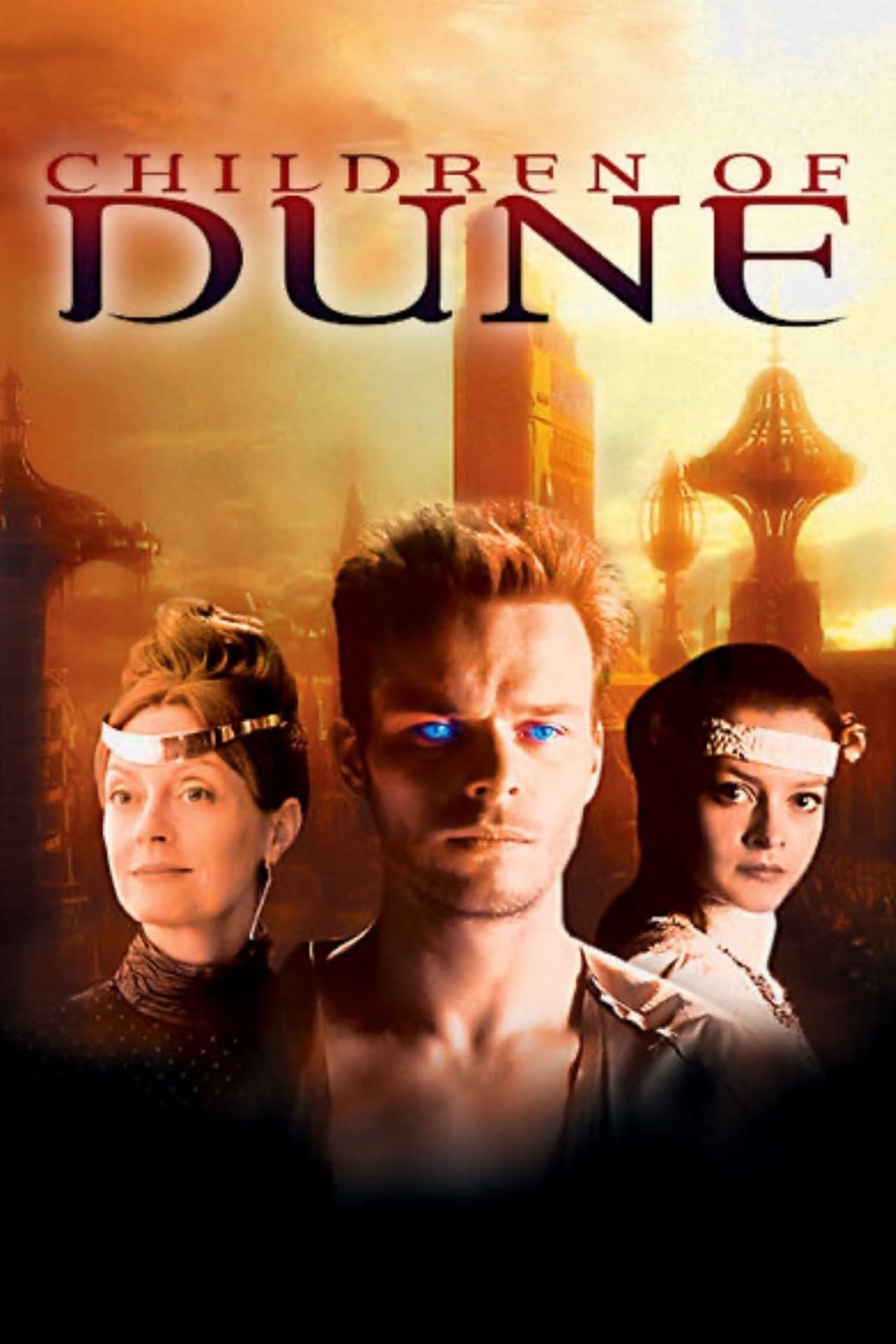
Review: Frank Herbert’s Children of Dune


“To know the future is to be trapped by it.” — Leto II Atreides

Children of Dune is one of those sci-fi miniseries that feels a little rough around the edges, but still manages to hit with real ambition, atmosphere, and a lot more emotional weight than its modest TV budget might suggest. It is based on Frank Herbert’s Dune Messiah and Children of Dune, aired on the Sci Fi Channel in 2003 as a three-part miniseries, and it serves as a continuation of the 2000 Frank Herbert’s Dune adaptation.

What makes this version stand out is that it doesn’t just try to retell a story about desert politics and giant worms. It digs into legacy, prophecy, religious fanaticism, and the terrifying cost of being treated like a messiah. That sounds heavy, and it is, but the miniseries keeps moving with enough drama, betrayals, and strange mythic energy that it rarely feels static.

The opening section works especially well because it immediately reminds you that Paul Atreides’ victory was never a clean one. By the time the story gets going, his empire is already rotting from the inside, and the series makes a strong case that power on Arrakis is always poisoned by something, whether it is politics, faith, or the sand itself. The shift from Paul’s once-legendary rise to the unraveling of the world around his children gives the story a tragic tone that fits Herbert’s universe perfectly.

A big reason the miniseries works is that it understands Dune is not really about flashy action, even though it has some. It is about ideas, and this adaptation is willing to spend time on them. The show’s best material comes from the way it frames religion as both weapon and trap, especially once the myth of Muad’Dib starts consuming the people who worshiped him. That theme gives the whole thing a haunted feeling, like everyone is living inside a prophecy they do not fully understand.

The cast does a lot of heavy lifting, too. Alec Newman brings a wounded, exhausted quality to Paul that fits the role well, and his scenes carry real sadness because he feels like a man who has seen too far and cannot unsee it. Jessica Brooks, James McAvoy, and Julie Cox all help ground the family drama, while Susan Sarandon brings a cold intensity that gives the political side of the story some bite. Even when the dialogue gets stiff, the actors usually sell the material better than the script itself does.

One of the most interesting choices in Children of Dune is how it treats the twins, Leto II and Ghanima, as more than just plot devices. Their importance is obvious from the beginning, but the series gradually builds them into the real center of gravity. That works because the story is partly about inheritance, and these kids are inheriting not just a throne, but a nightmare of destiny, expectation, and manipulation. The series knows that the most dangerous thing in this universe is not a blade or a bomb, but a future someone insists is already written.

The production design is another area where the miniseries earns a lot of goodwill. It has that early-2000s TV look, sure, and some effects are clearly limited by the era, but the sets, costumes, and overall visual imagination give it a strong sense of place. Arrakis feels harsh and ceremonial at the same time, which is exactly what it should feel like. The costumes also help sell the political divide between factions, making the whole thing look more like a living empire than a generic sci-fi stage.

There are moments where the miniseries feels very theatrical, almost to a fault. Characters occasionally deliver lines with so much seriousness that the show risks sounding like it is declaring its themes instead of dramatizing them. That said, this is also part of the charm. Children of Dune is not embarrassed by its own scale or its own weirdness, and that confidence helps it pull off material that could easily have collapsed under a more self-conscious approach.

The pacing is mostly solid across the three parts, though it does have the usual miniseries issue of compressing a very large story into a limited runtime. Because it covers most of Dune Messiah in the first installment and then adapts Children of Dune in the later parts, some transitions feel abrupt and some developments move faster than they probably should. Still, the adaptation largely keeps its focus, and it is impressive how much story it packs in without turning into total chaos.

If there is a weakness here, it is that the miniseries can sometimes feel like it is working harder to explain the mythology than to make you feel it. Herbert’s world is notoriously dense, and this version does not always smooth that out for viewers who are not already familiar with the books. A newcomer could easily feel like they have been dropped into the middle of a dynastic collapse with very little hand-holding. But for a follow-up to Frank Herbert’s Dune, that density is more of a feature than a bug.

The best compliment I can give Children of Dune is that it respects the seriousness of its material without becoming completely lifeless. It has the courage to be grand, strange, and a little mournful all at once. Even when the execution is uneven, the miniseries understands that the heart of this saga is not a simple battle for power. It is the burden of seeing the future and realizing it may be worse than the present.

As a sequel, it improves on the sense of scale and emotional consequence from the earlier adaptation. It feels less like an introduction to a universe and more like the tragic fallout of one. That makes it a more satisfying watch for viewers who want Dune to feel like an epic family tragedy instead of just a sand-covered political thriller. The fact that it does this on TV, with all the limitations that implies, makes the achievement even more impressive.

In the end, Children of Dune is a flawed but memorable miniseries that succeeds because it commits to its own strange seriousness. It may not be sleek, and it may not always be easy to follow, but it has ideas, mood, and a genuine sense of doom that suits Herbert’s universe. For fans of the books, it is one of the more interesting screen adaptations because it is willing to lean into the philosophical and tragic side of the saga rather than sanding it down into something safer. For everyone else, it is still a fascinating piece of early-2000s sci-fi television that swings bigger than most shows of its era.

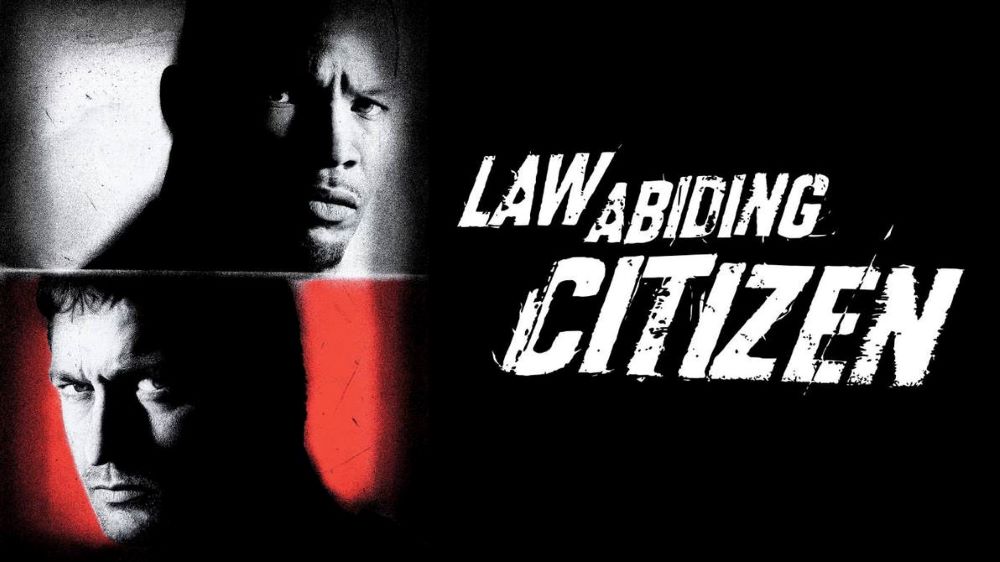
Review: Law Abiding Citizen (dir. by F. Gary Gray)


“Christ! Whatever happened to right and wrong!? Whatever happened to the people!? Whatever happened to justice!?” — Clyde Shelton

Law Abiding Citizen is one of those thrillers that grabs you right from the start and refuses to let go, even as it spirals into moral chaos. Directed by F. Gary Gray and released in 2009, the film pits two central performances—Gerard Butler as Clyde Shelton and Jamie Foxx as Nick Rice—against each other in a brutal chess match of justice, revenge, and control. On the surface, it’s a revenge thriller about a man wronged by a broken justice system. But dig a little deeper, and it becomes a dark commentary on the limits of law, the manipulation of morality, and the ethics of punishment. It’s not perfect—it veers toward implausibility at times—but it’s undeniably gripping, stylishly cold, and lingers in your mind long after the credits roll.

The film begins with a horrifying scene that immediately sets the tone for what’s to come. Clyde Shelton, an inventor and family man, watches helplessly as his wife and young daughter are brutally murdered in their home. When the killers are caught, Assistant District Attorney Nick Rice cuts a deal that lets one murderer go free in exchange for testifying against his partner. The decision, made in the name of efficiency and legal pragmatism, destroys Clyde’s faith in the justice system. Ten years later, when the murderer is executed under mysterious and gruesome circumstances, Clyde resurfaces—not as a grieving victim but as a brilliant, calculated force determined to expose the system’s corruption in the most explosive way imaginable.

What makes Law Abiding Citizen so effective early on is its sympathy play. The audience initially feels the same fury Clyde does. We understand his pain and disillusionment, and for a brief moment, we want him to succeed in making the system accountable. Butler captures that emotional transition perfectly—from quiet devastation to methodical vengeance. The scene where Clyde calmly watches his first victim die, having orchestrated the man’s death with near-surgical precision, is shocking yet disturbingly satisfying. This is where the film hooks its audience: it asks whether revenge can ever be justified when justice fails.

But as the killings pile up and Clyde’s plan grows more elaborate, that empathy begins to slip. The real tension of the film lies in that moral gray space—where Clyde’s righteous anger turns monstrous. His war isn’t just against the criminals but against the entire justice system, targeting judges, lawyers, and anyone he sees as complicit. Nick Rice, on the other hand, becomes the face of that system. He’s young, successful, and smug—a prosecutor obsessed with his win-loss record. Jamie Foxx’s performance gives Rice an icy veneer of confidence that slowly cracks as Clyde’s campaign escalates. The interplay between these two men—the avenger and the pragmatist—is the film’s heartbeat. It’s less about who will win and more about whether either man can still claim moral authority when the dust settles.

From a narrative standpoint, Law Abiding Citizen is structured like a dark puzzle. Each scene unveils another layer of Clyde’s intelligence and ruthlessness. The tension comes not from knowing who’s doing it—we know—but from wondering how he’s doing it. The film’s most audacious twist is that Clyde continues orchestrating murders even while locked in a high-security prison cell. This push toward psychological warfare turns the story into a cat-and-mouse game with shades of Seven and The Silence of the Lambs. However, where those films maintained a clear thematic direction, Law Abiding Citizen sometimes stumbles under the weight of its ambition. The logic of Clyde’s omnipotence starts to stretch believability, and the film sacrifices realism for spectacle. Still, it’s hard to look away when the spectacle is this sharp and aggressive.

Visually, F. Gary Gray directs with a crisp, metallic style. The cinematography uses muted tones and sharp contrasts to reflect the film’s moral ambiguity. The more the story dives into Clyde’s schemes, the colder and more sterile the visuals become, echoing his detachment from human empathy. The editing is snappy and kinetic, especially during the interrogation scenes and courtroom exchanges. Brian Tyler’s score underscores the tension with brooding, pulsing beats that heighten the sense of dread. Every technical element supports the emotional core—revenge as obsession, intelligence as a weapon.

Gerard Butler, best known for roles that highlight his physicality, delivers one of his most controlled performances here. His portrayal of Clyde is chilling because of how calm it is. He doesn’t yell or flail; his menace is intellectual. Even in scenes where the dialogue leans toward theatrical monologues about justice and morality, Butler maintains focus, grounding the performance in conviction rather than chaos. Jamie Foxx, meanwhile, brings subtlety to Nick Rice. His transformation from ambitious lawyer to shaken moralist is gradual. By the final act, Nick’s self-assurance has eroded into doubt—about the system, his choices, and his own complicity. Foxx and Butler’s dynamic never feels forced; it’s built on escalating tension, mutual respect, and bitter irony.

Where Law Abiding Citizen truly provokes is in its ethical questioning. What does justice mean when the system serves convenience instead of truth? Is it right to play by the rules if those rules protect the guilty? Clyde’s crusade, as twisted as it becomes, emerges from a very real frustration—one viewers can sympathize with, especially in a world full of technicalities that favor the powerful. But the film also serves as a warning. In trying to dismantle corruption, Clyde becomes its reflection. His vigilante justice ultimately mirrors the same indifference he condemns. By the time the film reaches its explosive climax, viewers are left torn—not cheering for Clyde’s punishment, but not wanting him to win either. This ambiguity gives the film an edge that lingers long after the credits roll.

That said, the story’s final act is where opinions tend to divide. Once strategy gives way to spectacle, the film trades nuance for action. The ending, while satisfying in terms of closure, feels somewhat abrupt and simplified compared to the build-up. The moral complexity that defined the first two acts begins to blur into a conventional revenge-thriller showdown. Still, even in its imperfections, the film sustains a dark fascination. It never feels lazy or hollow—it’s just that its ideas might have deserved a slightly more refined execution.

Despite its narrative stretches, Law Abiding Citizen remains a standout in the late-2000s thriller landscape. It’s unapologetically intense, dramatically charged, and philosophical enough to make its explosions feel earned rather than gratuitous. The film thrives on its contradictions: it condemns violence while indulging in it, critiques the system while sensationalizing its collapse. For all its over-the-top plotting, the emotional truth stays intact—when justice becomes negotiable, vengeance becomes inevitable. And whether viewers side with Clyde or Nick, the uneasy feeling the film leaves behind is its greatest triumph.

At its core, Law Abiding Citizen is less about revenge and more about control—who wields it, who loses it, and how the pursuit of it can consume both sides. F. Gary Gray’s direction, backed by two commanding performances, turns what could’ve been a formulaic thriller into something more charged and psychological. It’s a film that asks uncomfortable questions about morality, justice, and the price of vengeance, even if its answers are messy. And maybe that’s the point—justice, like humanity, rarely fits into a clean equation.

A Vision of the Avengers: Age of Ultron for the Third Time


AgeofUltron

The third and, hopefully, final trailer for Avengers: Age of Ultron was unlocked today after a Twitter event which had millions of people tweeting the hashtag #AvengersAssemble. One has to give it up to the Marvel marketing machine. They know how to get the public clamoring for more when it comes to their films.

All that could be said has been said about this film. Just sit back and enjoy (or critique) one of the most highly-anticipated films of the year.

Trailer: Furious 7 (Extended)


Furious7

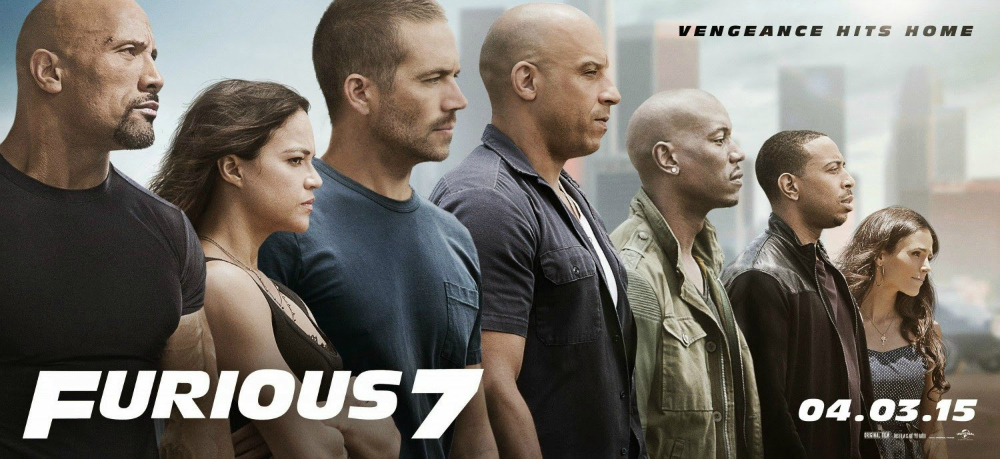
We saw the Super Bowl trailer of Furious 7 (formerly known as Fast & Furious 7). Well, here’s the extended version of it with more Jason Statham mayhem added to the mix. We also get The Rock get beatdown by Statham. Then again we’re all pretty much aware that Statham probably is the only person can put a beatdown on the Rock.

It looks like the summer blockbuster season starting out earlier and earlier with each passing year. Furious 7 is set for an April 3, 2015 release date.

Avengers: Age of Ultron (2nd Trailer)


AVENGERS-ULTRON-POSTER

“Everyone creates the thing they dread.” — Ultron

New Avengers: Age of Ultron trailer has dropped during the inaugural College Football Playoff Championship game between Oregon and Ohio State.

For all the underwhelming reaction that the Ant-Man teaser trailer got after it premiered last week it looks like this latest trailer for Avengers: Age of Ultron just builds on the immense buzz and hype created by the leaked trailer from November 2014.

No need to say more. Just watch the new hotness as we wait for May 1, 2015 when Avengers: Age of Ultron shows us something beautiful.

Trailer: Avengers: Age of Ultron (Extended)


AVENGERS-ULTRON-POSTER

“I know you mean well. You want to protect the world, but you don’t want it to change. There’s only one path to peace…your extinction.” — Ultron

Marvel has released a new extended version of the teaser trailer they released a couple weeks ago. While it’s pretty much similar to the first teaser trailer this extended version has a new intro with Ultron in his initial form confronting the partying Avengers in Avengers Tower. The voice-over by James Spader as Ultron also sounds much different in this trailer than the first. We also get more lingering shots of all the Avengers from Iron Man all the way to Hawkeye rather than the rapid-fire cuts we saw in the first teaser.

May 2015 cannot come soon enough.

Avengers: Age of Ultron is set for a May 1, 2015 release date in North America.

Trailer: Furious 7 (Teaser)


Furious7

To much fanfare we finally have the teaser trailer to the latest adventures of Dominic Toretto and his band of misfit drivers.

Now officially titled as Furious 7, the latest film in the franchise goes further away from it’s street racing roots and into the spy thriller and superhero genres it drifted into with Fast Five. Even the title alone sounds like a superhero team straight out of Marvel Comics. It’s almost as if I expect to see Iron Fist, Luke Cage, Daredevil and Elektra plus three other furious heroes fighting the good fight.

The teaser pretty much teases the sort of over-the-top, physics-defying action scenes we’ve come to expect from this franchise. It’s almost as if with each new film they up the ante as to how much universal laws Dom and his crew will break in order to entertain it’s massive fan audience.

Furious 7 is set to ride and die this April 3, 2015.

Movie Review: Teenage Mutant Ninja Turtles {2014} (dir. by Jonathan Liebesman)


teenage_mutant_ninja_turtles_ver15_xxlg-720x1066Before I start, I’d like everyone in advance to understand I’m aware this is a kid’s movie. So, when I complain, feel free to throw it out there like the hula hoop in The Hudsucker Proxy (“You know…for kids”). I may be nitpicking about this movie, looking at it with eyes that are older than the intended audience. It may also be somewhat spoiler filled, so a little warning beforehand.

When it comes to Kevin Eastman and Peter Laird’s Teenage Mutant Ninja Turtles, I grew up on the 90’s Era cartoon. Truth be told, though, the Turtles started way back in the early 80s and the new movie may be closer to that in some ways. I can’t really say for sure due to my unfamiliarity with the comics.

I can say that while Jonathan Liebesman’s Teenage Mutant Ninja Turtles may not be my Ninja Turtles, but they may end up being someone’s Ninja Turtles. That’s really the kindest thing I can say about it. A number of kids in my audience seemed to really enjoy it, though the adults who came for the nostalgia factor (myself included) looked a little disappointed. It’s not a horrid movie. I had moments – particularly the snow sequence – that I truly enjoyed, but at best this Turtles feels like an action demo reel sliced together.

The beginning of the movie explains the Turtles, the Foot Clan, and The Shredder in the space of five minutes. This is helped along with some drawings down by Kevin Eastman himself. Everyone in the city is aware of the Foot Clan, and reporter April O’Neil (Megan Fox) is trying to crack her first big story with anything she can find about the Ninja groups criminal acts. This leads her to discovering the Turtles, Splinter and together they try to stop the Shredder’s master plan – one that involves poisoning all of New York City with a deadly mist from the top of a tower. This involves the Turtles because their blood still contains remnants of the Mutagen used to change them, which assists in their amazing healing factors. The Mutagen also acts as an antidote to the poison. It’s almost the same premise used in The Amazing Spider-Man and Batman Begins. Would it hurt to have a little creativity? Didn’t anyone in the writing department say “wait, we’ve seen this trend in movies about as much as we’ve seen the ‘Captured-Villian-taken-to-Hero’s-Base-who-Springs-Trap-that-Disables-Hero’s-Ability-to-do-Good’. Maybe we should try something different here?” Nope. Let’s simply take a tired plot line and do it again. Teenage Mutant Ninja Turtles deserves to be the final film that uses the Toxic Mist angle for a while.

A moment of silence, if you will:

R.I.P. “Toxic Mist, a.k.a. Mutagen Mist, a.k.a. Scarecrow Dust” – Born 2005 (Batman Begins) – Died 2014 (Teenage Mutant Ninja Turtles)

Here’s what I had a problem with:

Exposition by way of Explanation –
The rule of “Show, don’t Tell” states that it’s better to reveal information on screen – to the characters and the audience – than it would be to have someone just tell you what’s up. Most of Turtles moves in this fashion. When April witnesses a crime thwarted by Raphael, she runs to her boss, her room mate and pieces it all together, telling everyone exactly what we just saw – that a vigilante is fighting back against the Foot Clan. The argument could be made that the explanation is done to help kids understand what’s going on, but the scene before that already covered it.

Plot holes within plot holes-
Turtles also suffers from giving the audience information that the writers completely ignore later on. At one point, one of the members is wounded and the remaining Turtles have to get Mutagen to save them. Wait. The story already mentioned that they all had Mutagen in them – the “Mutant” part that accelerates their healing – so why would you need to administer more when what they have can already save them? It’s face palm moments like these that show how much focus was done on making the movie look good, compared to writing a solid plot. Some things don’t make sense here.

What did work:

Brian Tyler’s score for the film may be the best element of the entire movie. It may sound similar to Thor: The Dark World in some ways, but it’s a good theme for the heroes overall. I’ve had some of it on repeat on Spotify, truth be told.

The action is actually pretty good, though it takes some time to get there. Some of the fight scenes suffer from the Bourne Identity and Batman Begins blur effects, but overall, it works out. Again, I wouldn’t mind seeing that snow sequence again if I didn’t have to sit through the entire film. From that point forward, the action picks up. Each turtle (and Splinter) has their own moment in the spotlight and when it happens, it can cause a smile or two, however brief that may be. The Turtles themselves are huge and highly mobile, which make the fights look like Power Rangers battles before the enemy grows to a huge size. There aren’t as many Bay like explosions in this as you’d find in Transformers, but you can feel his influence on this. That could be considered a problem when you compare Turtles with Battle: L.A. (which I enjoyed).

The In Between:

The casting on this movie is a mixed bag. Megan Fox isn’t a bad April O’Neil by any means (she’s good), but April herself in this version isn’t the sharpest tool in the shed. By that, I mean she is as abbreviated in this as Lois Lane was in Man of Steel. In an age where we’re trying to see more well rounded female leads on screen, O’Neil becomes just another Lara Croft / Carol Marcus / Sydney Bristow with issues circulating around her father. Not saying it’s unlikely, but they could have found something else to work with as background. Again, it’s a kid’s movie. Maybe it doesn’t need to be that complex. Will Arnett felt like a sidekick in this, and I found it a little difficult to not hear his Lego Batman when he spoke, but that’s just me. The Turtles themselves could be voiced by anyone, really. I didn’t feel too much of a difference between them, save that they played to their archetypes. Raphael always seemed angry, Mike is playful and so on.

Overall, Teenage Mutant Ninja Turtles is a kid’s film and maybe only young kids will really enjoy it. There’s action for both old and new fans of the Heroes in a Halfshell, but it’s wrapped up in stories we’ve heard before. This probably one you’ll want to wait for video, at best.

Song of the Day: Can You Dig It (by Brian Tyler)


IronMan3

In continuing the horror detox from this past month we bring to you one of the more fun film music from this past summer’s slew of blockbusters. The latest “Song of the Day” comes courtesy of Brian Tyler’s score for Shane Black’s Iron Man 3.

The first two Iron Man films had their score composed by Ramin Djawadi and John Debney, respectively. The first score was considered one of the finer efforts in the Marvel Cinematic Universe film scores. Djawadi brought a much needed fun tone to set-up the wise-ass persona of billionaire, playboy genius Tony Stark. It also had a very metal and hard rock component to it’s sound that put into the forefront that this was Iron Man.

The second film’s score by John Debney wasn’t as well-received by fans and critics alike. Which just goes to show just how much of a misfire the middle film in the trilogy was. It tried to build on what Djawadi did in the first score, but ended up becoming just a derivative version that brought nothing new to the Tony Stark series.

Now this third film brings a new film composer in Brian Tyler who has had some experience in scoring big-budget spectacles and he doesn’t disappoint with his new take on the Iron Man score. While this third score doesn’t bring back any recognizable leitmotifs from Djawadi’s score it does bring in a new sound that’s more reminiscent of 60’s action spy thrillers like the Connery and Moore Bond films. It actually evokes quite a heavy, fun 60’s psychedelic tone. This is best heard in the film’s main end titles credit sequence which brings an animated look back at the trilogy and it’s many characters.

“Can You Dig It” is just a very fun song and it brings much hope that Brian Tyler being assigned to do the film score for Thor: The Dark World will do for that series what he did to finish off the Iron Man trilogy.