Review: Dante’s Peak (dir. by Roger Donaldson)


“Not extinct, just dormant… as in sleeping. And your volcano might just be waking up.” — Harry Dalton

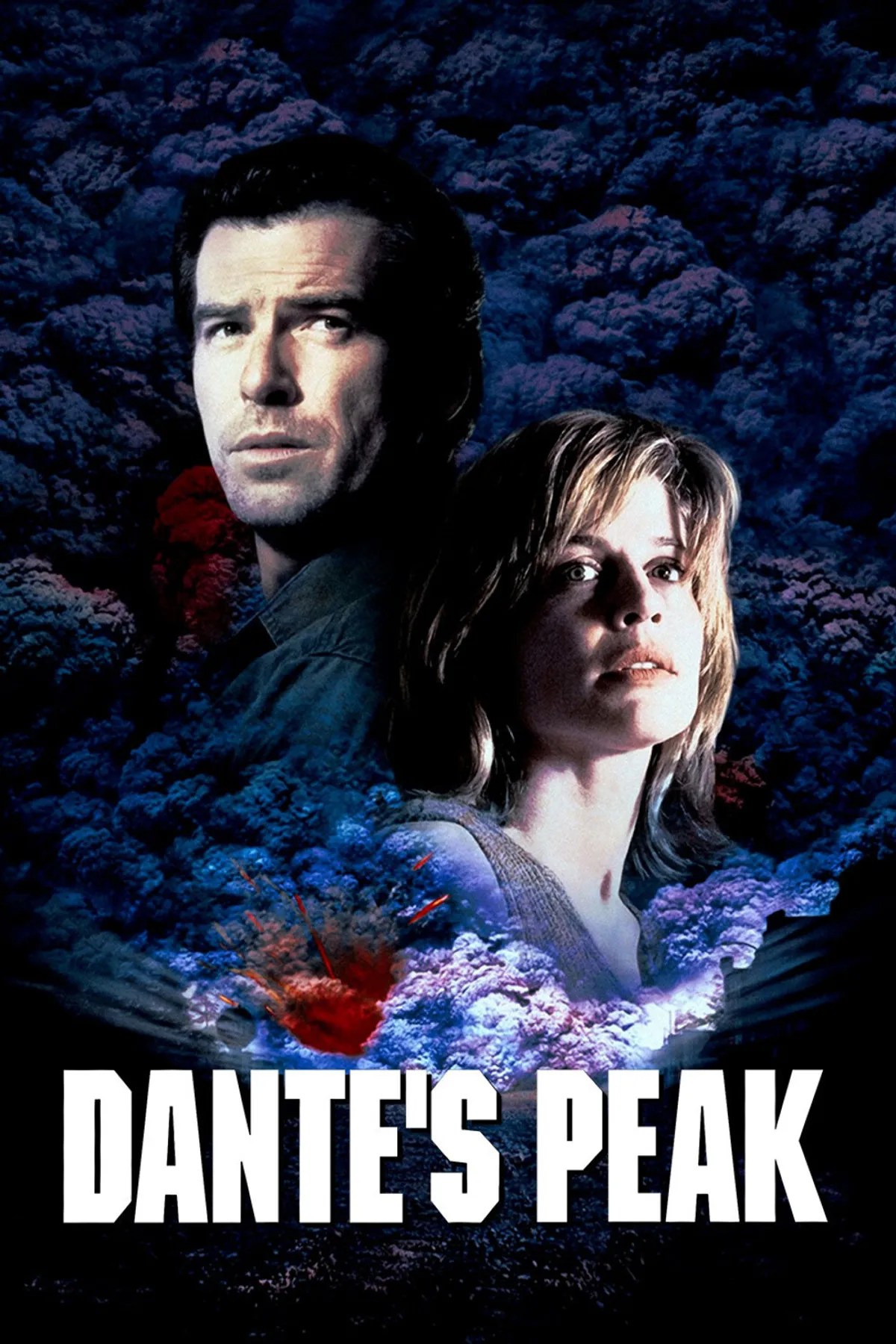
Dante’s Peak takes a simple but reliable disaster-movie setup—a quiet town sitting beneath a volcano that is very much not as dormant as everyone hopes—and turns it into a tense, highly watchable piece of 1990s spectacle. Directed by Roger Donaldson, the 1997 film is hardly subtle, and its character work can be pretty thin, but it remains an unusually watchable entry in the genre because it takes its central threat seriously. The movie spends enough time establishing the town and its people that, once the mountain finally blows, the destruction has some weight behind it. It is a familiar formula, but Dante’s Peak executes it with enough sincerity and old-school craftsmanship to stay entertaining.

Pierce Brosnan stars as Harry Dalton, a volcanologist for the U.S. Geological Survey who is still carrying the emotional scars of a prior eruption that killed his fiancée. Harry is sent to the picturesque Pacific Northwest town of Dante’s Peak after unusual seismic and chemical activity suggests that its supposedly dormant volcano may be waking up. His assignment initially sounds routine: inspect the mountain, collect some samples, talk to local officials, and determine whether there is any reason for concern. Naturally, there is. The water supply starts showing signs of dangerous acidity, tremors grow more frequent, steam vents become harder to ignore, and the mountain begins sending increasingly blunt warnings that it is ready to erupt.

The central tension is not whether the volcano will blow. The title alone pretty much gives that away. Instead, the first half works because of the fight over how seriously the warning signs should be taken. Dante’s Peak has just received national attention as one of the best small towns in America, and Mayor Rachel Wando, played by Linda Hamilton, is understandably hesitant to cause mass panic and wreck the town’s economy over an uncertain prediction. Harry believes the danger is real, but he also knows from painful experience that hesitation can get people killed. That conflict gives the movie a decent human foundation before the large-scale effects take over.

Brosnan is a good fit for Harry Dalton. This was the same period when he was newly established as James Bond, and Dante’s Peak makes smart use of his natural screen presence without turning Harry into an outright action hero. He is calm, capable, handsome, and articulate, but he is also clearly rattled by the possibility of repeating a tragedy he could not prevent. The role is not especially demanding on paper, yet Brosnan gives Harry enough fatigue and frustration that he comes across as a real professional rather than just a disaster-movie scientist whose only job is to shout warnings at dismissive bureaucrats.

Hamilton is arguably even more important to the movie’s success. Rachel could have been written as a generic authority figure who slows down the plot by refusing to believe the expert, but Hamilton makes her more sympathetic than that. She is not ignoring Harry because she is foolish or selfish. She has a town to protect, businesses that depend on tourism, residents who do not want to abandon their homes, and two children who become central to the film’s increasingly dangerous rescue mission. Hamilton had already cemented her action credentials in Terminator 2: Judgment Day, but here she plays a more grounded version of strength. Rachel is practical, stubborn, and brave without ever feeling like she has wandered in from another franchise with a shotgun and a leather jacket.

The supporting cast is more uneven. Charles Hallahan gets the familiar disaster-movie role of Paul Dreyfus, the superior whose skepticism creates a frustrating delay in the evacuation. Elizabeth Hoffman is memorable as Rachel’s grandmother, Ruth, even though the movie leans hard into the “stubborn elderly relative refuses to leave” setup. Rachel’s children, Lauren and Graham, mostly function as a way to push the adults back into danger after the eruption begins, and their choices can be maddening. Still, the cast sells the stakes well enough that the film avoids feeling completely mechanical.

Where Dante’s Peak really delivers is in its escalation. The first clear sign that things have gone wrong is genuinely creepy: the town’s supposedly pristine water supply turns corrosive. That detail is one of the movie’s best touches because it makes the volcano feel dangerous before it becomes visually spectacular. Then the film starts layering hazards on top of each other. There are earthquakes, falling volcanic debris, ash clouds, mudslides, a collapsing bridge, boiling water, and eventually a full eruption. It is an impressively varied disaster package. Rather than relying on one big explosion and calling it a day, the movie treats the volcano as a chain reaction that attacks the town from every direction.

The standout sequence is the drive across the lake after volcanic material has made the water acidic. It is ridiculous in the specific, memorable way that disaster cinema often is: a family in a damaged vehicle tries to outrun a lake that is essentially eating the vehicle out from under them. The science of the scene has been criticized plenty over the years, and fairly so, but it works as suspense filmmaking. Donaldson understands how to stage the moment visually, showing the immediate effects on the vehicle while keeping the characters trapped in a situation that gets worse by the second. It is the kind of scene people remember long after forgetting much of the dialogue.

Visually, the movie has aged better than some of its late-1990s peers because it balances computer-generated imagery with practical destruction, physical sets, and real locations. The effects do not always look flawless now, especially in wider shots of the erupting mountain, but the overall physicality helps. Buildings shake, roads split open, ash hangs in the air, and characters actually look buried in the mess rather than pasted in front of it. The town itself is also nicely chosen. Dante’s Peak looks like the sort of clean, friendly, postcard-perfect place that a disaster movie needs to destroy. The contrast between its calm opening scenes and its ash-covered final act is one of the film’s strongest visual ideas.

Roger Donaldson directs efficiently, even if he never quite gives the film a distinctive personality. He keeps the geography clear during most of the action, which matters a lot in a movie built around people trying to flee shifting dangers. You usually understand where Harry and Rachel are, what obstacle is in front of them, and why they cannot simply drive away. The pacing is a little slow in the middle, particularly when the scientific warnings begin repeating themselves, but that patience pays off once the final act kicks in. The movie takes a while to get to the eruption, then makes sure the eruption earns its screen time.

The screenplay by Leslie Bohem is where Dante’s Peak shows its limitations. The dialogue is often blunt, the romance between Harry and Rachel is predictable, and several characters exist mainly to make unwise decisions at the exact moment the plot needs more danger. The film also has a habit of making Harry right about nearly everything, which can flatten the debate around whether to evacuate. Still, there is something likable about how earnestly it embraces its own premise. It never winks at the audience or tries to become ironic. It wants viewers to care about the town, fear the mountain, and cheer when people narrowly escape certain death.

That sincerity is probably why Dante’s Peak has endured better than its mixed critical reputation might suggest. It is not a great disaster movie in the way that The Poseidon Adventure or The Towering Inferno can be called great, and it does not have the full-throttle spectacle of Twister. But it is dependable comfort-viewing for anyone who enjoys this particular brand of high-stakes Hollywood nonsense. The movie’s science is questionable in spots, its family drama can get corny, and its plot follows the disaster handbook almost page for page. Yet Brosnan and Hamilton give it enough credibility, Donaldson keeps it moving, and the volcanic destruction is still satisfying.

In the end, Dante’s Peak is a solid, unpretentious disaster thriller that understands the appeal of watching ordinary people try to outrun an extraordinary catastrophe. It may not reinvent the genre, but it delivers the basics with conviction: a looming natural threat, decent leads, escalating tension, and a finale full of lava, ash, and desperate escapes. Sometimes that is more than enough.
Pierce Brosnan Is Brendan Ingle In The Trailer For Giant


Back in the day, my favorite boxer was Britain’s own Naseem Hamed, a flamboyant showman who always turned his entrance into a production but who could also back up his ego in the ring.  A lot of my friends couldn’t stand Prince Naseem, as he was known, and they used to watch HBO Boxing specifically hoping to see him lose.  In retrospect, he was one of the last of the genuinely entertaining boxers.

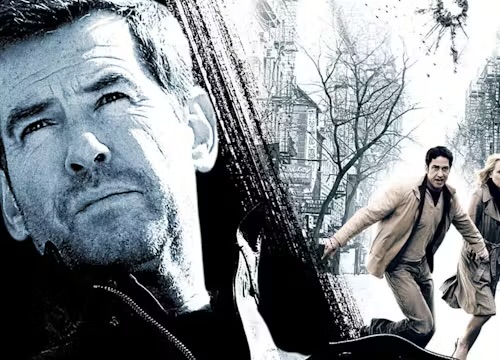
Giant, which has already been released to generally positive reviews in the UK, stars Amir El-Masry as Hamed and Pierce Brosnan in the role of Hamed’s trainer, the legendary Brendan Ingle.  Judging from the just-released trailer, Brosnan, who always been the most underrated of all the actors who played James Bond, is almost unidentifiable in the role of Ingle.

Giant will be released in the U.S. later this year.

Horror On TV: Hammer House Of Horror #9: Carpathian Eagle (dir by Francis Megahy)


Tonight’s episode of Hammer House of Horror is Carpathian Eagle.

Men are being murdered in bed by a woman who removes their heart.  Inspector Clifford (Anthony Valentine) investigates with the help of a true crime historian named Natalie (Suzanne Danielle).  Natalie tells the story of an ancient Carpathian countess who murdered men in the same way and suggests that the murders might be the work of a modern-day descendant.  The truth turns out to be a bit more complicated, if also a bit predictable.

This is not my favorite episode Hammer House of Horror but still, it’s worth watching to catch a young Pierce Brosnan in an early small role.  This episode originally aired on November 8th, 1980.

Brad reviews SHATTERED (2007) starring Pierce Brosnan, Gerard Butler, and Maria Bello!


My wife and I decided to watch SHATTERED (2007), also known as BUTTERFLY ON A WHEEL, on a whim tonight. We were browsing through Amazon Prime when I saw Gerard Butler on the preview, and that was enough for me to watch it. Sierra likes cheesy thrillers, which this definitely gives off that vibe, so she was all in as well. 

SHATTERED is set in Chicago and opens on the Randall’s, a seemingly perfect little family, made up of Neil (Gerard Butler), Abby (Maria Bello), and their beautiful daughter, Sophie. Neil’s a successful, if somewhat ethically challenged businessman on the verge of a big promotion, and life is good. That is, until a stranger (Pierce Brosnan) literally pops up in the couple’s life out of nowhere, tells them that he’s kidnapped Sophie, and forces them to do whatever he says or he’ll kill the girl. One moment they’re emptying their bank accounts only to see the stranger burn the money, and the next they’re delivering incriminating business documents to the competition that will destroy Neil’s company and his career. As the demands escalate, we learn that Neil and Abby’s lives aren’t quite as perfect as initially presented. But who is this stranger, why is he doing this, and how far will he force them to go to save their daughter?

I enjoyed SHATTERED quite a bit. It’s one of those movies that rope you in with its intriguing premise… a mysterious stranger puts a happy couple through hell, and we don’t know why he’s doing it, but we want to! This type of story, if done well, always pulls me in even though we’ve seen it done many times before. It’s helped by the game cast. Pierce Brosnan is appropriately intense and menacing as the stranger, helping us believe that he’ll hurt their daughter if they don’t follow his orders. James Bond, he is not! I’m a big fan of Gerard Butler, and he’s good here. His character is not the badass that we’ve come to expect from him these days, and he’s not that great of a guy either, but he does a good job of portraying a morally compromised guy whose life is spiraling out of control. Maria Bello is equal to the task as well, as the desperate mother who’s forced to deal with her husband’s failures at the same time as she’s dealing with any mother’s worst nightmare.

At the end of the day, these types of thrillers live and die based on their “twists” at the end. I have to admit that I was able to figure out the first twist about halfway through the movie, but SHATTERED isn’t content with just one twist, and it seems to stumble somewhat as it continues on after the first big reveal. I don’t blame the writers for trying to come up with something unique to close us out, but it doesn’t feel entirely successful in light of all that’s transpired before. It might actually be worth a rewatch just to see how well it stacks up. 

I’m glad I watched SHATTERED. It’s time-tested storyline and fast pace make it worth a viewing, especially if you’re a fan of the cast like I am. Just keep your expectations in check, and you should enjoy the ride!

The TSL Grindhouse: Nomads (dir by John McTiernan)


1986’s Nomads opens with anthropologist Jean-Charles Pommier being rushed into an emergency room, badly beaten and struggling for his life.  Despite the best efforts of Dr. Eileen Flax (Lesley-Anne Down), Pommier dies in the ER.  Flax is shocked by Pommier’s death and, naturally, she’s upset that she couldn’t save him.  But, at the same time, people die in hospitals.  It happens to the best of doctors.

Except soon, Flax is seeing flashes of the events that led to Pommier’s death.  Pommier has somehow entered her mind and soon, she’s reliving his investigation into the origins of a group of destructive, urban nomads that Pommier witnessed causing havoc throughout Los Angeles.  Pommier often felt like he was the only person who was capable of seeing the nomads and he grew to be tortured by his fear that they were specifically stalking him.  We soon learn that there was reason for that….

Now, based on his name, you’re probably assuming that Pommier is meant to be French.  And he is!  He’s from France, though he considers himself to be a citizen of the world.  He’s traveled everywhere, taking pictures of different cultural rituals across the globe.  However, in Nomads, the very French Jean-Charles Pommier is played by Pierce Brosnan.  Pierce Brosnan is, needless to say, not French.  He’s Irish, even though a lot of people seem to be shocked when they first learn that.  Brosnan normally speaks with an accent that could best be described as a mix of posh London and mid-Atlantic American.  Everything about him screams the UK.  In short, Pierce Brosnan is one of the least convincing French people ever seen on film and he delivers his lines in an accent that sounds like every accent other than the French accent.  Watching this film, I found myself thinking about the Monty Python skit where Terry Jones and Carol Cleveland starred in a French movie.  (“I see you have a cabbage.”  “Oui.”)  Brosnan is not a bad actor and it’s entertaining to watch him overact in Nomads.  But there’s nothing French about him and every time that someone referred to him as being French, it totally took me out of the movie.

Which is a shame because Nomads may be narratively incoherent but it’s got some memorably surreal visuals and it does a good job of generating a properly ominous atmosphere.  Director John McTiernan (who later went on to do Predator, Die Hard, and The Hunt For Red October) makes smart use of slow motion and a handheld camera to keep the audience off-balance.  At its best, Nomads achieves a dream-like intensity that makes up for the fact that the story doesn’t make the least bit of sense.  The nomads themselves are a memorable and creepy.  While Adam Ant plays their leader (and the scene where he smiles as Brosnan attempts to throw him off a building is truly disturbing), the most frightening of the nomads is Mary Woronov as Dancing Mary.  Seriously, after I watched this film, I checked all the locks in the house.  No urban nomads were going to interrupt me in my sleep!

My suggestion to everyone is to do a Nomads/Nomadland double feature.  You’ll never get in another van.

Scenes That I Love: James Bond Does His Thing In Tomorrow Never Dies


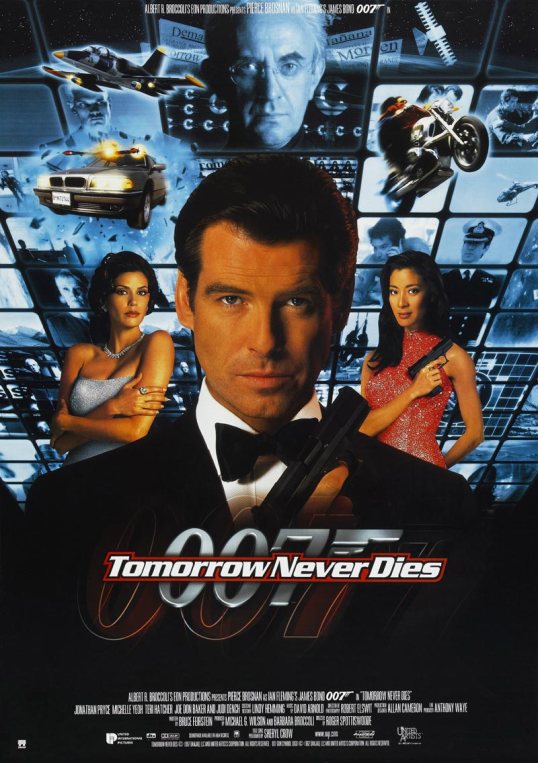
1997’s Tomorrow Never Dies, which was directed by Roger Spottiswoode, was one of the most underrated of the Bond films.  Perhaps not coincidentally, it also starred the most underrated Bond, Pierce Brosnan.

In this pre-credits opening scene, Brosnan shows us exactly who James Bond is meant to be.  He’s the best at his job but he still knows how to enjoy himself.  After the recent Daniel Craig films, it can be somewhat surprising to go back see how enjoyable James Bond was when he was angst-free.

Where does the admiral want his bombs delivered?


Horror Film Review: The Lawnmower Man (dir by Brett Leonard)


The 1992 horror/sci-fi hybrid, The Lawnmower Man, tells the story of two men.

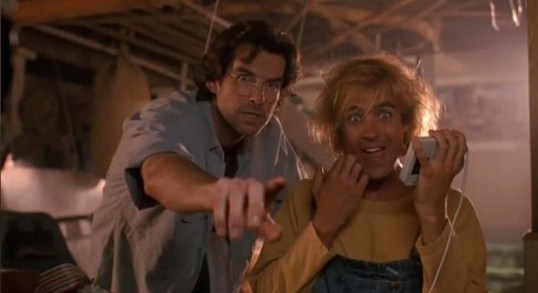
Dr. Lawrence Angelo (played by Pierce Brosnan) is a scientist who is experimenting with ways to make less intellectually inclined people smarter. Dr. Angelo is kind of a burn out. You can tell he has issues because he needs to shave, he’s always sitting in the dark, and he’s never without a cigarette. You look at Dr. Angelo and you just imagine that he smells like smoke, bourbon, and lost dreams.

Jobe (Jeff Fahey) is the kind-hearted but intellectually disabled man who lives in a shack and spends his time mowing everyone’s lawn. Hence, he’s known as the …. wait for it …. THE LAWNMOWER MAN!

Together, Dr. Angelo and Jobe solve crimes!

No, not really. Instead, Dr. Angelo decides to experiment on Jobe. This leads to Jobe not only becoming smarter but also quicker to anger. Soon, Jobe is developing psychic abilities. He can move things with his mind. He can magically set people on fire. Basically, he can do whatever the script needs for him to do at the moment. Jobe is soon tormenting everyone who once bullied him. Father McKeen, the pervy priest, gets set on fire. Jake, the gas station attendant, is put into a catatonic state. An abusive father get run over by a lawnmower.

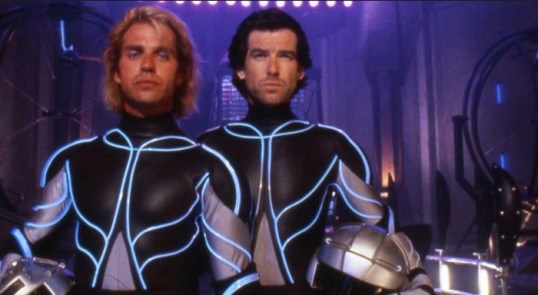
Dr. Angelo knows that Jobe is out-of-control and that the experiment has to be reversed. However, the sinister group behind Angelo’s research wants to use Jobe as a weapon because …. well, because they’re evil and that’s what evil people did back in 1992. Jobe, however, has other plans. He wants to become pure energy so that he can rule over a virtual world….

Or something like that. To be honest, it’s kind of difficult to really figure out what’s going on in The Lawnmower Man. The movie shares its name with a Stephen King short story but it has so little in common with its source material that King reportedly sued to get his name taken out of the credits. (Considering some of the films that King has allowed himself to be associated with, this is kind of amazing.) The film tries to be a satire, a slasher film, a conspiracy film, and a technology-gone-crazy film all in one and the end result is one big mess.

Along with all of that, The Lawnmower Man is also a time capsule of when it was made. A good deal of the film takes place in Jobe’s virtual reality universe, which looks a lot like a mix of Doom and Second Life. I imagine the film’s special effects may have seen impressive way back in the 20th Century but, seen today, they’re rather cartoonish, if occasionally charmingly retro.

On the plus side, the film does have an interesting cast. Pierce Brosnan is never convincing as burn-out but he tries so hard that he’s still fun to watch. Underrated actors like Jenny Wright, Geoffrey Lewis, Dean Norris, and Troy Evans all get a chance to show what they can do in minor roles. Finally, you’ve got the great Jeff Fahey, giving a far better performance than the script perhaps deserves. Though the film may be a mess, there’s something undeniably fun watching Jeff Fahey’s Jobe go from being meek to being a megalomaniac.

It’s a silly film and not one that’s meant to be watched alone. This is a film that has to be watched with a group of your snarkiest friends. Watch it the next time you’re looking for an excuse to avoid doing the yard work.

Monday Live Tweet Alert: Join Us For Live Wire and Edward Scissorhands!


As some of our regular readers undoubtedly know, I am involved in hosting a few weekly live tweets on twitter.  I host #FridayNightFlix every Friday, I co-host #ScarySocial on Saturday, and I am one of the five hosts of #MondayActionMovie!  Every week, we get together.  We watch a movie.  We tweet our way through it.

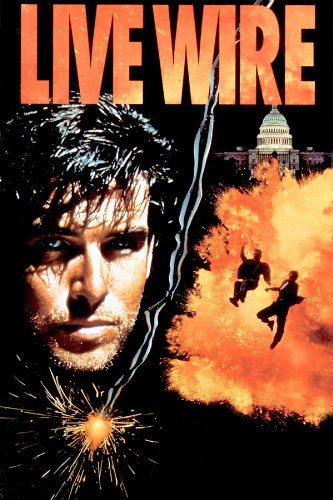
Tonight, for #MondayActionMovie, the film will be 1992’s Live Wire!  Selected and hosted by @BunnyHero, Live Wire is a thriller that stars a pre-James Bond Pierce Brosnan dealing with people who have been programmed to literally explode. The movie starts at 8 pm et and it is available on YouTube.


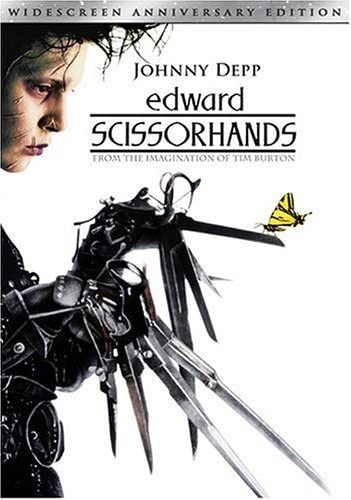
Following #MondayActionMovie, Brad and Sierra will be hosting the #MondayMuggers live tweet.  Tonight’s movie, starting at 10 pm et, will be 1990’s Edward Scissorhands, the Tim Burton classic that stars Johnny Depp as a boy who has scissors for hands!  The film is available on Prime!


It should make for a night of intense viewing and I invite all of you to join in.  If you want to join the live tweets, just hop onto twitter, start Live Wire at 8 pm et, and use the #MondayActionMovie hashtag!  Then, at 10 pm et, switch over to prime, start Edward Scissorhands and use the #MondayMuggers hashtag!  The live tweet community is a friendly group and welcoming of newcomers so don’t be shy.  And reviews of these films will probably end up on this site at some point over the next few weeks. 

Celebrate National Trivia Day With The Actors Who Could Have Been James Bond!


Today is National Trivia Day so I thought why not share some trivia?  I love film trivia.  I especially love trivia about who was considered for certain films.  Hell, one of my most popular posts on the Shattered Lens dealt with all of the actors who were considered for the Godfather!

(I even came up with an alternative cast for The Godfather, even though I consider the actual film to be the best cast film in history.)

I also happen to love the James Bond films.  (Well, not so much the recent Bond films.  I’ve made my feelings on SPECTRE clear.)  As a franchise, I absolutely love them.  So, with all that in mind, here is a look at the actors who could have been Bond.  I’ve compiled this article from many sources.  And yes, you could probably just find a lot of the information on Wikipedia but then you’d miss out on my editorial commentary.

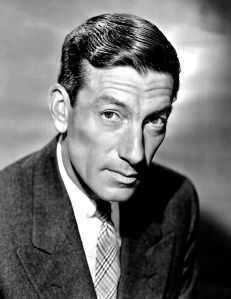
Hoagy Carmichael

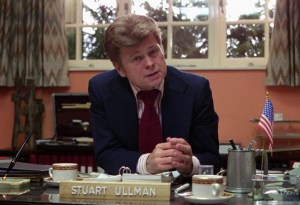
Ian Fleming himself always said that his pick for Bond would have been the musician, Hoagy Carmichael.  He even made a point, in Casino Royale, of having Vesper Lynd exclaim that Bond looked like Hoagy Carmichael.  Of course, the first actor to actually play Bond was Barry Nelson in a 1954 television adaptation of Casino Royale.  Nelson is probably best remembered for playing Mr. Ullman in Stanley Kubrick’s The Shining.

Barry Nelson, the first James Bond

When Dr. No went into production in 1961, many actors were considered for the role before Sean Connery was eventually cast.  Many of them were very well-known actors and, had they been cast, Dr. No would not have been remembered as a Bond movie.  Instead, it would be remembered as a star vehicle for … well, let’s take a look at some of the better-known possibilities:

Among the famous actors who were mentioned for Bond in 1961: Cary Grant, Richard Burton, James Mason, Trevor Howard, Stanley Baker, George Baker, Jimmy Stewart, Rex Harrison, and David Niven.  (Of that list, I think Burton would have made for an interesting Bond.  If the Bond films had been made in the 1940s, Grant would have been my first choice.  Trying to imagine Jimmy Stewart as a British secret agent is … interesting.)

Once it became obvious that a star was not going to play Bond, the role was offered to Patrick McGoohan and Rod Taylor.  McGoohan had moral objections to the character.  Rod Taylor reportedly felt that the film would flop.  Steve Reeves, the American body builder who became famous for playing Hercules in Italy, was reportedly strongly considered.  At one point, director Terrence Young wanted to offer the role to Richard Johnson, who later played Dr. Menard in Lucio Fulci’s Zombi 2.

Of course, the role went to Sean Connery and made Connery a huge star.  In 1967, after Connery announced that he would no longer play the world’s most famous secret agent, there was a huge and widely publicized search for his replacement.  Some of the names that were considered are intriguing.  Others are just bizarre.

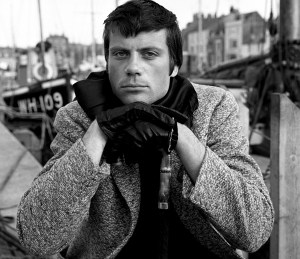
Oliver Reed

To me, perhaps the most intriguing name mentioned was that of Oliver Reed.  Reed definitely would have brought a rougher edge of the role than some of the other actors considered.  However, that’s one reason why Reed wasn’t picked.  Apparently, it was felt that he did not have the right public image to play the suave Mr. Bond.

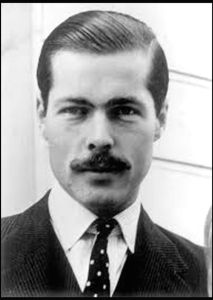
Somewhat inevitably, Michael Caine was sought out for the role.  Caine, however, refused to consider it because he had already starred in three back-to-back spy thrillers and didn’t want to get typecast.  Caine’s former roommate, Terrence Stamp, was another possibility but wanted too much control over the future direction of the Bond films.  Future Bond Timothy Dalton was considered to be too young.  Another future Bond, Roger Moore, didn’t want to give up his television career.  Eric Braeden has the right look for Bond but was German.  Rumor has it that producer Cubby Broccoli even considered Dick Van Dyke for the role, though I find that hard to believe.  An even more surprising possibility was the nobleman Lord Lucan, who was offered a screen test in 1967 and who, ten years later, would vanish after being accused of murdering his children’s nanny.

Lord Lucan

Among the actors who auditioned before George Lazenby was cast in On Her Majesty’s Secret Service: Michael Billington, Jeremy Brett, Peter Purves, Robert Campbell, Patrick Mower, Daniel Pilon, John Richardson, Anthony Rogers, Hans De Vries, and Peter Snow.

After the mixed reception of both Lazenby’s performance and On Her Majesty’s Secret Service, Lazenby was soon out as James Bond.  Even today, there’s a lot of controversy about what led to Lazenby being dismissed from the role.  Some say Lazenby demanded too much money.  Some say that Lazenby was merely used a pawn to try to get Sean Connery to return to the role.  Regardless, Lazenby only made one film as Bond.  (Of course, On Her Majesty’s Secret Service has retroactively been recognized as being one of the best of the series.)

With Connery still claiming that he would never return to the role, the film’s producers went through the motions of looking for a new Bond.  Once again, Roger Moore and Timothy Dalton were considered.  Connery suggested that a talk show host named Simon Dee should play the role.  An actor named Roger Green auditioned.  So did Michael Gambon, though he later said he was turned down because, in his own words, he “had tits like a woman.”  Interestingly, several Americans were mentioned.  Clint Eastwood as James Bond?  Burt Reynolds?  Adam “Batman” West? The mind boggles but their names were mentioned.

John Gavin

And interestingly enough, an American was cast.  John Gavin is best known for playing Sam Loomis in Psycho but he was also, briefly, James Bond.  After Gavin accepted he role and signed a contract, Sean Connery announced that he would be willing to return to the role.  Gavin was paid off and Connery went on to star in Diamonds are Forever.

After Diamonds, Connery left the role for a second time and, once again, Bond was recast.  This time, Roger Moore would finally accept the role.  However, before Moore was cast, several other actors were considered.  Some of the regular possibilities were mentioned again: John Gavin, Simon Oates, Timothy Dalton, and Michael Billington.  Others considered included Jon Finch, Ranulph Fiennes, Peter Laughton, and Guy Peters.  Some of those names are probably as unknown to you as they are to me but it’s intriguing to think that Guy Peters may not be a well-known name but, at one time, there was a possibility that he could suddenly become one of the biggest stars in the world.

Looking over the history of the Bond franchise, it’s interesting to see the number of times that Moore tried to leave the role, just to be talked into returning.  Every time that Moore considered quitting, a new group of actors would be considered for the role of Bond.  In 1979, when Moore said he might not return after Moonraker, Timothy Dalton, Michael Jayston, Patrick Mower (who was also considered for On Her Majesty’s Secret Service), and Michael Billington were all considered as replacements.  So was Julian Glover.  Ironically, when Moore did agree to return to the role, Glover was cast as the villain in For Your Eyes Only.

David Warbeck

To me, the most intriguing actor mentioned as a replacement for Roger Moore was David Warbeck.  Warbeck was a television actor and model who subsequently had a nearly legendary film career in Italy.  Not only did he play a key role in Sergio Leone’s Duck You Sucker!, but he also starred in Lucio Fulci’s The Black Cat and The Beyond.  He also appeared in the best of Italian Apocalypse Now rip-offs, The Last Hunter.  In interviews, Warbeck claimed that he was under contract to Cubby Broccoli to step into the role in case Roger Moore ever walked off the set.  The likable and rugged Warbeck would have been an interesting Bond.

In 1983, when Moore again said he might not return to the role, Michael Billington (who actually did appear in a Bond film when he played a KGB agent killed at the start of The Spy Who Loved Me) would be once more considered as a replacement.  British TV actors Lewis Collins and Ian Ogilvy were also considered for the role.  In a repeat of what happened with John Gavin in Diamonds are Forever, American actor James Brolin was actually put under contract until Moore agreed to play the role in Octopussy.

James Brolin, in a screen test for Octopussy

After A View To A Kill, Moore left the role for the final time.  Famously, future Bond Pierce Brosnan was actually cast as his replacement until the surge of interest created by his casting led to the renewal of Remington Steele, the American television show in which Brosnan was starring.  Once the show was renewed, Brosnan could no longer work the Bond films into his schedule.

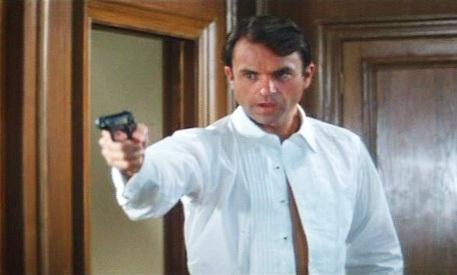
Among the other names mentioned: Sean Bean, Simon MacCorkindale, Andrew Clarke, Finlay Light, Mark Greenstreet, Neil Dickson, Christopher Lambert, Mel Gibson, and Antony Hamilton.  Sam Neill was another possibility and reportedly came very close to getting the role.  Watch any of the films that Neill made when he was younger and you can definitely see hints of Bond.

Sam Neill

In the end, Timothy Dalton finally accepted the role.  Ironically, for an actor who spent 20 years being courted for the role, Dalton turned out to be a bit of a flop as Bond.  He made two movies (both of which were considered to be disappointing when compared to the previous Bond films) and then left the role.

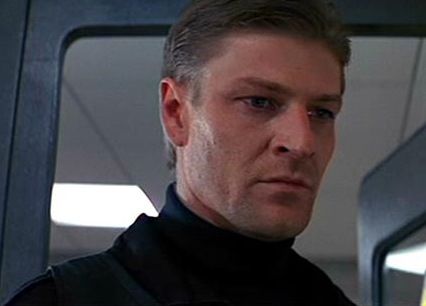
Looking over the contemporary reviews of Dalton as Bond, one thing that comes through clearly is that a lot of people resented him for taking a role that they felt should have gone to Pierce Brosnan.  When the Bond films resumed production with Goldeneye in 1994, Brosnan finally stepped into the role.  Reportedly, if Brosnan had turned down the role, the second choice was Sean Bean.  Much like Julian Glover, Bean may have lost out on 007 but he did end up playing the villain.

Sean Bean

Among the other actors who were reportedly considered before Brosnan accepted the role: Mark Frankel, Paul McGann, Liam Neeson, Russell Crowe, and Lambert Wilson.  Ralph Fiennes, who has been M since Skyfall, was also considered.

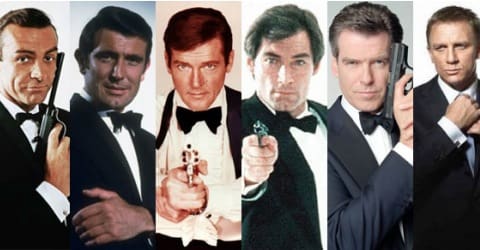
As opposed to his predecessors, Brosnan seemed to be very comfortable with the idea of playing Bond and never threatened to leave the role.  Looking over the Bond-related articles that were published from 1995 to 2004, I found the occasional speculation about whether Rupert Everett would be the first gay James Bond or if Sharon Stone would be the first female James Bond but I found very little speculation about Brosnan actually leaving the role.  Indeed, when Brosnan officially retired as Bond in 2004, it was less his decision and more at the prodding of the franchise’s producers, who felt that the series needed to be rejuvenated with a new (and younger) actor.  After Brosnan left, the series was rebooted and Daniel Craig played the role in Casino Royale.

In the past, I’ve made it clear that Daniel Craig is hardly my favorite Bond.  I loved Skyfall (and I consider it to the 2nd best Bond film, after From Russia With Love) but, even in that case, I felt that the film succeeded despite Craig instead of because of him.  With Casino Royale, we were supposed to be seeing a young and inexperienced Bond.  That’s never come through to me, probably because Craig looked like he was nearly 50 years old when he made Casino Royale.

Among the actors who were mentioned for the role before Craig received the role: Ralph Fiennes (again), Colin Salmon, Ewan McGregor, Henry Cavill, Rupert Friend, Julian McMahon, Alex O’Laughlin, Clive Owen, Dougray Scott, and Goran Visjnic.  Dominic West, who I think would have been great in the role, reportedly ruled himself out because he heard a rumor that Brosnan would be returning to the role.

Dominic West

Daniel Craig, of course, has been talking about leaving the role ever since he was first cast.  I think Skyfall would have been a perfect movie for him to leave on.  (It would have saved the world from SPECTRE.)  However, Craig has apparently agreed to do at least one more Bond film.  Maybe two.

When Craig does leave, who will replace him?  Idris Elba, of course, is probably the most widely discussed possibility.  James Norton has also been named as a possibility.  Others that I’ve seen mentioned: Tom Hardy, Jack Huston, Aidan Turner, Tom Hiddleston, Michael Fassbender, Jamie Bell, and Henry Cavill (again).

My personal choice?  Dominic Cooper.  He’d be an off-center Bond but I think it would still be an intriguing pick.

Dominic Cooper

Who knows what the future may hold for 007?  All I know is that I look forward to the speculation.

Happy National Trivia Day, everyone!

A Movie A Day #220: Entangled (1993, directed by Max Fischer)


There has been a car crash in Paris and now, David (Judd Nelson) is in the hospital, slowly recovering.  In flashbacks, it is revealed that David is an American writer who came to France after his first novel flopped.  He came to see his best friend, a womanizing photographer (Roy Dupuis), and ended up meeting and falling in love with the beautiful model, Annabelle (Laurence Treil).  Even as he worked on his second novel, he was consumed with jealousy over Annabelle.  Why was she sneaking off to a château owned by a mysterious and decadent businessman named Garavan (Piece Brosnan)?  Any why, while he is in the hospital, is his second novel published and credited to someone else?
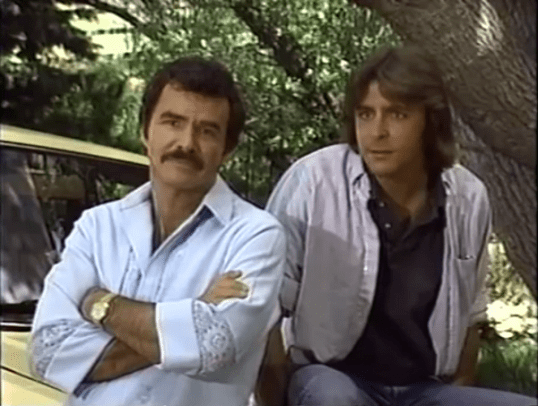
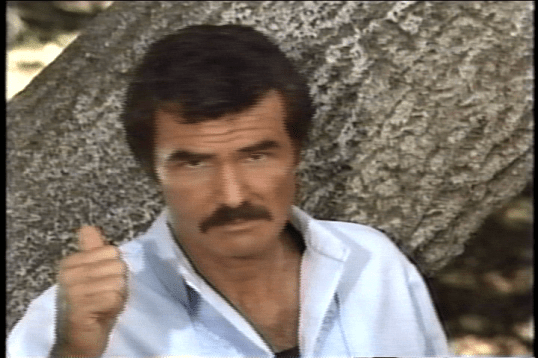
Entangled is yet another 90s neo-noir starring Judd Nelson.  Laurence Treil was beautiful and often naked, which made it perfect for showings on Skinemax but the movie fails because, like so many others, it requires the audience to believe that Judd Nelson could not only write a book but get a model girlfriend as well.  That takes much more work than is portrayed in Entangled.  Early on in Entangled, Judd Nelson gropes a cardboard cut-out of George H.W. Bush and it is pretty much all downhill from there.  Not even Brosnan doing a good job as a sinister character can do much to save Entangled.

What could have saved Entangled?  Like so many of Judd Nelson’s direct-to-video movies, Entangled needed the calming hand of Judd’s co-star from Shattered If Your Kid’s On Drugs, Burt Reynolds!

Am I saying that Entangled would have been a better movie if Burt Reynolds had been given a role?

It couldn’t have hurt.