The National Society of Film Critics Honors Nomadland


I was kind of hoping that, when they met and voted earlier today, the National Society Of Film Critics would add some new films and performances to the Oscar discussion but instead, they went for the usual suspects.  Nomadland took Best Picture, though First Cow was a close runner-up.  Chloe Zhao, Frances McDormand, and Maria Bakalova won again.  I mean, if we’re going to be honest …. it was all pretty predicable.  Remember how, in past years, it sometimes took nearly an entire day for the NSFC to announce all their winners because the voting was so close?  That didn’t happen this year.  It was all pretty much cut-and-dried.  I followed along on twitter because I’m addicted to this stuff but as soon as they announced Frances McDormand was their pick for Best Actress, I knew how the day was going to go.

(And don’t get me wrong!  Frances McDormand is great!  I haven’t seen Nomadland yet but I greatly admired The Rider, Chloe Zhao’s previous film.  Please do not think that I’m saying that any of these awards are undeserved because I most certainly am not.  Instead, I’m just saying that — from the perspective of a lifelong Oscar watcher — it’s more fun when things aren’t predictable.)

Oh well, it happens.  Sometimes, you have an Oscar race where every precursor is unpredictable and it seem like anyone could win.  And then we have years like this one, where the same film keeps winning over and over again.  Some people would say that we should probably just be happy that people can all agree on something for once.  Hopefully, they won’t say that to me, though.  If we’re all going to agree on something, let’s agree to treat one another with respect and not always jump to the worst conclusion about the other side.  Agreeing on films, though, is nothing to celebrates.  Films are meant to be argued about.

Anyway, here are the winners from the National Society Of Film Critics!

Best Picture
Winner: NOMADLAND (52 points)
Runners-up: FIRST COW (50 points) & NEVER RARELY SOMETIMES ALWAYS (41 points)

Best Director
Winner: Chloé Zhao, NOMADLAND (58 points)
Runners-up: Steve McQueen, SMALL AXE (41 points) & Kelly Reichardt, FIRST COW (30 points)

Best Foreign-Language Film
Winner: COLLECTIVE (38 points)
Runners-up: BACURAU and BEANPOLE (36 points) & VITALINA VARELA (32 points)

Best Actress
Winner: Frances McDormand, NOMADLAND (46 points)
Runners-up: Viola Davis, MA RAINEY’S BLACK BOTTOM (33 points) & Sidney Flanigan, NEVER RARELY SOMETIMES ALWAYS (29 points)

Best Actor
Winner: Delroy Lindo, DA 5 BLOODS (52 points)
Runners-up: Chadwick Boseman, MA RAINEY’S BLACK BOTTOM (47 points) & Riz Ahmed, SOUND OF METAL (32 points)

Best Supporting Actress
Winner: Maria Bakalova, BORAT SUBSEQUENT MOVIEFILM (47 points)
Runners-up: Amanda Seyfried, MANK (40 points) & Youn Yuh-jung, MINARI (33 points)

Best Supporting Actor
​Winner: Paul Raci, SOUND OF METAL (53 points)
Runners-up: Glynn Turman, MA RAINEY’S BLACK BOTTOM (36 points) & Chadwick Boseman, DA 5 BLOODS (35 points)

Best Screenplay
Winner: Eliza Hittman, NEVER RARELY SOMETIMES ALWAYS (38 points)
Runners-up: Jon Raymond and Kelly Reichardt, FIRST COW (35 points) Charlie Kaufman, I’M THINKING OF ENDING THINGS (29 points)

Best Cinematography
Winner: Joshua James Richards, NOMADLAND (47 points)
Runners-up: Shabier Kirchner, LOVERS ROCK (41 points) & Leonardo Simões, VITALINA VARELA (34 points)
Here Are the 2020 Greater Western New York Film Critics Association Nominations!


The Greater Western New York Film Critics Association announced their nominees for the best of 2020 earlier today.  The winners will be announced on December 31st so, again, you’ve got some time to consider these nominees.

The Small Axe films are probably not going to be eligible and I’m Thinking of Ending Things will probably be judged too strange to pick up many nominations but otherwise, I kind of have a feeling that they eventual list of Oscar nominees is going to look a lot like the GWNYFCA list.

Here are the nominees:

Best Picture
Da 5 Bloods
Driveways
The Father
First Cow
I’m Thinking of Ending Things
Mank
Never Rarely Sometimes Always
Nomadland
Small Axe: Lovers Rock
Sound of Metal

Best Film in a Foreign Language
Another Round (Denmark)
Bacurau (Brazil)
Ema (Chile)
Minari (United States)
​Undine (Germany)

Best Animated Film
Onward
Soul
The Wolf House
​Wolfwalkers
World of Tomorrow Episode Three

Best Documentary
Bloody Nose, Empty Pockets
Boys State
Collective
Dick Johnson is Dead
​Time

Best Director
Spike Lee – Da 5 Bloods
Darius Marder – Sound of Metal
Steve McQueen – Small Axe: Lovers Rock
Kelly Reichardt – First Cow
Chloé Zhao – Nomadland

Best Lead Actress
Viola Davis – Ma Rainey’s Black Bottom
Sidney Flanigan – Never Rarely Sometimes Always
Vanessa Kirby – Pieces of a Woman
Frances McDormand – Nomadland
Carey Mulligan – Promising Young Woman

Best Lead Actor
Riz Ahmed – Sound of Metal
Chadwick Boseman – Ma Rainey’s Black Bottom
Anthony Hopkins – The Father
Delroy Lindo – Da 5 Bloods
Steven Yeun – Minari

​Best Supporting Actress
Maria Bakalova – Borat Subsequent Moviefilm
Ellen Burstyn – Pieces of a Woman
Olivia Colman – The Father
Amanda Seyfried – Mank
Youn Yuh-jung – Minari

Best Supporting Actor
Sasha Baron Cohen – The Trial of the Chicago 7
Brian Dennehy – Driveways
Bill Murray – On the Rocks
Leslie Odom Jr. – One Night in Miami…
Paul Raci – Sound of Metal

Best Adapted Screenplay
Eleanor Catton – Emma.
Christopher Hampton & Florian Zeller – The Father
Jonathan Raymond & Kelly Reichardt – First Cow
Charlie Kaufman – I’m Thinking of Ending Things
Chloé Zhao – Nomadland

Best Original Screenplay
Hannah Bos & Paul Thureen – Driveways
Lee Isaac Chung – Minari
Emerald Fennell – Promising Young Woman
Eliza Hittman – Never Rarely Sometimes Always
Darius Marder & Abraham Marder – Sound of Metal

Best Cinematography
Christopher Blauvelt – First Cow
Erik Messerschmidt – Mank
Martin Ruhe – The Midnight Sky
Joshua James Richards – Nomadland
Shabier Kirchner – Small Axe: Lovers Rock

Best Editing
Andy Canny – The Invisible Man
Kirk Baxter – Mank
Chloé Zhao – Nomadland
Mikkel E.G. Nielsen – Sound of Metal
Alan Baumgarten – The Trial of the Chicago 7

Best Score
Terence Blanchard – Da 5 Bloods
Trent Reznor & Atticus Ross – Mank
Alexandre Desplat – The Midnight Sky
Emile Mosseri – Minari
Trent Reznor & Atticus Ross – Soul

Breakthrough Director
Max Barbakow – Palm Springs
Radha Blank – The Forty-Year Old Version
Emerald Fennell – Promising Young Woman
Darius Marder – Sound of Metal
Florian Zeller – The Father

Breakthrough Performance
Kiera Allen – Run
Sidney Flanigan – Never Rarely Sometimes Always
Paul Raci – Sound of Metal
Talia Ryder – Never Rarely Sometimes Always
Isabel Sandoval – Lingua Franca

The Los Angeles Film Critics Association Honors …. Small Axe!?


Small Axe: Mangrove

The Los Angeles Film Critics Association met earlier today and announced their picks for the best of 2020.  In the past, the LAFCA has been considered to be one of the more reliable of the Oscar precursors.  For the past decade, the LAFCA’s pick for best film has gone on to pick up several Oscar nominations.

Well, that streak came to an end today.  In a totally unexpected but still rather nice twist, the LAFCA selected Steve McQueen’s Small Axe as Best Picture.  Small Axe, of course, is the umbrella title for five films that McQueen produced for the BBC and which are currently streaming on Prime.  I’ve reviewed two of them — Mangrove and Red, White, and Blue I’ll watch and review the other three this week.

Whether or not Small Axe is Oscar eligible has long been an open question.  Both Mangrove and Red, White, and, Blue were selected to premiere at Cannes and to play at other festivals before making then airing on the BBC and streaming on Prime.  Due to the pandemic, the Academy also changed the rules this year to make it easier for streaming films to compete.  However, Steve McQueen has said that Small Axe was always intended to be a television miniseries and that, despite the films being accepted to Cannes and other festivals, there was never any plan to release any of them theatrically.  For its part, Amazon has submitted Small Axe to the Golden Globes as a Limited Series and was apparently planning on mounting an Emmy campaign next year.  With the exception of documentaries, films nominated for Emmys are not eligible to be nominated for Oscars and vice versa.  The rule, even in this odd year, is that you have to pick one or the other.

So, by all those standards, none of McQueen’s five films nor Small Axe as a whole are Oscar-eligible.  Will that change?  Will Amazon decide to forgo the Emmys and instead go for an Oscar campaign?  Eh …. probably not.  But who knows — with this year blurring the lines between theatrical and television films like never before, anything could happen.  (But probably won’t.)

Anyway, here are the LAFCA winners!

Best Film
Small Axe
Runner-Up: Nomadland

Best Foreign Film
Beanpole
Runner-Up: Martin Eden

Best Director
Chloé Zhao – Nomadland
Runner-Up: Steve McQueen – Small Axe

Best Actress
Carey Mulligan – Promising Young Woman
Runner-Up: Viola Davis – Ma Rainey’s Black Bottom

Best Actor
Chadwick Boseman – Ma Rainey’s Black Bottom
Runner-Up: Riz Ahmed – Sound Of Metal

Best Documentary Film
Time
Runner-Up: Collective

Best Screenplay
Promising Young Woman
Runner-Up: Never Rarely Sometimes Always

Best Animated Film
Wolfwalkers
Runner-Up: Soul

Best Supporting Actress
Youn Yuh-jung – Minari
Runner-Up: Amanda Seyfried – Mank

Best Editing
The Father
Runner-Up: Time

Best Production Design
Mank
​Runner-Up: Beanpole

Best Supporting Actor
Glynn Turman – Ma Rainey’s Black Bottom
Runner-Up: Paul Raci – Sound Of Metal

Best Music/Score
Soul
Runner-Up: Lovers Rock

Best Cinematography
Small Axe
Runner-Up: Nomadland

New Generation Award
Radha Blank – The Forty-Year-Old-Version

Career Achievement Award
Hou Hsiao-Hsien and Harry Belafonte

Legacy Award
Norman Lloyd

The Douglas Edwards Experimental Film Prize
John Gianvito – Her Socialist Smile

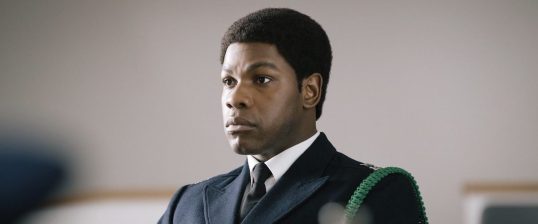
John Boyega in Small Axe: Red, White, and Blue


The New York Film Critics Circle Honors First Cow


Earlier today, the New York Film Critics Circle (NYFCC) announced their picks for the best of 2020!

And here they are:

Best Film
First Cow

Best Director
Chloé Zhao – Nomadland

Best Screenplay
Eliza Hittman – Never Rarely Sometimes Always

Best Actress
Sidney Flanigan – Never Rarely Sometimes Always

Best Actor
Delroy Lindo – Da 5 Bloods

​Best Supporting Actress
Maria Bakalova – Borat Subsequent Moviefilm

Best Supporting Actor
Chadwick Boseman – Da 5 Bloods

Best Cinematography
Small Axe (All Films)
​​
​Best Animated Feature
Wolfwalkers

Best Non-Fiction Film
Time

Best Foreign Language Film
Bacurau

Best First Film
The Forty-Year-Old-Version

Special Awards
Kino Lorber, for their creation of Kino Marquee, a virtual cinema distribution service that was designed to help support movie theaters, not destroy them.
Spike Lee for inspiring the New York community with his short film “New York New York” and for advocating for a better society through cinema.

Here Are The Nominees of the 2020 Indiana Film Journalists Assosciation!


Bad Education

The Indiana Film Journalists Association (IJA) has announced their nominees for the best of 2020!  They’ll be announcing the winners on December 21st!

What I like about these nominations is that there’s a lot of them.  2020 may have been a difficult year for many but there were a lot of good films released and it does seem kind of silly (as it does every year) to limit things to some sort of arbitrary number.  Why only nominate 10 films when you could nominate 20 or 30?  Many of the nominees below will appear on my own personal best lists in January.

The other thing that I like about these nominees is that the include films like Bad Education and Mangrove.  There’s some debate as to whether or not these films should be considered Oscar eligible.  I feel that they should be so it’s nice to see that the folks in Indiana agree with me!

Here are the nominees:

BEST FILM
Da 5 Bloods
Another Round
The Assistant
Athlete A
Bad Education
Crip Camp: A Disability Revolution
Dick Johnson is Dead
Emma.
The Father
First Cow
I’m Thinking of Ending Things
Ma Rainey’s Black Bottom
Minari
The Nest
Never Rarely Sometimes Always
Nomadland
One Night in Miami
Palm Springs
The Personal History of David Copperfield
Possessor
Promising Young Woman
Small Axe: Mangrove
Song Without a Name
Soul
Sound of Metal
The Trial of the Chicago 7
The Twentieth Century
The Vast of Night

BEST ANIMATED FEATURE
Onward
Soul
Wolfwalkers

BEST FOREIGN LANGUAGE FILM
76 Days
Another Round
Bacurau
Beanpole
La Dosis
Song Without a Name

BEST DOCUMENTARY
76 Days
All In: The Fight for Democracy
Athlete A
Boys State
Crip Camp: A Disability Revolution
Desert One
Dick Johnson is Dead
Disclosure
John Lewis: Good Trouble
The Last Out
Miss Americana
MLK/FBI
Time
Totally Under Control
Welcome to Chechnya

BEST ORIGINAL SCREENPLAY
Lee Isaac Chung – Minari
Brandon Cronenberg – Possessor
Pete Docter, Mike Jones and Kemp Powers – Soul
Sean Durkin – The Nest
Emerald Fennell – Promising Young Woman
Kitty Green – The Assistant
Eliza Hittman – Never Rarely Sometimes Always
Tobias Lindholm and Thomas Vinterberg – Another Round
James Montague and Craig W. Sanger – The Vast of Night
Matthew Rankin – The Twentieth Century
Andy Siara – Palm Springs
Aaron Sorkin – The Trial of the Chicago 7
Alice Wu – The Half of It

BEST ADAPTED SCREENPLAY
Christopher Hampton and Florian Zeller – The Father
Armando Iannucci and Simon Blackwell – The Personal History of David Copperfield
Charlie Kaufman – I’m Thinking of Ending Things
Mike Makowsky – Bad Education
Kemp Powers – One Night in Miami
Jonathan Raymond and Kelly Reichardt – First Cow
Ruben Santiago-Hudson – Ma Rainey’s Black Bottom
Chloé Zhao – Nomadland

BEST DIRECTOR
Lee Isaac Chung – Minari
Brandon Cronenberg – Possessor
Pete Docter – Soul
Sean Durkin – The Nest
Emerald Fennell – Promising Young Woman
Kitty Green – The Assistant
Eliza Hittman – Never Rarely Sometimes Always
Kirsten Johnson – Dick Johnson is Dead
Charlie Kaufman – I’m Thinking of Ending Things
Regina King – One Night in Miami
Spike Lee – Da 5 Bloods
Melina Léon – Song Without a Name
Steve McQueen – Small Axe: Mangrove
Matthew Rankin – The Twentieth Century
Kelly Reichardt – First Cow
Aaron Sorkin – The Trial of the Chicago 7
George C. Wolfe – Ma Rainey’s Black Bottom
Alice Wu – The Half of It
Chloé Zhao – Nomadland

BEST ACTRESS
Haley Bennett – Swallow
Jessie Buckley – I’m Thinking of Ending Things
Carrie Coon – The Nest
Viola Davis – Ma Rainey’s Black Bottom
Sidney Flanigin – Never Rarely Sometimes Always
Julia Garner – The Assistant
Han Ye-ri – Minari
Leah Lewis – The Half of It
Rachel McAdams – Eurovision Song Contest: The Story of Fire Saga
Frances McDormand – Nomadland
Pamela Mendoza – Song Without a Name
Cristin Milioti – Palm Springs
Elisabeth Moss – The Invisible Man
Carey Mulligan – Promising Young Woman
Aubrey Plaza – Black Bear
Margot Robbie – BIrds of Prey (and the Fantabulous Emancipation of One Harley Quinn)
Anya Taylor-Joy – Emma.

BEST SUPPORTING ACTRESS
Jane Adams – She Dies Tomorrow
Maria Bakalova – Borat Subsequent Moviefilm
Toni Collette – I’m Thinking of Ending Things
Olivia Colman – The Father
Olivia Cooke – Sound of Metal
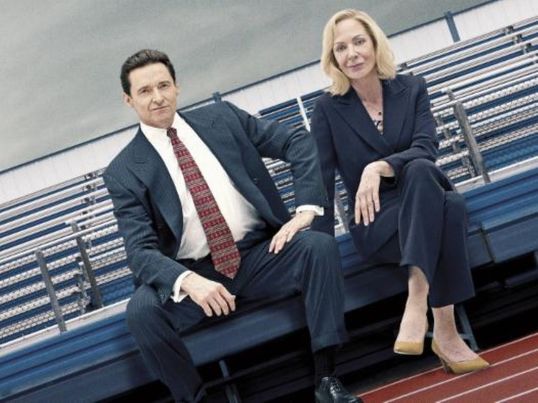
Allison Janney – Bad Education
Margo Martindale – Blow the Man Down
Talia Ryder – Never Rarely Sometimes Always
Youn Yuh-jung – Minari

BEST ACTOR
Christopher Abbott – Possessor
Ben Affleck – The Way Back
Riz Ahmed – Sound of Metal
Kingsley Ben-Adir – One Night in Miami
Paul Bettany – Uncle Frank
Chadwick Boseman – Ma Rainey’s Black Bottom
Eli Goree – One Night in Miami
Anthony Hopkins – The Father
Hugh Jackman – Bad Education
Jude Law – The Nest
Delroy Lindo – Da 5 Bloods
Mads Mikkelsen – Another Round
Jesse Plemons – I’m Thinking of Ending Things
Eddie Redmayne – The Trial of the Chicago 7
Steven Yeun – Minari

BEST SUPPORTING ACTOR
Chadwick Boseman, Da 5 Bloods
Bo Burnham – Promising Young Woman
Bill Burr – The King of Staten Island
Peter Capaldi – The Personal History of David Copperfield
Colman Domingo – Ma Rainey’s Black Bottom
Aldis Hodge – One Night in Miami
Caleb Landry Jones – The Outpost
Alan Kim – Minari
Frank Langella – The Trial of the Chicago 7
Orion Lee – First Cow
Ewan McGregor – BIrds of Prey (and the Fantabulous Emancipation of One Harley Quinn)
Bill Murray – On the Rocks
Leslie Odom, Jr. – One Night in Miami
Paul Raci – Sound of Metal
J.K. Simmons – Palm Springs
Dan Stevens – Eurovision Song Contest: The Story of Fire Saga
David Strathairn – Nomadland
David Thewlis – I’m Thinking of Ending Things

BEST VOCAL / MOTION CAPTURE PERFORMANCE
Sean Bean – Wolfwalkers
Tina Fey – Soul
Jamie Foxx – Soul
Oliver Platt – I’m Thinking of Ending Things
Donald Ray Pollock – The Devil All the Time
Ben Schwartz – Sonic the Hedgehog

BEST ENSEMBLE ACTING
Da 5 Bloods
Another Round
The Devil All the Time
I’m Thinking of Ending Things
The King of Staten Island
Ma Rainey’s Black Bottom
Minari
One Night in Miami
The Personal History of David Copperfield
She Dies Tomorrow
The Trial of the Chicago 7
Uncle Frank

BEST MUSICAL SCORE
Erick Alexander and Jared Bulmer – The Vast of Night
Terence Blanchard – One Night in Miami
Ludovico Einaudi – Nomadland
Ludwig Göransson – Tenet
Emile Mosseri – Minari
Richard Reed Parry – The Nest
Trent Reznor and Atticus Ross – Soul
William Tyler – First Cow
Jay Wadley – I’m Thinking of Ending Things
Isobel Waller-Bridge and David Schweitzer – Emma.
Benjamin Wallfisch – The Invisible Man
Jim Williams – Possessor

BREAKOUT OF THE YEAR
Maria Bakalova (actress) – Borat Subsequent Moviefilm
Max Barbakow (director) – Palm Springs
Emerald Fennell (writer / director) – Promising Young Woman
Sidney Flanigin (actress) – Never Rarely Sometimes Always
Alan Kim (actor) – Minari
Orion Lee (actor) – First Cow
Leah Lewis (actress) – The Half of It
Darius Marder (writer / director) – Sound of Metal
Andrew Patterson (director) – The Vast of Night
Tayarisha Poe (writer / director) – Selah and the Spades
Kemp Powers – co-writer / co-director for Soul and writer for One Night in Miami
Matthew Rankin (writer / director) – The Twentieth Century
Andy Siara (writer) – Palm Springs
Autumn de Wilde (director) – Emma.

HOOSIER AWARD
Athlete A
Eliza Hittman, writer / director of Never Rarely Sometimes Always and graduate of Indiana University

ORIGINAL VISION AWARD
After Midnight
Assassin 33 A.D.
Dick Johnson is Dead
I’m Thinking of Ending Things
Possessor
Promising Young Woman
She Dies Tomorrow
The Twentieth Century
The Vast of Night
Vivarium

Mangrove

Film Review: Small Axe: Red White and Blue (dir by Steve McQueen)


Red, White, and Blue opens with a very young Leroy Logan (Nathan Vidal) standing on a London street corner.  Behind him is the school that he attends.  He’s wearing a school uniform.  As the other students walk past him, they say hi and acknowledge the very obvious fact that Leroy is a student who is waiting to be picked up by his parents.

That, however, doesn’t matter to the two white police officers who walk up to Leroy and start to interrogate him as to why he’s standing on the street corner.  They inform Leroy that there have bee several burglaries in the area and that the burglar is a young, black male.  They start to search Leroy.  The only thing that stops them is the arrival of Leroy’s father, Ken (Steve Toussaint).  Ken reprimands the police for harassing his son.  While driving Leroy home, Ken tells Leroy that he expects his son to do two things for him.  Leroy is never to become “a roughneck” and he’s never to bring the police to his front door.

Jump forward several years and Leroy Logan (now played by John Boyega) is now grown up and working as a forensic scientist.  When his father is beaten by two police officers who claim that Ken was blocking traffic and that he was resisting arrest (neither is true), Leroy decides to channel his anger into something productive.  He applies to join the police force, hoping to bring about change from within.

Needless to say, that turns out to be more difficult than even Leroy was expecting.  At first, Leroy finds himself being used as a prop.  Knowing that they’ve got to fix their public image, the police uses Leroy as a part of their latest public relations campaign, featuring him in advertisements and news stories.  But on the streets, Leroy finds himself an outsider.  His fellow cops, the majority of whom are white, refuse to have his back and welcome him to the force by writing racist graffiti on his locker.  Meanwhile, the members of his community now distrust Leroy, accusing him of selling out and calling him a traitor.  Leroy became a police officer believing that he could be an agent of change but he soon discovers that no one is interested in changing.

At the heart of the film is Leroy’s relationship with his father.  Though Leroy joined the force to try to make life better for men like his father, he didn’t tell Ken about his decision.  In fact, Ken doesn’t find out until two police officers show up at this doorstep, checking to make sure that Leroy put the correct address on his application.  Ken believes that the system cannot be changed.  Leroy disagrees.  The film leaves it to us to decide which man is correct.

Red, White, and Blue is based on a true story.  Leroy Logan was one of the first blacks to join the London Metropolitan Police and he joined for the same reasons that are shown in the film.  Eventually, Leroy would work his way up to being a superintendent and he would help to found and later chair the Black Police Association.  Interestingly enough, the details of Leroy’s eventual success are left out of Red, White, and Blue.  Instead, the film ends with Leroy and his father at the kitchen table, still wondering if things can change.  It’s an ambiguous ending, one that’s hopeful because, even though he’s disillusioned, Leroy hasn’t given up but, at the same time, it’s also one that accepts that it’s going to take more than just one man to change the culture of the police.  It’s an ending that suggests that racism is so ingrained in society that the only way to vanquish it might be to just start all over again from the beginning.  It’s an ending that manages to be both low-key and revolutionary at the same time.

Red, White, and Blue is the third film in Steve McQueen’s Small Axe anthology.  It’s a deceptively simple film, one that kind of sneaks up on you and takes you by surprise.  The minute that you start to think the film is going to be just another well-intentioned liberal plea for tolerance, McQueen will throw in an unexpectedly honest scene that will shake your expectations.  For instance, when Leroy tries to help a prisoner who has been brutalized by a bunch of racist cops, his help is rejected and Leroy discovers that the prisoner hates him even more than he hates the cops who were beating on him.  The prisoner takes it for granted that the white cops are going to be brutal but he saves his most vicious scorn for someone whom he consider to be a traitor to his race.  McQueen directs in a matter-of-fact but enthralling style, emphasizing the bleak coldness of the London landscape.

John Boyega and Steve Toussaint both anchor the film with ferocious performances.  Leroy spends the majority of the film having to hold back his anger and, sometimes, his despair and Boyega does a wonderful job suggesting what’s going on behind Leroy’s outward calmness.  Boyega does get to do some yelling, of course.  When he confronts his follow police officers for refusing to respond to his calls for backup, Boyega doesn’t hold back.  But his best moments are the quiet ones, where Boyega subtly but powerfully suggests that anger and the pain that Leroy has to deal with every day.

Red, White, and Blue is a short but powerful film.  Check it out on Prime.

Film Review: Small Axe: Mangrove (dir by Steve McQueen)


Say whatever else you might want to say about 2020 as a cinematic year, at least it’s giving us five new films from Steve McQueen.

This British director is one of the most consistently interesting filmmakers working today and anytime we get new work for him, it’s a cause for celebration.  His latest project is Small Axe, an anthology of five feature-length films that examines the real-life history of London’s West Indian community.  In the UK, the film are premiering on the BBC while, here in the States, they’ll be premiering on Prime.  Through mid-December, we’ll be getting a new Steve McQueen film every week.

The first of these films is Mangrove.  The film opens in the late 60s, with activist Frank Crichlow (Shaun Parkes) opening a restaurant in London’s Notting Hill neighborhood.  The restaurant is called The Mangrove and it quickly becomes a base for the community.  It also becomes a target for the Metropolitan Police.  PC Pulley (Sam Spruell) claims that the Frank has a history of tolerating petty crime and that the Mangrove is probably just a front for some nefarious operation.  Of course, what quickly becomes obvious is that Pulley’s main problem with the Mangrove is that its owner is black and so are the majority of its customers.  Pulley is an unrepentant racist, the type of man who sits in his patrol car and complains that the military hasn’t been called in to enforce the law in the neighborhood.  (As obsessed as he is with the military, Pulley also says, with some pride, that he’s never actually served in the army.)  When a new rookie shows up, Pulley informs him that his priority for the night is to arrest the first black person that he sees.

Every chance that he gets, Pulley raids the Mangrove.  When Frank complains, he loses his liquor license.  When the members of the community stage a peaceful protest (“Hands Off The Mangrove!” goes one chant), Frank and eight others are arrested and charged with inciting a riot and affray, charges that could lead to all of them spending several years in prison.  (Affray is the legal term for “disturbing the peace.”)  Among those arrested, along with Frank, are activist Darcus Howe (Malachi Kirby) and British Black Panther leader Altheia Jones-LeCointe (Letitita Wright).  Both Darcus and Altheia insist on acting as their own counsel during the trial, giving them the chance to cross-examine the police and to also take their case directly to the jury.

Though Mangrove is a courtroom drama, the trial doesn’t being until almost an hour into the film’s running time.  Wisely, McQueen instead spends the first sixty minutes of the film introducing us to the neighborhood surrounding the Mangrove and also allowing us to get to know the people who not only work there but also the ones who eat there.  The film shows how, for a community of outsiders, the Mangrove became more than just a restaurant.  It became a center for the entire neighborhood, a place where the members of the London’s West Indian community could safely gather.  For someone like Pulley, the Mangrove was a symbol of everything that he couldn’t control and therefore, it had to be destroyed and its owners had to be humiliated.  As well-handled as the courtroom scenes are, they would be considerably less effective if the film hadn’t shown us why it was felt that the Mangrove was something worth fighting for.  When the Mangrove Nine go on trail, they’re not just nine people who have been unjustly accused.  Instead, they represent an entire community that refuses to continue to bow down to their oppressors.

It’s an often effective film, one that is all the more powerful for being based on a true story.  Much as he did with Shame, Steve McQueen makes effective use of the harsh and rather cold urban landscape that his characters inhabit. One needs only watch Frank walk down a dreary London street to understand why the Mangrove was so important to the community.  As presented by McQueen, the Mangrove provides not only an escape from the harshness of the world but also a safe place to discuss how to make that world maybe a little bit less harsh for future generations.  McQueen is brave enough to allow his camera to keep running, even beyond the point that most directors would have said “Cut.”  McQueen shows us Frank yelling after being brutally pushed into a prison cell, as any director would.  However, McQueen doesn’t cut away once Frank falls silent.  Instead, his camera remains on Frank, making us feel his isolation and his feeling of hopelessness.  It takes just a minute to go from the exhilaration of hearing Frank curse out his jailers to the horror of realizing that Frank is basically at their mercy.

For the most part, the actors make a strong impression, with the only false note coming from Rochenda Sandall, who plays Darcus’s partner and often seems to be performing in a different movie from everyone else.  Malachi Kirby and Shaun Parkes have several strong moments as Darcus and Frank while Sam Spruell plays Pulley as being an all-too familiar monster.  That said, the film is pretty much stolen by Letitia Wright, who brings both fury and wit to the role of Altheia.  Whether she’s exposing the Crown’s medical examiner as a fraud or angrily reprimanding a defendant who is considering pleading guilty, Letitia Wright dominates every scene in which she appears.

Is Mangrove eligible for the Oscars?  Under normal circumstances, it wouldn’t be.  But, with the rule changes and the fact that Mangrove was not only selected to compete at Cannes (before Cannes was cancelled, of course) but that it also opened the BFI London Film Festival, I think a case can be made for considering Mangrove to be a feature film as opposed to being a television movie.  This is a strange year so who knows?  Personally, I think Mangrove deserves to be considered.  If it’s not nominated for any Oscars, it’ll definitely be nominated for the Emmys.  That’ll be determined in the future.  For now, it can be viewed on Prime.