October Positivity: Beauty and the Atheist (dir by Donald James Parker)


In 2026’s Beauty and the Atheist, Beau Davidson plays Trey Crawford.  Trey is one of the country’s most popular atheist podcasters.  He spends his entire show making fun of creationists and the makers of Christian movies.  When he discovers that Douglas Connors (Donald James Parker), the star of Gramps Goes to College, is living nearby, Trey decides to invite him on the podcast for a debate.

Now, already, this is just a smidgen more interesting than the usual Douglas James Parker film.  Parker is essentially playing himself but he’s calling himself Douglas Connors.  This film seems to acknowledge that Gramps Goes To College has a certain Room-like reputation.  Could this be a Donald James Parker film that actually has a sense of humor about itself?

Douglas reluctantly goes on Trey’s podcast, expecting to get ambushed by a slick podcaster who hides his own bitterness and personal failings behind a bunch of scientific terms.  And that’s exactly what happens.  Douglas is earnest and polite.  Trey is snarky and angry.  Even Douglas admits that he lost the debate.

Meanwhile, Trey has fallen for Jeweli (Tara Massey), a woman who he keeps spotting in his local coffeehouse.  (It wouldn’t be a Donald James Parker film without a coffeehouse.)  What Trey doesn’t know is that Jeweli is the daughter of Douglas Connors!  And she’s a believer.  Soon, the Atheist has fallen for the beautiful Christian which …. actually, I knew quite a few couples where one partner is religious and the other is not.  It’s not really that unusual of a thing.

Beauty and the Atheist is a smidgen better than the usual Donald James Parker film, largely because Beau Davidson and Tara Massey are better performers than usually appear in Parker’s films.  As well, the scenes set in Davidson’s podcast studio actually require Parker to make some lighting and design choices as opposed to just turning on the camera.  Interestingly enough, despite the film’s premise, Beauty and the Atheist is not quite as aggressive as some of Parker’s other films.  There’s one rather lengthy scenes in which Douglas explains all of the tricks that Trey supposedly used to make him lose the debate but otherwise, this film is far less angry than something like Operation Unite or, for that matter, Gramps Goes To College.

That said, it’s still a Donald James Parker film. This is yet another film where the atheist is an atheist because of family trauma.  Now, to be honest, I’ve met any number of atheists where that stereotype is indeed true.  But it still feels a bit too easy of a  narrative excuse.  On a technical level, the sound recording is often abysmal.  While Davidson and Massey are adequate in their roles, the rest of the cast delivers their lines flatly.  As for the dialogue, it’s sometimes a blessing that it’s hard to hear what the characters are saying.  Most of it falls flat and the attempts at humor are painful to watch.  When Jeweli’s sister comes across some evidence online that she thinks will put Trey in his place, she literally shouts, “Eureka!”  It’s hard to listen to and hard to watch.
 

Late Night Retro Television Review: CHiPs 6.11 “Day of the Robot”


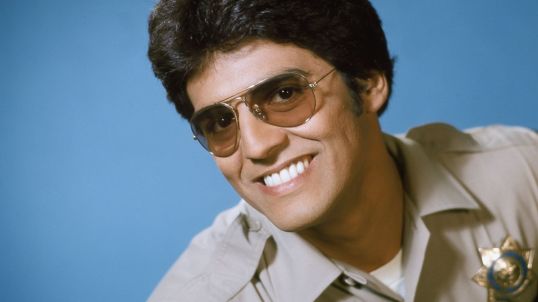
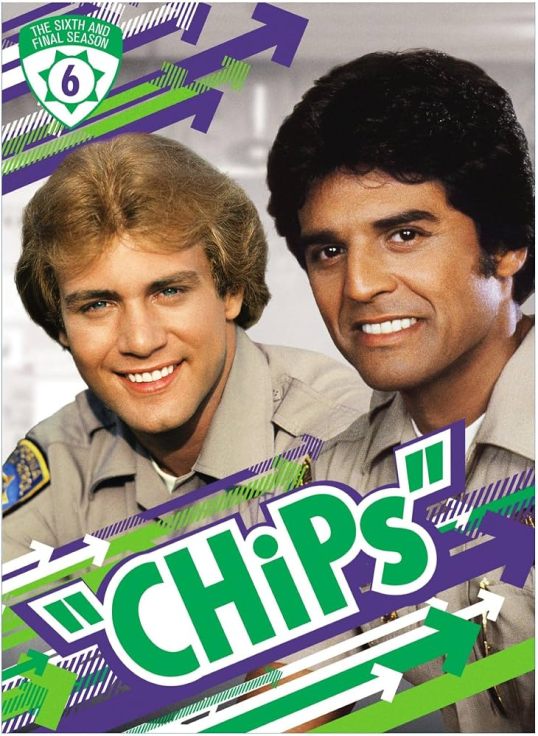
Welcome to Late Night Retro Television Reviews, a feature where we review some of our favorite and least favorite shows of the past!  On Mondays, I will be reviewing CHiPs, which ran on NBC from 1977 to 1983.  The entire show is currently streaming on Prime!

This week, Ponch is busy.  The rest of the Highway Patrol is impressed.

Episode 6.11 “Day of the Robot”

(Dir by Phil Bondelli, originally aired on January 2nd, 1983)

Years ago, Emily’s younger brother was killed by a reckless driver.  Now, Emily (Melody Anderson) is the leader of a group of young women who drive their motorcycles up and down the highway and keep an eye out for people who run stop signs and make unsafe lane changes.  They issue their own tickets.  They attempt to make citizen’s arrests.  They always call the Highway Patrol before going off in pursuit but Ponch, Getraer, and even Bobby still think that they’re putting their own lives at danger.  When two stereo thieves decide to get revenge on Emily for a ticket, can Ponch save the day?

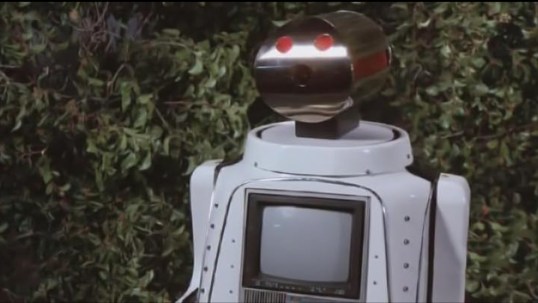
Meanwhile, a robot named MERV has been loaned to the Highway Patrol to help with filing and other tasks.  When it turns out that MERV has a short in its system that’s turned it into a “ticking time bomb,” can Ponch figure out how shut it down so it can be repaired before it accidentally blows up the children’s wing of the hospital?

Of course, he can.  Ponch can do anything!

This episode was a good example of how, during the show’s final season, everyone at the Highway Patrol was pretty much useless except for Ponch.  Ponch is the one who knows exactly what to say to Emily.  Ponch is the one who saves a bunch of sick kids from a potentially explosive situation.  Ponch is practically the only member of the Highway Patrol who couldn’t easily be replaced by a robot.

One gets the feeling that the show’s producers were getting a little desperate during season 6.  Not only have we had a UFO and a tragic death but this season has also given us a robot.  Remember how the early seasons mostly just tried to be a realistic portrait of the day-to-day activities of the Highway Patrol?

Those days are over.  The episode reminds us that CHiPs is now….

On the plus side, at least the robot was cute.

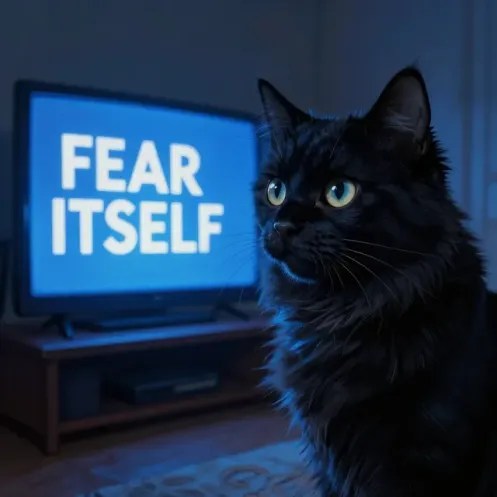
Horror On TV: Fear Itself 1.5 “Eater” (dir by Stuart Gordon)


On tonight’s episode of Fear Itself, a young police officer (Elisabeth Moss) finds herself assigned to be a part of a detail that is guarding a serial killer cannibal named Duane Mellor (Stephen R. Hart).  As the night goes on, strange things start to happen and it becomes apparent that Mellor has powers and habits that go beyond just eating people.

You may have noticed that I skipped the fourth episode of Fear Itself.  That episode was In Sickness and In Health and it was about a bride-to-be who, on her wedding day, receives a note that reads, “The person you are marrying is a serial killer.”  It all leads to a pretty predictable twist.  The reason why I decided not to post that episode is because it was written by Victor Salva, a filmmaker who sexually abused the 12 year-old star of his first film and who, after serving 15 months in prison, somehow went on to continue making movies.  I’ve made a personal decision not to review anything involving Victor Salva.  That said, I do think everyone has to make their own decision as far as problematic filmmakers are concerned so I will say that the episode is on YouTube if you want to watch it.

As for Eater, it’s an intense and atmospheric episode that benefits from Stuart Gordon’s strong direction and which features good performances from both Moss and Hart.  You can watch it below!


October Hacks: Buried Alive (dir by Gerard Kikoine)


1990’s Buried Alive may be the worst Edgar Allan Poe adaptation ever filmed.

The film takes place at the Ravenscroft Institute, a former mental asylum founded by the fearsome Jacob Julian (John Carradine). Jacob’s son, Gary (Robert Vaughn), took over the Institute after his father’s death, treated his patients with kindness and compassion, and preached about the need for “freedom.” Now, Gary has transformed Ravenscroft into an all-girls school for juvenile delinquents. The students worship him because he tells them that nothing is their fault and that they deserve to live the life they want. His newest teacher, Janet (Karen Lorre), is a fan as well. In fact, she soon finds herself falling in love with Gary.

However, from the minute Janet shows up at Ravenscroft, she starts having strange visions. She sees thousands of ants crawling over her feet. She hears strange sounds in the walls. At one point, an arm reaches out of a toilet and tries to grab her. She thinks she sees a distinguished Shakespearean character actor sealed behind a wall. Is she losing her mind, or has she stumbled across something more sinister?

Now, when I say that Buried Alive is one of the worst Edgar Allan Poe adaptations I’ve ever seen, understand that it is not the fault of the cast. There are some truly talented people in this film. A young Nia Long plays a student named Fingers. Ginger Lynn Allen has fun playing a bully named Debbie. Robert Vaughn is appropriately intense as Gary, and John Carradine is… well, he’s John Carradine. This was one of Carradine’s final films, and he actually died before it was released. Obviously, Carradine doesn’t do much, but, as was often the case, his intimidating screen presence meant that he didn’t have to do much to make an impression. He just had to exist. Donald Pleasence plays Dr. Schaeffer, a German-accented member of the staff who wears round glasses and an ill-fitting toupee and who pops up occasionally to tell Janet not to wander around at night. Pleasence was obviously not in the best of health when he played Schaeffer, but, much like Carradine, his eccentric presence gives the film some much-needed atmosphere, and there is a fairly effective twist involving his character. Finally, there’s an absolutely adorable black cat that randomly appears throughout the film. It’s the film’s way of acknowledging Edgar Allan Poe, I imagine.

No, the failure of Buried Alive is not due to the cast. It’s really not even due to the script, which borrows the idea of someone being buried alive and not much else from the Poe story. Instead, the fault almost entirely rests with the film’s direction. The story unfolds with little momentum, some scenes meander while others are over far too quickly, and the director seems to think that filming anyone in an extreme close-up will automatically make them creepy. There are a few gross sequences involving a bunch of ants and the film has a few slasher moments, like the silencing of one annoying victim via a garden tool to the forehead , but otherwise there’s little horror and next to no suspense. I actually found myself getting angry over how poorly directed this film was.

The cast deserved better.

SOV Horror Review: Spine (dir by John Howard and Justin Simmonds)


In the 1986 Shot-on-Video film Spine, a killer is stalking …. well, to be honest, I’m not sure which state this movie is supposed to be taking place in.  Some of the shots feature mountains in the background so it’s definitely not Texas.  I’m going to guess that the film was shot in California, despite the fact that some of performers had Southern accents.

Anyway, a killer is stalking California.  His victims are all nurses who stand 5’3.  He attacks them at home.  He ties them up in a way that causes them to strangle themselves when they struggle.  He cuts out their spinal cords.  Using his victim’s own bloody hands, he writes “LINDA” on the wall.  None of the victims are named Linda.

Who could this killer be?

Well, we know from the beginning.  This film is not a whodunit,  From the start, we see that the killer is Lawrence Ashton (R. Eric Huxley), a hulking man who has a Graham Platner-style beard and who apparently thinks that every nurse that he sees is his former girlfriend, Linda.  He holds Linda responsible for the death of his mother and he’s seeking revenge.

Who can stop Ashton?  How about a cop who does things his way!?  Sam Joffrey (Carl Elliott) doesn’t have time to go by the book!  He’s got nurses to save!

I spent most of this film thinking that Sam Joffrey was terrible at his job.  There was a lengthy and rather distasteful sequence in which Ashton menaced two nurses.  The whole thing seemed to go on forever and I found myself wondering just what exactly our “hero” was doing while all of this was going on.  However, the entire sequence turned out to be just a nightmare.  Really, movie?  I mean, again, I thought the whole sequence went on for way too long and that the film seemed to be celebrating the violence more than condemning it but, if you’re going film something like that, you should at least commit to it.  If you’re going to make a gory film about a sadistic murderer, there’s no excuse for hand-waving away the bloodiest part of the movie by making it “just a dream.”

Spine has all of the typical SOV flaws.  Even though it’s only 72 minutes long, I struggled to pay attention to it.  For the most part, the dialogue was either too muffled or too loud for me to really be able to follow any of the conversations.  (Even today, amateur filmmakers tend to underrate the importance of a clean soundtrack.)  The actors were pretty amateurish.  The dialogue had that “everyone told me this line was funny so we’re not cutting it from the script” feel that is such an integral part of the SOV experience.

That said, I have a weakness for these SOV films.  A part of it’s because I’m a history nerd and this film allowed me see just how tacky 1986 could be.  It’s one thing to shoot a scene on a soundstage that’s been designed to look like a living room.  It’s another thing to shoot a scene in an actual living room that has a really ugly couch as a centerpiece.  Finally, Spine actually did have an effective score.  In the usual SOV tradition, it was a synth score but it still did a good job of creating a slight feeling of unease.

There are better SOV films than Spine but there are worse ones as well.  Spine is right in the forgettable middle.

The TSL Horror Grindhouse: American Rickshaw (dir by Sergio Martino)


1989’s American Rickshaw opens in Florida. Scott Edwards (played by Olympic gymnast Mitch Gaylord) is a college student who pays the bills by pulling a rickshaw through the streets of Miami. One day, he sees an elderly Asian woman (Michi Koba) sitting by herself at a bus stop. When it starts to rain, he offers her a free ride home. Though Scott was just being nice, it turns out that this is the most important thing he’s ever done. The woman is a witch, and when Scott is subsequently implicated in the murder of the son of televangelist Rev. Mortom (Donald Pleasence), she uses her powers to help him escape both the police and the hitman trying to track him down. The witch, aided by both a cat and a cobra, has a history of her own with the duplicitous Rev. Mortom.

American Rickshaw is an odd hybrid of a film. In many ways, it’s a standard action film. Gaylord plays Scott as a lovable loser who gets set up by a stripper named Joanna (Victoria Prouty) and Jason Mortom (Gregg Todd Davis). While Joanna seduces Scott on a boat, Jason hides behind a two-way mirror with a video camera. When Scott hears Jason behind the mirror, he breaks Jason’s camera and leaves the boat with a videotape he thinks features him and Joanna. Only later does he discover that he grabbed the wrong tape. When Scott returns for the correct tape, he discovers that Jason has been murdered. With the hitmen determined to get the tape Scott did take, he ends up getting chased all over Miami.

At the same time, it’s a horror film. The witch uses her powers to help Scott, which means there are scenes of hitmen suddenly seeing a snake approaching them. The witch’s cat also shows up and stares at the ocean until Scott finally realizes he’s meant to dive in so he can find a clue. It’s established that the witch has a magical past with the demonic Rev. Mortom and that Mortom himself is involved in his own son’s murder. “He’s the devil!” Mortom’s wife (Judy Clayton) yells at one point, and it turns out she’s pretty much right.

This, of course, is all a polite way of saying that the film doesn’t make much sense, but anyone familiar with the films of Sergio Martino will not be surprised to hear that. Like many of the great Italian horror and thriller directors, Martino was always more interested in a few strong set pieces than in a coherent plot. American Rickshaw is more about the chase than the destination, and there are enough weird moments to keep things entertaining. Mitch Gaylord is just as blandly engaging here as he was in American Anthem. (“Steve Tevere has thrown a tripus!”) What Gaylord may have lacked in range, he made up for with earnestness.

Of course, the main attraction here is Donald Pleasence, playing the televangelist with an appropriately predatory glint in his eyes. Pleasence doesn’t get a lot of scenes, but, as always, he’s a memorable presence and he commands the screen whenever he does show up. The reverend is such a strange character that it’s hard to think of any actor other than Donald Pleasence in the role.

American Rickshaw is one of those films that seems to get a lot of bad reviews, largely from people who aren’t familiar with the unique style of Italian exploitation films. Personally, I think it’s impossible not to enjoy something as weird as this film. Seriously, how can anyone resist Donald Pleasence and Mitch Gaylord in the same movie?

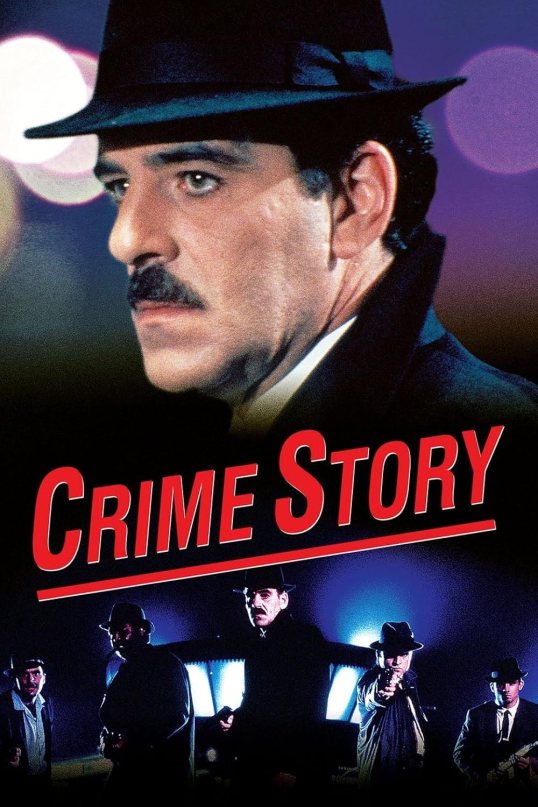
Retro Television Review: Crime Story 2.1 “The Senator, The Movie Star, and the Mob”


Welcome to Retro Television Reviews, a feature where we review some of our favorite and least favorite shows of the past!  On Mondays, I will be reviewing Crime Story, which ran on NBC from 1986 to 1988.  The entire show can be found on Tubi!

Today, we start the second season of Crime Story!

Episode 2.1 “The Senator, The Movie Star, and the Mob”

(Dir by John Nicolella, originally aired on September 22nd, 1987)

The second season of Crime Story opens with Torello, Abrams, and the Task Force still in Las Vegas. With Luca and Pauli apparently dead as a result of that nuclear blast at the end of the first season, various gangsters are trying to position themselves as Manny Weisbord’s new man in Vegas. Carlo Mastrangelo (Stephen McHattie) is the latest contender.

(And yet, it’s hard not to notice that, during the opening credits, both Tony Denison and John Santucci are listed. Neither appears in this episode other than in the pictures displayed at their funeral. But the credits don’t seem quite convinced that Luca and Pauli are dead.)

Crusading Senator Rourke (Kevin Spacey, in his first major television role) comes to Vegas. Rourke—the son of a former bootlegger and a presidential contender who speaks with a slightly abrasive Boston accent—is holding hearings on the Mob. Also arriving in Vegas is Pamela Palmer (Jenny Wright), a platinum-blonde movie star known for her glamorous sex appeal but who spends almost the entire episode hiding a black eye behind her sunglasses. As Torello discovers, Pamela is Mastrangelo’s occasional girlfriend, but she’s also having an affair with Senator Rourke.

Anyone who has studied history or who has an interest in conspiracy theories will be able to see the obvious real-world parallels. Rourke, with his bootlegger father and his less-than-ideal private life, is an obvious stand-in for both John and Robert F. Kennedy. (Of course, when seen today, the casting of Kevin Spacey in the role brings a whole other dimension to it. Now we instinctively distrust Rourke as soon as we see him, despite the fact that the show portrays him as sincere in his crusade against the Mob.) Pamela is Marilyn Monroe. Mastrangelo and his second-in-command Bobby Meeker (Michael Wincott) bring to mind Sam Giancana and Johnny Roselli, two of the mobsters whose names regularly turn up in JFK assassination lore.

In real life, a heartbroken Marilyn Monroe overdosed and both Kennedy brothers were assassinated. On Crime Story, Torello is able to prevent Mastrangelo from assassinating Rourke, and an emotionally strengthened Pamela is able to leave Las Vegas for what will hopefully be a brighter future than the one that awaited Marilyn. This episode feels like a work of alternative history, one in which the Kennedys lived up to their promise and one determined man like Mike Torello could prevent a nation from being traumatized.

For a history nerd like me, this episode was enjoyable. It held my interest. I liked seeing how the show reimagined history. At the same time, Luca and Pauli were definitely missed. A format in which Torello deals with a villain-a-week doesn’t carry the same emotional punch as watching Torello obsess, episode after episode, on just one particularly nasty villain. Because Luca and Torello were opposite sides of the same driven coin, not having Luca around makes it feel as if Torello is incomplete as well.

That said, this episode ended with a shot of a bandaged man sitting on a beach in Mexico. Could that man be Luca? Hopefully, we’ll find out soon!

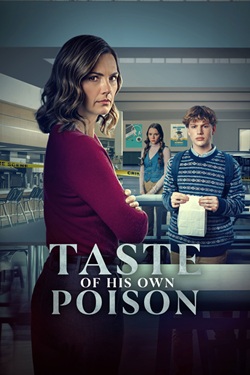
October On Lifetime: Taste Of His Own Poison (dir by Soran Mardookhi)


The 2025 Lifetime film Taste of His Own Poison opens with nerdy high school student Dylan (Nolen Dubuc) being attacked in the school bathroom by his nemesis, Sawyer (Dylan Kingwell). Sawyer, who comes from a broken home and looks up to his delinquent older brother, has a bizarre obsession with harassing Dylan. For some reason, he likes to eat half of Dylan’s lunch before tossing it on the floor and forcing Dylan to eat what’s left. This time, Dylan is saved by his best friend, Meredith (Juliette Hawk). Meredith tells Sawyer to leave Dylan alone, and Sawyer backs off. Later, in their chemistry class, Dylan attacks Sawyer.

Dylan’s mother, Courtenay (Rhonda Dent), is stunned to hear that Dylan has been getting into fights at school. Like all Lifetime mothers, Courtenay owns her own restaurant and has tried to raise her son to know better than to try to solve his problems with his fists. Her husband, Ben (Jonathan Purvis), is impressed that Dylan stood up for himself. As Ben explains it, he would do anything to protect his son. Courtenay doesn’t believe in rewarding violent behavior, even if father and son both claim that it was justified. Perhaps that explains why she and Ben are in the process of separating.

The next day, Sawyer once again grabs Dylan’s sandwich and eats it. Sawyer then has a seizure and promptly dies in the middle of the cafeteria. When it becomes apparent that someone poisoned Dylan’s sandwich, Courtenay finds herself considering what she would have previously thought to be impossible. Did Dylan murder Sawyer? Or was it Ben, who has already said that he would literally kill to protect his son? Both Dylan and Ben deny having anything to do with murdering Sawyer, but Sawyer’s violent older brother disagrees and wants revenge…

I really enjoyed Taste of His Own Poison, which felt like a throwback to the days when Lifetime was all about embracing the melodrama and seeing how many implausible twists could be pushed into one 90-minute story. This Lifetime film actually featured convincing high school students, as opposed to the 20-something actors who usually roam the halls. (I always notice that Lifetime high schools only seem to have about 20 students enrolled. I always have to laugh when I see the sparsely populated hallways of a Lifetime high school.) I have to admit that Taste of His Own Poison had a few plot developments that took me by surprise. A lot of that was because they often didn’t seem to make much sense, but with a film like this, it’s a bit pointless to get caught up in whether or not the story itself is realistic or if everyone is acting in a logical way. There are so many false leads and red herrings that I lost count. This is one of those films where you just follow the story to wherever it leads you. It’s the type of film that is designed to make you shake your head and say, “Oh my God,” every few minutes or so. It’s a fun movie. Just go with it.

Brad’s favorite horror thriller of the past decade…HUSH (2016)!


I may be contributing to our annual Horrorthon here at TSL, but I’ll be the first to admit that I’m not as knowledgeable about the horror genre as the rest of the crew. Most of the horror films I watched growing up were the edited versions that would play on my favorite local channel, Fox-16 out of Little Rock. If not there, I’d see scary movies at my friend’s bunking parties when I was in grade school or junior high. That’s how I first saw the FRIDAY THE 13TH series, and I even remember seeing Fulci’s HOUSE BY THE CEMETERY (1981) at one such party. I didn’t have a clue who Fulci was at the time, but I do remember a victim’s throat being ripped out! I’d go home and have a hard time sleeping. I’ve never been good with gore, and I’ve always preferred action films. With that said, I’ve been trying to up my horror game over the last few years. I try to take part in the weekly #ScarySocial live tweet event, and I’ll watch horror films periodically that my friends tell me about or that seem interesting for some reason. I’ve still got a large backlog to get through, and I’ll never watch the classic gorefests, but I know way more now than I did a few years ago. Horrorthon is an amazing place to learn more.

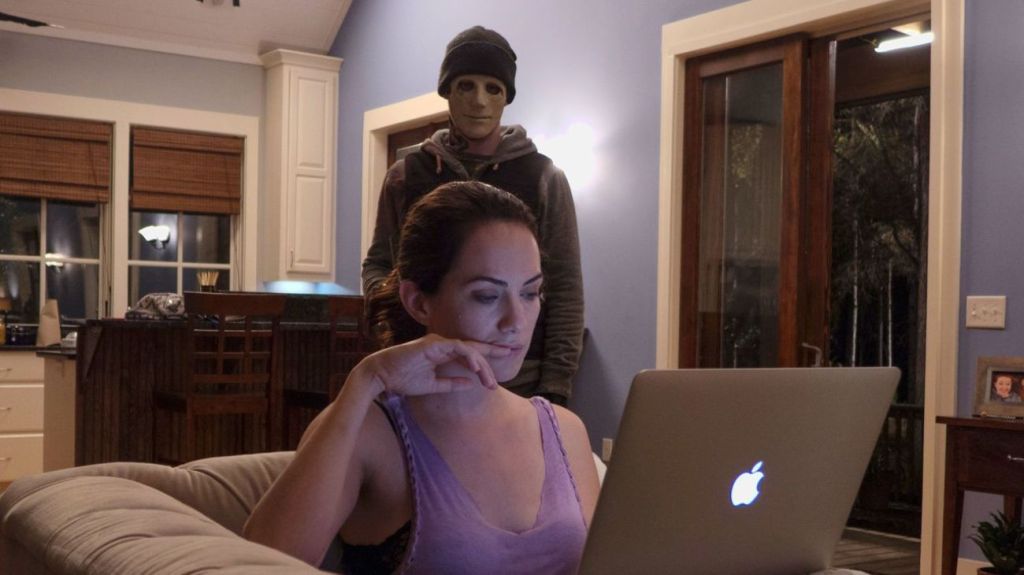
I came across a horror movie ten years ago that I loved, and I still watch it every year. That film is HUSH, which I see as more like a nightmarish thriller than a straight on horror film. The setup is incredible as our lead character Maddie, who’s both deaf and unable to speak, finds herself being stalked at her remote home. There are some early visuals that illustrate the psychopathic evil of “The Man” (John Gallagher, Jr.) as he turns his attention towards Maddie, while also showing us how vulnerable her inability to hear or speak make her in this situation. There’s also a sequence involving the Man sending current pictures to our heroine’s laptop that show her being watched. It’s here that she first realizes something horrific is going on, and it’s a truly chilling scene. The movie hooked me right there, and I was completely invested as the psycho played his cruel games with her.

I thought Kate Siegel was exceptional in the lead role. I didn’t know a thing about the actress going into the film all those years ago, and I’m not sure I’ve watched any of her work since, but I still don’t think anyone could have been better. She proves herself to be smart, resourceful, and not near the fun, easy target our killer thinks she’s going to be.  After being put through hell both physically and mentally over the first couple of acts, I can only describe her character as a total bad-ass as the film races towards its conclusion! She also co-wrote the film with its director, Mike Flanagan, which helped me appreciate her work even more as she helped craft the amazing character. John Gallagher, Jr. is effectively creepy as the killer. This character could have walked straight out of an 80’s horror film, as we never understand why he’s so evil, which makes him more terrifying as far as I’m concerned. I don’t have to understand his motives to want him to die by the end.

As a warning for the more squeamish viewers like me, some of the violence is extremely difficult to watch, with various hands and necks being the most susceptible to extreme harm. The violence is realistic and personal, and I still look away because I know it’s coming and can’t really handle it. It also is one of the reasons the movie stays with me year after year. Just writing about it now is making my toes curl up a bit.

If you’ve seen HUSH before, I hope this makes you want to watch it again. If you’ve never seen it, I’ll let this serve as my recommendation that it’s a movie I love and think you probably will too. And if you want to know even more about the film, check out Lisa’s REVIEW from when it first came out back in 2016. It has more detail about her own personal reactions to the film, as well as her unique critical insight.

Horror Film Review: The Mutations (dir by Jack Cardiff)


In 1974’s The Mutations, Donald Pleasence stars as Professor Nolter. A genetic scientist, Nolter is convinced that plants are the greatest examples of evolution. During the classes he teaches at the local university, Nolter raves about the wonders of the Venus flytrap. Is there anything better than a plant specifically developed to eat bugs? When we see Nolter’s students listening to him, the majority of them appear kind of bored with the whole thing. Only Brian Redford (Brad Harris) is really that interested in anything Nolter has to say.

What no one knows is that Nolter has been conducting experiments of his own. Nolter has hired the deformed Lynch (Tom Baker) to abduct young women and eventually young men so that Nolter can try to speed up their evolution by injecting them with plant DNA… or something. To be honest, I’m not totally sure what Nolter was doing in that laboratory, and I kind of suspect the same was true for the screenwriter. What I can say for sure is that there were a lot of close-ups of the hypodermic needle Nolter was holding in his hand. Unfortunately, all of Nolter’s experiments have failed, and his victims have been transformed into strange creatures. One girl becomes a lizard woman. One guy is turned into a crab-like plant monster.

Fortunately for Nolter, Lynch owns a carnival, and Nolter’s victims just become the latest attractions. Lynch was himself once a carnival “freak.” He was known as “the ugliest man in the world,” and he’s never recovered from the shame and the trauma of being taunted for years. Nolter has promised to cure Lynch of his disfigurement in return for Lynch continuing to abduct new subjects for him. However, when a group of Nolter’s students come to suspect that a classmate has been transformed into a reptile, everything starts to come crashing down.

The Mutations is an odd film. On the one hand, the carnival setting and Donald Pleasence’s mad scientist definitely feel like they could have been lifted from any number of old, black-and-white horror films. At the same time, the nudity, the gore, and the clear implication that Lynch is a pervert, along with everything else, clearly establish that this film was made in the ’70s. Indeed, there’s a scene in which some students talk about dropping acid that practically seems to be shouting, “See? This film is modern and hip!” The film works best when it pays homage to the older films that inspired it. As always, Donald Pleasence seems as if he was born to play an obsessive and quite mad scientist. Tom Baker is brutish as Lynch, but he also communicates the pain that Lynch carries in his heart. (Baker especially deserves credit for managing to give such an expressive performance despite acting underneath a ton of makeup.) Michael Dunn also gives a good performance as the sympathetic leader of the freaks. Unfortunately, the college students are never as interesting. Our heroes are duds. Luckily, the villains are entertaining.

This film was directed by cinematographer Jack Cardiff and, not surprisingly, it looks great. This was Cardiff’s final film as a director. After this film, he returned to working as a cinematographer. One of his last credits was for Rambo: First Blood Part II. No matter what you may think of that film, it looks good! The same can be said of The Mutations.