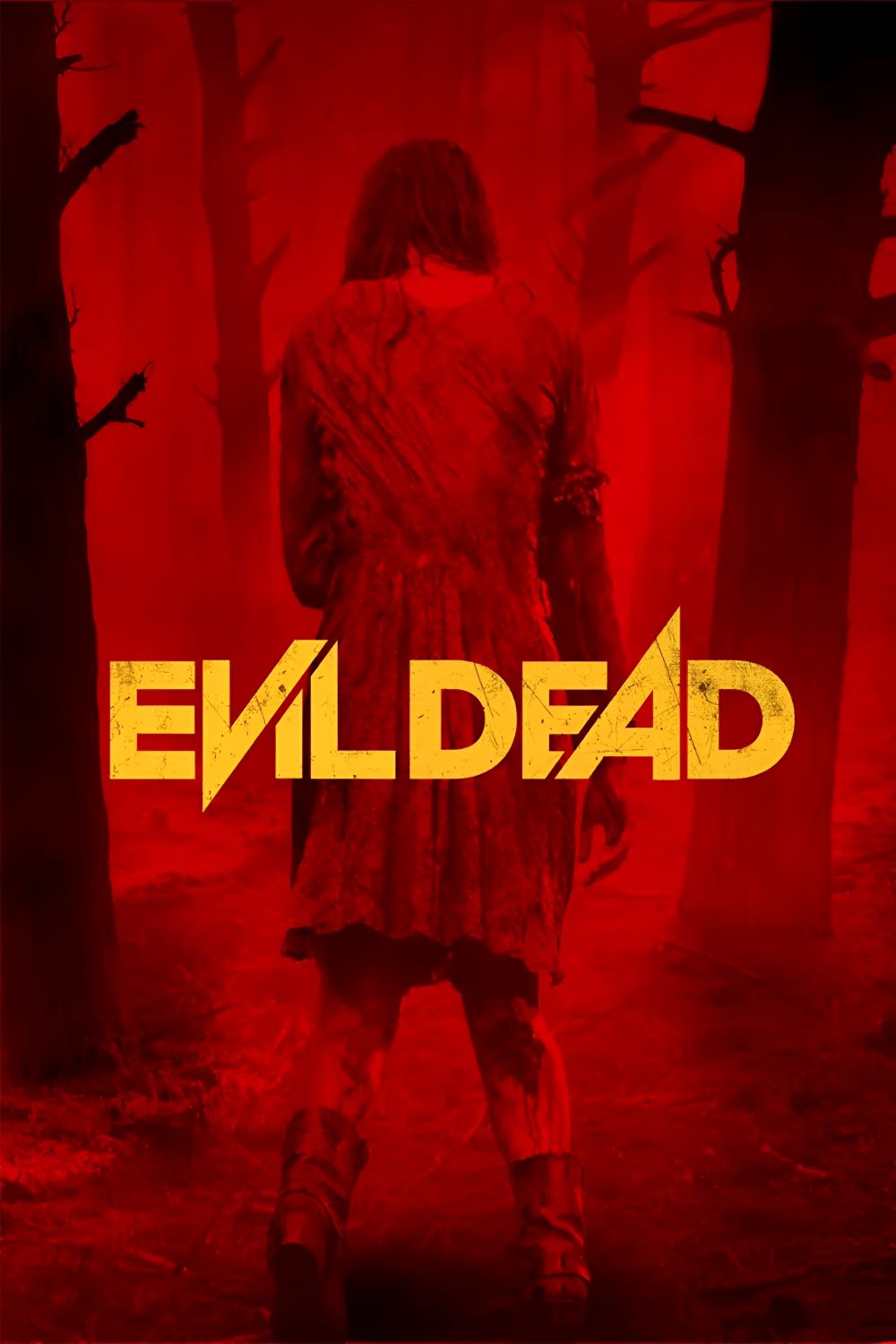
Horror Film Review: Evil Dead (dir. by Fede Alvarez)


“I don’t know if you’ve noticed this, but nothing has been fine. And everything’s been getting worse every second.” — Eric

Evil Dead does not tiptoe around its legacy; it kicks the cabin door open, grabs the Necronomicon, and buries the audience under gallons of blood. Fede Alvarez’s 2013 soft reboot faced the nearly impossible task of revisiting Sam Raimi’s The Evil Dead, a cult horror landmark so tied to its handmade weirdness, manic energy, and eventual dark-comedy sensibility that a straight duplicate would have been pointless. Alvarez wisely does not try to replace the original. Instead, he takes its basic framework—the isolated cabin, the Book of the Dead, a group of doomed young people, and an escalating demonic outbreak—and reshapes it into something more polished, more punishing, and much more relentlessly nasty.

The major difference is tone. Raimi’s original had a rough, handmade quality that made every improvised effect, wild camera move, and strange performance feel like part of its identity. It was scary, but it was also energized by a kind of reckless invention. Alvarez’s Evil Dead goes in another direction. It is slicker, more controlled, and deeply mean-spirited in a way that makes the cabin feel less like a creepy vacation spot and more like a rotting death trap. This is not a winking horror-comedy, at least not until the violence becomes so excessive that it starts circling back around into stunned laughter. For most of its running time, the movie plays things brutally straight. It wants the audience to feel trapped in that filthy cabin right alongside the characters, watching every injury worsen and every possible escape route close off.

That seriousness is actually one of the film’s smartest choices. The cabin trip is no longer just a random weekend getaway that turns into hell. Mia, played by Jane Levy, is being brought to the family cabin by her brother David and a few friends so she can detox from heroin. It is a grim premise, but it gives the story a real emotional spine. Mia’s friends and family are not merely there to be picked off one by one; they are trying, however imperfectly, to help her survive something terrifying before any supernatural force enters the picture. When Mia starts seeing horrific things, the others initially assume she is suffering withdrawal symptoms or trying to manipulate them into letting her leave. That adds a nasty layer of uncertainty to the setup. The audience knows something evil is happening, but the people around Mia have a believable reason not to trust her.

Jane Levy carries a huge amount of the movie. Mia has to move through several different modes: vulnerable, furious, terrified, possessed, exhausted, and eventually almost mythic in her determination to survive. It would have been easy for the movie to turn her into either a helpless victim or a standard final girl, but Levy gives her enough rawness that she feels like a person fighting two battles at once. She is struggling with addiction, family resentment, and an actual demonic infection spreading through the cabin. Her performance gets more intense as the movie goes on, and by the final act she has become one of the more memorable protagonists in the franchise.

The supporting cast is less developed, though that is partly by design. David, played by Shiloh Fernandez, is Mia’s estranged brother and the closest thing the film has to a traditional lead for much of the first half. Lou Taylor Pucci’s Eric is the unfortunate idiot who reads from the Necronomicon despite the book being wrapped in barbed wire, marked with warnings, and seemingly designed to scream “do not open this.” Still, the movie at least gives him more guilt than the average horror-movie fool. Once he realizes what he has unleashed, Eric spends much of the film trying to help Mia and clean up his mistake. Olivia and Natalie are thinner characters, but the film uses them effectively as different stages of the Deadite infection and as delivery systems for some especially vile set pieces.

And that is where Evil Dead really earns its reputation. The film’s violence is not merely bloody; it is aggressive, tactile, and determined to make the audience squirm. Needles, glass, nail guns, electric carving knives, box cutters, hot water, exposed nerves, severed limbs—Alvarez and co-writer Rodo Sayagues treat the cabin like a giant torture chamber filled with household objects waiting to become weapons. The gore is so over-the-top that it becomes almost operatic. There is a clear effort to make every major injury feel specific rather than generic. This is not just people getting slashed in dark rooms. The movie wants viewers to remember exactly what happened, which is why several scenes are difficult to shake even after the credits roll.

What makes the carnage work is the heavy use of practical effects. The film has digital touch-ups here and there, but it mostly wants blood, makeup, prosthetics, and physical messiness in the frame. That choice connects it directly to the old-school horror tradition that made the original The Evil Dead so memorable. Alvarez has a cleaner visual style than Raimi, but he does not make the mistake of turning the Deadites into sleek CGI monsters. They look diseased, swollen, burned, cut open, and horribly physical. The cabin itself is just as important. It is damp, dark, decaying, and full of corners that seem infected before anyone even opens the book.

The film also knows how to use the iconography of the series without becoming trapped by it. The Book of the Dead is immediately recognizable, but it is presented as a more grotesque object than ever: bound in human skin, wrapped in barbed wire, and full of disturbing images and warnings that practically dare someone to ignore them. There are nods to Raimi’s films, including a familiar yellow Oldsmobile and the expected cabin imagery, but Alvarez avoids simply repeating Ash Williams’s story. Bruce Campbell’s Ash is such a distinct character that trying to replace him outright would have been a disaster. Instead, Evil Dead makes Mia its own survivor and lets her final confrontation stand apart from the earlier movies.

The biggest criticism of Alvarez’s film is also a fair one: it can feel almost too grim. The original movies had a wild punk-rock sense of fun—raw, fast, messy, inventive, and powered by the kind of reckless confidence that turns limitations into personality. Alvarez’s soft reboot abandons that punk-rock attitude almost entirely. If Raimi’s The Evil Dead feels like a sweaty, chaotic garage band ripping through a horror song at maximum volume, Alvarez’s Evil Dead is the Norwegian black-metal version: colder, uglier, more nihilistic, and committed to burying the audience under mud, blood, grief, and cruelty. It is still extreme, but it is extreme in a much more punishing key.

That is not automatically a flaw, even if it may leave fans of the original’s humor missing the unhinged fun. Alvarez is not trying to make a Raimi imitation. He makes a full-blooded, punishing horror film that takes the mythology seriously while still delivering the series’ essential pleasures: demonic possessions, a cursed cabin, practical gross-out effects, and enough blood to drown a small town. The dialogue is occasionally stiff, some of the supporting characters never become much more than targets, and the addiction metaphor can be a little blunt, but those weaknesses do not erase the film’s commitment or craft.

The climax is where the movie finally fully embraces the outrageousness that defines the franchise. Mia’s fight against the Abomination during a literal rain of blood is ridiculous in the best possible way. It is gruesome, excessive, and visually unforgettable. The movie has spent so long tightening the screws that this ending feels like an explosion of all the pent-up insanity it had been holding back. It is not as funny as Evil Dead II or Army of Darkness, but it absolutely understands that an Evil Dead finale should be bigger, wetter, louder, and more deranged than logic permits.

Ultimately, Evil Dead works because it treats the source material with respect without treating it like museum property. It is nastier than the original, more emotionally grounded, and less playful, but it is still recognizably part of the same cursed family tree. Alvarez’s version may not have the handmade chaos or goofy charm of Raimi’s The Evil Dead, but it has its own savage identity. More importantly, it proved the franchise could move forward without simply repeating Ash Williams’s story. Its grimy, practical-effects-heavy, emotionally brutal approach became the blueprint for the modern Evil Dead films that followed, including Evil Dead Rise and Evil Dead Burn, even as each one found a new setting, cast, and nightmare to unleash. Evil Dead Rise moved the carnage from the cabin into a cramped apartment building, while Evil Dead Burn carried that modern branch of the series forward with another standalone story connected to the same larger Deadite universe.

For viewers who want horror movies to go all the way—who want the blood to spray, the limbs to fly, and the final girl to earn every second of her survival—it remains one of the strongest horror remakes of its era.
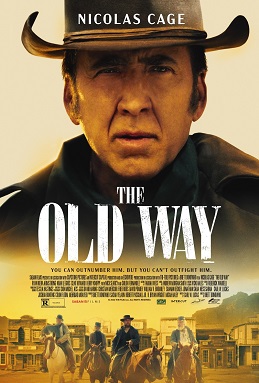
Film Review: The Old Way (dir by Brett Donowho)


“Oh my God!  A Nicolas Cage western!?  This is going to be great!”

That was my initial reaction when I heard about The Old Way, a film in which Nicolas Cage plays a former gunslinger who returns to his old ways while seeking revenge for the murder of his wife.  Who knew which Nicolas Cage would show up for The Old Way?  Would we get the wild, unpredictable Cage?  Would we get the soulful and haunted Cage?  Would this be one of the films that Cage cared about or would this be one of the films that Cage clearly just made for the money?  Hearing that Nicolas Cage walked off the set because of an accident with one of the guns did not fill me with confidence.  (The armorer who worked on The Old Way was the same one who went on to work on Rust and again, that did not exactly fill me with confidence.)  Still, I was definitely curious to see The Old Way for myself.

Unfortunately, The Old Way is neither Cage at his best nor Cage at his most eccentric.  Instead, Cage gives a quiet and emotionally restrained performance as Colton Briggs.  When Briggs is first seen, he’s taking part in an extrajudicial execution and then coldly killing a man who first shoots him in the back.  Jump forward 20 years and, much like Clint Eastwood in Unforgiven, Colton Briggs is now a married man and a somewhat uptight shop owner who rarely shows a hint of emotion.  His 10 year-old daughter (Ryan Kiera Armstrong) is as rebellious as Colton once was and she has no idea about Colton’s past.  However, when the nephew of the man that Colton killed at the start of the film, murders Colton’s wife, Colton sets out for revenge.  His daughter follows him, along with Marshal Jarret (Nick Searcy, giving the film’s best performance).  Jarret is a former friend of Colton’s but both men make it clear that they will kill the other if they have to.  That’s the old way.

It’s a typical western and, on a purely technical level, it’s not a bad one.  The cinematography is frequently gorgeous and the members of the rival gang are made up of memorable character actors like Clint Howard and Abraham Benrubi.  Obviously, a certain amount of care went into recreating the old west.  As I said before, Nick Searcy is ideally cast as Marshal Jarret and he gives a performance that will keep you guessing as to whether or not Jarret should be trusted.  Nicolas Cage is adequate in the lead role, even if he’s never quite as eccentric as most of his fans would probably prefer him to be.  When he first shows up, he’s wearing an obviously fake mustache but that’s about as odd as his performance gets.

But, in the end, The Old Way just isn’t a particularly memorable film.  It’s one of those films that you watch with the hope that it will suddenly spring an unexpected detail or a bizarre moment on the audience but it never happens.  The Old Way is way too formulaic for its own good, borrowing liberally from True Grit and Unforgiven without ever really establishing its own identity.

Horror Film Review: From Within (dir by Phedon Papamichael Jr.)


Strange things are happening in Grovetown, Maryland.

Sitting out on the dock, Sean (Shiloh Fernandez) reads from a book while his girlfriend, Natalie (Rumer Willis), waits.  After he finishes reading, he promptly shoots himself in the head.

Natalie staggers back to her father’s dress shop and says that someone is following her.  She then ducks into a backroom and stabs herself in the neck with a pair of scissors.

The next day, Natalie father (Jared Harris) hangs himself in the back of his shop.

And the deaths continue, one after another.  One girl crashes her car while screaming that someone is following her.  Another cuts her wrists on a broken window.  A recovering alcoholic drinks drain cleaner….

Normally, all of this death would be a cause for panic (or, at the very least, a sudden surge of people moving out of town) but the citizens of Grovetown are all confident in their ability to survive.  That’s because almost all of them are members of the same megachurch, led by the charismatic Pastor Joe (Steven Culp).  They believe that the deaths are the results of witch’s curse.  Perhaps all they have to do is kill the witch’s descendants….

Now, the witch’s son, Aidan (Thomas Dekker), is willing to admit that yes, it’s possible that his mother put a curse the town.  And it’s also possible that it was the suicide of his brother Sean that unlocked the curse and activated all of the deaths.  But Aidan still swears that it’s the townspeople themselves who are choosing to commit suicide.  If anything, the curse is just pushing them toward the inevitable….

Of course, complicating things is the fact that Aidan has kind of fallen in love with Lindsay (Elizabeth Rice) and Lindsay is dating Dylan (Kelly Blatz), the fanatical son of Pastor Joe.  Aidan and Lindsay think that they may have found a way to stop the curse but Dylan is more interested in just killing Aidan.  Working with Dylan is a white trash pyromaniac named Roy (Adam Goldberg) and you really haven’t lived until you’ve seen Adam Goldberg play a white trash pyromaniac.

Anyway, From Within is a film about which I have mixed feelings.  On the one hand, the film is full of creepy moments.  On the other hand, it keeps getting bogged down in its attempt to say something meaningful about religious fanaticism.  I mean, we know that Pastor Joe, Dylan, and Roy are all bad news as soon as they start talking about how religious they are because this is a movie and religious people are always evil hypocrites in movies.  At times, this movie comes across as if it thinks it’s the first movie to ever suggest that maybe not all religious people are as perfect as they claim.

Far more effective are the scenes involving the curse.  Whenever someone falls victim to the curse, they find themselves being chased by their own doppelgänger, which leads to some incredibly creepy moments.  (When the doppelgänger appeared in a mirror and compelled one woman to drink bleach, it totally freaked me out.)  These scenes reminded me a bit of It Follows, though it’s important to note that From Within was released in 2008, seven years before It Follows.

From Within is an uneven film, a bit frustrating in its pretensions but undeniably effective in its scares.

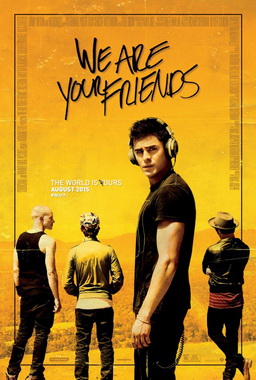
A Quickie With Lisa Marie: We Are Your Friends (dir by Max Joseph)


We_Are_Your_Friends

So, this morning, I read some of the harsh reviews that mainstream critics have given the new film We Are Your Friends and I have to admit that I’m starting to get a little ticked off.

That’s not to say that We Are Your Friends is a very good movie.  I saw it last night with my BFF Evelyn and we enjoyed it but mostly, that was because we talked through almost the entire movie.  And yes, I know that it’s rude to talk through a movie but seriously, the theater was nearly deserted.  When we bought our tickets, there was a huge crowd of people gathered outside the theater but it turns out that they were all buying tickets for War Room.

Anyway, We Are Your Friends tells the story of Cole (Zac Efron), a DJ who lives with three idiot friends (who are so identical to the group from Entourage that one of them is even named Squirrel).  He spends his days working at a mortgage company and his nights DJing.  Then he meets James (Wes Bentley), a formerly great DJ who is on his way down.  James takes Cole under his wing and mentors him and teaches him how to get a room dancing.  But, Cole ends up falling in love with James’s abused girlfriend, Sophie (Emily Ratajkowski), which leads to… well, it leads to exactly what you think it’s going to lead to.  Storywise, We Are Your Friends is not going to win any points for originality.

While we were watching the movie, Evelyn and I agreed that Zac Efron is a strange actor.  I mean, yes, he’s hot and yes, he’s talented enough that he can walk while delivering his lines but, at the same time, his dramatic performances always feel oddly empty.  You watch him and you get the feeling that he’s still trying way too hard to prove that there’s more to him than just High School Musical.  He’s like the guy who you have crush on until you actually get to know him and discover that, beyond his looks, he’s really not that interesting.  Efron always seems to be putting in a lot of effort but, whenever you watch one of his performances, you get the feeling that there’s not much going on underneath the beautiful surface.  For all intents and purposes, Zac Efron is the anti-Gosling.

And some movies have made good use of Efron’s limits.  He was perfectly cast in Me and Orson Welles, for instance.  And he’s good in comedies, where he can play against his good looks.  But in a film like We Are Your Friends, where you’re actually supposed to have some sort of emotional stake in his hopes and dreams, Efron just feels miscast.

That said, I still enjoyed We Are Your Friends and I think that a lot of the reviews have been a bit too harsh.  Why did I enjoy the movie?  It all comes down to the music and the dancing.  If you love EDM, you’ll find a lot to enjoy in We Are Your Friends.  And if you’re not into EDM — well, then fuck off.  I could sit here and write another 500 words about how clichéd the storyline is but, ultimately, that’s not what the film is about.  The film is about the music.  The film is about the ecstasy of dancing all night and then waking up with the beats still playing in your head.  At its best, that’s what this film captures.  It’s not a great film.  A month from now, I have a feeling that it’ll be a struggle to remember much about We Are Your Friends.  But I’ll probably still be listening to the soundtrack.

That’s what a lot of the harsh reviews are missing but then again, most mainstream film reviews are written by people who are too old to appreciate EDM in the first place.  EDM is music for people who are young and who are still capable of enjoying the present and dreaming about the future.  Boring old mainstream critics will never get it and that’s why the reviews of We Are Your Friends feel so condescending.  The critical consensus on Rotten Tomatoes reads: “We Are Your Friends boasts magnetic stars and glimmers of insight, but they’re lost in a clichéd coming-of-age story as programmed as the soundtrack’s beats.”  Now I know how those Christians who went to see War Room feel whenever a reviewer thinks he’s being clever when he says that one of their films “doesn’t have a prayer.”  It’s all so condescending and cutesy.

Listen, We Are Your Friends is not a particularly good film.  But it’s not as bad as you might think.  The plot is bad but the music is good and really, isn’t that the point?

Everyone Else Is Talking About The “Evil Dead” Remake, So I Guess I Will, Too


Evil-Dead-Poster

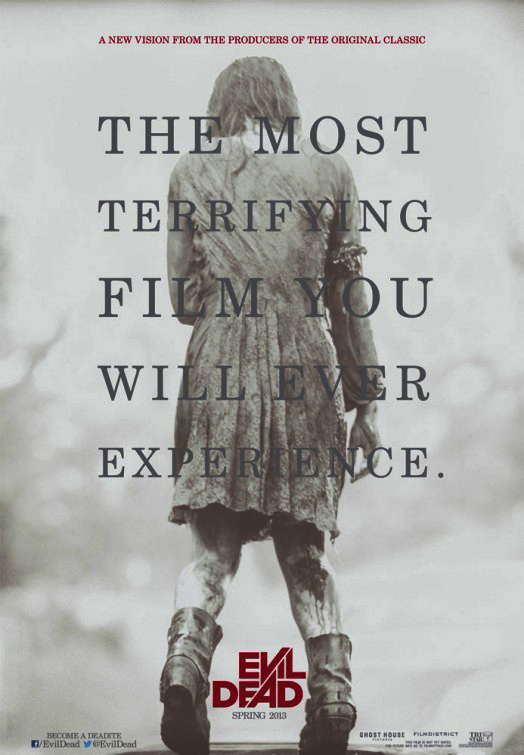
Let’s get one thing straight right off the bat — first-time director Fede Alvarez’s new remake/”reimagining” of Sam Raimi’s 1981 classic The Evil Dead (this time going out minus the article at the beginning of the title, so it’s just Evil Dead, thank you very much) is not, as its ad poster claims, “the most terrifying film you will ever experience.” That’s actually a gutsier tag line than it sounds on first reading, since it’s essentially promising that not only is this flick scarier than anything you’ve already seen, it’s scarier than anything else you’re ever going to see for the rest of your life. It can’t live up to that, period — and truth be told, it’s not even very scary at all.

Which isn’t to say that it’s bad or anything. In many key respects — eschewing CGI for “real” special effects, not even trying to cast somebody new in the role of Ash since  absolutely anyone would suffer in comparison to Bruce Campbell (who, along with Raimi, is on board as at least an air-quote producer on this one) — Alvarez and  his cohorts (including, it pains me to say, co-screenwriter Diablo Cody, who I was fairly certain was going to fuck things up here in some way, shape, or form but, pleasingly, doesn’t) get a lot of what they’re trying to do here right. The film is gory beyond belief, moves at nearly the same breakneck pace as its ’81 template, there’s a sublimely wrong tree-rape (yes, you read that correctly) scene,  the script provides a believably updated reason for why our five protagonists are getting together in a remote cabin in the woods — that looks very much like the original, might I add — in the first place ( I won’t spell it out too specifically but it gives new meaning to the old “withdrawal’s a bitch” cliche), and the performances are, on the whole, fairly solid.

They’ve also wisely chosen not to mess with the whole “haunted book inked in human blood and bound in human skin that releases untold evil onto the world” premise, so points all around for not only not messing with what worked in the original, but also for not trying to catch  lightning in a bottle twice by hewing too closely to it. Alvarez seems to have gone into this one knowing what he should and shouldn’t play around with, and that puts him a step ahead of your average horror remake director.

Here’s the rub, though — whenever you’re trying to update the look and feel of a $375,000 production on a budget of $14 million, something’s bound to get lost in translation, and no matter how hard it tries, Evil Dead circa 2013 just can’t capture the grittiness, the grime, the immediacy and, dare I say it, the heart of its progenitor. Alvarez is definitely going for an old-school approach here, and I commend him for that, but it’s still (and obviously) not old-school in actuality. Once you poke beneath the paper-thin surface, it becomes fairly obvious that any successes the new film has are more or less of the cosmetic and superficial variety. It looks good, sure — but it still feels kinda wrong, even though it’s doing its level best to cover that up by, again to its credit,  not giving you too much time to think.

I mentioned before that I by and large liked the cast — Shiloh Fernandez, Lou Taylor Pucci, Jessica Lucas, Elizabeth Blackmore and, especially, Jane Levy as our doomed (or is she?) central “heroine,” Mia — all do a nice job. But none of them especially stand out, either, which isn’t too bad a mini-metaphor for the movie itself as a whole — it’s thoroughly competent in terms of its execution, but there’s not much extra “spark” to the proceedings. Alvarez seems to understand the essential ingredients for making a solid, respectful, won’t-piss-you-off updating of a classic, but he’s got some way to go before he can create a genuine classic from whole cloth himself.

In some respects, there’s really not a whole lot he can do about that — The Evil Dead was shot in a remote Tennessee cabin while Evil Dead constructed its own location in New Zealand that set out to ape the look and feel of middle-of-nowhere USA as best it can — but that’s just endemic of the greater problem at work here, namely that this is a story that just plain not only doesn’t need a so-called “upgrade,” but literally can’t survive one with its celluloid soul intact. I give Alvarez all the kudos in the world for trying, and for at least understanding the surface elements of what made the original the undeniable classic that it’s rightly hailed as, but so much of what made Raimi’s flick the singular triumph that it was can never be duplicated. Hence, I guess, why I just referred to it as a “singular” work. In short, while we’re still talking about the first one some 32 years after its release, I’ll be damn surprised if people are talking about this remake very much even a year from now.

Still — they did what they could here, I suppose. I had an exchange with a couple of friends on facebook earlier today about the endless stream of remakes in general that we’re forced to navigate, and it made me realize that at some unspecified, silently-arrived-at point, I went from going into these things thinking “I hope they get it right this time” to  “dear God I hope they don’t fuck this one up.” It’s a subtle shift, sure, but it  certainly speaks volumes about the general performance of the studios’ big-budget-remake machine. I’m pleased to say that Alvarez et. al. don’t fuck this one up (and whatever you do, hang around until the credits are over — you’re guaranteed to leave with a smile on your face even if you don’t actually like the film at all), but it is what it is. The Evil Dead 1981 was a product of blood, sweat, tears, determination, and — weird as it may sound — love, put together by folks who didn’t always know what they were doing but were always giving it more than their best effort. Evil Dead 2013 is, for all its attempts to duplicate the trappings of its predecessor, a professionally-executed Hollywood production. You tell me which is gonna be better.

Hell —  tell me which has to be.

Trailer: Evil Dead (Full Red Band)


EvilDead

Remake. Remake. Remake.

I can hear the howls now. Not another horror remake and one of a classic in the genre that many fans consider one of the holy grails of horror cinema. Guess what I say to those people. SHUT THE FUCK UP!

With the complete blessing from both Sam Raimi and Bruce “Who is God when he wants to walk amongst his creations” Campbell and them back but in the role of producers and mentor to the remake’s director, Fede Alvarez, and the young ensemble cast I have much more faith with this particular horror remake than others of its kind.

The trailer itself looks to go on the far extreme on the horror side of the original. I didn’t get a sense of much of the black humor of the original film (and it’s subsequent semi-remake), but I think that’s a good thing. Why remake a classic beat for beat when one can go their own way and explore something even the original never did.

One thing I can say about this full red band trailer that has me jumping up and down like a horror fan on bath salts…

VIOLENTLY AMOROUS TREE: Check!

LOTS AND LOTS AND LOTS OF BLOOD: Check!

GRAPHIC DISMEMBERMENT: Check!

CHAINSAW: Check!

DEADITE POSSESSIONS: Check!

FACE-EATING (or Extreme GIRL-ON-GIRL MAKE-OUT SESSION: Check and Check!

Evil Dead lands it’s bloody, possessed corpse on everyone this April 12, 2013. Until then….

….Shop smart. Shop S-MART.

Horror Trailer: The Evil Dead (Red Band)


Horror remakes is almost as old as the history of film. I’ve tried to educate those who complain that another horror classic was being remade and it will suck. Guess what horror classics have always been remade and they don’t always suck. So, instead of telling these snobs to go in their rooms and drool and jerk one off to their classics they don’t want tarnished by a remake I just shake my head and try to see if the remake holds up to the original or, better yet, judge the remake on it’s own creative merits and see if it brings something new to the “classic” original.

In 2013 we see one such horror remake arriving on the big-screen with Fede Alvarez’s new take on a true horror and grindhouse classic horror, The Evil Dead.

The film will be produced by two of the same people who made the original film in Sam Raimi and Bruce “God when walking amongst the humans he created” Campbell. There will not be a character named Ash, but the role of Mia (played by Jane Levy) will take on a similar role in the film. This trailer first premiered for a select audience during this year’s New York Comic-Con and the response was loud, louder and even louder. One thing which everyone who saw the trailer seemed to agree was that the remake looks to honor the original film (rushing POV tracking shots to the oppressive atmosphere throughout the film) while also giving director Fede Alvarez a chance to add his own visual and narrative style to the production.

It is going to be a gory remake and very oppressive and nihilistic. What the trailer doesn’t seem to hint at is any sign of dark humor that fans of the original film are now nitpicking about. Guess what…the original was straight up grindhouse horror that had nothing humorous about (well unless you consider a possessed tree raping a woman as being hilarious). So, it’s going to be interesting to see if this remake will get a chance to impress the fans of the original while at the same time show those new to the horror genre a glimpse at what 70’s horror was really all about.

The Evil Dead is set for a 2013 release date.

Film Review: Red Riding Hood (dir. by Catherine Hardwicke)


My problems with Red Riding Hood are more of a personal nature than anything else. I’m from a family that clashed old world values of women being blindly subserviant to the Man of the House vs. women being fiercely independent and only having a male in their lives to complement things. These elements were my luggage already brought to the table on seeing the film, but it shouldn’t damper one’s opinion on the film. If this review does this, it’s on me personally and not a reflection of the entire Shattered Lens.

Like Alice in Wonderland before it, Red Riding Hood takes the classic fairy tale and expands on it. While it does so, it doesn’t do it by much. What it has going for it is a nice visual style. Colors are vibrant and director Catherine Hardwicke really has an eye when it comes to forest landscapes (just as she did with Twilight). Mists cover the trees and capes billow in the wind, when it’s not concentrating on the town itself (which does look like a soundstage at times). In the end, however, it suffers from the same quasi teenage issues that Twilight had. I yawned a number of times. Granted, I understand that the movie may be targeted to a younger audience (and for them it may very well work), but even my audience groaned a little and they were target individuals.

Red Riding Hood is the story of Valerie (Amanda Seyfried), who lives in a small village that lives in fear of The Wolf, who has been known to sneak in and attack or kill citizens. To appease the wolf, the townspeople keep animals tied outside. As a child, she forms a bond with a young boy named Peter. Time passes, and we find young Valerie bethrothed to Henry (Max Irons) by way of her mother’s plans (played by Virginia Madsen). Peter (Shiloh Fernandez) still has feelings for Valerie, and this all quickly becomes another Bella / Jacob / Edward triangle. It’s not at the start a story of Valerie choosing her own road, but having to hear from everyone around her that this guy should be the one she marries or that one is the right guy for her. To me, personally, the film in the beginning pushes as much of a pro-“I need a man to survive” stance as Battle:LA does a Pro-Marine one. Is this a terrible thing? Not if that’s where your mindset is, no. Every time I saw them mention anything along the lines of hand and feet worship some guy just because “that’s how it is”, I had to remind myself that it’s just the time period the story takes place in (though I’m sure the audience heard me groan at least once). Again, that’s just me.

In the midst of all this, on being asked to run away with Peter, Valerie is alerted to her sister’s death from the wolf. The townfolk make a point of going after the wolf, and decide to head out the cave where they believe the beast lives. They return with proof of a victory and plan to host a party for the deed. The town priest (Lukas Haas, who somehow seems to less here than he did in Inception) reaches out for help in form of Solomon (Gary Oldman). Solomon, arriving with armed guards warns the townsfolk of the evil of werewolves and that he will hunt it down. The next few nights will be Blood Moon nights, meaning that if the wolf bites anyone during that time, they’ll become werewolves as well. The townsfolk, not buying into this, decide to have a wild party with sexy dancing. This results in a visit from the Wolf, who confronts Valerie and telepathically asks her to come away with it, or the town will be razed. It all kind of escalates from there.

Oldman, for his credit, was fun here and slightly over to the top.  Oldman delivers his lines with flair, being far less subdued here than he was in The Book of Eli. For who better to hunt a wolf than Sirius Black himself, right?

And that’s part of the problem I found with Red Riding Hood. With the exception of Seyfried, the supporting cast is actually stronger than the main group of actors the story focuses on. Julie Christie plays Valerie’s grandmother, in a great turn, and as always Billy Burke (Drive Angry, Twilight) is supportive as Valerie’s father. He’s really one of the highlights of the film. As for Henry and Peter’s characters,  the most I could think of with them were the Winchester brothers in Supernatural. They’re eye candy for the girls, though I should note that none of the girls in my audience were excited as they were when I saw The Twilight Saga: New Moon. There were lots of screaming for that one.

What does work is that the movie is reminiscient of The Beast Must Die. It is a mystery of who the wolf actually is, and both Valerie and the audience are given clues. That I actually enjoyed, and the third act of the film wasn’t too bad. The action is quick and to the point, but again, it all kind of feels like I could have seen this as a series on the CW. There wasn’t as much of a worry about who would fall at the hands of the wolf or what dangers would face Valerie so much as they actually looked cool when it occurred. Easily a Netflix pick.