Review: The Last Starfighter (dir. by Nick Castle)


“Alex! Alex! You’re walking away from history! History! Did Chris Columbus say he wanted to stay home? No! What if the Wright Brothers thought that only birds should fly?” — Centauri

The Last Starfighter is one of the most purely enjoyable science-fiction adventures of the 1980s: earnest, inventive, occasionally corny, and driven by the kind of wide-eyed imagination that modern blockbusters too often confuse with sheer scale. Directed by Nick Castle, the 1984 film builds an entire intergalactic adventure around a premise that could have been dismissed as a gimmick: an arcade champion discovers that his favorite game is actually a recruitment test for a real war in space. Instead of treating that premise ironically, the film commits to it wholeheartedly, and that sincerity is ultimately what makes it endure.

Lance Guest stars as Alex Rogan, a teenager living in the Starlite Starbrite trailer park with his mother and younger brother, Louis. Alex is smart, resourceful, and visibly restless. He wants to get out of his small-town surroundings, attend college, and build a better future, but financial strain and family responsibility keep making those ambitions seem less realistic. His one reliable escape comes from an arcade machine outside the local store called The Last Starfighter. Alex plays constantly, eventually achieving a record score that attracts the attention of the game’s mysterious creator, Centauri.

Robert Preston’s Centauri is one of the film’s great pleasures. He is an interstellar recruiter who behaves like a flamboyant carnival salesman, arriving in Alex’s life with a strange vehicle, flashy clothes, a rapid-fire sales pitch, and a proposition that sounds completely insane. Centauri reveals that The Last Starfighter is not merely a video game; it is a test designed to identify young people with the reflexes, tactical instincts, and courage needed to become Gunstar pilots for the Rylan Star League. Alex has not just beaten a difficult arcade game. He has qualified to defend an entire civilization from the Kodan Armada.

That central idea remains the movie’s strongest asset. It transforms a familiar adolescent fantasy into something emotionally resonant. Alex is not gifted with a magical sword, superpowers, or an ancient royal lineage. He is selected because he became exceptionally skilled at something the adults around him would probably regard as a waste of time. His ability to master a video game becomes proof that he has discipline, intelligence, hand-eye coordination, and the ability to make decisions under pressure. For anyone who grew up playing arcade games, it is an irresistible fantasy: the thing you are good at for fun might one day turn out to matter more than anyone realizes.

The film understands, however, that being offered a larger life is not the same as being ready for it. Alex initially reacts to the truth with disbelief and fear rather than instant heroism. He wants to return home. He assumes there has been a mistake. That response helps ground the movie, because Alex is not a prepackaged action hero. He is a teenager who has dreamed of escaping his circumstances but has never seriously considered the sacrifices that escape might require. It is easy to want a more exciting future when it is only an idea. It is harder when that future involves leaving your family, crossing the galaxy, and possibly dying in a war you barely understand.

Lance Guest gives Alex enough insecurity and frustration to make his eventual growth satisfying. Alex can be impatient and occasionally self-centered, but he never comes across as unlikable. He feels trapped, and the film makes that frustration understandable. His conflict is not simply whether he can destroy enemy ships; it is whether he can accept that he deserves a larger destiny than the one he has assumed is available to him. By the time he decides to fight, he has moved beyond wanting adventure as an escape. He has chosen to take responsibility for something greater than himself.

Catherine Mary Stewart is also appealing as Maggie Gordon, Alex’s girlfriend. Maggie is not given an enormous amount to do, but she has more personality than the standard passive romantic interest in many 1980s adventure films. She cares deeply about Alex, yet she also has every reason to be hurt and confused when he suddenly disappears and begins acting strangely. Her scenes with Beta Alex, the android duplicate sent to take Alex’s place on Earth, provide some of the movie’s most amusing moments. Beta Alex looks exactly like him, but his behavior is just strange enough to create an entertaining mixture of comedy and unease.

The Beta Alex subplot is one of the film’s cleverest touches because it allows the story to explore Alex’s absence without simply abandoning the Earthbound characters. Beta Alex is a convincing physical duplicate, but he cannot quite replicate the nuances of being human. His overly literal responses, awkward attempts at social interaction, and bizarre behavior around Maggie make him a memorable comic creation. The device also reinforces the contrast between Alex’s old life and the extraordinary new situation he has been pulled into. While the real Alex is in space facing a galactic conflict, the people at home are left trying to make sense of a version of him that seems familiar but fundamentally wrong.

Robert Preston’s performance gives the entire movie energy whenever Centauri appears. He could easily have become an irritating eccentric, but Preston makes him funny, charismatic, and unexpectedly warm. Centauri sees Alex’s potential before Alex sees it himself. Beneath the fast talking and theatrical mannerisms is a real belief in the people he recruits. He does not merely need another pilot; he genuinely wants Alex to become the person he is capable of being. Preston’s presence adds an old-fashioned show-business charm to a film otherwise built around futuristic hardware and computer-generated spacecraft.

Dan O’Herlihy is equally important as Grig, the reptilian alien navigator assigned to work with Alex. Grig initially seems like the typical stern mentor figure, but he gradually becomes one of the movie’s most likable characters. He has experience, discipline, and a personal history with the war that gives the conflict some added seriousness. His partnership with Alex works because they begin from very different places. Grig is a hardened veteran who has seen the cost of battle, while Alex is an overwhelmed rookie who still wants to go home. As they learn to trust each other, their relationship becomes the heart of the space-adventure material.

The villains are broad but effective. Xur and the Kodan Armada are not psychologically complex antagonists, yet the movie does not need them to be. Their purpose is to represent a threat large enough to force Alex into a defining choice. Xur’s willingness to betray the Star League and sacrifice innocent lives for power makes him an appropriately clear villain for this kind of adventure. The conflict is straightforward: a small group of defenders must stand against an overwhelming enemy force, and Alex must decide whether he will be one of those defenders.

The visual effects are perhaps the most historically fascinating part of The Last Starfighter. The film was an early showcase for computer-generated imagery, using digital effects for its spacecraft, alien environments, and space-combat sequences. At the time, this was revolutionary. Seen today, the visual effects are obviously dated. The ships have a smooth, artificial quality, the textures are basic, and the movement lacks the weight and complexity audiences expect from modern computer animation. Yet there is still something charming about them. They represent a major transitional period in science-fiction filmmaking, when filmmakers were beginning to discover what computers could do for cinematic spectacle.

The early CGI gives the movie a distinctive visual identity rather than simply making it look obsolete. The Gunstar fighter, the Kodan fleet, and the distant alien landscapes have the clean, geometric appearance of an advanced arcade game brought to life. That is fitting for a story about a teenager whose gaming skills translate into real combat ability. The computer-generated imagery may not have the tactile realism of the practical miniature work seen in films such as Star Wars or Blade Runner, but it has an important place in the history of visual effects. The movie was imagining a future that the technology of its day could only partially create, and that ambition remains visible in every digital battle.

The Gunstar itself is a memorable piece of science-fiction design. It looks futuristic while still retaining the simplicity of a classic arcade spaceship, and the cockpit scenes effectively sell the sensation of Alex being thrown into something far beyond his experience. The climactic use of the “Death Blossom” maneuver is especially satisfying because the film treats it as a genuine last resort. It is the cinematic equivalent of unleashing a devastating power-up at the exact moment an arcade game seems impossible to win. The sequence is flashy, uncomplicated, and immensely fun.

What makes The Last Starfighter last is not its special effects alone, nor is it just nostalgia for the arcade era. The movie works because it is fundamentally optimistic. It believes that potential can emerge from unlikely places and that someone who feels ignored, trapped, or underestimated may still possess the ability to do something remarkable. Alex is not chosen because he is already fearless. He becomes heroic because he eventually chooses to act despite being afraid.

The film is not perfect. Its dialogue can be cheesy, some characters are thinly developed, and the dated effects may be difficult for viewers accustomed to modern CGI. Even so, those imperfections are part of its charm. The Last Starfighter is colorful, sincere, and unashamedly enthusiastic about its own premise. It remains a lovable science-fiction adventure because it takes the dreams of a video-game-playing teenager seriously. It asks viewers to imagine that the skill everyone dismisses, the hobby that feels like an escape from ordinary life, might actually be the first sign that they are capable of something far greater.
Film Review: Dark Star (dir by John Carpenter)


Dark Star (1974, dir by John Carpenter, DP: Douglas Knapp)

What’s it like to live in outer space?

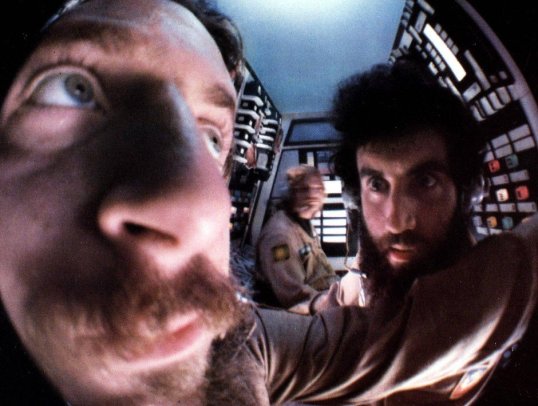
That’s the question posed by 1974’s Dark Star and the answer seems to be that it’s boring as Hell.  Lt. Doolittle (Brian Narelle), Sgt. Pinback (future director and screenwriter Dan O’Bannon), Boiler (Cal Kuniholm), and Talby (Andreijah “Dre” Pahich) have been floating in their spaceship for over twenty years.  (Because of the vagaries of the space-time continuum, they’ve only aged three years in all that time.)  The leader of their mission, Commander Powell (Joe Saunders) was killed when he was accidentally electrocuted at the start of the mission.  The crew put his body in suspended animation so that they could still ask him question despite the fact that he’s not quite alive.  (When they do talk to Powell, Powell is very resentful about the whole situation.)  Doolittle, a former surfer, has taken over as commander of the ship though no one seems to be quite sure what their mission is.

The men struggle to find ways to pass the time as they float endlessly through space.  Some of them watch the asteroids in the distance.  Doolittle fantasizes about surfing.  Pinback plays jokes on people and claims to be an imposter who killed the real Pinback before the start of the mission.  The spaceship is a cluttered mess and the crew looks more like a collection of long-haired hippies than a group of rigorously trained astronauts.  They spend their time getting on each other’s nerves.

They do have a few things that they have to deal with over the course of the film.  The men aren’t particularly smart and whatever discipline they had was abandoned long ago.  As a result, their ship constantly seems to be on the verge of literally falling apart.  A dangerous alien that looks like a beach ball gets loose on the ship.  Even worse, one of the ship’s talking bomb is having an existential crisis.  It’s been over 20 years and it has yet to be used to blow anything up.  What, the bomb wonders, is the purpose of being a bomb if you can’t blow anything up?  Then again, what is the purpose of being in space if there’s nothing left to explore or to discover?

Dark Star is a film that requires a bit of patience.  It moves at its own deliberate pace and a lot of the humor comes from the contrast between the shabbiness of the film’s crew and Stanley Kubrick’s far sleeker vision of space travel in 2001: A Space Odyssey.  Both Dark Star and 2001 are existential films about man’s search for meaning in the stars.  In 2001, Dave Bowman finds that meaning, even if he doesn’t realize it.  The crew of the Dark Star however have to deal with very real possibility that there is no meaning.  Dark Star‘s comedy comes from poking fun at the concept that going into space would make people any less frustrated than they already are on Earth.

Essentially a stoner comedy set in space, Dark Star was John Carpenter’s feature debut.  It started out as a student film but Carpenter and Dan O’Bannon were able to raise an extra $10,ooo  to extend it to feature length.  Largely overlooked when it was first released, it was re-released in 1979.  By that point, Carpenter had directed Halloween and O’Bannon had written Alien, a film that had more than a little in common with Dark Star’s shabby future and its dangerous alien.  While Dark Star definitely shows its origins as a student film, I’ve always enjoyed it.  It’s hard not appreciate the film’s ambition.  And, in its way, it’s probably one of the most realistic vision of life in space ever captured on film.  Humans, the film says, will always be humans.  They’ll always screw things up but occasionally, if they’re lucky, they’ll also get to surf amongst the stars.

Escape From New York (dir. by John Carpenter)


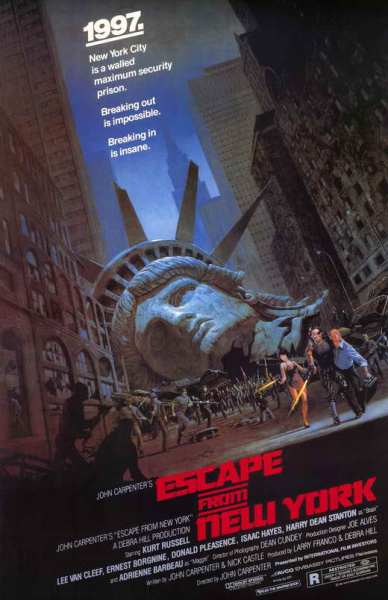
escape-from-new-york-movie-poster-1981-1020189511Before you start, note that Escape From New York was recently showcased in Jeff’s 4 Shots from 4 Films post to celebrate Kurt Russell’s birthday. For another take on the film, check out Jeff’s review. Please check that out, and then double back here, if you want. 
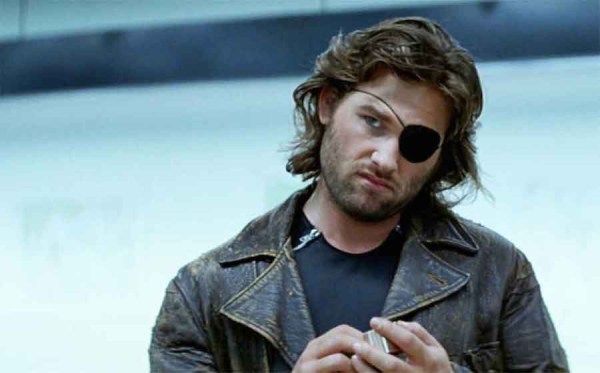
When I was little, my Aunt would sometimes take my older brother and I with her into Manhattan. In a little movie theatre near 82nd Street, she’d get us a set of tickets for a film, help us get seated with snacks and then either stay for the movie or leave to perform housekeeping duties for someone nearby if she had work and we weren’t allowed to hang out on site. John Carpenter’s Escape From New York wasn’t a film she stayed for (she loved Raiders of the Lost Ark), but it was okay. I was introduced to Snake Plissken, who ended up being cooler than Han Solo to my six year old eyes. Instead of being the hero, here was a criminal being asked to a mission. It showed me that even the bad guys could be heroes, now and then (or better yet, not every hero is cookie cutter clean). The film became an instant favorite for me. As I also do with Jaws and The Fog, I try not to let a year go by without watching Escape From New York at least once. It was my first Carpenter film.

The cultural impact of Escape From New York is pretty grand, in my opinion. It had a major influence on Hideo Kojima’s Metal Gear video games and also spawned a few comics with Plissken, complete with Jack Burton crossovers with Carpenter’s Big Trouble in Little China.

Carpenter brought in most of the same crew he worked with in his previous movies. The film was the third collaboration between Carpenter and Debra Hill, who previously worked with him in 1978’s Halloween and 1980’s The Fog. Though Hill didn’t write this one, she was still the producer, along with Larry Franco. There’s also a bit of speculation on whether Hill performed the opening vocals describing New York or Jamie Lee Curtis handled that. Cinematographer Dean Cundey (who worked on most of Carpenter’s early films) returned to help give the movie it’s gritty look, which is helpful considering how much of it takes place either at night or in darkened rooms. Another interesting part of the production is James Cameron, who was the Director of Photography when it came to the effects and matte work. One of the best effects shots in the film has Plissken gliding over Manhattan, which was designed by Effects member John C. Wash. The shot on his plane’s dashboard of the city was made from miniature mock up with reflective tape that made it appear as if it were digital, which was pretty cool given that they weren’t on an Industrial Light and Magic budget. There’s a fantastic article on We Are The Mutants and on the Escape From New York/LA Fan Page that focus on Wash’s technical contributions to the film.

For Carpenter’s career, Escape From New York marked the start of a great working relationship with Alan Howarth. Howarth, who also worked on the sound in the film, assisted Carpenter with the soundtrack. I’ve always felt this brought a new level to Carpenter’s music overall. You can easily hear the difference when Howarth was involved. Where Carpenter excelled at general synth sound, Howarth’s touch added some bass and depth. Together, they’d work on Christine, Big Trouble in Little China, Halloween III: Season of the Witch, Prince of Darkness and They Live together. On his own, Howarth was also responsible for both Halloween 2, 4 and 5.

For the writing, Carpenter worked with Nick Castle, who played Michael Myers for him in the original Halloween. Escape From New York’s story is simple. In 1988, the crime rate for the United States rises 400 percent. As a result, someone had the notion to turn Manhattan into a prison for an entire country, setting up walls around the borough and mines in the waterways. When Airforce One crashes in the borough nearly a decade later, the recently arrested war hero / fugitive Snake Plissken (Kurt Russell) is given a mission. Go in, rescue the President and/or the tape he’s carrying in 22 hours, and Plissken receives a pardon for all his crimes. To ensure that he follows through, he’s injected with nano-explosives that will kill him when the deadline hits. What seems like a simple mission becomes a little complicated when Snake discovers the President was captured by The Duke of New York, played by Issac Hayes (I’m Gonna Git You Sucka). Given that I’ve commuted to Manhattan more times than I can count, the film holds a special place in my heart.  The concept of the entire borough being a prison was mind blowing as a kid. The concept still holds up for me as an adult.

For a film about New York, there were only two days of filming actually spent on location there, according to Carpenter’s commentary. Most of that was used for the opening shot at the Statue of Liberty. The bulk of the film was made in Los Angeles, Atlanta and St. Louis. At the time, there was a major fire in St. Louis. The damage made for a great backdrop for both the crash site and the city at night. The film does take some liberties with locations, though. For example, as far as I know, we don’t have a 69th Street Bridge in Manhattan, but as a kid, it didn’t matter much. From an action standpoint, it might not feel as intense as other films. Even when compared to other films in 1981 – like Raiders of the Lost Ark (released a month earlier) – Escape From New York doesn’t have a whole lot, though I still enjoy what it does provide.

escape_from_new_york

Snake Plissken (Kurt Russell) has 22 hours to save the President in John Carpenter’s Escape from New York.

Casting seemed to come easy for the film. Hill, Castle and Carpenter reached out to some friends.  Kurt Russell and Carpenter worked together on Elvis, that was easy enough. Russell’s work with Carpenter would continue on in The Thing, Big Trouble in Little China and Escape from L.A.  From Halloween, Donald Pleasance was brought on to play the President, along with Charles Cyphers and Nancy Stephens as one pissed off flight attendant. From The Fog, we have Tom Atkins as Nick and Adrienne Barbeau as Maggie, who happened to be married to Carpenter at the time. According to Carpenter on the film’s commentary track, the sequence for Maggie’s exit needed to be reshot and extended. The scene with her body on the ground was filmed in Carpenter’s garage and added to the film.

Ernest Borgnine’s (The Poseidon Adventure) Cabbie was a favorite character of mine. Like most cabbies, he knew the city well. He even prepared for some of its challenges with molotov cocktails. Harry Dean Stanton (Alien, Christine) played Brain, the smartest individual in the room and the supplier for gas for the Duke. If you look close, you’ll also catch Assault on Precinct 13’s Frank Doubleday as Romero, which his crazy looking teeth. To round it all out, Lee Van Cleef (The Good, The Bad & The Ugly) plays Hauk, who puts Snake on his mission. And of course, it wouldn’t be a Carpenter film without a George ‘Buck’ Flower cameo. Buck was kind of Carpenter’s lucky charm in the way Dick Miller was for Joe Dante’s films. Good Ol’ Buck plays an inmate who sings Hail to the Chief.

Overall, Escape From New York is a classic Carpenter film that’s worth the watch. Whether you do so while wearing an eyepatch or not, that’s on you. We all have our preferences.


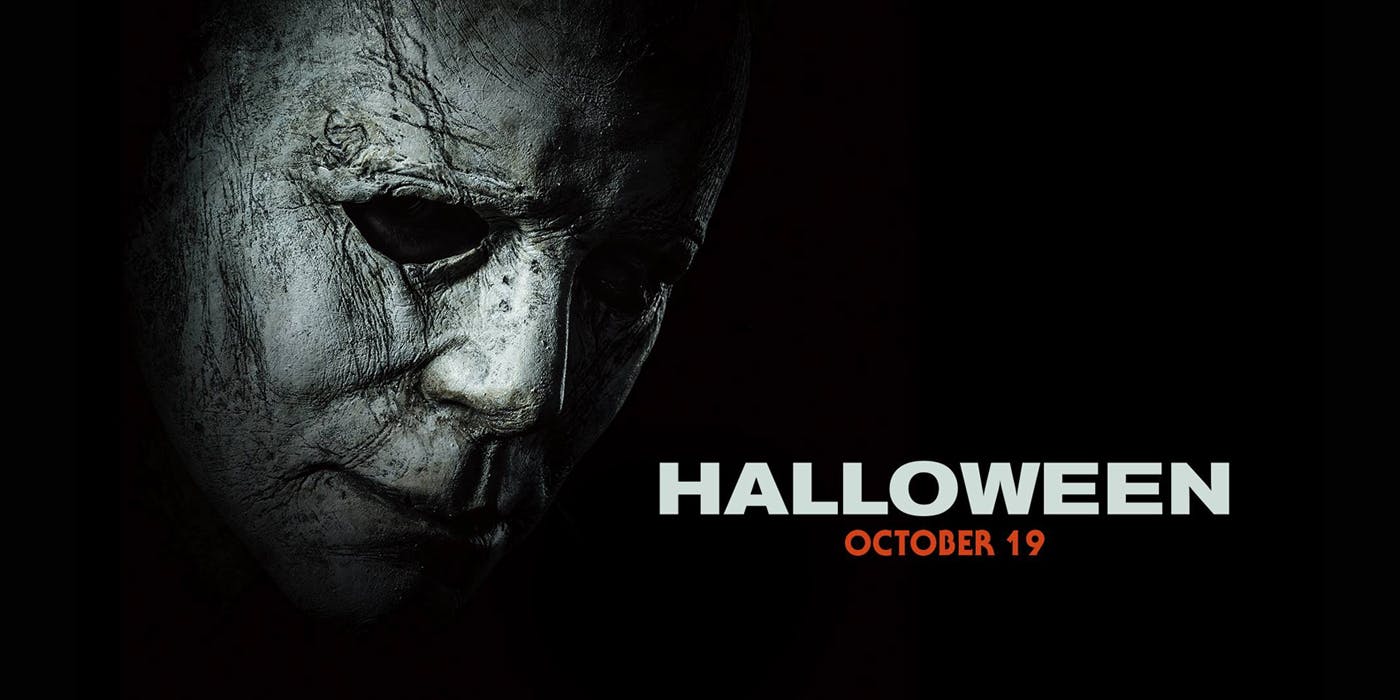
Trailer: Halloween


Halloween 2018

October 19, 2018. Keep that date in mind.

It’s the date for the latest entry to the Halloween franchise. It’s to be a sequel to the original film. It will also discard every other Halloween sequel ever made. So, for those who are so anti-remake/reboot this should alleviate any of those triggers.

David Gordon Green (who co-wrote this sequel with Danny McBride and Jeff Fradley) directs this sequel as a continuation of the events which happened with the original film. A follow-up that’s 40 years in the making, literally.

So, once again, remember October 19th and make sure to check this film out. I have a sneaking suspicion that it’ll be the true sequel to Carpenter’s classic.

Quick Horror Review: John Carpenter’s The Fog


I have something of a tradition with John Carpenter’s The Fog. Every year, I try to watch the film on the date and time where the story starts – April 20th, at around 11:55pm. It’s not the scariest of stories, but it does have a spooky atmosphere that lends itself well to Halloween – or any late quiet night. I love this movie.

The Fog marked the first film that John Carpenter worked on after Halloween, collaborating with the late Debra Hill, who also produced the movie. She’d go on to also produce both Escape From New York and Escape from L.A for Carpenter. While it didn’t really have the impact of Halloween, it held up until Escape from New York came out the following year.

Here’s the story:

In the town of Antonio Bay, an old captain (John Houseman) explains to some children about the ill-fated Elizabeth Dane (what a beautiful name, I might add), a ship that belonged a rich of crew of lepers led by someone named Blake. The heads of the town conspired to steal the gold by setting up the ship to crash against the docks. It works out for the Conspirators, as they are “aided by a unearthy fog” that blinds the Leper ship’s navigators. and the gold they collect helps to form the great town the kids play in to this day.

What they don’t realize is that vengeance is coming in the form of that very same fog, as the ghost of the Lepers have come to claim the lives of the six conspirators…or their direct descendants.

As a kid, I had a problem with that. You mean because my great great grandparents messed up somewhere ages ago, I have to get killed for it? I remember thinking that it really wasn’t fair, but I’m kind of diverging from the topic here. The story gives you four points of view. You have Nick (Tom Atkins, sans his signature mustache) and a hitchhiker he picks up played by then scream queen Jamie Lee Curtis. You have Curtis mother, Janet Leigh, who’s character is working on the anniversary party for the town and her assistant, Sandy, played by Nancy Loomis (who appeared in the first three Halloween films). The third comes from Adrienne Barbeau’s character, Stevie Wayne, who works for the local radio station. Her character acts as the warning voice for the town and she starts to notice that something’s going on when her son gives her a piece of Driftwood that later echoes Blake’s warning. The final viewpoint comes from Father Malone (Hal Holbrook), who discovers Blake’s diary and learns the truth about what happened 100 years ago. His character helps to piece the mystery together, somewhat.

Carpenter and Hill gathered many of their friends, who went on to work on other films for this. Tommy Lee Wallace went on to direct Halloween III: Season of the Witch (and coincidentally did the voice of the Silver Shamrock ad-man in the commercial) and Vampires: Los Muertos. Wallace’s name was given to Carpenter fan favorite Buck Flower. Nick Castle’s name was given to Tom Atkins character. Makeup Wizard Rob Bottin (who also played Blake in the film) went on to do some of the effects in The Thing.

The makeup effects in this film were okay. The lighting and fog did more to obscure than to actually help one see what was doing the attacking, but it really worked for some of the shadowing in the film. If the movie has any drawbacks, it’s that there’s a really low body count to the film. In essence, there are only 6 people the ghosts are after, so these are only the ones they actually get. It would have been interesting if there were a few random deaths, or more individuals in danger, but I supposed it worked out well for the time period.

The Fog is a nice film to catch late at night. You won’t find it at the upper rankings of top horror films, but it’s one to try, at least. Don’t even bother with the Remake for this one. It’s not even work talking about.