Scenes I Love: Norman Bates Talks About His Mother In Psycho


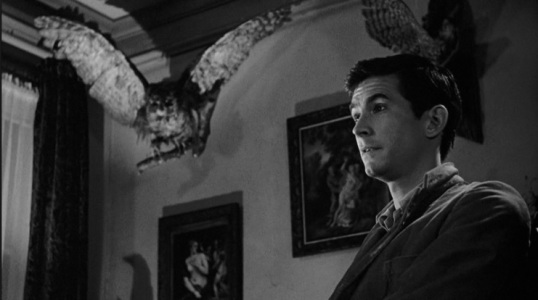
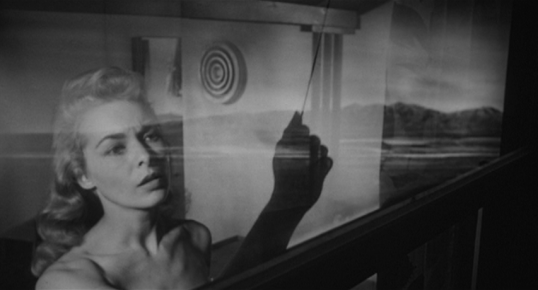
Norman Bates, now there’s someone who probably made a big deal out of every Mother’s Day.  Today’s scene that I love comes from 1960’s Psycho and features Hitchcock, Janet Leigh, and Anthony Perkins at their absolute best.

Scenes That I Love: The Opening Tracking Shot from Orson Welles’s Touch of Evil


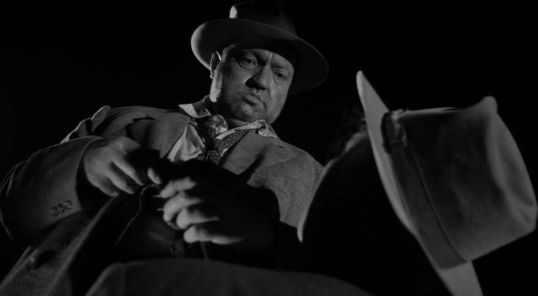
Since today is Orson Welles’s birthday, I wanted to share at least one scene that I love from his films.  The famous tracking shot from 1958’s Touch of Evil, which begins in America and ends in Mexico, truly shows Orson Welles at his visionary best.

It’s also Welles at his most clever.  Knowing that he wouldn’t be given control over the editing of the footage he shot, Welles included as many long shots as possible to make it more difficult for an editor to chop up or alter his vision.

Scene That I Love: Janet Leigh and Pat Hitchcock in Psycho


Yesterday was Janet Leigh’s birthday and today is Pat Hitchcock’s birthday so it seems appropriate that today’s scene that I love should feature both of them.  From 1960’s Psycho, this scene features Leigh and Hitchcock as office co-workers who meet the very wealthy Mr. Lowry (played by Frank Albertson).

“He was flirting with you.  He must have seen my wedding ring,” remains one of the greatest lines ever written.

Film Review: The Naked Spur (dir by Anthony Mann)


First released in 1953, The Naked Spur is one of the most cynical and downbeat movies that I’ve ever seen.

It’s also one of the most visually beautiful.  Filmed in the Rockies and presented in glorious Technicolor, The Naked Spur is a western that is full of amazing scenery, from green forests to snow-capped mountains to a river that, under different circumstances, would probably be a wonderful place to just sit down and think for a spell.  Director Anthony Mann crafts an image of the American frontier that makes it easy to understand why anyone would want to explore it and build a new life there.  Mann contrasts the beauty of nature with the ugliness of the people who trample across it.

Jesse Tate (Millard Mitchell) is a grizzled and somewhat sickly prospector who runs into a stranger named Howard Kemp (James Stewart).  Kemp is, at first, antagonistic and paranoid but soon, he offers to pay Tate $20 if Tate will help him track down an outlaw named Ben Vandergroat.  Vandergroat, wanted for the murder of a U.S. marshal, is believed to be hiding in the mountains.  In need of the money, Jesse agrees.  Soon, he and Kemp are joined by another wanderer, a recently discharged soldier named Roy Anderson (Ralph Meeker).  From the minute that Roy shows up, it’s obvious that he’s not being totally honest about why he’s wandering around the Rockies.

As for Ben Vandergroat (Robert Ryan), he is indeed hiding in the mountains.  He’s accompanied by Lina Patrch (Janet Leigh), a naive young woman whose late father was one of Ben’s partners-in-crime.  Lina looks up to Ben as a father figure and refuses to believe that he could possibly be guilty of any of the things that he’s been accused of doing.  Ben, meanwhile, manipulates Lina into doing his bidding.

After being captured by Kemp, Jesse, and Roy, Ben proves himself to be far more clever than he initially seems.  After revealing that Kemp isn’t who Jesse assumed him to be, Ben works to try to turn the three men against each other.  There’s a reward on Ben’s head and, after Kemp reluctantly agrees to share the money with Jesse and Roy, Ben mentions that there will be a lot more money if its split two ways instead of three.  Soon, Ben has the three men distrusting each other even more than they already did.  However, Lina finds herself falling in love with Kemp.

The Naked Spur is a great film.  Featuring only five-speaking parts, it plays out like a particularly intense play and every single member of the cast does a great job of bringing the film’s characters to life.  Robert Ryan is coolly manipulative as the cocky Ben while Ralph Meeker is crudely menacing as the untrustworthy Roy Anderson.  Millard Mitchell is, at times, heart-breaking as the sickly prospector.  Janet Leigh reveals the strength underneath Lina’s naive persona.  Of course, the film is stolen by James Stewart, who is convincingly bitter and ultimately rather poignant as Howard Kemp.  Kemp feels like a continuation of the character that Stewart played in Broken Arrow He’s seen the worst that humanity has to offer.  Even in the beautiful Rockies, Stewart’s character cannot escape the ugliness that he’s witnessed firsthand.  Stewart’s performance as that haunted and angry Howard Kemp is one of his best.

The Naked Spur is an intelligent and well-acted western and one of eight movies that Stewart made with director Anthony Mann.  It’s psychological complexity, beautiful scenery, compelling script, and brilliant cast make it a true classic.

Scenes I Love: Norman Bates Talks About His Mother In Psycho


Norman Bates, now there’s someone who probably made a big deal out of every Mother’s Day.  Today’s scene that I love comes from 1960’s Psycho and features Hitchcock, Janet Leigh, and Anthony Perkins at their absolute best,

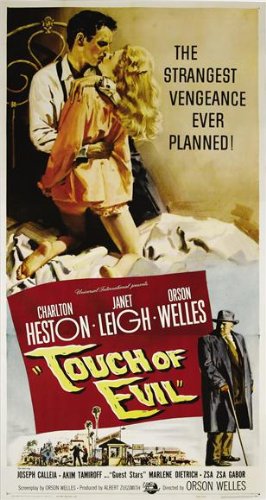
The Unnominated #15: Touch of Evil (dir by Orson Welles)


Though the Academy of Motion Picture Arts and Sciences claim that the Oscars honor the best of the year, we all know that there are always worthy films and performances that end up getting overlooked.  Sometimes, it’s because the competition too fierce.  Sometimes, it’s because the film itself was too controversial.  Often, it’s just a case of a film’s quality not being fully recognized until years after its initial released.  This series of reviews takes a look at the films and performances that should have been nominated but were, for whatever reason, overlooked.  These are the Unnominated.

I come here to defend Charlton Heston.

1994’s Ed Wood is a great film that has one unfortunate line.  Towards the end of the film, director Ed Wood (Johnny Depp) meets his hero, Orson Welles (Vincent D’Onoforio), in a bar.  They talk about the difficulties of directing a film.  Wood talks about the trouble that he’s having with Plan 9 From Outer Space.  Welles says that he can understand what Wood is going through because the studio is forcing him to cast Charlton Heston as a Mexican in his next movie.

And look, I get it.  It is true that Charlton Heston does play a Mexican prosecutor named Mike Vargas in Welles’s 1958 film, Touch of Evil.  And it is true that Heston is not the most convincing Mexican to ever appear in a film.  And I understand that there are people who enjoy taking cheap shots at Charlton Heston because he did have a tendency to come across as being a bit full of himself and he was a conservative in a industry dominated by Leftists. There are people who actually think Michael Moore doesn’t come across like a self-righteous prick when he confronts Heaton in Bowling for Columbine.  I get the joke.

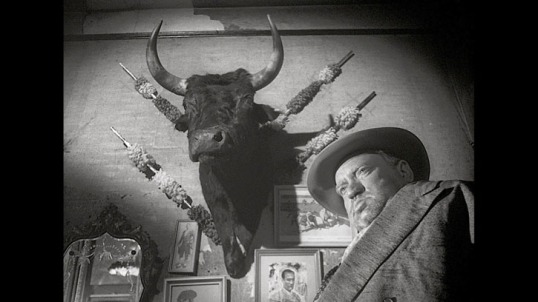
But it’s not true and it’s not fair.  When Touch of Evil was first put into production by Universal, Welles was not hired to direct.  He was hired to play Hank Quinlan, the formerly honest cop with a habit of planting evidence on those who he believed to be guilty.  When Charlton Heston was offered the role of Vargas, he asked who had been hired to direct.  When he was told that a director hadn’t been selected, Heston was the one who suggested Welles be given the job.  When, as often happened with Welles’s film, the studio decided to take the film out of Welles’s hands, Heston argued for Welles’s vision while Welles was off trying to set up his long-dreamed of film of Don Quixote.  Say what you will about Charlton Heston’s career, he fought for Orson Welles, just as he later fought for Sam Peckinpah during the making of Major Dundee.  Heston may not have agreed with either Welles or Peckinpah politically but he fought for them when few people were willing to do so.

That Touch of Evil is a brilliant film is pretty much entirely due to Welles’s directorial vision.  The story is pure pulp.  While investigating the murder of an American businessman in Mexico, Vargas comes to believe that Quinlan is attempting to frame a young Mexican for the crime.  While Vargas watches Quinlan, his wife Susie (Janet Leigh) is menaced by the crime lord Joe Grandi (Akim Tamiroff), who has his own issues with both Vargas and Quinlan.  The plot may be the stuff of a B-programmer but, as directed by Welles, Touch of Evil plays out like a surreal nightmare, a journey into the heart of darkness that is full of eccentric characters, shadowy images, memorably askew camera angles, and lively dialogue.  Welles and cinematographer Russell Metty create a world that feels alien despite being familiar.  Just as he did with Gregg Toland in Citizen Kane, Welles shapes a film that shows us what’s happening in the shadows that most people try to ignore.

There’s really not a boring character to be found in Touch of Evil and the cast is full of old colleagues and friends of Welles.  Marlene Dietrich shows up as Quinlan’s former lover.  Mercedes McCambridge plays a leather-clad gang leader.  Dennis Weaver is the creepy owner of a remote motel.  (Two years before Psycho, Touch of Evil featured Janet Leigh being menaced in a motel.  Mort Mills, who played Psycho’s frightening highway patrolman, plays a member of law enforcement here as well.)  Zsa Zsa Gabor shows up for a few brief seconds and it makes a strange sort of sense.  Why shouldn’t she be here?  Everyone else is.  Joseph Cotten plays a coroner.  Ray Collins plays a local official.   In the film’s skewered world, Charlton Heston as Mike Vargas works.  His upright performance grounds this film and keeps it from getting buried in its own idiosyncrasies.   Big personalites are everywhere and yet the film is stolen by Joseph Calleia, playing Quinlan’s quiet but observant partner.  Calleia’s performance is the heart of the film.

Touch of Evil was not nominated for a single Oscar and that’s not surprising.  It’s not really the type of film that was noticed by the Academy in the 50s.  It was too pulpy and surreal and, with its story of a crooked cop framing someone who might very well be guilty anyway, it was probably too subversive for the Academy of the 1950s.  It would take a while for Touch of Evil to be recognized for being the noir masterpiece that it is.  In a perfect world, Welles would have been nominated for directing and for his larger-than-life performance as Quinlan.  Joseph Calleia would have been nominated for Supporting Actor and perhaps both Janet Leigh and Marlene Dietrtich would have been mentioned for Supporting Actress.  That didn’t happen but it would have been nice if it had.

Previous entries in The Unnominated:

  1. Auto Focus 
  2. Star 80
  3. Monty Python and The Holy Grail
  4. Johnny Got His Gun
  5. Saint Jack
  6. Office Space
  7. Play Misty For Me
  8. The Long Riders
  9. Mean Streets
  10. The Long Goodbye
  11. The General
  12. Tombstone
  13. Heat
  14. Kansas City Bomber

Scenes That I Love: The Opening Tracking Shot from Orson Welles’s Touch of Evil


Since today is Orson Welles’s birthday, I wanted to share at least one scene that I love from his films.  The famous tracking shot from 1958’s Touch of Evil, which begins in America and ends in Mexico, truly shows Orson Welles at his visionary best.

It’s also Welles at his most clever.  Knowing that he wouldn’t be given control over the editing of the footage he shot, Welles included as many long shots as possible to make it more difficult for an editor to chop up or alter his vision.

Retro Television Review: Fantasy Island 6.7 “Roller Derby Dolls/Thanks A Million”


Welcome to Retro Television Reviews, a feature where we review some of our favorite and least favorite shows of the past!  On Tuesdays, I will be reviewing the original Fantasy Island, which ran on ABC from 1977 to 1984.  Unfortunately, the show has been removed from most streaming sites.  Fortunately, I’ve got nearly every episode on my DVR.

This week, things get strange on the Island!

Episode 6.7 “Roller Derby Dolls/Thanks A Million”

(Dir by Don Weis, originally aired on December 4th, 1982)

Norman Hackett (Vic Tayback) is a sports fanatic who wants to coach his own athletic team.  Oddly, he doesn’t specify what type of team he wants to coach.  I would think that would be the first thing that a true sports fanatic would make clear.  “I want to coach the….”  Well, I can’t think of the names of any teams off the top of my head.  I’m not a sports person so …. okay, he could have said he wanted to coach the Cowboys.  You happy?  Yes, I’m from North Texas and our football team sucks,  Even I’m embarrassed by them and I don’t even follow football.  I’d be tempted to coach the Rangers except I know Erin would get mad at me if the team didn’t make it to the championship.  We also have a hockey team called the Stars but Leonard is the biggest hockey fan I know and, if anyone here at TSL deserves to coach hockey, it’s Leonard.  What’s that, you say?  The Mavericks?  Ehh.  I hate basketball.  Those squeaky shoes drive me nuts.  Plus Mark Cuban’s been kind of annoying ever since he decided to run for President in 2028.

Anyway, I’m rambling because this episode really wasn’t that interesting.  Because Norman didn’t make it clear what he wanted to coach, Mr. Roarke gives him a whistle and then introduces him to the Belles, an all-female roller derby team.  It turns out that roller derby is a big deal on Fantasy Island!  There’s a roller derby rink and everything.  It also turns out that Norman’s check bounced so, if he abandons the Belles, he’ll have to pay Mr. Roarke even more money …. wait, what?  Shouldn’t Norman just be sent home or something?  And doesn’t Roarke know enough to make sure the check clears before inviting someone to the Island?  No wonder Tattoo used to be in charge of the money.

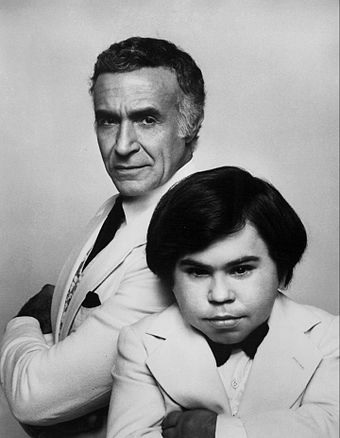
Speaking of money, Suzanne (Janet Leigh), Roger (James Noble), and Eddie (Art Metrano) come to the Island to take part in a contest.  The winner will get $1.000.000 from a mysterious benefactor.  The benefactor, by the way, is actually Eddie and it turns out that the entire contest is a private bet between him and Mr. Roarke.  Eddie thinks that people will do anything to get money.  (This is largely true.  Up until a few weeks ago, this moronic woman was trying to sue my dead father’s estate for half a million.  Fear not, she got nothing.)  Roarke believes that people are good at heart.  Eddie puts Suzanne and Roger through a series of increasingly dangerous tests to see how far they’re willing to go.  In the end, both Roger and Suzanne prove themselves to be good people, though Suzanne is the one who gets the money.  Roarke wins his bet and we’re left wondering how all this came about in the first place.  (Seriously, how does Roarke even know Eddie?)

Anyway, this was kind of a strange trip to the Island.  I’m not really happy about an episode of Fantasy Island featuring a story that isn’t really a fantasy.  Still, at least the scenery was nice.  That’s a beautiful island!

Scenes I Love: Marion Meets The Patrolman in Psycho


116 years ago, an actor named Mort Mills was born.

Mort Mills may have never been a household name but he will be forever remembered for playing the suspicious highway patrolman in 1960’s Psycho.  Anyone was have ever had to deal with a grim-faced, flat-voiced highway patrolman will automatically be able to relate to Janet Leigh’s fear in today’s scene that I love.  I’ve watched this film numerous times and I still don’t know if the patrolman was just doing his job or if he really was suspicious of Marion.  Mort Mills, with those dark glasses and flat affect, keeps you guessing.  In this brief role, Mills makes an impression that will never be forgotten.

Horror Scenes I Love: Anthony Perkins In Psycho


Poor Anthony Perkins!

Anthony Perkins did not start his career as a horror icon.  A talented young actor, Perkins started his career on Broadway and eventually, he started to appear in films.  From the start, he was usually cast as nervous young men, the type who awkwardly smiled and struggled to talk to people.  Perkins was promoted as a romantic lead, with the Studios and his agents making sure that Perkins was regularly photographed dating Hollywood starlets like Natalie Wood.  As witty off-screen as he was nervous on-screen, Perkins was a popular figure in Hollywood.  He received his only Oscar nomination for his performance as a young Quaker in 1956’s Friendly Persuasion.

Perkins’s entire career changed when Alfred Hitchcock cast him as the seemingly timid motel owner in 1960’s Psycho.  Perkins was reportedly Hitchcock’s first choice for the role, with Hitchcock saying that he felt only Perkins or Dean Stockwell was capable of bringing Norman to life.  Perkins was not nominated for Best Actor but the role pretty much defined him in the eyes of many.  Perkins spent the rest of his career trying to first escape the shadow of Psycho and then eventually embracing his status as an icon of horror.

Perkins’s performance has been imitated so many times that there’s a tendency to forget just how good he is in the role.  In this episode, Perkins-as-Norman discusses his mother with Janet Leigh.