Review: The Last Starfighter (dir. by Nick Castle)


“Alex! Alex! You’re walking away from history! History! Did Chris Columbus say he wanted to stay home? No! What if the Wright Brothers thought that only birds should fly?” — Centauri

The Last Starfighter is one of the most purely enjoyable science-fiction adventures of the 1980s: earnest, inventive, occasionally corny, and driven by the kind of wide-eyed imagination that modern blockbusters too often confuse with sheer scale. Directed by Nick Castle, the 1984 film builds an entire intergalactic adventure around a premise that could have been dismissed as a gimmick: an arcade champion discovers that his favorite game is actually a recruitment test for a real war in space. Instead of treating that premise ironically, the film commits to it wholeheartedly, and that sincerity is ultimately what makes it endure.

Lance Guest stars as Alex Rogan, a teenager living in the Starlite Starbrite trailer park with his mother and younger brother, Louis. Alex is smart, resourceful, and visibly restless. He wants to get out of his small-town surroundings, attend college, and build a better future, but financial strain and family responsibility keep making those ambitions seem less realistic. His one reliable escape comes from an arcade machine outside the local store called The Last Starfighter. Alex plays constantly, eventually achieving a record score that attracts the attention of the game’s mysterious creator, Centauri.

Robert Preston’s Centauri is one of the film’s great pleasures. He is an interstellar recruiter who behaves like a flamboyant carnival salesman, arriving in Alex’s life with a strange vehicle, flashy clothes, a rapid-fire sales pitch, and a proposition that sounds completely insane. Centauri reveals that The Last Starfighter is not merely a video game; it is a test designed to identify young people with the reflexes, tactical instincts, and courage needed to become Gunstar pilots for the Rylan Star League. Alex has not just beaten a difficult arcade game. He has qualified to defend an entire civilization from the Kodan Armada.

That central idea remains the movie’s strongest asset. It transforms a familiar adolescent fantasy into something emotionally resonant. Alex is not gifted with a magical sword, superpowers, or an ancient royal lineage. He is selected because he became exceptionally skilled at something the adults around him would probably regard as a waste of time. His ability to master a video game becomes proof that he has discipline, intelligence, hand-eye coordination, and the ability to make decisions under pressure. For anyone who grew up playing arcade games, it is an irresistible fantasy: the thing you are good at for fun might one day turn out to matter more than anyone realizes.

The film understands, however, that being offered a larger life is not the same as being ready for it. Alex initially reacts to the truth with disbelief and fear rather than instant heroism. He wants to return home. He assumes there has been a mistake. That response helps ground the movie, because Alex is not a prepackaged action hero. He is a teenager who has dreamed of escaping his circumstances but has never seriously considered the sacrifices that escape might require. It is easy to want a more exciting future when it is only an idea. It is harder when that future involves leaving your family, crossing the galaxy, and possibly dying in a war you barely understand.

Lance Guest gives Alex enough insecurity and frustration to make his eventual growth satisfying. Alex can be impatient and occasionally self-centered, but he never comes across as unlikable. He feels trapped, and the film makes that frustration understandable. His conflict is not simply whether he can destroy enemy ships; it is whether he can accept that he deserves a larger destiny than the one he has assumed is available to him. By the time he decides to fight, he has moved beyond wanting adventure as an escape. He has chosen to take responsibility for something greater than himself.

Catherine Mary Stewart is also appealing as Maggie Gordon, Alex’s girlfriend. Maggie is not given an enormous amount to do, but she has more personality than the standard passive romantic interest in many 1980s adventure films. She cares deeply about Alex, yet she also has every reason to be hurt and confused when he suddenly disappears and begins acting strangely. Her scenes with Beta Alex, the android duplicate sent to take Alex’s place on Earth, provide some of the movie’s most amusing moments. Beta Alex looks exactly like him, but his behavior is just strange enough to create an entertaining mixture of comedy and unease.

The Beta Alex subplot is one of the film’s cleverest touches because it allows the story to explore Alex’s absence without simply abandoning the Earthbound characters. Beta Alex is a convincing physical duplicate, but he cannot quite replicate the nuances of being human. His overly literal responses, awkward attempts at social interaction, and bizarre behavior around Maggie make him a memorable comic creation. The device also reinforces the contrast between Alex’s old life and the extraordinary new situation he has been pulled into. While the real Alex is in space facing a galactic conflict, the people at home are left trying to make sense of a version of him that seems familiar but fundamentally wrong.

Robert Preston’s performance gives the entire movie energy whenever Centauri appears. He could easily have become an irritating eccentric, but Preston makes him funny, charismatic, and unexpectedly warm. Centauri sees Alex’s potential before Alex sees it himself. Beneath the fast talking and theatrical mannerisms is a real belief in the people he recruits. He does not merely need another pilot; he genuinely wants Alex to become the person he is capable of being. Preston’s presence adds an old-fashioned show-business charm to a film otherwise built around futuristic hardware and computer-generated spacecraft.

Dan O’Herlihy is equally important as Grig, the reptilian alien navigator assigned to work with Alex. Grig initially seems like the typical stern mentor figure, but he gradually becomes one of the movie’s most likable characters. He has experience, discipline, and a personal history with the war that gives the conflict some added seriousness. His partnership with Alex works because they begin from very different places. Grig is a hardened veteran who has seen the cost of battle, while Alex is an overwhelmed rookie who still wants to go home. As they learn to trust each other, their relationship becomes the heart of the space-adventure material.

The villains are broad but effective. Xur and the Kodan Armada are not psychologically complex antagonists, yet the movie does not need them to be. Their purpose is to represent a threat large enough to force Alex into a defining choice. Xur’s willingness to betray the Star League and sacrifice innocent lives for power makes him an appropriately clear villain for this kind of adventure. The conflict is straightforward: a small group of defenders must stand against an overwhelming enemy force, and Alex must decide whether he will be one of those defenders.

The visual effects are perhaps the most historically fascinating part of The Last Starfighter. The film was an early showcase for computer-generated imagery, using digital effects for its spacecraft, alien environments, and space-combat sequences. At the time, this was revolutionary. Seen today, the visual effects are obviously dated. The ships have a smooth, artificial quality, the textures are basic, and the movement lacks the weight and complexity audiences expect from modern computer animation. Yet there is still something charming about them. They represent a major transitional period in science-fiction filmmaking, when filmmakers were beginning to discover what computers could do for cinematic spectacle.

The early CGI gives the movie a distinctive visual identity rather than simply making it look obsolete. The Gunstar fighter, the Kodan fleet, and the distant alien landscapes have the clean, geometric appearance of an advanced arcade game brought to life. That is fitting for a story about a teenager whose gaming skills translate into real combat ability. The computer-generated imagery may not have the tactile realism of the practical miniature work seen in films such as Star Wars or Blade Runner, but it has an important place in the history of visual effects. The movie was imagining a future that the technology of its day could only partially create, and that ambition remains visible in every digital battle.

The Gunstar itself is a memorable piece of science-fiction design. It looks futuristic while still retaining the simplicity of a classic arcade spaceship, and the cockpit scenes effectively sell the sensation of Alex being thrown into something far beyond his experience. The climactic use of the “Death Blossom” maneuver is especially satisfying because the film treats it as a genuine last resort. It is the cinematic equivalent of unleashing a devastating power-up at the exact moment an arcade game seems impossible to win. The sequence is flashy, uncomplicated, and immensely fun.

What makes The Last Starfighter last is not its special effects alone, nor is it just nostalgia for the arcade era. The movie works because it is fundamentally optimistic. It believes that potential can emerge from unlikely places and that someone who feels ignored, trapped, or underestimated may still possess the ability to do something remarkable. Alex is not chosen because he is already fearless. He becomes heroic because he eventually chooses to act despite being afraid.

The film is not perfect. Its dialogue can be cheesy, some characters are thinly developed, and the dated effects may be difficult for viewers accustomed to modern CGI. Even so, those imperfections are part of its charm. The Last Starfighter is colorful, sincere, and unashamedly enthusiastic about its own premise. It remains a lovable science-fiction adventure because it takes the dreams of a video-game-playing teenager seriously. It asks viewers to imagine that the skill everyone dismisses, the hobby that feels like an escape from ordinary life, might actually be the first sign that they are capable of something far greater.
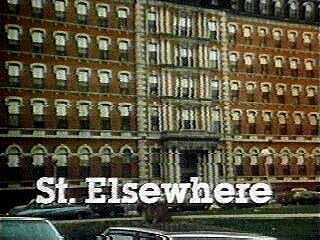
Retro Television Review: St. Elsewhere 1.9 “Hearts”


Welcome to Retro Television Reviews, a feature where we review some of our favorite and least favorite shows of the past! On Fridays, I will be reviewing St. Elsewhere, a medical show which ran on NBC from 1982 to 1988.  The show can be found on Hulu and, for purchase, on Prime!

This week, Dr. Ehrlich faints!

Episode 1.9 “Hearts”

(Dir by Mark Tinker, originally aired on January 11th, 1983)

Ralph, the guy who thinks that he’s a bird, is now running around the hospital and checking in on patients and signing his name as “Dr. Bullfinch.”  I guess it says something about how big St. Elgius is that Dr. Chandler spends most of this episode asking people if they’ve ever heard of or met Dr. Bullfinch.  The show plays this for humor.  There’s only two problems.

First off, we’ve already done the fake doctor thing.  Dr. Craig spent three episodes searching for Dr. Barnum, the fictional doctor who Mark thought was interested in buying his car.  Since Chandler was a part of that whole practical joke, it surprised me that it didn’t occur to him that maybe Dr. Bullfinch also didn’t exist.

Secondly, Ralph is one of those character who was amusing at first but, after episode-after-episode of him disrupting the hospital and making the patients uncomfortable, I can’t help but feel that it’s time for Ralph to at least try to fly off into the sunset, even if it leads to him crashing to the pavement below.  Dr. Westphall tells Dr. Beale to keep Ralph locked up in the psych ward or else Westphall will send Ralph to a mental hospital.  I think Westphall should have just gone for it.  I mean, does Westphall not realize the legal jeopardy that the hospital is now in because of Ralph’s continued presence?

While that was going on, an overweight woman (Conchata Ferrell) checked into the hospital with stomach pains and was shocked to discover that she was pregnant and going into labor.  This was a heartbreaking story, largely due to the wonderful performance of Conchata Ferrell.  No one — from her father to the nurses at the hospital — has ever treated her with any sort of compassion.  In the end, she checks out of the hospital and abandons her baby in the maternity ward.

A new doctor (Dorothy Fielding) came to work at St. Eligius and — hey! — she has a romantic history with Dr. Samuels.  *Yawn*  Samuels is the most boring character on the show and I tuned out this storyline as soon as I realized he was going to be at the center of it.

Newly separated from his wife, Dr. White is having a nervous breakdown and has to abandon a patient so that he can cry in the stairwell.  Dr. Westphall offers him some heartfelt advice but you can tell that Westphall thinks that White doesn’t have what it takes to be a doctor.  I think Westphall is right.

Finally, an ill Dr. Erhlich tries to get out of assisting Dr. Craig with an operation.  Craig tells Erhlich to man up.  Erhlich faints during the operation.  Surprisingly, Dr. Craig is not angry with Ehrlich because, as he explains it, the important thing is that the operation was a success.  Seeing how sick Ehrlich has become, Craig tells Ehrlich to go home and get some rest.

“Do you have a car?” Dr. Craig asks.

“No, I usually ride the bus,” Ehrlich replies.

“Good,” Craig says, “you shouldn’t be driving in your condition.”

And I have to admit that exchange made me laugh.  William Daniels gives such a good performance as the arrogant yet talented Dr. Craig that you can’t help but love the guy, no matter how much of a jerk he is.  After knowing him best as the always compassionate Mr. Feeney on Boy Meets World, it’s been interesting to watch William Daniels play a character as thoroughly self-centered and vain as Dr. Craig.  On the drama St. Elsewhere, William Daniels often provides some much-needed comedic relief.  On the (very silly) sitcom Boy Meets World, Daniels was the dramatic relief.  It’s a strange world.

This episode had a few too many plotlines that I either didn’t care about or which felt a bit played out (like Ralph the Birdman).  It wasn’t St. Elsewhere at its best but William Daniels and Conchata Ferrell still saved the episode.

Retro Television Review: St. Elsewhere 1.7 “Legionnaires: Part Two”


Welcome to Retro Television Reviews, a feature where we review some of our favorite and least favorite shows of the past! On Fridays, I will be reviewing St. Elsewhere, a medical show which ran on NBC from 1982 to 1988.  The show can be found on Hulu!

This week, the hospital’s in chaos!

Episode 1.7 “Legionnaires: Part Two”

(Dir by Mark Tinker, originally aired on December 14th, 1982)

With one of the wards shut down due to a Legionnaires outbreak, the hospital is in crisis.  All of the patients from the infected ward and their doctors have been moved to a new floor and now, everyone is stressed and overworked.  Dr. Westphall insists to the Hospital Board that he has no regrets about shutting down the ward and that he did what he had to do.  Westphall is vindicated when it turns out that he was correct about the Legionnaires outbreak but he still has to admit that administrator H.J. Cummings (Christopher Guest) has a point about Westphall’s actions causing a panic.  Cummings argues that Westphall could have quietly closed the ward without alerting the media.  In the end, it doesn’t matter as Cummings explains that he’ll be the one who gets fired over the bad publicity, not Westphall.  The episode ends with Westphall returning to his small home, carrying the birthday present that he was supposed to give his son that day.  Westphall has dedicated his life to the hospital and it’s obvious that his family has often had to wait until he has time for them.

(I’m starting to understand why Westphall always seems so damn depressed.)

Some people take advantage of the chaos.  Two gang members (one of whom is played by a very young Robert Davi) hit Fiscus over the head and steal his wallet after Fiscus stitches up one of their hands.  Peter White, eager to get away from his troubled marriage, shows up to work Morrison’s shift for him.  Dr. Chandler glares at a nurse that he previously accused of unprofessional behavior.  Dr. Craig tries to find someone foolish enough to buy his old convertible from him.  And head nurse Helen Rosenthal finds herself being called over and over again to the room of patient Martha Mulvahey (Ann Bronston).

Poor Martha!  She has a reputation for being a problem patient, because she’s always calling for the nurses and asking them to do things for her, like wash her hair or raise her bed.  Only Helen is willing to put up with Martha but even Helen loses her temper when Martha asks for help putting on her makeup.  Finally, Martha breaks down and explains that her arthritis is so severe that she can barely move her hands.  She’s a librarian and she can’t even turn the pages of a book anymore.  (Excuse me, I think I have something in my eye….)  A friend is coming to visit her at the hospital and she just wants to look good for him because she doesn’t want him to remember her as someone who can’t even get out of a hospital bed.  Helen helps Martha put on her makeup.  At the end of the episode, the hospital may be in chaos but Martha gets to see her friend and that made me happy and brought even more tears to my eyes.

Meanwhile, psychiatric patient Jane Zontell (Laraine Newman) returns to the hospital and checks herself back in for treatment.  Dr. Beale (G.W. Bailey) is shocked to learn that Jane is three months pregnant.  But it’s only been two months since Jane was last a patient at St. Eligius so that father must be someone at the hospital.  Uh-oh.

(Personally, I suspect Fiscus.)

This was a good episode.  I cried for Martha.  I felt bad for Westphall.  I hope someone buys Dr. Craig’s car so he’ll stop bothering everyone else about it.  This episode was about how bad things can get at a hospital but, with Martha and Rosenthal, it offered up some hope as well.  All in all, it worked.

Retro Television Review: St. Elsewhere 1.6 “Legionnaires: Part One”


Welcome to Retro Television Reviews, a feature where we review some of our favorite and least favorite shows of the past! On Fridays, I will be reviewing St. Elsewhere, a medical show which ran on NBC from 1982 to 1988.  The show can be found on Hulu!

This week, Peter White continues to disappoint everyone.

Episode 1.6 “Legionnaires: Part One”

(Dir by Thomas Carter, originally aired on December 7th, 1982)

Dr. Peter White (Terence Knox) is perhaps the most incompetent doctor at St. Eligius.  Over the course of the first few episodes, we have watched as he’s taken advantage of his fellow residents, been rude to patients, misdiagnosed obvious medical conditions, and complained nonstop about how difficult his life is.  Dr. White is struggling to balance the punishing schedule of being a resident with also being a husband and the father to a young girl and a newborn.  He’s in over his head.

What’s interesting is that, despite all of his problems, he’s not a particularly sympathetic character and I don’t think he’s meant to be.  He’s never going to be a good doctor and he doesn’t have the courage to admit it.  Instead of finding a career for which he’s suited, he insists on being a doctor and risking the life of anyone unlucky enough to be his patient.  What makes Dr. White an especially disturbing character is that there are probably a lot of doctors in the real world who are just like him.  They’re overwhelmed and they make stupid mistakes.  I get overwhelmed sometimes too, as does everyone.  And, like everyone, I occasionally make mistakes.  However, my mistakes usually amount to something like missing a cringey typo that causes me to feel embarrassment until I get a chance to fix it.  A doctor’s mistake can lead to people dying.

This week, Dr. White attempts to give penicillin to a patient who is allergic.  Fortunately, Dr. Westphall is able to stop White from putting his patient into a coma.  Dr. White also manages to lose his hospital-issued pager and, when he’s told that it will cost him $300 to get a new one, he freaks out.  A chance meeting with a lawyer in the hospital cafeteria leads White to offer to sell out the hospital by recommending the lawyer to anyone willing to sue because they ended up with a doctor like Peter White.  White finally raises the money by donating his sperm.  The nurse at the sperm bank says that it’s really generous for a doctor to donate.  Not this doctor!

While Peter is screwing up his life, Dr. Westphall is dealing with what appears to be an outbreak of Legionnaire’s Disease in one of the wards.  Westphall wants to immediately shut down the ward.  Dr. Auschlander and board member H.J. Cummings (Christopher Guest — yes, that Christopher Guest) disagree.  However, after another young woman dies of what appears to be Legionnaire’s, Westphall orders the ward to be closed and the patients to be relocated.

Meanwhile, Kathy Martin broke up with Fiscus because she felt their fling was turning into a relationship and Dr. Cavanero dealt with a nurse who disliked her.  Neither one of those subplots did much for me, though Kathy is emerging as one of my favorite characters on this show.  Before breaking up with Fiscus, she goes to a funeral of a stranger just so he won’t be buried without someone there to mourn him.  She wears white to the funeral.  One doctor comments that she’s never seen Kathy wear white before.  Kathy’s a great character and deserves better than just being Fiscus’s girlfriend.

This episode was an improvement over the last episode I watched.  According to the title, it’s also only “Part One” so I imagine there will be some fallout over closing that ward next week.  We’ll see what happens.

Retro Television Review: St. Elsewhere 1.3 “Down’s Syndrome”


Welcome to Retro Television Reviews, a feature where we review some of our favorite and least favorite shows of the past! On Fridays, I will be reviewing St. Elsewhere, a medical show which ran on NBC from 1982 to 1988.  The show can be found on Hulu!

This week, we get to know a very bad doctor.

Episode 1.3 “Down’s Syndrome”

(Dir by Mark Tinker, originally aired on November 16th, 1982)

St. Eligius is home to several doctors, some of whom are good at their job and some of whom are really, really bad.

One of the bad ones appears to be Dr. Peter White (Terrence Knox), a resident who was in the background during the previous two episodes but who was at the center for a good deal of this episode.  Peter has a terrible bedside manner, absolutely no social skills, and his knowledge of medicine appears to be subpar at best.  When a homeless man comes in and complains of pain, Peter gives him a dose of potassium that nearly kills him.  (Only the quick thinking of Dr. Ehrlich — who himself hardly appears to be the perfect doctor — keeps the patient alive.)  Dr. White seems to be overwhelmed and it certainly doesn’t help that his wife is constantly calling the hospital and demanding to speak to him about every little thing.  That said, it’s hard to have much sympathy for Dr. White.  Yes, he’s overwhelmed but his mistakes nearly kill a man.

I have to admit that, as I watched Dr. Peter White on this week’s episode, I kept thinking about some of the doctors who treated my father after he had his car accident in May.  Whenever I spoke to them, they would brusquely answer my questions, usually in technical language that reflected that it had been a long time since they talked anyone who hadn’t gone to medical school.  At the time, I made the same excuses for them that I just made for Dr. White.  They were young, they were busy, and they were overwhelmed.  After my father died, though, I stopped making excuses for them and I instead just accepted that they weren’t very good at their job.  And perhaps Dr. White should admit the same.

It doesn’t help that Dr. White is contrasted with Dr. Auschlander, a kind and elderly liver specialist who is battling cancer but who still manages to treat all of his patients with kindness and respect.  The episode made it clear that all of the residents should hope to become a doctor like Dr. Auschlander.  While Peter snaps at his patients and nearly kills a man, Auschlander takes the time to play cards with a woman who is dying.  We should all be so lucky as to have an Auschlander in our life.

Finally, Brian Whitehill (Tony Bill) and his pregnant wife, Denise (Maureen Whitehill) are informed that their baby will be born with Down’s Syndrome.  In a scene that brings to mind Icelandic eugenics, Brian suggests that Denise get an abortion but Denise refuses, especially when she learns that she’s going to have a son.  (She already has two daughters.)  A day later, Brian comes home from work and tells Denise that he’s realized that she’s right and he’s prepared to be the father of a special needs child.  Denise replies that she had the abortion earlier in the day.  Seriously, what a depressing story!  That said, I respected what the show was doing here.  The patients are just as important as the doctors.

(And while Denise is getting an abortion, Dr. Morrison is learning that he’s going to be a father and, in contrast to Brian Whitehill, joyfully cheering in the hospital stairwell.)

As with the previous episode, there was a lot going on in the background.  Dr. Beale attempted to analyze terrorist Andrew Reinhardt (Tim Robbins), who is still basically acting like an arrogant prick.  Kathleen McAllister, the victim of Reinhardt’s attack, is still in a coma.  Dr. Westphall gave a tour of the hospital to two community leaders who both suggested that St. Eligius should shut down and move its operations to a wealthier neighborhood.  Dr. Fiscus got a blow job in an elevator from Kathy Martin.  (“Going down?” Fiscus asked the next guy who got on the elevator.)  It was a busy day at the hospital!  It was a good episode, even if it didn’t really have any of the big wow moments that the previous two episodes featured.  This episode was more about following a few days in the life of a hospital and the emphasis was on the nonstop flow of patients and doctors, some of whom were doing their best and some of whom were on the verge of giving up.  In the end, the main thing I took away from this episode was that there may not be enough Aucschlanders to make up for all the Peter Whites.


Spring Breakdown: Jaws: The Revenge (dir by Joseph Sargent)


The 1987 film, Jaws: The Revenge, opens with Amity Island (last seen in Jaws 2) preparing to celebrate Christmas.  Longtime police chief and veteran shark hunter Martin Brody has died but his widow, Ellen (Lorraine Gary), still lives on the island.  Also living on the island is Ellen’s youngest son, Sean (Mitchell Anderson).  Sean is now a deputy and he spends a lot of time patrolling the ocean.  This worries Ellen because the Brodys don’t exactly have the best luck when it come to the water….

Or continuity for that matter!  Anyone who has seen Jaws 3-D knows that Sean Brody moves down to Florida, became a cowboy, hooked up with Lea Thompson, and worked with his older brother at Sea World.  And yet, as Jaws: The Revenge opens, Sean is suddenly back in Amity, he’s not a cowboy, and he’s engaged to someone who is not Lea Thompson.  Throughout the film, no mention is made of Sean having ever gone to Florida or going through a cowboy phase.  Basically, this film ignores the entire existence of Jaws 3-D.  That would be okay if Jaws: The Revenge was actually a better film than Jaws 3-D but it’s not.  That’s right, Jaws The Revenge fails to even improve on Jaws 3-D.

Anyway, Sean goes out on patrol and promptly gets eaten by a shark.  Ellen loses her mind at the funeral and announces that she doesn’t want her oldest son, Michael (Lance Guest), going anywhere near the water.  Unfortunately, Michael is working in the Bahamas as a marine biologist so …. well, sorry, grandma.

Perhaps to try to help Ellen get over her fear of water, Michael brings Ellen back to the Bahamas with him.  Ellen gets a chance to spend some time with her daughter-in-law, Carla (Karen Young) and her granddaughter, Thea (Judith Barsi).  Ellen also pursues a tentative romance with the local pilot, Hoagie (Michael Caine, who gives a likable performance but who also has absolutely zero romantic chemistry with Lorraine Gary).  However, Ellen still has nightmares about the ocean and she suspects that the shark that killed Sean might be on its way to the Bahamas.  Why?  Because this time it’s personal!

Actually, as crazy as that sounds, it turns out that Ellen’s right.  Unfortunately, it takes the shark a while to get down there and, as such, the audience spends a lot of time watching Ellen, who was always the least interesting character in all of the Jaws films, wander around the Bahamas.  The island scenery is lovely but when you’re watching a Jaws movie, you’re watching for the shark action.  Jaws: The Revenge is only a 90-minute film and the shark doesn’t make its second appearance until the 50 minute mark.

Once the shark does show up, of course, it gets right down business.  It eats a swimmer.  It eats an airplane.  It sinks a boat.  At one point the shark bites someone in half and someone off-screen is heard to shout, “Get a doctor!” as if a doctor is going to be able to do much in that situation.  Ellen sets out to get some revenge of her own, which would be a thrilling moment if Ellen was as iconic a character as Jaws: The Revenge seems to think that she is.  My favorite moment is when Michael Caine reveals that, despite the odds, he somehow managed to avoid getting eaten by the shark.  When someone asks him how he did it, he replies, “It wasn’t easy …. bloody Hell,” and that’s pretty much all that’s said about it.

Ultimately, though, this is the least of the four Jaws films, duplicating neither the suspense of the first two films nor the camp silliness of the third film.  Fortunately, though this film may have been the last official sequel to Jaws, the legacy of the classic original will live forever.

Favorite Son (1988, directed by Jeff Bleckner)


During a reception on the steps of U.S. Capitol, an assassin kills Contra leader Col. Martinez (Geno Silva) and seriously wounds Sen. Terry Fallon (Harry Hamlin), an up-and-coming politician from Texas.  An eager media catapults Fallon to national stardom and the beleagued President (James Whitmore), who is facing a tough reelection bid, is pressured to replace the current vice president (Mitchell Ryan) with Fallon.

The FBI only assigns two of their agents to investigate the assassination, a sure sign that someone wants the investigation to just go away.  Nick Mancuso (Robert Loggia) is a crusty, hard-drinking veteran agent whose career is nearly at an end.  David Ross (Lance Guest) is his young and idealistic partner.  When Mancuso and Ross discover that Martinez was injected with the HIV virus just two days before the assassination, it becomes obvious that there is a bigger conspiracy afoot.  It all links back to Sally Crain (Linda Kozlowski), who is Fallon’s legislative aide and also his lover.  (Fallon has a wife but she’s locked away in a hospital.)  Sally has an interest in bondage, as Ross soon finds out.

Favorite Son was originally aired as a 3-night, 4 and a half-hour miniseries.  It was later reedited and, with a running time of less than two hours, released theatrically overseas as Target: Favorite Son.  As a miniseries, Favorite Son is an exciting conspiracy-themed film that is full of scheming, plotting, interesting performances, and pungent dialogue.  Target: Favorite Son, on the other hand, is disjointed and, unless you know the original’s plot, almost impossible to follow.  If you’re going to watch Favorite Son, make sure you see the original miniseries.  My mom taped it off of NBC when it originally aired.  That was the only way that I was able to originally see the film the way that it meant to be seen.  The entire miniseries has also been uploaded, in three parts, to YouTube.

Hopefully, the original miniseries will get an official release someday because it’s pretty damn entertaining.  Harry Hamlin isn’t really dynamic enough for the role of Fallon but otherwise, the movie is perfectly cast.  Robert Loggia is so perfect for the role of Nick Mancuso that it almost seems as if the character was written for him.  (Loggia did later star in a one-season drama called Mancuso, FBI.)  Linda Kozlowski seems to be destined to be forever known as Crocodile Dundee’s wife but her performance as Sally shows that she was a better actress than she was given credit for.  The supporting cast also features good performances from Jason Alexander, Ronny Cox, Tony Goldwyn, John Mahoney, Kenneth McMillian, Richard Bradford, and Jon Cypher.

Favorite Son may be over 30 years old but it’s still relevant today.  In the third part, John Mahoney gives a speech about how American voters are often willfully ignorant when it comes to what’s going on behind the scenes in Washington and it’s a killer moment.  Melodramatic as Favorite Son may be, with its portrayal of political chicanery and an exploitative national media, it’s still got something to say that’s worth hearing.


Reblog: Lisa’s Thoughts on Halloween II (directed by Rick Rosenthal)


And now that you’ve re-read Arleigh’s review of the original Halloween, why not check out my review of the original Halloween II? This was originally published in 2012! After reading this, be sure to check back in about 90 minutes for Case’s review of Halloween 4! And then come back on Thursday for Halloween 5! (Where’s Halloween 3? It will be dealt with as soon as we finish the saga of Michael Myers…)

Lisa Marie Bowman's avatarThrough the Shattered Lens

Last night, I watched Halloween II.  No, I’m not referring to the rather disturbing Rob Zombie movie that came out in 2009.  Instead, this Halloween II was the original sequel to the original Halloween.  This version was written by John Carpenter and Debra Hill.  It was released in 1981 and I saw it in 2012, via Cinemax.

Why Was I Watching It?

Because it’s October, of course!  It’s horror month and Halloween is one of the great horror movies.  Would Halloween II turn out to be another great horror movie?  Well, to be honest, I figured it probably wouldn’t but I decided to watch it anyway.

What Was It About?

Halloween II picks up exactly from where the first Halloween ended.  The sole surviving babysitter, Laurie Strode (Jamie Lee Curtis), is being rushed to the hospital by two paramedics, one nice (Lance Guest) and one kinda crude and pervy (Leo Rossi). …

View original post 640 more words

What Horror Lisa Marie Watched Last Night #53: Halloween II (directed by Rick Rosenthal)


Last night, I watched Halloween II.  No, I’m not referring to the rather disturbing Rob Zombie movie that came out in 2009.  Instead, this Halloween II was the original sequel to the original Halloween.  This version was written by John Carpenter and Debra Hill.  It was released in 1981 and I saw it in 2012, via Cinemax.

Why Was I Watching It?

Because it’s October, of course!  It’s horror month and Halloween is one of the great horror movies.  Would Halloween II turn out to be another great horror movie?  Well, to be honest, I figured it probably wouldn’t but I decided to watch it anyway.

What Was It About?

Halloween II picks up exactly from where the first Halloween ended.  The sole surviving babysitter, Laurie Strode (Jamie Lee Curtis), is being rushed to the hospital by two paramedics, one nice (Lance Guest) and one kinda crude and pervy (Leo Rossi).  Two guesses which one of our two paramedics eventually ends up dead.  Meanwhile, Michael Myers has apparently survived being shot six times and falling out of a second story window and he’s still wandering around Haddonfield, Indiana.  Best of all, Dr. Sam Loomis (Donald Pleasence) is still running around all over the place, telling anyone who will listen that it wasn’t his idea to allow Michael to be released.  (In one of the film’s best running jokes, everyone responds to Loomis’ protestations by saying stuff like, “Damn you for letting him out!”  “Uhmm, I didn’t…” Dr. Loomis mutters at one point.)  It quickly becomes apparent that Michael’s rampage wasn’t quite as random as it seemed in the first film.  He’s after Laurie and, once he breaks into the local hospital, it seems like he might very well get her.  Why?  Because, for the most part, it appears that every single citizen of Haddonfield is a total and complete moron.

What Worked?

Halloween II is actually one the better of the slasher sequels of the early 80s.  While it can’t compare to the first Halloween, it’s still a fairly suspenseful little film and Michael Myers is just as frightening as ever.  However, what truly makes this film memorable, is Donald Pleasence’s unhinged performance as Dr. Loomis.  Whereas in the first film, Pleasence played Loomis as just being somewhat testy and annoyed, his performance here suggests that, in the minute or so between shooting Michael and then looking out the window at the end of the first film, Loomis has managed to totally lose his mind.  Pleasence gives one of the most mannered, over the top performances in film history in Halloween II and it works perfectly.  Whenever the film starts to drag, Pleasence shows up and injects a nice bit of crazy into the proceedings.  My favorite moment comes when Loomis suddenly yells at a policeman, “What is it you guys you usually do?  FIRE A WARNING SHOT!?”

Lance Guest, who plays the nice paramedic, was really quite likable.  I know there’s some debate as to the ultimate fate of his character but I chose to believe that he survived.

The Halloween theme music is still probably one of the most effective horror soundtracks to have not been composed by Goblin or Riz Ortolani.  When it came on the TV last night, our cat Doc actually got scared and ran out of the room.

What Didn’t Work?

It’s not the first Halloween.

While the film nominally stars Jamie Lee Curtis, Laurie spends most of the film catatonic and she never really gets to do much other than run from Michael.  Say what you will about how Laurie kept dropping her weapons at the end of the first Halloween, she still at least fought back.  In Halloween II, Laurie is reduced to being a stereotypical victim.

“Oh my God!  Just like me!” Moments

I have to admit that I kinda related to the three nurses who were on call at the hospital.  I related to Karen (Pamela Susan Shoop) because, like her, I have, in the past, shown a weakness for bad boys who insist on making out in a hot tub even while there’s a merciless serial killer wandering about.  I related to Jill (Tawny Moyer) because, like her, I tend to look at my nails whenever I get bored at work.  Most of all, I related to Janet (Ana Alicia), because she couldn’t figure out how to use a walkie talkie.  (And, seriously, what type of name is walkie-talkie anyway?  It sounds like a cutesy robot.)

So, as opposed to most other slasher films, I was able to find instant empathy with not one but three characters!  Unfortunately, all three of those nurses were dead by the end of the film so, seriously … agck!

Lessons Learned:

I would not survive a slasher film.