Review: The Last Starfighter (dir. by Nick Castle)


“Alex! Alex! You’re walking away from history! History! Did Chris Columbus say he wanted to stay home? No! What if the Wright Brothers thought that only birds should fly?” — Centauri

The Last Starfighter is one of the most purely enjoyable science-fiction adventures of the 1980s: earnest, inventive, occasionally corny, and driven by the kind of wide-eyed imagination that modern blockbusters too often confuse with sheer scale. Directed by Nick Castle, the 1984 film builds an entire intergalactic adventure around a premise that could have been dismissed as a gimmick: an arcade champion discovers that his favorite game is actually a recruitment test for a real war in space. Instead of treating that premise ironically, the film commits to it wholeheartedly, and that sincerity is ultimately what makes it endure.

Lance Guest stars as Alex Rogan, a teenager living in the Starlite Starbrite trailer park with his mother and younger brother, Louis. Alex is smart, resourceful, and visibly restless. He wants to get out of his small-town surroundings, attend college, and build a better future, but financial strain and family responsibility keep making those ambitions seem less realistic. His one reliable escape comes from an arcade machine outside the local store called The Last Starfighter. Alex plays constantly, eventually achieving a record score that attracts the attention of the game’s mysterious creator, Centauri.

Robert Preston’s Centauri is one of the film’s great pleasures. He is an interstellar recruiter who behaves like a flamboyant carnival salesman, arriving in Alex’s life with a strange vehicle, flashy clothes, a rapid-fire sales pitch, and a proposition that sounds completely insane. Centauri reveals that The Last Starfighter is not merely a video game; it is a test designed to identify young people with the reflexes, tactical instincts, and courage needed to become Gunstar pilots for the Rylan Star League. Alex has not just beaten a difficult arcade game. He has qualified to defend an entire civilization from the Kodan Armada.

That central idea remains the movie’s strongest asset. It transforms a familiar adolescent fantasy into something emotionally resonant. Alex is not gifted with a magical sword, superpowers, or an ancient royal lineage. He is selected because he became exceptionally skilled at something the adults around him would probably regard as a waste of time. His ability to master a video game becomes proof that he has discipline, intelligence, hand-eye coordination, and the ability to make decisions under pressure. For anyone who grew up playing arcade games, it is an irresistible fantasy: the thing you are good at for fun might one day turn out to matter more than anyone realizes.

The film understands, however, that being offered a larger life is not the same as being ready for it. Alex initially reacts to the truth with disbelief and fear rather than instant heroism. He wants to return home. He assumes there has been a mistake. That response helps ground the movie, because Alex is not a prepackaged action hero. He is a teenager who has dreamed of escaping his circumstances but has never seriously considered the sacrifices that escape might require. It is easy to want a more exciting future when it is only an idea. It is harder when that future involves leaving your family, crossing the galaxy, and possibly dying in a war you barely understand.

Lance Guest gives Alex enough insecurity and frustration to make his eventual growth satisfying. Alex can be impatient and occasionally self-centered, but he never comes across as unlikable. He feels trapped, and the film makes that frustration understandable. His conflict is not simply whether he can destroy enemy ships; it is whether he can accept that he deserves a larger destiny than the one he has assumed is available to him. By the time he decides to fight, he has moved beyond wanting adventure as an escape. He has chosen to take responsibility for something greater than himself.

Catherine Mary Stewart is also appealing as Maggie Gordon, Alex’s girlfriend. Maggie is not given an enormous amount to do, but she has more personality than the standard passive romantic interest in many 1980s adventure films. She cares deeply about Alex, yet she also has every reason to be hurt and confused when he suddenly disappears and begins acting strangely. Her scenes with Beta Alex, the android duplicate sent to take Alex’s place on Earth, provide some of the movie’s most amusing moments. Beta Alex looks exactly like him, but his behavior is just strange enough to create an entertaining mixture of comedy and unease.

The Beta Alex subplot is one of the film’s cleverest touches because it allows the story to explore Alex’s absence without simply abandoning the Earthbound characters. Beta Alex is a convincing physical duplicate, but he cannot quite replicate the nuances of being human. His overly literal responses, awkward attempts at social interaction, and bizarre behavior around Maggie make him a memorable comic creation. The device also reinforces the contrast between Alex’s old life and the extraordinary new situation he has been pulled into. While the real Alex is in space facing a galactic conflict, the people at home are left trying to make sense of a version of him that seems familiar but fundamentally wrong.

Robert Preston’s performance gives the entire movie energy whenever Centauri appears. He could easily have become an irritating eccentric, but Preston makes him funny, charismatic, and unexpectedly warm. Centauri sees Alex’s potential before Alex sees it himself. Beneath the fast talking and theatrical mannerisms is a real belief in the people he recruits. He does not merely need another pilot; he genuinely wants Alex to become the person he is capable of being. Preston’s presence adds an old-fashioned show-business charm to a film otherwise built around futuristic hardware and computer-generated spacecraft.

Dan O’Herlihy is equally important as Grig, the reptilian alien navigator assigned to work with Alex. Grig initially seems like the typical stern mentor figure, but he gradually becomes one of the movie’s most likable characters. He has experience, discipline, and a personal history with the war that gives the conflict some added seriousness. His partnership with Alex works because they begin from very different places. Grig is a hardened veteran who has seen the cost of battle, while Alex is an overwhelmed rookie who still wants to go home. As they learn to trust each other, their relationship becomes the heart of the space-adventure material.

The villains are broad but effective. Xur and the Kodan Armada are not psychologically complex antagonists, yet the movie does not need them to be. Their purpose is to represent a threat large enough to force Alex into a defining choice. Xur’s willingness to betray the Star League and sacrifice innocent lives for power makes him an appropriately clear villain for this kind of adventure. The conflict is straightforward: a small group of defenders must stand against an overwhelming enemy force, and Alex must decide whether he will be one of those defenders.

The visual effects are perhaps the most historically fascinating part of The Last Starfighter. The film was an early showcase for computer-generated imagery, using digital effects for its spacecraft, alien environments, and space-combat sequences. At the time, this was revolutionary. Seen today, the visual effects are obviously dated. The ships have a smooth, artificial quality, the textures are basic, and the movement lacks the weight and complexity audiences expect from modern computer animation. Yet there is still something charming about them. They represent a major transitional period in science-fiction filmmaking, when filmmakers were beginning to discover what computers could do for cinematic spectacle.

The early CGI gives the movie a distinctive visual identity rather than simply making it look obsolete. The Gunstar fighter, the Kodan fleet, and the distant alien landscapes have the clean, geometric appearance of an advanced arcade game brought to life. That is fitting for a story about a teenager whose gaming skills translate into real combat ability. The computer-generated imagery may not have the tactile realism of the practical miniature work seen in films such as Star Wars or Blade Runner, but it has an important place in the history of visual effects. The movie was imagining a future that the technology of its day could only partially create, and that ambition remains visible in every digital battle.

The Gunstar itself is a memorable piece of science-fiction design. It looks futuristic while still retaining the simplicity of a classic arcade spaceship, and the cockpit scenes effectively sell the sensation of Alex being thrown into something far beyond his experience. The climactic use of the “Death Blossom” maneuver is especially satisfying because the film treats it as a genuine last resort. It is the cinematic equivalent of unleashing a devastating power-up at the exact moment an arcade game seems impossible to win. The sequence is flashy, uncomplicated, and immensely fun.

What makes The Last Starfighter last is not its special effects alone, nor is it just nostalgia for the arcade era. The movie works because it is fundamentally optimistic. It believes that potential can emerge from unlikely places and that someone who feels ignored, trapped, or underestimated may still possess the ability to do something remarkable. Alex is not chosen because he is already fearless. He becomes heroic because he eventually chooses to act despite being afraid.

The film is not perfect. Its dialogue can be cheesy, some characters are thinly developed, and the dated effects may be difficult for viewers accustomed to modern CGI. Even so, those imperfections are part of its charm. The Last Starfighter is colorful, sincere, and unashamedly enthusiastic about its own premise. It remains a lovable science-fiction adventure because it takes the dreams of a video-game-playing teenager seriously. It asks viewers to imagine that the skill everyone dismisses, the hobby that feels like an escape from ordinary life, might actually be the first sign that they are capable of something far greater.
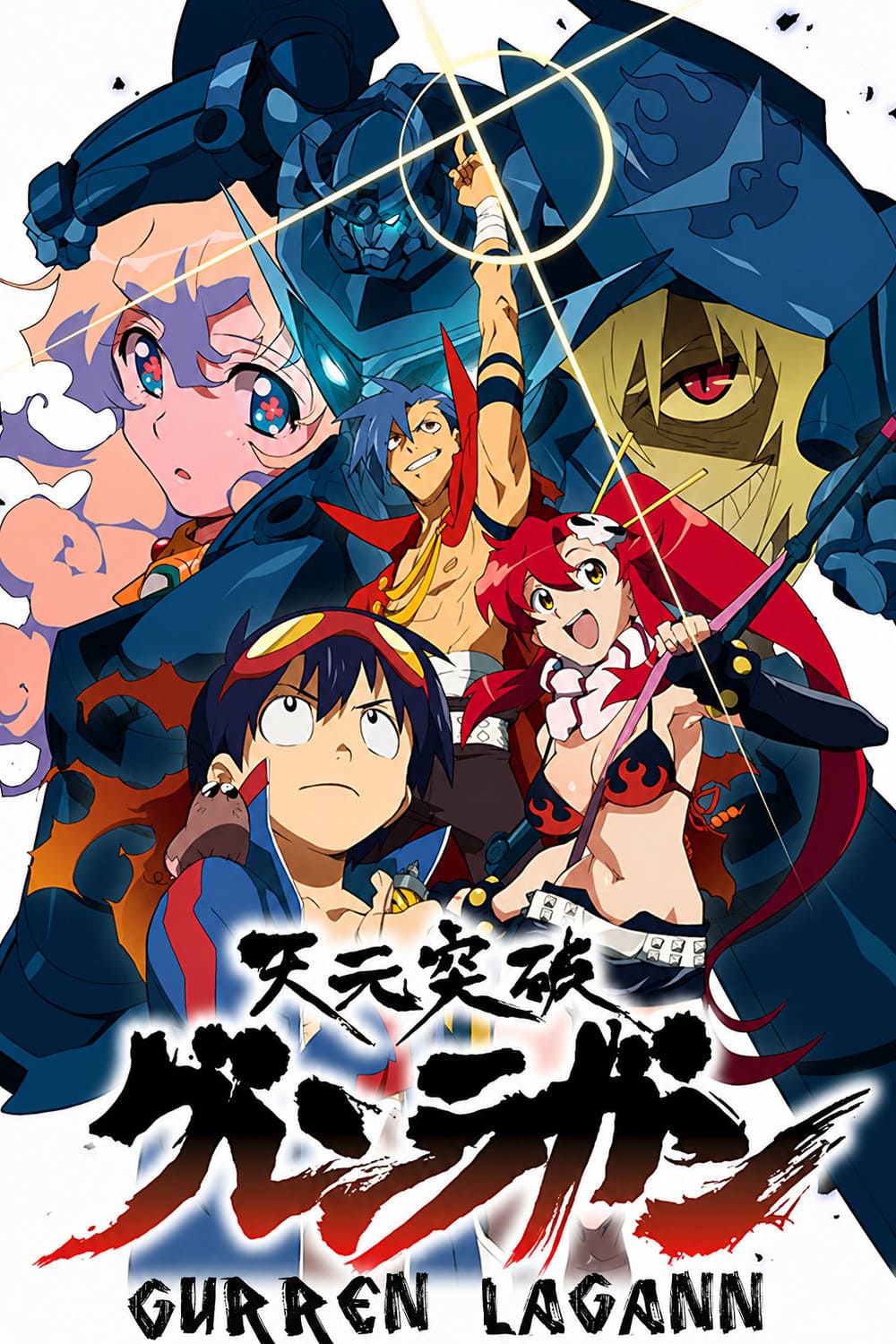

Anime You Should Be Watching: Tengen Toppa Gurren Lagann


“Don’t forget. Believe in yourself. Not in the you who believes in me. Not the me who believes in you. Believe in the you who believes in yourself.” — Kamina

Gurren Lagann is one of those anime that seems to announce itself at maximum volume before the opening theme has even finished. It is loud, ridiculous, earnest, aggressively stylish, and so emotionally committed to its own escalation that it somehow transforms drills, sunglasses, tiny robots, and increasingly impossible acts of defiance into a genuinely moving epic. Produced by Gainax and originally broadcast in 2007, Tengen Toppa Gurren Lagann begins underground with a timid boy named Simon and ends in a place so cosmically huge that describing it risks making the show sound like parody. But that journey—from cramped tunnels beneath the earth to a battle for humanity’s future among the stars—is exactly why it still lands so hard.

The premise starts simply. Simon lives in an underground village where people have been conditioned to accept a small, confined existence beneath a hostile surface world. He spends his days digging tunnels, largely ignored by the others around him, until his life is upended by Kamina, a reckless older boy who insists that the surface exists and that humans belong there. Kamina’s conviction is less a coherent philosophy than a full-force personality trait: he believes in breaking through walls because walls are there to be broken. When Simon discovers a small drill-shaped device and a miniature mecha called Lagann, the pair’s ambitions become suddenly possible. Their escape to the surface introduces Yoko, the series’ sharp-shooting, level-headed third lead, and kicks off a war against the Beastmen and their towering Gunmen.

On paper, that sounds like a standard mecha adventure. In practice, Gurren Lagann uses that foundation as a launchpad for a story about grief, courage, self-definition, and the strange process of becoming the person you need to be after the person you depended on is gone. Its early episodes are especially effective because Simon is not immediately framed as a hidden hero. He is anxious, withdrawn, and clearly accustomed to having Kamina speak for him. Kamina may be the show’s loudest presence, but Simon is its emotional center. The series understands that confidence is not just something a character “gets” after a training montage. It has to be built through failure, fear, loss, responsibility, and the gradual realization that admiration is not the same thing as identity.

Kamina is still the character most people remember first, and it is easy to see why. His dialogue is endlessly quotable, his poses are absurdly theatrical, and his belief in Simon is powerful precisely because it is so unconditional. Kamina does not believe Simon is capable because Simon has proven himself; he believes Simon will prove himself because he already sees something in him. That relationship gives the early part of Gurren Lagann its heart. Kamina is not merely a mentor figure or a source of comic bravado. He is the force that makes Simon look upward. The show’s famous “believe in the me that believes in you” idea could have been corny in another context, but here it becomes a sincere expression of what it means to lend someone confidence until they can create their own.

The series’ willingness to change after its major emotional turning point is what elevates it beyond a very good action show. Gurren Lagann understands that inspirational speeches cannot erase trauma. Simon does not simply inherit Kamina’s confidence; he has to confront the fact that trying to imitate Kamina leaves him hollow. His eventual growth is about accepting Kamina’s influence without becoming trapped inside it. That distinction gives the show surprising maturity beneath all the bombast. Simon’s ultimate strength comes not from copying another person’s legend, but from finding a voice and resolve that belong to him alone.

Yoko is also more important than the usual “female lead in a shōnen-style action series” label would suggest. She has to serve as both a capable fighter and one of the few people who can puncture the boys’ more reckless impulses, but Gurren Lagann gives her a real emotional presence beyond that function. Her grief, her resilience, and her continued movement through a world that keeps changing around her make her feel essential to the story’s broader ideas about survival. The show’s presentation of Yoko can be very much of its mid-2000s anime era, and some of its fanservice has not aged particularly gracefully. Still, she is never reduced entirely to that material, and the series repeatedly reminds the audience that she is a veteran combatant and a person carrying losses of her own.

Visually, Gurren Lagann remains an absolute blast. Its art style is dynamic in a way that feels almost physically restless. The animation stretches bodies, machines, perspective, and scale for emotional effect rather than strict mechanical realism. Characters lean into poses so hard they feel like they might burst through the frame. Mecha do not merely move; they lunge, twist, slam, and spiral forward with a sense of weight and raw momentum. The show frequently uses exaggerated proportions, thick expressive linework, explosive color, and wild camera angles to make every confrontation feel bigger than the last. Even its stillness has energy, because the designs and compositions are always angled toward motion.

That visual approach has had a real influence on anime in the years since its release. You can see echoes of Gurren Lagann’s expressive exaggeration, bold color blocking, elastic action, and preference for emotional impact over restrained realism in much of the work associated with former Gainax talent and Studio Trigger, particularly Kill la Kill, Promare, Little Witch Academia, and Cyberpunk: Edgerunners. Its influence is broader than any one studio, though. The show helped solidify a modern appetite for animation that can be rough-edged, hyperactive, and knowingly excessive without sacrificing sincerity. A lot of later anime have chased its surface energy—the crazy transformations, the screaming declarations, the impossible scale—but fewer have replicated how carefully Gurren Lagann ties that escalation to character growth.

The mecha designs deserve special credit because they capture the show’s philosophy better than any speech could. Lagann starts as a small, almost toy-like machine, while Gurren is clunky, hot-blooded, and visually associated with Kamina’s swagger. When they combine into Gurren Lagann, the result is not sleek or conventionally elegant. It looks improvised, rebellious, and barely interested in obeying the normal rules of robotics. That is exactly the point. In Gurren Lagann, machines become expressions of willpower. They are not military hardware treated with sterile technical reverence; they are emotional extensions of the people piloting them. The more the characters believe they can surpass a limitation, the more absurdly grand their machines become.

The escalation is famously outrageous, but it is not random. The series moves from village-scale conflict to planetary stakes and eventually to something far beyond that, while preserving the same central question: what do people do when someone or something tells them that they have reached their limit? The antagonistic force behind the story, particularly through the Anti-Spiral, represents stagnation disguised as protection. The Anti-Spiral’s logic has a certain bleak rationality: humanity’s capacity to grow is dangerous, so it must be contained. Simon and the rest of Team Dai-Gurren respond with the series’ central rebuttal—that the risk of moving forward is inseparable from being alive. It is a simple message, but the show sells it with such conviction that it feels almost mythic.

This is also where Gurren Lagann separates itself from pure power fantasy. The characters win because they keep pushing forward, but the series does not pretend that forward movement makes pain disappear. People die. Dreams change. The ending, for all its spectacle, is not a cheap promise that determination guarantees a perfect reward. It recognizes that growing up often means accepting the cost of the choices that define you. Simon’s final arc is compelling because he becomes powerful enough to reshape the universe, yet the story still asks him to live with restraint, loss, and the knowledge that not every desire should be fulfilled simply because it can be.

The soundtrack is equally crucial to the experience. Taku Iwasaki’s score knows exactly when to go huge, mixing orchestral intensity, dramatic choral material, rock energy, and hip-hop-inflected momentum. “Libera Me From Hell” is the obvious standout, and it remains one of the most gloriously over-the-top climactic tracks in anime. It should not work as well as it does. The blend of opera and rap sounds like something invented as a joke, but in the context of Gurren Lagann, it feels completely natural. The song captures the entire show’s spirit: dramatic, strange, sincere, and unwilling to accept the idea that two seemingly incompatible things cannot be fused into something incredible.

There are flaws, of course. The first few episodes can feel especially frantic, and the humor occasionally leans into juvenile territory in ways that may test a new viewer’s patience. Some supporting characters get less development than they deserve, especially once the plot begins accelerating toward its larger conflicts. The fanservice is the element most likely to feel dated, since it can interrupt scenes that are otherwise focused on emotional gravity or visual spectacle. Yet even with those issues, Gurren Lagann never loses its sense of purpose. It is too alive, too earnest, and too committed to its own vision to feel disposable.

More than anything, Gurren Lagann endures because it understands the appeal of impossible optimism. It does not tell viewers that the world will always reward them, or that bravery means never being afraid. Instead, it argues that fear, grief, and uncertainty are not final states. You can carry them with you and still move forward. You can outgrow the person you used to be without betraying them. You can take inspiration from someone else without surrendering your own identity. And if the wall in front of you seems impossible to break, maybe the answer is not to wait for permission. Maybe you pick up a drill and start spinning.

Anime You Should Be Watching

Music Video of the Day: Coming Of Age by Cassandra Coleman (2025, Dir. by Miles Murphy)


At first, I didn’t think I was going to like this video because, at first, the song sounded like every other song that’s been released nowadays.  Sometimes, I feel like every up-and-coming female singer works with same committee of songwriters and every song ends up sounding the same as a result.  Luckily, around the two-minute mark, the song finally got interesting and it won me over.

The video was filmed in the country and it’s pretty to look at.  These are the type of locations that I love to visit with my camera to see if maybe I can capture some of that rural beauty before it goes away.  Going for a nice walk is something that I suggest to anyone who finds themselves away from the city.  Sometimes, you really do find some strikingly beautiful locations if you’re willing to look for them.  Here’s one of my favorite pictures, which I took at a country cemetery in Arkansas.  I was lucky enough to turn around just in time to see a deer making a visit.

by Erin Nicole

Enjoy!