“Good cop and bad cop have left for the day. I’m a different kind of cop.” — Vic Mackey
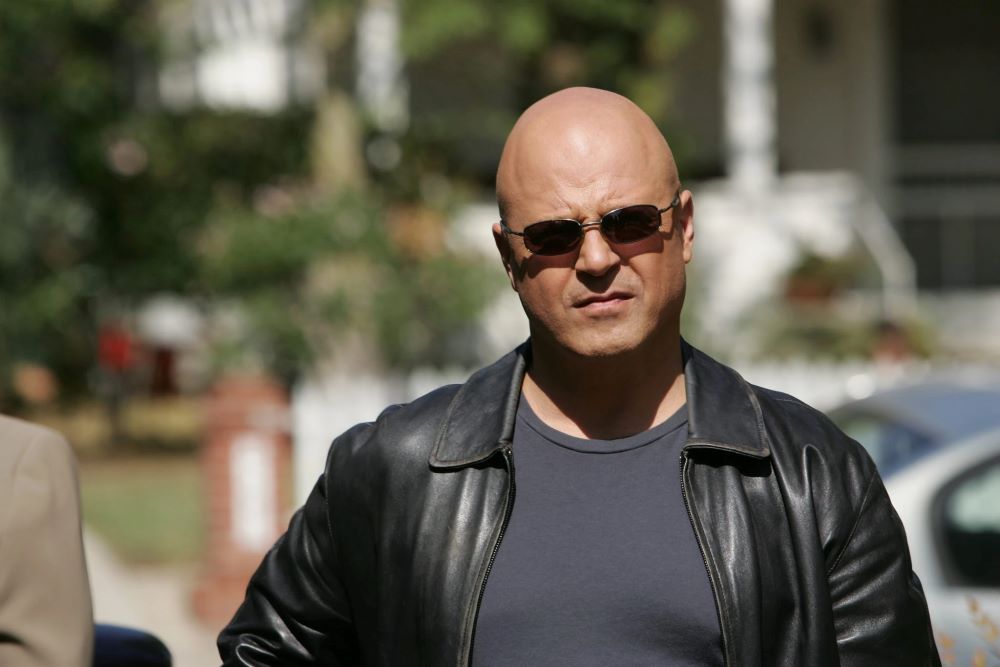
From the moment he shot a fellow detective in the face in the pilot episode, Vic Mackey of The Shield redefined the television antihero, establishing himself as one of the most mesmerizing and morally complex villains ever to grace the small screen. Unlike the charming mobsters or conflicted drug dealers that populated the era’s prestige dramas, Mackey was a cop—a figure sworn to uphold the very laws he so casually and brutally shattered. This foundational transgression was the show’s masterstroke, forcing the audience into a complicity that would only deepen over seven seasons, as they rooted for a man who was, by any conventional measure, a monster. His character wasn’t just a villain; he was a challenge to the very concept of heroism in a “gray time,” as actor Michael Chiklis aptly described it.
The bedrock of Vic Mackey’s charisma lies in his unwavering, almost terrifying, conviction in his own moral code. He is the ultimate “ends justify the means” pragmatist, operating in a world he sees as too dangerous for the niceties of due process. Mackey views his brutality and corruption as necessary tools to fight a greater evil, a twisted sense of duty that makes him simultaneously repulsive and indispensable. As the show’s creator, Shawn Ryan, noted, the audience was shown a man who was “a protector” in a frightening world, and that primal allure is potent. He steals from drug dealers, beats suspects, and burns a man’s face on a stove, yet all of this is framed as a means to keep the streets of Farmington safe—a justification that, for many viewers, became tragically persuasive.
This duality is what makes him so compelling; Vic Mackey is not a one-dimensional sociopath but a man of fierce, contradictory loyalties. He is a devoted, if deeply flawed, father who steals to pay for his autistic children’s medical bills, and a protector of the vulnerable, like the prostitute Connie and the young victims of a child pornography ring. Walton Goggins, who played his partner Shane Vendrell, suggested that the character’s core was “compartmentalization.” This allowed Mackey to show genuine compassion in one breath and coldly blackmail a fellow officer for being gay in the next, using that knowledge as a tool for control. He is an “Even Evil Has Loved Ones” archetype, but pushed to such an extreme that his love for his family becomes yet another justification for his escalating sins. This constant oscillation between good and evil creates a magnetic dissonance, making him impossible to dismiss as a simple monster.
The show’s genius was in ensuring that this dissonance was a source of agonizing tension for the audience. Creator Shawn Ryan was genuinely surprised to find that viewers overwhelmingly rooted for Mackey against a “clean” Internal Affairs investigator, proving that Chiklis’s performance had woven an almost unbreakable spell. To watch The Shield is to engage in a constant, uncomfortable negotiation with one’s own morality. The show sparked intense debate about whether Vic deserved punishment or absolution, a testament to the complexity of the character. The show’s narrative, as Goggins put it, is a “morality tale” where “you reap what you’ve sown,” but the path to that reckoning is paved with so many justifications and compelling moments of “good” that the audience is left hoping against hope for his redemption, even as his sins pile up.
Ultimately, Vic Mackey’s mesmerizing villainy lies in his chillingly relatable humanity. He is not a cackling antagonist or a far-removed tyrant; he is a man who, when presented with a choice between his survival and his soul, consistently chooses the former with an unnerving lack of remorse. The show’s iconic final scene, where he is trapped in a bureaucratic purgatory at an ICE desk, is a perfect, ironic punishment for a man who lived for action and control. It’s a fate that feels both just and heartbreaking. Vic Mackey remains a towering figure in television history because he forces us to confront a disturbing question: if a man who commits such evil can still command our sympathy and allegiance, what does that say about us, and what are we willing to forgive?
“So, we cause a triple murder before breakfast, start a race war before dinner – that’s uh, that’s a pretty good day.” — Shane Vendrell
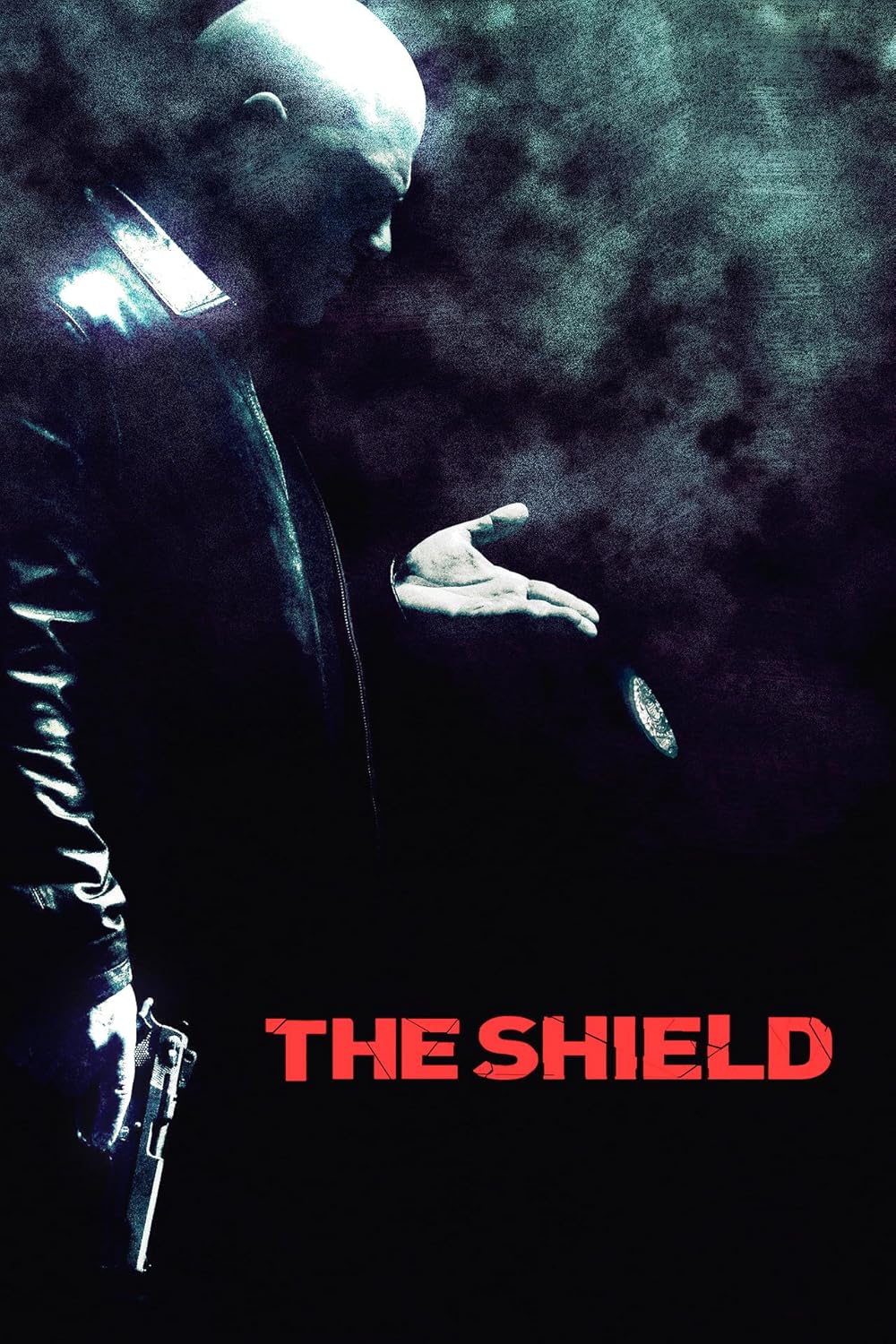
If you want to talk about the history of television, you basically have to divide the timeline into two distinct eras: before The Shield and after The Shield. When creator Shawn Ryan launched this gritty FX crime drama in 2002, the television landscape was a very different place. Sure, The Sopranos had already kicked down the door for premium cable, proving that audiences were hungry for complex, morally ambiguous anti-heroes. But basic cable was still largely seen as a graveyard for sanitized, formulaic network rejects. Then came The Shield, swaggering onto the screen with a chaotic energy that immediately changed the rules of the game. Running for seven intense seasons until 2008, the show didn’t just push the envelope; it set the envelope on fire and danced around the ashes. Looking back at it now, it remains a staggering achievement in storytelling that completely redefined what a cop show could be, sending shockwaves through basic cable, premium cable, and even Hollywood films.
The premise of the show sounds almost simple on paper, but its execution was anything but. The series follows the Strike Team, an elite anti-gang unit operating out of a rundown, overcrowded police station in the fictional Farmington district of Los Angeles. Leading this crew is Detective Vic Mackey, played with terrifying charisma by Michael Chiklis. Vic is not your typical television cop. He is not a flawed but ultimately noble hero who bends the rules to get the bad guys. Vic Mackey is, flat out, a criminal who happens to wear a badge. The show announces this immediately in the legendary opening scene of the pilot, where Vic murders a fellow police officer who is about to expose his corruption. It was a gut punch that served as a warning to the audience: you are not in Kansas anymore. From that moment on, you are complicit in Vic’s crimes because you are rooting for him to get away with them.
What made The Shield so brilliant was how it surrounded this monstrous central character with an incredibly rich ensemble cast that represented every facet of law enforcement. You had Shane Vendrell, Vic’s deeply insecure and ultimately tragic right-hand man, brought to life with jaw-dropping nuance by Walton Goggins. You had Claudette Wyms, the fiercely intelligent detective played by CCH Pounder, who spent the entire series fighting against the systemic rot embodied by Vic. And then there was Dutch Wagenbach, the deeply awkward, brilliantly analytical detective who provided a stark contrast to the Strike Team’s brute force approach. The show used these characters to explore the sheer exhaustion of police work. The Barn, as their station house was known, felt like a pressure cooker. It was a place where idealism went to die, crushed under the weight of endless caseloads, bureaucratic nonsense, and the depressing reality that the justice system is often deeply broken.
Visually and tonally, The Shield felt like a punch to the face. Ryan and his team utilized handheld cameras, harsh lighting, and a documentary-style grit that made the show feel dangerously real. There was no glossy cinematography or sweeping orchestral scores. The soundtrack was often just the ambient noise of the city, punctuated by sudden, shocking bursts of violence. This aesthetic choice was crucial because it stripped away the Hollywood glamour usually associated with police work. When Vic and the Strike Team kicked down a door, it didn’t look like an action movie; it looked like a chaotic, terrifying intrusion that left you feeling uneasy. This raw approach forced the audience to confront the physical and emotional toll of the job without any safety net.
When we talk about how The Shield redefined basic cable, it is hard to overstate its importance. Before this show, basic cable networks like FX were terrified of alienating advertisers. The Shield blew that hesitation out of the water by introducing unprecedented levels of profanity, nudity, and violence to non-premium television. But it wasn’t just about shock value; it was about authenticity. The criminals in Farmington talked like actual criminals, and the cops talked like actual cops who were fed up with the system. By proving that audiences would tune in in massive numbers to watch a show that didn’t hold their hand, FX essentially built its entire brand identity around The Shield. It paved the way for everything from Sons of Anarchy to American Horror Story, proving that basic cable could rival the creative freedom of HBO.
Interestingly, the success of The Shield also had a massive trickle-up effect on premium cable. HBO had been sitting comfortably as the king of prestige television, but suddenly a basic cable show was matching them punch for punch in terms of narrative complexity and character depth. Shows like The Wire and Breaking Bad (which debuted later on basic cable) owe a massive debt to the path Shawn Ryan blazed. The Shield proved that you didn’t need a massive HBO budget to create high art; you just needed a sharp script, fearless actors, and a network willing to take a risk. It forced premium cable to stop resting on its laurels and realize that the competition was no longer just the broadcast networks, but the upstarts on basic cable who were hungry for prestige.
The show’s influence even bled into the film industry, fundamentally altering the cop genre on the big screen. Before The Shield, the standard cop movie usually followed a fairly strict moral compass, or if it did feature a corrupt cop, like in Training Day, it was contained within a neat two-hour narrative arc. The Shield introduced the concept of the serialized corrupt cop. It showed audiences that the psychological unraveling of a dirty officer is much better suited to a long-form television format, where you can spend years peeling back the layers of their justification and paranoia. After The Shield, Hollywood started realizing that the simple “good guy versus bad guy” cop movie felt outdated. Films had to get darker, more ambiguous, and more willing to dwell in the gray areas of morality just to keep up with what was happening on television.
At the core of the series is a really fascinating, easy-to-understand analysis of utilitarianism versus deontology. In simple terms, Vic Mackey operates on the belief that the ends justify the means. He robs drug dealers, beats confessions out of suspects, and ruins innocent lives, but he argues that he is keeping the streets of Farmington safe. The show constantly challenges the audience to wrestle with this uncomfortable philosophy. Is a neighborhood actually safer if the people protecting it are worse than the criminals they are locking up? The Shield refuses to give you a tidy answer, which is what makes it so rewatchable. It presents a system where doing things the “right” way often lets the bad guys walk, while doing things the “wrong” way gets results but destroys the souls of everyone involved.
As the series moved into its later seasons, the narrative tension became almost unbearable. You cannot build a house on a foundation of lies and expect it to stand forever, and Vic’s world inevitably begins to collapse. The introduction of internal affairs, the escalating violence with the Mexican cartels, and the fracturing of the brotherhood between Vic and Shane created a tragic downward spiral that was riveting to watch. Walton Goggins’s portrayal of Shane’s descent into desperate paranoia is some of the best acting in television history. The show stopped being just about police corruption and turned into a Shakespearean tragedy about loyalty, betrayal, and the inescapable consequences of one’s actions.
The series finale of The Shield remains one of the greatest and most satisfying endings in television history. Without spoiling every detail, it manages to perfectly punish Vic for his lifetime of sins in a way that is far more cruel and poetic than simply sending him to prison or killing him. It is a masterclass in writing, wrapping up seven seasons of tangled plotlines and emotional baggage into a devastating final image. Vic Mackey gets exactly what he wanted, but he loses absolutely everything that made his life worth living in the process. It is bleak, brilliant, and completely uncompromising.
Ultimately, The Shield is a show that changed the DNA of television. It took the cop drama, stripped away all the nostalgia and hero-worship, and replaced it with a brutal, unflinching look at the cost of authority. Shawn Ryan and his incredible cast created a universe where the line between good and evil wasn’t just blurred; it was completely erased. It proved that audiences were smart enough to handle deeply flawed protagonists and narrative structures that refused to offer easy absolution. Whether you are looking at the rise of prestige basic cable, the evolution of the anti-hero on premium networks, or the dark turn that cop films took in the 2000s, you can trace the lineage right back to a rundown police station in Los Angeles. The Shield didn’t just redefine a genre; it helped build the modern era of television as we know it today, and for that alone, it demands to be remembered as an all-time great.
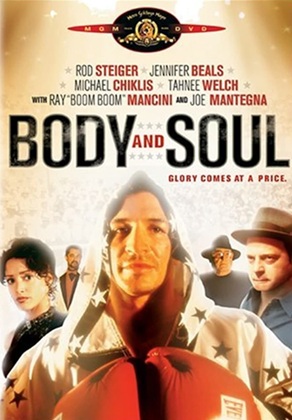
Small town boxer Charlie Davis (Ray Mancini) travels to Reno with his best friend and manager, Tiny O’Toole (Michael Chiklis). Charlie wants to become a professional and he has the support of Tiny and Gina (Jennifer Beals), a saintly hitchhiker that they pick up on the way to Nevada. Charlie managers to impress a legendary trainer (Rod Steiger) but, as Charlie moves up the ranks, he comes under the influence of a corrupt promoter (Joe Mantegna). Seduced by a bad girl (Tahnee Welch) and allowing his success to go to his head, Charlie alienates Tiny just when he needs him the most. A chance to become the champion is coming up and the promoter expects Charlie to throw the fight.
There’s not a boxing cliche that goes unused in this movie. Simple-minded by talented boxer? Check. Loyal best friend? Check. Overwrought narration? Double check because merely calling this film’s narration overwrought doesn’t begin to do it justice. Saintly good girl? Check. Dangerous bad girl? Check. Gruff trainer? Check. Corrupt promoter? Another double check. It’s not that the cliches are necessarily unwelcome. Most boxing movies follow the same basic plot. Instead, the problem here is that the film neither has the direction or the performances to make the cliches compelling.
You would think that casting Ray Mancini as a boxer would give this film some authenticity but Mancini looks as uncomfortable in the ring as he does when he’s having to actually act. As bad as Mancini is, his performance is nowhere near as desultory as Michael Chiklis’s. Chiklis not only plays Tiny but he also narrates the movie and watching and listening to him, you would be hard pressed to believe that he would someday star in The Shield. Meanwhile, Rod Steiger and Jennifer Beals are wasted in underwritten roles.
If there is one thing that redeems the film, it’s Joe Mantegna as the crooked promoter. Using his Fat Tony voice, Mantegna at least seems to have a sense of humor about the film.
I always appreciate a good boxing movie but this ain’t it.
Welcome to Retro Television Reviews, a feature where we review some of our favorite and least favorite shows of the past! On Mondays, I will be reviewing Miami Vice, which ran on NBC from 1984 to 1989. The entire show can be purchased on Prime!
This week, Crockett and Tubbs — or is it Burnett and Cooper? — enter the art world.
Episode 5.14 “The Lost Madonna”
(Dir by Chip Chalmers, originally aired on March 17th, 1989)
When Crockett and Tubbs take down what they think is a drug deal, they’re shocked to discover that Stanley Costa (Stephen G. Anthony) was actually smuggling two paintings! They could always ask Stanley what’s going on but — whoops! They killed him during the show’s precredit sequence.
Detective Whitehead (Michael Chiklis) comes down from New York City and explains that the two paintings are the side pieces for a triptych called The Last Madonna. It was recently stolen from a Paris museum and Whitehead is convinced that theft was masterminded by Joey Scianti (Peter Dobson).
It’s time for Tubbs and Crockett to — *sigh* — go undercover. Why they’re still always going undercover, I have never really understood. Every time they go undercover, their cover gets blown. Do the members of the Miami underworld just not communicate with each other? Shouldn’t everyone know, by this point, that Tubbs and Crockett are cops? In this case, Tubbs goes undercover as someone who appreciates art. Crockett goes undercover as the crude Sonny Burnett….
Yes, Crockett is still using the Burnett cover. He’s doing this despite the fact that he just recently had a mental breakdown that led to him not only thinking that he actually was Burnett but also becoming Miami’s biggest drug lord. Even if the Scianti family was dumb enough to not know that Crockett was a cop, surely they would have heard enough about drug lord Sonny Burnett to wonder why he would be hanging out with a connoisseur of fine art.
(Indeed, it’s hard not to notice that everyone has apparently moved on rather quickly from Sonny’s mental breakdown and his time as a drug lord. For that matter, Sonny certainly doesn’t seem to ever give much thought to his dead second wife. Remember her? The world-famous singer who was literally gunned down in front of him? She appears to have been forgotten.)
This episode was dull, largely because the Scianti family was never really a credible threat. They came across as being a bunch of buffoons and, as such, it was hard to really get that concerned about whether or not they would figure out that Crockett and Tubbs were actually cops. This is another episode that features a twist that you’ll see coming from miles away. From the minute Michael Chiklis first showed up, I knew that he was eventually going to try to steal the The Lost Madonna for himself.
Considering that there was a lot of humor in this episode (Crockett, not surprisingly, struggled with understanding modern art), there’s also some surprisingly graphic violence. Crockett and Tubbs gun down Stanley Costa and blood splatters all over the wall. Whitehead shoots Joey Scianti and the shocked Joey looks down at his wound and says that it’s “real blood.” Tonally, this episode is all over the place.
Everyone seemed kind of bored with this episode. This was definitely a final season entry.
1998’s Soldier starts off with a brilliant seven-minute sequence. We watch as, over the course of 17 years, a child named Todd is raised and trained to be the ultimate soldier. From a young age, he’s learning how to fight. He’s learning discipline. He’s learning to follow orders without question. We follow him as he goes on to fight in conflict after conflict. The name of each conflict in which he fights is tattooed on his muscular arms. Finally, a title card appears that informs us that Todd (now played by Kurt Russell) is “Between wars.”
Captain Church (Gary Busey) insists that Todd and his fellow soldiers are the greatest fighting force in the galaxy. The autocratic Colonel Merkum (Jason Isaacs) disagrees, claiming that his genetically-engineered soldiers are superior and that Todd is now obsolete. After a savage training exercise that leaves Todd unconscious, Merkum orders that Todd be dumped on an abandoned planet.
Of course, it turns out that the planet in question is not actually abandoned. Instead, it’s home to a group of colonists who crash-landed on the planet years ago and who now live a life that is devoid of conflict. When Todd approaches the colony, he is cautiously welcomed. Todd, who rarely speaks, is extremely strong and quick and that pays off when he’s able to save Jimmy (Michael Chiklis) from being pulled into a thrasher. However, Todd is also haunted by PTSD and he’s been bred to fight and that leaves the other colonists cautious about him. Despite the efforts of Mace (Sean Pertwee) and his wife Sandra (Connie Nielsen), the other colonists vote to exile Todd from their colony.
Meanwhile, Merkum and his “superior” soldiers are heading towards the planet, eager to execute the colonists as a part of a training exercise. Todd will have to use all of his training to defeat Merkum’s super soldier, Caine 607 (Jason Scott Lee), and help the colonists reach their final destination.
One of the more interesting things about Soldier is that it apparently takes place in the same cinematic universe as Blade Runner. The wreckage of one of Blade Runner‘s flying cars is spotted on the planet and Todd is shown to have fought in some of the same battle that Roy Batty claimed to have witnessed in Ridley Scott’s classic film. For that matter, Ridley Scott himself has said that Blade Runner also takes place in the same cinematic universe as Alien and some people insist that Predator is a part of the universe as well. That’s a rich heritage for Soldier, which is essentially a dumb but entertaining B-movie.
I liked Soldier, almost despite myself. It’s a silly film and there are certain scenes, mostly dealing with day-to-day life in colony, that feel a bit draggy. But I enjoyed Kurt Russell’s performance as the ultimate super soldier. Russell has very little dialogue in the film and his character is bit stunted emotionally but it doesn’t matter. Ultimately, Russell’s natural charisma carries the day and his fight with Caine 607 is genuinely exciting. As usual, Jason Isaacs makes for a wonderfully hissable villain and even Gary Busey gives what is, for him, a rather restrained and ultimately credible performance. As is so often the case with the work of director Paul W.S. Anderson, the film is a cartoon but it’s an entertaining cartoon.
“Oh my God!” I said as I looked at what was new on Netflix, “A Halloween movie starring the guy from Uncut Gems!? THIS IS GOING TO BE INTENSE!”
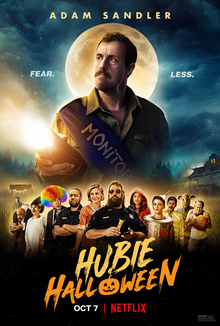
Of course, as I’m sure you already guessed, Hubie Halloween might as well be taking place in a totally different universe from Uncut Gems. Uncut Gems was an intense drama that starred Adam Sandler as a man so self-destructive that he literally seems to spend the entire movie just daring death to reach out and take him. Hubie Halloween, on the other hand, is fairly laid back comedy featuring Adam Sandler playing yet another well-meaning manchild. The film features supporting performances from all the usual Happy Madison suspects, like Kevin James, Rob Schneider, Steve Buscemi, Tim Meadows, Ben Stiller, Maya Rudolph, Keenan Thompson, and Colin Quinn. It’s sentimental and it’s about thirty minute too long and the humor is often juvenile but also frequently funny.
Adam Sandler plays Hubie, who lives in Salem, Massachusetts with his mother (June Squibb). Hubie is the town eccentric, the type of guy who thinks that he’s protecting the entire town but who mostly just gets on everyone’s nerves. A lot of people make fun of Hubie (who they call Pubie). Pete Landolfa (Ray Liotta) may be mourning the recent death of his father but he still finds time to toss Hubie into an open grave. Not even Father Dave (Michael Chiklis) has much sympathy for Hubie. Hubie is the type of guy who goes down to the local school to give a speech on Halloween safety, just for the students (and teachers) to respond by throwing all of their food at him.
One of the few people who is nice to Hubie is his new neighbor, Walter Lambert (Steve Buscemi). However, Hubie suspects that Walter might be a werewolf and when people start to disappear over the course of Halloween, Hubie suspects that Walter’s responsible. Meanwhile, the police (represented by a heavily bearded Kevin James) thinks that it might be Hubie, seeing as how everyone who has disappeared is also someone who has bullied him.
Then again, Richie Hartman (Rob Schneider) has just escaped from the local mental institution. Could he possibly have something to do with the mysterious happenings in Salem!?
When Adam Sandler won his Indie Spirit Award for Uncut Gems, he infamously announced that, if he didn’t get an Oscar nomination, he would get back at the Academy by making the worst film of all time. Well, Sandler was snubbed the Academy. (Though Sandler deserved that nomination — and probably nominations for The Meyerowtiz Stories, Funny People, and Punch-Drunk Love as well — it’s pretty obvious that the Academy is never going to nominate the star of That’s My Boy and Jack and Jill.) However, Hubie Halloween is certainly not the worst film ever made. It’s actually a rather likable and sweet-natured comedy, one in which the humor is definitely juvenile but, in contrast to some of the other Happy Madison comedies, never really mean-spirited. In many ways, it’s a perfect Netflix film. It’s good enough to keep you entertained while, at the same time, you don’t necessarily have to really pay attention to every minute of the film to get it. It’s the epitome of the type of film that you can watch while doing something else.
One of the main complaints that’s always lodged against Sandler is that he primarily just makes movies so that he can hang out with his friends and get paid for it. There’s a certain amount of truth to that statement and that, more than anything, explains why Sandler’s filmography tends to be so frustratingly uneven. The cast of Hubie Halloween looks like they had a lot of fun making it. Fortunately, in this case, that sense of fun actually translates onto the screen. Steve Buscemi, June Squibb, and particularly Ray Liotta all seem to be having a ball getting to parody their own dramatic images.
Admittedly, Hubie Halloween is not a film that sticks with you. It won’t make you laugh as much as Happy Gilmore and it won’t leave you stunned like Uncut Gems. But, for what it is, it’s just likable enough to be entertaining.
Sometimes, you watch a movie and all you cay say, at the end, is “What the Hell were they thinking?”
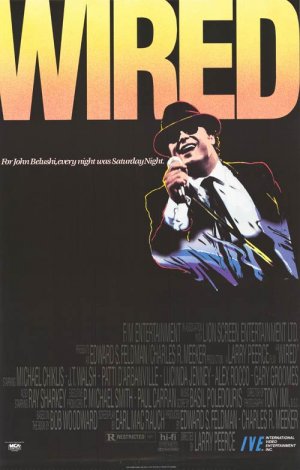
Wired is one such movie. Based on a widely discredited biography by Bob Woodward, Wired tells two stories. In the first story, John Belushi (Michael Chiklis, making an unfortunate film debut) wakes up in a morgue and is told by his guardian angel that he has died of a drug overdose. Did I mention that his guardian angel is Puerto Rican cabbie named Angel Vasquez (Ray Sharkey) and Angel drives Belushi through a series of flashbacks? Belushi meets Dan Aykroyd (Gary Groomes, who looks nothing like Dan Aykroyd). Belushi gets cast on Saturday Night Live. Belushi marries Judy (Lucinda Jenney). Belushi uses drugs, costars in The Blues Brothers, dies of a drug overdose in a sleazy motel, and plays a pinball game to determine whether he’ll go to Heaven or Hell. While this is going on, Bob Woodward (J.T. Walsh) is interviewing everyone who knew Belushi while he was alive.
There are so many things wrong with Wired that it is hard to know where to even begin. I haven’t even mentioned the scene where Bob Woodward travels back in time and has a conversation with Belushi while he’s dying on the motel room floor. Wired tries to be a cautionary tale about getting seduced by fame and drugs but how seriously can anyone take the message of any movie that features Ray Sharkey as a guardian angel? The scenes with Woodward are strange, mostly because the hero of Watergate is being played by an actor best known for playing sinister villains. (Seven years after playing Bob Woodward, J.T. Walsh was actually cast as Watergate figure John Ehrlichman in Nixon.) Considering that this was his first movie, Michael Chiklis is not bad when it comes to playing a drug addict named John but he’s never convincing as John Belushi. He never captures the mix of charisma and danger that made John Belushi a superstar. Wired wants to tell the story of Belushi’s downfall but never understands what made him special to begin with.
Wired tries to be edgy but it only succeeds for one split second. During the filming of The Blues Brothers, a director who is clearly meant to be John Landis walks over to Belushi’s trailer. Listen carefully, and a helicopter can be heard in the background.
As for the rest of Wired, what the Hell were they thinking?
In part of my continuing effort to get caught up on my 2013 film reviews, here are 6 more reviews of 6 more films.
The Company You Keep (dir by Robert Redford)
Shia LeBeouf is a journalist who discovers that attorney Bill Grant (Robert Redford) is actually a former 60s radical who is still wanted by the FBI for taking part in a bank robbery in which a security guard was killed. In one of those coincidences that can be filed directly under “Because it was convenient for the plot,” LeBeouf’s girlfriend (Anna Kendrick) works for the FBI. Anyway, all of this leads to Grant going on the run and meeting up with a lot of his former radical colleagues (all of whom are played by familiar character actors like Susan Sarandon, Nick Nolte, Richard Jenkins, and Julie Christie). Ben pursues him and discovers that Grant could very well be innocent and … oh, who cares? The Company You Keep is a big smug mess of a film. It’s full of talented actors — like Stanley Tucci, Brendan Gleeson, and Brit Marling (who, talented as she may be, is actually kinda terrible in this film) — but so what? I lost interest in the film after the first 20 minutes, which was a problem since I still had 101 more minutes left to go.
Has there ever been a movie that’s actually been improved by the presence of Shia LeBeouf?
Dracula 3D (dir by Dario Argento)
Dario Argento’s version of the classic Dracula tale got terrible reviews when it was briefly released here in the States but I happen to think that it was rather underrated. No, the film can not compares to classic Argento films like Deep Red, Suspiria, and Tenebre. However, the film itself is so shamelessly excessive that it’s impossible not to enjoy on some level. The film’s moody sets harken back to the classic gothic villages of the old Hammer films, Thomas Kretschman turns Dracula into the type of decadent European aristocrat who you would expect to find doing cocaine in 1970s New York, and Rutger Hauer is wonderfully over-the-top as Van Helsing. Yes, Dracula does turn into a giant preying mantis at one point but if you can’t enjoy that then you’re obviously taking life (and movies) too seriously.
Getaway (dir by Courtney Solomon)
I saw Getaway during my summer vacation and the main thing I remember about the experience is that I saw it in Charleston, West Virginia. Have I mentioned how in love I am with Charleston? Seriously, I love that city!
As for the movie, it was 90 minutes of nonstop car chases and crashes and yet it somehow still managed to be one of the dullest films that I’ve ever seen. Ethan Hawke’s wife is kidnapped by Jon Voight and Hawke is forced to steal a car and drive around the city, doing random things. Along the way, he picks up a sidekick played by Selena Gomez. Hawke and Voight are two of my favorite actors and, on the basis of Spring Breakers, I think that Gomez is a lot more talented than she’s given credit for. But all of that talent didn’t stop Getaway from being forgettable. It’s often asked how much action is too much action and it appears that Getaway was specifically made to answer that question.
Identity Thief (dir by Seth Gordon)
My best friend Evelyn and I attempted to watch this “comedy” on Saturday night and we could only get through the first hour before we turned it off. Jason Bateman’s a great actor but, between Identity Thief and Disconnect, this just wasn’t his year. In this film, Bateman is a guy named Sandy (Are you laughing yet? Because the movie really thinks this is hilarious) whose identity is stolen by Melissa McCarthy. In order to restore both his credit and his good name, Bateman goes down to Florida and attempts to convince McCarthy to return to Colorado with him. The film’s “humor” comes from the fact that McCarthy is sociopath while Bateman is … not.
It’s just as funny as it sounds.
Pawn (dir by David Armstrong)
An all-night diner is robbed by three thieves led by Michael Chiklis and, perhaps not surprisingly, things do not go as expected. It turns out that not only does Chilklis have a secret agenda of his own but so does nearly everyone else in the diner. Pawn is a gritty little action thriller that’s full of twists and turns. Chiklis gives a great performance and Ray Liotta has a surprisingly effective cameo.
Welcome to the Punch (dir by Eran Creevy)
In this British crime drama, gangster Jacob (Mark Strong) comes out of hiding and returns to London in order to get his son out of prison. Waiting for Jacob is an obsessive police detective (James McAvoy) who is determined to finally capture Jacob.
In many ways, Welcome To The Punch reminded me a lot of Tranceand n0t just because both films feature James McAvoy playing a morally ambiguous hero. Like Trance, Welcome to the Punch is something of a shallow film but Eran Creevy’s direction is so stylish and Mark Strong and James McAvoy both give such effective performances that you find yourself entertained even if the film itself leaves you feeling somewhat detached.

 Sometimes, you watch a movie and all you cay say, at the end, is “What the Hell were they thinking?”
