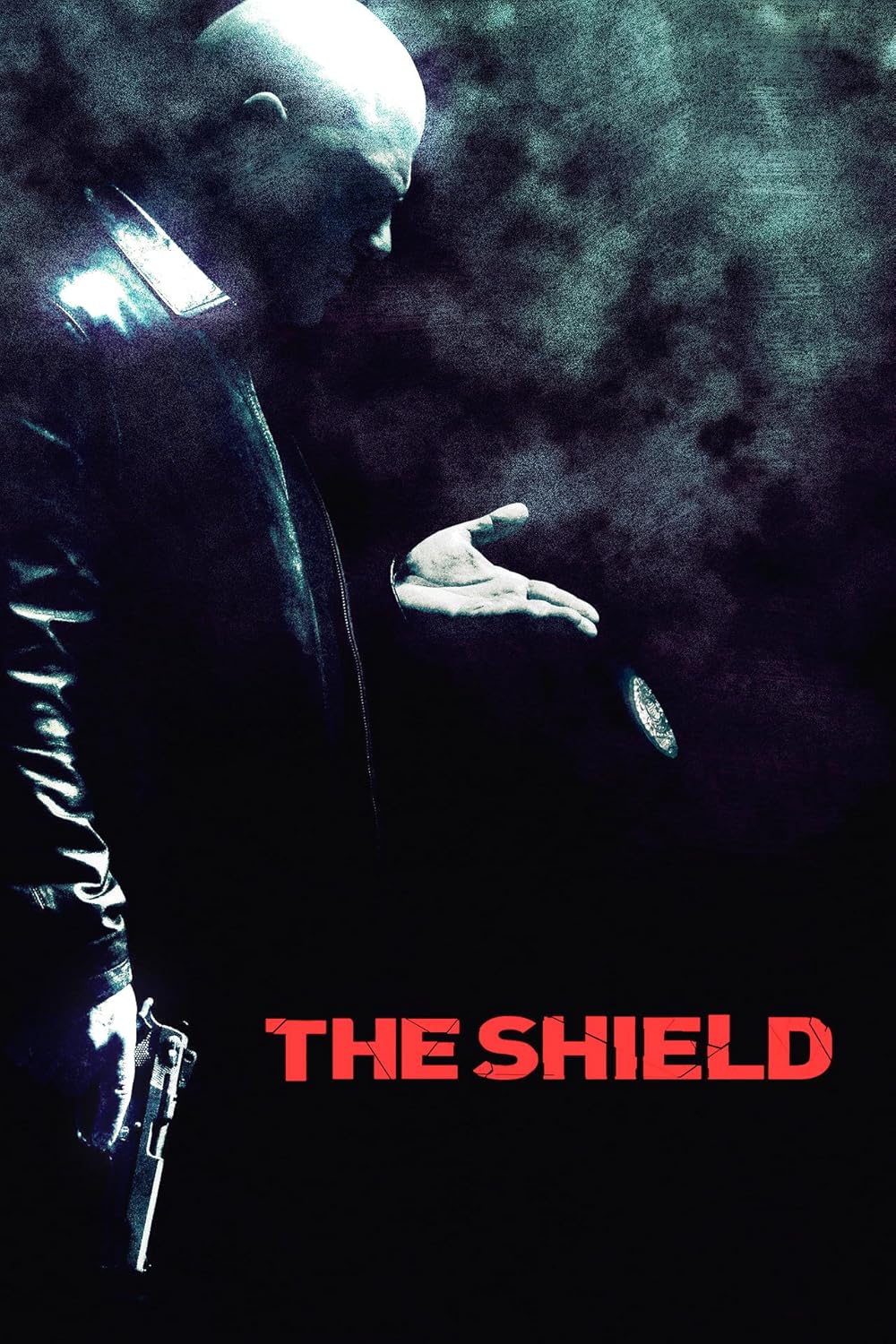
Review: The Shield (by Shawn Ryan)


“So, we cause a triple murder before breakfast, start a race war before dinner – that’s uh, that’s a pretty good day.” — Shane Vendrell

If you want to talk about the history of television, you basically have to divide the timeline into two distinct eras: before The Shield and after The Shield. When creator Shawn Ryan launched this gritty FX crime drama in 2002, the television landscape was a very different place. Sure, The Sopranos had already kicked down the door for premium cable, proving that audiences were hungry for complex, morally ambiguous anti-heroes. But basic cable was still largely seen as a graveyard for sanitized, formulaic network rejects. Then came The Shield, swaggering onto the screen with a chaotic energy that immediately changed the rules of the game. Running for seven intense seasons until 2008, the show didn’t just push the envelope; it set the envelope on fire and danced around the ashes. Looking back at it now, it remains a staggering achievement in storytelling that completely redefined what a cop show could be, sending shockwaves through basic cable, premium cable, and even Hollywood films.

The premise of the show sounds almost simple on paper, but its execution was anything but. The series follows the Strike Team, an elite anti-gang unit operating out of a rundown, overcrowded police station in the fictional Farmington district of Los Angeles. Leading this crew is Detective Vic Mackey, played with terrifying charisma by Michael Chiklis. Vic is not your typical television cop. He is not a flawed but ultimately noble hero who bends the rules to get the bad guys. Vic Mackey is, flat out, a criminal who happens to wear a badge. The show announces this immediately in the legendary opening scene of the pilot, where Vic murders a fellow police officer who is about to expose his corruption. It was a gut punch that served as a warning to the audience: you are not in Kansas anymore. From that moment on, you are complicit in Vic’s crimes because you are rooting for him to get away with them.

What made The Shield so brilliant was how it surrounded this monstrous central character with an incredibly rich ensemble cast that represented every facet of law enforcement. You had Shane Vendrell, Vic’s deeply insecure and ultimately tragic right-hand man, brought to life with jaw-dropping nuance by Walton Goggins. You had Claudette Wyms, the fiercely intelligent detective played by CCH Pounder, who spent the entire series fighting against the systemic rot embodied by Vic. And then there was Dutch Wagenbach, the deeply awkward, brilliantly analytical detective who provided a stark contrast to the Strike Team’s brute force approach. The show used these characters to explore the sheer exhaustion of police work. The Barn, as their station house was known, felt like a pressure cooker. It was a place where idealism went to die, crushed under the weight of endless caseloads, bureaucratic nonsense, and the depressing reality that the justice system is often deeply broken.

Visually and tonally, The Shield felt like a punch to the face. Ryan and his team utilized handheld cameras, harsh lighting, and a documentary-style grit that made the show feel dangerously real. There was no glossy cinematography or sweeping orchestral scores. The soundtrack was often just the ambient noise of the city, punctuated by sudden, shocking bursts of violence. This aesthetic choice was crucial because it stripped away the Hollywood glamour usually associated with police work. When Vic and the Strike Team kicked down a door, it didn’t look like an action movie; it looked like a chaotic, terrifying intrusion that left you feeling uneasy. This raw approach forced the audience to confront the physical and emotional toll of the job without any safety net.

When we talk about how The Shield redefined basic cable, it is hard to overstate its importance. Before this show, basic cable networks like FX were terrified of alienating advertisers. The Shield blew that hesitation out of the water by introducing unprecedented levels of profanity, nudity, and violence to non-premium television. But it wasn’t just about shock value; it was about authenticity. The criminals in Farmington talked like actual criminals, and the cops talked like actual cops who were fed up with the system. By proving that audiences would tune in in massive numbers to watch a show that didn’t hold their hand, FX essentially built its entire brand identity around The Shield. It paved the way for everything from Sons of Anarchy to American Horror Story, proving that basic cable could rival the creative freedom of HBO.

Interestingly, the success of The Shield also had a massive trickle-up effect on premium cable. HBO had been sitting comfortably as the king of prestige television, but suddenly a basic cable show was matching them punch for punch in terms of narrative complexity and character depth. Shows like The Wire and Breaking Bad (which debuted later on basic cable) owe a massive debt to the path Shawn Ryan blazed. The Shield proved that you didn’t need a massive HBO budget to create high art; you just needed a sharp script, fearless actors, and a network willing to take a risk. It forced premium cable to stop resting on its laurels and realize that the competition was no longer just the broadcast networks, but the upstarts on basic cable who were hungry for prestige.

The show’s influence even bled into the film industry, fundamentally altering the cop genre on the big screen. Before The Shield, the standard cop movie usually followed a fairly strict moral compass, or if it did feature a corrupt cop, like in Training Day, it was contained within a neat two-hour narrative arc. The Shield introduced the concept of the serialized corrupt cop. It showed audiences that the psychological unraveling of a dirty officer is much better suited to a long-form television format, where you can spend years peeling back the layers of their justification and paranoia. After The Shield, Hollywood started realizing that the simple “good guy versus bad guy” cop movie felt outdated. Films had to get darker, more ambiguous, and more willing to dwell in the gray areas of morality just to keep up with what was happening on television.

At the core of the series is a really fascinating, easy-to-understand analysis of utilitarianism versus deontology. In simple terms, Vic Mackey operates on the belief that the ends justify the means. He robs drug dealers, beats confessions out of suspects, and ruins innocent lives, but he argues that he is keeping the streets of Farmington safe. The show constantly challenges the audience to wrestle with this uncomfortable philosophy. Is a neighborhood actually safer if the people protecting it are worse than the criminals they are locking up? The Shield refuses to give you a tidy answer, which is what makes it so rewatchable. It presents a system where doing things the “right” way often lets the bad guys walk, while doing things the “wrong” way gets results but destroys the souls of everyone involved.

As the series moved into its later seasons, the narrative tension became almost unbearable. You cannot build a house on a foundation of lies and expect it to stand forever, and Vic’s world inevitably begins to collapse. The introduction of internal affairs, the escalating violence with the Mexican cartels, and the fracturing of the brotherhood between Vic and Shane created a tragic downward spiral that was riveting to watch. Walton Goggins’s portrayal of Shane’s descent into desperate paranoia is some of the best acting in television history. The show stopped being just about police corruption and turned into a Shakespearean tragedy about loyalty, betrayal, and the inescapable consequences of one’s actions.

The series finale of The Shield remains one of the greatest and most satisfying endings in television history. Without spoiling every detail, it manages to perfectly punish Vic for his lifetime of sins in a way that is far more cruel and poetic than simply sending him to prison or killing him. It is a masterclass in writing, wrapping up seven seasons of tangled plotlines and emotional baggage into a devastating final image. Vic Mackey gets exactly what he wanted, but he loses absolutely everything that made his life worth living in the process. It is bleak, brilliant, and completely uncompromising.

Ultimately, The Shield is a show that changed the DNA of television. It took the cop drama, stripped away all the nostalgia and hero-worship, and replaced it with a brutal, unflinching look at the cost of authority. Shawn Ryan and his incredible cast created a universe where the line between good and evil wasn’t just blurred; it was completely erased. It proved that audiences were smart enough to handle deeply flawed protagonists and narrative structures that refused to offer easy absolution. Whether you are looking at the rise of prestige basic cable, the evolution of the anti-hero on premium networks, or the dark turn that cop films took in the 2000s, you can trace the lineage right back to a rundown police station in Los Angeles. The Shield didn’t just redefine a genre; it helped build the modern era of television as we know it today, and for that alone, it demands to be remembered as an all-time great.
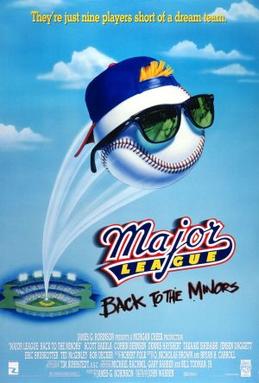
I Watched Major League: Back To The Minors (1998, Dir. by John Warren)


Roger Dorn (Corbin Bernsen), the former third baseman for the Cleveland Indians, is the new owner of the Minnesota Twins.  There’s a hotshot hitter playing for the Buzz, the Twins’s Minor League affiliate.  Downtown Anderson (Walton Goggin) can hit the ball over the fences but he still needs to learn about teamwork before he’ll be ready to move up to the majors.  Roger recruits an old friend, an aging pitcher named Gus Cantrell (Scott Bakula), to manage the Buzz and mentor Downtown.  Under Gus’s leadership, the Buzz starts winning games.  Even some former Indians, like Pedro Cerrano (Dennis Haysbert) and Taka Tanaka (Takaaki Ishibashi), are recruited to play for the Buzz.  When the manager of the Twins, Leonard Huff (Ted McGinley), insults Gus and the Buzz over dinner, Gus challenges the Twins to an exhibition game, the minors against the majors.  Huff accepts the challenge.

I had always heard that Major League: Back To The Minors was the worst of three Major League films but I liked it.  It wasn’t as good as the first one but it wasn’t as boring as the second one.  A lot of it has to do with the cast, who give it their all.  Walton Goggins is great as the cocky Downtown Anderson but really, all of the actors playing entire team did a good job.  They’re all misfits, of course.  I especially liked Doc (Peter Mackenzie), a medical student-turned-pitcher who has the slowest fastball in the game.  This movie had a little of the warmth and insider humor that made the first Major League film so special.  It’s an underdog story, with the minor league players proving that they’re just as good as the spoiled players in the big leagues.

I didn’t find the idea of an exhibition game between the Twins and the Buzz to be believable.  In the movie, they actually play two games against each other and they both take place during the regular season.  When did they find the time to play each other?  I guess they gave up one of their travel days but it still doesn’t seem like something that would happen.

I enjoyed this movie more than I thought I would.  It helped that I love baseball.  And I love the minor leagues, even if they don’t get the same respect as the majors.  Some of the best baseball I’ve ever seen has been in minor league games.  They may not have the huge contracts but they’ve got the talent, they’ve got something to prove, and they’ve got the love of the game.

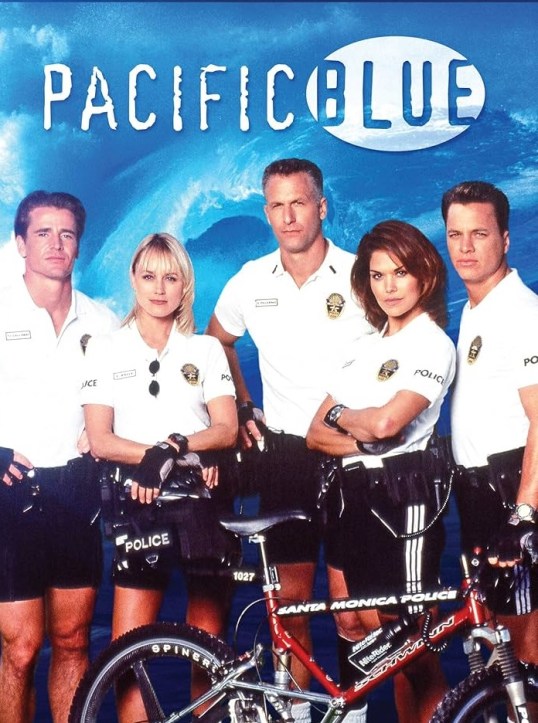
Late Night Retro Television Review: Pacific Blue 1.4 “Over The Edge”


Welcome to Late Night Retro Television Reviews, a feature where we review some of our favorite and least favorite shows of the past! On Tuesdays, I will be reviewing Pacific Blue, a cop show that aired from 1996 to 2000 on the USA Network!  It’s currently streaming everywhere, though I’m watching it on Tubi.

There’s been a murder but don’t worry.  The bike patrol is here.

Episode 1.4 “Over the Edge”

(Dir by Cory Michael Eubanks, originally aired on March 23rd, 1996)

“I need some personal time!” TC announces to Lt. Palermo after TC’s childhood friend, Todd (Dave Oliver), washes up dead on the beach.  It turns out that Todd was killed in a skydiving incident and TC doesn’t think it was an accident.  Todd jumped out of 700 planes without dying so obviously something is up.

(Really?  700?  Did he just spend a year jumping out of plane after plane?  700 is a HUGE number, especially when it comes to risking your life.)

TC’s partner, Chris, is shocked to discover that TC had a friend because apparently, he never mentioned Todd in the past.  Well, Chris, this is only the fourth episode so it’s not like you two have been partners for that long.  This is a weird episode because it assume that the audience has an emotional investment in TC despite the fact that we know next to nothing about him.  We know that TC rides a bicycle.  We know that he comes from a rich family.  And we know he hardly ever smiles because being on the bicycle patrol is suuuuuuuuch an important responsibility.  Otherwise, TC is just kind of a boring guy.  I’m sorry his friend died because I’m sorry when anyone dies but other than that, I don’t really have any emotional connection to any of this.

Anyway, it turns out that Todd fell in with a bunch of Australian extreme athlete types and they shoved him out of an airplane without a properly working parachute.  I’m sure there was a reason why but, for the most part, this episode is just an excuse for TC to look grim while doing the whole extreme sports thing.  I remember that, when I was growing up, you’d always hear all this breathless talk about how someone was doing “extreme sports” but then it would just turn out they were riding a unicycle or rolling down a hill.  Remember bike jousting, where people would joust while slowly riding bicycles and it looked totally stupid but everyone would still go, “Whoa!” while watching?  That was dumb.

Speaking of dumb, I’m still having a hard time taking the idea of cops on bicycles seriously.  Did the people who made this show not realize how stupid the cast looks rolling up and down the boardwalk in their crisp white shirts and blue shorts?  Seriously, it’s hard to take them seriously.  Baywatch was a dumb show but at least those red swimsuits were visually effective.  The bicycle cops on Pacific Blue just look like idiots, no matter how fast they try to peddle.

This show just seems silly right now.  I’ve got over a 100 episodes left to review so I hope things will get better.

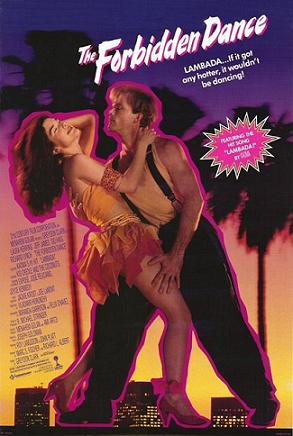
Embracing the Melodrama Part II #84: The Forbidden Dance (dir by Greydon Clark)


Forbidden_danceDANCE!

I love to dance, I loved to teach others how to dance, and I love watching other people dance.  If you’ve been reading my reviews for a while, then you know that I can not resist a film that features a lot of dancing.  It doesn’t matter if the director is inept.  It doesn’t matter if the script makes no sense.  It doesn’t matter if the actors don’t have a bit of acting talent to use to their advantage.  As long as the film features a lot of dancing, I’m happy.

Seriously, people, when in doubt … DANCE!

Let’s take the 1990 film The Forbidden Dance, for instance.  Now, if I wanted to be nit-picky, I could probably find a lot to criticize about this film.  I mean, this film even has a pro-environmental message and you know how annoyed I can get with message films.  And you know what?  You can do a google search and you can find all sorts of insanely negative reviews of this film.

But you know what?

I don’t really care about any of that.  This is, at heart, a dance film.  It features almost non-stop dancing, so I really can’t be too critical of it.  Add to that, it also features memorable performances from Sid Haig and the late Richard Lynch.  Unfortunately, neither Haig nor Lynch get out on the dance floor because, if they had, The Forbidden Dance would have been legendary.

The Forbidden Dance begins in the Brazilian rain forest.  A tribe of Native Brazilians is happily dancing and basically not bothering anyone.  As we learn later on in the film, the dance that they are doing is called the Lambada and apparently, the Brazilian government tried to ban it “because it was too sexy.”

(Amazingly enough and according to Wikipedia, the Lambada apparently was an actual dance craze back in 1990.  The Forbidden Dance came out on the exact same weekend as a competing film about the Lambada.  That film was called, appropriately enough, Lambada.  Strangely enough, two years ago, I randomly reviewed that film for this very site.)

Anyway, all the dancing and the fun is interrupted by the arrival of Benjamin Maxwell (Richard Lynch), a mercenary who works for a Big Evil Corporation.  Maxwell tells the tribe that they might want to stop dancing and leave because the rain forest is going to be destroyed.

Naturally enough, the tribe’s king responds to this by sending his daughter, Nisa (Laura Harring), to America.  Accompanying Nisa is Joa (Sid Haig), a witch doctor.  However, Nisa and Joa’s attempts to invade the headquarters of Big Evil Corporation results in Joa being arrested.

(Incidentally, you might recognize Laura Harring from David Lynch’s Mulholland Drive, where she played a similarly mysterious character who was lost and hunted in Los Angeles.)

Left to fend for herself, Nisa gets a job working as a maid for a wealthy family.  And while neither Mr. nor Mrs. Anderson has much interest in the backstory of the help, their son Jason (Jeff James) is a different story.  As Jason’s mother complains, Jason doesn’t have much interest in anything other than dancing.  And, when Jason spots Nisa dancing in her bedroom, he becomes intrigued with her.  Ignoring the snobbish reactions of his wealthy friends, Jason asks Nisa to teach him the Lambada!

And hey!  Guess what!  There’s going to be a dance contest and it’s going to be televised!  What better way to get a platform to protest the destruction of the Brazilian Rain Forest then by winning the contest?  Standing in the way of this plan: Benjamin Maxwell (who, in one icky scene, demands that Nisa dance for him), Jason’s parents and friends, and the fact that, through a complicated series of events, Nisa ends up being forced to dance in the sleaziest club in Los Angeles.

So, look — there’s all sorts of things that I could say about The Forbidden Dance but it features a lot of dancing so I’m inclined to be generous towards the film, especially since Laura Harring and Jeff James both know how to move and look really good dancing together.  I mean, the word Dance is right there in the title. The film promises dancing and it delivers.  Plus, it also delivers Sid Haig and Richard Lynch at their demented best.

So, why complain when you can … DANCE!?


Review: Bates Motel 2.3 “Caleb”


Caleb

Well, that’s certainly icky.

Regardless of whatever else may have happened on this week’s episode of Bates Motel, it will always be remembered as the episode where things got even ickier than before.

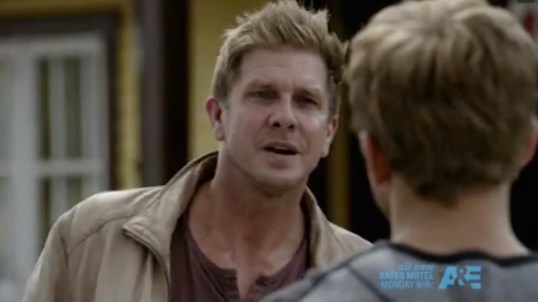
I’m talking, of course, about the revelation that Dylan’s (Max Thieriot) father also happens to be his uncle, Caleb (Kenny Johnson).  I have to admit that I wasn’t necessarily surprised by this.  In fact, when one thinks about the world that Bates Motel takes place in, there was really no way that Caleb wasn’t going to turn out to be Dylan’s father.  It explains why Norma wants nothing to do with her oldest son and Max Thieriot, Vera Farmiga, and Kenny Johnson all deserve a lot of credit for their performances tonight.

That said, I’m hoping that Caleb — much like Deputy Shelby and so many of the other sleazy men who have stopped off at the Motel — will not be around that much longer because, seriously, he is just so icky!  Bates Motel has a good track record for violently executing sexual predators and I expect that same fate is waiting for Caleb.

If nothing else, Bates Motel seems to be making a good case against men in general.  Is there a single man in Norma Bates’s life who isn’t a deviant of some sort?  Earlier in the episode — before we discovered that Caleb was Dylan’s father — Norma met a guy named George (Michael Vartan).  George seems like a really nice guy but, seeing as this is Bates Motel, I’m still expecting him to have somebody chained up in his basement.

Along with the arrival of Uncle Caleb and Norma meeting George, this week’s other major subplot was Emma (Olivia Cooke) attempting to throw a beachside memorial service for Bradley.  As I’ve stated in the past, Emma is my favorite character so I was happy to finally see her getting to do something.  The memorial service was neatly contrasted with the garden party that Norma attended.  And just as Norma met George, Norman got to know Cody (Paloma Kwiatkowski), who, now that Bradley is gone, is apparently going to be the latest obstacle keeping Emma and Norman from getting together.

Then again, that might be for the best.

Norman and Emma are an adorable couple but, ultimately, he is Norman Bates, isn’t he?

Random Thoughts and Observations

  • This week’s “Vera Farmiga is a great actress who deserves an Emmy moment”: The Grand Canyon joke.
  • The great White Pine Bay drug war is apparently still raging.  Fortunately, I love Max Thieriot or else the whole drug war would be kind of boring.
  • That said, Dylan was kinda lingering a bit while Norma was getting dressed.  Again — icky!
  • The name of the town newspaper is the White Pine Bay Current.  For some reason, that amused me.
  • I felt so bad for Norma when she saw she hadn’t been cast in the town musical.
  • Tonight’s episode was directed by Lodge Kerrigan, who has a great name.
  • One thing that was not mentioned in this week’s episode: The murder of Ms. Watson.  I really hope that the show isn’t going to abandon that mystery just because Sheriff Romero arrested the wrong guy last week.  I have to admit that I’m still holding out hope that Norman did not kill Ms. Watson.
  • It’s interesting to note that Bates Motel and The Following both air on Monday nights.  They’re both unapologetically sordid shows about psychotic murderers and sexual deviants.  However, I love Bates Motel and I absolutely hate what I’ve seen of The Following.  The difference is that The Following is a sincerely misogynistic show whereas Bates Motel seems to actually like its cast of misfits.
  • “You’re in the chorus?  Do you want to be in the chorus?”  Trust me, nobody wants to be in the chorus!
  • That said, I would rather be in the chorus than be on the tech crew.  Poor Norman.