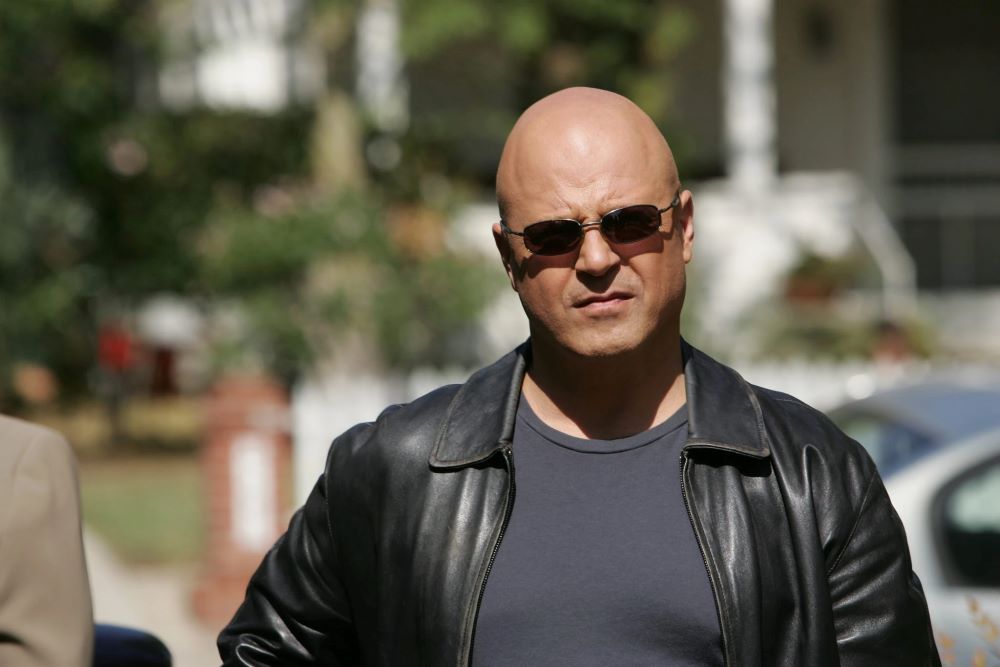
“Good cop and bad cop have left for the day. I’m a different kind of cop.” — Vic Mackey
From the moment he shot a fellow detective in the face in the pilot episode, Vic Mackey of The Shield redefined the television antihero, establishing himself as one of the most mesmerizing and morally complex villains ever to grace the small screen. Unlike the charming mobsters or conflicted drug dealers that populated the era’s prestige dramas, Mackey was a cop—a figure sworn to uphold the very laws he so casually and brutally shattered. This foundational transgression was the show’s masterstroke, forcing the audience into a complicity that would only deepen over seven seasons, as they rooted for a man who was, by any conventional measure, a monster. His character wasn’t just a villain; he was a challenge to the very concept of heroism in a “gray time,” as actor Michael Chiklis aptly described it.
The bedrock of Vic Mackey’s charisma lies in his unwavering, almost terrifying, conviction in his own moral code. He is the ultimate “ends justify the means” pragmatist, operating in a world he sees as too dangerous for the niceties of due process. Mackey views his brutality and corruption as necessary tools to fight a greater evil, a twisted sense of duty that makes him simultaneously repulsive and indispensable. As the show’s creator, Shawn Ryan, noted, the audience was shown a man who was “a protector” in a frightening world, and that primal allure is potent. He steals from drug dealers, beats suspects, and burns a man’s face on a stove, yet all of this is framed as a means to keep the streets of Farmington safe—a justification that, for many viewers, became tragically persuasive.
This duality is what makes him so compelling; Vic Mackey is not a one-dimensional sociopath but a man of fierce, contradictory loyalties. He is a devoted, if deeply flawed, father who steals to pay for his autistic children’s medical bills, and a protector of the vulnerable, like the prostitute Connie and the young victims of a child pornography ring. Walton Goggins, who played his partner Shane Vendrell, suggested that the character’s core was “compartmentalization.” This allowed Mackey to show genuine compassion in one breath and coldly blackmail a fellow officer for being gay in the next, using that knowledge as a tool for control. He is an “Even Evil Has Loved Ones” archetype, but pushed to such an extreme that his love for his family becomes yet another justification for his escalating sins. This constant oscillation between good and evil creates a magnetic dissonance, making him impossible to dismiss as a simple monster.
The show’s genius was in ensuring that this dissonance was a source of agonizing tension for the audience. Creator Shawn Ryan was genuinely surprised to find that viewers overwhelmingly rooted for Mackey against a “clean” Internal Affairs investigator, proving that Chiklis’s performance had woven an almost unbreakable spell. To watch The Shield is to engage in a constant, uncomfortable negotiation with one’s own morality. The show sparked intense debate about whether Vic deserved punishment or absolution, a testament to the complexity of the character. The show’s narrative, as Goggins put it, is a “morality tale” where “you reap what you’ve sown,” but the path to that reckoning is paved with so many justifications and compelling moments of “good” that the audience is left hoping against hope for his redemption, even as his sins pile up.
Ultimately, Vic Mackey’s mesmerizing villainy lies in his chillingly relatable humanity. He is not a cackling antagonist or a far-removed tyrant; he is a man who, when presented with a choice between his survival and his soul, consistently chooses the former with an unnerving lack of remorse. The show’s iconic final scene, where he is trapped in a bureaucratic purgatory at an ICE desk, is a perfect, ironic punishment for a man who lived for action and control. It’s a fate that feels both just and heartbreaking. Vic Mackey remains a towering figure in television history because he forces us to confront a disturbing question: if a man who commits such evil can still command our sympathy and allegiance, what does that say about us, and what are we willing to forgive?
Villain of the Day

