Horror Scenes That I Love: The Monster Meets The Blind Man In Bride of Frankenstein


Today’s horror scene that I love comes from 1935’s Bride of Frankenstein!

In this scene, directed by James Whale, the Monster (Boris Karloff) meets his first friend, a blind hermit played by O.P. Heggie.  It’s a scene that features Karloff at his best and it’s still touching, even if it is kind of hard to watch it without thinking about Peter Boyle accidentally burning down Gene Hackman’s shack in Young Frankenstein.

4 Shots From 4 Horror Films: October 21st


4 Shots From 4 Films is just what it says it is, 4 shots from 4 of our favorite films. As opposed to the reviews and recaps that we usually post, 4 Shots From 4 Films lets the visuals do the talking!

4 Shots From 4 Horror Films

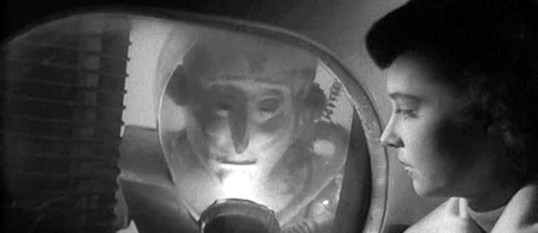
The Man From Planet X (1951, dir by Edgar G. Ulmer, DP: John L. Russell)

Black Sabbath (1963, dir by Mario Bava, DP: Ubaldo Terzano)

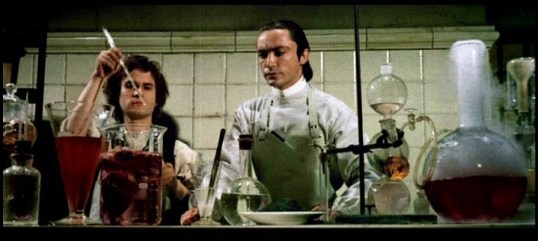
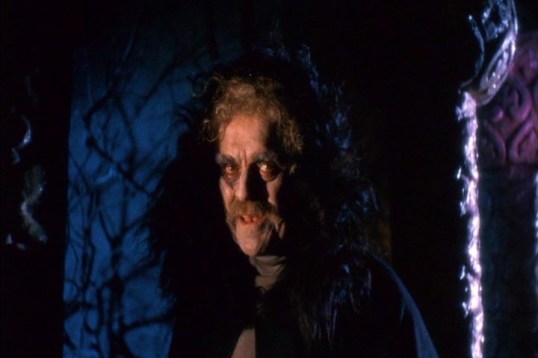
Flesh For Frankenstein (1973, dir by Paul Morrissey, DP: Luigi Kuveiller)

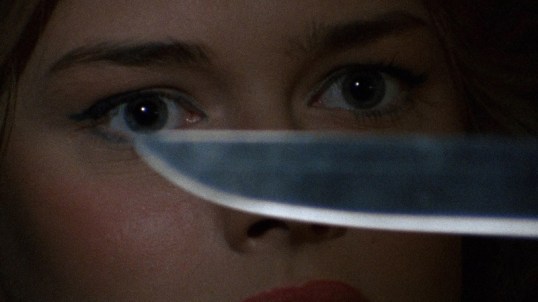
A Blade In The Dark (1983, dir by Lamberto Bava, DP: Gianlorenzo Battaglia)

October Positivity: The Order of Rights (dir by James Ball)


2021’s The Order of Rights tells the story of two teenagers.

Emma Stein (Emma Elle Roberts) is artistic and creative and we know this because she’s working the lights for the current high school theater production.  I have to say that I did a lot of high school theater and I always really disliked having to deal with the members of the backstage crew,  They were always worried about something.  Whenever I was waiting to make my entrance, I always knew some crew person was going to wander up and start talking to me about the lighting cues.  And I would just be like, “Just make sure I look good.”  Wow, that was mean of me.  I feel kind of bad now.

Anyway, back to the movie….

Ethan (Ben Davies) is a jock.  When know he’s a jock because he always wears his baseball cap backwards.  For Ethan and Emma it’s love at first sight.  Ethan is also a Christian and he feels really guilty after he and Emma give into temptation and have sex.  He feels even more guilty after Emma informs him that she’s pregnant.

Ethan talks to his parents (Matthew Welling and Julie Silcott).  They tell him that, before he was born, they found themselves in a similar situation.  They weren’t married at the time so Ethan’s mother decided to have an abortion.  They have always felt that they made a mistake.  When they learn that Emma’s mother is pressuring Emma to get an abortion, they hire a lawyer (Richard Cutting) to file a civil case against Emma, claiming that Emma is denying her baby its rights under the 14th amendment.

The case becomes national news.  We get a montage of real-life conservative podcasters and talk show hosts discussing the case.  The second half of the movie takes place almost exclusively in the court room and if you enjoy scenes of people saying, “Objection!” and a judge replying with “Overruled,” rest assured that this film is full of them.  Each side is given a chance to make its case.  That said, it’s hard not to notice that Ethan’s lawyer is extremely earnest while Emma’s lawyer is extremely smug.

Much like One Nation Under God, this is a film that was largely made to annoy liberals and, judging from the reviews left on Letterboxd, it certainly managed to do that.  It’s really not any more heavy-handed than most mainstream movies about abortion.  It’s just, in this case, the film comes at things from the pro-life point of view as opposed to the pro-choice point of view.  It’s a film that’s full of awkward scenes and there are quite a few performances that don’t work, especially during the film’s first half.  The actors playing Emma’s theater friends offer up some of the worst line readings that I’ve ever heard.  That said, Emma Elle Roberts probably gives a better performance than the film deserves and, regardless of what else you may want to say about the movie, it doesn’t turn Emma into a cardboard villain.  In the end, one feels very sorry for her as both sides are just using her pregnancy to push their own agenda.

This film was released in 2021.  A year later, Roe v Wade was overturned, making The Order of Rights feel very dated indeed.

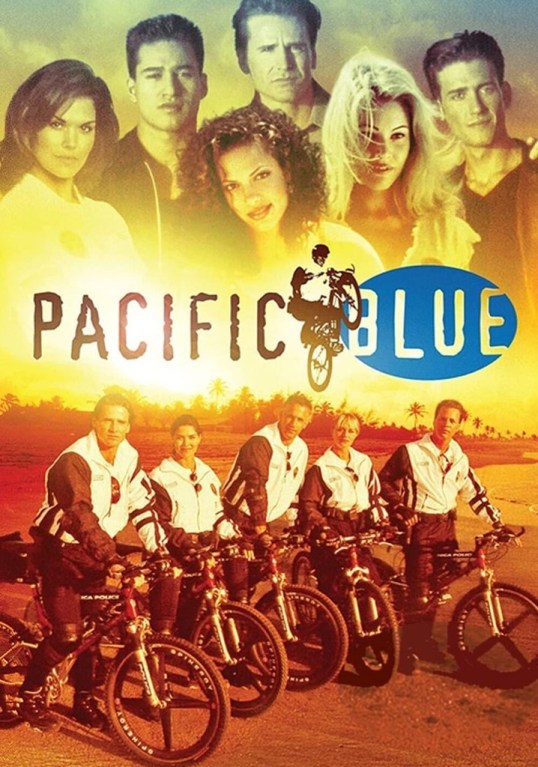
Late Night Retro Television Review: Pacific Blue 5.2 “The Naked Truth”


Welcome to Late Night Retro Television Reviews, a feature where we review some of our favorite and least favorite shows of the past! On Tuesdays, I will be reviewing Pacific Blue, a cop show that aired from 1996 to 2000 on the USA Network!  It’s currently streaming everywhere, though I’m watching it on Tubi.

This week, everyone’s going undercover!

Episode 5.2 “The Naked Truth”

(Dir by Sara Rose, originally aired on July 25th, 1999)

When a wealthy sorority girl is found dead on the beach with her head caved in, it falls to the bicycle patrol to solve the case.  Where are the Homicide detectives?  We know that the Santa Monica PD has a homicide division because Chris keeps talking about transferring there.  I know I bring this up every episode but it simply doesn’t make sense for the bike cops to be the ones investigating all of these crimes.  I mean, essentially, they’re traffic cops.  In the real world, they’re job would be to secure the crime scene and wait for the real detectives to show up.

Anyway, when Monica sees that the dead girl was wearing a sequined bikini, she immediately deduces that she was working as a stripper.  (I’m not sure that logic would hold hope in court but whatever.)  Why would a rich sorority girl be working at a strip club?  Monica and Chris go undercover to find out.  Chris is the new housemother at the sorority house.  Monica is a new pledge.  It turns out that working at the strip club started as a hazing ritual but now, all of the girls are being blackmailed (via email, we’re specifically told) into doing it.

Who is the blackmailer?  That mystery is solved when Chris catches the local handyman going through her underwear.  The handyman explains that he’s not a murderer, he’s just a pervert.  He also says that all of the girls have expensive underwear except for one who owns “K-mart panties.”  Because that girl is poor and a computer science major, Monica and Chris decide that she’s the blackmailer.  (Again, I’m not sure that logic would hope up in court but whatever.  I’m too tired to argue with this stupid show.)  I guess the lesson here is to spend money on quality panties.  Well, don’t worry, Pacific Blue!  I buy and wear only the best!

As for the murderer, it turns out to be a cowboy with a country accent who is always hanging out at the strip club and requesting a private dance.  It really wasn’t that much of a shock.

Pacific Blue always talks a big game about how women shouldn’t be objectified but then every episode opens with random bikini shots and this episode looked for every possible excuse to put Monica in a school girl outfit.  I’d have more respect for Pacific Blue if it was just honest about what it is was doing as opposed to having the characters constantly spouting a lot of cliches about empowerment that the show itself doesn’t seem to take all that seriously.

The good thing about this episode is that it ends with Chris telling TC that they need some time apart.  I agree!  You can do better, Chris!

Horror on TV: Thriller 1.1 “The Twisted Image”


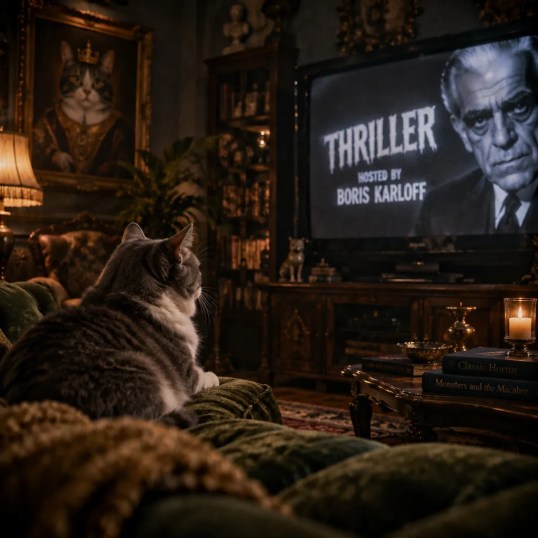
Tonight’s excursion into televised horror is the very first episode of Boris Karloff’s Thriller!

Thriller was an anthology series that lasted from 1960 to 1962.  Each episode presented a new story of horror and/or suspense.  What makes this series especially memorable is that each episode was introduced by none other than Boris Karloff!  I’ve seen a few episodes of Thriller (the entire series is on YouTube) and, to be honest, it’s kind of a hit-or-miss show.  But Karloff and that mischievous twinkle in his eye makes it all worth it!

This episode originally aired on September 13th, 1960.  It’s called The Twisted Image and stars Leslie Neilsen as a man being stalked by two mentally disturbed individuals.  This episode was well-directed by Arthur Hiller and, if it’s more of a suspense story than a horror story, it still has its creepy moments.

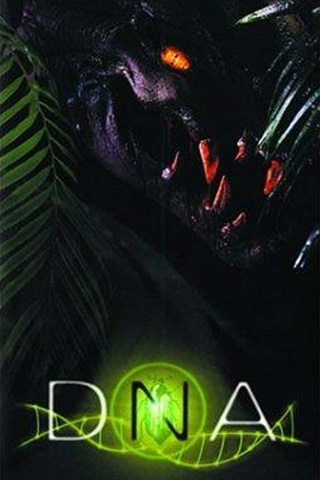
The TSL Horror Grindhouse: DNA (dir by William Messa)


In 1996’s DNA, Mark Dacascos plays Dr. Ash Matteley, an American doctor who works to bring healthcare to the residents of Borneo. When Ash’s former boss, Dr. Carl Wessinger (Jürgen Prochnow), approaches Ash and invites him to take part in a jungle expedition to track down some beetles whose genetic material can cure all known diseases, Ash agrees. However, once Wessinger, Ash, and their native helpers find the beetles in an ancient tomb, it turns out that Wessinger has plans of his own. He shoots Ash in the shoulder and then makes his escape.

Two years later, Ash has long hair and he’s taken to wearing a Hawaiian shirt, but he’s still dedicated to taking care of the poor of Borneo. When CIA agent Claire Sommers (Robin McKee) approaches him and asks him to help lead her through the jungle, Ash says that he’s not interested. But when Sommers reveals that she’s looking for Wessinger, Ash realizes that he has no choice but to help her. For some reason, they take a child named Matzu with them. Why you would recruit a child for a dangerous mission that involves going upriver in a canoe, I’m not sure. Then again, I’m also not sure why Claire would wear a dress while exploring the jungle either, other than the fact that the film needed an excuse to have Ash look away and then sneak a peek while Claire undresses and changes into something more jungle-appropriate.

It probably won’t surprise you to learn that Dr. Wessinger has not been spending his time trying to cure all known diseases. Instead, he’s been splicing genetic material to try to bring an ancient creature back to life. Now, before you say that this sounds like a Jurassic Park rip-off, allow me to point out that Wessinger is not bringing back a dinosaur. Instead, he’s bringing back a big alien creature, one that perhaps crashed on Earth during the prehistoric age. This is not Jurassic Park. At most, it’s Jurassic Alien.

Or maybe it’s just Alien. Once Ash and Claire and the little kid make it inside Dr. Wessinger’s headquarters, there are a lot of scenes of people hiding in offices and nervously walking down hallways and hoping that the monster won’t jump out of nowhere and kill them.

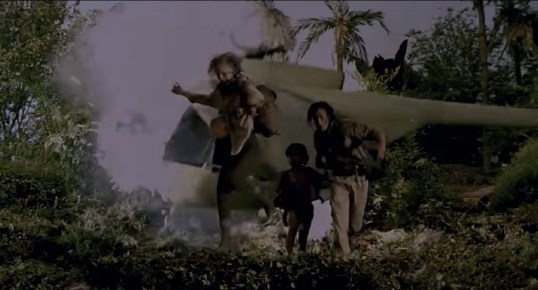
Then again, maybe we should just call this movie Predator because eventually, the action moves back into the jungle and Ash finds himself being stalked by the alien, who is apparently a very good hunter and who lives for the hunt. Ash goes from being a hippie doctor to being a full-blown action hero. There’s even a scene where he and Claire and the kid have to run away from a crashing helicopter. Of course, the helicopter was obviously a model. Still, it was hard not to imagine Mark Dacascos saying, “Get away from da choppah!”
My point is that a lot of different DNA was spliced together to create this movie. Take a little from Indiana Jones and a little from Apocalypse Now and then toss in Alien, Predator, and Jurassic Park and you’ve got DNA. Unfortunately, the film still isn’t as entertaining as it should have been. Mark Dacascos barely gets to show off his martial arts skills while the film can’t even give us one good Jürgen Prochnow freak-out. Even with all of the shameless plagiarism, the film still feels like it’s just going through the motions. Sadly, DNA is never as much fun as it should have been.
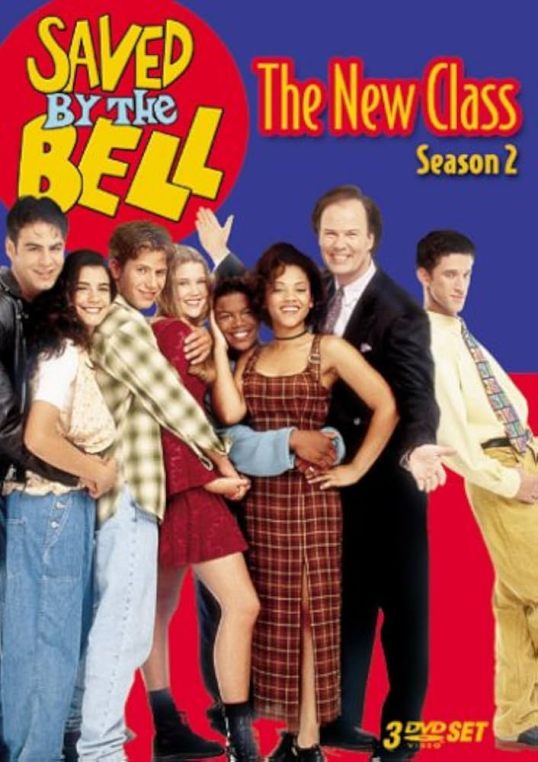
Retro Television Review: Saved By The Bell: The New Class 2.23 “The D Stands For Dropout”


Welcome to Retro Television Reviews, a feature where we review some of our favorite and least favorite shows of the past!  On Tuesdays, I will be reviewing Saved By The Bell: The New Class, which ran on NBC from 1993 to 2o00.  The show is currently on Prime.

This week, the Gang learns a lesson about not dropping out of school.

Episode 2.23 “The D Stands For Dropout”

(Dir by Don Barnhart, originally aired on December 10th, 1994)

Oh no!  Tommy wants to drop out of high school and work full time as an auto mechanic!

Actually …. that might be for the best.

Since the very first episode, Saved By The Bell: The New Class has portrayed Tommy as being an amiable but dumb guy who just happens to have a savant-like ability for fixing cars.  It’s been established, in several episodes, that there’s nothing Tommy can’t do with a car.  Since Tommy apparently know everything that there is to know about cars and cars are literally the only thing that he cares about and he always seems to be flunking every class that he takes, why shouldn’t Tommy drop out?  What’s he going to do in high school or college?  He’s already learned everything that there is no to know about how to fix a car and a good auto mechanic will always be in demand.  Plus, Tommy’s cute enough that, if he needs to, he can probably find a rich widow in Beverly Hills to pay his bills.

Drop out, Tommy!  Drop out!

Still, Mr. Belding and everyone else insists that Tommy is making a mistake when he drops out of school.  Belding tells Tommy’s father (Nick Angotti) that he needs to show some tough love so Tommy realizes how difficult it is in the real world.  Tommy is kicked out of his house and has to move in with Screech.  Tommy is no longer allowed to help his friends with their science project.  Tommy has one of those Saved By The Bell fantasy sequences where Screech refuses to hire him because he doesn’t have a high school diploma….

And really, this is when Tommy should say, “But I’m actually already getting paid good money to do the only thing that I care about and the only thing that I’m actually good at so who cares?”

Instead, Tommy reenrolls in high school and helps the Gang win the science fair by building a remote control car.  The competition must have been really weak that year.

Poor Tommy.  When he’s an adult, he’s going to look and realize he should have just dropped out when he had the chance.

The Films of Dario Argento: Sleepless


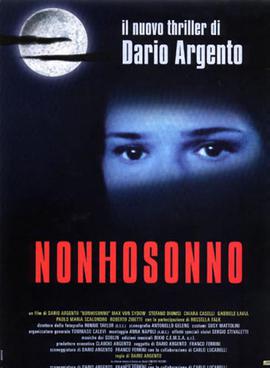
In Italy, a young boy named Giacomo Gallo can only hide under a bed as he witnesses his mother being stabbed to death by an English horn. He doesn’t see the murderer, who is believed to be a serial killer known as The Dwarf Killer due to his short stature. All he can remember for sure is the blood and a strange hissing sound. Detective Ulisse Moretti (Max von Sydow) promises Giacomo that he will capture the Dwarf Killer.

Twenty years later, Moretti is retired. He never caught the Dwarf Killer, whose killing spree ended just as abruptly as it began. However, when a sex worker named Angela (Barbara Lerici) is brutally murdered on a train, there is evidence that indicates the Dwarf Killer has returned. Moretti comes out of retirement, determined to close the one case that he never solved. Unfortunately, it’s going to be difficult because Moretti’s memory is failing. As he puts it at one point, there are times when he can’t even remember his late wife’s face. Moretti has forgotten much about the case, though as he investigates, it all starts to come back to him. Moretti finds himself working with the now grown-up Giacomo (Stefano Dionisi), who hopes to finally capture the man who killed his mother. And while Moretti may be struggling to remember the past and Giacomo still isn’t quite sure what he saw while hiding under the bed, it soon becomes clear that the killer remembers both of them.

After the disappointingly mean-spirited Phantom of the Opera, Sleepless was a return to form for Dario Argento. The film is a giallo and, in typical Argento fashion, the mystery involves not just the physical clues but also how people interpret and edit their own memories. The hiss that Giacomo heard turns out to be not what he originally believed. The killer also turns out to be something even more disturbing than what the police originally assumed. At the heart of the mystery is a rather morbid nursery verse, the sort of thing that can be either innocent or dangerous depending on how one interprets the words. Sleepless is a throwback to the type of films that made Mario Bava famous and also the type of films with which Argento started his directorial career. Max von Sydow’s Moretti is not just a detective. He’s also a symbol of an aging genre, a reminder of the clever mysteries that shed blood with style without ever losing their essential humanity.

Argento has often been criticized for not getting particularly complex performances from his actors. I don’t think that criticism is always fair. One need only see David Hemmings and Daria Nicolodi in Deep Red or Jessica Harper in Suspiria to see what Argento can do with the right cast. In Sleepless, Max von Sydow gives a strong performance as Moretti. In fact, it’s probably one of the best performances to have ever appeared in an Argento film. He plays Moretti as being a kindly man on a mission, someone who has seen the worst that the world has to offer but who hasn’t given up his soul. Von Sydow gives us someone who we truly care about, which makes the film’s set pieces (which are bloody even by Argento standards) all the more effective.

It’s become a bit of a cliché to claim that Argento went into a decline after Tenebrae. While it’s true that Argento’s post-Opera films have been uneven, Sleepless shows what he was still capable of producing.

The (Reviewed) Films of Dario Argento:

  1. The Bird With The Crystal Plumage
  2. Cat O’Nine Tales
  3. Four Flies on Grey Velvet
  4. Deep Red
  5. Suspiria
  6. Inferno
  7. Tenebrae
  8. Phenomena
  9. Opera
  10. Two Evil Eyes
  11. Trauma
  12. The Stendhal Syndrome
  13. The Phantom of the Opera
  14. Dracula 3D (Reviewed by Brad Crain)

Horror Film Review: One Body Too Many (dir by Frank MacDonald)


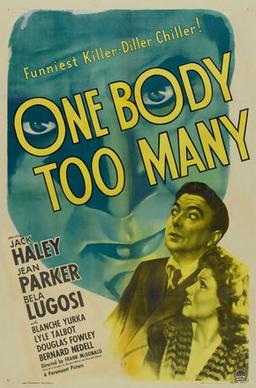
In 1944’s One Body Too Many, Jack Haley stars as Albert L. Tuttle. Tuttle is an insurance agent. He’s a rather mild-mannered one. In fact, people often have a hard time remembering his name. He’s called “Mr. Turtle.” He’s called “Mr. Title.” Patiently, he explains over and over again that his name is Tuttle. Looking to secure his job, Tuttle hopes to sell $200,000 in life insurance to an eccentric millionaire named Cyrus J. Rutherford.

What Tuttle doesn’t know is that Cyrus J. Rutherford has recently died. His entire greedy family and all of his servants have gathered at the Rutherford Mansion so that they can hear the reading of the will. In his will, Rutherford lays out all the reasons why he didn’t like his family or anyone who worked for him. He accuses the butler, Merkil (Bela Lugosi), of padding his expense account. He accuses his lawyer (Bernard Nedell) of always trying to take advantage of him. Rutherford writes that his last request is that his body be placed in a glass-domed vault so that the stars can forever shine down upon his face. He says that anyone who leaves the house before the glass vault is built will lose their inheritance. If the body is buried instead of in the vault, then Rutherford’s largest beneficiaries will instead become his smallest beneficiaries and vice versa. It’s a bit of an odd will, to be honest. I’m not particularly sure that it would stand up in court today, but in 1944, eccentric millionaires could pretty much do whatever they wanted. Myself, I have to applaud Rutherford for messing with everyone even after death. That takes determination.

When Tuttle shows up, the family mistakes him for a detective that has been sent to make sure that Rutherford’s body isn’t stolen before the glass dome is constructed. Tuttle, not picking up on how weird this all is, assumes that the family is just really excited about insurance. When Tuttle finds himself locked in with the dead body, he immediately demands to leave. However, since the real detective has failed to show up, Rutherford’s niece, Carol (Jean Parker), asks him to stay and guard the body. A good Tuttle appears on one of Tuttle’s shoulders while a bad Tuttle appears on the other. After listening to the debate, Tuttle decides to stay if only because Carol is attractive.

It’s going to be a long night, though. Not only does the body disappear, but it appears that there is a murderer in the house!

One Body Too Many is an amiable comedy, one that features a very 1940s mix of absurd dialogue and slapstick humor. Though Jack Haley, who is best-remembered for playing the Cowardly Lion in The Wizard of Oz, is the lead and a very likable one at that, the movie is pretty much stolen by Bela Lugosi. Lugosi’s later films tend to be a mixed bag, but One Body Too Many allows Lugosi to give a good and genuinely funny performance as a butler who is far more clever than anyone realizes. Lugosi’s snarky reactions make the film, and they’re a nice reminder that Lugosi was a far more talented actor than he’s often given credit for.