Review: Extraction 2 (dir. by Sam Hargrave)


“I will not stop.” — Tyler Rake

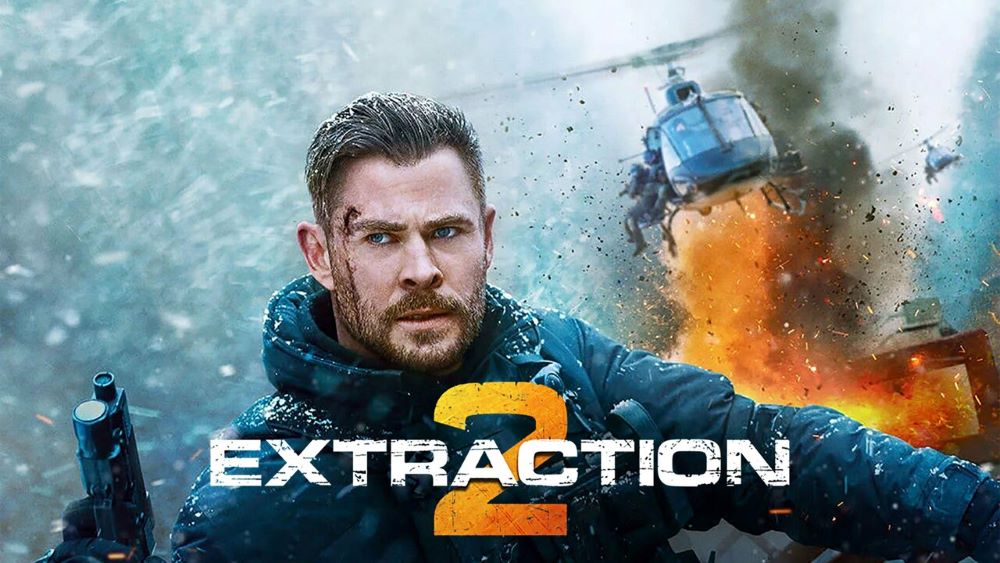
Extraction 2 drops you right into the thick of things, cranking the intensity way past the first film. To quickly recap, the original Extraction introduced Tyler Rake, a gritty mercenary with a troubled past played with undeniable grit by Chris Harmsworth. The story was simple but effective—a high-stakes rescue of a kidnapped boy in Dhaka, Bangladesh, filled with edge-of-your-seat action and those now-iconic, almost balletic long-take fight sequences. It was raw, realistic, and emotionally grounded. Harmsworth’s portrayal anchored the chaos in human vulnerability, helping the film stand out from the typical action fare.

Now, the sequel’s aim is clear—it wants to go bigger, bloodier, and more relentless, and it pulls that off in many ways. The standout here is definitely the action choreography. Sam Hargrave, the director, really flexes his muscle with several jaw-dropping sequences, especially a breathtaking 21-minute continuous take that makes you feel like you’re running alongside Rake, dodging bullets and throwing punches in real time. It’s an impressive technical feat but, more importantly, it’s incredibly immersive. The fights have that gritty realism where each blow counts, and the camera work lets you see every tense moment clearly instead of hiding behind shaky cuts.

Chris Hemsworth, once again, owns the role. This time around, you can see a bit more of the toll the mercenary life has taken on Rake. Hemsworth brings a subtle layer of weariness mixed with fierce determination. His physicality is on full display—he’s convincing in those brutal hand-to-hand combats without ever feeling like a stuntman stand-in. He does it all, and it’s clear he’s not just punching air; this is a man fighting for something beyond just survival. The emotional beats land a bit more naturally this time around, helped by Hemsworth’s grounded performance, which balances the nonstop action with moments of quiet reflection.

Visually, the film is a significant step up. The settings shift from humid, congested streets to icy, oppressive Georgia, and the cinematography makes the most of this change. The chilly, bleak palette fits perfectly with the film’s mood—harsh, unforgiving, and tense. The camera work is bold yet measured; it takes its time to show us the fights fully, letting the choreography breathe without rushing or confusing the viewer. This clarity turns the action scenes into mini-masterpieces, where every movement, every shot, and every punch feels deliberate and impactful.

That said, not everything clicks perfectly. The plot plays it safe with familiar revenge and rescue-mission beats, and the supporting characters don’t get much development beyond their utility to the story. Golshifteh Farahani steals a few scenes as Nik, adding fresh energy and complexity as a tough and capable ally, but others around her mainly exist to get the body count up. There’s a formulaic feel to the storyline—with plenty of high-stakes tension but little in the way of surprise. If you go in looking for deep storytelling or rich character arcs, you might be left wanting.

The film truly embraces the “bigger is better” mantra, and in many ways, it pays off spectacularly with larger, more intricate action sequences and expanded scale. This escalation brings a fuller, more thrilling spectacle that keeps you hooked from start to finish. However, this increase in scope leads to a trade-off: the narrative feels more convoluted and sometimes weighed down by its own ambition. The plot introduces multiple new characters and intersecting agendas, which lengthens the storyline unnecessarily and complicates what could have been a more straightforward mission. This convolution makes the story not only more formulaic but also harder to follow, detracting from the lean storytelling charm that made the first movie so effective.

Tone-wise, the movie trades some of the first film’s grounded grit for a flashier, more stylized look and feel. Some sequences stretch believability—Rake’s near-indestructibility and certain stunt setups can pull you out of the moment. Still, if you’re willing to accept that and enjoy the ride, the movie delivers on adrenaline and spectacle in full force.

One of the most refreshing things about Extraction 2 is how well it balances raw, physical combat with moments of emotional depth. Between the intense fight scenes, there are small windows into who Tyler Rake is and what drives him. These touches give the film a heartbeat beneath all the explosions and punches. Rake is no cookie-cutter action hero; he’s a broken man clawing his way toward redemption, and that gives the film a surprising amount of emotional weight for a movie mainly about violence and chaos.

Ultimately, Extraction 2 isn’t reinventing the wheel, but it doesn’t need to. It knows its audience and delivers exactly what it promises: high-octane, impeccably executed action sequences tied together by a thread of humanity. Hemsworth’s portrayal elevates it beyond just a flashy romp, lending it a gritty soul. The villains feel suitably menacing, and the stakes are convincingly high, which keeps the tension ticking throughout.

If you loved the first Extraction for its mix of brutal realism and emotional punch, the sequel will feel familiar but amplified—more intense, more expansive, and a bit louder. If you’re new to the series, Extraction 2 still stands solid on its own as a showcase of what well-choreographed action cinema looks like today—raw, precise, and emotionally resonant with just enough story to keep you invested without dragging you down.

In short, Extraction 2 is a wild, thrilling ride with a surprisingly human heart beating beneath all the chaos. It’s a film that knows how to entertain, showcasing Chris Harmsworth at his physical and emotional best and proving that action movies can still push creative boundaries while keeping viewers hooked. The movie brings bigger and bolder set pieces that truly live up to the “bigger is better” slogan, but this comes at the cost of making the plot more convoluted and overly complicated than it needed to be. While the intricate story layers may strain some viewers, the explosive action and solid performances make it a must-watch for any fan of visceral, edge-of-your-seat thrillers. If you want a no-nonsense blockbuster with a pulse, Extraction 2 delivers in spades.

Horror Review: A House of Dynamite (dir. by Kathryn Bigelow)


“So it’s a fucking coin toss? That’s what 50 billion dollars buys us?” — Secretary of Defense Reid Baker

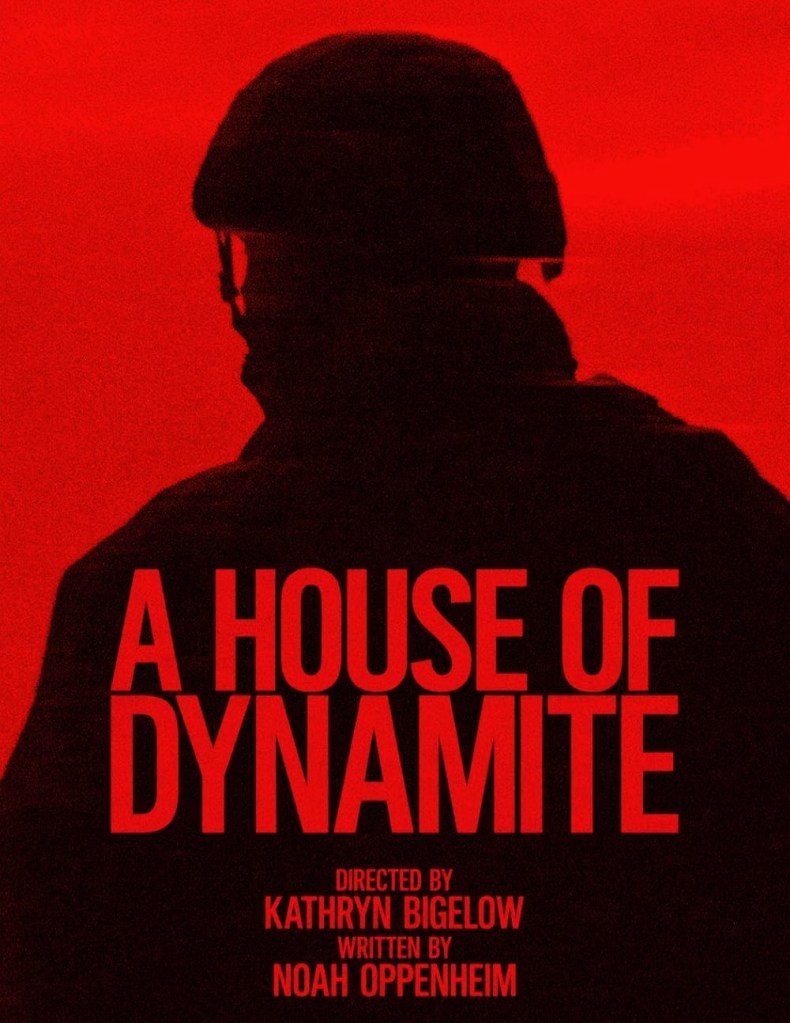
The end of the Cold War was supposed to close a chapter of fear. With the superpowers stepping back from the brink, the world briefly believed it had entered an era of stability. Yet that promise never held. The weapons remained, the rivalries adapted, and the global machinery of deterrence continued to hum beneath the surface. Kathryn Bigelow’s A House of Dynamite faces this reality head-on, transforming the mechanics of modern nuclear defense into something unnervingly human. On the surface, it plays as a high-tension political technothriller, but beneath that precision lies a deeply existential horror film—one built not on shadows or monsters, but on daylight, competence, and the narrow margins of human fallibility.

The premise is piercingly simple. An unidentified missile is detected over the Pacific. Analysts assume it’s a test or a glitch—another false alarm in a world overflowing with them. But within minutes, as conflicting data streams converge, what seemed routine begins to look real. The film unfolds in real time over twenty excruciating minutes, charting the reactions of those charged with interpreting and responding to the potential catastrophe. Bigelow divides the film into three interwoven perspectives: the White House Situation Room, the missile intercept base at Fort Greely, and the President’s mobile command aboard Marine One. The structure allows tension to grow from every direction at once, each perspective magnifying the other until the screen feels ready to collapse under its own pressure.

Capt. Olivia Walker (Rebecca Ferguson), commanding officer of the Situation Room, anchors the story with calm professionalism that gradually frays into disbelief. Ferguson’s performance is clear-eyed and tightly modulated—precise, disciplined, and quietly devastating. She stands as the rational center inside chaos, her composure the last gesture of control in a world that no longer follows reason.

Over her is Adm. Mark Miller (Jason Clarke), Director of the Situation Room, who represents the institutional embodiment of confidence. Clarke plays him with methodical restraint, a man who trusts procedure long after it stops earning trust. Miller’s authority is both comforting and horrifying: a portrait of leadership built on ritual rather than certainty.

At Fort Greely, Anthony Ramos brings an intimate immediacy as the officer charged with the missile intercept. His scenes hum with kinetic dread—the physical execution of decisions made thousands of miles away. Through him, the film captures the most primal kind of fear: acting when hesitation could mean extinction, knowing that success and failure are separated only by chance.

The President, portrayed by Idris Elba, spends much of the crisis in motion—first within the cocoon of the presidential limousine, and later, aboard Marine One as it carves through blinding daylight. Elba gives a performance of subtle, steady erosion. At first, he embodies unshakeable calm, a figure of poise and authority; but as the situation deepens, his steadiness wanes. Words become shorter, pauses longer. Every decision carries consequences too vast for resolution. It is a measured, understated portrait of power giving way to human uncertainty.

Bigelow’s direction is stripped of ornament and focused on precision. Barry Ackroyd’s cinematography heightens the claustrophobia of command centers—the sterile light, the reflective glass, the sense that every surface observes its occupants—while his exterior scenes pierce with harsh brightness, suggesting that no sanctuary exists under full exposure. Kirk Baxter’s editing maintains an unrelenting pulse, cutting with mathematical precision while preserving the eerie stillness of the moments where no one dares to speak.

​A House of Dynamite also shows how even with the most competent experts—military, intelligence, and political—working to manage an escalating crisis, there is no path to victory. The professionals at every level stop seeking to prevent the worst and instead focus on saving what they can when the worst becomes inevitable. The film’s scariest revelation is not the potential for destruction, but the paralysis that intelligence creates. If the brightest, most disciplined people in the world cannot find an answer, what happens when power falls into the hands of those less prepared or less rational? In its quiet way, the film poses that question that we see more and more each day on the news and on social media and we are left with silence and realization of the horror of it all.

Despite its precision, the film isn’t without flaws. Bigelow’s triptych structure—cutting between the three perspectives—works brilliantly to escalate tension, yet the repetition of similar beats slightly blunts the impact. Each segment revisits the same crisis rhythms—a data discrepancy, an argument over authority, another uncertain update—sometimes slowing the natural momentum. While the repetition underlines the futility of bureaucratic systems in chaos, the transitions don’t flow as fluidly as the rest of the film’s airtight craftsmanship. The result is a film that is gripping overall, occasionally uneven in rhythm, but never less than absorbing.

When the final minutes arrive, Bigelow declines to deliver resolution. No mushroom clouds, no catharsis. The President sits in Marine One, head down with the weight of the world on his shoulders as he contemplates his options in the Black Book (options in how to retaliate) and knowing that he has no good choices in front of him. The world remains suspended between survival and oblivion, and the silence that follows feels heavier than sound. The ending resists closure because endings, in the nuclear age, are an illusion—the fear continues no matter what happens next.

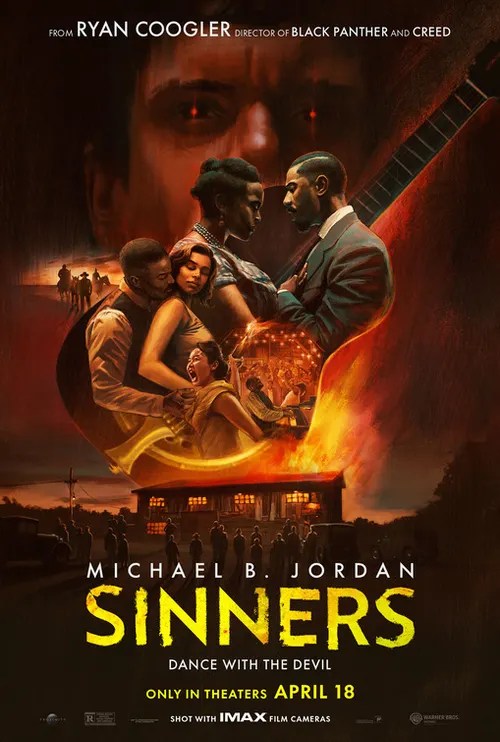
In a year crowded with strong horror releases—SinnersWeapons, The Long Walk and Frankenstein among them—A House of Dynamite stands apart. Dressed in the crisp realism of a technothriller, it’s a horror film defined by procedure, light, and silence. Bigelow builds terror from competence, from the steady voices and confident gestures of people trying to manage the unmanageable. This is not the chaos of fiction but the dread of reality, a reminder that the systems meant to preserve and protect might one day fail to deliver on its promise. For all its precision and restraint, A House of Dynamite shakes in the memory long after it ends—the year’s most quietly terrifying film.

Nuclear Close Calls: The situation and question brought up in the film has basis in history as there has been many instances of close calls and false alarms. The film itself doesn’t confirm that the missile detonated, but the implications in past confirmed events just shows how close the world has been to a completed catastrophe.

Here Are The 2024 AARP Movies For Grown-Ups Nominations


The awards precursor season is getting started …. kinda.

The AARP Movies For Grown-Ups Nominations were announced last week, on the 20th.  I’m only now getting around to sharing them because I’m not a member of AARP and therefore, I had no idea these nominations had even been announced.  It seems a bit earlier than usual, for them.  Then again, you know how retired folks are about getting up early.

How influential are the AARP nominations?  Not very.  These nominations were not made being film critics or people who work in the industry.  They were made by the editors of AARP’s magazine.  That said, it’s always good to get mentioned somewhere.  If nothing else, this list might indicate which films are resonating with the over-5o set.

Or maybe I just like long lists.

Anyway, here are the nominations!  The winners will be announced on January 11th, during the Denny’s breakfast special.

Best Picture/Best Movie for Grownups
A Complete Unknown
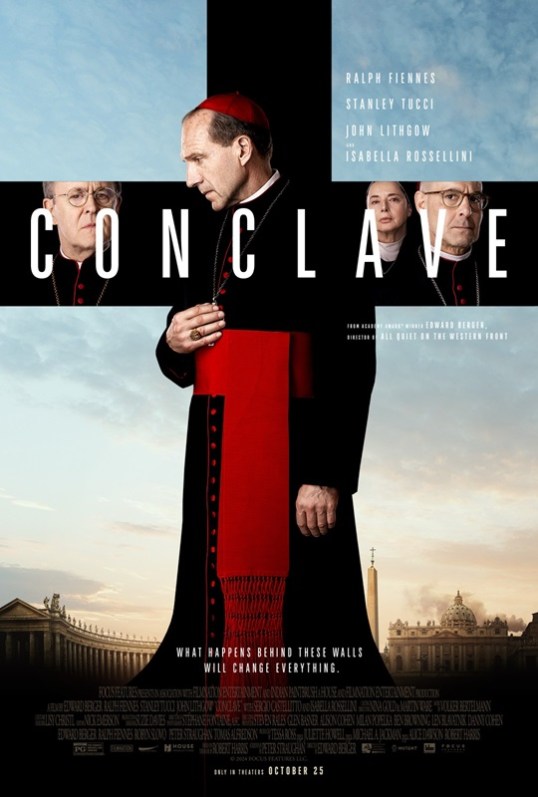
Conclave
Emilia Pérez
Gladiator II
September 5

Best Actress
Pamela Anderson (The Last Showgirl)
Marianne Jean-Baptiste (Hard Truths)
Nicole Kidman (Babygirl)
Demi Moore (The Substance)
June Squibb (Thelma)

Best Actor
Adrien Brody (The Brutalist)
Daniel Craig (Queer)
Colman Domingo (Sing Sing)
Ralph Fiennes (Conclave)
Jude Law (The Order)

Best Supporting Actress
Joan Chen (Didi)
Aunjanue Ellis-Taylor (Nickel Boys)
Lesley Manville (Queer)
Connie Nielsen (Gladiator II)
Isabella Rossellini (Conclave)

Best Supporting Actor
Clarence Maclin (Sing Sing)
Guy Pearce (The Brutalist)
Peter Sarsgaard (September 5)
Stanley Tucci (Conclave)
Denzel Washington (Gladiator II)

Best Director
Pedro Almodóvar (The Room Next Door)
Jacques Audiard (Emilia Pérez)
Edward Berger (Conclave)
James Mangold (A Complete Unknown)
Ridley Scott (Gladiator II)

Best Screenwriter
Jacques Audiard, Thomas Bidegain, Nicolas Livecchi (Emilia Pérez)
Jay Cocks and James Mangold (A Complete Unknown)
Winnie Holzman (Wicked)
Peter Straughan (Conclave)
Denis Villeneuve and Jon Spaihts (Dune: Part Two)

Best Ensemble
A Complete Unknown
Beetlejuice Beetlejuice
His Three Daughters
September 5
Sing Sing

Best Actress (TV)
Jennifer Aniston (The Morning Show)
Jodie Foster (True Detective: Night Country)
Jean Smart (Hacks)
Meryl Streep (Only Murders in the Building)
Sofia Vergara (Griselda)

Best Actor (TV)
Billy Crudup (The Morning Show)
Idris Elba (Hijack)
Jon Hamm (Fargo)
Gary Oldman (Slow Horses)
Hiroyuki Sanada (Shōgun)

Best TV Series or Limited Series
The Crown
Hacks
Palm Royale
Shōgun
Slow Horses

Best Intergenerational Film
Didi
Here
His Three Daughters
The Piano Lesson
Thelma

Best Time Capsule
A Complete Unknown
The Brutalist
Here
Maria
September 5

Best Documentary
I Am: Celine Dion
Luther: Never Too Much
Piece by Piece
Super/Man: The Christopher Reeve Story
Will & Harper

Shadow joins the fray in the Sonic the Hedgehog 3 Trailer!


The trailer for Sonic the Hedgehog 3 dropped today, and it has Sonic (Ben Schwartz), Tails(Colleen O’Shaughnessey) & Knuckles (Idris Elba) squaring off against Shadow, voiced by Keanu Reeves. Shadow seems to be too much, even for the trio. It looks like we might get a team up with Dr. Robotnik (Jim Carrey). Of course, both Tom (James Marsden) and Maddie (Tika Sumpter) are still on hand to cheer on our heroes with moral support.

Sonic the Hedgehog 3 will be in cinemas this December.

Film Review: Luther: The Fallen Sun (dir by Jamie Payne)


A serial killer (Andy Serkis) is terrorizing London.

With the help of a worldwide network of hackers, the Killer is able to spy on random people and catch them doing and saying things online that they wouldn’t want their friends, families, and coworkers to find out about.  The Killer than blackmails his targets, forcing them into committing bigger and bigger crimes for him.  The Killer pushes his victims to their limits and then he arranges for them to die.  Sometimes, he kills them.  Sometimes, he forced them to kill themselves.  The Killer is a smirking sadist, a force of chaos who is empowered by the isolation and loneliness of the modern world.

The Killer’s latest victim is a young cleaner who disappears on a rainy night.  Assigned to the case is DCI John Luther (Idris Elba), a detective who is famous for both his brilliance and his determination.  Luther promises the missing cleaner’s mother (Hattie Morahan, giving a poignant performance in a small but important role) that he will find her son.  The Killer is frustrated to discover that Luther doesn’t spend much time online and, hence, cannot be blackmailed.  However, the Killer’s associates discover that Luther has frequently broken the law in order to catch criminals.  When this information is released to the press, Luther is not only kicked off the force but he also ends up in prison.  All of his fellow prisoners want to kill him.  The police view him as being a disgrace.  Luther has very few allies left in the world but he’s determined to keep the promise that he made to the cleaner’s mother.  When the Killer himself starts to send taunting messages to Luther, Luther decides that his only option is escape from prison and bring the Killer to justice himself.

Luther: The Fallen Sun is a follow-up to the BBC television series, which followed Luther as he worked for London’s Metropolitan Police Service and as he struggled with his own personal demons.  The film begins by bringing Luther’s career as a police detective to a close but it also ends with the suggestion of new career path for John Luther.  In between, we watch as Luther chases the Killer through London and eventually across Europe.  Sometimes opposing  him and sometimes helping him is his former boss, Martin Schenk (Dermot Crowley), and his replacement, DCI Odette Raine (Cynthia Erivo).

Luther: The Fallen Sun is at its best when the action is centered on Luther searching for the Killer in London.  A confrontation between the two in Piccadilly Circus is especially well-done and it leads to genuinely exciting chase through the London Underground.  Idris Elba displays both his fierce intelligence and his exciting physicality, while also doing a good job of suggesting that Luther is always just a frustration or two away from mentally snapping.  Elba is entertaining to watch, a perfect hero for these chaotic times.  Andy Serkis, meanwhile, plays the Killer without a hint of subtlety but that approach works for the character.  The Killer is someone who is evil because he enjoys it.  And, throughout the majority of this film, the Killer really does seem to be having the time of his life.

The film gets off to a good start, with plenty of action and atmosphere.  (This is one of those films where nothing happens unless it’s also raining.)  The aerial shots of London capture a certain neon grandeur that suggests a city that is in the process of transitioning into a brightly lit dystopia.  Serkis’s crimes are genuinely disturbing, with a scene involving a burning building feeling nightmarish in its intensity.  Unfortunately, the film loses its way a bit when the action moves away from England and into Europe.  The more that is revealed about Serkis’s plans, the less sense they make and the more the viewer is forced to suspend their disbelief.  In the end, the film’s third act feels as if it belongs in a totally different movie from everything that came before it.

That said, the mystery is still an intriguing one and Luther: The Fallen Sun actually does have something relevant to say about the illusion of privacy in our extremely online world.  One of the better scenes features hundreds of hackers, all sitting at their cubicles and watching as random people across the world go about their lives.  (“Potential target,” one hacker types.)  Andy Serkis is appropriately creepy and Idris Elba shows off the tough but sensitive screen presence that made him a star.  Luther: The Fallen Sun serves as both an effective continuation of the show and, for the viewers who may be meeting him for the first time, an intriguing introduction to John Luther.

Lisa Marie’s Way Too Early Oscar Predictions for May


It’s that time of the month again!

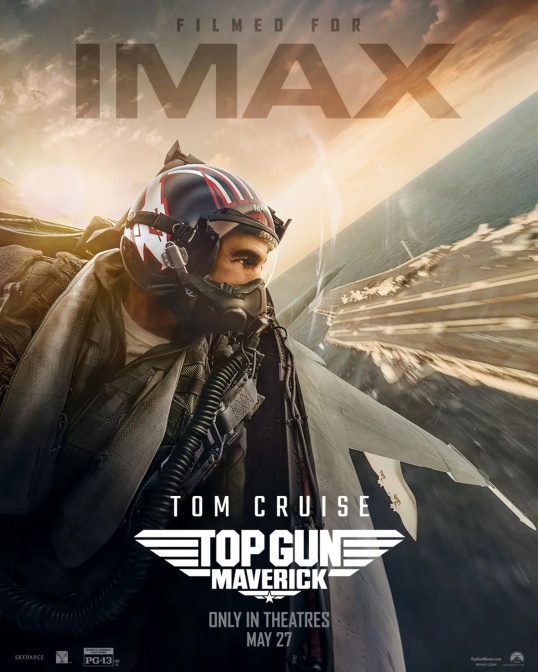
It’s time for me to once again try to predict what will be nominated for the Oscars.  If you had to told me, at this time last year, that Top Gun: Maverick would emerge as an Oscar contender, I would have said that you were crazy but here we are.  Admittedly, it is early in the year and I think there’s always going to be some ambivalence towards honoring Tom Cruise.  (You just know that someone is having nightmares about him thanking David Miscavige in his Oscar speech.)  But with the reviews and the box office success that Top Gun: Maverick is getting, it would be a mistake to dismiss it.  After all, Mad Max: Fury Road came out around this same time of year in 2015.  As well, one can be sure that A24 will be giving Everything Everywhere All At Once a heavy awards push as well.  This could very well be the year of the genre blockbuster as far as the Oscars are concerned.

As for Cannes, it’s come and gone.  George Miller’s Three Thousand Years of Longing got some good reviews, even if those reviews didn’t translate into awards at the end of the Festival.  David Cronenberg’s Crimes of the Future sounds like it’s going to be too divisive for the Academy and really, the thought of Cronenberg winning an Oscar has always been a bit implausible, regardless of how much he may or may not deserve one.  As for James Gray’s Armageddon Time, Gray has always been more popular with critics than with audiences or Academy voters.  If Gray couldn’t break through with something like The Lost City of Z, I doubt he’s going to do so with an autobiographical film about his life in private school.  Steven Spielberg already has the autobiography slot wrapped up with The Fabelmans. 

Of course, there’s still many films left to see and many more film festivals to be held.  Let us not forget that Martin Scorsese is bringing us Killers of the Flower Moon.  Personally, I’m looking forward to Damien Chazelle’s Babylon.  In short, nothing has been settled yet.  For all the acclaim that Top Gun and Everything are getting, who knows how the race is going to look at the start of the Fall season?

Anyway, here are my predictions for May.  Be sure to check out my predictions for February and March and April as well!

Best Picture

Amsterdam

Babylon

Everything Everywhere All at Once

The Fabelmans

I Want To Dance With Somebody

Killers of the Flower Moon

Next Goal Wins

Rustin

She Said

Top Gun: Maverick

Best Director

Damien Chazelle for Babylon

Kasi Lemmons for I Want To Dance With Somebody

Martin Scorsese for Killers of the Flower Moon

Steven Spielberg for The Fabelmans

Taika Waititi for Next Goal Wins

Best Actor

Tom Cruise in Top Gun: Maverick

Colman Domingo in Rustin

Idris Elba in Three Thousand Years of Longing

Brendan Fraser in The Whale

Brad Pitt in Babylon

Best Actress

Naomi Ackie in I Want To Dance With Somebody

Cate Blanchett in Tar

Margot Robie in Babylon

Tilda Swinton in Three Thousand Years of Longing

Michelle Yeoh in Everything Everywhere All At Once

Best Supporting Actor

John Boyega in The Woman King

Leonardo DiCaprio in Flowers of the Killer Moon

Tom Hanks in Elvis

David Lynch in The Fabelmans

Tobey Maguire in Babylon

Best Supporting Actress

Jessie Buckley in Women Talking

Tantoo Cardinal in Flowers of the Killer Moon

Li Jun Li in Babylon

Samantha Morton in She Said

Michelle Williams in The Fabelmans

Black Panther Dominates The Black Reel Nominations


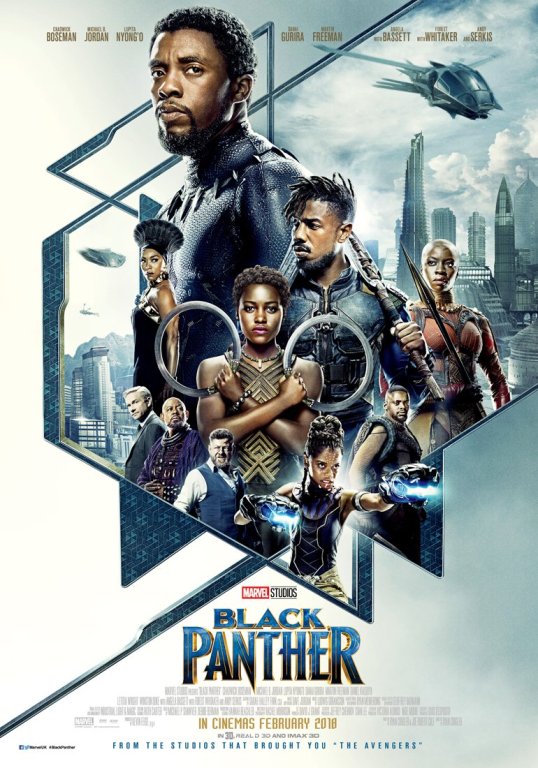
The Black Reel Nominations were announced today, with Black Panther picking up a record 17 nominations!  Coming in second was If Beale Street Could Talk, which received 14 nominations while Spike Lee’s BlackKklansman received 11 nominations.

Here’s a full list of the nominees:

Outstanding Motion Picture
Black Panther
BlacKkKlansman
Green Book
If Beale Street Could Talk
Widows

Outstanding Actor
Chadwick Boseman | Black Panther
Stephan James | If Beale Street Could Talk
Michael B. Jordan | Creed II
LaKeith Stanfield | ​Sorry to Bother You
John David Washington | BlacKkKlansman

Outstanding Actress
Viola Davis | Widows
Regina Hall | Support the Girls
Kiki Layne | If Beale Street Could Talk
Zoe Renee | Jinn
Amandla Stenberg | ​The Hate U Give

Outstanding Director
Ryan Coogler | Black Panther
Barry Jenkins | If Beale Street Could Talk
Spike Lee | BlacKkKlansman
Steve McQueen | Widows
Boots Riley | ​Sorry to Bother You

Outstanding Supporting Actor
Mahershala Ali | Green Book
Brian Tyree Henry | If Beale Street Could Talk
Russell Hornsby | The Hate U Give
Michael B. Jordan | Black Panther
Daniel Kaluuya | Widows

Outstanding Supporting Actress
Danai Gurira | Black Panther
Regina King | If Beale Street Could Talk
Simone Missick | Jinn
Lupita Nyong’o | Black Panther
Letitia Wright | Black Panther

Outstanding Screenplay
Black Panther
BlacKkKlansman
If Beale Street Could Talk
​Sorry to Bother You
Widows

Outstanding Ensemble
Black Panther
BlacKkKlansman
If Beale Street Could Talk
​Sorry to Bother You
Widows

Outstanding Documentary
Amazing Grace
Hale County This Morning, This Evening
Minding the Gap
Quincy
Whitney

Outstanding Foreign Language/ World Cinema Motion Picture
Green Days by the River (Trinidad & Tobago)
Lionheart (Nigeria)
Rafiki (Kenya)
Vaya (South Africa)
Where Hands Touch (UK)

Outstanding Voice Performance
Mahershala Ali | Spider-Man: Into the Spider-Verse
Taraji P. Henson | Ralph Breaks the Internet
Brian Tyree Henry | Spider-Man: Into the Spider-Verse
Samuel L. Jackson | Incredibles 2
Shamiek Moore | Spider-Man: Into the Spider-Verse

Outstanding Score
Black Panther
BlacKkKlansman
Creed II
The Hate U Give
If Beale Street Could Talk

Outstanding Original Song
“All the Stars” (Black Panther) | Kendrick Lamar & SZA
“I’ll Fight” (RBG) | Jennifer Hudson
“Love Lies” (Love, Simon) | Khalid & Normani
“Pray For Me” (Black Panther) | The Weeknd & Kendrick Lamar
“We Won’t Move” (The Hate U Give) | Arlissa

Outstanding Independent Feature
A Boy. A Girl. A Dream.
Jinn
Monsters and Men
Roxanne Roxanne
Yardie

Outstanding Independent Documentary
Basquiat: Rage to Riches
Lorainne Hansberry: Sighted Eyes/ Feeling
Sammy Davis Jr.: I’ve Gotta Be Me

Outstanding Short
Funk Force | Desmond Levi Jackson
Hair Wolf | Mariama Diallo
Jump | Kofi Siriboe, director
The Tale of Four | Gabourey Sidibe, director
WTFIMH: What the F*ck Is Mental Health | Kofi Siriboe, director

Outstanding Emerging Director
Idris Elba | Yardie
Reinald Marcus Green | Monsters and Men
Rashida Jones | Quincy
Nijla Mu’min | Jinn
Boots Riley | ​Sorry to Bother You

Outstanding Breakthrough Performance, Male
Daveed Diggs | Blindspotting
Winston Duke | Black Panther
Donald Glover | Solo: A Star Wars Story
Brian Tyree Henry | If Beale Street Could Talk
John David Washington | BlacKkKlansman

Outstanding Breakthrough Performance, Female
Cynthia Erivo | Bad Times at the El Royale
Laura Harrier | BlacKkKlansman
Kiki Layne | If Beale Street Could Talk
Zoe Renee | Jinn
Letitia Wright | Black Panther

Outstanding First Screenplay
Blindspotting
Jinn
Monsters and Men
Roxanne Roxanne
Sorry to Bother You

Outstanding Cinematography
Black Panther
BlacKkKlansman
If Beale Street Could Talk
Widows
A Wrinkle In Time

Outstanding Costume Design
Black Panther
BlacKkKlansman
If Beale Street Could Talk
Sorry to Bother You
A Wrinkle In Time

Outstanding Production Design
Black Panther
BlacKkKlansman
Green Book
If Beale Street Could Talk
A Wrinkle In Time

Lisa Reviews Avengers: Infinity War (dir by Joe and Anthony Russo)


(Warning: There are spoilers in this review.  They’re not necessarily huge spoilers but they’re there.  Read at your own risk.)

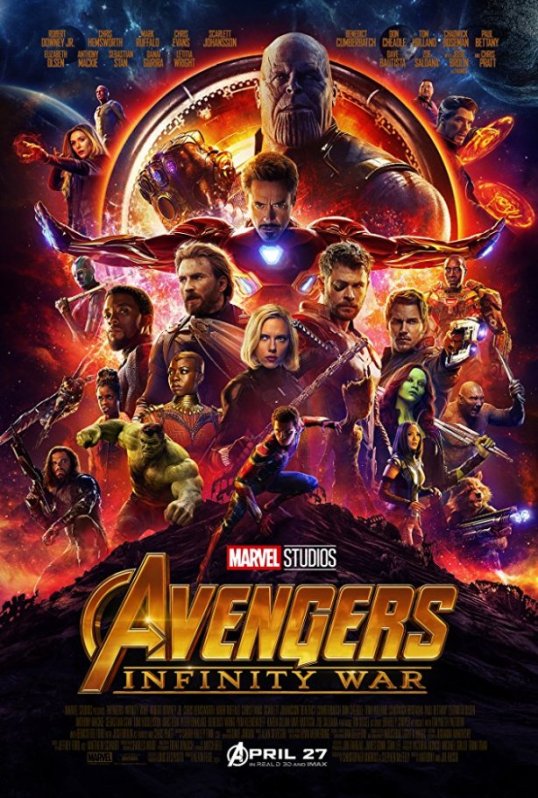
Avengers: Infinity War is a lot of things.  It’s big, it’s thrilling, it’s emotional, it’s colorful, it’s loud, it’s flamboyant, and, clocking in at two and a half hours, it’s occasionally a bit exhausting.  It’s overwhelming but it’s never boring.  It’s a nearly perfect example of pure cinema, where the story is less about what happens and more how it’s told. It’s a tribute to not just the Marvel Cinematic Universe but also to the audiences who have been flocking to each movie since Iron Man was first released way back in 2008.  Avengers: Infinity War is a pop art masterpiece, one that provides the first part of a climax to a saga that’s been unfolding for ten years.

In the days leading up to the release of Avengers: Infinity War, the main selling point was the assumption that this movie would feature every single character that’s been introduced as a citizen of the MCU so far.  Though the film comes close to including everyone, there are still a few characters who are notable for their absence.  Ant-Man and the Wasp are nowhere to be seen.  None of the Marvel Television characters show up, which is a shame because I’m sure Jessica Jones would have had some choice words about the potential end of the universe.  Two familiar SHIELD agents make a brief appearance, though you have to wonder where they were when New York and Wakanda were being invaded.

That said, all of the big heroes show up.  Tony Stark (Robert Downey, Jr.) flies into space with Dr. Strange (Benedict Cumberbatch) and Spider-Man (Tom Holland).  Thor (Chris Hemsworth) teams up with Rocket Racoon and Groot (voiced by Bradley Cooper and Vin Diesel, respectively).  When Wakanda is attacked, Black Panther (Chadwick Boseman), Captain America (Chris Evans), The Falcon (Anthony Mackie), White Wolf (Sebastian Stan), the Hulk (Mark Ruffalo), Rhodey (Don Cheadle), and Natasha (Scarlett Johansson) are all present to defend it.  Meanwhile, Vision (Paul Bettany) and Wanda (Elizabeth Olsen) continue to pursue their odd relationship while Peter Quill (Chris Pratt) and Gamora (Zoe Saldana) search for Gamora’s father, Thanos (Josh Brolin).

It’s a packed film and the fact that it works as well as it does is a testament to the power of perfect casting and movie star charisma.  At this point, we feel as if we know these characters.  We know that Tony Stark is going to be haunted by what happened the last time Thanos’s minions involved New York.  We know that Spider-Man is going to be desperate to prove that he belongs with the adults, just as we know that Dr. Strange isn’t going to be particularly impressed with anyone he meets.  Needless to say, some characters get more screen time than others.  Despite a good deal of the film taking place in Wakanda, Black Panther largely stays in the background.  I personally wish that both Natasha and Captain America had been given a bit more to do.  Considering just how talented both Anthony Mackie and Don Cheadle are, it’s a shame that neither one of them ever gets to do much in these films.  At the same time, Infinity Wars allows both Elizabeth Olsen and Paul Bettany to come into their own and Chris Hemsworth again shows that he may be the most underrated star in the MCU.  I’ve read a lot of criticism of certain actions taken by Peter Quill towards the end of the film but actually, it’s exactly what you would expect his character to do in the situation and, up until that moment, Chris Pratt is a welcome presence.  It’s important to have someone around who appreciates good music and who can make you laugh, especially considering that Thanos is planning to wipe out 50% of the universe’s population…

Oh yes, Thanos.  After spending years lurking in the background, Thanos finally steps forward in Infinity War.  In fact, it can be argued that Avengers: Infinity War is actually much more of a Thanos film than an Avengers film.  While our heroes are continually spending the film trying to catch up to Thanos and reacting to his latest action, Thanos is always one step ahead.  Thanos is the one who steers the narrative and, for once, you really do believe that an MCU villain views the heroes as being mere distractions.  Thanos is the one on a quest and the film follows him through every step of his search.  In fact, the film’s most emotional moments belong to Thanos.  For all the death and destruction to be found in the film’s surprisingly dark narrative, Thanos is the only character to ever shed a tear.  Like all great villains, Thanos doesn’t view himself as being evil.  Instead, Thanos speaks very sincerely of his desire to bring balance to the universe.  The scary thing about Thanos isn’t that he claims that he’s being merciful when he slaughters millions of beings.  The scary thing about Thanos is that believes it.

Thanos, you see, is a bit of an intergalactic environmentalist.  As he explains it, the universe only has a finite number of resources.  By killing half of the universe’s population, he is ensuring that the other half will be able to survive in peace and harmony.  Most people would call Thanos’s actions genocidal but Thanos would probably say that he’s merely making the difficult decisions that others don’t have the courage or intelligence to make.  It may all sound rather far-fetched and melodramatic until you consider that, just last week, bureaucrats and doctors in the UK decided it would be better to starve a sick infant to death rather than allow his parents to take him to be treated in another country.  With his mix of narcissism and absolutely belief in his own moral certitude, Thanos is a far more familiar villain than a lot of viewers might want to admit.  As opposed to the forgettable villains who have appeared in so many MCU films, Thanos is a compelling and complicated figure.  It’s interesting to note that two of the best performances of the year so far were given by actors appearing as villains in MCU films, Michael B. Jordan in Black Panther and Josh Brolin in this one.

As befits the film’s subject matter, Infinity War is a sprawling film, one that skips from world to world.  The visuals are frequently spectacular, as are the many battles.  From the opening attack on New York to the final battles in Wakanda and in space, the action is non-stop and thrilling.  (It helps that, as opposed to some of the previous MCU films, it’s always clear who is fighting who and why they’re fighting.)  For me, though, the most memorable scenes are the scenes where Thanos looks and considers the worlds that he’s destroyed.  There’s a scene where an exhausted Thanos rests on a placid planet and it’s one of the strongest images in the history of the MCU.

I’ve been told that I shouldn’t worry too much about all of the characters who are killed over the course of Infinity War.  From what I’ve been told, it’s apparently something of a tradition in Marvel comics to kill off a bunch of recognizable characters and then have them come back to life an issue or two later.  And the fact that the sequel to Infinity War has already been filmed and is set to released next year leads me to suspect that nothing’s permanent.  I mean, if all of these people are really dead, there aren’t going to be many heroes left to make any more movies about.  That said, I still got far more emotional than I probably should have at some of the unexpected demises.  Especially … well, no.  I won’t say the name.  But seriously, it was upsetting.

2018 is shaping up to be the year of Marvel.  So far, Marvel has released two of the best films of the year.  To be honest, a film as huge as Infinity War shouldn’t have worked and yet, it does.  It’s a masterpiece of pop art.*

* For a totally different response to Avengers: Infinity War, check out Ryan’s review by clicking here!

8 Deserving Actors Who Have Never Been Nominated For An Oscar


Last year, on Oscar Sunday, I shared lists of 16 actors and 16 actresses who has never been nominated for an Oscar.  On the list of actors was Sam Rockwell.  One year later, Rockwell has not only been nominated for an Oscar but many think he’s the front runner to win!

Needless to say, my list had absolutely nothing to do with this fact.  Still, who knows?  Maybe one of the actors listed below will be next year’s sure-fire winner.

Here are 8 more deserving actors who have yet to be nominated for an Oscar!

  1. Idris Elba

I have to admit that I’m still shocked that Elba wasn’t nominated for his chilling work in Beasts of No Nation.  Elba is one of those supremely talented actors who makes it all look easy.  In fact, that may be part of the problem.  Elba is such a natural performer that sometimes, I think people overlook just how many different roles he played.  Elba seems destined to be nominated someday.

2. Armie Hammer

Armie Hammer has appeared in some truly regrettable films but, at the same time, he’s given really good performances in a handful of memorable ones.  It seems like ever since he played twins in The Social Network, Hammer has been circling Oscar recognition.  This year, he probably came the closest yet to getting nominated, with his performance in Call Me By Your Name.  I would also say that he deserved some consideration for his slyly humorous work in Free Fire.

3. Oscar Isaac

Oscar Isaac is going to be nominated some day.  It’s all a matter of when.  I would have given him an Oscar just for the way he delivered the line, “I declare him to be an … OUTLAAAAAAAAAAAW!” in Robin Hood.

4. Tobey Magurie

Personally, I think that Maguire has it in him to make a comeback, perhaps even an Oscar-winning comeback.  Right now, his main problem seems to be that all of the good Tobey Maguire roles are going to Edward Norton.

5. James McAvoy

McAvoy deserved a nomination this year for his performance in Split.

6. Ben Mendelsohn

There was some speculation that Mendelsohn’s role in Darkest Hour might result in a nomination this year.  It didn’t happen but Ben Mendelsohn is another actor who seems to be destined to be nominated eventually.  I would have nominated him for his frightening performance in Animal Kingdom.

7. Kurt Russell

A lot of us thought that Russell would receive a nomination for The Hateful Eight but, instead, that film was dominated by Samuel L. Jackson, Jennifer Jason Leigh, and Walton Goggins.  Everyone loves Kurt but he’s not getting any younger so someone needs to write him a really great role before he decides to retire to Vancouver.

8. Peter Sarsgaard

Peter Sarsgaard is another one of those really good actors who never seems to get as much appreciation as he deserves.  If you want to see how good Sarsgaard can be, track down a film called Shattered Glass.

Here’s hoping that, come next year, at least one of those actors will no longer be eligible for this list!


Celebrate National Trivia Day With The Actors Who Could Have Been James Bond!


Today is National Trivia Day so I thought why not share some trivia?  I love film trivia.  I especially love trivia about who was considered for certain films.  Hell, one of my most popular posts on the Shattered Lens dealt with all of the actors who were considered for the Godfather!

(I even came up with an alternative cast for The Godfather, even though I consider the actual film to be the best cast film in history.)

I also happen to love the James Bond films.  (Well, not so much the recent Bond films.  I’ve made my feelings on SPECTRE clear.)  As a franchise, I absolutely love them.  So, with all that in mind, here is a look at the actors who could have been Bond.  I’ve compiled this article from many sources.  And yes, you could probably just find a lot of the information on Wikipedia but then you’d miss out on my editorial commentary.

Hoagy Carmichael

Ian Fleming himself always said that his pick for Bond would have been the musician, Hoagy Carmichael.  He even made a point, in Casino Royale, of having Vesper Lynd exclaim that Bond looked like Hoagy Carmichael.  Of course, the first actor to actually play Bond was Barry Nelson in a 1954 television adaptation of Casino Royale.  Nelson is probably best remembered for playing Mr. Ullman in Stanley Kubrick’s The Shining.

Barry Nelson, the first James Bond

When Dr. No went into production in 1961, many actors were considered for the role before Sean Connery was eventually cast.  Many of them were very well-known actors and, had they been cast, Dr. No would not have been remembered as a Bond movie.  Instead, it would be remembered as a star vehicle for … well, let’s take a look at some of the better-known possibilities:

Among the famous actors who were mentioned for Bond in 1961: Cary Grant, Richard Burton, James Mason, Trevor Howard, Stanley Baker, George Baker, Jimmy Stewart, Rex Harrison, and David Niven.  (Of that list, I think Burton would have made for an interesting Bond.  If the Bond films had been made in the 1940s, Grant would have been my first choice.  Trying to imagine Jimmy Stewart as a British secret agent is … interesting.)

Once it became obvious that a star was not going to play Bond, the role was offered to Patrick McGoohan and Rod Taylor.  McGoohan had moral objections to the character.  Rod Taylor reportedly felt that the film would flop.  Steve Reeves, the American body builder who became famous for playing Hercules in Italy, was reportedly strongly considered.  At one point, director Terrence Young wanted to offer the role to Richard Johnson, who later played Dr. Menard in Lucio Fulci’s Zombi 2.

Of course, the role went to Sean Connery and made Connery a huge star.  In 1967, after Connery announced that he would no longer play the world’s most famous secret agent, there was a huge and widely publicized search for his replacement.  Some of the names that were considered are intriguing.  Others are just bizarre.

Oliver Reed

To me, perhaps the most intriguing name mentioned was that of Oliver Reed.  Reed definitely would have brought a rougher edge of the role than some of the other actors considered.  However, that’s one reason why Reed wasn’t picked.  Apparently, it was felt that he did not have the right public image to play the suave Mr. Bond.

Somewhat inevitably, Michael Caine was sought out for the role.  Caine, however, refused to consider it because he had already starred in three back-to-back spy thrillers and didn’t want to get typecast.  Caine’s former roommate, Terrence Stamp, was another possibility but wanted too much control over the future direction of the Bond films.  Future Bond Timothy Dalton was considered to be too young.  Another future Bond, Roger Moore, didn’t want to give up his television career.  Eric Braeden has the right look for Bond but was German.  Rumor has it that producer Cubby Broccoli even considered Dick Van Dyke for the role, though I find that hard to believe.  An even more surprising possibility was the nobleman Lord Lucan, who was offered a screen test in 1967 and who, ten years later, would vanish after being accused of murdering his children’s nanny.

Lord Lucan

Among the actors who auditioned before George Lazenby was cast in On Her Majesty’s Secret Service: Michael Billington, Jeremy Brett, Peter Purves, Robert Campbell, Patrick Mower, Daniel Pilon, John Richardson, Anthony Rogers, Hans De Vries, and Peter Snow.

After the mixed reception of both Lazenby’s performance and On Her Majesty’s Secret Service, Lazenby was soon out as James Bond.  Even today, there’s a lot of controversy about what led to Lazenby being dismissed from the role.  Some say Lazenby demanded too much money.  Some say that Lazenby was merely used a pawn to try to get Sean Connery to return to the role.  Regardless, Lazenby only made one film as Bond.  (Of course, On Her Majesty’s Secret Service has retroactively been recognized as being one of the best of the series.)

With Connery still claiming that he would never return to the role, the film’s producers went through the motions of looking for a new Bond.  Once again, Roger Moore and Timothy Dalton were considered.  Connery suggested that a talk show host named Simon Dee should play the role.  An actor named Roger Green auditioned.  So did Michael Gambon, though he later said he was turned down because, in his own words, he “had tits like a woman.”  Interestingly, several Americans were mentioned.  Clint Eastwood as James Bond?  Burt Reynolds?  Adam “Batman” West? The mind boggles but their names were mentioned.

John Gavin

And interestingly enough, an American was cast.  John Gavin is best known for playing Sam Loomis in Psycho but he was also, briefly, James Bond.  After Gavin accepted he role and signed a contract, Sean Connery announced that he would be willing to return to the role.  Gavin was paid off and Connery went on to star in Diamonds are Forever.

After Diamonds, Connery left the role for a second time and, once again, Bond was recast.  This time, Roger Moore would finally accept the role.  However, before Moore was cast, several other actors were considered.  Some of the regular possibilities were mentioned again: John Gavin, Simon Oates, Timothy Dalton, and Michael Billington.  Others considered included Jon Finch, Ranulph Fiennes, Peter Laughton, and Guy Peters.  Some of those names are probably as unknown to you as they are to me but it’s intriguing to think that Guy Peters may not be a well-known name but, at one time, there was a possibility that he could suddenly become one of the biggest stars in the world.

Looking over the history of the Bond franchise, it’s interesting to see the number of times that Moore tried to leave the role, just to be talked into returning.  Every time that Moore considered quitting, a new group of actors would be considered for the role of Bond.  In 1979, when Moore said he might not return after Moonraker, Timothy Dalton, Michael Jayston, Patrick Mower (who was also considered for On Her Majesty’s Secret Service), and Michael Billington were all considered as replacements.  So was Julian Glover.  Ironically, when Moore did agree to return to the role, Glover was cast as the villain in For Your Eyes Only.

David Warbeck

To me, the most intriguing actor mentioned as a replacement for Roger Moore was David Warbeck.  Warbeck was a television actor and model who subsequently had a nearly legendary film career in Italy.  Not only did he play a key role in Sergio Leone’s Duck You Sucker!, but he also starred in Lucio Fulci’s The Black Cat and The Beyond.  He also appeared in the best of Italian Apocalypse Now rip-offs, The Last Hunter.  In interviews, Warbeck claimed that he was under contract to Cubby Broccoli to step into the role in case Roger Moore ever walked off the set.  The likable and rugged Warbeck would have been an interesting Bond.

In 1983, when Moore again said he might not return to the role, Michael Billington (who actually did appear in a Bond film when he played a KGB agent killed at the start of The Spy Who Loved Me) would be once more considered as a replacement.  British TV actors Lewis Collins and Ian Ogilvy were also considered for the role.  In a repeat of what happened with John Gavin in Diamonds are Forever, American actor James Brolin was actually put under contract until Moore agreed to play the role in Octopussy.

James Brolin, in a screen test for Octopussy

After A View To A Kill, Moore left the role for the final time.  Famously, future Bond Pierce Brosnan was actually cast as his replacement until the surge of interest created by his casting led to the renewal of Remington Steele, the American television show in which Brosnan was starring.  Once the show was renewed, Brosnan could no longer work the Bond films into his schedule.

Among the other names mentioned: Sean Bean, Simon MacCorkindale, Andrew Clarke, Finlay Light, Mark Greenstreet, Neil Dickson, Christopher Lambert, Mel Gibson, and Antony Hamilton.  Sam Neill was another possibility and reportedly came very close to getting the role.  Watch any of the films that Neill made when he was younger and you can definitely see hints of Bond.

Sam Neill

In the end, Timothy Dalton finally accepted the role.  Ironically, for an actor who spent 20 years being courted for the role, Dalton turned out to be a bit of a flop as Bond.  He made two movies (both of which were considered to be disappointing when compared to the previous Bond films) and then left the role.

Looking over the contemporary reviews of Dalton as Bond, one thing that comes through clearly is that a lot of people resented him for taking a role that they felt should have gone to Pierce Brosnan.  When the Bond films resumed production with Goldeneye in 1994, Brosnan finally stepped into the role.  Reportedly, if Brosnan had turned down the role, the second choice was Sean Bean.  Much like Julian Glover, Bean may have lost out on 007 but he did end up playing the villain.

Sean Bean

Among the other actors who were reportedly considered before Brosnan accepted the role: Mark Frankel, Paul McGann, Liam Neeson, Russell Crowe, and Lambert Wilson.  Ralph Fiennes, who has been M since Skyfall, was also considered.

As opposed to his predecessors, Brosnan seemed to be very comfortable with the idea of playing Bond and never threatened to leave the role.  Looking over the Bond-related articles that were published from 1995 to 2004, I found the occasional speculation about whether Rupert Everett would be the first gay James Bond or if Sharon Stone would be the first female James Bond but I found very little speculation about Brosnan actually leaving the role.  Indeed, when Brosnan officially retired as Bond in 2004, it was less his decision and more at the prodding of the franchise’s producers, who felt that the series needed to be rejuvenated with a new (and younger) actor.  After Brosnan left, the series was rebooted and Daniel Craig played the role in Casino Royale.

In the past, I’ve made it clear that Daniel Craig is hardly my favorite Bond.  I loved Skyfall (and I consider it to the 2nd best Bond film, after From Russia With Love) but, even in that case, I felt that the film succeeded despite Craig instead of because of him.  With Casino Royale, we were supposed to be seeing a young and inexperienced Bond.  That’s never come through to me, probably because Craig looked like he was nearly 50 years old when he made Casino Royale.

Among the actors who were mentioned for the role before Craig received the role: Ralph Fiennes (again), Colin Salmon, Ewan McGregor, Henry Cavill, Rupert Friend, Julian McMahon, Alex O’Laughlin, Clive Owen, Dougray Scott, and Goran Visjnic.  Dominic West, who I think would have been great in the role, reportedly ruled himself out because he heard a rumor that Brosnan would be returning to the role.

Dominic West

Daniel Craig, of course, has been talking about leaving the role ever since he was first cast.  I think Skyfall would have been a perfect movie for him to leave on.  (It would have saved the world from SPECTRE.)  However, Craig has apparently agreed to do at least one more Bond film.  Maybe two.

When Craig does leave, who will replace him?  Idris Elba, of course, is probably the most widely discussed possibility.  James Norton has also been named as a possibility.  Others that I’ve seen mentioned: Tom Hardy, Jack Huston, Aidan Turner, Tom Hiddleston, Michael Fassbender, Jamie Bell, and Henry Cavill (again).

My personal choice?  Dominic Cooper.  He’d be an off-center Bond but I think it would still be an intriguing pick.

Dominic Cooper

Who knows what the future may hold for 007?  All I know is that I look forward to the speculation.

Happy National Trivia Day, everyone!