Robert Englund as Han Solo? A Little May 4th Trivia


Can you imagine how things might have played out if Robert Englund had played Han Solo?

It’s not as far-fetched as it might sound.  In his autobiography, Hollywood Monster: A Walk Down Elm Street with the Man of Your Dreams, Englund mentions that he was one of the many actor who, in 1975, auditioned for a role in the first Star Wars film.  It’s often forgotten that, before he became famous as Freddy Krueger in A Nightmare In Elm Street, Englund was a busy character actor who had roles in several big studio productions in the 70s.  He was definitely a part of the “new Hollywood” that included people like George Lucas, Steven Spielberg, and Jon Milius.

Though Englund doesn’t go into much detail, he does say that he read for the roles of both Han Solo and Luke Skywalker.  At the time, Englund didn’t feel that he was right for either role and he went back to his apartment under the correct impression that he would not be cast.  However, he did feel that his friend and then-roommate Mark Hamill would be a good pick for Luke Skywalker and Englund writes that he encouraged Hamill to try out for the role.

Would Mark Hamill have been cast if Robert Englund hadn’t told him about the audition?  Probably.  Given that Star Wars was Lucas’s follow-up to the very popular American Graffiti, it’s probable that every struggling young actor in Hollywood was hoping to audition.  As well, Hamill was not totally unknown to George Lucas, having early read for a role in American Graffiti.  Still, it’s nice to think that, long before he was cast as Freddy Krueger, Robert Englund may have played a role in casting one of the most successful films of all time.

What would Robert Englund have been like as Han Solo?  He definitely would not have been as grouchy as Harrison Ford’s Han.  Indeed, one of the striking things out about Englund’s pre-Nightmare career was how he was usually cast as friendly characters who were almost shy.  Englund would have been friendlier and rather eccentric Han Solo but I think he would have been entertaining in his way.

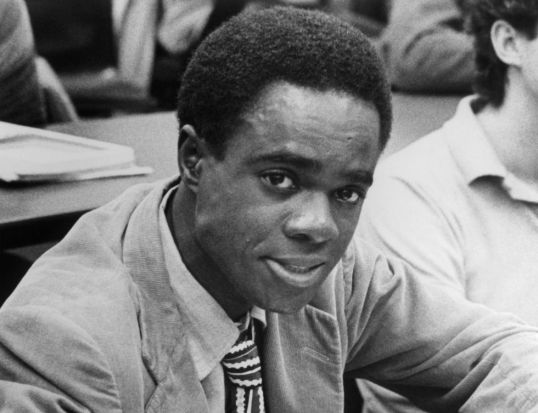
Because of the film’s success, it can be a bit difficult to know who was actually considered for a role in Star Wars.  Lucas has said that he originally wanted to cast Black actor Glynn Turman as Han Solo but he feared audiences would not accept the possibility of an interracial romance between him and Leia, even in a galaxy far away.  (Lucas’s regret over that decision is one of the things that led to the casting of Billy Dee Williams as Lando Calrissian.)  The film’s IMDb trivia page insists that everyone from Al Pacino to Bill Murray to Marlon Brando to Chevy Chase was considered for the role of Han Solo and I have to say that this is a case where I doubt the accuracy of the IMDb.  Harrison Ford, who had originally been hired only to read with people at the auditions, eventually got the role despite telling Lucas, about the script, “You can type this shit but you can’t say it.”

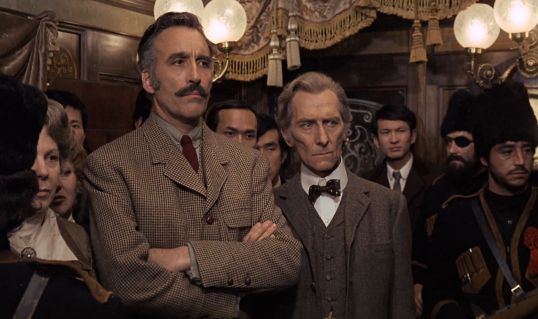
In several interviews, Christopher Lee expressed regret at having turned down the role of Grand Moff Tarkin, which was instead played by Lee’s best friend Peter Cushing.  Interestingly enough, Cushing was also one of Lucas’s choices for Obi-Wan Kenobi so it’s easy to imagine a universe in which Star Wars reunited two Hammer films legends, along with setting box office records.

Famously, Lucas held joint-auditions with his friend Brian De Palma.  De Palma was casting Carrie and just about everyone who read for one of the films also read for the other.  Reportedly, William Katt came close to getting the role of Luke before instead being cast as Carrie’s doomed prom date.  Amy Irving was also a strong contender for Leia, before instead ending up as Sue Snell in De Palma’s film.  Some source that that Sissy Spacek also read for Leia, though I’ve also read that Spacek was not a part of the joint-auditions.  That’s one thing about collecting trivia about classic films.  It’s often hard to know what’s true and what’s just wishful thinking.

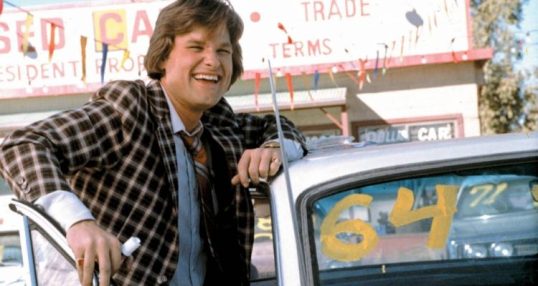
I should mention that another strong contender for Han Solo (and reportedly Luke as well) was Kurt Russell.  It’s actually easy to imagine Kurt Russell as Han and, just as with Englund, it leads to an intriguing game of what if.  Would Kurt Russell have gone on to have Harrison Ford’s career if he had been cast in Star Wars?  Would Russell have gone to play Indiana Jones and Jack Ryan if he had been cast as Han Solo and would Harrison Ford have ended up helping the President to Escape from New York?  Or is it just as possible that Star Wars have not worked without the chemistry of Harrison Ford, Carrie Fisher, and Mark Hamill?  Would a Kurt Russell, Amy Irving, and William Katt version of Star Wars captured the imagination of audiences?

It’s a question to which there is no real answer, a bit like wondering if The Godfather would have been as big a hit if it had starred George C. Scott, Martin Sheen, and Burt Reynolds.  Still, it’s interesting to consider.

Film Review: Rustin (dir by George C. Wolfe)


In Netflix’s Rustin, Colman Domingo plays Bayard Rustin.

A Quaker, a pacifist, a leader of the civil rights movement, and a former communist, Bayard Rustin was an early advisor to Martin Luther King, Jr.  Rustin commitment to non-violent protest was a huge influence on King’s own activism and Rustin helped King to organize the Southern Christian Leadership Council.  Rustin was one of King’s closest advisors but he was distrusted by other leaders of the movement because of both his independent nature and the fact that he was a gay man at a time when homophobia was the law of the land.  In fact, Rustin opens with Rustin’s rivals, the NAACP’s Roy Wilkins (Chris Rock) and U.S. Rep. Adam Clayton Powell, Jr. (Jeffrey Wright), letting King know that it would be in his best interest not to be associated with someone like Bayard Rustin.  Rustin, thinking that King will stand with him, offers to resign from the SCLC and is stunned when King (Aml Ameen) accepts his resignation.

After spending three years in relative obscurity and watching as younger civil rights activists start to reject the non-violence that is at the core of his philosophy, Rustin comes up with the idea that will become the 1963 March on Washington.  Putting aside his hurt feelings, Rustin works with King and several other civil rights leaders to organize the March and, at the same time, he once again finds himself being attacked for being both gay and a former member of the Communist Party.  Even while organizing the march, Rustin pursues a doomed relationship with a deeply closeted clergyman (Johnny Ramey).

It’s an important story but the film itself is sabotaged by both its script and its direction.  The script, which was co-written by Dustin Lance Black, is heavy on exposition and monologues but there’s few moments in which the characters really get to come alive.  Meanwhile, George C. Wolfe’s direction is stagey and stodgy.  Visually, the film has the aesthetic of a well-produced made-for-TV movie.  For all the time that is spent on the planning of the March of Washington, the event itself is recreated in a rushed and rather flat matter.  One could argue that the filmmakers felt that the real event is so iconic that there would no way to really do it justice and perhaps the filmmakers were correct in that.  Still, one can’t help but feel that Wolfe should have at least tried to capture some of the event’s electricity.  The film, to its credit, captures the hard work that went on behind-the-scenes of the civil rights movement but there are very few moments that feel spontaneous or as if they have a spark of life actually being lived in front of the camera.

Fortunately, the film is blessed to feature Colman Domingo in the title role.  Playing a larger-than-life figure, Domingo gives a performance that is big, charismatic, flamboyant, and sensitive.  As played by Domingo, Rustin is a collection of seemingly conflicting traits.  At times, he’s confident to the point of being arrogant but, when he finds himself shunned by the other leaders of the civil rights movement, he reveals the insecurity hiding underneath the surface.  Rustin is hyperactive yet focused, angry yet forgiving, and self-absorbed yet compassionate.  One of the film’s best moments comes when Rustin responds to an innuendo-filled attack on him by throwing himself into planning every detail of the March.  Rustin is surrounded by people telling him that, as a black man and a gay man, he will always be a second-class citizen and an outsider.  Rustin refuses to accept that and Domingo captures the intelligence, wit, and determination that allowed Rustin to continue to fight, against amazing odds, for equality.

The film doesn’t tell us much about Rustin’s life after the March on Washington.  In later years, Rustin, while remaining a socialist, became a strong anti-Communist and was also an outspoken supporter of Israel.  Today’s Left would probably not have much use for the moderate Bayard Rustin and, with his commitment to non-violence, it’s doubtful that Rustin would have much use for many of them.  Despite his prominence in the Civil Rights movement and the importance of his work, Rustin is still not as well-known as he should be.  Perhaps this movie, despite its flaws, will change that.

Retro Television Reviews: In Search of America (by Paul Bogart)


Welcome to Retro Television Reviews, a feature where we review some of our favorite and least favorite shows of the past!  On Sundays, I will be reviewing the made-for-television movies that used to be a primetime mainstay.  Today’s film is 1971’s In Search of America!  It  can be viewed on YouTube!

College student Mike Olson (young Jeff Bridges) returns home and informs his mother (Vera Miles) and his father (Carl Betz) and his annoyingly quirky grandmother (Ruth McDevitt) that he’s dropped out of college.  He apologizes for wasting all the money that they spent on tuition but hey, maybe he can make it up to them by taking them on a journey as he drives across America in an old bus.

Uhmmm….

Now, let me just repeat this so that there is no confusion.  This absolutely schmuck took his parents’ money, wasted it, dropped out of college, and now he expects everyone to travel with him across America because he’s decided that he’s a part of the counterculture.

And, instead of telling him to go to Hell and get a job, his family agrees.

Oh sure, Mom is a little bit hesitant about Mike’s idea.  But Dad is really enthusiastic.  He understands the kids and he wants a chance to relive his own youth, before he got tied down with things like paying bills and being a responsible human being.  And, of course, if the Hippies were famous for anything, it was their love of upper class, middle-aged people.  Just ask the LaBiancas.

And, of course, grandma is totally excited about it because she’s an old person in a made-for-TV movie.

So, they all board the bus and Mike takes them to a music festival so that they can meet some of his friends.  For instance, there’s Nick (Sal Mineo), a drop-out who says that he’s more burned out than turned on.  There’s Annie (Tyne Daly), who is going to need someone to help deliver her baby.  There’s Bodhi (Glynn Turman), who is some sort of doctor.  He and grandma bond of their shared quirkiness.  And then there’s Kathy (Renne Jarrett), who is at the music festival despite the fact that she’s really sick and on the verge of dying. When Kathy’s parents (Howard Duff and Kim Hunter) show up looking for her, Mike has to decide whether to save her life or respect her wish to do her own thing.

This was obviously meant to be a pilot for a show where the family would travel around the country and I guess get involved in different adventures each week.  The main problem is that, while Jeff Bridges seems to be a bit of a hippie in real life, he’s not particularly convincing in this film.  He’s way too clean-cut and his family’s decision to follow him across the country never makes the least bit of sense.  As for the hippies themselves, they come across as being so shallow that I found myself wanting to donate money to the Nixon campaign.

Film Review: Out of Bounds (dir by Richard Tuggle)


Just a country boy

Born and raised in South Des Moines

He took the midnight bus to anywhere….

That’s the story of Darryl Cage, the protagonist of the 1986 film, Out of Bounds.  Played by Anthony Michael Hall, Darryl is an Iowa farm boy who goes to Los Angeles to live with his brother.  Unfortunately, when his flight lands, Darryl’s suitcase is switched with another one that’s full of cocaine!  Darryl becomes an accidental drug mule and end up getting his brother killed!  WHAT A DUMBASS!

So now, Darryl is on the run.  He’s a small town farmer in the big city, trying to avoid bad guy Roy (Jeff Kober) and the police, led by Lt. Delgado (Glynn Turman).  Fortunately, Darryl meets an aspiring actress named Dizz (Jenny Wright).  Dizz gives him a makeover and introduces him to the Los Angeles club scene.  Siouxsie and the Banshees make a cameo appearance at one club.  They perform one song and fortunately, it’s Cities in the Dust.  Unfortunately, they don’t actually get involved in the plot of the film.  I would have liked to have seen Siouxsie beat up Jeff Kober.  But it doesn’t happen.

Out of Bounds is one of the many films that came out in the mid-to-late-80s in which the actors who were (somewhat unfairly) considered to be Brat Packers attempted to prove that they were capable of doing more than just projecting teen angst.  Judd Nelson and Ally Sheedy, for instance, starred in a forgettable neo-noir called Blue City.  Andrew McCarthy starred in an interesting but ultimately uneven film called Kansas.  Emilio Estevez not only starred in Wisdom but he directed it too.  And Anthony Michael Hall starred in Out of Bounds.

Anthony Michael Hall was best-known for playing nerdy characters in Sixteen Candles and The Breakfast Club and it’s probable that he was attempting to escape being typecast when he took his role in Out of Bounds.  This was Anthony Michael Hall’s chance to play an action hero!  Unfortunately, Anthony Michael Hall made the same mistake that many of his peers made while trying to give the performance that would allow them to break free of the Brat Pack label.  He tried too hard.  While Glynn Turman, Jeff Kober and Jenny Wright obviously understood the type of  rather silly movie that Out of Bounds was going to be and they modified their performances accordingly, Anthony Michael Hall apparently tried to duplicate the method intensity of Marlon Brando or James Dean.  In other words, Hall took the film far more seriously than it deserved to be taken.

Out of Bounds get off to a bad start as soon as it opens with Anthony Michael Hall on the farm in Iowa.  There’s absolutely nothing about the young Anthony Michael Hall that leaves on with the impression that he’s ever spent any time on a farm.  Everything about him screams Hollywood before he even lands in Los Angeles.  Hence, it gets difficult to really buy him as being the wide-eyed innocent that everyone else views him as being.  Since a good deal of the film’s plot is dependent upon Hall being naïve, that’s a problem.  He may be a farm boy but he certainly doesn’t freak out after shooting someone.  He’s also somehow learned how to throw a knife straight into someone’s gut.  Out of Bound‘s director, Richard Tuggle, directed two films for Clint Eastwood so he obviously knew how to frame a fight scene but Hall is so miscast that it’s impossible to really get into the movie.

The film is pretty much stolen by Jenny Wright and Jeff Kober.  Kober is properly menacing and, just as she did in Near Dark and I, Madman, Jenny Wright works wonders with a role that could have just been formulaic.  Jenny Wright has apparently retired from acting.  Jeff Kober still shows up in movies and on television, usually playing villains.  (Earlier this year, he played yet another drug trafficker on General Hospital.)  Watching them give compelling performance in a film like Out of Bounds, it’s hard not to feel that both of them deserved bigger career than they had (or, in Kober’s case, still have).

The film is also stolen by its soundtrack, which is very 80s but in the best possible way.  Adam Ant, The Smiths, the aforementioned Souixsie and the Banshees, they all make an appearance and provide the film with a bit of narrative momentum that it would otherwise lack.  Watching the film, 80s Los Angeles comes across like a fun place.  No wonder Darryl Cage wanted to stay even though everyone was trying to kill him.

Out of Bounds is ultimately pretty forgettable and it didn’t make Anthony Michael Hall into an action star.  But, that’s okay.  Like a lot of former Brat Packers, he’s proven himself to be a reliable character actor.  There is life after high school.  Even more importantly, there’s also life after Iowa.

Here Are The Nominees For the 2020 NAACP Image Awards!


The NAACP has announced their nominees for the 2020 Image Awards!

And here they are:

Outstanding Motion Picture
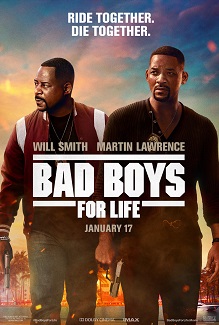
Bad Boys For Life
Da 5 Bloods
Jingle Jangle: A Christmas Journey
Ma Rainey’s Black Bottom
One Night In Miami…

Outstanding Directing in a Motion Picture
David E. Talbert – Jingle Jangle: A Christmas Journey
George C. Wolfe – Ma Rainey’s Black Bottom
Gina Prince-Bythewood – The Old Guard
Radha Blank – The Forty-Year-Old Version
Regina King – One Night In Miami…

Outstanding Actor in a Motion Picture
Anthony Mackie – The Banker
Chadwick Boseman – Ma Rainey’s Black Bottom
Delroy Lindo – Da 5 Bloods
Forest Whitaker – Jingle Jangle: A Christmas Journey
Will Smith – Bad Boys For Life

Outstanding Actress in a Motion Picture
Issa Rae – The Photograph
Janelle Monáe – Antebellum
Madalen Mills – Jingle Jangle: A Christmas Journey
Tracee Ellis Ross – The High Note
Viola Davis – Ma Rainey’s Black Bottom

Outstanding Supporting Actor in a Motion Picture
Aldis Hodge – One Night In Miami…
Chadwick Boseman – Da 5 Bloods
Clarke Peters – Da 5 Bloods
Colman Domingo – Ma Rainey’s Black Bottom
Glynn Turman – Ma Rainey’s Black Bottom

Outstanding Supporting Actress in a Motion Picture
Anika Noni Rose – Jingle Jangle: A Christmas Journey
Gabourey Sidibe – Antebellum
Nia Long – The Banker
Phylicia Rashad – Jingle Jangle: A Christmas Journey
Taylour Paige – Ma Rainey’s Black Bottom

Outstanding Writing in a Motion Picture
David E. Talbert – Jingle Jangle: A Christmas Journey
Kemp Powers – One Night In Miami…
Lee Isaac Chung – Minari
Pete Docter, Kemp Powers & Mike Jones – Soul
Radha Blank – The Forty-Year-Old Version

Outstanding Independent Motion Picture
Emperor
Farewell Amor
Miss Juneteenth
The 24th
The Banker

Outstanding International Motion Picture
Ainu Mosir
His House
Night of the Kings
The Last Tree
The Life Ahead

Outstanding Breakthrough Performance in a Motion Picture
Dayo Okeniyi – Emperor
Dominique Fishback – Project Power
Jahi Di’Allo Winston – Charm City Kings
Jahzir Bruno – The Witches
Madalen Mills – Jingle Jangle: A Christmas Journey

Outstanding Ensemble Cast in a Motion Picture
Da 5 Bloods
Jingle Jangle: A Christmas Journey
Ma Rainey’s Black Bottom
Soul
The Banker

Outstanding Animated Motion Picture
Onward
Over the Moon
Scoob!
Soul
Trolls World Tour

Outstanding Character Voice-Over Performance – Motion Picture
Ahmir-Khalib Thompson aka Questlove – Soul
Angela Bassett – Soul
Chris Rock – The Witches
Jamie Foxx – Soul
Phylicia Rashad – Soul

Outstanding Short Form (Live Action)
Baldwin Beauty
Black Boy Joy
Gets Good Light
Home
Mr. & Mrs. Ellis

Outstanding Short Form (Animated)
Canvas
Cops and Robbers
Loop
The Power of Hope
Windup

Outstanding Breakthrough Creative (Motion Picture)
Loira Limbal – Through the Night
Melissa Haizlip – Mr. Soul!
Nadia Hallgren – Becoming
Radha Blank – The Forty-Year-Old Version
Remi Weekes – His House

Before anyone makes any jokes about that Best Picture nomination for Bad Boys For Life — hey, that was a fun movie.  If the Academy ever had gone through with that plan to start awarding an Oscar for Best Popular Film, I assume that Bad Boys For Life probably would have been contender.  Anyway, the winners of the Image Awards will be announced on March 27th so you’ve all got a lot of times to consider these nominees.

So, get to considering!

Lisa Marie Picks The 30 Top Films of 2020


Well, it’s finally time!  It’s time for me to announce my picks for the best films of 2020.

Before we begin, there is one thing I want to make clear.  Unlike the Academy, I did not extend my eligibility window.  Films like Nomadland, Minari, and The Father (amongst others) will undoubtedly be competing for the Oscar for Best Picture of 2020.  However, as far as I’m concerned, those are all 2021 films.  And I imagine that a few of them will probably appear on my best films of 2021 list.  However, the list below are my picks for the best films of 2020.  You’ll probably agree with some of my picks and disagree with some of the others.  As always, I welcome any and all comments.

Also, be sure to check out my picks for 2010, 2011, 2012, 2013, 2014, 2015, 2016, 2017, 2018, and 2019!  Wow, I’ve been doing this for a while!

And now, in descending order, my favorites of 2020!

30. Money Plane (dir by Andrew Lawrence) — Okay, I can sense that you’re already rolling your eyes at my list by seriously, Money Plane is such a cheerfully absurd and self-aware little B-movie that there’s no way I couldn’t include it.  Seriously, how can you not love a film that features Kelsey Grammer always a gangster known as the Rumble?  Basically, as soon as I heard that priceless declaration of “We are going to rob the Money Plane!,” this movie had me under its spell.

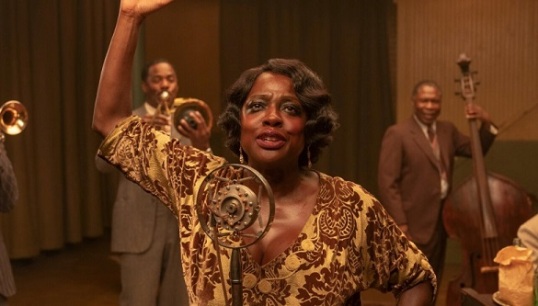
29. Ma Rainey’s Black Bottom (dir by George C. Wolfe) — Though this adaptation of August Wilson’s play never quite escapes its theatrical roots, no one can deny the powerful performances of Viola Davis, Colman Domingo, Glynn Turman, and especially Chadwick Boseman.  Boseman dominates the film from the minute that he makes his first appearance, playing an ambitious, troubled, and undeniably talented trumpeter.  Viola Davis plays Ma Rainey with the self-awareness of someone who knows that the record producers need her more than she needs them.  She has the power and she’s not going to let anyone get away with forgetting it.

28. The Invisible Man (dir by Leigh Wannell) — Before the Academy announced that they would be changing their rules to considers streaming movies, many critics speculated that one of the results of the pandemic would be The Invisible Man winning all of the Oscars.  Though they may have been joking, it was not as outlandish an idea as they seemed to think.  The Invisible Man is a horror film that proves that being a genre film does not mean that film can’t also be a good and thought-provoking work of art.  The Invisible Man breathes new life into a somewhat hokey premise and Elisabeth Moss gives a great performance as a woman stalked by her abusive (and now invisble) ex.  The Invisible Man features one of the best ending scenes of 2020.

27. The Hunt (dir by Craig Zobel) — Delayed due to a manufactured controversy and released to critical bafflement, The Hunt is a clever satire of our hyper-partisan and hyper-polarized society.  The film’s final twist is a clever commentary on social media drama and Hillary Swank steals the show with an unexpected cameo.

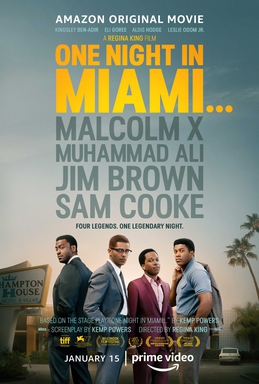
26. One Night In Miami (dir by Regina King) — I went back and forth on this one.  Based on a stage play, this film imagines what happened the night that Malcolm X, Jim Brown, Sam Cooke, and Muhammad Ali met in a Miami motel room.  There are a few times that the film is undoubtedly a bit too stagey for its own good and, early on, some of the dialogue is a bit too on the nose.  But the film has a cumulative power and, despite a few uneven moments, it’s ultimately an intriguing look at race, celebrity, and political activism in America.  A good deal of the film’s power is due to the ensemble.  While most of the awards chatter seems to be focused on Leslie Odom, Jr. as Sam Cooke, it’s Aldis Hodge’s Jim Brown who truly anchors the film.
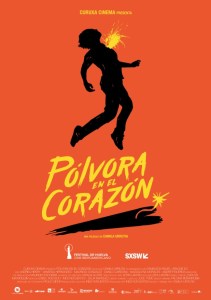
25. Gunpowder Heart (dir by Camila Urrutia) — This raw and angry film from Guatemala was one of the more powerful films to be featured at 2020’s virtual South By Southwest.  In Guatemala City, Maria and her girlfriend Claudia are assaulted by three men.  Maria wants revenge, no mater what.  Claudia, the more cautious of the two, knows that Maria’s plans are going to end in tragedy and disaster but she also knows that there’s nothing she can do to stop her.  Gunpowder Heart isn’t always easy to watch but it’s undeniably powerful.

24. The Shock of the Future (dir by Marc Collin) — Taking place in 1978, this French film follows one day in the life of a composer named Ana (Alma Jodorowsky).  It’s a typical day — Anna wakes up, a friend comes by with the latest albums, Anna tries to compose music, she goes to a party, and she hears the newest music.  It’s a simple but effective celebration of both music and the thrill of having your entire creative life ahead of you.  Alma Jodorowsky is brilliant in the role of Anna.

23. She Dies Tomorrow (dir by Amy Seimetz) — This a disturbing mood piece about a woman who is convinced that she is going to die in a day.  Everyone who she meets also becomes convinced that they’re going to die within 24 hours.  Some of them go out of their way to make sure that it happens while others just wait for death to come.  Is it a mass delusion or is it something else?  The atmospheric film may raise more questions than it answers but it will definitely stick with you.

22. Driveways (dir by Andrew Ahn) — Kathy (Hong Chau) and her young son, Cody (Lucas Jaye), move into the home that was owned by Kathy’s deceased sister.  In his final film appearance, Brian Dennehy plays the gruff but caring neighbor who befriends both Cody and his mother.  This is a low-key but emotionally resonant film, elevated by Dennehy’s heartfelt performance.

21. Figurant (dir by Jan Vejnar) — Clocking in at 14 minutes, this unsettling but powerful French/Czech co-production tells the story of a quiet man (Denis Levant) who follows a group of younger men into a warehouse and who soon finds himself in uniform and on a battlefield.  Or is he?  It’s not an easy question to answer but this intriguing short film will keep you watching, guessing, and thinking.

20. What Did Jack Do? (dir by David Lynch) — David Lynch interrogates a monkey in an expressionistic train station.  The monkey talks about a chicken and sings a song about true love’s flame.  “Are you now or have you ever been a member of the communist party?” Lynch asks.  It’s a brilliant short film and really, it’s the sort of thing that only David Lynch, with his mix of earnestness and eccentricity, could have pulled off.  Technically, this film was made a few years ago but it only got it’s official premiere in 2020, when Netflix released it on Lynch’s birthday.

19. Red, White, and Blue (dir by Steven McQueen) — Steve McQueen’s Small Axe was made up of five short films.  Three of them appear on this list.  There’s been a lot of debate about whether or not the Small Axe films should be considered individual features or if they should be considered a miniseries.  Obviously, I see them as being individual features but, in the end, they’re brilliant and thought-provoking regardless of whether they’re television or film.  Red, White, and Blue takes a nuanced look at institutional racism and features an excellent lead performance from John Boyega.

18. Mr. Jones (dir by Agnieszka Holland) — A film that deserved more attention than it received, Mr. Jones tells the story of Gareth Jones, the Welsh journalist who, in 1933, discovered the truth about the state-sponsored famine that was killing millions in the Ukraine.  Despite his efforts, the press refused to report on what was really happening in the Ukraine and instead, an odious propagandist named Walter Duranty was awarded a Pulitzer prize for writing pro-Stalin stories that were later determined to be full of deliberate lies.  An important and heartfelt film, Mr. Jones features a subtle but effective lead performance from James Norton and a memorable supporting turn from Peter Sarsgaard, who plays Walter Duranty as a smug snake.
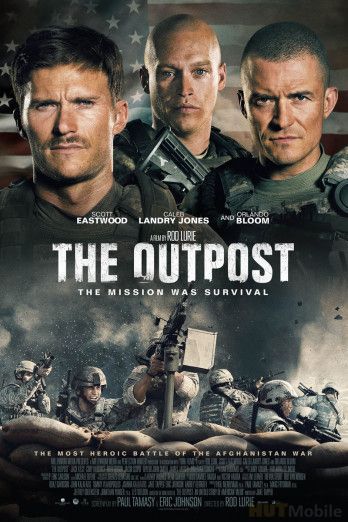
17. The Outpost (dir by Rod Lurie) — Based on a true story and directed by Rod Lurie, this film pays tribute to the men who have fought and died in America’s forgotten conflict, the War in Afghanistan.  Well-acted and doggedly unsentimental, The Outpost will literally leave you breathless.

16. Emma (dir by Autumn de Wilde) — The latest adaptation of Jane Austen’s much-adapted novel, Emma has a playful spirit that is lacking in so many other literary adaptations.  It also has a great performance from Anya Taylor-Joy, who makes the character of Emma Woodhouse her own.

15. Never Rarely Sometimes Always (dir by Eliza Hittman) — Two teenagers, Autumn (Sidney Flanigan) and her cousin Skylar (Talia Ryder), travel to New York City from Pennsylvania so that Autumn can get an abortion without having to get her parent’s consent.  Though I’m occasionally a bit skeptic of cinema verite, Never Rarely Sometimes Always makes good use of the style.  Far more than just being a film about abortion, it’s a character study of two people trying to survive in a harsh world.  The scene where the previously withdrawn Autumn is prodded to open up about her past is one of the most powerful of the year.

14. Possessor (dir by Brandon Cronenberg) — Brandon Cronenberg’s disturbing sci-fi/horror hybrid is not an easy film to explain or to even describe.  Questions of identity and betrayal are mixed with grotesque images of body horror and societal neglect.  By the end of the film, you’ll find yourself reconsidering everything that you previously assumed about the movie.  This one sticks with you, even though you may not want it to.  (How’s that for a recommendation?)
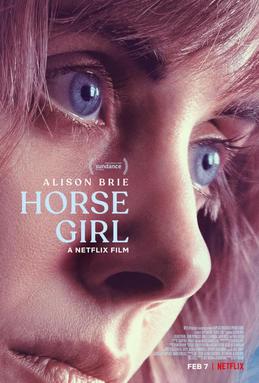
13. Horse Girl (dir by Jeff Baena) — This is a film that definitely deserved a bit more attention than it received.  Alison Brie gives a brave and sympathetic performance as someone who believes that she’s a clone who has been abducted by aliens.  Is she suffering from delusions brought on by a combination of loneliness and too much television?  Or is she right?  The film will leave you guessing.  While Brie is at the center of almost every scene, Molly Shannon also gives a good performance as one of Brie’s only friends.

12. Sound of Metal (dir by Darius Marder) — Riz Ahmed plays an occasionally obnoxious drummer who goes deaf.  Worried that Ahemd is going to relapse into drug use, his girlfriend and musical partner (Olivia Cooke) checks him into a rehab center for the deaf.  With the help of a sympathetic but no-nonsense counselor (Paul Raci), Ahmed struggles to come to accept the loss of sound and music from his life.  The three main performances elevate this film, making it one of the year’s best.  In the film’s best moments, we hear the world through Ahmed’s ears and experience what he’s experiencing.

11. Mangrove (dir by Steve McQueen) — The first film in Steve McQueen’s Small Axe anthology tells the story of a true life court case.  Politically charged from beginning to end and leaving no doubt as to what the true stakes were in the case, Mangrove is the film that Trial of The Chicago 7 should have been.

10. Soul (dir by Peter Docter) — The latest from PIXAR made me cry as only a great PIXAR film can.  A music teacher named Joe (voices by Jamie Foxx) falls down a manhole shortly after winning his dream job in a jazz band.  Unwilling to die before performing on stage, Joe finds himself in the Great Before, assigned to teach an unborn soul named 22 (voiced by Tina Fey) what it means to be human …. okay, you know what?  This film has one of those plots that sounds silly if you try to explain it.  What matters is that it’s a heartfelt film that celebrates every minute of life.  Foxx and Fey both do wonderful voice work and the animation is as clever as always.  Plus, there’s a cat!

9. The Vast of Night (dir by Andrew Patterson) — This low-budget film is a wonderfully atmospheric look at what may or may not be an alien invasion taking place in the 1950s.  Featuring wonderfully naturalistic performances and an intelligent storyline, The Vast of Night is a triumph of the independent spirit.  I can’t wait to see what Andrew Patterson does next.

8. Lovers Rock (dir by Steve McQueen) — The 2nd film is Steve MQueen’s Small Axe anthology, Lovers Rock centers on one exhilarating house party.  Though the world outside of this party may be harsh and full of oppression and racism (a group of white teens shout racial slurs at one partygoer when she steps outside of the house), the world inside of the party is one of love, music, and celebration.

7. i’m thinking of ending things (dir by Charlie Kaufman) — A riddle wrapped in an enigma, i’m thinking of ending things features great performance from Jessie Buckley, Jesse Plemons, Toni Collette, and David Thewlis.  What starts out as an awkward drive to visit Plemons’s parents grows increasingly more and more surreal until the audience is left to wonder what is real, what is fantasy, and whether the majority of the film’s characters even exist.  This film plays out like a dream and stays with you long after it end.

6. Palm Springs (dir by Max Barbakow) — Perhaps the ultimate twist on Groundhog Day, Palm Springs is a thought-provoking comedic gem from Lonely Island Classic Pictures.  Andy Samberg, J.K. Simmons, and Cristin Milioti find themselves living the same day over and over again.  Each one reacts to their predicament in a different way.  It’ll make you laugh and then it’ll make you cry.  Revealing too much else about the plot would be a crime.  It’s on Hulu so go watch it.

5. The Assistant (dir by Kitty Green) — This infuriating and ultimately tragic film follows one day in the life of Jane (Julia Garner), a production assistant at a film company.  Though he’s never seen, Jane’s boss is clearly meant to be a fictionalized version of Harvey Weinstein.  Should Jane save her career or try to warn the actress that her boss has clearly set his eyes upon as his next victim?  The scene where the head of HR assures Jane that she needn’t worry about her boss’s behavior because “you’re not his type,” rings all too horribly true.  The Assistant was obviously designed to be a rallying call for #MeToo but sadly, today, it feels more like an obituary.
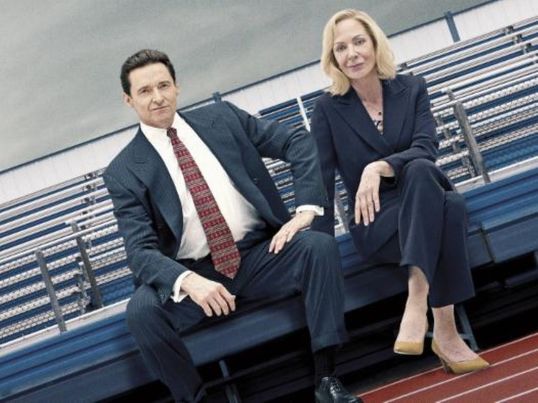
Bad Education

4. Bad Education (dir by Cory Finley) — All year, I have been lamenting the fact that Bad Education was bought by HBO and not Netflix.  If it had been released on Netflix, it would probably be an Oscar contender and Hugh Jackman would be in the hunt for his first Best Actor Oscar.  Instead, it aired on HBO and it had to settle for limited Emmy recognition.  It’s a shame because this film, which centers on embezzlement at one suburban school, was one of the best of 2020.  At a time when we’re being told not to question authority, Bad Education encourages us to question everything.  Along with being thought-provoking, it’s also occasionally laugh out loud funny.  Jackman is brilliant in the lead role.  Allison Janney is award-worthy as his partner-in-crime.  Ray Romano takes another step in proving that he’s more than just a sitcom actor.  All in all, this was a great movie.

3. First Cow (dir by Kelly Reichardt) — This melancholy tale follows two men who meet in Oregon in the 1820s and who become unlikely business partners.  Unfortunately, being partners means stealing milk from Toby Jones’s cow and thievery was even less appreciated in the 1820s than it is today. Featuring outstanding lead performances from Jon Magaro and Orion Lee, First Cow is a rewarding work of historical fiction.  Kelly Reichardt makes you feel as if you’ve woken up in the 1820s, even as she uses the past to comment upon the present.  This probably isn’t a film for everyone.  Reichardt’s style has always been more about observing than passing judgment.  But for viewers willing to stick with it, this deliberately paced film is a rewarding experience.

Finally, when it comes to the best film of the year, I’ve been going back and forth between two films.  In the end, I have to declare a tie.  In alphabetical order by title, here are the two best films of 2020:

2. The Girl With A Bracelet (dir by Stéphane Demoustier) — This French film is about a teenage girl who is on trial for murdering her best friend.  Whether or not she’s guilty is ultimately less important than why everyone has been so quick to accuse her in the first place.  Featuring an outstanding ensemble and an intelligent script, The Girl With A Bracelet will leave you thinking about …. well, everything.  It can currently be viewed on Prime.

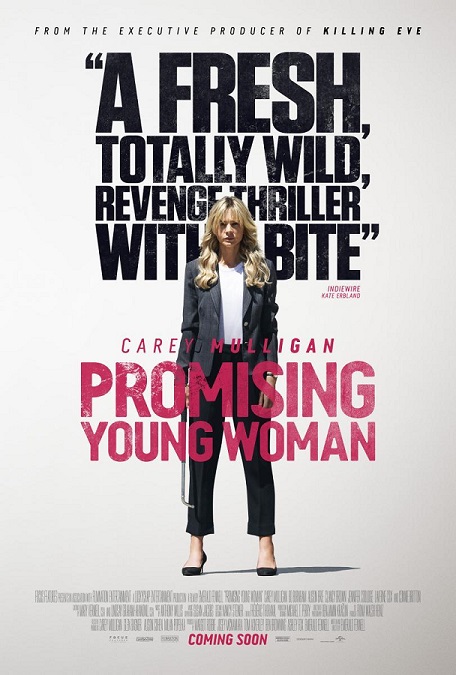
1. Promising Young Woman (dir by Emerald Fennell) — When I first started watching this film, I worried that it might be too stylized to be effective.  But it soon became apparent the director/screenwriter Emerald Fennell and star Carey Mulligan both knew exactly what they needed to do to tell this story.  Mulligan plays a med school drop-out who is seeking her own unique style of revenge against not only the men who raped her best friend in college but also the people who Mulligan feels subsequently let her friend down.  Bo Burnham plays the pediatrician who asks Mulligan out on a date and who appears to be the perfect nice guy, the adorably awkward boyfriend who you you would expect to find in a 90s rom com.  Neither character turns out to be exactly who they initially appeared to be.  Promising Young Woman mixes genres that normally don’t go together, smashing together drama and comedy, and it’s just audacious enough to be one of the best films of the year.


TSL Looks Back at 2020:

  1. 2020 In Review: The Best of Lifetime (Lisa Marie Bowman)
  2. 12 Good Things I Saw On Television in 2020 (Lisa Marie Bowman)
  3. Lisa Marie’s Top 8 Novels of 2020 (Lisa Marie Bowman)
  4. Lisa Marie’s Top 8 Non-Fiction Books of 2020 (Lisa Marie Bowman)
  5. Lisa Marie’s 20 Favorite Songs of 2020 (Lisa Marie Bowman)
  6. Lisa Marie’s 16 Worst Films of 2020 (Lisa Marie Bowman)
  7. My Top 20 Albums of 2020 (Necromoonyeti)
  8. 25 Best, Worst, and Gems That I Saw In 2020 (Valerie Troutman)
  9. Top 10 Vintage Collections (Ryan C)
  10. Top 10 Contemporary Collections (Ryan C)
  11. Top 10 Original Graphic Novels (Ryan C)
  12. Top 10 Ongoing Series (Ryan C.)
  13. Top 10 Special Mentions (Ryan C.)
  14. Top Ten Single Issues (Ryan C)
Here Are The Film Independent Spirit Nominations!


Earlier today, the nominations for the Independent Spirit Awards were announced!  The winners will be announced on April 22nd so that’ll give all of us a lot of time to consider them.

Here are the nominees:

BEST FEATURE
First Cow
Ma Rainey’s Black Bottom
Minari
Never Rarely Sometimes Always
Nomadland

BEST FIRST FEATURE
I Carry You With Me
The Forty-Year-Old Version
Miss Juneteenth
Nine Days
Sound of Metal

JOHN CASSAVETES AWARD – Given to the best feature made for under $500,000
The Killing of Two Lovers
La Leyenda Negra
Lingua Franca
Residue
Saint Frances

BEST DIRECTOR
Lee Isaac Chung – Minari
Emerald Fennell – Promising Young Woman
Eliza Hittman – Never Rarely Sometimes Always
Kelly Reichardt – First Cow
Chloé Zhao – Nomadland

BEST SCREENPLAY
Lee Isaac Chung – Minari
Emerald Fennell – Promising Young Woman
Eliza Hittman – Never Rarely Sometimes Always
Mike Makowsky – Bad Education
Alice Wu – The Half of It

BEST FIRST SCREENPLAY
Kitty Green – The Assistant
Noah Hutton – Lapsis
Channing Godfrey Peoples – Miss Juneteenth
Andy Siara – Palm Springs
James Sweeney – Straight Up

BEST CINEMATOGRAPHY
Jay Keitel – She Dies Tomorrow
Shabier Kirchner – Bull
Michael Latham – The Assistant
Hélène Louvart – Never Rarely Sometimes Always
Joshua James Richards – Nomadland

BEST EDITING
Andy Canny – The Invisible Man
Scott Cummings – Never Rarely Sometimes Always
Merawi Gerima – Residue
Enat Sidi – I Carry You With Me
Chloé Zhao – Nomadland

BEST FEMALE LEAD
Nicole Beharie – Miss Juneteenth
Viola Davis – Ma Rainey’s Black Bottom
Sidney Flanigan – Never Rarely Sometimes Always
Julia Garner – The Assistant
Frances McDormand – Nomadland
Carey Mulligan – Promising Young Woman

BEST MALE LEAD
Riz Ahmed – Sound of Metal
Chadwick Boseman – Ma Rainey’s Black Bottom
Adarsh Gourav – The White Tiger
Rob Morgan – Bull
Steven Yeun – Minari

BEST SUPPORTING FEMALE
Alexis Chikaeze – Miss Juneteenth
Yeri Han – Minari
Valerie Mahaffey – French Exit
Talia Ryder – Never Rarely Sometimes Always
Yuh-jung Youn – Minari

BEST SUPPORTING MALE
Colman Domingo – Ma Rainey’s Black Bottom
Orion Lee – First Cow
Paul Raci – Sound of Metal
Glynn Turman – Ma Rainey’s Black Bottom
Benedict Wong – Nine Days

ROBERT ALTMAN AWARD – Given to one film’s director, casting director and ensemble cast
One Night in Miami…
Director: Regina King
Casting Directors: Kimberly R. Hardin
Ensemble Cast: Kingsley Ben-Adir, Eli Goree, Aldis Hodge, Leslie Odom Jr.

BEST DOCUMENTARY
Collective
Crip Camp
Dick Johnson is Dead
The Mole Agent
Time

BEST INTERNATIONAL FILM (Award given to the director)
Bacurau
The Disciple
Night of the Kings
Preparations to be Together for an Unknown Period of Time
Quo Vadis, Aida?

PRODUCERS AWARD – The Producers Award, now in its 24th year, honors emerging producers who, despite highly limited resources, demonstrate the creativity, tenacity and vision required to produce quality independent films.
Kara Durrett
Lucas Joaquin
Gerry Kim

SOMEONE TO WATCH AWARD – The Someone to Watch Award, now in its 27th year, recognizes a talented filmmaker of singular vision who has not yet received appropriate recognition.
David Midell – Director of The Killing of Kenneth Chamberlain
Ekwa Msangi – Director of Farewell Amor
Annie Silverstein – Director of Bull

TRUER THAN FICTION AWARD – The Truer Than Fiction Award, now in its 26th year, is presented to an emerging director of non-fiction features who has not yet received significant recognition.
Cecilia Aldarondo – Director of Landfall
Elegance Bratton – Director of Pier Kids
Elizabeth Lo – Director of Stray

TV CATEGORIES

BEST NEW NON-SCRIPTED OR DOCUMENTARY SERIES
Atlanta’s Missing and Murdered: The Lost Children
City So Real
Immigration Nation
Love Fraud
We’re Here

BEST NEW SCRIPTED SERIES
I May Destroy You
Little America
Small Axe
A Teacher
Unorthodox

BEST FEMALE PERFORMANCE IN A NEW SCRIPTED SERIES
Elle Fanning – The Great
Shira Haas – Unorthodox
Abby McEnany -Work in Progress
Maitreyi Ramakrishnan – Never Have I Ever
Jordan Kristine Seamón – We Are Who We Are

BEST MALE PERFORMANCE IN A NEW SCRIPTED SERIES
Conphidance – Little America
Adam Ali – Little America
Nicco Annan – P-Valley
Amit Rahav – Unorthodox
Harold Torres – Zero, Zero, Zero

BEST ENSEMBLE CAST IN A NEW SCRIPTED SERIES
I May Destroy You
Ensemble Cast: Michaela Coel, Paapa Essiedu, Wruche Opia,
Stephen Wight

The Films of 2020: Ma Rainey’s Black Bottom (dir by George C. Wolfe)


The year is 1927 and the place is Chicago.  6 men are in a claustrophobic recording studio, waiting for the arrival of blues singer Ma Rainey (Viola Davis).  While Ma’s agent, Irv (Jeremy Shamos) and studio owner Mel Sturdyvant (Johnny Coyne) wait upstairs, the members of Ma’s band gather in the rehearsal room.  They’ve been given a list of songs to rehearse.  As is quickly made clear, the band doesn’t have much say about which songs they’re going to perform and record.  In fact, Irv and Mel pretty much go out of their way to have as little contact with the black musicians as possible.

The band is made up of Cutler (Colman Domingo), Slow Drag (Michael Potts), Toledo (Glynn Turman), and a trumpet player named Levee (Chadwick Boseman).  Cutler may be their unofficial leader but Levee is the most outspoken.  Levee is sick of playing what he calls “jug band music.”  He’s written his own songs and he’s shown them to Sturdyvant.  He’s convinced that he’s going to start his own band and that he’s going to become a bigger star than Ma Rainey ever was.  The rest of the band views Levee with a mix of humor and distrust.

As for Ma, she arrives an hour late, accompanied by her girlfriend Dussie (Taylor Paige) and her nephew, Sylvester (Dusan Brown).  She doesn’t apologize for being late and, as soon as she arrives, she starts to make her voice heard.  She wants Sylvester to perform a spoken word intro on the record, despite the fact that Sylvester stutters.  When Irv and Sturdyvant fail to bring her a coke, she brings recording to a halt until she gets one.  She argues about which songs she wants to record and she reprimands Levee for trying to change the arrangement of one of her songs.  Ma’s difficult but, as she explains it, she has to be difficult.  Irv and Sturdyvant don’t care about her, they don’t care about what her music is actually about, and they certainly don’t care about paying her what she deserves.  Irv may claim to care about her but, as Ma tells Cutler, he’s only invited her to his home once and that was so she could sing for his white friends.  When they’re in the recording studio, Ma has all of the power and she’s not going to let anyone forget it.

Meanwhile, the members of the band continue to talk among themselves with the conversation always coming back to what it takes to survive in a society run by white people.  The three older men seem to have accepted that the world is what it is and that’s it’s never going to change but Levee believes that he has a future.  When the other members of the band poke fun at him for the obsequious way that he talks to Sturdyvant, Levee discusses the horrifying trauma of his past.  As the recording sessions continues, tempers start to flare until finally, the film climaxes in an act of sudden violence.

Ma Rainey’s Black Bottom is based on a play by August Wilson and, despite a few efforts to open up the story by including a few scenes on the streets of Chicago, it’s an undeniably stagey film.  You never forget that you’re essentially watching a film version of a theatrical experience.  Fortunately, the performances are so powerful and the dialogue is so sharp that it’s easy to forgive both the film’s staginess and the occasional lapses in pace.

In his final performance before his tragic passing, Chadwick Boseman transforms Levee into a character who manages to be frustrating, sympathetic, and occasionally frightening.  From his powerful monologue about what he and his family experienced during his youth to the film’s final anguished moments, Boseman holds your attention every second that he’s on screen.  Boseman captures not only Levee’s anger and his ambition but also Levee’s fragile confidence.  At the start of the film, he may be bitter about having to play Ma’s music but he’s also perhaps the most hopeful musician in that recording studio and there’s something undeniably tragic about watching him come to realize the truth of his situation.  He’s a character about whom many viewers will have mixed feelings but Boseman is never less than compelling.  Viola Davis, as well, gives a powerful performance as Ma Rainey, playing her as someone who knows that she can’t afford to show a single moment of weakness.  Ma knows that the white men who are in charge of the studio need her more than she needs them and she’s not going to let them forget it.  Of the rest of the cast, Glynn Turman is a stand-out as a piano player who knows and understands history in a way that his bandmates don’t.

Ma Rainey’s Black Bottom is currently streaming on Netflix.


The National Society of Film Critics Honors Nomadland


I was kind of hoping that, when they met and voted earlier today, the National Society Of Film Critics would add some new films and performances to the Oscar discussion but instead, they went for the usual suspects.  Nomadland took Best Picture, though First Cow was a close runner-up.  Chloe Zhao, Frances McDormand, and Maria Bakalova won again.  I mean, if we’re going to be honest …. it was all pretty predicable.  Remember how, in past years, it sometimes took nearly an entire day for the NSFC to announce all their winners because the voting was so close?  That didn’t happen this year.  It was all pretty much cut-and-dried.  I followed along on twitter because I’m addicted to this stuff but as soon as they announced Frances McDormand was their pick for Best Actress, I knew how the day was going to go.

(And don’t get me wrong!  Frances McDormand is great!  I haven’t seen Nomadland yet but I greatly admired The Rider, Chloe Zhao’s previous film.  Please do not think that I’m saying that any of these awards are undeserved because I most certainly am not.  Instead, I’m just saying that — from the perspective of a lifelong Oscar watcher — it’s more fun when things aren’t predictable.)

Oh well, it happens.  Sometimes, you have an Oscar race where every precursor is unpredictable and it seem like anyone could win.  And then we have years like this one, where the same film keeps winning over and over again.  Some people would say that we should probably just be happy that people can all agree on something for once.  Hopefully, they won’t say that to me, though.  If we’re all going to agree on something, let’s agree to treat one another with respect and not always jump to the worst conclusion about the other side.  Agreeing on films, though, is nothing to celebrates.  Films are meant to be argued about.

Anyway, here are the winners from the National Society Of Film Critics!

Best Picture
Winner: NOMADLAND (52 points)
Runners-up: FIRST COW (50 points) & NEVER RARELY SOMETIMES ALWAYS (41 points)

Best Director
Winner: Chloé Zhao, NOMADLAND (58 points)
Runners-up: Steve McQueen, SMALL AXE (41 points) & Kelly Reichardt, FIRST COW (30 points)

Best Foreign-Language Film
Winner: COLLECTIVE (38 points)
Runners-up: BACURAU and BEANPOLE (36 points) & VITALINA VARELA (32 points)

Best Actress
Winner: Frances McDormand, NOMADLAND (46 points)
Runners-up: Viola Davis, MA RAINEY’S BLACK BOTTOM (33 points) & Sidney Flanigan, NEVER RARELY SOMETIMES ALWAYS (29 points)

Best Actor
Winner: Delroy Lindo, DA 5 BLOODS (52 points)
Runners-up: Chadwick Boseman, MA RAINEY’S BLACK BOTTOM (47 points) & Riz Ahmed, SOUND OF METAL (32 points)

Best Supporting Actress
Winner: Maria Bakalova, BORAT SUBSEQUENT MOVIEFILM (47 points)
Runners-up: Amanda Seyfried, MANK (40 points) & Youn Yuh-jung, MINARI (33 points)

Best Supporting Actor
​Winner: Paul Raci, SOUND OF METAL (53 points)
Runners-up: Glynn Turman, MA RAINEY’S BLACK BOTTOM (36 points) & Chadwick Boseman, DA 5 BLOODS (35 points)

Best Screenplay
Winner: Eliza Hittman, NEVER RARELY SOMETIMES ALWAYS (38 points)
Runners-up: Jon Raymond and Kelly Reichardt, FIRST COW (35 points) Charlie Kaufman, I’M THINKING OF ENDING THINGS (29 points)

Best Cinematography
Winner: Joshua James Richards, NOMADLAND (47 points)
Runners-up: Shabier Kirchner, LOVERS ROCK (41 points) & Leonardo Simões, VITALINA VARELA (34 points)

The Los Angeles Film Critics Association Honors …. Small Axe!?


Small Axe: Mangrove

The Los Angeles Film Critics Association met earlier today and announced their picks for the best of 2020.  In the past, the LAFCA has been considered to be one of the more reliable of the Oscar precursors.  For the past decade, the LAFCA’s pick for best film has gone on to pick up several Oscar nominations.

Well, that streak came to an end today.  In a totally unexpected but still rather nice twist, the LAFCA selected Steve McQueen’s Small Axe as Best Picture.  Small Axe, of course, is the umbrella title for five films that McQueen produced for the BBC and which are currently streaming on Prime.  I’ve reviewed two of them — Mangrove and Red, White, and Blue I’ll watch and review the other three this week.

Whether or not Small Axe is Oscar eligible has long been an open question.  Both Mangrove and Red, White, and, Blue were selected to premiere at Cannes and to play at other festivals before making then airing on the BBC and streaming on Prime.  Due to the pandemic, the Academy also changed the rules this year to make it easier for streaming films to compete.  However, Steve McQueen has said that Small Axe was always intended to be a television miniseries and that, despite the films being accepted to Cannes and other festivals, there was never any plan to release any of them theatrically.  For its part, Amazon has submitted Small Axe to the Golden Globes as a Limited Series and was apparently planning on mounting an Emmy campaign next year.  With the exception of documentaries, films nominated for Emmys are not eligible to be nominated for Oscars and vice versa.  The rule, even in this odd year, is that you have to pick one or the other.

So, by all those standards, none of McQueen’s five films nor Small Axe as a whole are Oscar-eligible.  Will that change?  Will Amazon decide to forgo the Emmys and instead go for an Oscar campaign?  Eh …. probably not.  But who knows — with this year blurring the lines between theatrical and television films like never before, anything could happen.  (But probably won’t.)

Anyway, here are the LAFCA winners!

Best Film
Small Axe
Runner-Up: Nomadland

Best Foreign Film
Beanpole
Runner-Up: Martin Eden

Best Director
Chloé Zhao – Nomadland
Runner-Up: Steve McQueen – Small Axe

Best Actress
Carey Mulligan – Promising Young Woman
Runner-Up: Viola Davis – Ma Rainey’s Black Bottom

Best Actor
Chadwick Boseman – Ma Rainey’s Black Bottom
Runner-Up: Riz Ahmed – Sound Of Metal

Best Documentary Film
Time
Runner-Up: Collective

Best Screenplay
Promising Young Woman
Runner-Up: Never Rarely Sometimes Always

Best Animated Film
Wolfwalkers
Runner-Up: Soul

Best Supporting Actress
Youn Yuh-jung – Minari
Runner-Up: Amanda Seyfried – Mank

Best Editing
The Father
Runner-Up: Time

Best Production Design
Mank
​Runner-Up: Beanpole

Best Supporting Actor
Glynn Turman – Ma Rainey’s Black Bottom
Runner-Up: Paul Raci – Sound Of Metal

Best Music/Score
Soul
Runner-Up: Lovers Rock

Best Cinematography
Small Axe
Runner-Up: Nomadland

New Generation Award
Radha Blank – The Forty-Year-Old-Version

Career Achievement Award
Hou Hsiao-Hsien and Harry Belafonte

Legacy Award
Norman Lloyd

The Douglas Edwards Experimental Film Prize
John Gianvito – Her Socialist Smile

John Boyega in Small Axe: Red, White, and Blue