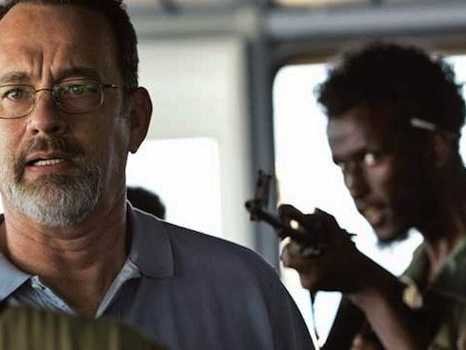
Lisa Reviews An Oscar Nominee: Captain Phillips (dir by Paul Greengrass)


tom-hanks-barkhad-abdi-captain-phillips

Here’s an interesting and often overlooked fact:

It has been 17 years since Tom Hanks was last nominated for Best Actor.

When I discovered this fact, I was shocked because Tom Hanks is one of those actors who has a reputation for always getting nominated.  We tend to think of him as almost being a male Meryl Streep, an actor who will be nominated simply for showing up.  But, actually, the Academy last nominated Tom Hanks, for his performance in Cast Away, in the year 2000.

Hanks has given plenty of strong performances since then and he’s continued to appear in acclaimed and Oscar-nominated films.  And you would think, considering his apparent popularity in Hollywood, Tom Hanks would have been nominated for everything from Charlie Wilson’s War to Bridge of Spies.  But no.

Personally, I think Hanks should have been nominated this year for Sully.  But you know what Hanks performance truly deserved some Oscar recognition?

Captain Phillips.

Playing the title role in this 2013 Best Picture nominee, Hanks gave perhaps the best performance of his career.  That he was snubbed by the Academy is not only shocking but it’s actually a bit unforgivable.  Perhaps Hanks was so good that the Academy took him for granted.  Perhaps they thought that since both Hanks and Richard Phillips are decent, down-to-Earth guys, that Hanks was just playing himself.  For whatever reason, Tom Hanks deserved, at the very least, a nomination.

Captain Phillips was based on a true story.  This is another docudrama from director Paul Greengrass, filmed in his signature (and potentially nausea-inducing) handheld style.  (Actually, if any aspiring director wants to understand how to effectively use the handheld style, Greengrass is the filmmaker to study.)  In 2009, a four Somali pirates hijacked the Maersk Alabama and took its captain, Richard Phillips, hostage.  Captain Phillips was eventually rescued by a group of Navy SEALS.  Three of the pirates were killed while their leader, Muse (Barkhad Abdi), was captured and is currently serving a 33 year sentence in a federal penitentiary.

This was a huge news story in 2009 with the rescue being described as being the first major foreign policy victory for the new presidential administration.  When Phillips was rescued, people took to the streets and the “USA!  USA!” chant was heard.  “That’s right,” the media and the government and the chanters seemed to be exclaiming in unison, “America’s back!  We were abused and it’s never going to happen again!”

A lot of that jubilation was because, at the time, the term “Somali pirates” conjured up visions of cinematic villains who would be more at home in Mad Max: Fury Road than in the real world.  The reality of the situation, of course, was that the “pirates,” whose deaths were celebrated as some sort of political victory for the government, were actually poverty-stricken Somali teenagers, the majority of which worked for warlords who remained (and still remain) safely hidden away.

One of the more interesting things about Captain Phillips is that it devotes almost as much time to the Somali pirates as it does to Phillips and his crew.  Rather than presenting them as a nameless and personalityless threat, the film allows Muse and his men to emerge as individuals.  Much as Phillips spends the movie trying to keep both himself and his crew safe, Muse spends much of the movie trying to keep an increasingly out-of-control situation stable.  Both Phillips and Muse are in over their heads.  Barkhad Abdi gives a smart and intimidating performance as Muse.  The film never makes the mistake of excusing the actions of Muse or the other pirates but, at the same time, it does provide a more nuanced view of them than one would normally expect.

But really, this film totally belongs to Tom Hanks.  Captain Phillips works because of Tom Hanks.  It earned its best picture nomination on the strength of Hanks’s performance.  As an actor, Hanks could have easily coasted on the good will that the audience would have already had for him but instead, he fully commits himself to playing not Tom Hanks but instead Captain Richard Phillips.  The film’s final scene — in which Phillips goes into a state of shock and can’t stop talking — is a masterclass in great acting.  How the Academy ignored it, I will never understand.

Captain Phillips was nominated for best picture of 2013.  However, it lost to 12 Years a Slave.
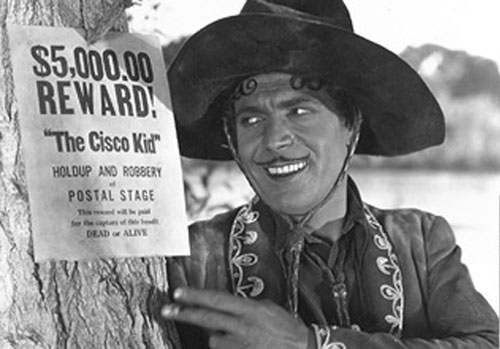
 

Lisa Marie Reviews An Oscar Nominee: In Old Arizona (dir by Raoul Walsh and Irving Cummings)


in-old-arizona-warner-baxter

Since the Oscars are approaching, I thought I would devote February to continuing my never-ending quest to watch and review every single film nominated for best picture!

With that in mind, I recently watched the 1928 film In Old Arizona.  In Old Arizona is a bit of an oddity in Oscar history.  Even though it is considered to have been a best picture nominee, it was never officially nominated.  In fact, in 1929, there were no official nominees.  Instead, the Academy simply announced the names of the winners.  The winners were selected by a small committee of judges.  The committee’s intentions are particularly obvious when you notice that not one film won more than one Oscar in 1929.  At a time when the industry was struggling to make the transition from silent film to the talkies, the 1929 Oscars were all about spreading the wealth and reassuring everyone that they were doing worthwhile work.  In Old Arizona‘s star, Warner Baxter, was named the year’s best actor while Broadway Melody was declared to have been the best picture.

(At that year’s Oscar ceremony, the second in the Academy’s history, the awards were reportedly handed out in 10 minutes and nobody gave an acceptance speech.  If this all seems strange when compared to the annual extravaganza that we all know and love, consider that Louis B. Mayer originally formed the Academy in order to give the studio bosses the upper hand in a labor dispute.  The awards were largely an afterthought.)

Years later, Oscar historians came across the notes of the committee’s meeting.  The notes listed every other film and performer that the committee considered.  Before settling on Broadway Melody, the committee apparently considered In Old Arizona.  For that reason, In Old Arizona is considered to have been nominated for best picture of the year.

If it seems like I’ve spent a bit more time than necessary discussing the history behind the 1929 Oscars, that’s because In Old Arizona isn’t that interesting of a film.  It was a huge box office success in 1929 and it was an undeniable influence on almost every Western that followed but seen today, it’s an extremely creaky film.  Influential or not, there’s not a scene, character, or performance in In Old Arizona that hasn’t been done better by another western.

Based on a story by O. Henry, In Old Arizona tells the story of a bandit named The Cisco Kid (Warner Baxter).  Cisco may be an outlaw but he’s also a nice guy who enjoys a good laugh and occasionally sings a song while riding his horse across the Arizona landscape.  (California and Utah stood in for Arizona.)  The Cisco Kid may rob stagecoaches but he always does it with a smile.  Besides, he only needs the money so that he can give gifts to his girlfriend, Tonia (Dorothy Burgess).  What the Cisco Kid doesn’t know is that Tonia is bored and frustrated by his frequent absences and she has been cheating on him.  Then she’s approached by Sgt. Mickey Dunn (Edmund Lowe), the big dumb lug who has been ordered to bring the Kid in (dead or alive, of course).  Will Tonia betrayed the Kid?

If you’re watching In Old Arizona and hoping to be entertained, you’ll probably be disappointed.  Almost everything about this film has aged terribly.  Watching the film, it’s obvious that none of the actors had quite figured out how to adapt to the sound era and, as such, all of the performances were very theatrical and overdone.  Probably the easiest to take is Edmund Lowe, who at least managed to deliver his lines without screeching.  Sadly, the same cannot be said of Dorothy Burgess.  As for Warner Baxter, he may have won an Oscar for playing the Cisco Kid but that doesn’t make his acting any easier to take.

And yet, if you’re a history nerd like me, In Old Arizona is worth watching because it really is a time capsule of the era in which it was made.  In Old Arizona was not only the first Western to ever receive an Oscar.  This was also the first all-talking, all-sound picture.  Watching it today, without that knowledge, you might be tempted to wonder why the film lingers so long over seemingly mundane details, like horses walking down a street, the ticking of a clock, a baby crying, or a church bell ringing.  But, if you know the film’s significance, it’s fun to try to put yourself in the shoes of someone watching In Old Arizona in 1929 and, for the first time, realizing that film could not just a visual medium but one of sound as well.  For some members of that 1929 audience, In Old Arizona was probably the first time they ever heard the sound of a horse galloping across the landscape.

(I have to admit that, as a student of American history, I couldn’t help but get excited when one of the characters mentioned President McKinley.  McKinley may be forgotten today but audiences in 1929 would not only remember McKinley but also his tragic assassination.  By mentioning that McKinley was President, In Old Arizona not only reminded audiences that it was taking in the past but that it was also taking place during what would have been considered a more innocent time.  Much as how later movies would use John F. Kennedy as a nostalgic symbol of a more idealistic time, In Old Arizona uses William McKinley.)

In Old Arizona is no longer a particularly entertaining film but, as a historical artifact, it is absolutely fascinating.

Here’s The Super Bowl Spot For Life!


Apparently, there was a Super Bowl spot for a film called Life.  Somehow, I missed it.  Maybe it aired while I was outside, trying to convince the cat to come inside.

Who knows!?

But, what that in mind, here is the Super Bowl spot for Life!  Ryan Reynolds and Jake Gyllenhaal play astronauts and attempt not to get sued by whoever owns the rights to Alien.