“We are not enemies. We are the agents of change. To that end we are bound together.” — Hecate
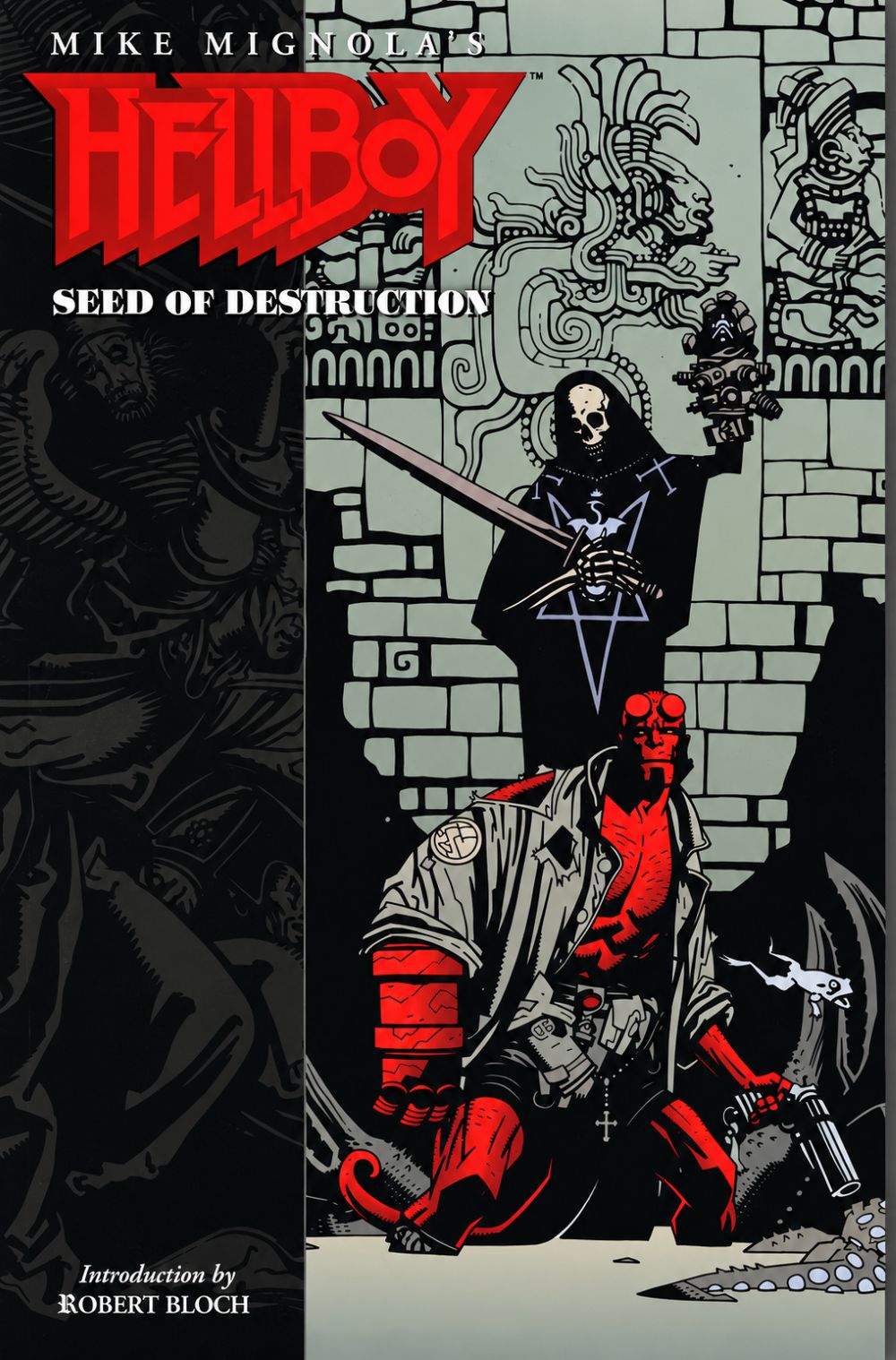
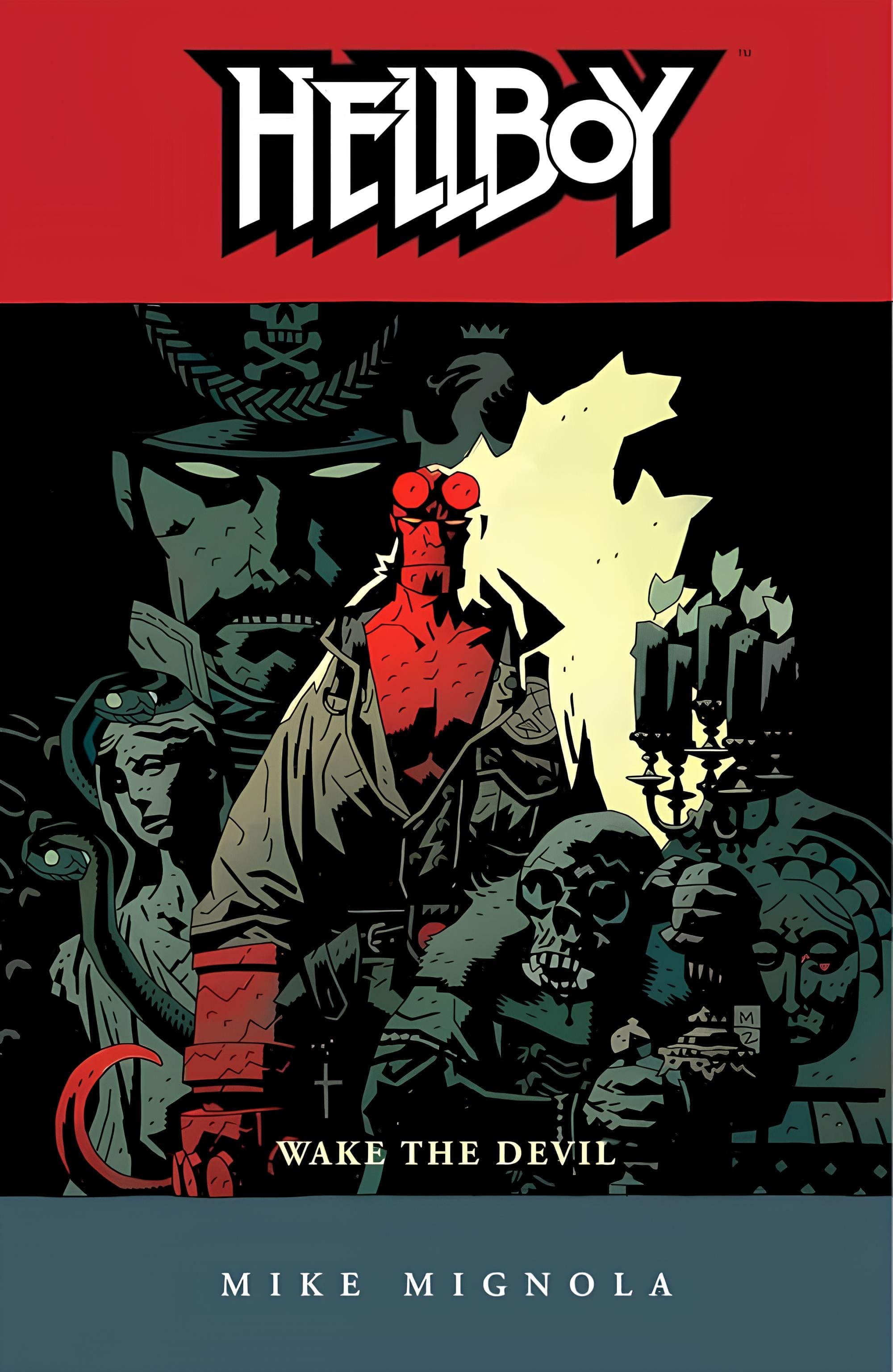
By the time Hellboy: Wake the Devil begins, Mike Mignola has already made clear that Hellboy’s world is not one where the dead stay buried or where ancient evils remain confined to history. Building on the groundwork established in Hellboy: Seed of Destruction, this graphic novel moves deeper into the peculiar mixture of pulp adventure, Gothic horror, occult conspiracy, folklore, and apocalyptic myth that makes Hellboy so distinctive. It is a darker, stranger, and more confident continuation, one that expands Hellboy’s world through vampires, witches, ancient ruins, Russian legends, Nazi occultists, and the ever-present suggestion that the past is not buried so much as waiting to rise again.
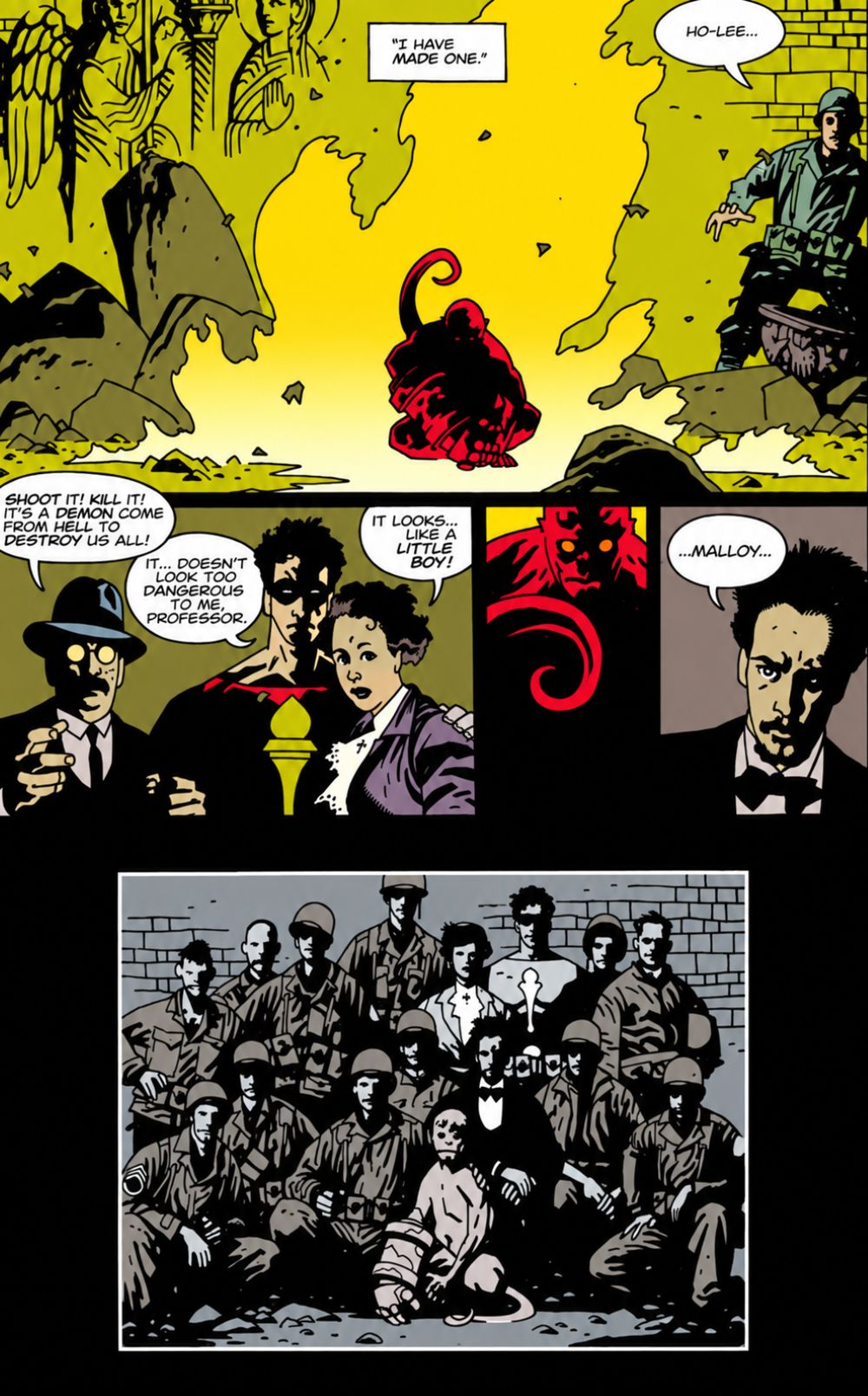
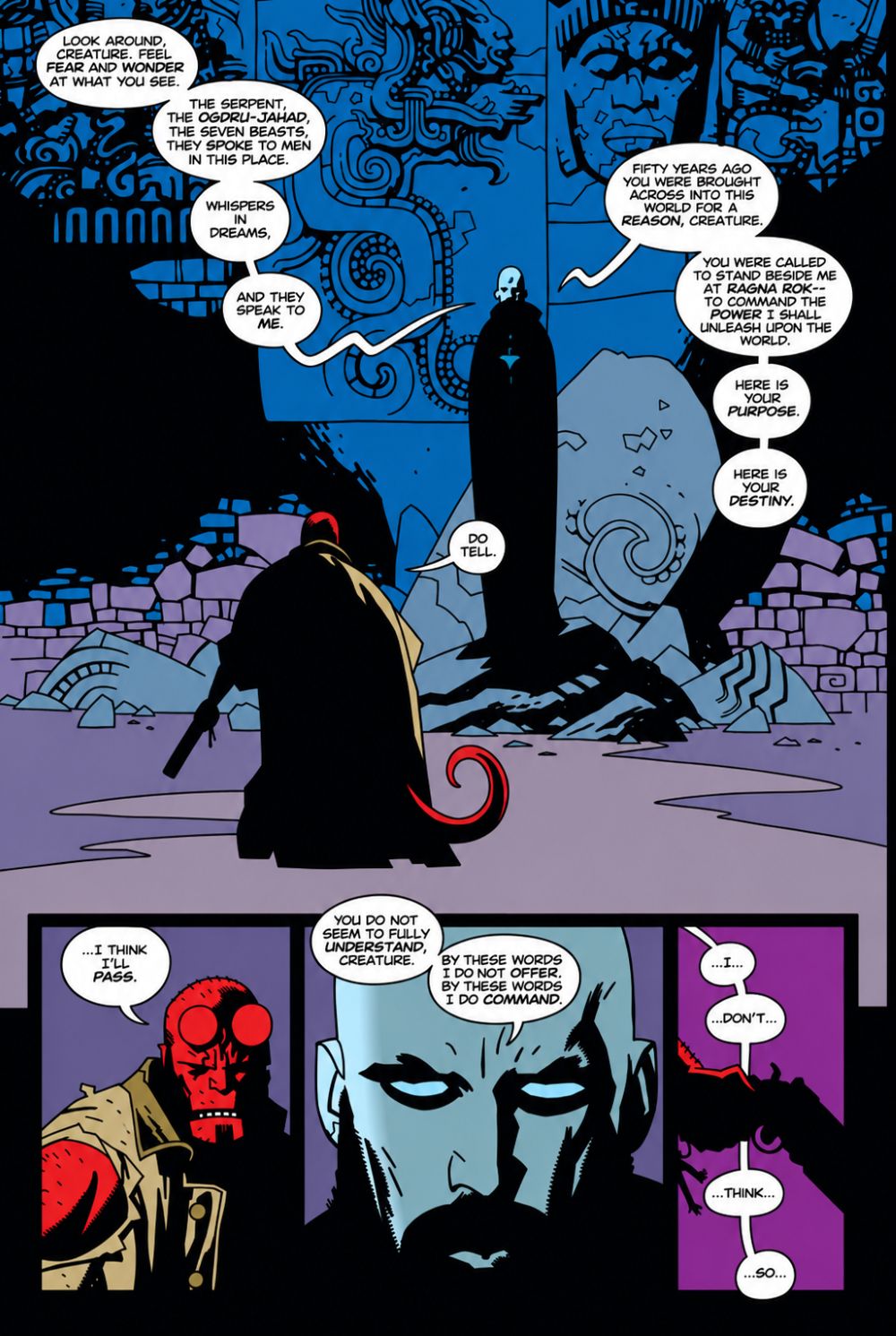
Where Hellboy: Seed of Destruction had to introduce readers to Hellboy, the B.P.R.D., Rasputin, and the ominous question of the hero’s intended destiny, Hellboy: Wake the Devil benefits from being able to assume some familiarity with the larger premise. It does not waste time reintroducing every concept or explaining Hellboy’s origin in exhaustive detail. Instead, Mignola plunges directly into another supernatural crisis, trusting the reader to follow the fragments of history, prophecy, and folklore that emerge along the way. That confidence gives the book a more distinctive identity than the first graphic novel, which was highly entertaining but still carried some of the structure of a traditional early-1990s superhero adventure.
This difference also reflects Mignola’s greater control over the material. While Hellboy: Seed of Destruction was co-plotted and scripted by John Byrne, Wake the Devil feels more purely shaped by Mignola’s own creative instincts. The writing is leaner, stranger, and more willing to leave mysteries partially unresolved. The plot remains accessible, but it is not interested in handing readers a complete guidebook to its mythology. Rather than explaining every occult reference, historical figure, or supernatural artifact, Mignola presents them as pieces of a much larger hidden world. That approach gives the story a dreamlike quality, as if Hellboy has stumbled into a folktale that has been unfolding for centuries without him.
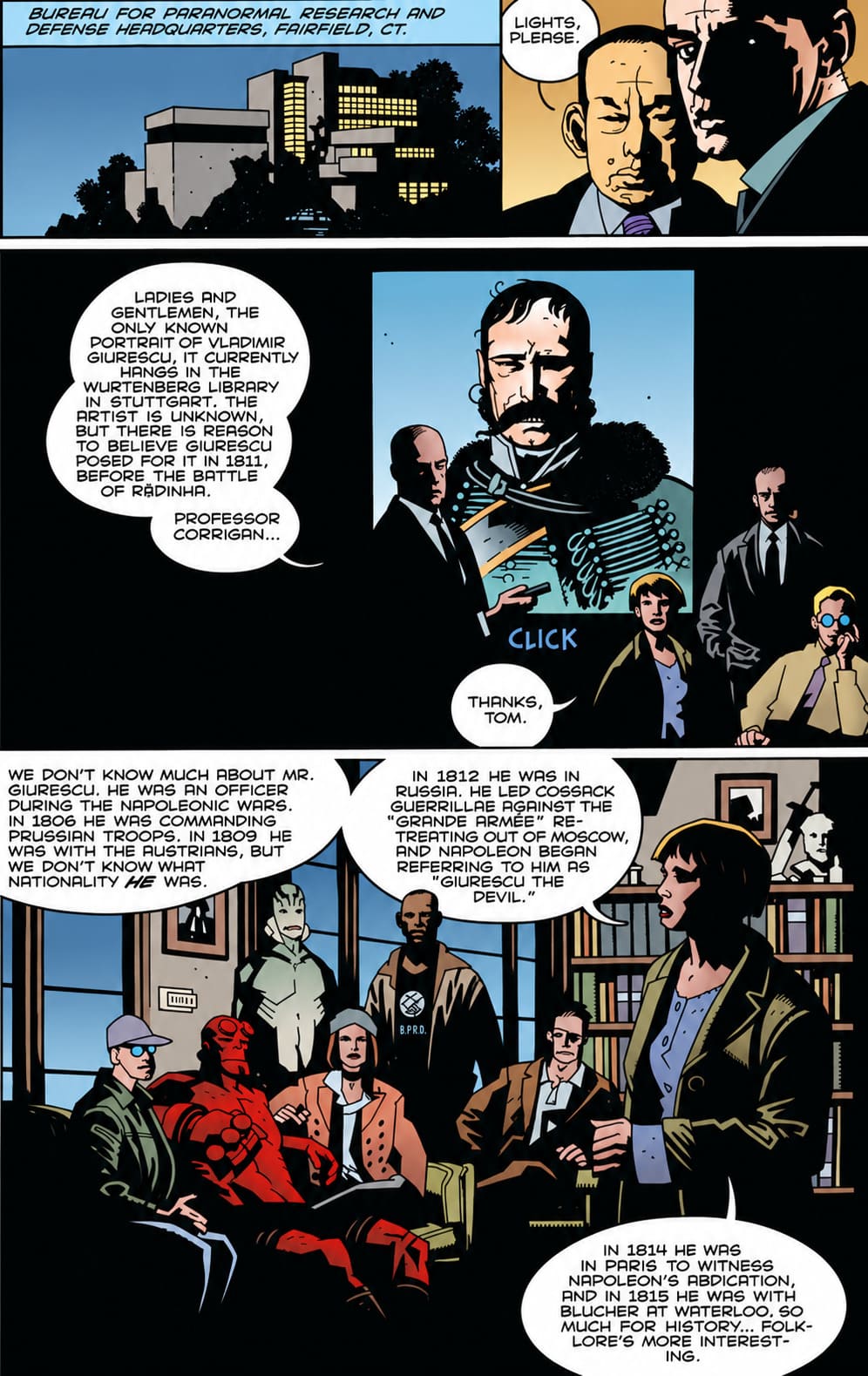
The story begins with a stolen corpse, an opening that immediately establishes the book’s grim tone. This theft is connected to Vladimir Giurescu, an ancient vampire whose resurrection becomes the central threat of the graphic novel. Giurescu is not presented as a familiar, romantic version of Dracula, nor is he simply another monster for Hellboy to punch through a wall. He is an old-world figure tied to European violence, occult ritual, aristocratic power, witchcraft, and death. Mignola makes him feel ancient in the best sense: not merely old, but connected to a past so deep and cruel that modern people cannot fully comprehend it.
Giurescu’s presence is one of the book’s greatest strengths because he embodies the kind of villain Mignola handles especially well. He is frightening not because he constantly performs elaborate acts of violence, although the story has no shortage of monstrous imagery, but because he carries the weight of history with him. His return does not feel like the arrival of a single antagonist. It feels like a buried nightmare opening its eyes. Mignola’s supernatural villains often possess this quality. They are dangerous as individuals, but they are even more dangerous as evidence that Hellboy’s world is built over ancient horrors that have never truly disappeared.
The plot also brings back Ilsa Haupstein, one of the Nazi occultists introduced in Hellboy: Seed of Destruction. Her involvement gives Wake the Devil a direct link to the previous story without making the book feel like a repetitive sequel. The Nazi occult material remains important, but Mignola wisely expands the scope beyond it. The conspirators and occultists are no longer the entire center of the story. They become one part of a wider mythology involving vampires, witches, old relics, secret histories, and supernatural forces that existed long before the twentieth century. The result is a story that feels more expansive without becoming bloated.
The title carries an interesting irony, since Hellboy himself is constantly associated with the devil because of his red skin, horns, tail, and demonic appearance. People who encounter him often assume that he must be monstrous, dangerous, or connected to evil. Yet Wake the Devil again makes clear that Hellboy’s appearance has little to do with his moral character. He may look like a demon, but he is still the person trying to stop the resurrection of an ancient vampire and the spread of occult evil. The real devils in the story are the people and creatures who seek power through murder, ritual, resurrection, and the exploitation of forbidden knowledge.
Hellboy’s moral simplicity is one of the series’ most enduring strengths. He is not simple in the sense of being a shallow character, but he is direct about what matters. He does not spend pages agonizing over whether monsters should be stopped. If something evil is threatening innocent people, he goes after it. He complains, gets irritated, takes a beating, delivers a dry joke, and keeps moving. That makes him an ideal protagonist for Mignola’s world. The setting is filled with cryptic prophecies, ancient names, hidden archives, and supernatural mysteries, but Hellboy gives the reader someone grounded to follow through it all.
His humor remains especially important. Wake the Devil is a dark book, full of graves, corpses, ruined buildings, occult rites, and creatures whose existence seems to violate the natural order. Without Hellboy’s blunt attitude, the material could become overly solemn. He does not make light of the danger, but his presence keeps the graphic novel from collapsing under the weight of its own mythology. Hellboy has the energy of a hardboiled detective dropped into a nightmare, even though his methods usually involve a massive stone fist rather than a revolver and a fedora.
The B.P.R.D. supporting cast also becomes more meaningful in this story. Abe Sapien and Liz Sherman are not merely background teammates, even if Hellboy remains the main focus. Abe’s intelligence and aquatic strangeness make him a natural fit for a universe filled with lost civilizations, secret knowledge, and evolutionary mysteries. Liz, meanwhile, carries a more tragic and dangerous presence because of her pyrokinetic powers. She is not simply a character who can shoot fire at monsters. Her abilities are tied to fear, isolation, and trauma, which gives her a vulnerability that contrasts sharply with Hellboy’s more durable and outwardly confident persona.
The relationship between these characters reinforces the unusual nature of the B.P.R.D. It is not a brightly polished superhero team assembled to save the world in matching costumes. It is an organization of people who have been pushed outside ordinary society, whether by their appearance, their powers, or the bizarre things they have experienced. Hellboy, Abe, and Liz are united less by traditional comic-book camaraderie than by shared alienation. They understand dangers that ordinary people would struggle to believe, and that creates a quieter emotional bond beneath the monster fights and supernatural investigations.
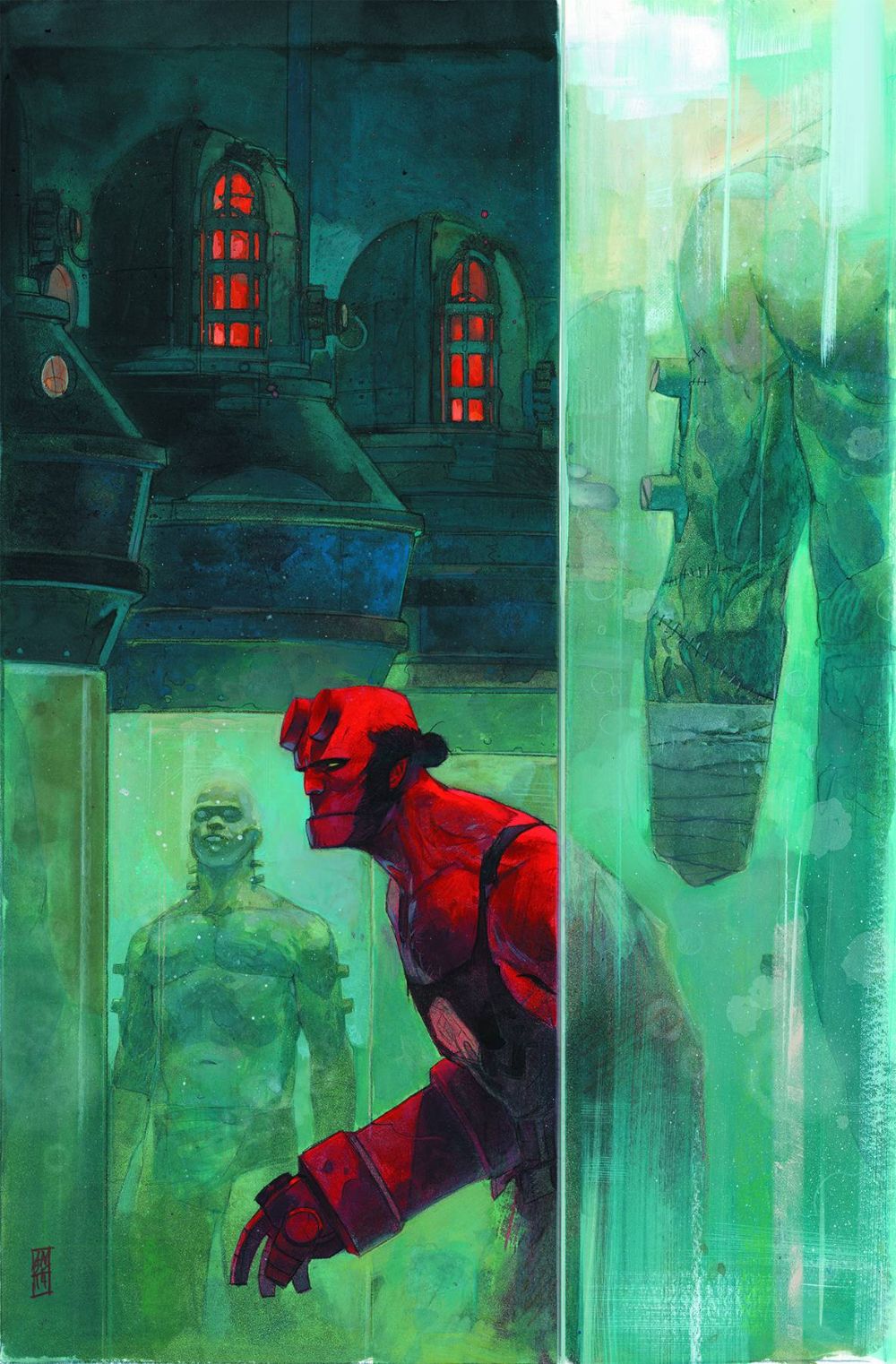
Visually, Hellboy: Wake the Devil is a major achievement. Mignola’s artwork is not built around realism or dense anatomical detail. Instead, it relies on dramatic shapes, bold shadows, exaggerated silhouettes, and a masterful sense of composition. His pages can make a single doorway, tomb, hallway, or distant figure feel ominous. A black shape against a pale background becomes threatening because Mignola knows precisely how much information to withhold. His art frequently suggests that the real terror is not necessarily what readers can see, but what might be waiting inside the darkness beyond the panel.
The book’s use of architecture is especially striking. Castles, crypts, underground chambers, cemeteries, churches, and ruined interiors are not just places where the action happens. They feel like extensions of the story’s ancient dread. Heavy stone walls, towering doorframes, deep corridors, and massive areas of black create the impression that Hellboy is moving through a physical landscape built by history itself. The settings seem to contain memories. Every abandoned room and buried chamber implies that something dreadful once happened there, and perhaps never truly stopped happening.
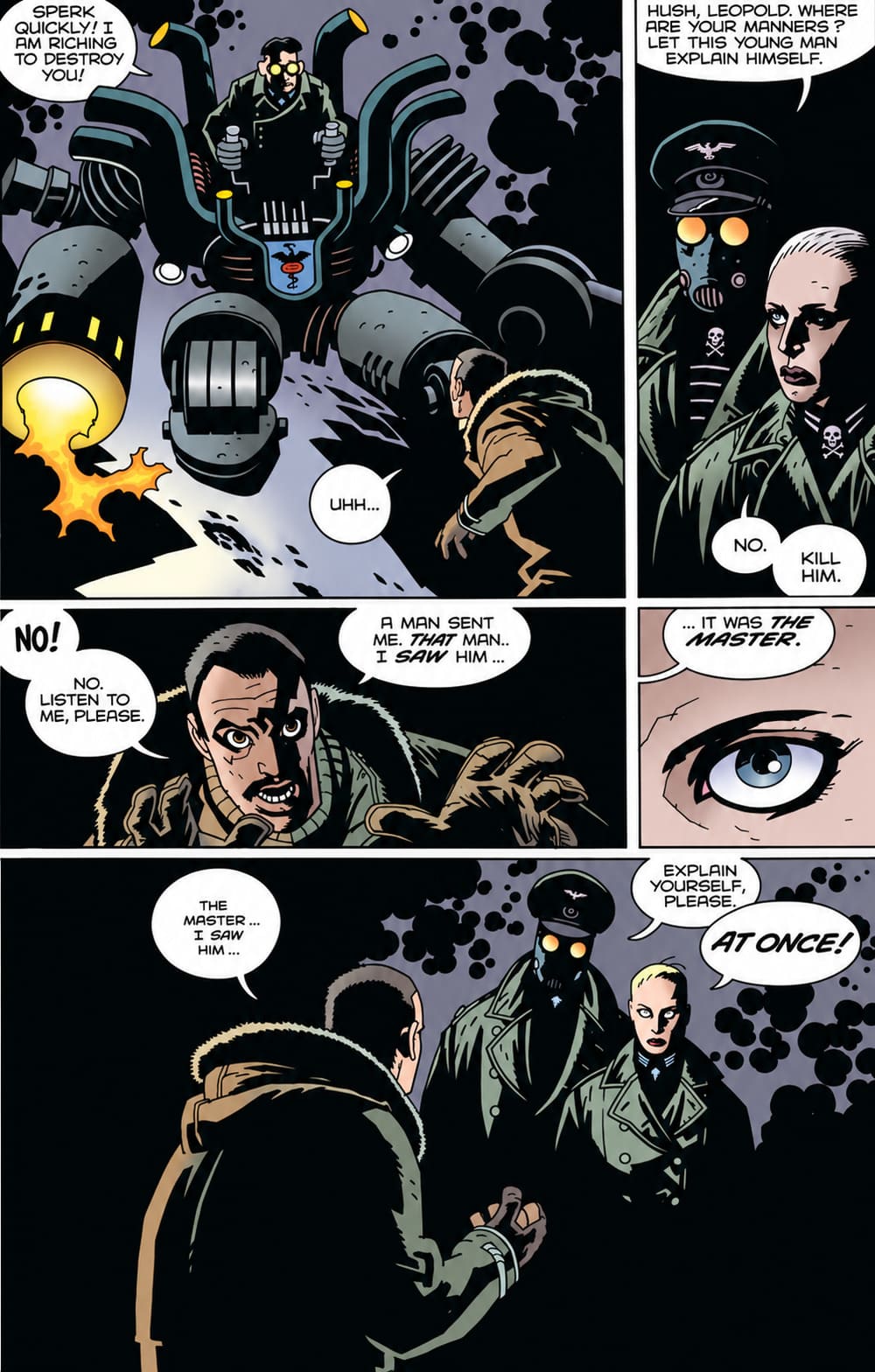
Matt Hollingsworth’s color work adds enormously to this atmosphere. The palette is often muted and moody, dominated by dark blues, sickly greens, faded browns, purples, and deep black shadows. This restraint makes the bursts of red more powerful, whether the red comes from Hellboy himself, blood, fire, or supernatural violence. The colors give the pages an aged, almost storybook texture. It can feel as though the reader is looking at a collection of old illustrations from some forbidden European folktale rather than a conventional comic book.
Mignola’s pacing is equally important. Wake the Devil knows when to pause and let the mood settle. There are moments where a character simply stands before an open grave, explores a silent corridor, or confronts an object that hints at a terrible history. Those quieter scenes make the action scenes more forceful. Hellboy does not fight with the slick agility of a typical superhero. He crashes through doors, falls through floors, gets thrown into walls, and responds to impossible threats with the stubborn endurance of someone who has spent his whole life being sent into terrible places.
That physicality helps make Hellboy feel vulnerable even when he is clearly superhuman. He is powerful, but he is not untouchable. He gets hurt, overwhelmed, deceived, and placed in situations where brute strength alone is not enough. The Right Hand of Doom is visually iconic, but it is not a solution to every problem. Hellboy survives because he is resilient, practical, and unwilling to give up when the supernatural situation becomes more complicated than expected.
The story’s deeper theme is the danger of seeking power through forbidden knowledge. Nearly every major threat in Wake the Devil grows out of someone trying to revive, exploit, or control something that should have remained lost. Characters pursue immortality, occult strength, revenge, or access to secret history, only to discover that ancient evil does not become manageable merely because someone has learned its name. Mignola draws heavily from Gothic vampire fiction, but the story also has the broader cosmic unease that defined Seed of Destruction. The horrors here are not merely monsters with weaknesses. They are fragments of a much bigger darkness.
At times, the book can seem deliberately cryptic, particularly for readers unfamiliar with the expanding mythology of Hellboy. Mignola introduces artifacts, historical references, mystical forces, and supernatural figures without always providing a detailed explanation. Yet that ambiguity is largely part of the appeal. The comic does not make its world feel small enough to be completely explained in a few captions. Instead, it invites readers to feel the weight of a hidden history that Hellboy can only partially understand.
Ultimately, Hellboy: Wake the Devil is an essential chapter in Mike Mignola’s larger saga. It confirms that Hellboy is not merely a clever premise about a demon who fights monsters for a government agency. It is a singular world of pulp adventure, folklore, Gothic horror, vampire mythology, wartime conspiracy, and dark fantasy, all filtered through Mignola’s unmistakable visual imagination. The graphic novel deepens the mythology while preserving the straightforward pleasure of watching Hellboy enter a supernatural disaster, trade a sarcastic remark with a monster, and refuse to let ancient evil dictate his fate.
If Hellboy: Seed of Destruction introduced a hero resisting the destiny imposed upon him, Hellboy: Wake the Devilreveals the scale of the haunted world surrounding that struggle. It is eerie, violent, funny, mysterious, and visually beautiful. Most importantly, it shows that Hellboy’s greatest strength is not the Right Hand of Doom or his ability to survive battles with creatures from nightmare. His true strength is his refusal to let monsters, prophecies, occult conspiracies, or his own infernal appearance determine who he is.
Hellboy Saga