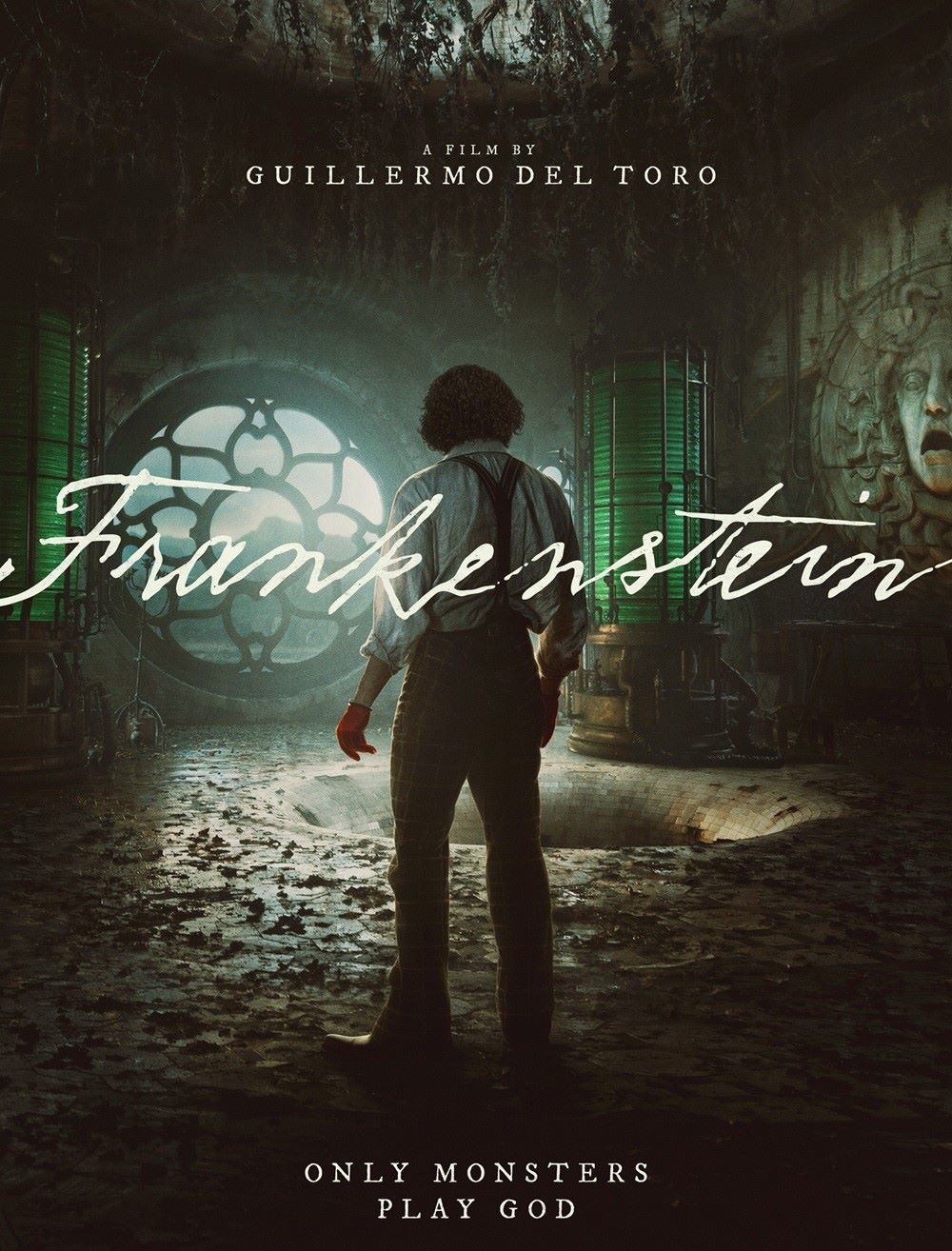
Horror Trailer: Frankenstein


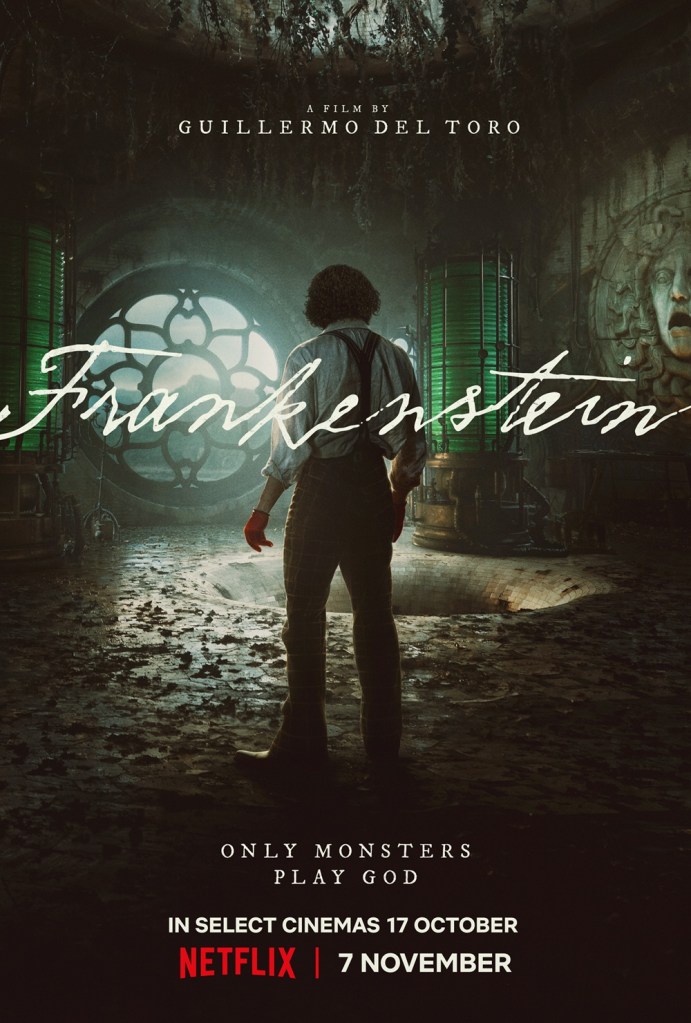
The official trailer for Guillermo Del Toro’s take on the Mary Shelley’s classic gothic horror Frankenstein has finally been released.

An earlier teaser was sent out months ago, but that was mostly played off like sizzle reel of what Del Toro had been up to with this latest adaptation. This official trailer gives us a much more closer look at the type of adaptation Del Toro decided to take with Shelley’s novel of the tortured scientist and his creation.

Even though it will be show up on Netflix on November 7, 2025, I do believe that this film needs to be seen on the big screen when a select cities get them on October 17, 2025.

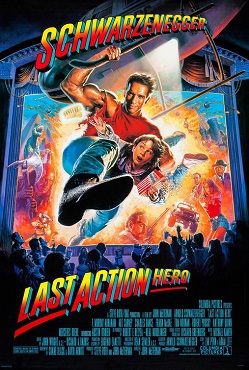
Guilty Pleasure No. 84: Last Action Hero (dir by John McTiernan)


Oh, Last Action Hero.

Ever since this film was first released in 1993, it’s usually held up as an example of a Hollywood fiasco.  The script was originally written to be a modest satire of action films.  The screenwriters wrote the character of Jack Slater, an movie action hero who comes into the real world, for Dolph Lundgren.  Instead, the film became an Arnold Schwarzenegger extravaganza and the studio ended up tossing a ton of money at it.  When the film was originally released, the reviews were mixed and the box office was considered to be disappointing.  (That it went up against the first Jurassic Park was definitely an underrated issue when it came to the box office.)  Ever since then, The Last Action Hero has had a reputation for being a bad film.

Well, I don’t care.  I like The Last Action Hero.  Yes, it’s a bit overproduced for a comedy.  (It breaks my own rule about how no comedy should run longer than two hours.)  Yes, it gets a bit sentimental with ten year-old Danny Madigan (Austin O’Brien) using a magic, golden ticket to enter the film world of his hero, Jack Slater.  If you want to argue that the film should have devoted more time to and gone a bit deeper into contrasting the film world with the real world, I won’t disagree with you.  But I will also say that Sylvester Stallone starring as The Terminator in Jack’s world was actually a pretty funny sight gag.  Danny knowing better than to trust a character played by F. Murray Abraham made me laugh.  Danny’s fantasy in which Arnold Schwarzenegger played Hamlet was made all the better by the fact that his teacher was played by Laurence Olivier’s wife, Joan Plowright.   Danny DeVito as Whiskers the Cartoon Cat makes me laugh as well, even if it is perhaps a bit too bizarre of a joke for this particular film.  (There’s nothing else about the Jack Slater films that would explain the presence of a cartoon cat.)

When you set aside the idea of the Last Action Hero being a symbol of Hollywood bloat and just watch it as a film, it emerges as an enjoyably goofy action movie, one that captures the joy of watching movies (because who hasn’t wanted to enter a movie’s world at some point in their life), and also one that features a rather charming performance from Arnold Schwarzenegger.  (Schwarzenegger, I should add, plays both himself and Jack Slater.  One of my favorite jokes is when the real Schwarzenegger is at a premiere and he mistakes the evil Ripper for Tom Noonan, the actor who played him in the previous Jack Slater film.)  Yeah, the golden ticket is a little bit hokey but who cares?  Underneath all of the special effects and action and money spent on star salaries, Last Action Hero is an action movie and comedy with a heart.  Danny meets his hero but also gets to become a hero himself.  And Jack Slater turns out to be everything you would hope your movie hero would be.  In the end, it’s obvious that a lot of the criticism of this film has more to do with the appeal of riding the bandwagon as opposed to what actually happens on screen.

Last Action Hero is a movie that I’ll happily defend.

Previous Guilty Pleasures

  1. Half-Baked
  2. Save The Last Dance
  3. Every Rose Has Its Thorns
  4. The Jeremy Kyle Show
  5. Invasion USA
  6. The Golden Child
  7. Final Destination 2
  8. Paparazzi
  9. The Principal
  10. The Substitute
  11. Terror In The Family
  12. Pandorum
  13. Lambada
  14. Fear
  15. Cocktail
  16. Keep Off The Grass
  17. Girls, Girls, Girls
  18. Class
  19. Tart
  20. King Kong vs. Godzilla
  21. Hawk the Slayer
  22. Battle Beyond the Stars
  23. Meridian
  24. Walk of Shame
  25. From Justin To Kelly
  26. Project Greenlight
  27. Sex Decoy: Love Stings
  28. Swimfan
  29. On the Line
  30. Wolfen
  31. Hail Caesar!
  32. It’s So Cold In The D
  33. In the Mix
  34. Healed By Grace
  35. Valley of the Dolls
  36. The Legend of Billie Jean
  37. Death Wish
  38. Shipping Wars
  39. Ghost Whisperer
  40. Parking Wars
  41. The Dead Are After Me
  42. Harper’s Island
  43. The Resurrection of Gavin Stone
  44. Paranormal State
  45. Utopia
  46. Bar Rescue
  47. The Powers of Matthew Star
  48. Spiker
  49. Heavenly Bodies
  50. Maid in Manhattan
  51. Rage and Honor
  52. Saved By The Bell 3. 21 “No Hope With Dope”
  53. Happy Gilmore
  54. Solarbabies
  55. The Dawn of Correction
  56. Once You Understand
  57. The Voyeurs 
  58. Robot Jox
  59. Teen Wolf
  60. The Running Man
  61. Double Dragon
  62. Backtrack
  63. Julie and Jack
  64. Karate Warrior
  65. Invaders From Mars
  66. Cloverfield
  67. Aerobicide 
  68. Blood Harvest
  69. Shocking Dark
  70. Face The Truth
  71. Submerged
  72. The Canyons
  73. Days of Thunder
  74. Van Helsing
  75. The Night Comes for Us
  76. Code of Silence
  77. Captain Ron
  78. Armageddon
  79. Kate’s Secret
  80. Point Break
  81. The Replacements
  82. The Shadow
  83. Meteor

Film Review: Michael Collins (dir by Neil Jordan)


Released in 1996, Michael Collins tells the story of the early 20th century struggle of Ireland to gain independence from Britain.

Liam Neeson stars as Michael “Mick” Collins, the revolutionary leader who perfected the use of guerilla warfare against the British and then, in the greatest of ironies, found himself fighting some of his former allies during the Irish Civil War.  Aidan Quinn plays Mick’s friend and fellow revolutionary, Harry Boland.  Both Harry and Mick fall in love with Kitty Kiernan (Julia Roberts).  Stephen Rea shows up as Ned Broy, a member of the Dublin police department who is inspired by Mick’s words to become a double agent.  Charles Dance has a cameo as the fearsome Soames, a British intelligence agent who is sent to Ireland to violently put down the Irish insurgency.  Finally, Alan Rickman plays Eamon de Valera, who goes from being one of Mick’s strongest allies to being one of his fiercest rivals.  The film follows Collins from the Easter Rising of 1916 to his eventual assassination in 1922, providing a look at the history of Ireland that is as much directed towards those outside of Ireland as those on the inside.

When watching Michael Collins, it helps to have a working knowledge of Irish history.  Otherwise, it can occasionally be a bit difficult to keep track of who is angry with who at any particular point in time.  Of course, it should be noted that the movie itself is not exactly historically accurate.  In the film, the gentle and likable Ned Broy becomes a victim of British bloodlust.  In real life, Ned Broy outlived Michael Collins by several decades and died peacefully at the age of 84.  For that matter, the film presents Eamon de Valera as being coldly Machiavellian and it suggests that de Valera was jealous of Mick’s popularity.  Though both Rickman and director Neil Jordan later said it wasn’t intentional, the film also seems to suggest that de Valera played a role in Collins’s assassination.  While Eamon de Valera remains a controversial figure for many reasons (including his neutrality during World War II), Jordan has said that he feels de Valera was not necessarily treated fairly in Michael Collins and indeed, de Valera — who plays as big a role in the founding of the Irish republic as anyone — is portrayed as often being ineffectual and unwilling to truly put himself at risk to fight the British.  De Valera’s relationship with Collins was undoubtedly more complex than portrayed in this film but, when one makes a movie for an international audience, nuance is often the first thing that’s abandoned.

Seen today, 29 years after it was released, Michael Collins is an impressively made film that has a few inescapable flaws.  It’s gorgeous to look at, full of moody shots of dark Dublin streets.  The violence is often shocking and Jordan doesn’t shy away from considering the moral implications of Collins’s guerilla warfare.  Michael Collins doesn’t make the mistake of blindly celebrating violence, which would be a valuable lesson for the world’s current crop of self-styled revolutionaries if they were only willing to hear it.  Having gotten used to seeing Liam Neeson cast in one generic action film after another, it was interesting to watch Michael Collins and see what a good actor he truly could be.  Even in 1996, He was perhaps a few years too old to playing a man who was only 31 when he died but Neeson still plays the role with a ferocious charisma that makes him believable as a leader.  His scenes with Aidan Quinn have a joie de vivre that brings out the both in best actors.  Alan Rickman is memorably sinister as Eamon de Valera and Stephen Rea’s gentle style makes Ned Broy into a truly tragic figure.  That said, the very American Julia Roberts feels miscast as Kitty Kiernan.  One gets the feeling that she was cast solely for her box office appeal.  Every film, the feeling goes, needs  a love story and those love stories need to be between people with familiar faces and Roberts is such a familiar face that her every appearance in the film feels like a distraction from the story being told.  That said, the film captures the excitement and danger of being in the middle of history-making events.  It’s a historical epic that’s never boring and manages to hold the viewer’s interest.

Michael Collins is ultimately a flawed but entertaining look at the early days of the Irish republic.

The Films of 2020: Mank (dir by David Fincher)


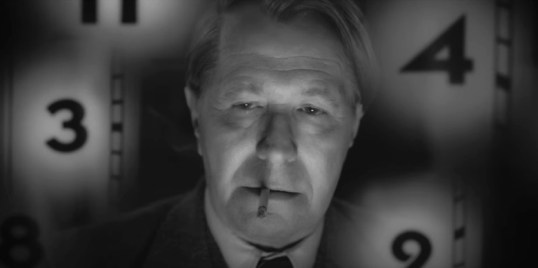
As I watched David Fincher’s latest film, Mank, my main feeling was one of wanting to like the film more than I actually did.

I mean, really, the film sounds like it was specifically made to appeal to me.  It’s a film about the Golden Age of Hollywood, which is an era that has always fascinated me as both a film lover and history nerd.  Even more specifically, it’s a film about the writing of Citizen Kane, which is one of my favorite movies.  (On one of our first dates, Jeff and I snuck into a showing of Citizen Kane at the Magnolia.  The crime was fun and finally getting to see the movie on the big screen was even better.)  It’s a film that features a host of historical figures, everyone from Louis B. Mayer to Irving Thalberg to Orson Welles to William Randolph Hearst to Marion Davies to the title character himself, the self-destructive screenwriter Herman J. Mankiewicz.

Those historical figures are played by a truly impressive collection of actors, almost all of whom give memorable performances.  Gary Oldman plays Mankiewicz, lurching about Hollywood in a drunken haze and calling out the system while, somewhat hypocritically, also attempting to profit from it.  Charles Dance is compellingly arrogant as William Randolph Hearst.  Tom Burke captures Orson Welles’s trademark voice and charisma, making an impression despite having surprisingly little screen time.  Ferdinand Kingsley plays Irving Thalberg and steals nearly every scene in which he appears.  Arliss Howard is a marvel as the manipulate Mayer while Amanda Seyfried gives the best performance of her career so far as Marion Davies.  The film portrays Davies as being intelligent, witty, and perhaps the only truly honest person in Hollywood.  If it can be argued that Citizen Kane robbed Davies of her dignity, it can also be argued that Mank makes a sincere attempt to give it back to her.  With the exception of a distracting cameo from Bill Nye (yes, the science guy), Mank is perfectly cast.

And yet, despite all of that, the film never really engaged me on either an emotional or an intellectual level.  The black-and-white cinematography is gorgeous but the film plods from one incident to another, skipping back and forth in time and trying to convince us that Herman J. Mankiewicz was a more fascinating figure than he comes across as being.  For the most part, Mankiewicz comes across as being a bit of a bore and the film makes the classic mistake of assuming that we’ll naturally like him just because he’s the main character.  Gary Oldman is as charismatic as ever but the film doesn’t give him much of character to play.  Mankiewicz stumbles from scene to scene, searching for a drink and always complaining about one thing or another.  A little bit of Herman J. Mankiewicz goes a long way and, once it becomes apparent that he’s going to spend the entire film perpetually annoyed, Mankiewicz becomes a rather uninteresting character.  Long before this film even reached the halfway mark, I was on the side of everyone who wanted Mankiewicz to stop talking and just finish writing the damn script.

If you’re one of the ten or so people who is still outraged over the failure of Upton Sinclair’s 1934 gubernatorial campaign, you’ll probably enjoy this film.  For those of you haven’t read Greg Mitchell’s The Campaign of the Century: Upton Sinclair’s Race for Governor of California and the Birth of Media Politics, Upton Sinclair was a writer and longtime socialist activist who won the 1934 Democratic nomination to run for governor of California.  Despite garnering a lot of national attention with his End Poverty In California (EPIC) platform, Sincliar was overwhelmingly defeated by Republican Frank Merriam.  Mank argues that Sinclair’s defeat was largely due to dirty tricks and negative campaigning, most of it masterminded by Mayer and Hearst.  Mankiewicz is a Sinclair supporter who is angered by the underhanded efforts of Mayer and Hearst.  The script for Citizen Kane is, at least partially, Mankiewicz’s revenge on Hearst and Mayer for working against Sinclair and it’s something that Mankiewicz feels so strongly about that he’s willing to demand that Orson Welles give him credit for his work on the screenplay.  It’s a legitimate theory, but the film’s exploration of it feels rather shallow and intellectually lazy.  Just as it did with the character of Mankiewicz, the film makes the mistake of assuming the audiences will automatically find the candidacy of Upton Sinclair to be as inspiring as the film does.  The film continually insists that we should care but, when it finally has a chance to show us why Upton Sinclair’s campaign was important, all it can provide is Bill Nye The Science Guy, standing on a platform and complaining about religious hypocrisy.  It’s the cinematic equivalent of a casual acquaintance demanding to know why his twitter feed didn’t convince you to vote for Bernie Sanders.

From a historical point of view, the film does itself no favors by creating a fictional friend of Mankiewicz’s, one who is so consumed with guilt over his part in defeating Upton Sinclair that he ends up committing suicide.  It feels rather cheap and predictable, an easy way to give Mankiewicz some sort of motivation beyond being infatuated with Marion Davies.  Historically, the truth of the matter is that Frank Merriam turned to the left as soon as he was elected and Upton Sinclair went on to win the Pulitzer Prize for writing a series of now-unreadable books about an international do-gooder named Lanny Budd.  Meanwhile, director Felix E. Feist (who was responsible for shooting many of the anti-Sinclair newsreels that MGM released into cinemas) went on to have a very long career and never indicated that he felt any guilty for playing a part in Sinclair’s defeat.

Like many of David Fincher’s film, Mank works best as an exercise in style.  The black-and-white cinematography is to die for.  Some of the shots — especially early in the film — are breathtaking.  Mankiewicz may spend the majority of the film railing against the excesses of Hollywood but, visually, Fincher can’t get enough of them.  Indeed, much as with The Social Network, Fincher seems to be spend the majority of the film at odds with the the film’s overwritten and rather pompous script.  (Of course, Mank was written by Fincher’s late father while The Social Network was written by Aaron Sorkin.  While there’s a lot to criticize about Jack Fincher’s script, one can still be thankful that he wrote the script instead of Sorkin.  One can only imagine how Marion Davies would have been portrayed if Aaron Sorkin had been involved.)  Mank is narratively deficient but visually stunning.  The film’s script rather snarkily dismisses Orson Welles as being a mere “showman” but, as film, Mank proves that sometimes a showman is exactly what’s needed.

The Alliance of Women Film Journalists Honor Nomadland


The Alliance of Women Film Journalists have announced that their pick for the best of 2020 is Nomadland.  Just as the AWFJ did with their nominations, they announced the winners in an exclusive for Variety.  Fear not, though — my picks for the best of 2020 will be released exclusively to this site.  Two can play at this game.

(I joke, of course.  Ever since Clayton Davis took over, Variety’s Oscar coverage has been wonderful and the AWFJ deserves a lot of credit for having categories that are a bit more interesting than the usual stuff.)

Anyway, here’s the winners!

AWFJ BEST OF AWARDS

(These awards are presented to women and/or men without gender consideration)

Best Film

  • “Minari” (A24)
  • “Never Rarely Sometimes Always” (Focus Features)
  • “Nomadland” (Searchlight Pictures) – WINNER
  • “One Night in Miami” (Amazon Studios)
  • “Promising Young Woman” (Focus Features)
  • “The Trial of the Chicago 7” (Netflix)

Best Director 

  • Emerald Fennell, “Promising Young Woman” (Focus Features)
  • Regina King, “One Night in Miami” (Amazon Studios)
  • Kelly Reichardt, “First Cow” (A24)
  • Aaron Sorkin, “The Trial of the Chicago 7” (Netflix)
  • Chloé Zhao, “Nomadland” (Searchlight Pictures) – WINNER

Best Actor

  • Riz Ahmed, “Sound of Metal” (Amazon Studios)
  • Chadwick Boseman, “Ma Rainey’s Black Bottom” (Netflix) – WINNER
  • Delroy Lindo, “Da 5 Bloods” (Netflix)

Best Actress 

  • Viola Davis, “Ma Rainey’s Black Bottom” (Netflix)
  • Vanessa Kirby, “Pieces of a Woman” (Netflix)
  • Frances McDormand, “Nomadland” (Searchlight Pictures) – WINNER
  • Carey Mulligan, “Promising Young Woman” (Focus Features)

Best Actor in a Supporting Role 

  • Sacha Baron Cohen, “The Trial of the Chicago 7” (Netflix)
  • Bill Murray, “On the Rocks” (A24/Apple TV Plus)
  • Leslie Odom Jr, “One Night in Miami” (Amazon Studios) – WINNER

Best Actress in a Supporting Role

  • Maria Bakalova, “Borat Subsequent Moviefilm” (Amazon Studios)
  • Ellen Burstyn, “Pieces of a Woman” (Netflix)
  • Amanda Seyfried, “Mank” (Netflix)
  • Yuh-Jung Youn, “Minari” (A24) – WINNER

Best Screenplay, Original 

  • “Mank” (Netflix) – Jack Fincher
  • “Promising Young Woman” (Focus Features) – Emerald Fennell – WINNER
  • “The Trial of the Chicago 7” (Netflix) – Aaron Sorkin

Best Screenplay, Adapted

  • “First Cow” (A24) – Kelly Reichardt and Jonathan Raymond
  • “Nomadland” (Searchlight Pictures) – Chloé Zhao – WINNER
  • “One Night in Miami” (Amazon Studios) – Kemp Powers

Best Animated Film

  • “Over the Moon” (Netflix)
  • “Soul” (Pixar) – WINNER
  • “Wolfwalkers” (Apple TV Plus/GKIDS)

Best Cinematography 

  • “Mank” (Netflix) – Erik Messerschmidt
  • “Nomadland” (Searchlight Pictures) – Joshua James Richards – WINNER
  • “One Night in Miami” (Amazon Studios) – Tami Reiker

Best Editing 

  • “One Night in Miami” (Amazon Studios) – Tariq Anwar
  • “Nomadland” (Searchlight Pictures) – Chloé Zhao – WINNER
  • “The Trial of the Chicago 7” (Netflix) – Alan Baumgarten

Best Documentary 

  • “All In: The Fight for Democracy” (Amazon Studios) – WINNER (tie)
  • “Athlete A” (Netflix)
  • “Crip Camp” (Netflix)
  • “The Painter and the Thief” (Neon) – WINNER (tie)
  • “Time” (Amazon Studios)

Best Non-English-Language Film

  • “Another Round” – Denmark – WINNER
  • “Beanpole” – Russia
  • “The Mole Agent” – Chile
  • “The Painted Bird” – Czech Republic

Best Ensemble Cast – Casting Director

  • “Da 5 Bloods” (Netflix) – Kim Coleman
  • “One Night in Miami” (Amazon Studios) – Kimberly Hardin – WINNER (tie)
  • “The Trial of the Chicago 7” (Netflix) – Francine Maisler – WINNER (tie)

EDA FEMALE FOCUS AWARDS

(These awards honor WOMEN only, excluding women who’ve won the category in the Best Of Awards.

Best Woman Director 

  • Emerald Fennell, “Promising Young Woman” (Focus Features) – WINNER
  • Eliza Hittman, “Never Rarely Sometimes Always” (Focus Features)
  • Regina King, “One Night in Miami” (Amazon Studios)
  • Channing Godfrey Peoples, “Miss Juneteenth” (Vertical Entertainment)
  • Kelly Reichardt, “First Cow” (A24)
  • Chloé Zhao, “Nomadland” (Searchlight Pictures)

Best Woman Screenwriter 

  • Radha Blank, “The Forty-Year-Old Version” (Netflix) – WINNER
  • Emerald Fennell, “Promising Young Woman” (Focus Features)
  • Eliza Hittman, “Never Rarely Sometimes Always” (Focus Features)
  • Chloé Zhao, “Nomadland” (Searchlight Pictures)

Best Animated Female 

  • “22” in “Soul” (Pixar) – portrayed by Tina Fey – WINNER
  • “Mebh Óg MacTíre” in “Wolfwalkers” (Apple TV Plus/GKIDS) – portrayed by Eva Whittaker
  • “Robyn Goodfellowe” in “Wolfwalkers” (Apple TV Plus/GKIDS) – portrayed by Honor Kneafsey

Best Woman’s Breakthrough Performance 

  • Radha Blank, “The Forty-Year-Old Version” (Netflix)
  • Sidney Flanigan, “Never Rarely Sometimes Always” (Focus Features) – WINNER
  • Helena Zengel, “News of the World” (Universal Pictures)

Outstanding Achievement by a Woman in the Film Industry 

  • All female heads of film festivals who successfully transitioned from live to online events to sustain festival culture through the pandemic.
  • All indie female writers and directors who normalized abortion as a vital element in the cultural conversation in films such as “Saint Frances,” “Never Rarely Sometimes Always,” “Sister of the Groom,” “Once Upon a River,” The Glorias” and others. – WINNER
  • Emerald Fennell for creating a film that forces empathy to put an end to the toxic sexist rape culture pervasive through modern history.
  • Sophia Loren for a brilliant comeback at age 86 in “The Life Ahead,” the latest in her record-setting career. Loren won a Best Actress Oscar in 1962 for “Two Women” and was the first actor to win for a foreign language movie. She was also nominated in 1965 for “Marriage Italian Style.” If she’s nominated in 2021, it will be a 56-year span between her two most recent nominations – the current record is held by Henry Fonda, who had a 41-year gap between nominations.

EDA SPECIAL MENTION AWARDS

Grand Dame Award for defying ageism.

  • Ellen Burstyn, “Pieces of a Woman” (Netflix)
  • Tsai Chin, “Lucky Grandma” (Good Deed Entertainment)
  • Sophia Loren, “The Life Ahead” (Netflix) – WINNER
  • Frances McDormand, “Nomadland” (Searchlight Pictures)

Most Egregious Lovers’ Age Difference Award 

  • “The Burnt Orange Heresy” (Sony Pictures Classics) – Elizabeth Debicki and Claes Bang (23 years)
  • “Devil All the Time” (Netflix) – Riley Keough and Jason Clarke (20 years)
  • “Mank” – Amanda Seyfried and Charles Dance (39 years), Gary Oldman (27 years)
  • “Tenet” – Elizabeth Debicki and Kenneth Branagh (30 years) – WINNER

She Deserves A New Agent Award 

  • Rose Byrne, “Like a Boss” (Paramount Pictures)
  • Tiffany Haddish, “Like a Boss” (Paramount Pictures)
  • Katie Holmes, “Dare to Dream” (Gravitas Ventures)
  • Uma Thurman, “The War with Grandpa” (101 Studios) – WINNER

Most Daring Performance Award 

  • Maria Bakalova, “Borat Subsequent Moviefilm’ (Amazon Studios) – WINNER
  • Haley Bennett, “Swallow” (IFC Films)
  • Vanessa Kirby, “Pieces of a Woman” (Netflix)
  • Elisabeth Moss, “The Invisible Man” (Universal Pictures)
  • Carey Mulligan, “Promising Young Woman” (Focus Features)

Time Waster Remake or Sequel Award 

  • “The Croods: A New Age” (DreamWorks Animation)
  • “Doolittle” (Universal Pictures) – WINNER
  • “Rebecca” (Netflix)

Here Are The 2020 Nominations of the Alliance of Women Film Journalists!


Earlier on Wednesday, the Alliance of Women Film Journalists announced their nominations for the best and the worst of 2020.  The nominations were announced in the pages of Variety and you can read more about them by clicking here.

Nomadland led with the most nominations which seems to be the way that the awards season is going to go.  Personally, when it comes to the AWFJ, I’m always more interested in the snarky nominations than in the serious ones.  For instance, the nominees for the She Deserves A New Agent award always leave me thinking.

The nominations are below.  The winners will be announced on January 4th.

AWFJ BEST OF AWARDS
(These awards are presented to women and/or men without gender consideration)

Best Film
“Minari” (A24)
“Never Rarely Sometimes Always” (Focus Features)
“Nomadland” (Searchlight Pictures)
“One Night in Miami” (Amazon Studios)
“Promising Young Woman” (Focus Features)
“The Trial of the Chicago 7” (Netflix)

Best Director
Emerald Fennell, “Promising Young Woman” (Focus Features)
Regina King, “One Night in Miami” (Amazon Studios)
Kelly Reichardt, “First Cow” (A24)
Aaron Sorkin, “The Trial of the Chicago 7” (Netflix)
Chloé Zhao, “Nomadland” (Searchlight Pictures)

Best Actor
Riz Ahmed, “Sound of Metal” (Amazon Studios)
Chadwick Boseman, “Ma Rainey’s Black Bottom” (Netflix)
Delroy Lindo, “Da 5 Bloods” (Netflix)

Best Actress
Viola Davis, “Ma Rainey’s Black Bottom” (Netflix)
Vanessa Kirby, “Pieces of a Woman” (Netflix)
Frances McDormand, “Nomadland” (Searchlight Pictures)
Carey Mulligan, “Promising Young Woman” (Focus Features)

Best Actor in a Supporting Role
Sacha Baron Cohen, “The Trial of the Chicago 7” (Netflix)
Bill Murray, “On the Rocks” (A24/Apple TV Plus)
Leslie Odom Jr, “One Night in Miami” (Amazon Studios)

Best Actress in a Supporting Role
Maria Bakalova, “Borat Subsequent Moviefilm” (Amazon Studios)
Ellen Burstyn, “Pieces of a Woman” (Netflix)
Amanda Seyfried, “Mank” (Netflix)
Yuh-Jung Youn, “Minari” (A24)

Best Screenplay, Original
“Mank” (Netflix) – Jack Fincher
“Promising Young Woman” (Focus Features) – Emerald Fennell
“The Trial of the Chicago 7” (Netflix) – Aaron Sorkin

Best Screenplay, Adapted
“First Cow” (A24) – Kelly Reichardt and Jonathan Raymond
“Nomadland” (Searchlight Pictures) – Chloé Zhao
“One Night in Miami” (Amazon Studios) – Kemp Powers

Best Animated Film
“Over the Moon” (Netflix)
“Soul” (Pixar)
“Wolfwalkers” (Apple TV Plus/GKIDS)

Best Cinematography
“Mank” (Netflix) – Erik Messerschmidt
“Nomadland” (Searchlight Pictures) – Joshua James Richards
“One Night in Miami” (Amazon Studios) – Tami Reiker

Best Editing
“One Night in Miami” (Amazon Studios) – Tariq Anwar
“Nomadland” (Searchlight Pictures) – Chloé Zhao
“The Trial of the Chicago 7” (Netflix) – Alan Baumgarten

Best Documentary
“All In: The Fight for Democracy” (Amazon Studios)
“Athlete A” (Netflix)
“Crip Camp” (Netflix)
“The Painter and the Thief” (Neon)
“Time” (Amazon Studios)

Best Non-English-Language Film
“Another Round” – Denmark
“Beanpole” – Russia
“The Mole Agent” – Chile
“The Painted Bird” – Czech Republic

Best Ensemble Cast – Casting Director
“Da 5 Bloods” (Netflix) – Kim Coleman
“One Night in Miami” (Amazon Studios) – Kimberly Hardin
“The Trial of the Chicago 7” (Netflix) – Francine Maisler

EDA FEMALE FOCUS AWARDS
(These awards honor WOMEN only)

Best Woman Director
Emerald Fennell, “Promising Young Woman” (Focus Features)
Eliza Hittman, “Never Rarely Sometimes Always” (Focus Features)
Regina King, “One Night in Miami” (Amazon Studios)
Channing Godfrey Peoples, “Miss Juneteenth” (Vertical Entertainment)
Kelly Reichardt, “First Cow” (A24)
Chloé Zhao, “Nomadland” (Searchlight Pictures)

Best Woman Screenwriter
Radha Blank, “The Forty-Year-Old Version” (Netflix)
Emerald Fennell, “Promising Young Woman” (Focus Features)
Eliza Hittman, “Never Rarely Sometimes Always” (Focus Features)
Chloé Zhao, “Nomadland” (Searchlight Pictures)

Best Animated Female
“22” in “Soul” (Pixar) – portrayed by Tina Fey
“Mebh Óg MacTíre” in “Wolfwalkers” (Apple TV Plus/GKIDS) – portrayed by Eva Whittaker
“Robyn Goodfellowe” in “Wolfwalkers” (Apple TV Plus/GKIDS) – portrayed by Honor Kneafsey

Best Woman’s Breakthrough Performance
Radha Blank, “The Forty-Year-Old Version” (Netflix)
Sidney Flanigan, “Never Rarely Sometimes Always” (Focus Features)
Helena Zengel, “News of the World” (Universal Pictures)

Outstanding Achievement by a Woman in the Film Industry
All female heads of film festivals who successfully transitioned from live to online events to sustain festival culture through the pandemic.
All indie female writers and directors who normalized abortion as a vital element in the cultural conversation in films such as “Saint Frances,” “Never Rarely Sometimes Always,” “Sister of the Groom,” “Once Upon a River,” “The Glorias” and others.
Emerald Fennell for creating a film that forces empathy to put an end to the toxic sexist rape culture pervasive through modern history.
Sophia Loren for a brilliant comeback at age 86 in “The Life Ahead,” the latest in her record-setting career. Loren won a Best Actress Oscar in 1962 for “Two Women” and was the first actor to win for a foreign language movie. She was also nominated in 1965 for “Marriage Italian Style.” If she’s nominated in 2021, it will be a 56-year span between her two most recent nominations – the current record is held by Henry Fonda, who had a 41-year gap between nominations.

EDA SPECIAL MENTION AWARDS

Grand Dame Award for defying ageism.
Ellen Burstyn, “Pieces of a Woman” (Netflix)
Tsai Chin, “Lucky Grandma” (Good Deed Entertainment)
Sophia Loren, “The Life Ahead” (Netflix)
Frances McDormand, “Nomadland” (Searchlight Pictures)

Most Egregious Lovers’ Age Difference Award
“The Burnt Orange Heresy” (Sony Pictures Classics) – Elizabeth Debicki and Claes Bang (23 years)
“The Devil All the Time” (Netflix) – Riley Keough and Jason Clarke (20 years)
“Mank” – Amanda Seyfried and Charles Dance (39 years), Gary Oldman (27 years)
“Tenet” – Elizabeth Debicki and Kenneth Branagh (30 years)

She Deserves A New Agent Award
Rose Byrne, “Like a Boss” (Paramount Pictures)
Tiffany Haddish, “Like a Boss” (Paramount Pictures)
Katie Holmes, “Dare to Dream” (Gravitas Ventures)
Uma Thurman, “The War with Grandpa” (101 Studios)

Most Daring Performance Award
Maria Bakalova, “Borat Subsequent Moviefilm” (Amazon Studios)
Haley Bennett, “Swallow” (IFC Films)
Vanessa Kirby, “Pieces of a Woman” (Netflix)
Elisabeth Moss, “The Invisible Man” (Universal Pictures)
Carey Mulligan, “Promising Young Woman” (Focus Features)

Time Waster Remake or Sequel Award
“The Croods: A New Age” (DreamWorks Animation)
“Dolittle” (Universal Pictures)
“Rebecca” (Netflix)

AWFJ Hall of Shame Award
Shia LeBoeuf for his ongoing abusive behavior
Christopher Nolan for insisting that “Tenet” be screened exclusively in theaters during a pandemic.
Dallas Sonnier and Adam Donaghey at Cinestate for sexual harassment, abuse and cover-up.

Trailer: The King’s Man


I love the Kingsman series. It looks like we have a third installment to the series, with a prequel showcasing the origins of the secret agent organization. Ralph Fiennes, Tom Hollander, Aaron Taylor-Johnson (who also worked with director Matthew Vaughn in Kick-Ass), Gemma Arterton, Daniel Bruhl, Djimon Hounsou, Charles Dance, Matthew Goode, and Stanley Tucci are all on board.

The King’s Man is due out February of 2020.

Lisa Reviews An Oscar Nominee: The Imitation Game (dir by Morten Tyldum)


The 2014 film, The Imitation Game, takes place in three very different time periods.

The majority of the film takes place during World War II.  While the Germans are ruthlessly rolling across and conquering huge swaths of Europe, the British are desperately trying to, at the very least, slow them down.  A key to that is decrypting the secret codes that the German forces use to communicate with each other.  Since the Germans change the code every day, the British not only have to break the code but also predict what the next day’s code will be.

Working out of a 19th century mansion called Bletchley Park, a small group of mathematicians, chess players, and spies work to design a machine that will be able to decode the German messages.  Heading up this group is a man named Alan Turing (Benedict Cumberbatch).  Alan is a remote and, at times, rather abrasive figure, a man who appears to be more comfortable dealing with equations than with other human beings.  The people working under him occasionally chafe at Alan’s lack of social skills.  Commander Denniston (Charles Dance) suspects that Alan’s a Russian spy and would just as soon close down the entire operation.  At first, the only person who seems to have any faith in Alan’s abilities appears to be Winston Churchill himself.

It’s only when Joan Clarke (Kiera Knightley) joins Alan’s team that they start to make progress.  Joan brings Alan out of his shell and teaches him how to deal with other human beings.  When Joan’s parents object to her being away from home, Alan even offers to marry her.  Of course, Alan also explains that it would just be a marriage of convenience, one that will last until they get Christopher up and working.

Christopher is the name that Alan has given to his encryption machine.  Why Christopher?  Throughout the film, we get flashbacks to Alan’s time in boarding school and his close friendship to another student, a boy named Christopher.

And finally, serving as a framing device to both the World War II intrigue and Alan’s relationship with Christopher, is a scene that’s set in 1951.  Alan’s home has been broken into and, as the police investigate the matter, they come to realize that Alan is hiding something about both his past and his present.  Their initial assumption is that Alan must be a communist spy.  The truth, however, is that Alan is gay.  And, in 1951 Britain, that is a criminal offense….

The Imitation Game is based on a true story.  During World War II, Alan Turing actually was a codebreaker and he did play a pivotal role in creating the machine that broke the German code.  After World War II, Turing was arrested and charged with “gross indecency.”  Given a choice between imprisonment or probation and chemical castration.  Turing selected the latter and committed suicide in 1954.  Alan Turing’s work as a cryptographer is estimated to have saved 14 million lives during World War II but he died a lonely and obscure figure, a victim of legally sanctioned prejudice.

Admittedly, The Imitation Game does take some liberties with history.  For one thing, most of the people who worked with Turing described him as being eccentric but not anti-social.  Though the film pretty much portrays the decoding machine as solely being Turing’s creation, it was actually a group effort.  Perhaps the biggest liberty that the film takes is that the machine was never called Christopher.  Instead, it was called Victory.

That said, The Imitation Game is still a strong and effective film.  Anchored by a brilliant lead performance from Benedict Cumberbatch, The Imitation Game is a film that manages to be both inspiring and infuriating at the same time.  It’s impossible not to get caught up in the team’s joy as they realize that they actually can beat the Germans at their own encryption game and, after spending 90 minutes listening to everyone doubt Alan’s abilities, you’re more than ready to see him and his unorthodox methods vindicated.  And yet, because of the film’s framing device, you already know that Alan is not going to get the credit that he deserves for his hard work.  Instead, he’s going to be destroyed by the laws of the very country that he worked so hard to save.  Success and tragedy walk hand-in-hand throughout The Imitation Game and the end result is a very powerful and very sad movie.

I have to admit that it was a bit jarring when the opening credits appeared onscreen and the first words that I read were “The Weinstein Company Presents.”  It’s only been a year and a half since Harvey Weinstein was finally exposed and forced out of power but it’s still easy to forget just how much the Wienstein Company used to dominate every Oscar season.  In many ways, with its historical setting and its cast of up-and-coming Brits, The Imitation Game feels like a typical Weinstein Company Oscar contender.  In this case, The Imitation Game was nominated for a total of 8 Oscars, including Best Actor for Benedict Cumberbatch, Best Supporting Actress for Keira Knightley, Best Director for Morten Tyldum, Best Adapted Screenplay for Graham Moore, and Best Picture.  In the end, only Moore won his category.  In a decision that continues to confound me, the Academy named Birdman the best film of the year.

Godzilla: King of Monsters 2nd Official Trailer


Godzilla King of Monsters

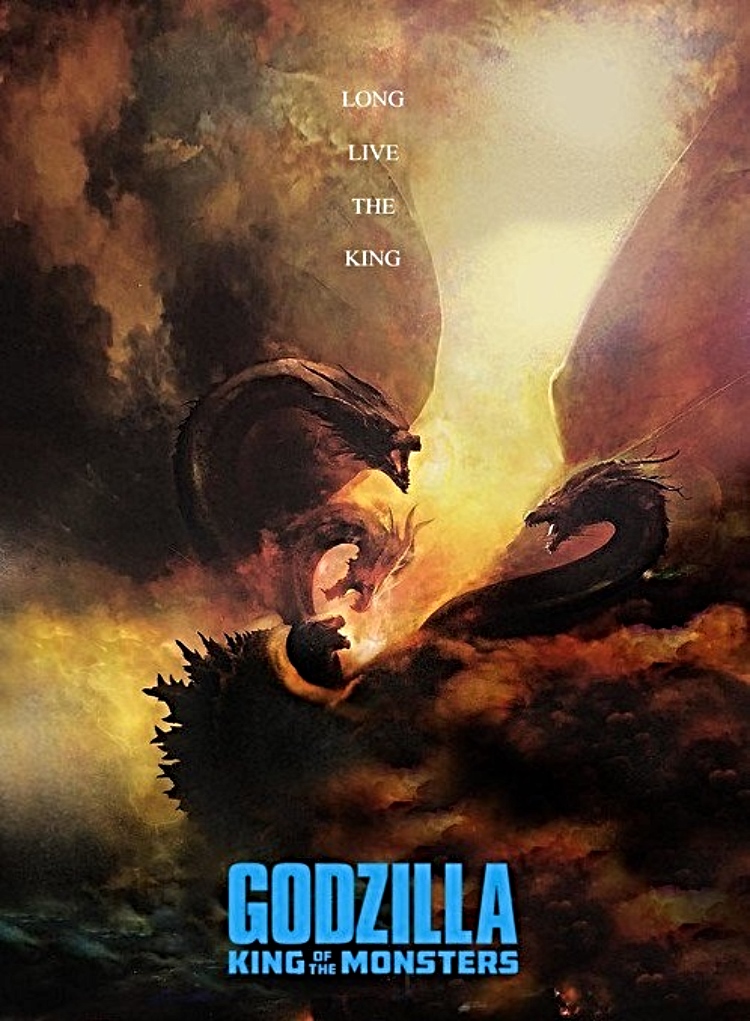
This past summer we saw the first trailer to Godzilla: King of Monsters. To say that the reaction to that trailer was positive would be an understatement. It was one of the highlights of San Diego Comic-Con 2018.

Now, Warner Brothers Pictures saw fit to release the second trailer for the film. This time with less classical music and more Kaiju mayhem visuals instead. Michael Dougherty takes over directing duties from Gareth Edwards and this time it shows as the film stresses the action in the film rather than the human interactions underfoot.

Kaiju films have been fan-favorites for decades upon decades because of the monsters and less about the humans. The humans really were just there to give voice to the different factions of monsters duking it out. It looks like this time this sequel will follow the same formula.

Godzilla: King of Monsters is set for May 31, 2019.

Horror Film Review: Underworld: Blood Wars (dir by Anna Foerster)


The Underworld films are bad for my ADD.

Seriously, I’ve seen all five of the Underworld films and I’m still not quite sure what’s going on.  That’s odd because, in every film, Selene (Kate Beckinsale) spends a good deal of time explaining what has happened and why it’s happened.  And yet, every time I try to listen, I’m usually left even more confused than usual.  I can’t help it.  As soon as I hear someone say, “The war between lycans and vampires,” I zone out.

So, I’ll admit it.  I’m the person who, after the movie, is always asking, “Is Selene still a vampire?  Why are the lycans and the vampires at war?  Oh, wait — that was Selene’s daughter?  Why would they want to create a hybrid?  So, are they in the real world or are they in an alternate world?  Is this movie taking place in the past or the future?  Why can’t they just call them werewolves?  Wait — that character died?  When did that happen?”

What’s funny is that, even though I can never understand what exactly is going on, I still tend to enjoy the Underworld films.  It’s not that I think they’re great movies and, to be honest, I tend to forget about them within a day or two of watching them.  But, that being said, the Underworld films typically have style to burn and Kate Beckinsale always kicks ass as Selene.  Every time I watch an Underworld film, I find myself trying to do slow-motion spin kicks.  The Underworld franchise has led to me spraining my ankle more than a few times.

Underworld: Blood Wars, the latest installment in the franchise, was released in January and it played for a few weeks before vanishing from theaters and most people’s minds.  It says something about the way the Underworld films are perceived that the latest installments are almost always released in January, a month when most movie goers are more concerned with getting caught up with the Oscar nominees as opposed to seeing new releases.  Obviously, the Underworld franchise has made enough money to justify five films.  (A sixth installment is currently in pre-production.)  But, at the same time, no one will ever mistake this franchise for the MCU.  Indeed, in most franchises, the challenge is to make each film bigger and more extravagant than the last.  The Underworld movies tend to take the opposite approach.  Even by Underworld standards, Blood Wars looks cheap.  The entire film takes place in darkness, in castles that look like they’ve been constructed for a community theater production of The Lion in Winter.

Blood Wars starts out with Selene narrating a lengthy recap of the story so far.  I tried to pay attention to the recap but as soon as Selene said, “lycans and vampires,” my ADD kicked in and I started playing with my phone.  As far as I can tell, in Blood Wars, a member of the Vampire Council named Semira (Laura Pulver) offers to give Selene clemency if Selene will come to her castle and train a new generation of Death Dealers.  However, it’s all a trick because Semira actually just wants to drink Selene’s blood and gain all of her powers.  Meanwhile, the lycans want to get Selene because they’re trying to track down Selene’s daughter because apparently, they can use her to create some sort of hybrid creature that will allow them to finally destroy the vampires.  Meanwhile, there’s a bunch of Nordic vampires running around and they’re all blonde because they’re Nordic.  (I do have to admit that part of the film made me laugh.  It’s as if the filmmakers said, “What can we do to make sure everyone knows that these are Nordic vampires?  Wait a minute!  Scandinavia.  Blonde hair.  I’m getting something here!”  If it had been an Irish coven, I assume they all would have had red hair.  And if it had been a Texas coven, they all would have been wearing cowboy hats.)  As usual, the whole thing leads to a big vampire/lycan battle.  Blood spurts.  Heads are ripped off of bodies.  All in all, it’s a typical Underworld film.

The film is largely forgettable and the plot is borderline incoherent but Kate Beckinsale still gives a remarkably committed performance.  As opposed to Daniel Craig in the latest Bond film, Kate Beckinsale still seems to be somewhat invested in her most famous role.  In typical Underworld fashion, Blood Wars doesn’t offer anything new but, at the same time, it also doesn’t demand much from the audience.

“Sit back and relax,” the film says, “nothing really matters anyway.”