Quick Review: Disney’s The Jungle Book (dir. by Jon Favreau)


THE JUNGLE BOOK

Without giving away the film, I haven’t much to say about Disney’s The Jungle Book other than I enjoyed it. Granted, it’s one that’s been done a number of times. 

When the trailer for Disney’s The Jungle Book was released, I was happy for it. It was good to see Jon Favreau back to directing bigger productions. After the misstep of Cowboys & Aliens and the success of Chef , it seems like he’s really back on track in a big way. That was my reason for seeing the film this past weekend.

Note that I’ve never seen the Disney Animated Version of The Jungle Book. I can’t really make any comparisons, other than the music, having listened to songs as a kid.

The Jungle Book is the story of Mowgli (newcomer Neel Sethi), a young boy who lives in the jungle and is raised by both a pack of wolves (lead by Lupita Nyong’o and Giancarlo Esposito) & a Panther named Bagheera (Sir Ben Kingsley). Evil rears its ugly head in the form of a Tiger named Shere Khan (Idris Elba), who wishes to have Mowgli killed because he knows how dangerous he can become once grown. Can the pack protect him, or will have have to find a way to save himself? That is pretty much what you need to know about the plot. I felt the movie had a number of comparisons to the Lion King (and even one reference to Return of the Jedi). Still, it manages to move at a good pace. Unlike Batman v. Superman: Dawn of Justice, I didn’t find myself rolling my eyes or counting the minutes until a bathroom break appeared. 

Casting in the Jungle Book is pretty good. There’s hardly a cast member out of place, though not everyone is given a great deal of screen time. It is Mowgli’s story, after all. Idris Elba is menacing as Shere Khan. Scarlett Johannson (Chef, Iron Man 2)  plays Kaa the Snake and has a song on the score. Bill Murray’s Baloo is cute and cuddly, but the biggest casting surprise has to be Christopher Walken as Big Louie. The film even manages to contain a few musical numbers, though I don’t know if it could be classified as a musical. Those moments are few and far between.

Visually, The Jungle Book is downright beautiful. The animals are rendered so well (in some cases) that one might suspect they had actual animals on hand for a reference or at least some on set. It’s still early, but this is a movie I’d tuck away until the next awards season, at least where the Visual Effects are concerned. The 3-D version of the film has some great moments, but I wouldn’t consider it a requirement to actually see it in this format.

Some elements early in the film may be frightening for the youngest of viewers. Tigers are meant to be scary, so Shere Khan definitely worked for me. The same goes with Kaa and with Louie. Overall, The Jungle Book is set to be a major hit and it’s nice to see Favreau with a directorial win.

Cleaning Out The DVR #25: The Maltese Falcon (dir by John Huston)


(For those following at home, Lisa is attempting to clean out her DVR by watching and reviewing 38 films by this Friday.  Will she make it?  Keep following the site to find out!)

220px-Falconm

I would love to see a remake of The Maltese Falcon with Bill Murray in the role of Sam Spade.  Well, maybe not the Bill Murray of today because he’s getting a little bit too old to play a hard-boiled private detective who is as good with his fists as his brain.  Instead, I’m thinking more of Lost In Translation era Bill Murray, when he was no longer young but could still probably beat up any sniveling punk who came at him with a gun.

Now, that may sound crazy to some but think about it.  Bill Murray is one of the great deadpan snarkers and so is Sam Spade.  Last night, when I watched the famous 1941 version of The Maltese Falcon (the story was filmed twice before, once with Bette Davis as the femme fatale), I was struck by how much of the film really was a comedy.  It may have been a murder mystery that featured death and betrayal and a lot of people getting beaten up but, ultimately, The Maltese Falcon is really about Sam Spade reacting to all of the crazy and strange people around him.  No matter how weird things get, Spade always responds with a smirk and a quip.  It’s a role that, at times, seems to be tailor-made for an actor like Bill Murray.

Bill Murray wasn’t around in 1941 but fortunately, Humphrey Bogart was.  Humphrey Bogart may have grown up wealthy and attended private schools but, on screen, nobody was tougher than Humphrey Bogart and nobody was better at delivering sarcastic, snark-filled dialogue.  After spending years as a villainous supporting actor, Humphrey Bogart got his first starring role when he played Sam Spade in The Maltese Falcon.  His performance, of course, would set the standard by which all future cinematic private eyes would be judged.

And, of course, Spade was tough and he was cynical and he has that wonderful moment at the end of the film where he explains that nobody’s going to make a “sap” out of him.  But for me, Bogart’s best moments come when Spade is alone and thinking.  It’s at those times that Spade suddenly becomes a human being.  A slight smirk comes to his lips, almost as if he’s sharing a private joke with the audience.  You can tell that he’s thinking to himself, “Can you believe how weird my life is?”

And it is indeed a weird life.  The film opens with Spade’s partner, Miles Archer (Jerome Cowan), being murdered.  The police believe that Archer was murdered by a man named Thursby and that Thursby was subsequently murdered by Spade.  Spade, however, suspects that both Archer and Thursby were killed by his latest client, a woman who introduced herself as Ruth Wonderly (Mary Astor).  Except, of course, that’s not her real name.  Her real name is Brigid O’Shaughnessy and, as she admits to Spade, Thursby was her partner.  She claims that Thursby must have murdered Archer but that she doesn’t know who could have possibly killed Thursby.

What’s particularly interesting about all this is that no one really seems to be that upset about Archer’s death.  Spade’s main motivation for investigating the murder is to clear his name and there are several lines of dialogue that reveal how little regard he had for Miles.  In fact, when Archer’s widow (Gladys George) suggests that Spade might be Archer’s killer, you can understand why she might think that.  But then again, that’s the world of The Maltese Falcon.  Only the tough survive.  Getting sentimental or allowing yourself to care is the biggest mistake you can make.

The murders are connected to the hunt for a valuable statue of a bird.  (This is the famous Maltese Falcon of the title.)  As Spade tries to clear his name in the two murders, he also finds himself getting caught up with a strange group of treasure hunters.  There’s the obsequious Joel Cairo (Peter Lorre).  There’s the ruthless “fat man,” Kasper Gutman (Sidney Greenstreet).  And then there’s Wilmer (Elisha Cook, Jr.), Gutman’s young henchman who spends the entire film trying to convince everyone that he’s tougher than he appears.  Wilmer is a born patsy.  Whenever Spade gets annoyed, he beats up Wilmer.  And he usually smiles afterward.

Along with being the directorial debut of John Huston, The Maltese Falcon was also one of the first great film noirs.  It’s one of the most influential films ever made and, even seen today, it’s a lot of fun.  You really can’t go wrong with Bogart, Astor, Greenstreet, Lorre, and Cook all in the same movie.  Bill Murray may never get a chance to play Sam Spade but that’s okay.  Humphrey Bogart’s the only Sam Spade we really need.

The Maltese Falcon was nominated for best picture.  However, it lost to How Green Was My Valley, a film that literally seems to take place in an entirely different universe from The Maltese Falcon.

The Jungle Book Super Bowl Trailer


The Jungle Book

A month before we marvel at Captain America: Civil War we shall be treated to the latest film adaptation of Disney’s animated film The Jungle Book which itself is an adaptation of the Rudyard Kipling of the same name.

This film has such an impressive pedigree. In the director’s chair is Jon Favreau who is the man who help begin the massive Marvel Cinematic Universe with Iron Man. The cast is a who’s who of some of the most recognizable actors working today: Idris Elba, Ben Kingsley, Scarlett Johansson, Lupito Nyong’o, Christopher Walken, Giancarlo Esposito and Bill Murray.

The Jungle Book is being touted as the next step in visual effects in filmmaking with everything except the young Mowgli being computer-generated. The film’s sizzle reel trailer wowed everyone at this past summer San Diego Comic-Con and this Super Bowl trailer does everything to help make that sizzle turn into a full-blown firestorm of hype.

The Jungle Book is set to come out on April 15, 2016.

No Safe Space: Drunk Stoned Brilliant Dead: The Story Of The National Lampoon (2015, directed by Douglas Tirola)


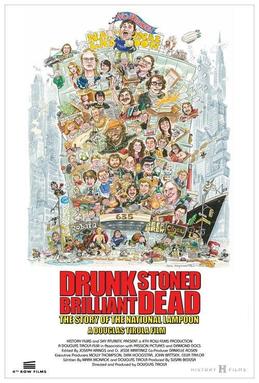
Drunk_Stoned_Brilliant_Dead_PosterThe documentary Drunk Stoned Brilliant Dead pays tribute to National Lampoon.  Founded in 1970, National Lampoon was published for 28 years and, at the height of its popularity, its sensibility redefined American comedy.  When it came to National Lampoon, nothing was sacred and nothing was off-limits.  The success of National Lampoon led to a stage show called Lemmings and The National Lampoon Radio Hour, which featured everyone from John Belushi and Bill Murray to Chevy Chase and Harold Ramis.  Michael O’Donoghue, famed for his impersonations of celebrities having needless inserted into their eyes, went from writing for the Lampoon to serving as Saturday Night Live‘s first head writer.  National Lampoon’s Animal House, Vacation, and Caddyshack are three of the most influential film comedies ever made.  Everyone from P.J. O’Rourke to John Hughes to The Simpsons‘ Al Jean got their start at National Lampoon.

As influential as it was, National Lampoon is a magazine that would not be able to exist today’s world.  Just looking at the cover of most issues of National Lampoon would reduce today’s special little snowflakes to the point of hysteria.  In Drunk Stoned Brilliant Dead, National Lampoon‘s publisher claims that the Lampoon ultimately ceased publication because the religious right threatened to boycott any company that advertised in the magazine.  Today, it would be the “safe space” crowd complaining that the magazine did not come with proper trigger warnings.  Lena Dunham would look at one issue and go into a rage spiral.  Salon would publish a hundred hand-wringing think pieces about how National Lampoon was the worst thing since Ted Cruz.  Colleges would ban it and religious groups would still burn it.  National Lampoon was a magazine that went out of its way to be offensive to both the left and the right but, as editor-in-chief Tony Hendra puts it, the job of satire is to make those in power feel uncomfortable.  By poking fun at everything and challenging its readers, National Lampoon exposed the absurdity behind both the country’s prejudices and some of its most sacred beliefs.

Kennedy VW Ad

Drunk Stoned Brilliant Dead follows the National Lampoon from its founding to its ignominious end.  Along with interviews with Lampoon alumni, it also features archival footage of both Lemmings and The Radio Show, providing glimpses of  Christopher Guest, Bill Murray, John Belushi, Gilda Radner, and Harold Ramis before they became famous.  There are also interviews with celebrity admirers of the Lampoon who talk about how the magazine inspired their own work.  It makes sense that Judd Apatow was interviewed and Kevin Bacon made his screen debut in Animal House but what was Billy Bob Thornton doing there?

Unfortunately, drunk, stoned, brilliant, and dead describes some of the most important and talented figures in the Lampoon‘s history.  The documentary especially focuses on Doug Kenney, the Lampoon’s co-founder.  Everyone interviewed agrees that Kenney was a comedic genius who was also often emotionally troubled and who would vanish for months on end.  After the initial critical failure of Caddyshack, Kenney disappeared in Hawaii.  His body was later discovered at the bottom of the cliff.  Did Kenney jump or did he slip or, as director John Landis suggests, was he murdered by a drug dealer?  Nobody seems to know but Kenney’s ghost haunts the documentary.  This collection of very funny people get very serious when it comes time to talk about Kenney’s death.  Even Chevy Chase briefly redeems himself after years of bad publicity when he gets choked up.

Drunk Stoned Brilliant Dead is tribute to both a magazine and a bygone era.  See it before it gets banned.

How_I_Killed_Lampoon_6_embed

Scenes That I Love: Happy Groundhog Day!


Today’s scene that I love comes from Groundhog Day!  In this scene, Bill Murray speaks truth to power and let’s us all know what the future holds for us!

(Incidentally, I believe that, earlier today, the groundhog did not see his shadow, which means that we’re going to have an early spring.  Bleh!  I was hoping for a longer winter, if just because I’d like to get some snow down here.  I’m tired of living vicariously through my blizzard-addled friends in the North!)

Playing Catch-Up: Aloha (dir by Cameron Crowe)


Well, Christmas is over and soon 2015 will be over as well!  And our long time readers know what that means — its time for Lisa to desperately try to get caught up on reviewing all of the films that she’s seen this year!  After all, it will soon be time for me to post my “Best of” and “Worst of” lists and who knows?  Some of these films might make a list!

Anyway, with all that in mind, let’s take a quick look at Aloha!

Say what you will about Aloha as a movie, I would have loved to have been a part of the production.  Not only is the cast full of performers that I absolutely adore (Bradley Cooper, Emma Stone, John Krasinski, Bill Murray, Rachel McAdams, and Danny McBride, just to name a few) but the film itself was shot in Hawaii, which is one of the most beautiful places on Earth.  And let’s give director Cameron Crowe some credit for capturing some truly beautiful images of Hawaii.

As for the film itself, it’s a bit of a self-indulgent chore to sit through.  Aloha feels like a dozen different films, all mashed together and the end result is something of a mess.  Bradley Cooper is Brian Gilchrest, a defense contractor who is haunted by a mistake that he made while in Afghanistan.  (It’s the equivalent of Jerry Maguire writing that memo and Orlando Bloom making those shoes in Elizabethtown.)  Disillusioned and cynical, Brian is now working for a billionaire Carson Welch (Bill Murray), who wants to build his own private space center in Hawaii.  Brian’s job is to get the support of the native Hawaiians.

Brian’s Air Force liaison is Alison Ng (Emma Stone) and she’s as idealistic as Brian is cynical.  Brian and Alison are soon falling love but, at the same time, Brian has also reconnected with his ex-girlfriend, Tracy (Rachel McAdams).  Tracy is now married to Woody (John Krasinski), an Air Force captain who has difficulty expressing his feelings.  Tracy also has a 12 year-old daughter and Brian might be the father.

That may sound like enough for any movie to deal with but Aloha also wants to be a political satire as well as a relationship dramedy.  So, of course, there’s all sorts of ethical questions about the satellite that Carson wants to launch and, as a character, Carson is so incredibly inconsistent that you’re just happy that he’s being played by Bill Murray, one of the few actors who can make inconsistency charming.

Aloha is such a frustrating film, largely because of all the talent involved.  With that cast and all the beautiful scenery, it should have at least been an enjoyable lark.  Instead, it’s a huge and self-indulgent mess.

And, naturally enough, it features Alec Baldwin.  Baldwin always seems to show up in films like this and, as I watched him bellow his way through Aloha, I found myself wondering how Alec Baldwin can be so good in some films and so amazingly awful in others.  Baldwin’s a talented actor but, when a director allows him to go overboard, he can be difficult to watch.  In Aloha, Cameron Crowe lets Alec Baldwin go totally overboard.

When Aloha was first released, there was a lot of controversy over Emma Stone playing a character who supposed to be a quarter Chinese and a quarter Hawaiian.  At the time, Cameron Crowe stated that: “As far back as 2007, Captain Allison Ng was written to be a super-proud one-quarter Hawaiian who was frustrated that, by all outward appearances, she looked nothing like one. A half-Chinese father was meant to show the surprising mix of cultures often prevalent in Hawaii. Extremely proud of her unlikely heritage, she feels personally compelled to over-explain every chance she gets. The character was based on a real-life, red-headed local who did just that.”  That’s something that I — as a pale redhead who happens to be very proud of being a fourth Spanish — could relate to so it didn’t particularly bother me that Emma Stone was playing a character named Alison Ng.

Instead, what bothered me was that Alison Ng was never really allowed to emerge as an individual character with her own hopes, dreams, and ambitions.  Her character pretty much only existed to give Brian a reason to believe in life again.  Emma Stone’s a good actress but, as a film, Aloha lets her down.

Still, at least she got to spend sometime in Hawaii!

Here Are The Very Confusing SAG Nominations!


Spotlight

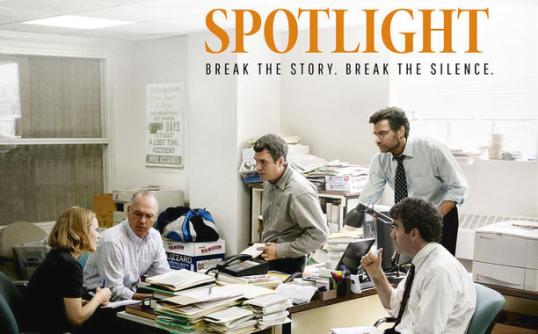
The nominees for the SAG Awards were announced earlier today!  The SAG Awards are usually one of the more accurate of the various Oscar precursors.  Because so many members of the Academy are also members of the Screen Actors Guild, the SAG Awards are usually a pretty good indication of what films are on the Academy’s radar and which ones aren’t.  Occasionally, an actor will be nominated by SAG and then snubbed by the Academy.  Last year, for instance, SAG nominated Jake Gyllenhall for Nightcrawler, Jennifer Aniston for Cake, and Naomi Watts for St. Vincent.  None of those three received any love from the Academy.  But, for the most part, SAG is one of the most reliable precursors out there.

And that’s why so many of us are in shock today!  The SAG Awards in no way resembled what many of us were expecting.  Other than Spotlight, none of the film’s that many of us expected to be nominated for best ensemble (the SAG’s equivalent of the Academy’s best picture) were nominated (and even Spotlight only received one other nomination, for Rachel McAdams who, up to this point, hasn’t really figured into the Oscar discussion).  The Martian was not nominated for best ensemble or anything else for that matter.  Creed was totally snubbed.  Brooklyn was nominated for actress but not ensemble.  Mad Mad: Fury Road was nominated for its stunt work and nothing else.  Helen Mirren received two nominations, for films that hardly anyone (outside of the SAG, obviously) was really paying any attention to.  Sarah Silverman received a best actress nomination for I Smile Back, which I hadn’t even heard of until about a week ago.  It’s an unexpected and strange group of nominees.

Keep in mind, it’s not necessarily a bad thing that the nominees are unexpected.  Beasts of No Nation and Straight Outta Compton will both receive deserved boosts in their hunt for Oscar gold.  At the same time, I have to admit that I wasn’t happy to see either The Big Short or Trumbo nominated for best ensemble because I know I’m going to feel obligated to see them and they both look so freaking tedious and blandly political!  But consider this: if The Big Short and Trumbo are both huge Oscar contenders, we may face a situation where both Jay Roach and Adam McKay are nominated for best director in the same year.  I think that’s one of the signs of the apocalypse and, at this point, I’m kind of ready to welcome the end of the world.

Anyway, here are the SAG nominations!  Look them over and, after the Golden Globe nominations are announced tomorrow, update your Oscar predictions accordingly.

Best Performance by a Cast Ensemble in a Motion Picture

Best Performance by a Male Actor in a Leading Role

Best Performance by a Female Actor in a Leading Role

  • Cate Blanchett – Carol
  • Brie Larson – Room
  • Helen Mirren – Woman in Gold
  • Saoirse Ronan – Brooklyn
  • Sarah Silverman – I Smile Back

Best Performance by a Male Actor in a Supporting Role

Best Performance by a Female Actor in a Supporting Role

  • Rooney Mara – Carol
  • Rachel McAdams – Spotlight
  • Helen Mirren – Trumbo
  • Alicia Vikander – The Danish Girl
  • Kate Winslet – Steve Jobs

Best Performance by a Stunt Ensemble in a Motion Picture

Best Performance by an Ensemble in a Drama Series

  • Downton Abbey
  • Game of Thrones
  • Homeland
  • House of Cards
  • Mad Men

Best Performance by a Male Actor in a Drama Series

  • Peter Dinklage – Game of Thrones
  • Jon Hamm – Mad Men
  • Rami Malek – Mr. Robot
  • Bob Odenkirk – Better Call Saul
  • Kevin Spacey – House of Cards

Best Performance by a Female Actor in a Drama Series

  • Claire Danes – Homeland
  • Viola Davis – How to Get Away with Murder
  • Julianna Marguilles – The Good Wife
  • Maggie Smith – Downton Abbey
  • Robin Wright – House of Cards

Best Performance by an Ensemble in a Comedy Series

  • The Big Bang Theory
  • Key and Peele
  • Modern Family
  • Orange is the New Black
  • Transparent
  • Veep

Best Performance by a Male Actor in a Comedy Series

  • Ty Burrell – Modern Family
  • Louis CK – Louie
  • William H. Macy – Shameless
  • Jim Parsons – The Big Bang Theory
  • Jeffrey Tambor – Transparent

Best Performance by a Female Actor in a Comedy Series

  • Uzo Aduba – Orange is the New Black
  • Edie Falco – Nurse Jackie
  • Ellie Kemper – Unbreakable Kimmy Schmidt
  • Julia Louis-Dreyfus – Veep
  • Amy Poehler – Parks and Recreation

Best Performance by a Male Actor in a TV Movie or Mini-Series

  • Idris Elba – Luther
  • Ben Kingsley – Tut
  • Ray Liotta — Texas Rising
  • Bill Murray – A Very Murray Christmas
  • Mark Rylance – Wolf Hall

Best Performance by a Female Actor in a TV Movie or Mini-Series

Best Performance by a Stunt Ensemble in a Comedy or Drama Series

  • Blacklist
  • Game of Thrones
  • Homeland
  • Marvel’s Daredevil
  • The Walking Dead

In Praise of Stripes’ Sergeant Hulka


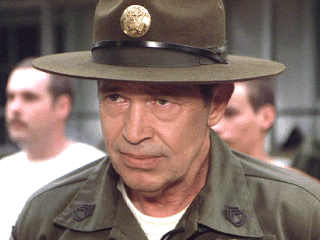
HulkaIn the army comedy Stripes, we never learn Sgt. Hulka’s first name but we do learn to never call him “sir.”  As Hulka himself puts it, “You don’t say sir to me, I’m a sergeant, I work for a living!”

It’s true.  Sgt. Hulka never stops working.  He’s the toughest drill sergeant this side of R. Lee Ermey and he’s going to turn this latest raw batch of recruits into a worthy collection of soldiers.  When he tells you to move, you’ll move fast.  When he tells you to jump, you’re going to ask, “How high!?”  And make no mistake. He don’t care where you come from, he don’t care what color you are, he don’t care how smart you are, he don’t care how dumb you are, ’cause he’s gonna teach every last one of you how to eat, sleep, walk, talk, shoot, shit like a United States soldier. Understand!?

I have lost track of how many times I have watched Stripes.  It’s one of my favorite comedies, a movie that can be quoted in almost every situation.  (“Lighten up, Francis.”)  Not only does it star Bill Murray and Harold Ramis at their anarchistic best but it also features everyone from John Candy to Judge Reinhold to John Larroquette.  Sean Young and P.J. Soles make for two of the sexiest MPs in military history.  But, for me, the best thing about Stripes is Sgt. Hulka and the man who played him.

Ironically, considering that he was famous for being a pot-smoking wild man who hung out with fellow anti-establishment rebels like Peter Fonda, Dennis Hopper, and Sam Peckinpah, Warren Oates played his share of no-nonsense military men.  (Oates actually had experience, having served in the Marines before becoming an actor.)  Of all the army roles that Warren Oates played, Sgt. Hulka is the best remembered.

And why not?  His performance in Stripes is a master class of good film acting.  Watch him as he does a stone-faced double take at the latest bit of insubordination from Murray and Ramis.  Watch the way he grins as he barks out his tough drill sergeant dialogue, hinting that Sgt. Hulka understands and has come to accept the lunacy of army life.  Originally, Hulka was supposed to be killed halfway through Stripes but both Warren Oates and his performance proved to be so popular with the film’s cast and crew that Hulka was given a reprieve.

Warren Oates and Bill MurrayIn Stripes, Sgt. Hulka accomplishes something that few other film characters have done.  He gets one over on Bill Murray.  After spending almost all of basic training dealing with John Winger (Bill Murray) and his bad attitude, Hulka confronts Winger in the latrine.  Hulka tells Winger that he’s concerned with “discipline and duty and honor and courage” and that Winger “ain’t got none of it!”  Hulka dares Winger to take a swing at him.  When Winger does it, Hulka floors him with one punch.

This is the only dramatic scene in Stripes.  It was so dramatic that nervous Columbia studio execs asked director Ivan Reitman to cut it.  Wisely, Reitman did not listen to them and the latrine scene is one of the best in the film.  When John eventually emerges as enough of a leader that he is able to invade Czechoslovakia in an armor-plated RV, we all know that it goes back to getting punched in the latrine.

(This was also the first “serious” scene that Bill Murray ever appeared in.  His subsequent work in films like Rushmore, Lost in Translation, and St. Vincent can all be linked back to that tense confrontation he played with Warren Oates.)

At the end of Stripes, Sgt. Hulka retires from the army and opens up a chain a Hulkaburger restaurants.  Here’s hoping that Sgt. Hulka had a happy retirement.  He earned it.

2013-07-04-warren_oates_sgt_hulka-533x299


Neon Dream #9: Air – Alone in Kyoto


Sofia Coppola’s Lost in Translation left a strange impression on me. In a way I can only really compare to Casablanca, it burrowed into my memory like an actual personal experience. I don’t review movies, and I am ill equipped to explain what made it such a special film for me, but the bond that Bob Harris (Bill Murray) and Charlotte (Scarlett Johansson) forge over a few days in Tokyo is something I’ll always carry with me and look back on fondly. That’s pretty weird, but I’m not complaining.

Music was essential to Lost in Translation, embedded into scenes as a part of what Bob and Charlotte actually experience. The hotel lounge has a live jazz band. “The State We’re In” by The Chemical Brothers plays in the club they visit. Phoenix’s “Too Young” pumps over the stereo when they go to a friend’s apartment. A woman dances to Peaches’ “Fuck the Pain Away” at the strip club. The actors aren’t just seen singing karaoke; they perform it at length. Coppola was pretty clever about extending this integration to the more traditionally situated background music. Happy End’s “Kaze wo Atsumete” enhances the feeling that Bob and Charlotte are winding down from an exhausting night, but it drifts faintly into the hallway, as if playing from the karaoke room. Charlotte is wearing headphones when we first hear Air’s “Alone in Kyoto”. The Jesus and Mary Chain’s “Just Like Honey” kicks off as Bob enters his cab. The encore of “Kaze wo Atsumete” in the credits could easily be playing in Bob’s head. Almost every song in the movie functions within the environment, not just as a peripheral enhancement.

Garden State tried something like this a year later, though I don’t recall the extent of it beyond the awkward Shins sequence. The effect was a sort of garish, in-your-face endorsement of director Zach Braff’s favorite tunes. It didn’t really cut it for me, in spite of the soundtrack’s impressive cast. In Lost in Translation, Coppola was a lot more attentive to creating continuity between songs and bringing musicians on board with the film’s atmosphere. She didn’t stop at using “Sometimes” by My Bloody Valentine; she dug founder Kevin Shields out of relative obscurity to compose four original pieces. A lot of the other artists formed a pre-existing community of sorts, suited to engage the project as art rather than a quick paycheck. Soundtrack supervisor Brian Reitzell performed drums for Air on their 2001 album 10 000 Hz Legend. Both Air and Roger Joseph Manning Jr, a fellow studio musician on that album, contribute original music to Lost in Translation. Phoenix previously performed with Air, and Sofia Coppola ultimately married their singer. While their contribution was recycled (“Too Young” appears in the context of young adults who would have been familiar with obscure but up and coming artists; using Phoenix’s first single made sense), the band was still involved in Coppola’s social sphere of musicians.

“Alone in Kyoto” plays as Charlotte travels through the classic side of Japan, visiting shrines and observing ancient customs. While that could possibly put it at odds with my theme, Air’s approach keeps the feeling modern, casting tradition as a subtle, delicate element of the present rather than as a form of escapism. It also occurs in a sequence without character interaction, permitting a pure sense of exploration. Within Lost in Translation‘s soundtrack, “Alone in Kyoto” reaches closest to that Japanese dream that still permeated a lot of American subcultures in 2003. The movie itself brought many of us the closest we would ever come to actually living that dream.

Shattered Politics #89: Hyde Park on Hudson (dir by Roger Michell)


Hyde_park_on_hudson_poster

Is there anything more frustrating than a film that should have been good but yet somehow turned out to be … well, to be rather awful?

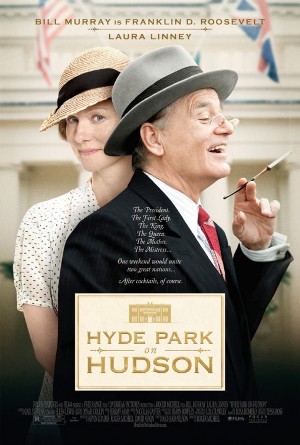
Case in point: 2012’s Hyde Park On Hudson.  In this slow-moving and almost painfully old-fashioned film, Bill Murray plays President Franklin D. Roosevelt.  When the film opens in 1939, Roosevelt is being visited by his sixth cousin, Margaret (Laura Linney).  It’s been several years since Roosevelt and Margaret last saw each other.  Franklin’s mother (Elizabeth Wilson) thinks that Margaret’s company could cheer up her melancholy son.  So, FDR and Margaret go out for a drive and, sitting atop a nice green hill, Margaret gives him a hand job.

And it is the most stately and respectable hand job to ever be quaintly portrayed in an American film.

Anyway, the rest of the film deals with FDR’s affair with Margaret.  Eventually, Margaret discovers that FDR has many mistresses but, before she does that, she helps FDR to charm England’s King George VI (Samuel West).  In the days leading up to World War II, George and his wife (Olivia Colman) visit Roosevelt out at his Hyde Park estate.  As we all know from watching The King’s Speech, George is insecure about his stutter.  But, fortunately, FDR points out that, despite the fact that he’s in a wheelchair, people still view him as being a strong leader and therefore, people will view George in the same way, regardless of his stutter.

And, speaking as a former stutterer, I have to say that it’s amazing to witness how poorly Hyde Park On Hudson deals with subject matter that was so brilliantly handled in The King’s Speech.

When I first heard about Hyde Park On Hudson, I had high hopes for it.  After all, I love history.  I love royalty.  I love gossip and I love scandal.  And, really. FDR was one of our more gossip-worthy Presidents, a spoiled rich kid who could not reach his full potential until after he was struck down by polio and who regularly cheated on his wife while battling both the Great Depression and the Nazis.  FDR was a dynamic and controversial figure and none of that comes through in Hyde Park on Hudson.

(Seriously, Bill Murray is totally wasted in this film.  If you’re going to cast an iconic actor in an iconic role, at least give him some good dialogue.)

In the end, Hyde Park on Hudson fails because it’s just too respectful.  It’s a slow, visually unimaginative film that manages to make an exciting time feel dull.  FDR deserves better and so does Bill Murray.