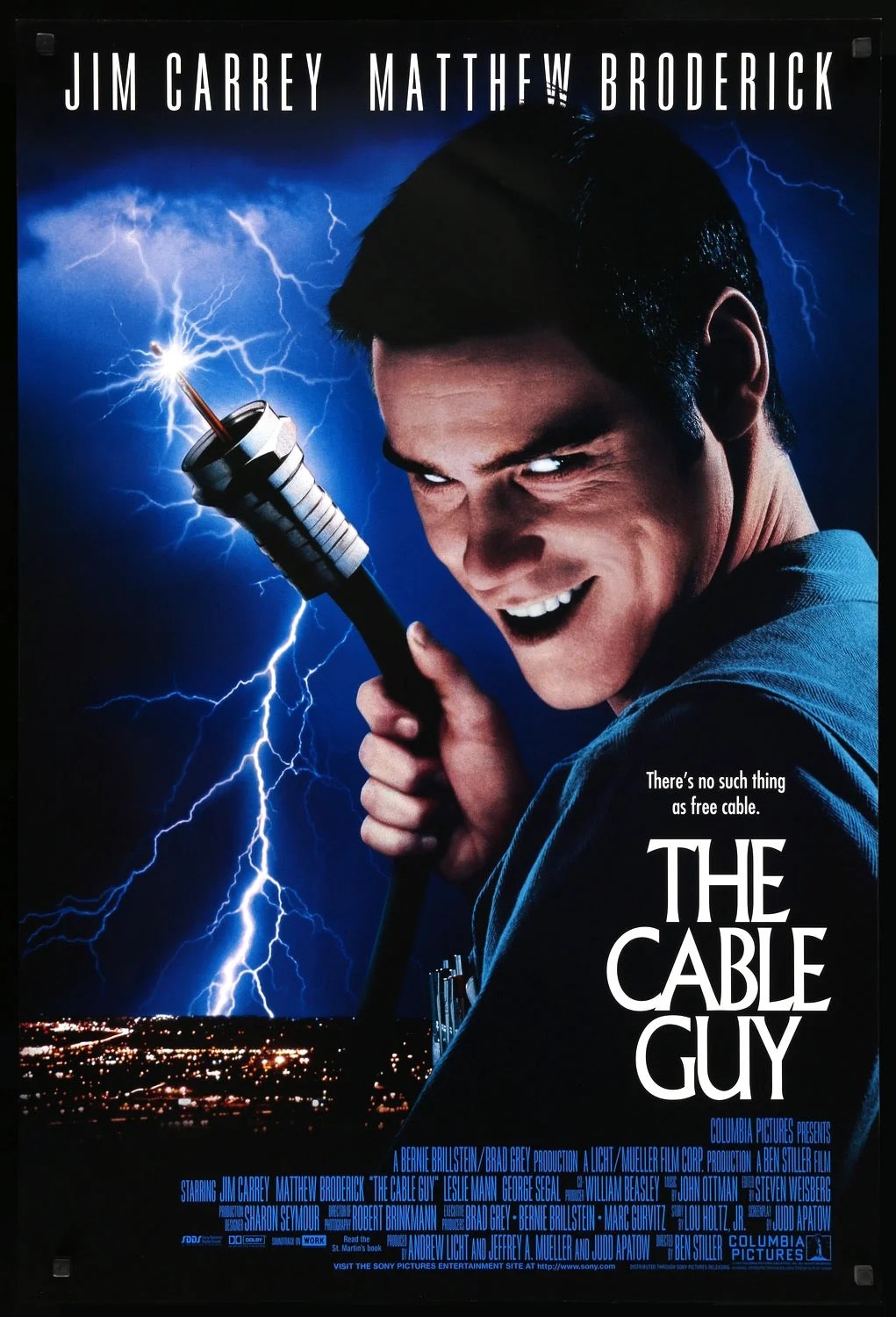
Icarus File No. 32: The Cable Guy (dir. by Ben Stiller)


“You were never there for me, were you, Mother? You expected Mike and Carol Brady to raise me! I’m the bastard son of Claire Huxtable! I am a lost Cunningham! I learned the facts of life from watching The Facts of Life!” — Chip

Few 1990s studio comedies are as awkwardly fascinating—or as misunderstood on arrival—as The Cable Guy. Directed by Ben Stiller and built around one of Jim Carrey’s most deliberately uncomfortable performances, it arrived at a strange point in Carrey’s career: he had become a massive box-office draw through films such as Ace Ventura: Pet Detective, The Mask, Dumb and Dumber, Batman Forever, and Ace Ventura: When Nature Calls. Audiences associated him with rubber-faced chaos, exuberant catchphrases, and a kind of manic but fundamentally likable comic energy. The Cable Guy offers something much colder. Carrey is still loud, physical, and wildly committed, but the movie twists those familiar traits into a portrait of loneliness, obsession, and emotional menace. It is a dark comedy about a man who has absorbed television culture so completely that he cannot form a normal human relationship without treating it like an episode of a sitcom.

That basic idea remains clever and surprisingly ahead of its time. Carrey plays Chip Douglas, a cable installer who enters the life of Steven Kovacs, played by Matthew Broderick, after Steven moves into a new apartment following a breakup with his girlfriend Robin, played by Leslie Mann. Steven wants cable television installed; Chip wants a best friend. What begins as awkward friendliness becomes invasive dependence, as Chip worms his way into Steven’s social circle, his professional life, and eventually his relationship with Robin. Chip is not simply a pest or an eccentric service worker. He is a lonely, emotionally stunted man whose references to television, movies, commercials, and game shows have become his entire vocabulary for intimacy.

The most interesting thing about The Cable Guy is that it understands television as both comfort and damage. Chip’s childhood was clearly shaped by neglect, with television functioning as his guardian, teacher, and surrogate parent. The movie makes this point broadly, sometimes too broadly, but it also gives the character a sad logic. Chip does not understand friendship as mutual connection; he understands it as a package deal. You meet someone, quote the same shows, hang out constantly, become inseparable, and live out the happy ending promised by popular entertainment. When Steven resists that fantasy, Chip does not know how to process rejection. His behavior turns increasingly controlling and vindictive because, in his mind, Steven has violated the rules of the relationship genre they are supposed to be playing.

In that respect, the film was well ahead of its time. In 1996, the idea of television becoming an all-encompassing babysitter for a generation of children was recognizable, but it still played largely as exaggerated satire. Chip represents the extreme result of a childhood where adults failed to provide stability, affection, supervision, and basic emotional guidance, leaving television to fill every role instead. He learned how to talk, how to joke, how to flirt, how to fight, and how to imagine friendship from whatever appeared on the screen. The tragedy is that media gave him endless information and endless imitation, but no real understanding of boundaries, empathy, or reciprocity.

That concern feels much less hypothetical today. Television did not disappear; it expanded into streaming libraries, on-demand movies, YouTube, social media feeds, online games, short-form video, and the constantly available internet. More children now grow up surrounded by screens that are not confined to a living-room television set or a few scheduled hours of programming. The old guardrails of limited channels, parental supervision around a shared TV, and the simple fact that a show ended at a certain time have weakened or, in many homes, disappeared altogether. The Cable Guy obviously does not predict every aspect of the internet age, but it does anticipate the emotional danger of allowing media to become a substitute for parenting, companionship, and healthy social development.

The film is careful enough to suggest that media alone did not create Chip. He is the product of abandonment first and television second. That distinction matters, because the movie is not arguing that children who watch too much television will inevitably become unstable stalkers. Rather, it suggests that screens can become especially powerful when they are used to fill an emotional void that should be addressed by family, community, and genuine relationships. Chip’s many references are funny at first because they are recognizable, but they become sadder as the movie reveals that he is not simply quoting pop culture for fun. He is quoting it because he has little else to draw from.

That makes the film more ambitious than its reputation as “the weird Jim Carrey movie” might suggest. The screenplay, by Lou Holtz Jr., has fun with media saturation, consumer culture, male insecurity, and the way people use technology to avoid direct emotional communication. The title itself now feels almost quaint, because cable installation hardly seems threatening in an age of smartphones, streaming services, social media surveillance, and algorithmic recommendation systems. Yet Chip’s obsession has only become more recognizable. He is essentially a proto-internet stalker, a man who treats access as entitlement. Because he can enter Steven’s home to connect his television service, he assumes he deserves access to Steven’s private life. The film exaggerates that premise for comic effect, but the underlying discomfort has aged well.

At the same time, The Cable Guy has a major problem, and it is inseparable from the reason the film exists: Jim Carrey. Casting Carrey was a commercial gamble meant to make a very dark premise accessible to a mainstream audience. In theory, it is an inspired decision. His brand of elastic, outsized comedy gives Chip a strange unpredictability; you never know whether he is going to make a ridiculous movie reference, belt out a sentimental song, physically humiliate himself, or suddenly become frightening. Carrey’s comic instincts make Chip memorable in a way that a more restrained actor likely would not have been. His version of the character is like an abandoned cartoon character who has somehow wandered into a real person’s life.

But the same performance often works against the movie. Carrey’s penchant for excessive facial expressions, exaggerated voices, and physical escalation overwhelms the subtler and more unsettling possibilities in the script. The film wants to be a satirical dark comedy, but it repeatedly gives itself over to big Jim Carrey bits. Some are undeniably funny, especially because Carrey commits to them with fearless energy, but they can make Chip feel less like a damaged human being and more like a delivery system for gags. The movie keeps shifting between “this man is dangerously unstable” and “look at Jim Carrey doing something weird,” and that unevenness prevents it from fully landing as either a truly disturbing character piece or a consistently hilarious farce.

The medieval-themed restaurant sequence is probably the clearest example of both the movie’s strengths and weaknesses. When Chip and Steven engage in an extended jousting and sword-fighting routine at Medieval Times, it is funny because it transforms a casual social outing into a ridiculous, testosterone-heavy spectacle. It also exposes the warped nature of their friendship: Chip is trying to force Steven into a grand, cinematic bonding ritual. Yet the scene is so broad and so committed to the escalating stunt comedy that it can feel detached from the film’s more interesting emotional undercurrents. It is memorable, certainly, but it is also the kind of scene that makes it easy to see why contemporary audiences may have expected another straightforward Carrey comedy rather than a satire with genuine bitterness beneath the jokes.

Broderick is important here because he provides the film’s necessary straight-man perspective. Steven is not a particularly dynamic protagonist, and that is partly the point. He is an ordinary, mildly selfish guy trying to rebuild his life after a breakup, which makes Chip’s intrusion feel even more invasive. Still, Broderick’s deliberately subdued performance can make Steven seem passive compared with the hurricane of Carrey’s performance. The movie needs Steven to be bland enough for Chip to project his fantasies onto him, but that choice also leaves the film with an imbalance: Chip is by far the most vivid person on screen, even when the story is asking us to see him as a nightmare.

Leslie Mann brings warmth and patience to Robin, while Jack Black, in an early supporting role as Steven’s friend Rick, adds a welcome jolt of weird energy without taking over the movie. The supporting cast understands the heightened tone, but Stiller’s direction occasionally pushes the material toward sketch-comedy exaggeration. That is not always a flaw; The Cable Guy is frequently inventive in its visual jokes, its television parodies, and its depictions of Chip turning every situation into a warped pop-culture performance. Still, the film is at its best when Stiller lets the strangeness breathe rather than constantly underlining it.

The movie’s lackluster initial reception makes sense in context. Audiences had been trained to see Carrey as a wildly energetic hero of broad studio comedies, not as a creepy, needy antagonist whose jokes often curdle into discomfort. The promotional challenge was enormous: sell The Cable Guy as a Jim Carrey movie, and viewers might expect another crowd-pleasing laugh machine; sell it honestly as a dark satire about loneliness and media dependency, and it becomes a much harder commercial proposition. Many viewers at the time seemed to reject it not because it lacked ideas, but because it did not give them the version of Jim Carrey they thought they were buying a ticket to see.

In the years since, however, the film has developed a deservedly large cult following. Distance has helped. Modern audiences are more accustomed to comedians making darker career turns, and the themes of mediated identity, parasocial attachment, isolation, and invasive access now feel much more relevant than they did in the mid-1990s. Carrey’s performance, once seen by many as abrasive or miscalculated, can now be appreciated as a risky attempt to weaponize his own comic persona. Chip is funny precisely because he is desperate to be liked, but he is also disturbing because his idea of being liked involves total possession.

The Cable Guy is not a perfect dark comedy. Its tone wobbles, its protagonist can feel underwritten, and Carrey’s larger-than-life antics sometimes obscure the sharper satire hiding underneath. Yet those flaws are also part of what makes it fascinating. It is a studio movie willing to be unpleasant, odd, and commercially confusing at the height of a superstar’s popularity. Rather than simply giving Jim Carrey another vehicle for his most familiar tricks, it turns those tricks into symptoms of a damaged man’s inability to connect. The result is uneven, but it is far more interesting than a safer 1996 Jim Carrey comedy would have been—and its cult status feels earned.

Previous Icarus Files:

  1. Cloud Atlas
  2. Maximum Overdrive
  3. Glass
  4. Captive State
  5. Mother!
  6. The Man Who Killed Don Quixote
  7. Last Days
  8. Plan 9 From Outer Space
  9. The Last Movie
  10. 88
  11. The Bonfire of the Vanities
  12. Birdemic
  13. Birdemic 2: The Resurrection 
  14. Last Exit To Brooklyn
  15. Glen or Glenda
  16. The Assassination of Trotsky
  17. Che!
  18. Brewster McCloud
  19. American Traitor: The Trial of Axis Sally
  20. Tough Guys Don’t Dance
  21. Reach Me
  22. Revolution
  23. The Last Tycoon
  24. Express to Terror 
  25. 1941
  26. The Teheran Incident
  27. Con Man
  28. Looker
  29. 1776
  30. Here
  31. The Adventures of Brisco County, Jr.
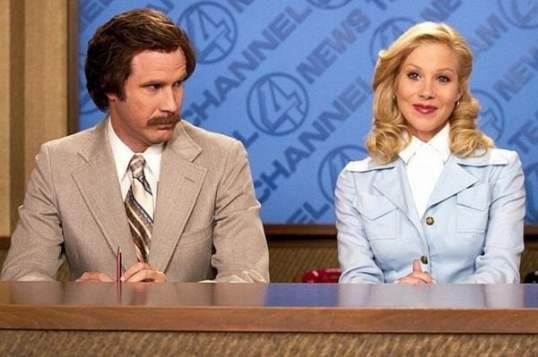
I Re-Watched Anchorman (2005, Dir. by Adam McKay)


“Ron Burgundy was the balls.”

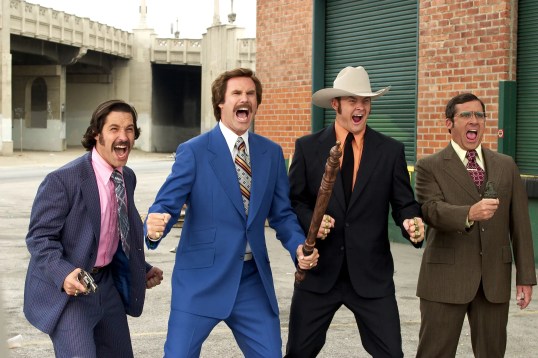
You got that right!  That’s one reason why I’ve lost track of the number of times that I’ve watched Anchorman.  Whatever’s going on in the world or my life, I know that Anchorman is going to make me laugh and make me feel better about things.  The adventures of anchorman Ron Burgundy (Will Ferrell) and his news team (Paul Rudd, David Koechner, Steve Carell) never cease to amuse me, whether they’re capturing the birth of a panda or getting involved in a street fight with their rival newsmen.

“Brick killed a guy.”

He did!  Where did Brick get a trident from?  When the street fight started, he only had a hand grenade.  Ron Burgundy suggests that Brick should find a safehouse and I hope Brick took his advice.  There’s a lot of funny people in Anchorman but Steve Carell, playing the weatherman with an IQ under 80, is my favorite.  Brick saying that he loves the lamp is so touching.

“Fare thee well, Baxter.  You shall always be a friend of the bears.”

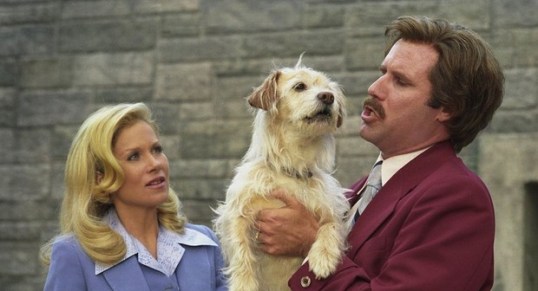
The first time I saw Anchorman, I couldn’t believe it when Baxter was drop-kicked off that bridge.  I swore that I would never watch another movie featuring Jack Black!  Baxter was so cute!  When Ron broke down over the loss of his dog, I wanted to break down with him.  Later, when Baxter emerged from the river and barked, “I’m coming, Ron!,” I was so relieved.  Baxter lives!  Baxter’s conversation with the bears warmed my heart.

“Stay classy, San Diego.”

That’s right, San Diego!  Stay classy.  Anchorman is in a class all of its own.  Ron Burgundy makes beautiful music with his jazz flute.  Brian Fantana is a walking advertisement for Sex Panther.  Veronica Corningstone (Christine Applegate) strikes a blow for women’s liberation and teaches Ron an important lesson about teleprompters.  It’s the little moments that make me laugh the most, whether it’s Fred Willard talking to his son’s school about why his son has been expelled or Tim Robbins as the PBS anchor who smokes a pipe and chops off Luke Wilson’s arm or Vince Vaughn shouting about the ratings.  Best of all, Will Ferrell has never been better than as the pompous Ron Burgundy, so stupid but so committed to his job that you can’t help but love him.

“Wow, that really escalated.”

You bet it did, Ron!  Each moment of Anchorman is funnier than the last.  (I wish the same was true of Anchorman 2.)  That’s why Anchorman is a film that I watch and rewatch.  In fact, I think I’ll go watch it right now!

“Thanks for stopping by, San Diego.”

Lisa Marie’s Picks For The 16 Worst Films of 2022


Well, it’s nearly February so I guess it’s time for me to start listing my picks for the best and the worst of 2022.

It’s pretty much a tradition here at the Shattered Lens that I always end up running behind as far as posting these lists are concerned.  I always think that I’m going to have everything ready to go during the first week of January but then I realize that there’s still a host of movies that I need to see before I can, in good conscience, post any sort of list.  Fortunately, I think I’ve finally reached where I can start posting lists.  Add to that, as I said at the start of this post, it’s nearly February!

Below, you’ll find my picks for the 16 worst films of 2022.  Why 16 films?  Because Lisa doesn’t do odd numbers!

In the end, of course, this list is my opinion.  You’re free to agree or disagree.  That’s the wonderful thing about having an opinion.

(Also be sure to check out my picks for 2021, 2020, 201920182017201620152014201320122011, and 2010!)

16. Glass Onion (dir by Rian Johnson) — I realize that, by even including Glass Onion on this list, I’m going out on a limb here.  A lot of people who I respect really enjoyed this film.  Several of my friends have it on their best of the year lists.  And that’s fine!  The film just didn’t work for me and it often seemed a bit too amused with itself.  That said, what really pushed me over the edge was what happened to the Mona Lisa.  If that hadn’t happened, this film would probably be ranked in the middle of the 129 films that are eligible for this year’s worst and best lists.

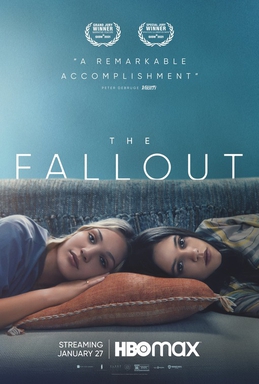
15. The Fallout (dir by Megan Park) — The Fallout dealt with an important subject and it had some good performances but it was just a bit too overwritten and predictable for me.  Plus, the film opened with someone making a really messy peanut butter sandwich and that totally grossed me out.  Jenna Ortega is still destined to be a star, though.

14. Studio 666 (dir by BJ McDonnell) — I wasn’t particularly harsh in my initial review of Studio 666 but, the more I think about it, the more dissatisfied I am with the film.  This is one of those films where the people making it definitely had more fun than the people who watched it.  I still respect the Foo Fighters for doing something for their fans and Dave Grohl seems to be about as likable and goofy as a rock star can be.  But the film itself ultimately feels a bit lazy,

13. A Day To Die (dir by Wes Miller) — This bland action film got some attention because it was one of the many films featuring Bruce Willis to be released this year.  Unfortunately, this one was just boring.  Willis and co-star Kevin Dillion were both seen to better effect in Wire Room.

12. The Princess (dir by Le-Van Kiet) — This cheap-looking film had a lot of action but not much characterization.  The film was so busy patting itself on the back for celebrating girl power that it didn’t seem to have noticed that the girl at the center of the film was seriously underwritten.

11. The Bubble (dir by Judd Apatow) — This oddly mean-spirited satire was Judd Apatow at his most self-indulgent and undisciplined.  The film’s smug attitude made it a real chore to sit through.

10. Fortress: Sniper’s Eye (dir by Josh Sternfeld) — This rather pointless action film was among the many films in which Bruce Willis appeared this year.  Willis spends most of the film offscreen while Jesse Metcalfe and Chad Michael Murray play two enemies who are trying to kill each other because of …. reasons, I guess.  Instead of watching this film, check out Willis in White Elephant, an entertaining film in which he plays a crime boss who goes to war with Michael Rooker.

9. Hellraiser (dir by David Buckner) — Blandly directed and poorly acted, this was a pointless reboot of the Hellraiser series, with Jamie Clayton proving to be a forgettable replacement for Doug Bradley.

8. American Siege (dir by Edward Drake) — This was undoubtedly the worst of Bruce Willis’s 2022 films, with a silly plot and Willis cast as an alcoholic police chief who has to decide whether or not to stand up to the richest man in town.  That said, Edward Drake also directed in Bruce Willis in Gasoline Alley, an excellent modern-day noir that featured a great lead performance from Devon Sawa and which gave Willis a decent role.  Instead of seeing American Siege, track down Gasoline Alley.

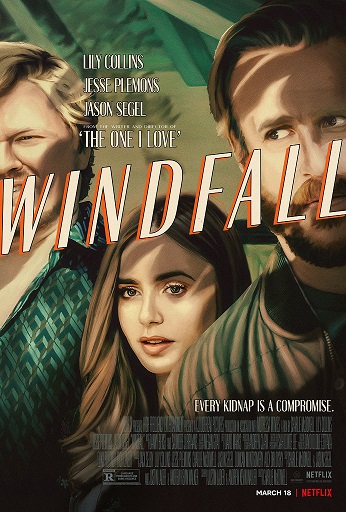
7. Windfall (dir by Charlie McDowell) — Jason Segel, Jesse Plemons, Lily Collins, and Charlie McDowell are all undoubtedly talented but this hostage melodrama goes nowhere unexpected.  Like a lot of hostage dramas, it becomes a bit of a drag as all of the expected mental games are played.  The attempt at social commentary falls flat.

6. Morbius (dir by Daniel Espinosa) — I started this film in October and didn’t bother to finish it until January.  Jared Leto seems to be taking the whole thing just a bit too seriously.  I still think it’s funny that a bunch of twitter trolls tricked Sony into re-releasing this thing so that it could flop twice.

5. Amsterdam (dir by David O. Russell) — Overlong and self-indulgent, Amsterdam features all of David O. Russell’s storytelling flaws without many of his strength.  To be honest, this film lost me as soon as the cutesy “This is based on an almost true story” flashed across the screen.  Amsterdam thinks that it’s considerably more clever than it is.  Taylor Swift, for all of her other talents, is not a particularly interesting actress.  Christian Bale gave the type of terrible performance that can only be delivered by someone with a lot of talent but not much of an attention span.  John David Washington was as bland as ever.  The anti-FDR Businessman’s Plot is not as obscure or unknown as this film seems to think that it is.

4. Blonde (dir by Andrew Dominik) — Andrew Dominik gives us yet another incredibly pretentious film that doesn’t seem to have much of a point beyond rubbing the audience’s face in how depressing life can be.  For all the effort that this film takes to recreate the life of Marilyn Monroe, the film doesn’t really seem to have much respect for her or even really like her that much.  Indeed, the film takes an almost perverse joy in detailing every tragedy that she suffered but it never displays much empathy for her suffering.  Never does the film see fit to really acknowledge her as a talented actress who was reportedly far more intelligent and well-read than most people realized.  People should be far more upset over Ana de Armas’s Oscar nomination than Andrea Riseborough’s.

3. The Sky is Everywhere (dir by Josephine Decker) — Ugh.  This film was unbearably twee.

2. Halloween Ends (dir by David Gordon Green) — In the past, I’ve liked quite a few of David Gordon Green’s films.  But I have to admit that I’ve disliked his Halloween films so much that it’s actually made me start to dislike his past movies as well.  There’s just something incredibly smug about Green’s approach to the films, as if he wants to make sure that we all understand that he’s better than the average horror director.  The thought of Green redoing The Exorcist…. bleh!  Anyway, Halloween Ends is a Halloween film that barely features Michael Myers.  The ending, with the somber march to the auto yard, was the most unintentionally funny thing that I’ve seen this year.  Can someone please tell David Gordon Green to get back to making films like Joe?

1. After Ever Happy (dir by Castille Landon) — The saga of the world’s most boring lovers continues.  Will these films never end!?

Film Review: The Bubble (dir by Judd Apatow)


Meh.

The Bubble is the latest film from Judd Apatow.  Taking place during the first year of the COVID pandemic, it follows a small group of actors as they attempt to make the sixth installment of the Cliff Beasts franchise.  The spoiled, pampered, and pretentious actors find themselves isolated, not allowed to go anywhere other than the set or the hotel.  The film becomes a disaster as the actors are driven mad by all the rules and the inconvenience that comes along with trying to make a film in the middle of the global pandemic.  When the studio hires a security team to keep anyone from escaping, things get only dumber.

Even by the standards of what we’ve come to expect from Judd Apatow, The Bubble is a notably messy and self-indulgent film.  It’s a bit of a shame really because there’s much about the Pandemic that not only deserves to be satirized but also needs to be satirized.  For much of society, satire will be an important step on the road back to sanity.  Unfortunately, the humor in The Bubble often falls flat because Apatow doesn’t seem to really be sure what his main target is.  Is he targeting COVID hysteria?  Is he targeting the pampered rich people who treated the pandemic like a two-year vacation while people who actually lived paycheck-to-paycheck were risking their health just so they could pay their bills?  Is he targeting bad action movies or pretentious indie directors or actors who think that the world revolves around them?  When Maude Apatow shows up as a TikTok star who has been given a role because she has 2,000,000 followers, is Apatow aiming at the shallowness of social media or is he poking fun at the older generation that can’t understand the kids and their wild and wacky ways?  Apatow seems to be going after everything and everyone but, at the same time, he also expects us to care about these characters when they start demanding to be allowed to leave the set.

The film’s action doesn’t really follow any sort of real storyline.  Instead, it feels like a collection of skits, all piled on top of each other and all dragging on for a bit too long.  Though The Bubble is shorter than the average Apatow film, it’s still over two hours long.  After the first hour, the film suddenly becomes obsessed with random dance scenes.  Usually, I love random dance scenes but, in this case, there’s really no humor or point to them beyond saying, “Wow, these people suck at dancing.”  It’s funny the first time but, by the fourth time, it starts to feel a bit lazy.  The film is like the improv student who, instead of building on the situation and working with his scene partners, just shouts out whatever pops into his head and begs the audience for a laugh.  The film does end on what would be a clever touch if not for the fact that it’s all pretty much lifted from the final scenes of Tropic Thunder.

Lest anyone think that I’m totally trashing the film, I did chuckle a few times.  There’s a recurring bit with Kate McKinnon’s studio exec constantly being at either the beach or on safari.  That made me laugh.  And Keegan-Michael Key, as an actor who has written a spiritual guide, delivers the majority of his lines with just the right amount of self-importance.  For the most part, though, The Bubble falls flat.  This is not the Netflix film to watch this weekend.

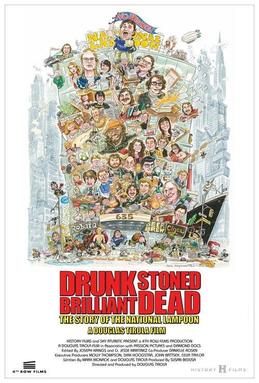
No Safe Space: Drunk Stoned Brilliant Dead: The Story Of The National Lampoon (2015, directed by Douglas Tirola)


Drunk_Stoned_Brilliant_Dead_PosterThe documentary Drunk Stoned Brilliant Dead pays tribute to National Lampoon.  Founded in 1970, National Lampoon was published for 28 years and, at the height of its popularity, its sensibility redefined American comedy.  When it came to National Lampoon, nothing was sacred and nothing was off-limits.  The success of National Lampoon led to a stage show called Lemmings and The National Lampoon Radio Hour, which featured everyone from John Belushi and Bill Murray to Chevy Chase and Harold Ramis.  Michael O’Donoghue, famed for his impersonations of celebrities having needless inserted into their eyes, went from writing for the Lampoon to serving as Saturday Night Live‘s first head writer.  National Lampoon’s Animal House, Vacation, and Caddyshack are three of the most influential film comedies ever made.  Everyone from P.J. O’Rourke to John Hughes to The Simpsons‘ Al Jean got their start at National Lampoon.
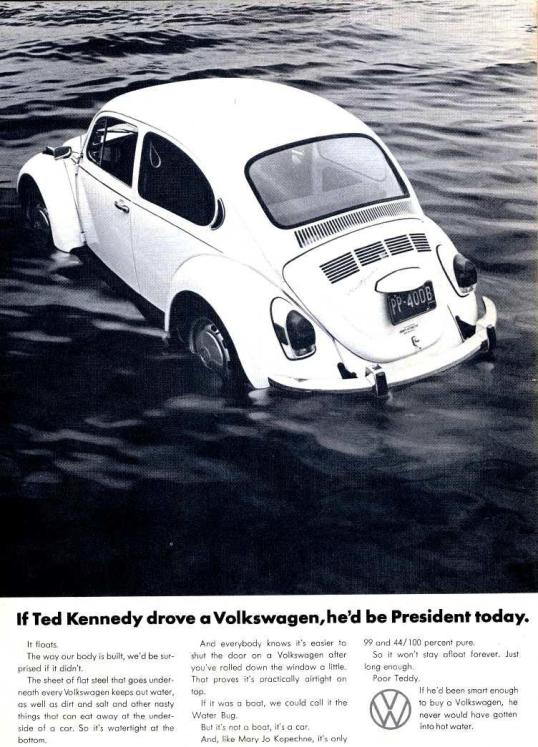
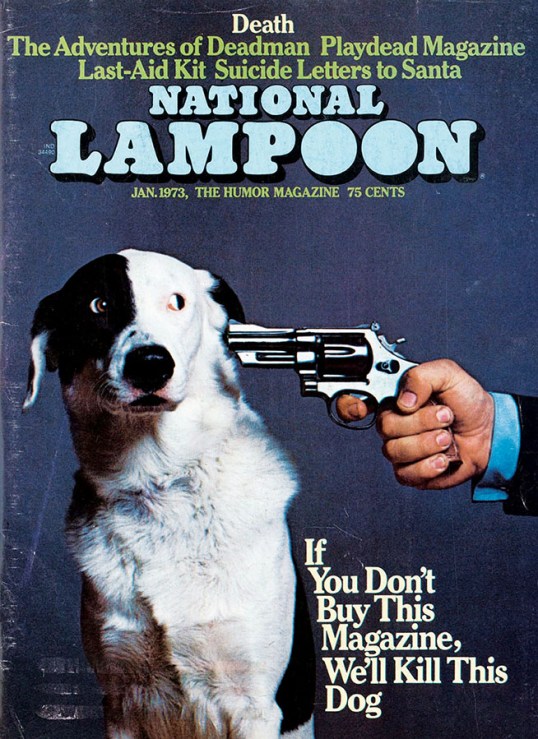
As influential as it was, National Lampoon is a magazine that would not be able to exist today’s world.  Just looking at the cover of most issues of National Lampoon would reduce today’s special little snowflakes to the point of hysteria.  In Drunk Stoned Brilliant Dead, National Lampoon‘s publisher claims that the Lampoon ultimately ceased publication because the religious right threatened to boycott any company that advertised in the magazine.  Today, it would be the “safe space” crowd complaining that the magazine did not come with proper trigger warnings.  Lena Dunham would look at one issue and go into a rage spiral.  Salon would publish a hundred hand-wringing think pieces about how National Lampoon was the worst thing since Ted Cruz.  Colleges would ban it and religious groups would still burn it.  National Lampoon was a magazine that went out of its way to be offensive to both the left and the right but, as editor-in-chief Tony Hendra puts it, the job of satire is to make those in power feel uncomfortable.  By poking fun at everything and challenging its readers, National Lampoon exposed the absurdity behind both the country’s prejudices and some of its most sacred beliefs.

Kennedy VW Ad

Drunk Stoned Brilliant Dead follows the National Lampoon from its founding to its ignominious end.  Along with interviews with Lampoon alumni, it also features archival footage of both Lemmings and The Radio Show, providing glimpses of  Christopher Guest, Bill Murray, John Belushi, Gilda Radner, and Harold Ramis before they became famous.  There are also interviews with celebrity admirers of the Lampoon who talk about how the magazine inspired their own work.  It makes sense that Judd Apatow was interviewed and Kevin Bacon made his screen debut in Animal House but what was Billy Bob Thornton doing there?

Unfortunately, drunk, stoned, brilliant, and dead describes some of the most important and talented figures in the Lampoon‘s history.  The documentary especially focuses on Doug Kenney, the Lampoon’s co-founder.  Everyone interviewed agrees that Kenney was a comedic genius who was also often emotionally troubled and who would vanish for months on end.  After the initial critical failure of Caddyshack, Kenney disappeared in Hawaii.  His body was later discovered at the bottom of the cliff.  Did Kenney jump or did he slip or, as director John Landis suggests, was he murdered by a drug dealer?  Nobody seems to know but Kenney’s ghost haunts the documentary.  This collection of very funny people get very serious when it comes time to talk about Kenney’s death.  Even Chevy Chase briefly redeems himself after years of bad publicity when he gets choked up.

Drunk Stoned Brilliant Dead is tribute to both a magazine and a bygone era.  See it before it gets banned.

How_I_Killed_Lampoon_6_embed

Playing Catch-Up With 6 Mini-Reviews: Amy, Gloria, Pitch Perfect 2, Sisters, Spy, Trainwreck


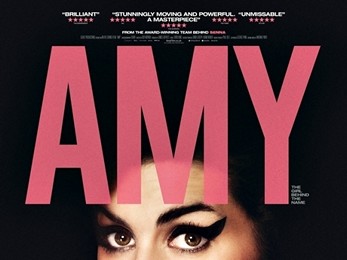
Amy_Movie_Poster

Amy (dir by Asif Kapadia)

Amy opens with brilliant and, in its way, heartbreaking footage of a 14 year-old Amy Winehouse and a friend singing Happy Birthday at a party.  Even though she’s singing deliberately off-key and going over-the-top (as we all tend to do when we sing Happy Birthday), you can tell that Amy was a star from the beginning.  She’s obviously enjoying performing and being the center of attention and, try as you might, it’s impossible not to contrast the joy of her Happy Birthday with the sadness of her later life.

A star whose music touched millions (including me), Amy Winehouse was ultimately betrayed by a world that both wanted to take advantage of her talent and to revel in her subsequent notoriety.  It’s often said the Amy was self-destructive but, if anything, the world conspired to destroy her.  By focusing on footage of Amy both in public and private and eschewing the usual “talking head” format of most documentaries, Amy pays tribute to both Amy Winehouse and reminds us of what a great talent we all lost in 2011.

Gloria_(2014_Film_Poster)

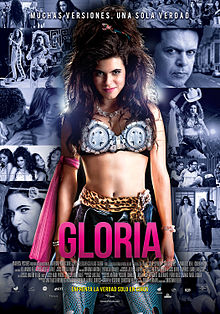
Gloria (dir by Christian Keller)

The Mexican film Gloria is a musical biopic of Gloria Trevi (played by Sofia Espinosa), a singer whose subversive songs and sexual image made her a superstar in Latin America and challenged the conventional morality of Catholic-dominated establishment.  Her manager and lover was the controversial Sergio Andrade (Marco Perez).  The movie follows Gloria from her first audition for the manipulative Sergio to her arrest (along with Sergio) on charges of corrupting minors.  It’s an interesting and still controversial story and Gloria tells it well, with Espinosa and Perez both giving excellent performances.

Pitch_Perfect_2_poster

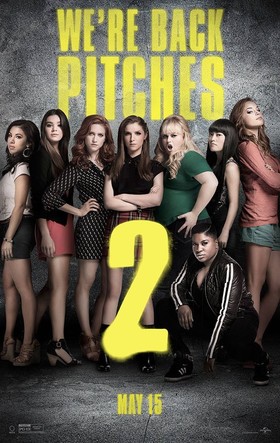
Pitch Perfect 2 (dir by Elizabeth Banks)

The Bellas are back!  As I think I’ve mentioned a few times on this site, I really loved the first Pitch Perfect.  In fact, I loved it so much that I was a bit concerned about the sequel.  After all, sequels are never as good as the original and I was dreading the idea of the legacy of the first film being tarnished.

But the sequel actually works pretty well.  It’s a bit more cartoonish than the first film.  After three years at reigning ICCA champions, the Bellas are expelled from competition after Fat Amy (Rebel Wilson) accidentally flashes the President.  The only way for the Bellas to get the suspension lifted is to win the World Championship of A Capella.  The plot, to be honest, really isn’t that important.  You’re watching the film for the music and the interplay of the Bellas and, on those two counts, the film totally delivers.

It should be noted that Elizabeth Banks had a great 2015.  Not only did she give a great performance in Love & Mercy but she also made a respectable feature directing debut with Pitch Perfect 2.

Sisters_movie_poster

Sisters (dir by Jason Moore)

It’s interesting how opinions can change.  For the longest time, I really liked Tina Fey and I thought that Amy Poehler was kind of overrated.  But, over the past two years, I’ve changed my opinion.  Now, I like Amy Poehler and Tina Fey kind of gets on my nerves.  The best way that I can explain it is to say that Tina Fey just seems like the type who would judge me for wearing a short skirt and that would get old quickly, seeing as how I happen to like showing off my legs.

Anyway, in Sisters, Tina and Amy play sisters!  (Shocking, I know.)  Amy is the responsible one who has just gotten a divorce and who wants to make everyone’s life better.  Tina is the irresponsible one who refuses to accept that she’s no longer a teenager.  When their parents announce that they’re selling the house where they grew up, Amy and Tina decide to throw one last party.  Complications ensue.

I actually had two very different reactions to Sisters.  On the one hand, as a self-declared film critic, it was easy for me to spot the obvious flaw with Sisters.  Tina and Amy should have switched roles because Tina Fey is simply not believable as someone who lives to have fun.  Sometimes, it’s smart to cast against type but it really doesn’t work here.

However, as the youngest of four sisters, there was a lot of Sisters that I related to.  I saw Sisters with my sister, the Dazzling Erin, and even if the film did not work overall, there were still a lot of little scenes that made us smile and go, “That’s just like us.”  In fact, I think they should remake Sisters and they should let me and Erin star in it.

Spy2015_TeaserPoster

Spy (dir by Paul Feig)

There were a lot of very good spy films released in 2015 and SPECTRE was not one of them.  In fact, the more I think about it, the more disappointed I am with the latest Bond film.  It’s not so much that SPECTRE was terrible as there just wasn’t anything particular memorable about it.  When we watch a film about secret agents saving the world, we expect at least a few memorable lines and performances.

Now, if you want to see a memorable spy movie, I suggest seeing Spy.  Not only is Spy one of the funniest movies of the year, it’s also a pretty good espionage film.  Director Paul Feig manages to strike the perfect balance between humor and action.  One of the joys of seeing CIA employee Susan Cooper (Melissa McCarthy) finally get to enter the field and do spy stuff is the fact that there are real stakes involved.  Susan is not only saving the world but, in the film’s best scenes, she’s having a lot of fun doing it and, for that matter, McCarthy is obviously having a lot of fun playing Susan and those of us in the audience are having a lot of fun watching as well.

Spy also features Jason Statham as a more traditional action hero.  Statham is hilarious as he sends up his own macho image.  Seriously, who would have guessed that he could such a funny actor?  Here’s hoping that he, McCarthy, and Feig will all return for the inevitable sequel.

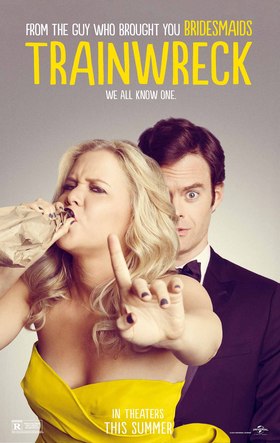
Trainwreck_poster

Trainwreck (dir by Judd Apatow)

There’s a lot of great things that can be said about Trainwreck.  Not only was it the funniest film of 2015 but it also announced to the world that Amy Schumer’s a star.  It was a romantic comedy for the 21st Century, one that defied all of the conventional BS about what has to happen in a romcom.  This a film for all of us because, let’s just be honest here, we’ve all been a trainwreck at some point in our life.

But for me, the heart of the film was truly to be found in the relationship between Amy and her younger sister, Kim (Brie Larson).  Whether fighting over what to do with their irresponsible father (Colin Quinn) or insulting each other’s life choices, their relationship is the strongest part of the film.  If Brie Larson wasn’t already guaranteed an Oscar nomination for Room, I’d demand that she get one for Trainwreck.  For that matter, Amy Schumer deserves one as well.

Seriously, it’s about time the trainwrecks of the world had a film that we could truly call our own.

An Underrated Quickie With Lisa Marie: The Five-Year Engagement (dir. by Nicholas Stoller)


When Jeff and I recently went to see The Five-Year Engagement, we literally had the entire theater to ourselves.  Seriously, that evening, we were apparently the only two people who took a look at the showtimes for the AMC Valley View and say, “Let’s see the Five-Year Engagement.” 

Now, I’m not complaining because, quite frankly, we enjoyed having that theater to ourselves. However, later that night, I found myself thinking about the empty theater and the fact that very few of the film lovers in my circle of friends had expressed much interest in The Five-Year Engagement.  The critics, in general, have been kind to the film but audiences seem to view it as a Netflix film at best. 

That’s a shame because, oh my God, The Five-Year Engagement is such a sweet film!  Seriously, I loved this movie!

Produced by Judd Apatow and directed by Nicholas Stoller, The Five-Year Engagement is a romantic comedy about a chef (played, quite well, by Jason Segal) and a psychologist (played by Emily Blunt, who is apparently destined to star in 65% of the romantic comedies released this year) who get engaged and end up remaining engaged for the next five years as the marriage ceremony is continually delayed by everything from Segal’s best friend marrying Blunt’s sister to the couple moving to Ann Arbor when Blunt gets a job working at the University of Michigan.  Along the way, various relatives die while still waiting for the blessed event and Segal and Blunt’s relationship struggles to survive against the distractions of everyday life.

The Five-Year Engagement isn’t a perfect film.  As often seems to happen with films produced by Judd Apatow, the film is about 20 minutes too long and sometimes the mix of sentimentality and crudeness is a bit awkward.  I could have done without an extended sequence in which Jason Segal (after having settled into life in Michigan) is revealed to have briefly turned into a crossbow-weilding survivalist. 

However, in the end, those flaws don’t matter because the Five-Year Engagement is, at heart, a sincerely sweet movie.  Jason Segal and Emily Blunt have a very real and very likable chemistry.  They make for a cute couple and you really find yourself hoping that they stay together.  Playing, respectively, Segal’s best friend and Blunt’s sister, Chris Pratt and Alison Brie both provide strong comedic support.  One of my favorite moments features Brie attempting to give a toast at Segal and Blunt’s engagement party and quickly dissolving into teary gibberish.  (Admitedly, one reason I loved this scene is because I did the same thing when I attempted to give a toast at my sister Megan’s wedding.)  Brie and Blunt also have another hilarious scene where they find themselves discussing realtionship matters while pretending to be Elmo and Cookie Monster.  It’s an odd but ultimately truthful moment.

Ignore the naysayers.  The Five-Year Engagement is sweet movie that deserves to be seen.