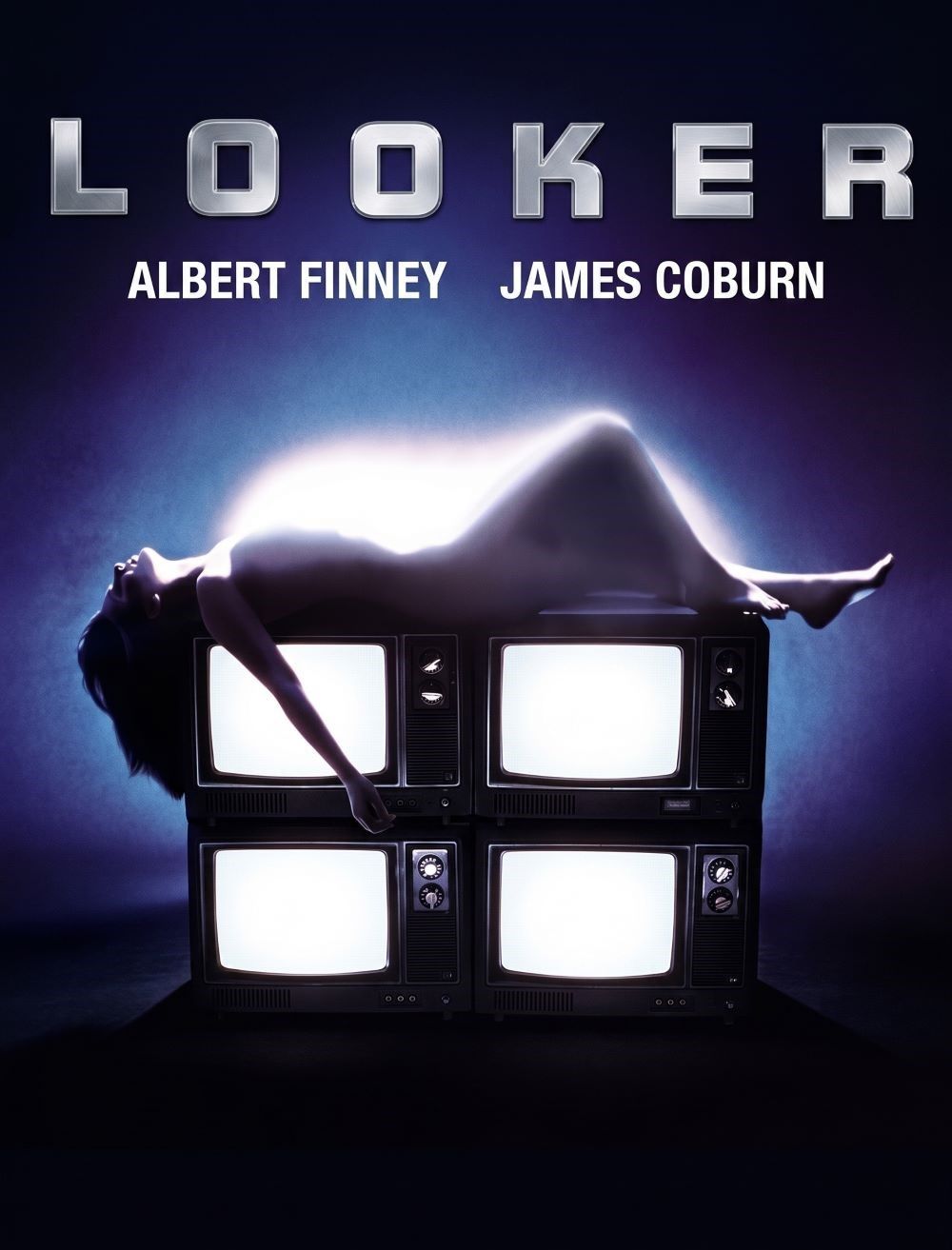
Icarus File No. 28: Looker (dir. by Michael Crichton)


“Hi, I’m Cindy. I’m the perfect female type: 18 to 25. I’m here to sell for you.” — Cindy Fairmont

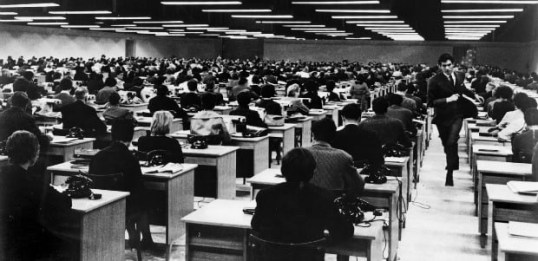
Looker is one of those 1981 films that, when it first came out, probably felt more like a goofy, slightly overwrought tech‑paranoia thriller than a serious prediction about the future. On paper, the premise—plastic‑surgery‑obsessed models being turned into digital clones for hyper‑tuned TV ads—sounds like a pulpy B‑movie gimmick. But viewed through the lens of right now, with Instagram influencers, AI‑generated content, and algorithm‑driven aesthetics shaping how we think about beauty and success, Looker starts to feel like a strangely accurate, almost eerie forecast. For a movie that was easy to write off as a minor, tonally wobbly Michael Crichton artifact, it does a surprisingly sharp job of outlining the emotional and cultural landscape we’re living in four decades later.

At the center of that landscape is Digital Matrix, the film’s antagonist in the form of a sleek, forward‑looking tech company that positions itself as a clean, rational, and indispensable partner to the advertising world. The company promises to revolutionize marketing by replacing messy, unreliable human models with perfectly calibrated digital avatars optimized to trigger maximum viewer response. That framing—as a neutral, even benevolent innovator—makes it all the more unsettling when its plans take on a distinctly murderous slant. To protect its “LOOKER” system and its vision of a world where perception can be mathematically controlled, Digital Matrix is willing to silence anyone who gets too close to the truth, from test‑subject models to inquisitive doctors. The bodies start piling up just off‑screen, treated as collateral damage in the pursuit of a more efficient, more profitable media ecosystem.

Seen from today’s vantage, Digital Matrix feels like a rough, bluntly drawn prototype of the big tech giants we now live with: polished, data‑driven, media‑centric, and profoundly invested in shaping what we see, buy, and believe. The difference, of course, is that modern tech behemoths are a lot better at hiding the bodies. In the real world, the “harm” is rarely as literal as Looker portrays it; instead, it shows up as algorithm‑driven addictions, mental health erosion, privacy carve‑ups, and the quiet erosion of trust in shared reality. People don’t get zapped by a sinister beam of light in a corporate lab; they get nudged into polarization, over‑consumption, or self‑images so warped that they resemble the film’s surgically obsessed models. The film exaggerates the physical violence, but its broader point—that when a tech company decides it can engineer human behavior at scale, ethical lines start to blur—still rings uncomfortably true.

Crichton’s version of this is less about organic social‑media culture and more about a centralized, corporate‑run system, but the emotional texture is similar. The models in Looker are under pressure to conform to a narrow, algorithmically derived standard of beauty, and the film doesn’t shy away from the toll that takes. They’re not just selling products; they’re being sold as products, their bodies and faces reduced to data points that can be adjusted, duplicated, and replaced. The idea that a person can be scanned, stored, and then endlessly repurposed as a digital avatar also anticipates contemporary debates about deepfakes, AI‑generated influencers, and the fear that real actors, musicians, and creators might be replaced by synthetic versions once their likeness and behavior are sufficiently “trained.” In that sense, Looker reads like an early, slightly clunky draft of the same anxieties we’re only now starting to grapple with at scale.

Where Looker falls short, at least in its day, is in fully articulating what all of this means for the idea of truth. The technology of 1981—not just the film’s budget and effects, but the broader cultural imagination—still assumed that truth was something largely fixed, something you could point to and defend if you had the right facts on your side. The movie flirts with the idea that perception can be manufactured, but it doesn’t really have the tools yet to show how completely that can destabilize the very concept of objective reality. The “LOOKER” system is treated as a kind of brainwashing gadget, a one‑off sci‑fi device rather than the logical endpoint of an entire infrastructure built to measure, model, and manipulate human behavior. The film wants to ask who controls the image, but in the early ’80s that question still felt contained, almost theatrical.

Now, in a world where truth is less about who has the facts in their corner and more about who controls the data, it’s clear how undercooked that idea really was in Looker. Today, truth is less a question of evidence and more a question of access: who has the biggest data centers, who owns the most comprehensive behavioral datasets, who runs the most sophisticated algorithmic matrices for shaping what people see, hear, and believe. Social‑media platforms, search engines, and ad networks don’t just reflect reality; they actively construct it by deciding which voices get amplified, which images get pushed, and which narratives get repeated until they feel like consensus. The company with the most money to build and refine those systems doesn’t just sell products; it sells versions of reality, packaged as personalized feeds, auto‑generated content, and AI‑driven narratives that feel increasingly indistinguishable from the “real” world.

Looker doesn’t fail because the ideas themselves are weak; in fact, the film actually does a fairly solid job of letting those ideas breathe and collide with each other. The problem is that those ideas sounded quite ludicrous within the context of 1981. A company digitally scanning and cloning models to engineer perfect ads, then using a device to subtly manipulate viewers’ minds, felt closer to paranoid pulp fantasy than plausible near‑future speculation. That gap between the film’s ambition and its audience’s willingness to buy into it gives the movie a slightly awkward tone, as if the world around it hasn’t yet caught up to the reality Crichton is trying to describe. The concepts are ahead of their time, which is exactly what makes them feel so prescient now, but back then, that same forward‑thinking quality made them easier to dismiss as silly or overreaching.

That disconnect is compounded by a cast that never quite seems to have fully bought into the film’s themes and narrative, even though several of them are game within the limits of the material. Albert Finney brings his usual grounded, slightly skeptical energy to Dr. Larry Roberts, lending the story a believable human center as the reluctant investigator pulled into Digital Matrix’s orbit. There’s a lived‑in quality to his performance that makes the ethical unease feel real, even when the plot veers into goofy sci‑fi mechanics. James Coburn, meanwhile, chews the scenery with a smarmy, charming conviction that suits Reston perfectly; he plays the corporate tech visionary as someone who genuinely believes in his own rhetoric, which makes his moral bankruptcy feel all the more unsettling. But around them, the rest of the ensemble often feels like it’s treating the premise more as a glossy thriller window dressing than a full‑blown social‑tech critique. The models and executives sometimes land their lines with a kind of detached professionalism that undercuts the deeper anxieties the film is trying to tap into.

As a piece of cultural legacy, Looker works less as a perfectly executed prediction and more as an early, slightly wobbly harbinger of the digital age we’re now fully immersed in. The film’s version of Digital Matrix may look clunky by our standards, but its logic—optimize attention, manufacture desire, and treat people as data to be extracted and reused—has become the default operating system of much of the digital world. The anxiety about who controls the image, who owns the algorithm, and who ultimately shapes what we see as “real” is no longer a speculative sci‑fi concern; it’s baked into the daily experience of social media, deepfake content, and AI‑driven feeds. Looker doesn’t need to be taken as a perfectly accurate prediction; it’s more powerful as a mood piece about the anxieties Crichton saw simmering beneath the surface of media, technology, and consumer culture. And in the way it casts a cutting‑edge tech company as the film’s real antagonist—a corporation whose “progressive” vision of the future quietly slides into murder and control—it feels uncomfortably close to the darker side of today’s Silicon Valley logic, minus the obvious body count but packed with a different kind of damage—one that’s less about visible corpses and more about the quiet erosion of what we can trust to be true.

Looker doesn’t so much fly too high to the sun and then crash‑burn under the weight of its ambition as it does peer through a cracked, slightly distorted future‑looking glass and just keeps staring in the wrong direction until the future finally catches up to it. It’s a film that doesn’t quite hold together as a flawless sci‑fi masterpiece, but it also never fully collapses under its own loftiness the way so many overly serious ’80s tech‑paranoia pictures do. Instead, it lurches forward with a rough, uneven energy that somehow makes its prescience feel more honest than polished. The movie doesn’t provide clean answers or tidy resolutions; it just lays out a set of ideas—about media, authenticity, beauty standards, and corporate control over perception—and then lets them sit in the air long after the credits roll.

Previous Icarus Files:

  1. Cloud Atlas
  2. Maximum Overdrive
  3. Glass
  4. Captive State
  5. Mother!
  6. The Man Who Killed Don Quixote
  7. Last Days
  8. Plan 9 From Outer Space
  9. The Last Movie
  10. 88
  11. The Bonfire of the Vanities
  12. Birdemic
  13. Birdemic 2: The Resurrection 
  14. Last Exit To Brooklyn
  15. Glen or Glenda
  16. The Assassination of Trotsky
  17. Che!
  18. Brewster McCloud
  19. American Traitor: The Trial of Axis Sally
  20. Tough Guys Don’t Dance
  21. Reach Me
  22. Revolution
  23. The Last Tycoon
  24. Express to Terror 
  25. 1941
  26. The Teheran Incident
  27. Con Man

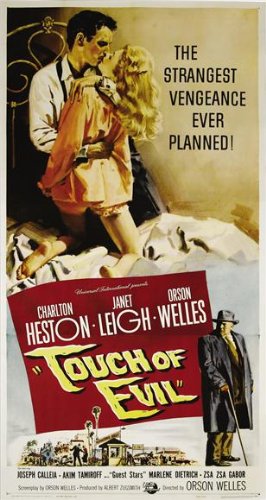
Scenes That I Love: The Opening Tracking Shot from Orson Welles’s Touch of Evil


Since today is Orson Welles’s birthday, I wanted to share at least one scene that I love from his films.  The famous tracking shot from 1958’s Touch of Evil, which begins in America and ends in Mexico, truly shows Orson Welles at his visionary best.

It’s also Welles at his most clever.  Knowing that he wouldn’t be given control over the editing of the footage he shot, Welles included as many long shots as possible to make it more difficult for an editor to chop up or alter his vision.

4 Shots From 4 Films: Special Orson Welles Edition


4 Or More Shots From 4 Or More Films is just what it says it is, 4 shots from 4 of our favorite films. As opposed to the reviews and recaps that we usually post, 4 Shots From 4 Films lets the visuals do the talking!

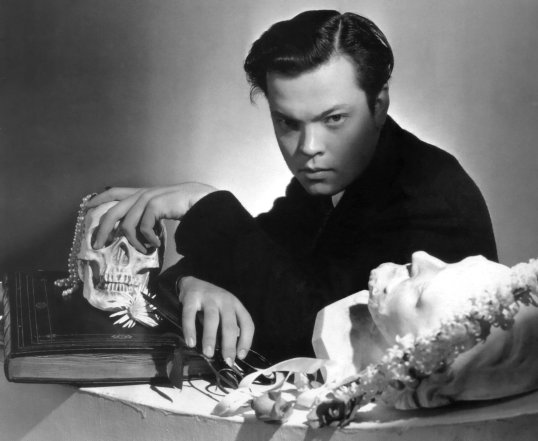
Today we celebrate what would have been the 111th birthday of the great Orson Welles!  It’s time for….

4 Shots from 4 Orson Welles Films

Citizen Kane (1941, dir by Orson Welles, DP: Gregg Toland)

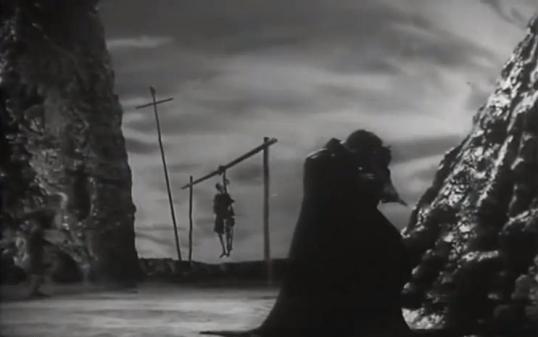
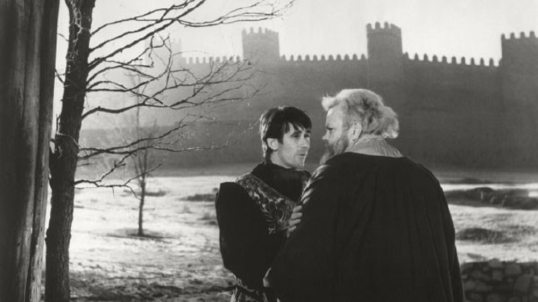
MacBeth (1948, dir by Orson Welles, DP: John L. Russell)

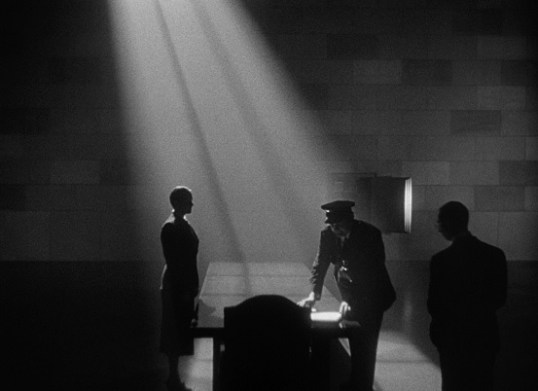
The Trial (1962, dir by Orson Welles, DP: Edmond Richard)

Chimes at Midnight (1965, dir by Orson Welles, DP: Edmond Richard)

Music Video of the Day: I’m Free by The Soup Dragons (1990, directed by Matthew Amos)


I’m Free was originally recorded by The Rolling Stones in 1965 and was the last track on the Out Of Our Heads album.  To quote Rolling Stone Magazine, the original song was a “folk rocker.”  The version by the Soup Dragons was much more psychedelic and featured a verse from Jamaican reggae performer, Junior Reid.  I’m Free became the band’s biggest hit, reaching the number 2 spot on Billboard’s Alternative Songs chart.

Director Matthew Amos has also directed videos for Stereo MCs, Jesus Jones, Slipknot, and Blur.  He’s also film several awards shows and stage productions for the BBC.

Late Night Retro Television Review: Pacific Blue 4.2 “Treasure Hunt”


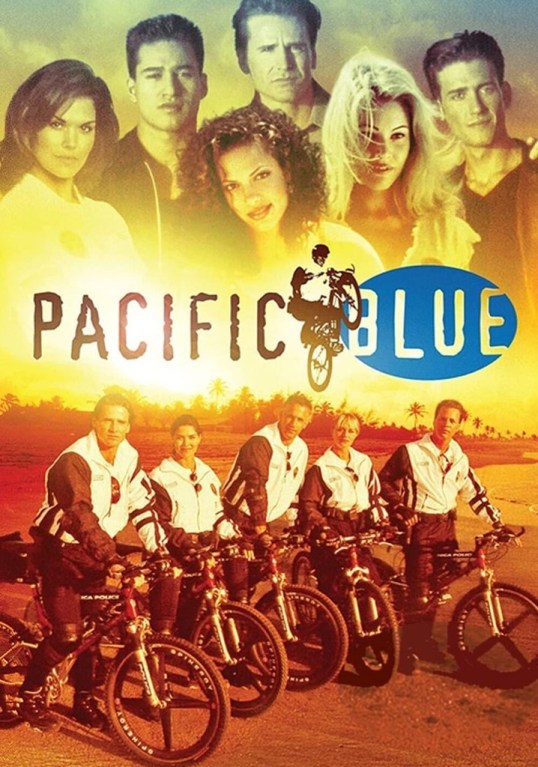
Welcome to Late Night Retro Television Reviews, a feature where we review some of our favorite and least favorite shows of the past! On Tuesdays, I will be reviewing Pacific Blue, a cop show that aired from 1996 to 2000 on the USA Network!  It’s currently streaming everywhere, though I’m watching it on Tubi.

This week, cliffhangers are abandoned and emotions run wild.

Episode 4.2 “Treasure Hunt”

(Dir by Terence H. Winkless, originally aired on August 2nd, 1998)

When last we checked in with Pacific Blue, we had a bit of cliffhanger going on.  Bobby Cruz was still considering whether or not to become a bicycle cop.  Detective Monica Harper was preparing to go back to her usual department.  And TC had just announced to Strickland and Granger that he wasn’t sure whether or not they would be continuing as bike cops.

Well, apparently, that all got worked out between episodes.  Strickland and Graner are still bike cops and they no longer appear to be living in that funky loft they were occupying during the previous episode.  Bobby is now a bike cop.  And Monica is a bike cop too because apparently, she got transferred to Pacific Blue.  She explains to Bobby that she goes wherever she’s sent but she’s not real happy about being a bike cop.  Hey, Monica, we’ve already got a whiny character on this show.  We don’t need another.

That whiny character — and yes, it is Chris Kelly — wants to be a sergeant.  So does Cory.  Both Chris and Cory take the sergeant’s exam.  Chris scores higher, though only by five points.  However, TC offers the sergeant’s position to Cory.  Chris, of course, whines about his decision.  TC replies that Cory’s been with the department longer and, unlike Chris, she’s never been written up for having a bad attitude.  TC feels that Cory will be a better role model for the new recruits and he’s probably right.  I mean, one of the few consistent things about Pacific Blue has been that Chris is generally thin-skinned and fairly rude to the people that citizens that she’s supposed to be protecting.  Chris is the bike cop who always seemed to be annoyed whenever she actually has to talk to anyone who doesn’t ride a bicycle.

One reason that is not mentioned for TC not promoting Chris is that Chris and TC are now married and I have to wonder how it would look if TC’s first action as commander was to promote his wife.  Honestly, how are TC and Chris even working together now?  This seems like a textbook case of conflict of interest.

As for the rest of the show, Strickland killed her first bad guy.  Shaken after shooting a convenience store robber, Strickland goes to a bar and gets drugged!  It turns out that someone is slipping GHB into the drinks on the boardwalk.  Could it have something to do with two obnoxious radio hosts who are broadcasting from the pier?  Bobby Cruz is not happy when he discovers that his 15 year-old sister is apparently a fan of their program….

Yes, Bobby Cruz is a Mexican-American bicycle cop from a tough neighborhood who is very protective of his younger sister.  Wasn’t that Victor Del Toro’s character as well?  Being from Texas, I’ve always been very aware of how television has always stereotyped any character who happens to have a Spanish last name.  With Pacific Blue, it looks like they just crossed out Victor Del Toro’s name in their scripts and wrote in Bobby Cruz instead.

Finally, Monica is looking for a new apartment.  Cory tries to keep Monica from finding out that there’s an apartment available in her building because …. Cory’s a bitch, maybe?  I don’t know.  It’s very out-of-character for Cory.  How is Cory going to be a sergeant if she gets this upset and petty over a new person being assigned to Pacific Blue?

Oh!  Also, Cory’s pregnant!  So far, only Chris knows.  Why would anyone tell Chris anything?  Chris is like hella mean….

Wow, a lot happened in this episode!  In fact, I’d say almost too much happened in this episode.  One got the feeling that the show’s writers wanted to focus on the newer members of the squad but, at the same time, they knew they had to come up with something for Chris to whine about.  In the past, Pacific Blue often felt understuffed.  This episode was definitely overstuffed.

Something is going to have to give.

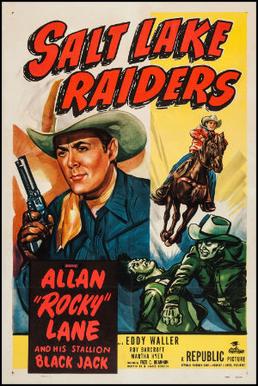
Salt Lake Raiders (1950, directed by Fred C. Brannon)


When convicted murderer Fred Mason (Myron Healey) escapes during a prison transfer, frontier Marshal Rocky Lane (Allan Lane) is brought in to re-capture him.  It’s believed that Fred has returned to the ghost town of Silver City so that he can retrieve a buried treasure of $100,000.  But when Rocky tracks Fred down, Fred insists that he was set up and that he didn’t kill anyone.  Rocky, Fred, and Nugget Clark (Eddy Waller) are soon captured by outlaw Brit Carson (Roy Barcroft), who is also searching for the money.

I wasn’t planning on watching Salt Lake Raiders today.  I’ve long wanted to review a Whip Wilson western and I was hoping I would be able to find one of his films, Silver Raiders, on YouTube.  However, every search that I did for Silver Raiders just returned Salt Lake Raiders.  Instead of watching a Whip Wilson western, I ened up just watching another Allan Lane western.

Salt Lake Raiders is a competently-made but not very memorable western.  The person who set up Fred is no big surprise.  The ghost town is a good location and, as always, Allan Lane is a believable hero.  Eddy Waller, as usual, plays sidekick Nugget Clark and lovely Martha Hyer plays the daughter of the man who Fred was accused of killing,  The movie holds your interest but it’s also so predictable that it is easy to understand why the studios abandoned B-western movies once television started giving them to people for free.

Unless I missed it, there is no mention of Salt Lake City or any other salt lakes in this movie.

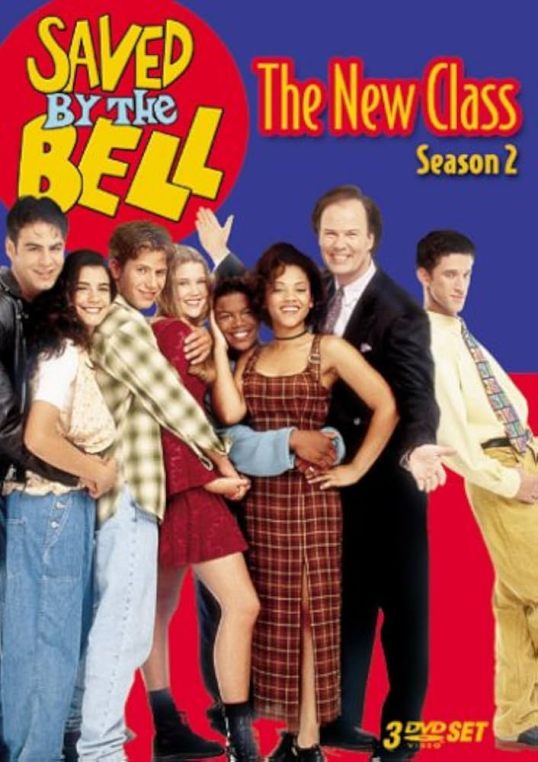
Retro Television Review: Saved By The Bell: The New Class 2.1 “The Return of Screech”


Welcome to Retro Television Reviews, a feature where we review some of our favorite and least favorite shows of the past!  On Tuesdays, I will be reviewing Saved By The Bell: The New Class, which ran on NBC from 1993 to 2o00.  The show is currently on Prime.

This week, we start the 2nd season of Saved By The Bell: The New Class!

Episode 2.1 “The Return of Screech”

(Dir by Don Barnhart, originally aired on September 10th, 1994)

After the disappointing reviews and ratings of the first season, Saved By The Bell: The New Class rebooted itself for the second season.  Robert Sutherland Telfer, Isaac Lidsky, and Bonnie Russavage were all fired and the characters of Scott, Weasel, and Vicky were dropped from the show. (No mention was ever made of where they had gone.  They just vanished.)

Suddenly, Megan and Lindsay’s best friend was Rachel Meyers (played by Sarah Lancaster, who appeared once during the first season).  Meanwhile, Swiss exchange student Brian Keller (played by a German actor named Christian Oliver) became the new head schemer while Bobby Wilson (Spankee Rodgers) became the new annoying sidekick with a crush on Megan.  From the start of the second season, everyone acted as if Brian and Bobby had always been there.  As for Lindsay and Tommy D, they continued to date.  And because Brian had a crush on Rachel, there was no longer anyone around trying to break the two of them up.

Mr. Belding was still the principal but now, he had a much bigger office with a window.  He also got a new administrative assistant, an education major who was on a work/study program with Cal U.  As you probably already guessed from this episode’s title, that administrative assistant turned out to be Screech Powers (Dustin Diamond).

Now, to give credit where credit is due, neither Screech nor Diamond are quite as annoying in this episode as they would eventually become.  By the end of the series, Diamond was giving such a broad performance as Screech that it almost came across as being deliberately self-destructive.  In this episode, though, Diamond just plays Screech as being overly earnest and too eager to please.  He may get on everyone’s nerves but at least he’s not doing the weird voices or the twisted facial expressions that would later come to typify his performance.

As for the plot of this episode, it’s dumb.  Rachel needs $700 so she can replace the jacket that she borrowed (without permission) from her mother.  Brian throws a party and sells tickets to help her raise the cash but when it turns out that Bobby’s house is not available for the party, Brian tricks Screech into unlocking the gym and allowing the party to be held in there.  When Belding shows up and demands to know what’s happening, Screech takes the blame and decides that he should return to Cal U.  And, really, he probably should have.  I mean, after all the years he spent with Zack, Screech should have been able to see that he was being manipulated.  What a moron.

But Brian does the right thing and tells the truth to Belding.  Brian and the Gang all get two-weeks detention.  Belding tells Screech that the students respect him and that he taught them an important lesson about the telling the truth.  I’m not sure how accurate any of that is but the important thing is that Screech stays at Bayside.

This episode was actually not as bad as I was expecting it to be.  Brian is a bit more likable than the first season’s Scott and this episode didn’t feature any of the mean-spiritedness that seemed to typify so much of the first season.  Even Screech was tolerable!

Don’t get used to it, though.  The season’s just getting started.


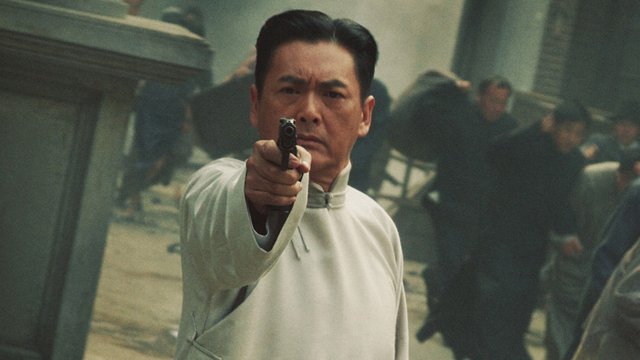
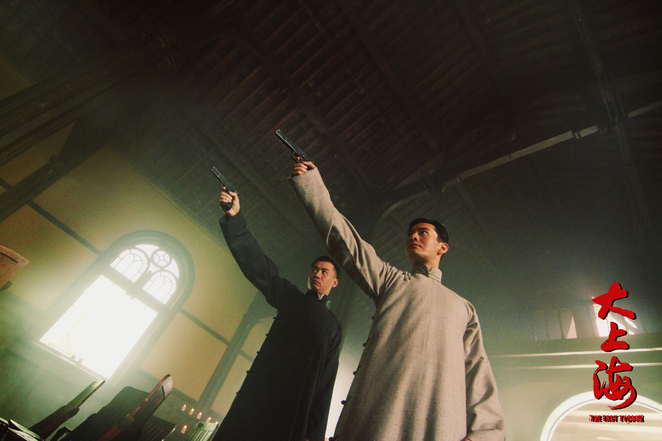
Brad reviews THE LAST TYCOON (2012), starring Chow Yun-Fat!


When fans of Hong Kong cinema think of high-quality film craftsmanship, the name Wong Jing doesn’t immediately come to mind. Sure, he directed one of my all-time favorite films, GOD OF GAMBLERS (1989), and he’s had his share of box office success over the years, but he’s also churned out a lot of crap. His name is not often the stamp of quality on a film production, but there’s something about working with Chow Yun-Fat that will sometimes bring out his best.

THE LAST TYCOON tells the story of Shanghai crime boss Cheng Daqi, portrayed here in two separate timelines by actor Huang Xiaoming in his younger years, and by the legendary Chow Yun-Fat in his older years. When we meet young Cheng, he seems like an awfully nice guy and then fate places him in a jail cell with the shady Mao Zai (Francis Ng). To escape and save his own life, and with a little help from Mao, Cheng commits his first murder. Forced to flee, Cheng aligns himself with a gang led by Hong Shouting (Sammo Hung). A natural leader, and as badass as it gets, Cheng rises rapidly in the ranks. The narrative isn’t as straight forward as this sounds so far, because it leaps frequently back and forth between younger Cheng and older Cheng. When the film finally settles in with Chow Yun-Fat for its latter half, we have seen how Cheng rose to become one of the most powerful men in Shanghai. We also understand how he has found himself in an extremely difficult wartime position with the Japanese that will test his loyalty to his country, as well as to the people he loves.

Right out of the gate, I want to give kudos to Wong Jing for putting together a highly entertaining film, set against an incredible 30-year backdrop of historical Shanghai! I don’t mention it in the summary above, but THE LAST TYCOON finds time to feature an abundance of romance between Cheng and the two loves of his life. We’re talking about grand melodrama done right, offset periodically with awesome action sequences, whether they be hand-to-blade street brawls, heroic bloodshed shoot-outs, or explosive wartime bombing raids. The emotions and the blood flow very strongly in this one!

The role of Cheng Daqi fits Chow Yun-Fat like a glove. He emotes early and often, and when he takes a break from that, it’s usually to pick up a pistol that he’s able to wield with maximum precision and efficiency. For a long-time fan like me, it’s high-quality fan service that fits seamlessly into the pulpiness of the story. As the younger version of Cheng, Huang Xiaoming does a fine job with the romance and the action. It seems perfectly natural that he’d eventually turn into the legend. Huang gets a lot of screentime, and without his solid portrayal, I don’t think the film would have worked nearly as well.

I did want to mention some of the notable supporting performances in THE LAST TYCOON. Veteran Francis Ng is as reliable as ever as we see his character go from a mystery lifesaver at the beginning to an evil villain by the end. The role may be underdeveloped, but Ng makes it work. I’m going to be looking for more from actor Gao Hu, who’s a total badass in his role as Cheng’s loyal soldier Lin Huai. Present over the entire 30-year timeline of the film, the man’s expert switchblade skills and gun-handling abilities are crucial to Cheng’s safety! Yolanda Yuan and Monica Mok are very good as the two women in Cheng’s life. They are very different, but it’s easy to see why he loves them both, and I think the movie ultimately gets the ending right where the romance is concerned. Finally, I did want to mention that I was somewhat disappointed in the character of Hong Shouting, played by the legendary Sammo Hung. Even though he was a powerful boss, I don’t think he comes across very strongly in the film. For someone of his stature, I see this as one of the few missteps from writer / director Wong Jing.

Small quibbles aside, I recommend THE LAST TYCOON without any reservations. Fans of Chow Yun-Fat and Hong Kong cinema can’t go wrong!

THE LAST TYCOON is currently available for streaming on Amazon Prime, Tubi, PlutoTV, and Plex.