“I’m not going there to die. I’m going to find out if I’m really alive.” — Spike Spiegel
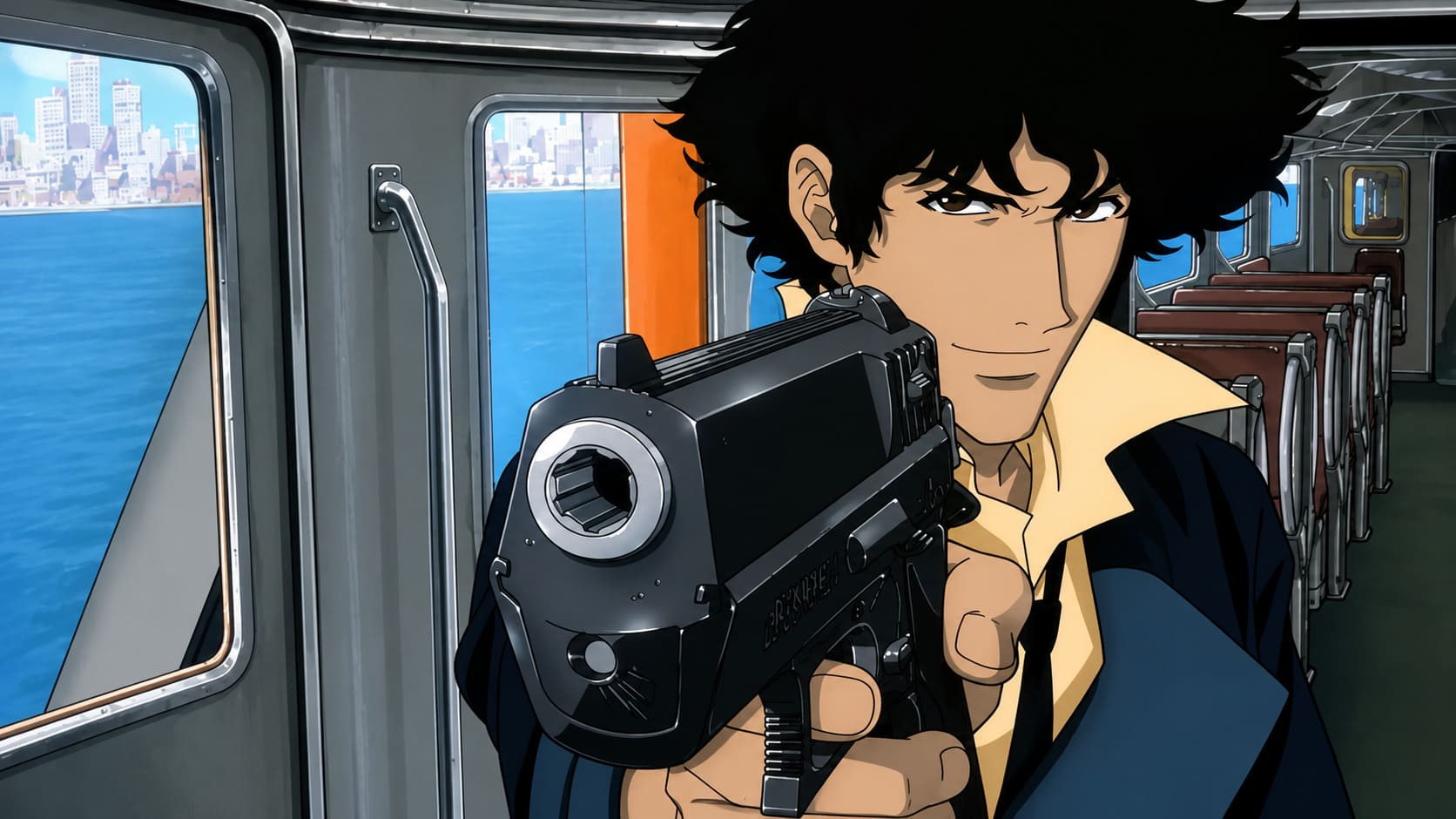
Few characters in anime history have cemented their legacy as indelibly as Spike Spiegel, the slacker protagonist of the neo-noir masterpiece Cowboy Bebop. At first glance, Spike seems to embody an archetype familiar to action media: the effortlessly cool, lone-wolf bounty hunter. Yet, what elevates him from a mere trope to an enduring icon is the profound juxtaposition at the core of his existence. Spike’s charisma does not stem from a traditional hero’s righteous drive, but rather from a deeply compelling contradiction—he is a man desperately trying to live in the present while being inextricably anchored to a violent past. This duality makes him not just a stylish action hero, but a fascinating study in trauma, detachment, and the performance of coolness.
Much of Spike’s immediate magnetism is undeniably visual and kinetic. Designed with a lanky frame, a perpetually rumpled suit, and a mop of unruly green hair, he subverts the traditional muscular anime hero. His physicality, heavily inspired by Bruce Lee’s Jeet Kune Do, further enhances his appeal. In combat, Spike does not fight with rage or precise, robotic calculation; he fights like he is dancing, waving off punches with a sardonic grin and fluid, almost lazy movements. He takes beatings as readily as he dishes them out, projecting an aura of invincibility that feels earned through sheer style rather than superhuman ability. This effortless physical grace makes him incredibly fun to watch, establishing a baseline of “cool” that the rest of his character actively deconstructs.
Beneath this facade of unflappable nonchalance, however, lies a complex psychological defense mechanism. Spike’s iconic philosophy—”whatever happens, happens” (katso okyaku-sama)—is often misinterpreted as pure nihilism, but it is actually the coping strategy of a broken man. By acting as though nothing matters, Spike shields himself from the agonizing grief of his past with the Red Dragon Syndicate and the woman he lost, Julia. His apparent laziness regarding bounty hunting, his refusal to take life seriously, and his perpetual, half-lidded expression are all mechanisms to avoid forming new attachments that could cause him pain again. This makes him a deeply relatable hero; his apathy is not a superpower, but a scar.
What truly makes Spike an interesting hero, however, is the nature of his ultimate conflict. Standard heroes fight to save the world or protect the innocent, but Spike’s narrative arc is intensely intimate and selfish. His antagonist, Vicious, is not a world-ending threat, but a dark mirror reflecting the life Spike tried to leave behind. When the past finally catches up to him, Spike is forced to drop his slacker persona and confront the ghosts he has been running from since the series began. His heroism is defined not by a desire to do good, but by a fatalistic need to set things right, even if the cost is his own life. He is a tragic hero wrapped in the guise of a comedic beatnik, fighting a war for his own soul rather than the fate of the universe.
Ultimately, Spike Spiegel endures as a charismatic and fascinating character because he is a masterclass in tragic irony. He spends the entire series convincing both his crew and the audience that he is a phantom, a man who died once and is simply living on borrowed time. Yet, in his final moments, his actions prove that he was more alive—and more capable of love, loyalty, and sacrifice—than he ever let on. Spike’s blend of kinetic coolness, guarded vulnerability, and fatalistic resolve creates a character that is as heartbreaking as he is effortlessly cool. It is this precise mixture that ensures that long after the final credits roll, Spike Spiegel remains the quintessential space cowboy.
“Men always seem to think about their past before they die, as though they were frantically searching for proof that they truly lived.” — Spike Spiegel
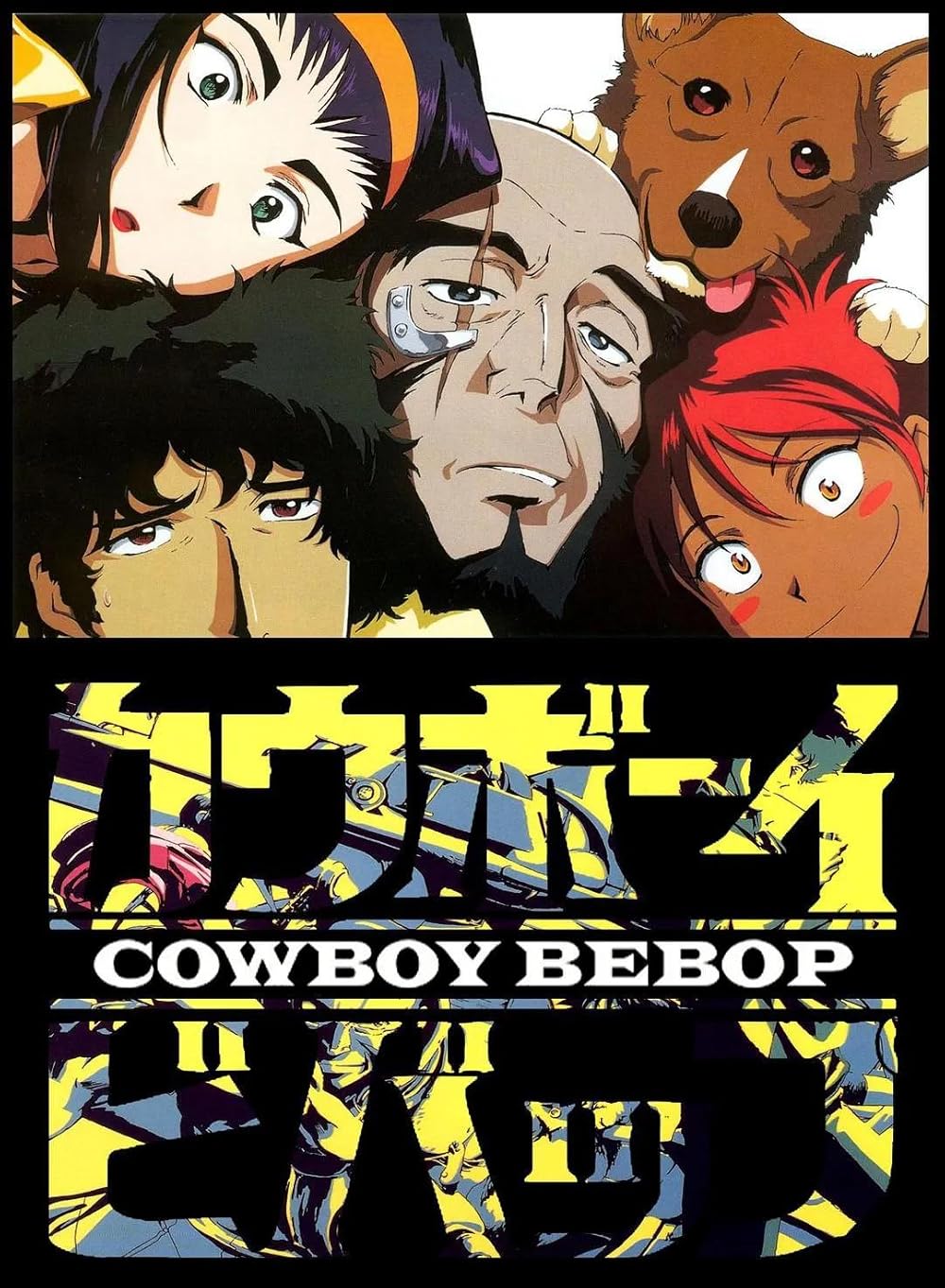
There are certain works of art that transcend their medium to become cultural landmarks, and Cowboy Bebop is one of them. Shinichirō Watanabe’s magnum opus isn’t just a great anime; it’s the classic for many, the show that gets brought up in the same breath as Akira and Ghost in the Shell when people talk about anime as an art form. Even now, decades after its initial run, it absolutely earns that reputation, which is why it non-negotiably belongs on any new anime fan’s must-see list. If someone tells me they want to get into anime but don’t know where to start, this is the first title I throw at them, because it serves as the ultimate gateway, a perfect primer on what the medium is capable of.
At its core, Cowboy Bebop is a space western noir, a genre mash-up that sounds chaotic on paper but plays out with such effortless cool that you never question it. You’ve got Spike Spiegel, a former syndicate hitman with a killer right hook and a death wish; Jet Black, a grizzled ex-cop with a cybernetic arm and a heart of gold; Faye Valentine, a femme fatale with amnesia and a gambling problem; Radical Edward, a chaos-gremlin child hacker; and Ein, a data-dog who is frankly way smarter than everyone else. They’re bounty hunters in the year 2071, just scraping by in a solar system that’s still recovering from a major accident that made Earth largely uninhabitable, and they’re not saving the world—they’re just trying to make enough woolongs to afford their next meal of bell peppers and beef, which, as Jet will remind you, never actually has any beef.
The episodic structure is a huge part of the show’s charm, as you never really know what you’re going to get from one episode to the next. One week, it’s a high-octane action romp; the next, it’s a somber, almost silent meditation on loss; and then it might pivot to a bizarre, almost comedic episode about a fridge floating through space. This variety keeps things endlessly fresh, but it’s the overarching narrative, the slow burn of Spike’s past with the Red Dragon Syndicate, that gives the whole thing its devastating emotional weight. The show rewards multiple viewings because you pick up on new little details, new visual cues, and new emotional resonances every time, and the animation by Sunrise, even by today’s standards, is fluid and expressive with a cinematic flair that often feels like watching a classic film.
If you talk about Cowboy Bebop and don’t immediately mention the music, you’ve missed the entire point. The influence of the soundtrack is so profound that it’s essentially another main character, as Watanabe has always had a brilliant, intuitive understanding of music’s power in storytelling. With composer Yoko Kanno at the helm, he created something that transcends a typical score; the music isn’t just there to heighten the mood, it shapes the mood, defines the narrative, and creates the show’s entire identity. “Tank!” is perhaps the most iconic anime opening of all time, a roaring, brassy jazz piece that screams “style and energy” before you’ve even seen a single frame, but Kanno’s genius is in her range, shifting seamlessly from the bluesy harmonica of “Rain” to the ethereal, Celtic-tinged vocals of “Adieu” to the frantic rock of “What Planet is This?” during a chaotic fight, all of which makes the space-faring adventure feel gritty and lived-in but also achingly beautiful.
This masterful use of sound creates the overall mood of the series, which is one of profound, melancholy cool, steeped in a pervasive sense of loneliness and existential drift. Each of the main characters is running from something—a past they can’t escape, a memory they can’t forget, or a future they can’t imagine—and Spike lives by a philosophy that a man only dies when he’s forgotten, with his entire arc about confronting a past he’s been trying to outrun. They are a found family, but they’re a family of loners, each so wrapped up in their own personal baggage that they can never truly connect on a deeper level; they share meals, they bicker, they fight together, but they rarely share their deepest fears or true feelings, creating a bittersweet undercurrent to all their interactions. This juxtaposition—the cool, action-packed surface and the lonely, emotional depth—is what makes Cowboy Bebop so unforgettable.
For a newcomer, that blend is exactly why the show serves as a perfect gateway, as you don’t need to be steeped in anime tropes or have a tolerance for over-the-top melodrama to appreciate it. The storytelling is grounded, character-driven, and deeply human, with a cinematic sensibility that feels instantly familiar to anyone who loves Western films, noir, or sci-fi, sidestepping the more esoteric quirks that can sometimes be a barrier for new fans and delivering pure, universal storytelling. It shows that anime can be mature, thoughtful, and emotionally complex without being dark and miserable for the sake of it, setting the bar incredibly high and giving newcomers a clear benchmark for quality.
So, is it as good as everyone says it is? Yes, it’s a masterclass in visual storytelling, world-building, and character development, managing to be mature without being gratuitous, philosophical without being pretentious, and deeply sad without being depressing. It’s a singular work of art where every single element—the animation, the story, the characters, and most importantly, the music—aligns perfectly to create something that is so much more than the sum of its parts. Honestly, if you watch Cowboy Bebop and don’t find something to love, anime might just not be your thing, but for the vast majority, it’s the beginning of a beautiful, lifelong obsession. It’s the show you’ll recommend to your friends, rewatch years later, and still find yourself tearing up at the finale—essential viewing, plain and simple. It’s a perfect, beautiful, jazz-infused tragedy, and you’re gonna carry that weight, whether you want to or not.
“Life without pain isn’t real life!” — Isamu Dyson
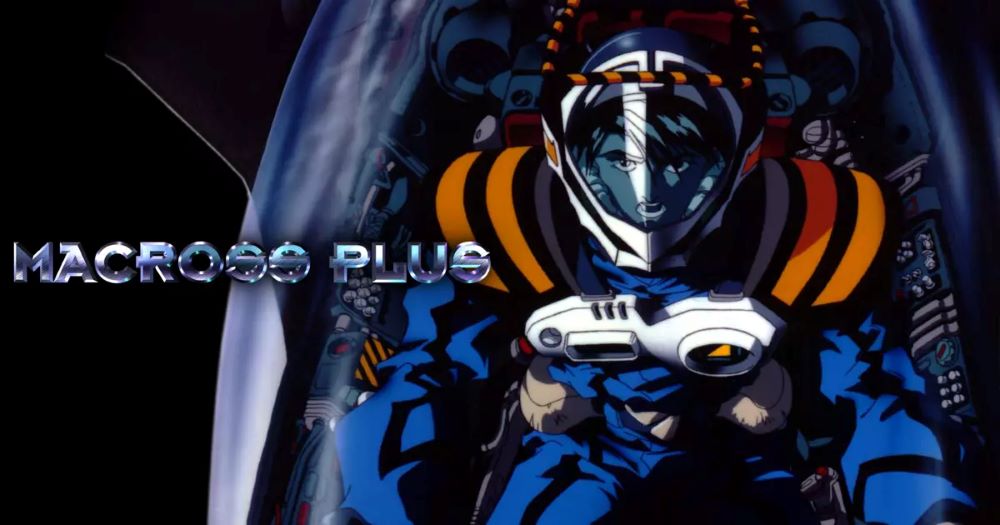
Macross Plus is a landmark anime OVA series from 1994 that continues to resonate with both newcomers and longtime fans of the genre. It stands out within the larger Macross franchise—one of the most influential in anime history—that includes various series beginning with the original Super Dimension Fortress Macross in the early 1980s. While Macross Plus is just one of several entries under this umbrella, it serves as a crucial bridge between the earlier incarnation of the series produced during the 1980s and the more modern take that the franchise would eventually develop in the late 1990s and into the 2000s. This OVA represents a stylistic and thematic evolution that helped transition the series from its original space opera roots into a more mature, complex narrative form that appeals to contemporary audiences.
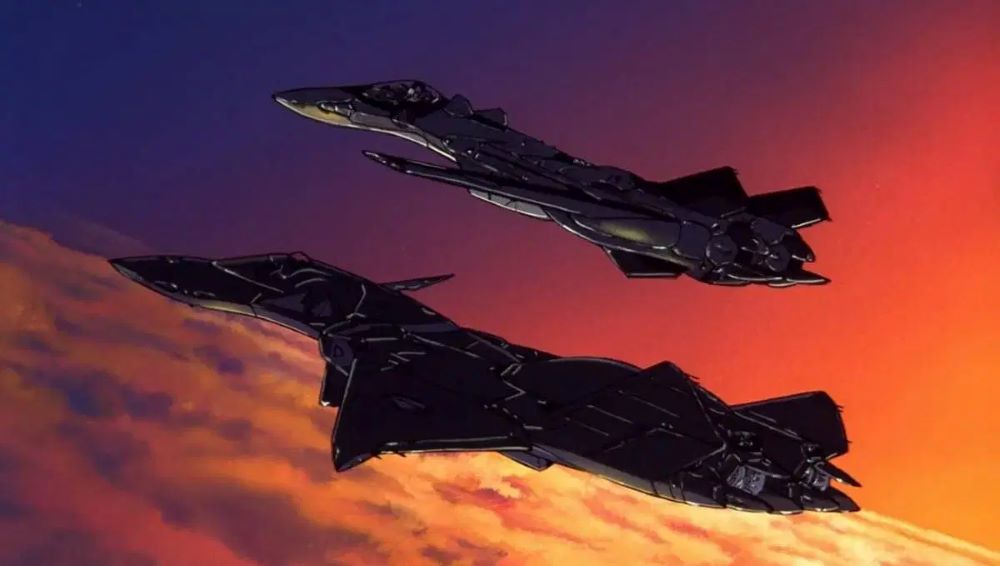
Set decades after the destructive war between humanity and the alien Zentradi featured in the original series, Macross Plus takes place in the year 2040 where the UN Spacy conducts flight trials on a remote planet to select the next generation of Variable Fighters. The story revolves around Isamu Dyson, a cocky and passionate pilot; Guld Goa Bowman, his calm and talented rival who is revealed to be a Zentradi/human hybrid; and Myung Fang Lone, a woman emotionally entangled with both men and managing the artificially intelligent holographic idol Sharon Apple. The narrative explores themes of rivalry, friendship, human connection, and emotional tension with nuance and depth, distinguishing it within the franchise and offering a compelling experience for both newcomers and longtime fans.
Viewers can experience Macross Plus either as a four-episode OVA or through the re-edited movie version titled Macross Plus: Movie Edition. The movie version condenses the original four episodes into a much shorter runtime, around 115 minutes, with certain scenes expanded, some new scenes added, and others shortened or removed entirely. While the movie includes roughly 20 minutes of new or alternate footage, it retains much of the OVA’s original material. The film format emphasizes a more cinematic presentation and features a widescreen format, contrasting the original OVA’s 1.37 aspect ratio. However, while the movie streamlines some narrative aspects and adds a few striking sequences, some fans feel the OVA’s longer runtime allows for richer character development and storytelling depth. Both versions have their merits, with many recommending watching the OVA first to appreciate the fuller experience before exploring the movie edition.
One of Macross Plus’s standout features is its animation quality, especially remarkable for a mid-1990s production. The series blends traditional hand-drawn artistry with pioneering computer graphics, particularly in its spectacular aerial dogfight sequences featuring transforming fighter jets. These dynamic battle scenes convey a vivid sense of speed and intensity, demonstrating a level of technical sophistication that remains impressive today. Though some fans note minor differences in character design from Haruhiko Mikimoto’s original work, the visual impact overall is striking and immersive, providing a thrilling experience for newcomers and a nostalgic appreciation for veteran viewers.
Integral to the anime’s atmosphere is its unforgettable soundtrack, composed by the legendary Yoko Kanno. Her wide-ranging score—from haunting melodies to energetic action themes—perfectly complements the show’s tonal shifts. While “Voices,” performed by Akino Arai, is the song most fans distinctly remember and cherish for encapsulating the emotional core of the series, the rest of the soundtrack stands out as excellent in its own right. Notably, the tracks tied to the Sharon Apple AI subplot add an additional layer of mood and narrative depth. The song “Information High,” performed by Sharon Apple, is particularly praised for its ethereal, electronic style that perfectly captures the AI’s hypnotic and otherworldly presence in the story. This track complements the themes of technology, identity, and artificial emotion explored through Sharon Apple’s character, enhancing the viewer’s immersion in the high-tech world of Macross Plus.
Another rarity in the anime world that Macross Plus represents is its highly regarded English-language dub. Unlike many anime dubs that face criticism, the Macross Plus English dub is considered excellent by fans and critics alike. One notable factor is the casting of a younger Bryan Cranston (before his Breaking Bad fame) as the voice of Isamu Dyson. His performance brings genuine energy and nuance to the role, contributing to the dub’s reputation as a quality adaptation worthy of both newcomers who prefer English audio and longtime fans who appreciate a well-executed dub.
A core thematic insight in Macross Plus lies in its exploration of technology, especially artificial intelligence, highlighting how even advanced AI must learn from humans as templates, inevitably influencing its behavior. Sharon Apple, the AI pop star and central figure of the subplot, cannot authentically generate emotion on her own. Instead, she relies on the emotional input provided by Myung Fang Lone, her producer and the emotional source behind Sharon’s performances. This dependency underlines a profound implication: true sentience and emotional authenticity in AI require imitation and absorption of human feelings, experience, and behavior. Consequently, Sharon’s increasingly autonomous actions become shaped by the complex and sometimes conflicted emotional landscape of the humans around her, illustrating how AI, while synthetic, is ultimately tied to the human condition and its imperfections. The series presents this relationship critically, showing both the potential and danger of AI learning and evolving from human templates, culminating in Sharon’s struggle to assert an identity that is both alien and deeply rooted in human emotions.
Importantly, Macross Plus is recognized as the first official sequel to the original Macross series by its creator Shoji Kawamori. The earlier Macross II was later retconned by Kawamori as an alternate reality or parallel world separate from the main timeline. This status cements Macross Plus as the canonical continuation of the original saga, reinforcing its significance within the franchise and its role in guiding Macross’s future directions.
The narrative structure—whether experienced as the OVA’s four episodes or the condensed movie version—strikes a balance between introspective character moments and exhilarating mech combat, keeping viewers engaged while allowing emotional depth to unfold. Though some supporting characters receive limited development and the antagonist can seem somewhat one-dimensional, these elements do not detract significantly from the memorable storytelling, animation, and thematic richness.
For newcomers, Macross Plus serves as a powerful introduction to anime that blends sophisticated storytelling, technical artistry, and philosophical inquiry. For veterans, it offers a compelling revisit to a milestone work that elegantly bridges the franchise’s classic roots and modern evolution.
Macross Plus holds a revered place within the Macross franchise and the wider anime landscape for several reasons. It was pioneering in its integration of traditional cel animation with early computer-generated imagery (CGI), setting a precedent for the increasing use of digital effects in anime. This blend allowed for its visually stunning aerial combat sequences which remain influential in mecha animation.
The series also marked the start of a significant collaboration between director Shinichirō Watanabe and composer Yoko Kanno, whose work on Macross Plus would lead to iconic projects such as Cowboy Bebop. The soundtrack’s genre-spanning style influenced how music could serve as a narrative force in anime, intertwining with story and character development rather than merely accompanying visuals.
Narratively, Macross Plus helped reaffirm the franchise’s thematic core—the interplay of love, war, and music—while pushing it toward more mature and psychological storytelling, expanding the appeal beyond traditional mecha fans. Its exploration of AI and human emotion was ahead of its time, posing philosophical questions still relevant in today’s discussions about technology and identity.
The excellent English dub, featuring talents like Bryan Cranston, contributed to its international acclaim, helping it become a gateway series for many Western viewers into the Macross universe and anime more broadly.
Its legacy continues not only through ongoing Macross installments but also in manga adaptations and video game tie-ins, as well as in inspiring countless mecha and sci-fi creators. To this day, Macross Plus is frequently cited as a high watermark of 1990s anime, a timeless fusion of innovative animation, memorable music, and complex, emotionally resonant storytelling that helped shape the trajectory of anime as a global medium.
Mecha: The name derives from a shortening of the English words “mechanism” or “mechanical” into the Japanese “mecha”
Last time I chose 4 shots from some chosen anime I went the isekai route. This time around I have chosen four shots from some of the more popular and well-received anime of the mecha variety.
This genre of anime has been around as far back as the 1940’s with earliest known mecha-related work being the 1940 manga “Electric Octopus” (Denki Dako). Yet, the subgenre of mecha as we we know of it today as the “super robot” was with the landmark anime from 1972 with Go Nagai’s “Mazinger Z.” This series would establish the many tropes and baseline rules of what mecha has become and will continue to be.
So, here are four shots from four very good to great mecha anime that fans new and old has watched at least once.
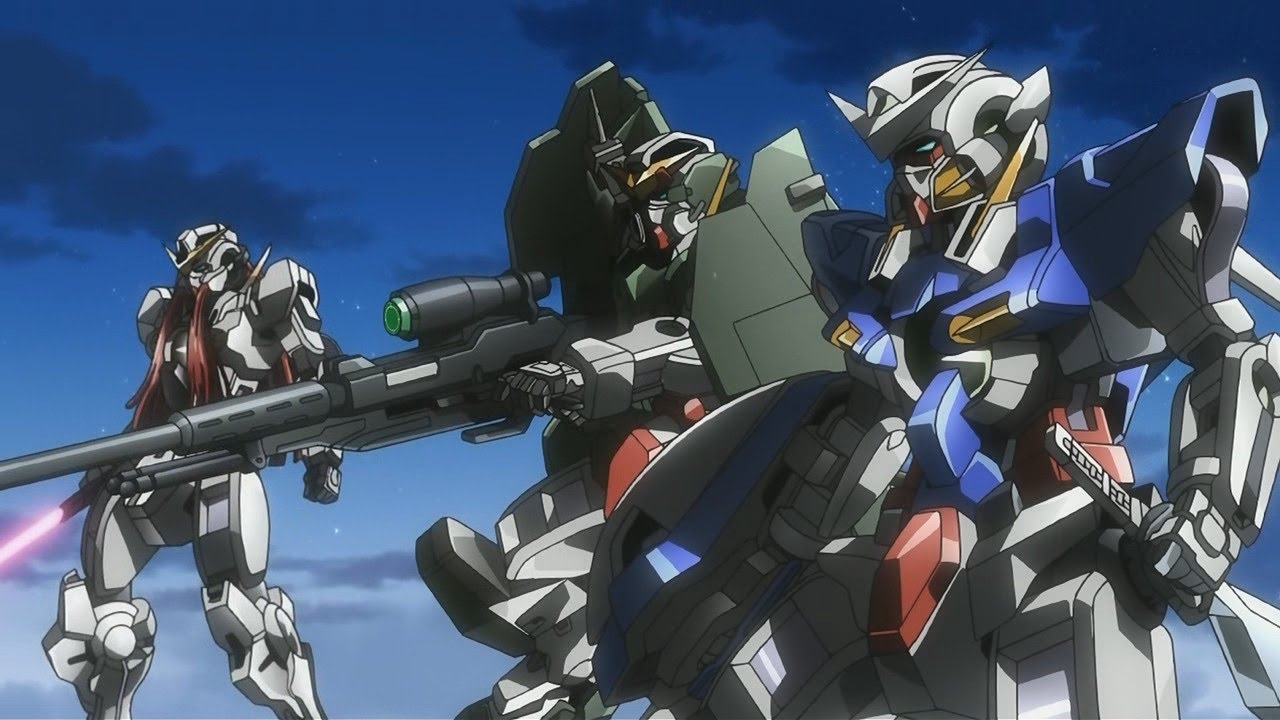
Mobile Suit Gundam 00 (dir. by Seiji Mizushima)
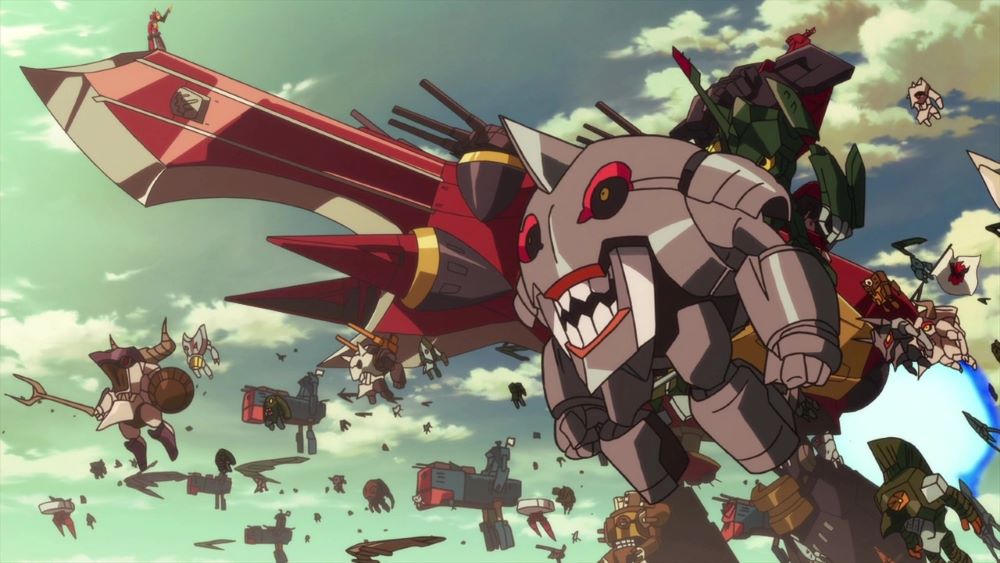
Tengen Toppa Gurren Lagann (dir. by Hiroyuki Imaishi)