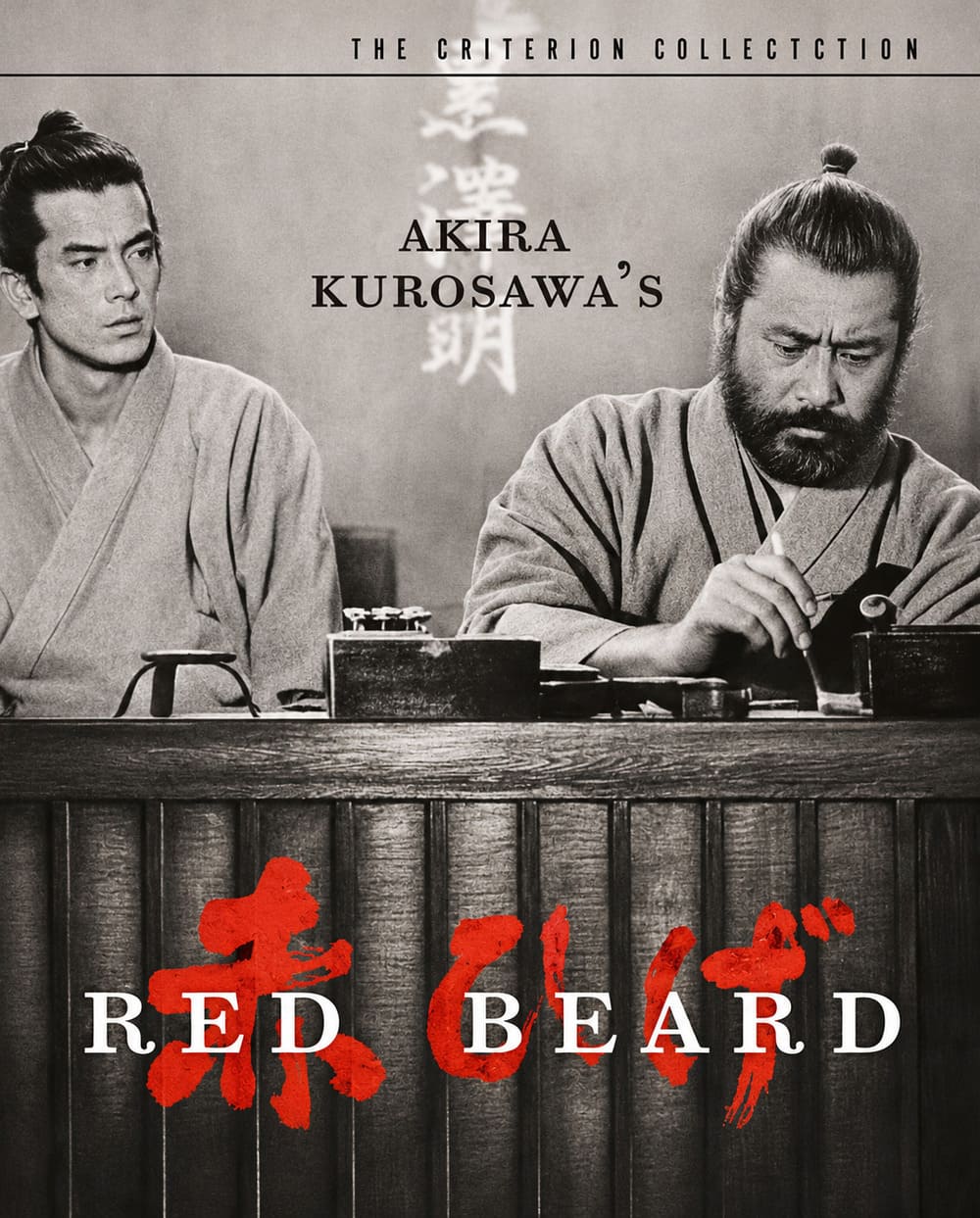
Film Review: Red Beard (dir. by Akira Kurosawa)


“If it weren’t for poverty, half of these people wouldn’t be sick.” — Dr. Kyojo Niide

There are plenty of movies about learning to become a better person, but few make the process feel as demanding, messy, and worthwhile as Akira Kurosawa’s Red Beard (1965). Set largely inside a clinic for the poor in nineteenth-century Japan, it turns medical training into an education in how to look at other people. That might sound like a prescription for three hours of worthy speeches. Thankfully, Kurosawa has something livelier in mind: a sprawling drama full of bruised pride, frightening encounters, unexpected humor, and compassion that actually requires work. It is deeply sentimental, certainly, but rarely soft about what suffering does to people.

The film also carries the weight of a farewell. Red Beard was the sixteenth and final collaboration between Kurosawa and Toshiro Mifune, and Kurosawa’s last black-and-white feature. After the restless energy of their earlier work together, there is something moving about seeing Mifune become the still center of such an expansive film. Their partnership ends not with a swordsman riding away, but with a doctor continuing his rounds. Whatever happened outside the frame, the artistic relationship reaches an unusually fitting conclusion here: Mifune’s immense authority becomes a force that helps everyone else find their footing.

Despite the title, our entry point is not Mifune’s Dr. Kyojo Niide, nicknamed Red Beard, but Noboru Yasumoto, played by Yuzo Kayama. Fresh from studying Dutch medicine in Nagasaki, Yasumoto expects a prestigious career serving the powerful. Instead, he finds himself assigned to a clinic whose patients offer little money and absolutely no social advantage. He treats the posting like an administrative insult. His refusal to wear the clinic’s uniform is a particularly revealing bit of rebellion: before he has properly met these people, he has already decided that caring for them is beneath him.

Kayama makes that arrogance believable without turning Yasumoto into an unbearable little monster. His stiffness and wounded vanity suggest someone whose entire understanding of success has suddenly become useless. More importantly, his eventual change is gradual. Kurosawa does not arrange one inspirational conversation and declare the young man cured of selfishness. Yasumoto has to sit beside dying patients, listen to stories he would previously have dismissed, and discover how little his qualifications prepare him for another person’s fear. The movie’s length becomes part of its argument. An education like this cannot happen on a convenient schedule.

Mifune, meanwhile, gives a performance built around restraint rather than display. Red Beard is intimidating, sometimes brusque, and not especially interested in making himself likable. But Mifune lets concern register beneath the severity without constantly advertising it. A pause or a shift in attention can tell us more than a reassuring speech would. The character risks becoming an impossibly wise father figure, yet his practical manner gives the idealism some weight. This is not a man floating above ordinary problems. He has a clinic to run, vulnerable people to protect, and limited patience for anyone confusing professional status with actual usefulness.

One of the film’s smartest decisions is allowing the clinic to become more interesting than the relationship that initially organizes it. Patients, cooks, attendants, and doctors gradually fill out a community rather than remaining background figures in Yasumoto’s personal development. The work of keeping people alive involves food, cleaning, conversation, and watchfulness as much as medical knowledge. That gives the film’s humanism a welcome material basis. Compassion is not simply something the good characters feel. It is something people do together, often repetitively, without much recognition. The clinic functions because care circulates through it instead of belonging exclusively to its commanding doctor.

Kurosawa’s visual organization makes that communal life tangible. The widescreen compositions give rooms a remarkable sense of social geography: someone listening at the edge of a scene can matter as much as the person speaking. Doorways, partitions, and stretches of floor separate characters while keeping their relationships visible. Even when the camera stays relatively still, the image feels active because bodies and glances keep rearranging its emphasis. This is handsome filmmaking, but the beauty is not merely decorative. Kurosawa makes us notice who occupies a space, who remains outside it, and how the distance between people can gradually close.

The episodic structure can initially feel like a detour from the main story. Sahachi’s account of his marriage, in particular, expands into a substantial tragedy of its own. Yet that apparent interruption is central to what the film asks of Yasumoto and the audience. A patient is not just the illness currently occupying a bed. He has an entire life that the young doctor knows nothing about. Tsutomu Yamazaki gives Sahachi’s generosity an underlying ache, and the extended flashback allows that generosity to become something more complicated than saintliness. Listening becomes a form of recognition, not simply a useful bedside skill.

The emotional center, though, is Otoyo, a traumatized girl rescued from a brothel and brought to the clinic. Terumi Niki’s performance is remarkable because it does not make her character’s pain conveniently appealing. Otoyo is suspicious, defensive, and unable to accept kindness on command. Her resistance gives the film some of its hardest moments. Yasumoto cannot simply apply his newly developing goodness and expect gratitude. He has to keep showing up without controlling the response. When the direction of care eventually reverses and she tends to him, their relationship becomes reciprocal rather than a flattering portrait of a rescuer and his grateful patient.

There is also a wonderfully strange interruption in which Red Beard deals with the men trying to prevent Otoyo’s rescue by demonstrating an alarming command of anatomy. Suddenly, the medical drama has made room for a Mifune action sequence. It is satisfying, funny, and arguably too easy: a complicated world briefly becomes a problem that the strongest good man can solve with his hands. The doctor’s subsequent regret does not entirely erase that contradiction. Still, the tonal jolt has personality. Kurosawa lets us enjoy the spectacle, then reminds us that breaking bodies is an awkward accomplishment for someone devoted to healing them.

Not every element lands quite as gracefully. The dangerous patient known as the Mantis brings a charged, almost horror-like atmosphere, but her presentation can feel more sensational than searching. Elsewhere, the accumulation of suffering sometimes makes Kurosawa’s emotional intentions very visible. This is not a film that worries much about appearing restrained or fashionable. It wants to move you, and occasionally you can feel it pushing. Yet the strongest passages earn that pressure through patient attention. By the time the clinic’s women call a desperately ill boy’s name into a well, the gesture feels less like manufactured uplift than a community refusing to surrender one of its own.

What ultimately makes Red Beard so affecting is that its optimism survives an honest acknowledgment of limits. The clinic cannot abolish poverty, undo exploitation, or prevent every death. Being decent does not grant anyone control over the outcome. What it can change is whether another person faces suffering alone. That is a modest proposition expressed on a grand cinematic scale, and the tension gives the film its staying power. As a final Kurosawa–Mifune collaboration, it is magnificent; as a drama about learning to care, it remains challenging rather than merely comforting. You leave impressed by the filmmaking, but also slightly embarrassed by your own impatience.

Kurosawa-Mifune Collaborations
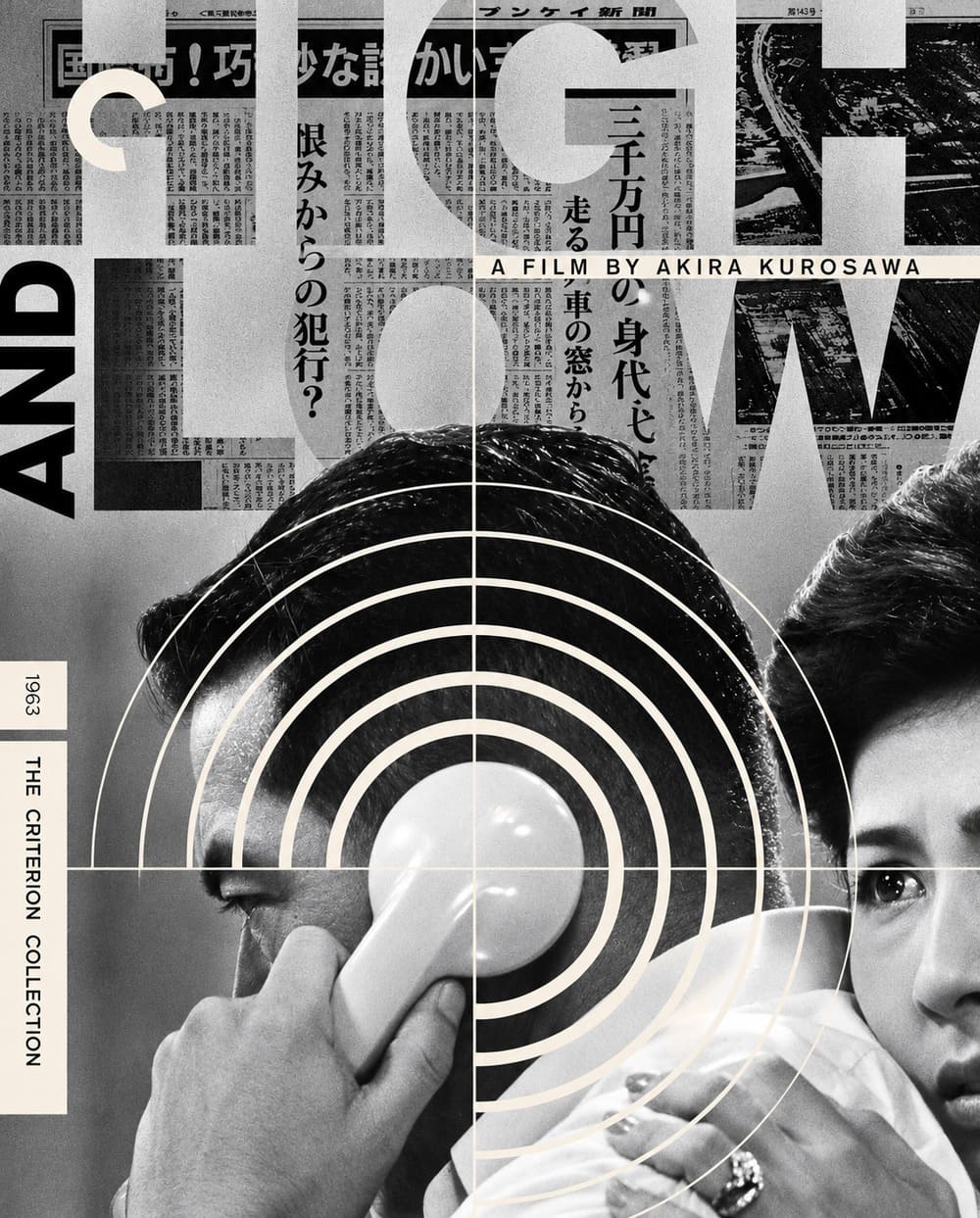
Film Review: High and Low (dir. by Akira Kurosawa)


“Success isn’t worth losing your humanity.” — Reiko Gondo

Before anyone gets kidnapped in Akira Kurosawa’s High and Low, a group of men argue about a shoe. It’s an oddly modest way to start a thriller this big. Kingo Gondo, played by Toshiro Mifune, thinks his company ought to make shoes that last. The men visiting his house would rather make something cheaper that’ll sell. You could cut the whole argument and still follow the kidnapping plot, but you’d lose the first good look at the man who’s about to be asked to give up everything he’s worked for. Gondo knows what a badly made shoe feels like in his hands. He knows what it costs to make a better one. Then the phone rings, and somebody asks him to put a price on something he can’t hold or inspect or bargain over in any of the ways he knows.

What makes that opening work is that Gondo isn’t necessarily the nicest person in the room, even when he’s the one making the most sense. Mifune gives him the impatience of somebody who knows his trade and can’t stand having to explain it to people who only know the numbers. He’s also halfway through a maneuver to take control of the company himself. The money that will eventually be demanded as ransom isn’t some idle fortune sitting in a bank. It’s already spoken for, and getting it together has put his family’s future on the line. Gondo’s pride in his work and his appetite for control are hard to separate. The film doesn’t ask us to sort his virtues from his faults before deciding whether we care what happens to him.

The voice on the phone says it has taken Gondo’s son. Then the boy turns up safe, and everyone gets about a second to feel relieved before the awful implication lands: the kidnapper has taken the chauffeur’s son, Shinichi, by mistake. He still wants the money. One of the nastiest things about this twist is how little the caller has to do once the mistake is clear. He doesn’t need to invent a new threat. He can leave the people in that room to work out why a sum that seemed unthinkable but necessary a moment ago now seems open to discussion. Gondo’s relief is completely understandable. So is the chauffeur’s horror at having been there to witness it.

High and Low is a loose adaptation of Ed McBain’s novel King’s Ransom, and Kurosawa’s most revealing change is to make Gondo pay. In the novel, the executive refuses, and the boy survives anyway. Kurosawa doesn’t give Gondo that escape hatch, but he doesn’t let him jump straight to the noble answer either. Mifune makes you sit with a man who can see exactly how paying might save one family from disaster and bring another to the edge of it. The opening argument about shoes matters here. We’ve already seen how much Gondo cares about what the company makes, so the prospect of losing it is more concrete than a man in a nice house saying he’d rather not part with his money.

What I like about the film’s sense of morality is that doing the right thing doesn’t settle the question of what kind of man Gondo is. It would be easy to make the ransom a test he passes and move on, but Kurosawa makes us remember how quickly everyone relaxed when they found out it wasn’t his son. That moment doesn’t cancel out Gondo’s generosity. It makes the choice more interesting: he has to act against an instinct most of us would recognize in ourselves. And the chauffeur doesn’t get a comparable chance to show what he’d sacrifice. He doesn’t have the money, so he has to plead with the man who employs him. The ransom is the same for both men; only one of them gets to weigh it against anything else.

For a movie that spends so much of its first stretch in one room, High and Low never feels like it’s waiting for somebody to open a door and let the cinema in. Kurosawa uses the width of the frame to make a conversation about more than the person talking. Your eye can drift over to the chauffeur while someone else discusses the ransom, and the discussion sounds different because you’re looking at him. At other times, a person at the edge of the room seems to be waiting for permission to enter an argument that will decide their future. By the time Gondo’s living room is crowded with family, employees, and police, you know who usually gets to speak there and can feel how badly the situation has thrown those arrangements off.

The window may be the most important thing in the house. In the opening, it offers the kind of view you can imagine somebody paying a fortune to wake up to. Once the caller makes it clear that the house can be seen from below, all that glass starts to look like a terrible idea. What’s changed isn’t the view; it’s who’s looking. Gondo has been able to see the city without thinking much about who can see him. Now he has to imagine his house as it appears to somebody who doesn’t get to go inside. The title might sound a little blunt if you take it only as a description of where people live. It’s more interesting as a question of what each position lets you see and what it makes easy to overlook.

After so much time waiting for a phone to ring, the ransom drop on the train feels like the movie letting out a breath. Suddenly there’s a moving train, a small window, and a very short amount of time in which to act. Kurosawa doesn’t make the sequence exciting by making it hard to follow. He makes sure we understand the physical problem, then lets the speed of the train do the worrying for us. It’s a wonderful bit of action, but it also marks the point where Gondo can no longer carry the film on his own. He can decide to part with the money. He can’t decide what the kidnapper does next or make the police find him any faster. The movie leaves the house behind because it has run out of questions that can be answered there.

This is where High and Low most clearly feels like a spiritual successor to Stray Dog. In the earlier film, Mifune plays a rookie detective whose stolen gun sends him through a sweltering postwar Tokyo. He follows the case with the shame and urgency of somebody who feels personally responsible for everything that happens next. The longer he searches, the harder it becomes for him to regard the man he’s chasing as someone fundamentally unlike himself. High and Low returns to that uneasy resemblance, but it spreads the work of the investigation across an entire squad. Tatsuya Nakadai’s Inspector Tokura is compelling precisely because he isn’t trying to dominate every scene. He listens, delegates, and lets someone else’s small discovery be the most important thing in the room. There’s a nice contrast between the young Mifune tearing around Tokyo trying to put things right and the older Mifune having to sit back while other people do the work.

Kurosawa develops the cinematic language of the police procedural further by making that work interesting on its own terms. During the squad’s report-back, he cuts between the officers describing their findings and the activity they’re describing. There’s pleasure in hearing a piece of information you might have dismissed on its own and realizing why it matters when another officer adds theirs. The scene doesn’t rely on a brilliant detective withholding the answer so he can impress everybody later. The thinking happens in front of us and belongs to a group. It also has a rhythm quite different from the scenes in Gondo’s house. Up there, people circle the same terrible question without getting any closer to an answer. Here, a room full of people talking can actually move the story forward, provided they pay attention to what the others have seen.

Then, in the middle of all that careful looking, there’s the pink smoke. In a black-and-white film, the color is such a surprise that for a second it hardly matters what it means. Then you remember that it means something very specific: the ransom cases are being burned. I like that the film lets Shinichi call attention to the smoke. Until then, the adults have done most of the talking about him, first as a child in danger and then as a witness. Here he gets to notice something for himself. And for all the sequence’s flash, it’s another variation on that big window in Gondo’s living room. The house on the hill commands a view of Yokohama, but having the best view doesn’t mean you’ll be the first to notice what matters.

The film’s influence makes sense when you consider how many different things a filmmaker could take from it. You could borrow the wrong-child premise and make a thriller that barely resembles Kurosawa’s. You could study the way he stages half a dozen people around a telephone, or how he makes a police briefing as absorbing as a chase. The story has been remade and reinterpreted, most recently by Spike Lee in 2025’s Highest 2 Lowest, with Denzel Washington as a New York music mogul rather than a Yokohama shoe executive. That change brings the story’s travels into focus: an American crime novel became a Japanese film, which in turn gave Lee a way into a story about money and power in his own city. The premise travels well, but the places aren’t interchangeable. So much of what gives Kurosawa’s film its bite is the simple fact that this particular house can be seen from those particular streets.

By the time Gondo sits across from the kidnapper in the final scene, I find myself thinking again about the man arguing over that shoe. At the start, he can pick something up, show you where it’s badly made, and tell you what he would do differently. There’s no equivalent gesture available to him here. The case has been solved, but the man on the other side of the glass isn’t a problem Gondo can fix, or even a person he can be sure he understands. Their reflections overlap, and for a moment the film gives them a closeness that neither man knows what to do with. I wouldn’t trade that awkwardness for a cleaner ending. Gondo did right by Shinichi, and nothing in that last scene takes away from it. But doing right by one person hasn’t made the world any easier to explain. It has brought him close enough to look at someone he used to be able to overlook.

Kurosawa-Mifune Collaborations

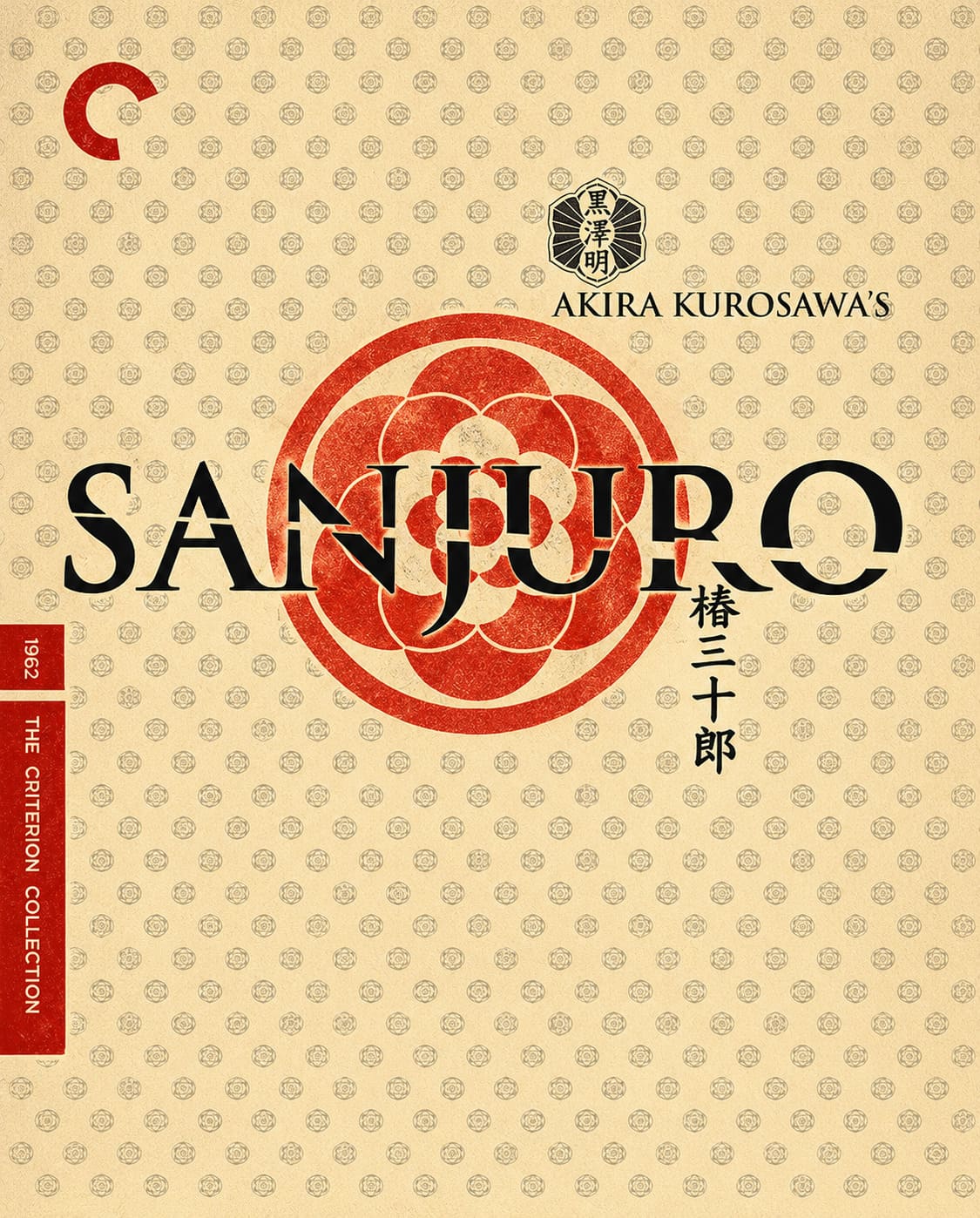
Film Review: Sanjuro (dir. by Akira Kurosawa)


“The best sword is kept in its sheath.” — chamberlain’s wife

Toshiro Mifune spends much of Sanjuro looking like the last person you’d ask to set an example. He slouches, scratches himself, and talks to nine young samurai as though their company were a nuisance he’d been too polite to avoid. Actually, he’s not even that polite. Naturally, they start looking up to him. This turns out to be a mixed blessing, and it’s the joke that gives Akira Kurosawa’s 1962 film its shape. Sanjuro is exactly the man these young samurai need in a crisis, but the more impressed they are by what he can do, the easier it is for them to miss what he knows. The fun of the movie is that we’re right there with them. Who wouldn’t want to be that sure of themselves, at least for an afternoon?

Sanjuro was one of Kurosawa’s rare productions to follow up an earlier film. It brings back Mifune’s wandering, masterless samurai from 1961’s Yojimbo, though the story stands on its own. The project began as an adaptation of a Shūgorō Yamamoto story and was reworked for the returning character after Yojimbo’s success. That history helps explain why the sequel doesn’t feel like a second helping. In Yojimbo, Sanjuro figures out what two rival gangs want and lets their self-interest do much of his work for him. Here, the people he has the most trouble managing are on his side. A crook looking out for himself is predictable. Nine decent men who want to prove they’re useful can talk themselves into just about anything.

We see the problem at the young men’s secret meeting about corruption in their clan. They’ve agreed on who looks guilty and which official seems trustworthy, and Sanjuro, listening from the next room, tells them they’ve read it backward. Mifune doesn’t play it as a grand entrance. He sounds like somebody who’d rather have minded his own business but can’t listen to another minute of this. Better still is the way he shifts from irritation to alertness without straightening up. You notice how closely he’s been listening only when he decides to speak. The young men are judging people by how convincingly they carry themselves. The first person to give them good advice looks as though he couldn’t be bothered to pass their test.

Kurosawa makes their inexperience visible without asking all nine actors to play nine different kinds of fool. Their heads turn together. They crowd into spaces already too small for them. They look ready to move before anyone has settled on a direction. Mifune gets laughs by staying where he is, but the other actors deserve some credit: their earnestness gives his stillness something to play against. In the wide frame, you can watch an idea spread through the group before anybody has stopped to consider whether it’s any good. The downside is that most of the nine don’t make much of an impression individually. I mind that less than the early tangle of officials and allegiances, which takes a while to sort out even when Kurosawa’s staging tells you exactly where to look.

Once rescuing the kidnapped chamberlain becomes the immediate goal, the comedy grows more affectionate. The young men’s mistakes are funnier because the consequences are clearer, but also because their impulse to help is plainly sincere. Sanjuro can tell them to hold back; he can’t make holding back feel honorable to men eager to prove themselves. The camellia signal is a lovely answer to that problem. Instead of having someone charge into the next scene, Kurosawa lets a bunch of flowers carry the message downstream. He gives us time to watch the blossoms move rather than cutting straight to their arrival. You catch yourself wanting them to hurry up, which is a ridiculous thing to want from flowers and not far off what Sanjuro has been dealing with all along.

The chamberlain’s wife, played by Takako Irie, is the one person who can make Sanjuro look as impatient as his pupils. She suggests that the finest sword is the one that stays in its sheath, and there’s a small comic pleasure in how little he has to say back. Irie’s composure keeps the moment from feeling like a lecture. She talks to him as though he’s perfectly capable of understanding her, which is more disarming than treating him as either a savior or a brute. Mifune doesn’t give us an emphatic pause or a look that says he’s a changed man. He just lets her finish. For a film that gets so much pleasure out of watching its hero be right, it gets a surprising amount out of watching him listen.

What keeps her advice interesting is that the movie gives us plenty of reasons to be glad Sanjuro can draw his sword. People need rescuing, and patience doesn’t always get him the whole way there. But it’s one thing to be grateful for that skill and another to make it the measure of a man. Mifune makes the distinction harder by being such good company when he takes charge. Even his habitual grumbling makes a kind of promise: whatever the others have gotten wrong, he’s already spotted it. There’s real comfort in that, especially after a stretch of plot in which nobody seems to know whom to trust. It’s easy to carry that trust a step too far and assume that whatever he does next must be right because he does it better than anyone else.

Tatsuya Nakadai’s Hanbei Muroto is the rare person who can look at Sanjuro without either underrating him or wanting to be him. Nakadai has a watchfulness that pairs beautifully with Mifune’s apparent indifference. With the nine samurai, Sanjuro can see a mistake coming and practically wait for it to arrive. With Muroto, he has to pay attention to a man who’s paying just as much attention back. That makes their scenes satisfying in a way that has little to do with who might win a fight. You get the sense that each enjoys being spared the usual work of explaining himself. By the time they face each other with swords, I’d almost rather hear what they could say to one another than see what they can do. Almost.

Kurosawa holds them in silence long enough that you start to crave movement, and the fight is over practically before you register that it has begun. The burst of blood is startling, but the pause beforehand gives it its bite. Kurosawa has used this kind of timing to get laughs: let the young men tense up, give Mifune an extra beat, then let him puncture their seriousness. The duel uses that timing without offering the same relief. What makes the shift convincing is that Mifune hasn’t suddenly made Sanjuro sinister. The efficiency we’ve been enjoying is still there. This time there’s no rescue to make it feel good, just an opponent who understood him unusually well and a group of young men watching to see what he’ll do.

I still prefer the nasty little town in Yojimbo to the clan intrigue in Sanjuro, but I prefer what this film asks of Mifune. He has to be magnetic enough that nine young men would want to follow him and honest enough to tell them what a poor ambition that is. If I could check in on those nine later, I wouldn’t especially want to see them draw a sword as fast as he can. I’d rather see one of them interrupt a meeting where everyone agrees too quickly, or recognize good advice from somebody who doesn’t look the part. Neither would make much of a story to tell afterward. But it would mean they’d been watching something besides his hands.

Kurosawa-Mifune Collaborations

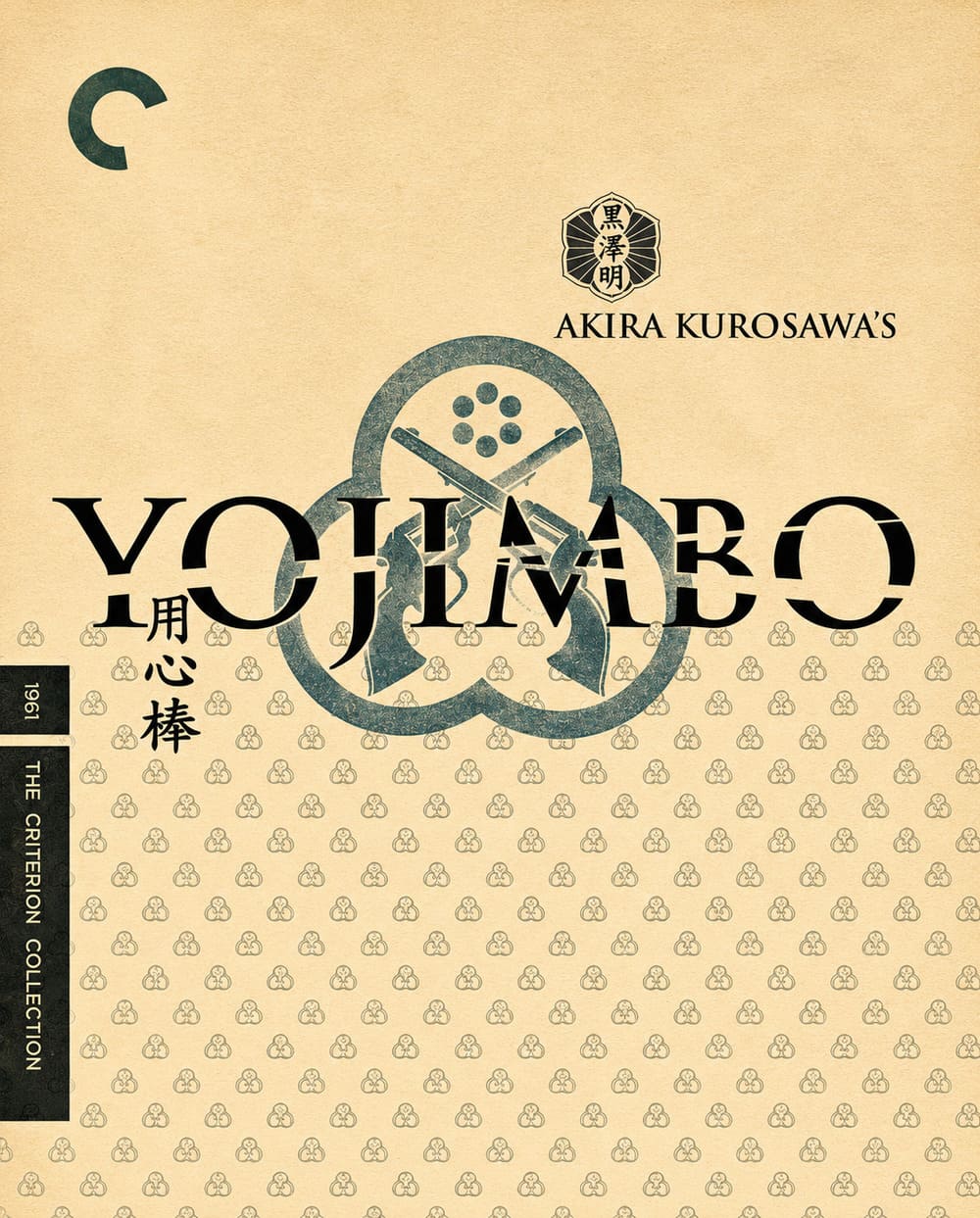
Film Review: Yojimbo (dir. by Akira Kurosawa)


“I’ll get paid for killing, and this town is full of people who deserve to die.” — Sanjuro

The title Yojimbo means “bodyguard,” which is a funny label for a man who spends most of the movie protecting nobody. Kurosawa’s hero is a hired sword who sells his services to two sides at once, and the job he’s really doing is far more mischievous than guarding anyone. That gap between the title and the behavior sets the tone for one of the slyest, most influential movies ever made about a man with a sword.

The setup is clean and nasty. A masterless samurai wanders into a wind-blown town divided between two gangs, one led by a silk merchant and the other by a sake brewer. Everyone else is hiding indoors, and the only man with a thriving business is the coffin-maker. The samurai gives his name as Sanjuro after glancing out a window at a mulberry field, which tells you right away that it’s invented. He sizes up the situation and decides to turn it to his advantage. He takes work from one boss, then the other, and starts feeding each side exactly the wrong information at the right moment.

What makes this more than a simple revenge or rescue plot is how patient the film lets him be. Sanjuro doesn’t charge into the fray. He plants a rumor, lets a negotiation fall apart, watches a rival’s men stumble into an ambush, and only then steps in to collect. The plot is basically a long con, and Kurosawa understands that the pleasure lies in watching a clever person work. You aren’t waiting for the hero to win so much as waiting to see which domino he’ll nudge next, and the answer is usually more outrageous than you expected.

Toshiro Mifune is the engine that makes all of this work. He takes the stiff, dignified image of the samurai and turns it into something rumpled and feline. He scratches his neck, shrugs his shoulders, and rolls his arms inside a dirty kimono as if the whole world were a mild inconvenience. It’s a physical performance built from tiny, lazy gestures, and those gestures tell you everything about the man: he’s tired, he’s bored, and he’s far more dangerous than he looks. The slouch is a kind of disguise, and the film keeps reminding you that it’s one.

Then, when it’s time to fight, Mifune snaps into focus with frightening speed. The swordplay is short and sharp, and the sound design gives every cut a heavy thud. Because the fights end almost before you register them, the violence feels casual, and the casualness is exactly what makes it a little shocking. There’s no long, ceremonial duel to prepare you. A man is standing there, then he isn’t. The comedy and the brutality keep feeding each other, and the film never lets either cancel the other out, which is a tricky balance that few movies manage.

Kurosawa’s visual style does as much work as the performance does. He loves long lenses and deep, crowded frames, so you often see several layers of action at once: Sanjuro watching from a tower with his feet up, thugs scheming in the middle distance, a stray dog trotting by with a severed hand in its mouth. The main street becomes a stage, dusty and exposed, and the camera arranges the extras like pieces on a board. It feels sealed off from everything else, which makes the gangs’ obsession with one another seem both ridiculous and doomed. It’s a great example of how composition alone can land a joke without a single line of dialogue.

That sense of a closed world also explains why the film is so good at comedy of escalation. Each side believes it’s one clever move away from winning, and every move feeds the other side’s paranoia. The gang bosses are not stupid in any simple way; they’re just ordinary men caught in a feud that has grown bigger than any of them, and Sanjuro’s gift is recognizing that. He doesn’t create the hatred in the town. He simply gives it a shove and then settles back to watch it roll.

The film’s pedigree adds an extra layer of fun. Kurosawa has pointed to The Glass Key, a noir adapted from Dashiell Hammett, as a source, and plenty of critics see the plot as even closer to Hammett’s novel Red Harvest. Whatever the exact debt, the notion of a cynical outsider cleaning up a rotten town by turning the crooks on each other fits American hardboiled fiction like a glove, and Kurosawa dropped it into the Edo period without a hiccup. It’s also a good reminder that cinematic borrowing moves in circles. Japan borrowed from American crime writing, and then Italy and Hollywood borrowed straight back.

This is where the film’s central achievement comes into focus: the antihero. Sanjuro is no noble knight. He’s a mercenary and a manipulator who takes money from everyone and lies to nearly everybody, and he doesn’t pretend otherwise. Set him beside the classic Hollywood gunfighter, like the title character in Shane, who rides in to protect decent people with a clear conscience, and he looks like another species altogether. Heroes like that arrive with a purpose. Sanjuro arrives with an appetite, and the audience is invited to find that refreshing.

Yet Kurosawa slips a conscience in sideways, and this is the detail that keeps the character from becoming a mere trickster. Sanjuro helps free a family from the gangs, pays for their escape, then barks at them to leave and never look back. He can’t stand cruelty, but he won’t admit it, and he covers the impulse with gruffness and irritation. That crack in the cynical armor is what makes him so appealing. He’s a bad man who does a good thing and then acts annoyed about it, and the embarrassment he feels about his own decency is, oddly, what makes us trust him.

You can see how portable that character turned out to be. The shape is simple enough to fit on a napkin: a wandering loner arrives in a town with two warring factions and plays them against each other. The film’s own follow-up, Sanjuro, arrived in 1962 and brought Mifune’s character back, so Kurosawa clearly knew he had something audiences wanted. After that, the template spread far beyond Japan, and it kept finding new settings. It turns out that nearly every culture has a town it would like to see burned to the ground by a stranger with good aim.

The most famous descendant is Sergio Leone’s A Fistful of Dollars, from 1964, which moves the story to a border town in the American West and puts Clint Eastwood in the lead as the Man With No Name. It follows the bones of Yojimbo so closely, down to the rival families, the coffin-maker, and the rescued mother and child, that the lack of authorization became a scandal and led to legal trouble. Even so, Leone made it feel like his own film. He slowed everything down, stretched the silences, and turned faces into landscapes with operatic close-ups, while Ennio Morricone’s whip-cracking score gave the whole thing a swagger of its own.

The difference in temperament is worth noticing. Eastwood’s stranger is stoic and almost mythic, a figure who barely speaks. Mifune’s Sanjuro is chatty, twitchy, and openly amused by the mess around him. Eastwood’s squint doesn’t owe much to Mifune’s shrug, but the attitude underneath is the same: a stranger in a bad town who’s smarter than everyone around him. If Kurosawa made the antihero a comedian, Leone made him a legend, and both versions have proved remarkably durable.

Walter Hill’s Last Man Standing, from 1996, takes another run at the story, setting it in a Texas town during Prohibition with rival bootleg gangs and Bruce Willis in the lead. Hill credited Kurosawa openly, and the film is a competent, moody gangster picture with a dusty, washed-out palette. What it lacks is Mifune’s mischief. Willis plays the character as a cold killer, which makes him less fun to watch and a lot less surprising. When the hero has no sense of humor about his own scheme, the audience loses its invitation to enjoy it.

Still, putting the three films together offers a neat lesson in how much of a story can survive a change of costume. Swords become six-shooters, which become Tommy guns, and the structure holds without trouble. That durability says something about how well Kurosawa built the thing. A good premise can move from era to era because it isn’t really about the weapons or the clothing; it’s about a cynical outsider, a divided community, and the uncomfortable truth that violence can be profitable for the person smart enough to manage it.

Beyond the direct remakes, Yojimbo belongs to a larger family of Kurosawa films, along with Seven Samurai, that helped shape how filmmakers around the world imagined the lone hero and the hired gun. You can trace echoes through the Spaghetti Westerns and the hardboiled action pictures that followed. Fans sometimes connect Kurosawa’s wider body of work to Star Wars as well, though that’s more a feeling of lineage than a clean borrowing from this particular movie. The more dependable throughline is the drifter who rides into town, plays both sides, and leaves with his hands only slightly cleaner than when he arrived.

The supporting cast keeps all this lively. Tatsuya Nakadai steals scenes as a pistol-carrying younger brother in a scarf, smirking like he’s the only person who has read the script, and he makes a great foil for Mifune. His weapon of choice is itself a statement: the old world of swords is about to be outpaced by something newer and more efficient. The finale pits sword against gun, and the film knows exactly how silly and thrilling that matchup is. Kurosawa also refuses to let the humor soften the bleakness. By the end, the town has all but destroyed itself, and nothing the hero has done feels especially heroic, just necessary.

Which is why, in the end, the most telling winner of the whole affair is the coffin-maker. Gangs rise and fall, swords flash, and the so-called bodyguard strolls away without a backward glance, but the one man who profits from every round of bloodshed is the guy selling the boxes. That’s the film’s cruelest joke, and it’s aimed at every tough-guy fantasy that came after it. Yojimbo is funny, savage and gorgeously shot, and more than six decades on, it still makes the genre’s heroes look a little foolish by comparison.

Kurosawa-Mifune Collaborations

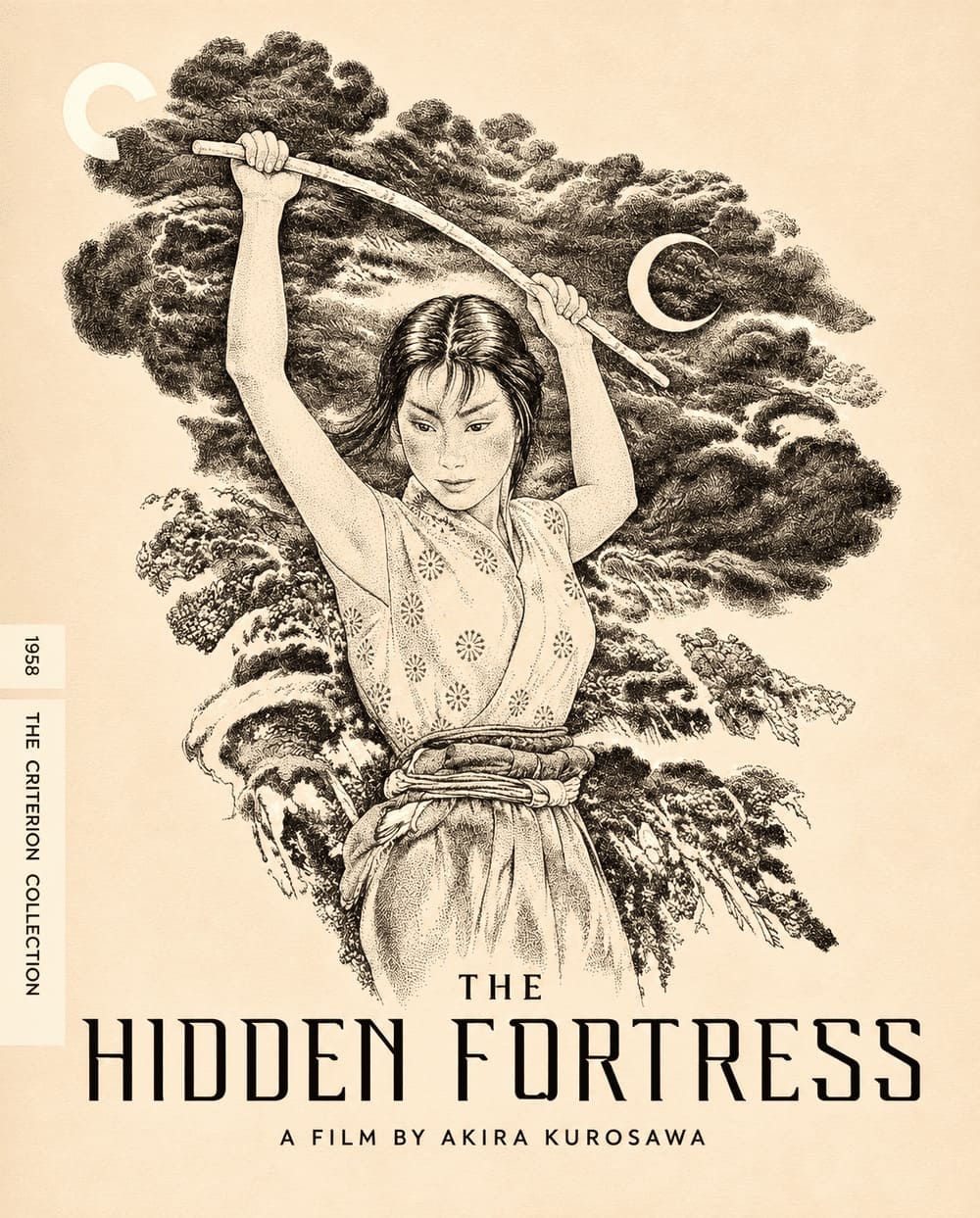
Film Review: The Hidden Fortress (dir. by Akira Kurosawa)


“I’ve seen their beauty and their ugliness with my own eyes.” — Princess Yuki

Nobody in The Hidden Fortress seems especially interested in making a heroic entrance. Its first companions are two filthy, complaining peasants who have wandered into a war hoping to make money and discovered that war is mostly terrible for business. They bicker, separate, reunite, and find fresh reasons to distrust each other. It is a wonderfully undignified way to begin an epic, and it establishes the attitude behind Akira Kurosawa’s 1958 adventure. Before offering noble sacrifice and spectacular combat, he puts us beside people wondering what they might get out of the situation. The grand adventure develops from there, but the dirt and desperation of that opening never entirely wash away.

Those unlikely companions are Tahei and Matashichi, played by Minoru Chiaki and Kamatari Fujiwara. Their fortunes become more complicated when they discover gold and encounter General Rokurota Makabe, played by Toshiro Mifune. Rokurota is escorting Princess Yuki, the heir of a defeated clan, through enemy territory while protecting the treasure needed for her people’s future. The peasants become part of the escape, although their participation involves considerably more intimidation than patriotic enthusiasm. Everyone needs the journey to succeed, but they disagree about what success should look like. Saving a royal dynasty sounds much less appealing to the peasants than leaving with its money.

That clash of priorities keeps the film moving. Rokurota thinks strategically, Yuki carries the responsibilities of her position, and the peasants keep looking for opportunities to improve their circumstances. Kurosawa makes those differences productive. A sensible military decision might seem intolerable to someone who wants a shortcut to wealth. An act of compassion might threaten the secrecy on which everyone’s survival depends. The suspense grows from the difficulty of getting these particular people to cooperate. They are not a ready-made team whose disagreements exist merely to supply amusing dialogue. Their competing interests can have dangerous consequences.

Chiaki and Fujiwara make an entertainingly unpleasant double act. Their suspicious glances, wounded pride, and endless negotiations give the journey a steady comic undertow. They are particularly funny when greed inspires teamwork, only for distrust to destroy it almost immediately. Still, the routine occasionally wears thin. Some arguments continue after the joke has landed, and their whining can become exhausting. That abrasiveness also distinguishes the film. Kurosawa does not reassure us that these men are secretly adorable. They can be cowardly, opportunistic, and mean, with desperation making their behavior understandable without necessarily making it forgivable.

Mifune’s performance is the film’s great stabilizing force. His Rokurota has the authority of someone who has assessed the situation before everybody else has finished panicking. Mifune communicates that confidence through his stance, his watchfulness, and the economical way he moves. He does not need to keep demonstrating the general’s strength because he makes the possibility of action feel constantly present. When that stillness breaks, the effect is tremendous. His physical performance has weight and speed, but also clarity: every movement seems connected to a decision. Intelligence and bodily confidence become parts of the same instinct.

He is also funny without turning Rokurota into a joke. His exchanges with the peasants suggest a capable professional whose work keeps being interrupted by assistants trying to steal the supplies. A glance can communicate an entire exhausted assessment of their behavior. Yet Mifune never makes the character merely a reassuring father figure. Rokurota intimidates and manipulates, and his dedication to duty has a hard edge. Warmth comes through selectively, which makes it persuasive. This is a commanding adventure performance because it preserves the distinction between a charismatic protector and an uncomplicatedly nice man.

Misa Uehara’s Princess Yuki supplies another kind of intensity. Her voice and bearing are imperious, sometimes almost confrontational, and the performance can initially seem rigid. That quality suits someone raised to embody authority rather than blend into ordinary life. What makes Yuki interesting is the pressure the journey places on that upbringing. Outside her protected environment, she encounters suffering that cannot be neatly absorbed into inherited ideas about duty. Her forcefulness does not disappear, but it begins responding to a broader understanding of other people. She becomes more than a royal passenger waiting for delivery.

Kurosawa’s widescreen compositions make those relationships visible. In his first widescreen feature, the expanded frame becomes a way of organizing power, vulnerability, and suspicion. Characters stand above one another, watch from a distance, or occupy separate areas until circumstances force them together. The landscapes are equally purposeful. Rocky slopes and exposed paths determine where the travelers can hide and how quickly they can escape. The scenery is beautiful, but never safely decorative. Moving through it requires effort, keeping the adventure grounded even when the storytelling takes on the simplicity of a fable.

That precision pays off in the action. The mass escape down a huge staircase turns architecture and human movement into a frightening surge. Rokurota’s mounted action has a thrilling physical directness, while his spear duel builds excitement through distance, anticipation, and controlled changes of pace. Kurosawa lets us understand the space before asking us to feel its dangers. The cutting sharpens the action rather than concealing it. The pauses become compelling because we can see what each fighter risks by advancing. It is action built around attention, and Mifune gives it tremendous bodily commitment.

The fire festival opens the film into a different emotional register. Flames, music, and collective movement briefly overwhelm the travelers’ calculations. The sequence serves the escape, but it also becomes something Yuki experiences rather than simply navigates. Its awareness of life’s brevity gives the adventure a reflective undertow without stopping it for a lecture. Moments like this complicate the film’s harsher instincts. Kurosawa recognizes cruelty and selfishness while allowing encounters that loosen the boundaries between people. His generosity feels earned because it emerges from a world that gives everyone reasons to remain guarded.

This was the Kurosawa adventure that would heavily influence a young filmmaker named George Lucas. Tahei and Matashichi helped inspire C-3PO and R2-D2 in Star Wars, particularly the decision to introduce a large conflict through two low-status, squabbling participants. The endangered princess and dangerous journey offer further connections, while Kurosawa’s wipe transitions became part of Lucas’s visual vocabulary. But The Hidden Fortress is harsher in tone and characterization. Its peasants are nastier than the droids, its protector more intimidating, and its humor less inclined to transform desperation into lovable eccentricity. The resemblance makes those differences especially revealing.

The film’s afterlife also includes Shinji Higuchi’s 2008 remake, Hidden Fortress: The Last Princess. Interestingly, that version reflects not only Kurosawa’s original but also the influence of Star Wars, bringing elements of the Hollywood spectacle it helped inspire back into a Japanese adventure. That circular exchange illustrates how film history actually works: stories cross borders, change shape, and return carrying traces of their descendants. Yet the original needs no family tree to justify its appeal. Its rhythms, performances, and uneasy mixture of comedy and cruelty remain distinctive rather than merely historically important.

What finally makes The Hidden Fortress satisfying is that its generosity never requires us to forget its roughness. Loyalty and mercy offer alternatives to the opening’s suspicion, but nobody erases the conditions that made suspicion reasonable. Even the comic characters remain recognizably themselves instead of becoming polished heroes. Mifune gives the journey its commanding center, while the surrounding friction gives it texture. Kurosawa delivers the pleasures of an escape story without sanding down the people making the escape. The result is a muscular, funny, sometimes abrasive adventure whose humanity comes from its willingness to let heroism and foolishness share the same road.

Kurosawa-Mifune Collaborations

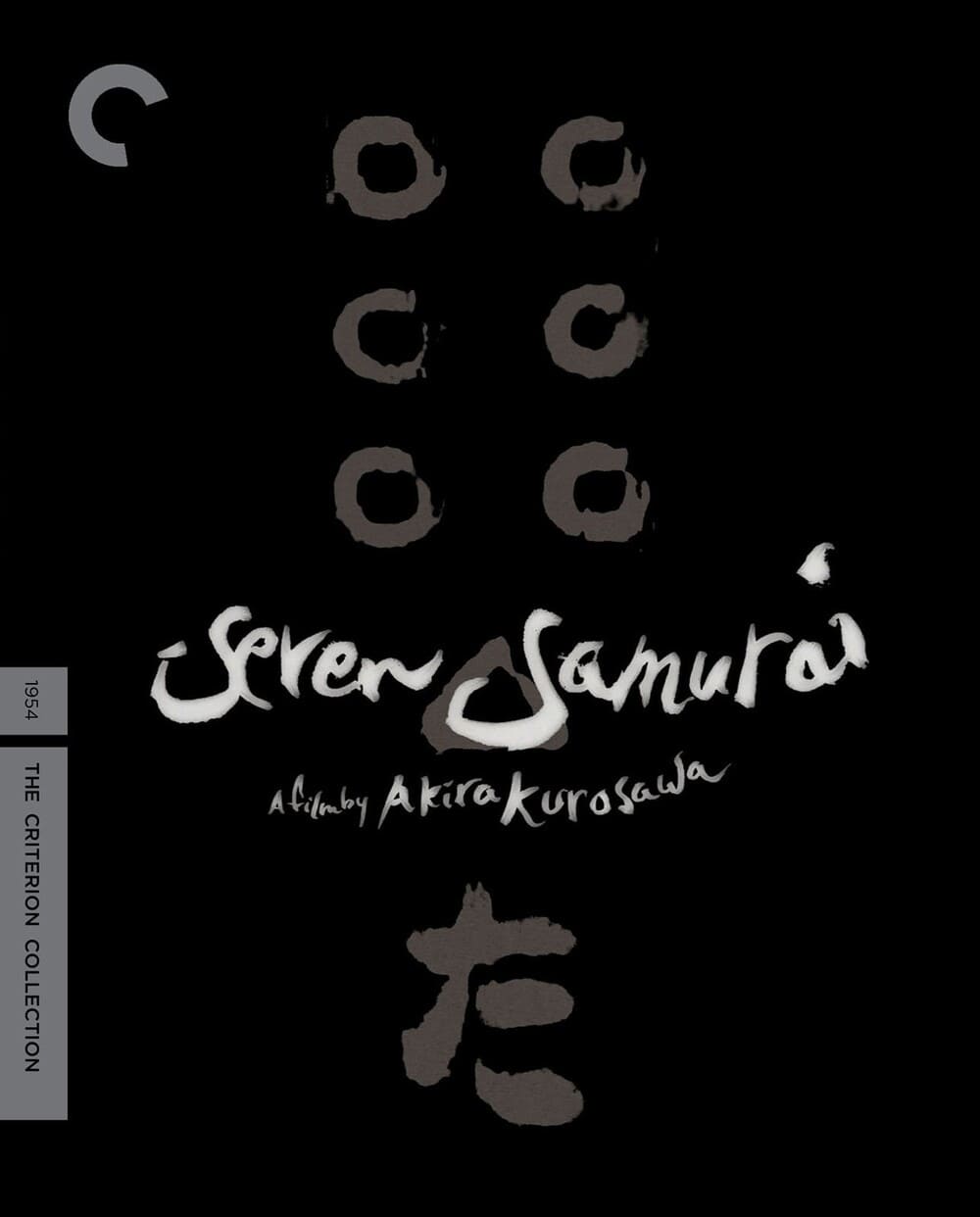
Film Review: Seven Samurai (dir. by Akira Kurosawa)


“The farmers have won. Not us.” — Kambei

The first thing that stands out about Akira Kurosawa’s Seven Samurai (1954) is how much life it contains. For a film built around an approaching attack, it spends a surprising amount of time watching people size each other up, argue over food, embarrass themselves, and figure out how to work together. Those details are not distractions from the adventure. They are the reason the adventure matters. Kurosawa makes defending a village feel like an enormous undertaking because he first makes that village feel inhabited. Beneath its legendary status and spectacular battles is a movie that understands a simple truth: saving people means dealing with all their complications.

There is a worthwhile debate to be had about whether Rashomon or Seven Samurai is Kurosawa’s greater achievement, and honestly, there is no wrong answer. Both demonstrate how an apparently straightforward situation can open into something morally and emotionally complicated. For me, though, Seven Samurai has the edge. It possesses the excellent storytelling and emotional impact that make Rashomon so powerful, but it also has an infectious physical energy. Its ambition is not limited to making us think about human behavior. It wants us to laugh, worry, feel the exhaustion of a fight, and care about the person who might not survive the next attack. Its greatness feels both intellectually satisfying and immediately accessible.

The story begins with a farming community facing another raid by bandits who intend to return after the harvest. Unable to protect themselves, the villagers seek samurai willing to fight in exchange for meals. It is a desperate offer, and the film never lets us forget the desperation behind it. Food determines who has power, who goes hungry, and what anyone can afford to sacrifice. Before the swords start swinging, Kurosawa establishes the stakes through something more basic than honor: people need to eat, and someone stronger intends to take what they have.

From that premise, the film develops an unusually rich adventure about the relationship between people who need protection and warriors whose abilities have not necessarily brought them security. Neither side approaches the arrangement comfortably. The villagers fear the samurai almost as much as they need them, while the samurai must decide whether an unrewarding, dangerous job is worth accepting. The shared enemy gives them a reason to cooperate, but it does not automatically produce trust. That distinction becomes essential to the film’s emotional weight.

Much of the opening stretch follows the recruitment of the defenders, and it remains one of the movie’s greatest pleasures. Kurosawa allows personalities to emerge through choices rather than lengthy explanations. We see who seeks recognition, who recognizes talent, and who understands the risks involved. The pleasure lies partly in watching the group take shape, but also in realizing how differently these men understand the same undertaking. Their individual skills matter, yet their temperaments matter just as much. A team is not simply a collection of capable people; it is a collection of people who must somehow become capable together.

At the center is Takashi Shimura as Kambei, the experienced samurai who takes responsibility for organizing the defense. Shimura, a longtime Kurosawa collaborator, gives a beautifully restrained performance. His authority comes from observation rather than intimidation. He watches, listens, and makes decisions without seeming interested in impressing anyone. Even his stillness suggests experience: this is someone who knows that unnecessary gestures waste energy. There is fatigue behind his composure, and his willingness to help matters because he appears fully aware of what the job could cost. Shimura makes goodness feel practical, demanding, and occasionally weary rather than saintly.

Toshiro Mifune, another of Kurosawa’s longtime collaborators, supplies almost the opposite energy as Kikuchiyo. Loud, restless, and constantly performing his own toughness, he initially seems ready to knock the movie off balance. Mifune makes that disruption irresistible. His movements are loose and unpredictable, his expressions enormous, and his comic timing wonderfully aggressive. Yet he is not merely providing relief from the more serious characters. Kikuchiyo wants recognition so badly that his behavior becomes both funny and uncomfortable. Beneath every boast is the possibility that someone will expose him as a man who does not belong among the warriors he desperately wants to join.

As Kikuchiyo’s background becomes clearer, Mifune turns that insecurity into the film’s rawest emotional material. A farmer’s son posing as a samurai, he understands both sides of the uneasy alliance. His anger at the villagers carries recognition, while his anger at the samurai comes from understanding the suffering their class can inflict. Mifune shifts between clowning and accusation without making either register feel false. What first looks like uncontrolled behavior gradually reveals a painful internal logic. Kikuchiyo is trying to escape his origins while remaining unable to abandon the people who share them.

The contrast between Mifune and Shimura gives the movie two complementary emotional centers. Kambei understands how to keep people working together; Kikuchiyo keeps exposing everything that threatens to pull them apart. One conserves energy while the other spends it recklessly. Neither performance would have quite the same force without the other. Their differences also prevent the samurai from settling into a single heroic ideal. Courage can look like patience, discipline, anger, or an impulsive decision made before fear has time to intervene.

The surrounding ensemble gives those central performances plenty to work against. Seiji Miyaguchi is especially memorable as Kyuzo, whose extraordinary skill comes with an almost complete absence of showmanship. His economy makes a perfect contrast to Kikuchiyo’s constant commotion. The younger Katsushiro brings idealism and romantic longing into a world governed by harsher calculations. Meanwhile, the farmers are allowed to be frustrating. They hide things, panic, and distrust their defenders. Kurosawa’s sympathy does not require them to behave like grateful supporting characters in somebody else’s heroic story.

That attention to conflicting perspectives keeps the film from becoming a simple fantasy about noble swordsmen rescuing helpless peasants. Cooperation does not erase the history separating these groups. It produces a fragile arrangement in which people must act together despite that history. The movie understands fear without pretending fear always produces admirable behavior. It also recognizes that the luxury of looking honorable is not equally available to everyone. People struggling to survive may make ugly choices, and understanding those choices is different from excusing them.

Kurosawa gives these tensions a physical form through the preparations for battle. We learn the village’s entrances, exposed approaches, houses, and fields alongside its defenders. We understand why a particular position matters because we have watched someone assess it. This is why the long running time feels earned. The film is not postponing excitement while everyone discusses strategy; it is constructing the conditions that make excitement possible. When the attacks begin, movement through the village means something. A breached defense threatens a place whose purpose and vulnerabilities we already understand.

The action filmmaking remains astonishing because it combines that clarity with such restless energy. Kurosawa’s use of multiple cameras, long lenses, dynamic staging, and forceful editing helped develop a new vocabulary for screen combat. Multiple viewpoints allow the action to feel caught in progress, while long lenses crowd bodies and movement together, making danger feel uncomfortably close. He did not invent every tool he used, but he combined and developed them with extraordinary purpose. The result feels immediate without becoming unreadable, a balance that helps explain why his approach would influence filmmakers for decades.

The rain-soaked final battle brings all those choices together. Water pours through the frame, horses struggle through mud, and exhausted bodies collide in spaces that suddenly seem dangerously cramped. Weather becomes a physical obstacle rather than decorative atmosphere. You feel how difficult it is to move, see, and remain standing. Despite the chaos, individual bursts of violence remain connected to the larger defense. The sequence delivers the excitement of great action while refusing to make combat look clean. Survival is not a stylish pose; it is exhausting work performed by vulnerable bodies.

That mixture of strong characterization, communal stakes, and explosive action also helps explain the film’s extraordinary afterlife. Seven Samurai has been remade and reworked so often that its basic arrangement feels almost like a subgenre of its own: a threatened community, an assembled band of specialists, defensive preparations, and a confrontation that tests everyone’s commitment. Not every variation is a direct remake, but the pattern has become a familiar storytelling language. It can function as a trope, a framework, or the entire appeal of a movie.

Watching the original, though, makes clear how much can disappear when that framework becomes a formula. Kurosawa does not simply gather entertaining personalities and send them into battle. He asks what brings them together, what separates them from the people they protect, and what remains after the fighting ends. The recruitment matters because we come to know the recruits. The preparations matter because they change relationships. The losses matter because these people have existed for us outside the moments when they are useful with a sword.

By the end, the battles are not the only things that linger. So do Shimura’s patient attention, Mifune’s wounded bravado, and the uneasy distance between the warriors and the community they defend. That is why Seven Samurai deserves its place among the greatest films of all time, beyond the reach of its influence or the brilliance of its technique. It gives us the pleasures of a tremendous adventure without pretending that courage resolves every division or guarantees anyone a home. The village can survive, ordinary life can resume, and the people who made that possible can still find themselves standing apart. For all its movement and noise, the film leaves its deepest impression in that quiet contradiction.

Kurosawa-Mifune Collaborations

Horror Film Review: Godzilla vs. King Ghidorah (dir by Kazuki Omori)


“Godzilla has been erased from time …. but now, King Ghidorah is here!”

Whoops!  I guess you all shouldn’t have traveled back in time and kept that dinosaur from mutating into Godzilla then!

1991’s Godzilla vs King Ghidorah was the 18th film in the Godzilla franchise and, because the Back To The Future franchise was very popular in Japan at the time that the film was made, it has a plot that revolves around time travel.  A group called The Futurians appear in 1990s Japan.  They explain that, by the year 2204, Godzilla will have destroyed all life in Japan.  However, they have a plan.  They’ve built a time machine and they will be going back to 1944 so that they can remove Godzilla from his island home before the nuclear testing begins.  For some reason, the Futurians take a few people from the 90s back with them.

After witnessing a dinosaur stepping on a World War II American army platoon, the Futurians arrange for the dinosaur to be transported to the Bering Strait, where it won’t get doused with radiation.  Meanwhile, they secretly leave behind three adorable baby dragons that, once nuclear testing begins, will end up being transformed into King Ghidorah.

It turns out that Futurians are liars!  I’m shocked too.  In 22o4, Japan is actually the most powerful country in the world and it is so economically strong that America, Russian, and Europe are dependent upon it for their survival.  The Futurians were just jealous of what a great country Japan was destined to become so they decided to get rid of Godzilla and instead allow King Ghidorah to destroy the country.

Now, if the Futurians were smart, they would have actually destroyed the dinosaur.  Instead, they just sent it to the Bering Strait.  And if the Futurians were really smart, they wouldn’t have allowed people in 1991 to know what they were doing.  To be honest, all of the mistakes made by the Futurians were self-inflicted.  By taking people from the 90s back to the past and letting them see where the dinosaur was sent, they basically ensured that those people would immediately go to the Bering Strait in 1991 and give the dinosaur a dose of radiation so that it would become Godzilla and then battle Ghidorah….

WHAT!?

Yeah, I know.  It makes no sense.  This is one of the least logical Godzilla films that I’ve ever seen and that’s saying something.  Godzilla vs Biollante was loved by critics but it was considered to be a disappointment at the box office.  For the follow-up, the producers not only brought back a classic Godzilla opponent (and I did smile when the three-headed Ghidorah showed up because he really was the most awesome member of Godzilla’s supporting cast) but they also came up with a plot that was considerably more juvenile than the previous film.  The end result is a film that makes no sense from a narrative point of view but it does at least feature a few good fights between Godzilla, Ghidorah, and a robot version of Ghidorah.  And it was also a film that did well enough at the Japanese box office to guarantee that Godzilla would return.

Previous Godzilla Reviews:

  1. Godzilla, King of the Monsters (1958)
  2. Godzilla Raids Again (1958)
  3. King Kong vs Godzilla (1962)
  4. Mothra vs. Godzilla (1964)
  5. Ghidorah: The Three-Headed Monster (1964)
  6. Invasion of the Astro-Monster (1965)
  7. Godzilla vs. The Sea Monster (1966)
  8. Son of Godzilla (1967)
  9. Destroy All Monsters (1968)
  10. All Monsters Attack (1969)
  11. Godzilla vs Hedorah (1971)
  12. Godzilla vs Gigan (1972)
  13. Godzilla vs Megalon (1973)
  14. Godzilla vs Mechagodzilla (1974)
  15. The Terror of Mechagodzilla (1975)
  16. Cozilla (1977)
  17. Godzilla 1985 (1985)
  18. Godzilla vs. Biollante (1989)
  19. Godzilla vs. Mothra (1992)
  20. Godzilla vs. Destoroyah (1995)
  21. Godzilla, Mothra, and King Ghidorah: Giant Monsters All-Out Attack (2001)
  22. Godzilla (2014)
  23. Godzilla: Planet of the Monsters (2017)
  24. Godzilla, King of the Monsters (2019)
  25. Godzilla vs Kong (2021)
  26. Godzilla Minus One (2023)

Horror Film Review: Godzilla Raids Again (Dir by Motoyoshi Oda)


Godzilla Raids Again begins with a plane making an emergency landing on an island near Japan.  Soon, another plane lands to help out the first plane.  The two pilots, however, are immediately stunned by the sight of Godzilla battling an armored dinosaur with a spikey back.  Rushing back to the Japan, the pilots learn that the armored dinosaur was an Ankylosaurus that has been named Anguirus.  Anguirus and Godzilla are among the many prehistoric creatures who, having once been thought extinct, have been awakened and set free by nuclear testing.  And though Godzilla and Angurius are first spotted fighting on an isolate island, there’s little doubt that they will soon make their way to Japan, where the population is still recovering from the previous Godzilla attack.

First released in Japan in 1955 and subsequently released in the United States in 1959, Godzilla Raids Again was the first sequel to Gojira and, in a nod to continuity that would become extremely rare as the series continued, it actually does provide an explanation as to how exactly Godzilla is still alive after being apparently dissolved at the end of the first film.  It’s explained that there are actually several Godzillas.  The one that previously attacked Tokyo was destroyed but now a second one is coming.  Unfortunately, the man who destroyed the first Godzilla was killed in the process and apparently, he didn’t leave behind any notes explaining how he did what he did.

Once again, Japan is attacked by a giant monster.  Once again, cites are in flames and innocent people are dying.  The main difference is that, this time, Godzilla isn’t so much trying to destroy humanity as he just doesn’t even seem to realize that humanity is there.  Godzilla is more concerned with fighting Angurius and he barely seems to notice the buildings that he’s destroying and the lives that he’s ending.  If the first Godzilla film was about the lingering trauma of the nuclear attacks on Hiroshima and Nagasaki, Godzilla Raids Again is about being a small country caught in the middle of a conflict between two nuclear superpowers.  Godzilla and Angurius are so obsessed with beating each other that they really don’t care about anyone who gets trampled underfoot.  While Godzilla Raids Again is nowhere near as dark as the nightmarish first film, it’s still considerably more sober-minded than the Godzilla films that would immediately follow.  Godzillla Raids Again may not be as powerful a film as the first one but it still has its moments.  The film is at its best when it examines how ordinary citizens react to being pawns in the middle of a war between two super-powered monsters.  Some people defy the orders to stay home and instead try to have a good time in what may be their final moments.  Others cower in fear.  Some turn to religion.  Some turn to science.  A group of criminals try to bust out of prison.  In the end, it’s the brave citizens who are willing to risk and sacrifice their lives who ultimately save the world from Godzilla’s atomic fury.

When Godzilla Raids Again was released in the United States, it was in a heavily re-edited and poorly dubbed version.  (The narrator is sure to mention that the United States is willing to help out Japan with its monster problem.)  The film was retitled Gigantis and, throughout the Americanized version, Godzilla is referred to as being “Gigantis.”  Apparently, the film’s distributor thought that audiences would stay away if they knew that this film was a sequel, despite the fact that Godzilla had been a hit with American audiences.  Since Godzilla died at the end of the first film, the distributor felt that audiences would reject the idea of the character returning from the dead.  Times certainly have changed.

Of course, Godzilla is forever.

Previous Godzilla Reviews:

  1. Godzilla, King of the Monsters (1958)
  2. King Kong vs Godzilla (1962)
  3. Mothra vs. Godzilla (1964)
  4. Ghidorah: The Three-Headed Monster (1964)
  5. Invasion of the Astro-Monster (1965)
  6. Godzilla vs. The Sea Monster (1966)
  7. Son of Godzilla (1967)
  8. Destroy All Monsters (1968)
  9. All Monsters Attack (1969)
  10. Godzilla vs Hedorah (1971)
  11. Godzilla vs Gigan (1972)
  12. Godzilla vs Megalon (1973)
  13. Godzilla vs Mechagodzilla (1974)
  14. Godzilla vs. Mothra (1992)
  15. Godzilla vs. Destoroyah (1995)
  16. Godzilla, Mothra, and King Ghidorah: Giant Monsters All-Out Attack (2001)
  17. Godzilla (2014)
  18. Godzilla: Planet of the Monsters (2017)
  19. Godzilla, King of the Monsters (2019)
  20. Godzilla vs Kong (2021)
  21. Godzilla Minus One (2023)