“Wait for me in hell.” — Jubei Kamata
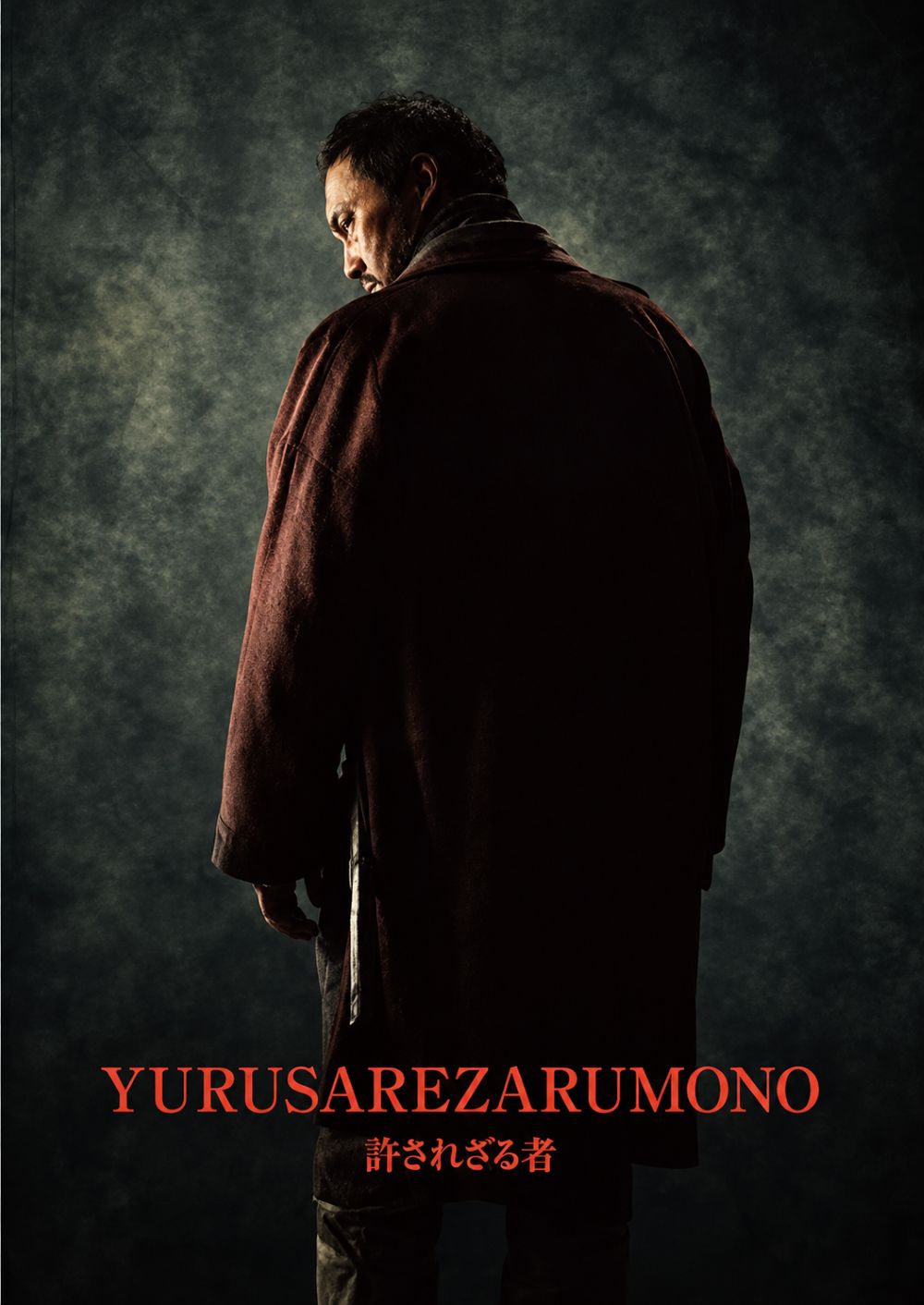
Unforgiven, released in Japan as Yurusarezaru Mono—literally “The Unforgiven” or “Unforgivable”—is the 2013 Japanese remake of Clint Eastwood’s 1992 revisionist Western. Rather than treating the original as a sacred object that cannot be touched, director Lee Sang-il and star Ken Watanabe prove that its central ideas can travel surprisingly well. The story moves from the fading American frontier to Hokkaido in the early Meiji era, when Japan was modernizing quickly and the samurai class was becoming a relic of a vanishing order. In that sense, the film finds the perfect Japanese equivalent to Eastwood’s aging gunslingers. Just as William Munny belongs to an Old West that is dying around him, Jubei Kamata belongs to a Japan that no longer has a clear place for men like him.
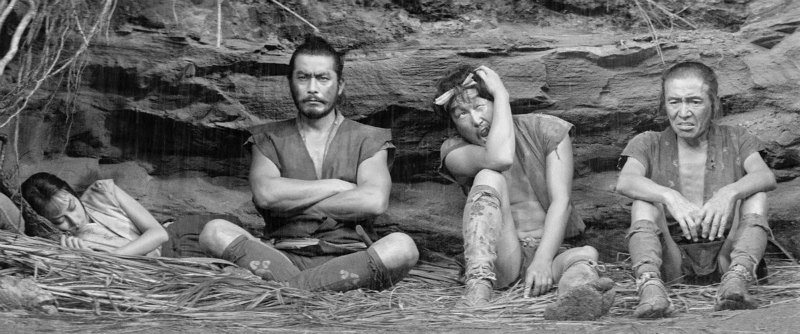
It also belongs to a much longer tradition in which samurai and Western gunslingers have become closely intertwined character types. Both are often portrayed as isolated men shaped by violence, reputation, personal codes, and the decline of the worlds that made them useful. Both can drift into a troubled town, become involved in someone else’s conflict, and turn into a larger-than-life figure whether they want to or not. The exchange between the genres has gone on for decades, most famously when Akira Kurosawa’s Yojimbo became the basis for Sergio Leone’s A Fistful of Dollars. Yurusarezaru Mono feels like an especially appropriate continuation of that conversation: a Japanese filmmaker takes an American Western that was itself deeply interested in dismantling the gunslinger myth and uses it to confront the equally romanticized myth of the samurai.
The original Unforgiven was already a film about stripping the glamour away from violence. Eastwood took the familiar image of the weathered gunfighter coming back for one final job and showed the ugliness underneath it. Violence is not clean, heroic, or especially skillful when it happens for real. It is frightening, clumsy, painful, and impossible to undo. Lee Sang-il keeps that moral core but finds a distinct cultural target. The Japanese version examines the idealized samurai image: the disciplined swordsman, the honorable warrior, the proud survivor of a more noble age. It asks whether any of those myths can survive when the man behind them has killed people, carries terrible memories, and no longer knows who he is without violence.
Ken Watanabe plays Jubei Kamata, a former samurai once feared as “Jubei the Killer.” He is the film’s William Munny equivalent, but Watanabe does not simply imitate Eastwood’s performance. Jubei is introduced as an exhausted farmer and widower raising two children in hard conditions. He is poor, physically worn down, and clearly ashamed of the person he used to be. Watanabe gives him an almost painful heaviness. Jubei is not merely an old warrior who wants peace; he is a man who has spent years trying to become someone else because he knows exactly what “Jubei the Killer” was capable of.
The early-Meiji setting gives that character arc a stronger historical charge. Jubei is not just retired from a bloody life. He is part of a fading warrior caste in a country remaking itself through new laws, new institutions, modernization, and expanding state power. The samurai may still exist in memory and in popular myth, but their old social role is slipping away. That mirrors the original film’s dying Old West perfectly. The gunslinger and the samurai are both figures from a violent past who have become obsolete, yet neither can completely escape the reputation that past gave them.
The plot begins after a prostitute is viciously assaulted and scarred by two men in a northern settlement. The town’s authorities treat the crime as an economic issue instead of an act of cruelty against a human being, so the women of the brothel raise a bounty for the attackers’ deaths. Kingo Baba, Jubei’s old companion, approaches him about the bounty and offers him a share of the reward. Jubei refuses at first because he has children, a failing farm, and a life he is trying to preserve. But poverty, desperation, and the lingering pull of his former identity eventually drag him back into violence.
The film’s real power is that it never turns this decision into a simple revenge fantasy. The men being hunted deserve condemnation for what they did, and the film does not soften that. Still, it never suggests that killing them will restore the woman they harmed or somehow balance the moral scale. Murder does not solve the original injustice; it only broadens the cycle of pain. Like Eastwood’s film, Yurusarezaru Mono constantly pushes against the audience’s instinct to treat revenge as satisfying or cleansing.
Jubei teams up with Kingo Baba, played by Akira Emoto, an old companion who fills the role of Ned Logan from the original. Their relationship is one of the remake’s best qualities. Emoto gives Kingo a tired, approachable decency, but he also makes clear that the man has lived long enough to understand the price of violence. He and Jubei do not need to explain their history in long speeches. Their shared past comes through in their guarded conversations, familiar irritation, and unspoken awareness that they are both far too old to be pretending this job will end cleanly.
Goro Sawada, played by Yuya Yagira, is just as important because he represents the fantasy of violence before reality destroys it. He wants a name. He wants to be feared. He wants stories about himself that will make him sound larger than life. But the film dismantles him in the same way Unforgiven dismantled the Schofield Kid. The first time he confronts the real consequences of killing, there is no rush of glory. There is only confusion, panic, and guilt. A legend is always easier to believe in when someone else has done the killing.
One of the Japanese remake’s most meaningful additions is its inclusion of the Ainu people, the Indigenous people of Hokkaido. The original film largely avoided directly engaging with the history of Native Americans in the American frontier, but Yurusarezaru Mono brings Indigenous displacement and discrimination into the story in a major way. Jubei’s late wife was Ainu, and his children therefore carry that heritage. Goro is also connected to the Ainu community and can speak the language. The film takes place during a period in which the Japanese state was expanding its control over Hokkaido, dispossessing and assimilating Ainu people while suppressing their culture and language.
That addition does not merely provide a local equivalent for the Western’s Native American history. It changes the emotional stakes of the entire story. Jubei is not only a former samurai made obsolete by Japan’s new order; he is tied by family to people being actively marginalized by that order. His farm, his children, and his dead wife become part of a larger historical wound. The film’s frontier is not empty land waiting for settlement. It is land already inhabited by people whose rights, identities, and futures are being threatened. By including the Ainu, the remake adds racial and colonial dimensions that the original’s story did not fully explore.
It also reframes Goro’s desire to prove himself. His hunger for reputation is not just youthful swagger. It comes from living in a society that treats people connected to the Ainu as inferior or disposable. He wants to be seen as somebody in a world eager to reduce him to less than that. Jubei understands this more deeply than he initially lets on. His eventual concern for Goro is shaped not only by friendship but by a recognition that the authorities could use Goro’s participation in the killings as an excuse to punish or target Ainu people more broadly.
Koichi Sato plays the local lawman, the Japanese counterpart to Gene Hackman’s Little Bill. He does not copy Hackman’s performance, which is a smart choice. Hackman’s Little Bill had a bluff, talkative confidence and an almost absurdly casual capacity for brutality. Sato’s version is colder and more calculating, with a distinctly bureaucratic edge. He sees himself as the defender of law and social order, but his version of order is built on intimidation, humiliation, and selective cruelty. He treats the abused woman as a problem, the prostitutes as a nuisance, and anyone outside his preferred hierarchy as someone to be controlled.
The emerging Meiji state may promise progress, but the film refuses to portray it as automatically enlightened. The samurai system’s decline does not erase injustice; it simply gives power a newer, more bureaucratic face. The lawman claims to hate disorder, yet he creates the kind of world where people can only pursue justice through murder because the law refuses to recognize their suffering. That makes him more than a simple villain. He is the embodiment of a new authority that insists it is civilized while using the same old cruelty to keep vulnerable people in their place.
The snowbound Hokkaido landscape gives the movie a visual identity that sets it apart from the dusty Wyoming imagery of the original. The cold, mud, wind, and vast stretches of white make the characters look even more vulnerable and lost. This is not the kind of samurai story built around beautiful duels and graceful swordplay. Lee Sang-il keeps the violence ugly and exhausting. When Jubei finally falls back into the terrifying persona of “Jubei the Killer,” it does not feel like he has rediscovered his true heroic self. It feels like a man surrendering to the worst part of himself because grief, anger, and desperation have burned away his restraint.
The ending closely follows the original in the way it brings Jubei’s buried reputation and frightening capacity for violence back to the surface. The climactic confrontation itself remains broadly faithful to Eastwood’s version, so the remake’s biggest distinction is not really in the setting or moment-to-moment mechanics of the final fight. The more meaningful change comes afterward, in what the film suggests about Jubei’s future once he has once again become “Jubei the Killer.”
Yurusarezaru Mono gives this question more weight through its focus on shame, guilt, and the possibility that some actions cannot be left behind simply because a man has spent years living differently. Jubei built a quieter life with his wife and children in the hope of becoming more than the killer he once was. But revisiting that past, even for reasons the audience can understand, forces him to confront whether he has truly escaped it—or whether he was only temporarily pretending it was gone. The remake’s final variation gives the story a sadder and more personally haunted edge, making Jubei’s past feel less like a legend he can reluctantly put back on and more like a moral burden that may have permanently separated him from the life he tried to build.
Those changes are important because they give Yurusarezaru Mono a distinct identity beyond simply being a Japanese version of a famous American film. The original Unforgiven ends with its own deliberately uneasy ambiguity. This remake reaches a similarly tragic, morally unsettled place, but it does so through the specific burdens of early-Meiji Hokkaido: the decline of the samurai, the oppression of the Ainu, and the false promise that modernization automatically means justice. The result is an ending that honors the emotional power of Eastwood’s film while still finding its own voice.
Ultimately, Yurusarezaru Mono works because it understands that Unforgiven was never only about the American West. It was about the myths societies build around violent men, the damage hidden by those myths, and the painful impossibility of separating a person from what he has done. By placing that story in early-Meiji Hokkaido, adding the history and oppression of the Ainu people, and revising key elements of the final act, Lee Sang-il’s film becomes more than a competent remake. It is a serious reinterpretation of a great Western through the lens of Japan’s own fading warrior mythology, colonial violence, and troubled modern identity.