Film Review: I Live in Fear (dir. by Akira Kurosawa)


“His only fault is going too far. But his anxiety about the bomb is something we all share.” — Dr. Harada

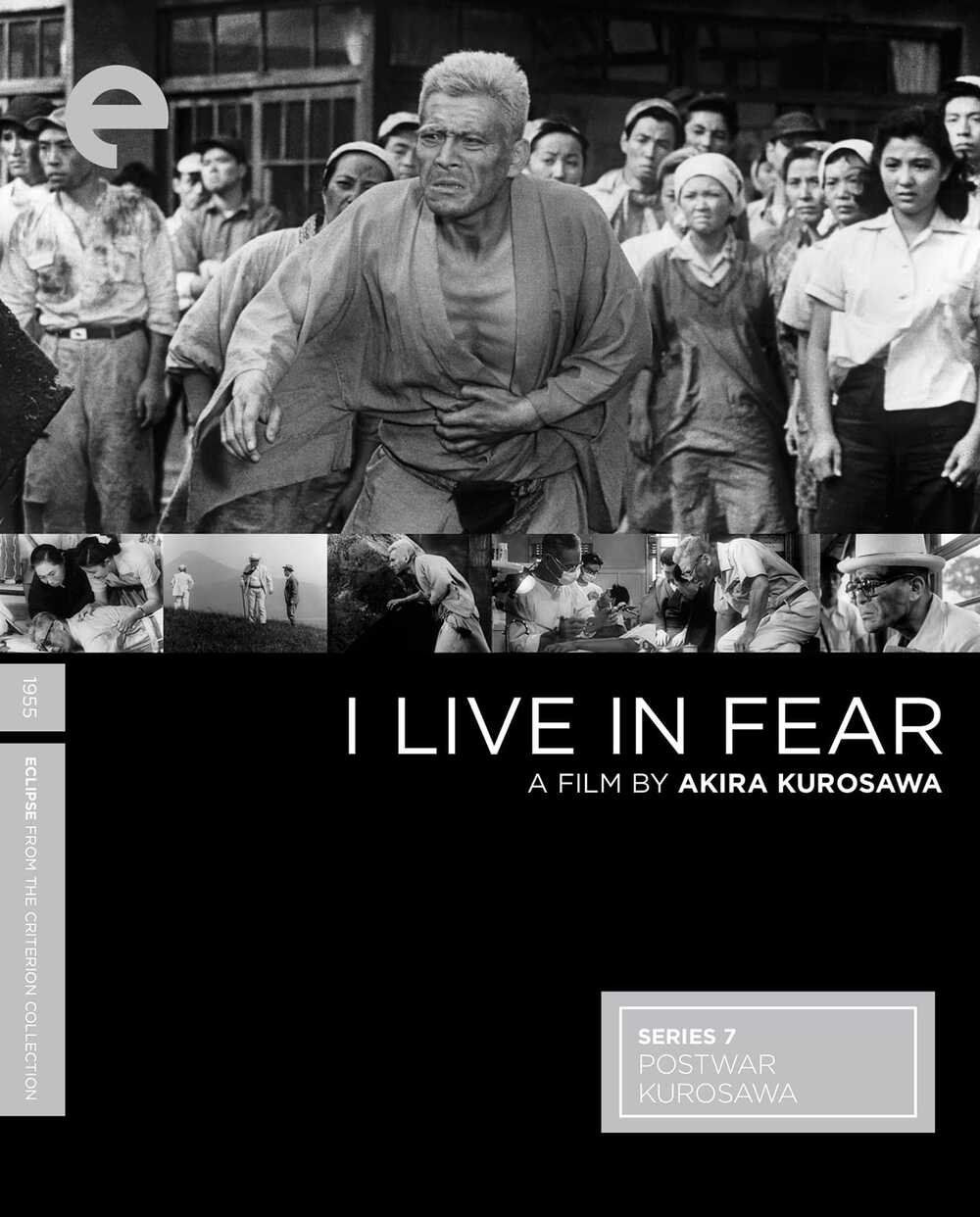
There’s something uncomfortable about watching a family discuss a man’s sanity when his greatest fear makes perfect sense. That discomfort drives Akira Kurosawa’s I Live in Fear (1955), a film in which the threat of nuclear destruction finds its way into arguments about property, responsibility, and who gets to make decisions for everyone else. Kurosawa keeps the apocalypse offscreen and lets its shadow fall across an already strained household. The result is less a warning about some distant disaster than a prickly, intimate study of people trying to live together when they no longer agree on what being reasonable means.

The story revolves around Kiichi Nakajima, an aging foundry owner played by Toshiro Mifune. Convinced that nuclear catastrophe is coming, he wants to sell his business and relocate his sprawling family to Brazil. His relatives, understandably unwilling to have their lives uprooted, petition to have him declared mentally incompetent. What might sound like a straightforward conflict between an unreasonable father and his practical children quickly becomes murkier. Nakajima’s proposed solution may be desperate, but the danger behind it isn’t imaginary. The family can challenge his judgment much more easily than they can disprove the thing he fears.

That distinction gives the film its staying power. Kurosawa isn’t asking us to endorse Nakajima’s escape plan; he’s asking us to notice how readily a legitimate terror becomes somebody else’s embarrassing problem. The film emerged amid renewed Japanese anxiety about nuclear testing, including the exposure of Japanese fishermen to radioactive fallout from tests at Bikini Atoll. This isn’t abstract doomsday speculation floating above the drama. It’s recent history pressing against the walls of an ordinary household. The courtroom can assess a man’s capacity to manage his property, but it cannot make the atmosphere outside those proceedings any safer.

Mifune is the film’s great, fascinating gamble. Playing a man considerably older than himself, he makes Nakajima seem tightly wound even when he’s barely moving. The stooped posture and elderly appearance are conspicuous, sometimes almost too conspicuous, but the performance’s physical tension matters more than its illusion of age. This is a man who has spent years expecting the world to respond to his commands and now faces something that cannot be bullied into submission. Mifune turns that helplessness into irritability, stubbornness, and sudden emotional exposure. You can find Nakajima exhausting without ever feeling safely superior to him.

What keeps the characterization interesting is that fear hasn’t magically made Nakajima a better person. His desire to protect his family is tangled up with his assumption that he should decide its future. The household also extends beyond a tidy domestic unit: his plans include mistresses and children from those relationships, making protection inseparable from a complicated history of patriarchal privilege. He wants everyone saved, but he also wants everyone aboard his solution. That contradiction gives the film a sharper edge than a simple portrait of a misunderstood prophet. Love can be genuine and still arrive wearing the clothes of control.

The relatives benefit from a similarly complicated reading. It would be easy to dismiss them as greedy people guarding an inheritance, and the film certainly makes room for that suspicion. Yet wanting to keep your home, livelihood, and familiar surroundings isn’t automatically moral cowardice. Nakajima’s money supports an existing network of lives; dismantling that network has consequences beyond bruised feelings. The family dispute becomes compelling precisely because almost everyone has something reasonable to say and something less flattering to conceal. Kurosawa lets financial dependence expose the awkward bargains underneath domestic loyalty. Affection doesn’t disappear when property enters the conversation, but it gets harder to recognize.

Takashi Shimura provides the crucial counterweight as Dr. Harada, a dentist serving as a family-court mediator. Where Mifune compresses every feeling into physical agitation, Shimura makes uncertainty visible through listening. Harada initially occupies the reassuring position of the sensible observer, someone who can help sort out another family’s trouble. Gradually, that distance becomes impossible to maintain. He can see the disruption Nakajima causes, yet he cannot dismiss the reasoning beneath it. His importance lies less in supplying an answer than in losing confidence in the available answers. Through him, the case stops being merely a question of one troublesome man.

Visually, the film exchanges the expansive physical excitement associated with Seven Samurai for a more constricted, claustrophobic intensity. Rooms feel occupied not just by people but by their incompatible expectations. Kurosawa’s handling of groups is especially effective: a conversation can feel like a gathering, a negotiation, and a quiet ambush all at once. The settings remain ordinary enough to deny us the comforting distance of spectacle. There’s no need to show civilization collapsing when the possibility of collapse has already changed how a father looks at his children. The catastrophe exists first as pressure, and pressure is something cinema can make almost bodily.

There’s a literary quality to the premise, too: a patriarch discovers that his authority cannot protect the people whose lives he organizes. He resembles a tragic king reduced to arguing over practical arrangements, with emigration plans replacing the grand gestures of an older tragedy. But Kurosawa keeps puncturing that grandeur with mundane complications. Someone must agree, money must move, livelihoods must be considered. That friction is the point. Apocalyptic fear doesn’t exempt anyone from ordinary responsibilities; it makes those responsibilities feel simultaneously urgent and absurd. Nakajima cannot reconcile the scale of his dread with the small, stubborn procedures through which daily life continues.

For all its force, I Live in Fear can be blunt, and its shifts between family drama and moral argument aren’t always graceful. Yet those limitations seem small beside the unease it leaves behind. Mifune gives us a man whose concern for others has become almost impossible for others to bear, while Shimura quietly erodes our confidence in judging him from a comfortable distance. What lingers is not an argument won but a human connection breaking under unbearable pressure. Kurosawa makes that rupture painful to watch, then leaves us to consider how much of ordinary life depends on agreeing not to look too closely at what frightens us.

Kurosawa-Mifune Collaborations
Film Review: Scandal (dir. by Akira Kurosawa)


“Stop worrying. It doesn’t matter if it’s bull — once it’s in print, the public believes it.” — Hori

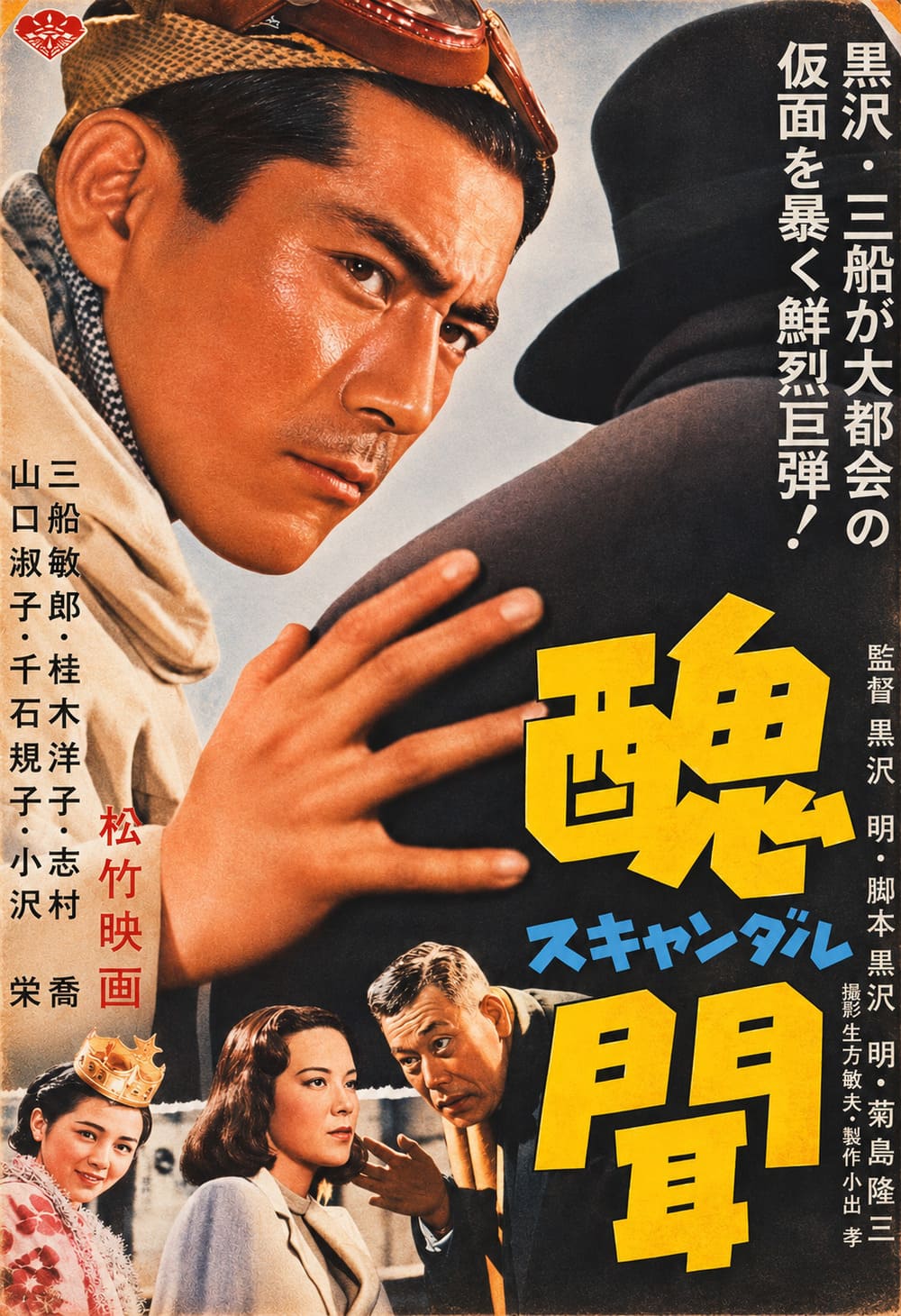
There are two movies competing for attention in Akira Kurosawa’s Scandal (1950), and the messier one is ultimately the more rewarding. One is a straightforward attack on a tabloid magazine that turns an innocent encounter into a profitable fiction. The other follows a shabby lawyer whose conscience keeps losing arguments with his worst impulses. Kurosawa doesn’t quite smooth out the transition between them, but that imbalance gives the film a peculiar appeal. What begins as an indignant demand for public accountability becomes something more intimate: a sympathetic, occasionally overearnest look at how difficult it can be to stop letting yourself down.

The setup is wonderfully straightforward. Painter Ichiro Aoe, played by Toshiro Mifune, meets popular singer Miyako Saigo, played by Yoshiko Yamaguchi, while out in the mountains. She has missed her bus, and he offers her a motorcycle ride to the hotel where they are both staying. Their casual acquaintance becomes tabloid material when photographers catch them together and a magazine manufactures an affair. Aoe decides to sue. There is nothing especially complicated about the ethical situation, which is partly the point: the magazine doesn’t uncover an uncomfortable truth. It creates a profitable lie and expects its targets to absorb the damage.

Scandal also continues the developing partnership between Kurosawa and Mifune, who first worked together on Drunken Angel (1948). Their collaboration would eventually encompass sixteen films, ending with Red Beard (1965), rather than extending throughout their lives. Here, you can already appreciate how effectively Kurosawa channels Mifune’s physical confidence. His Aoe seems comfortable taking up space, whether riding his motorcycle or confronting people who mistake shamelessness for professional initiative. The characterization can feel a little too spotless, but Mifune makes righteousness feel less like a lecture than it might have in another actor’s hands. You believe he would turn a personal insult into a fight over principle because backing down seems physically impossible for him.

The film is sharpest about the gap between an image and the story attached to it. A photograph appears to offer proof, but the magazine supplies the meaning, turning proximity into intimacy and ordinary friendliness into sexual intrigue. That makes Scandal feel contemporary without requiring any strained comparison to social media. Its real subject, at least initially, is the business of directing public attention. Accuracy is inconvenient when insinuation sells. Unfortunately, the magazine’s villainy is presented so broadly that the argument sometimes becomes dramatically easy. Kurosawa knows exactly where he stands, but leaves little room for the opposition to reveal anything unexpected.

Then Takashi Shimura enters as Hiruta, the shabby lawyer who takes Aoe’s case, and the film’s center of gravity shifts. Hiruta has gambling debts, a desperately ill daughter, and a talent for recognizing the right thing shortly before doing the wrong one. His vulnerability makes him susceptible to corruption, but it also makes him the most interesting person onscreen. Where Aoe is essentially a fixed moral point, Hiruta is constantly slipping. Shimura gives that instability an uncomfortable intimacy: this isn’t simply a dishonest man waiting to be exposed, but someone forced to keep company with his own disappointment.

That change of focus is both the film’s biggest weakness and its saving grace. As a story about public humiliation, Scandal loses momentum when the lawyer’s private misery takes over. Miyako, in particular, becomes less central than the premise seems to promise, and the consequences of the fabricated romance never receive the sustained attention they deserve. Yet Hiruta introduces the moral uncertainty missing from the opening conflict. The question stops being whether the magazine is wrong and becomes whether a compromised person can still act courageously. That is a richer dramatic problem, even if the transition between the two films feels awkward.

Shimura’s performance also complicates the sentimentality, although it cannot always rescue it. The suffering daughter gives Hiruta’s predicament an emotional urgency that occasionally feels too conveniently arranged. You can sense the screenplay reaching for the audience’s sympathy, then reaching a little farther just to make sure. But Shimura makes shame feel lived-in rather than decorative. His weakness isn’t charming, and the film is better whenever it allows him to be genuinely pathetic. The compassion comes from watching someone who understands his failures without possessing the strength to stop repeating them. That tension gives the melodrama a pulse beneath its obvious machinery.

The Christmas drinking sequence is where that emotional approach comes together most beautifully. Hiruta’s despair opens into a communal singing of Auld Lang Syne, with Aoe eventually joining the surrounding drinkers. On paper, it sounds like an invitation to roll your eyes: broken men, alcohol, a familiar song, the possibility of starting over. In practice, the scene earns its warmth through the fragile movement from individual misery toward shared feeling. Nobody suddenly becomes admirable. For a few minutes, though, the characters can imagine being better than they have been. The scene expresses the film’s faith in redemption more persuasively than its more explicit moral arguments.

Visually, there is plenty to enjoy even when the storytelling gets baggy. The crisp editing and carefully arranged compositions give scenes an assurance that the screenplay doesn’t always possess. Kurosawa can make a public space feel busy without losing the individual trapped inside it. The courtroom material benefits from that sensitivity to crowded environments: photographers and reporters turn a supposed search for truth into another spectacle. The people harmed by publicity must submit to still more publicity to challenge it. That irony is stronger than the fairly conventional courtroom mechanics, and it briefly brings the film’s two competing interests back into alignment.

Coming immediately before Rashomon, also released in 1950, Scandal can look like a modest detour beside a breakthrough. But treating it only as preparation misses its particular appeal. This is Kurosawa working in an openly argumentative, emotionally exposed register, less interested in ambiguity about the original accusation than in the difficulty of living decently afterward. It is not especially subtle, and its redemptive impulses sometimes soften the harder questions it raises. Still, the performances keep those impulses from feeling empty. For all its structural wandering and occasional pleading, Scandal finds something moving in the distance between knowing what is right and finally managing to do it.

Kurosawa-Mifune Collaborations

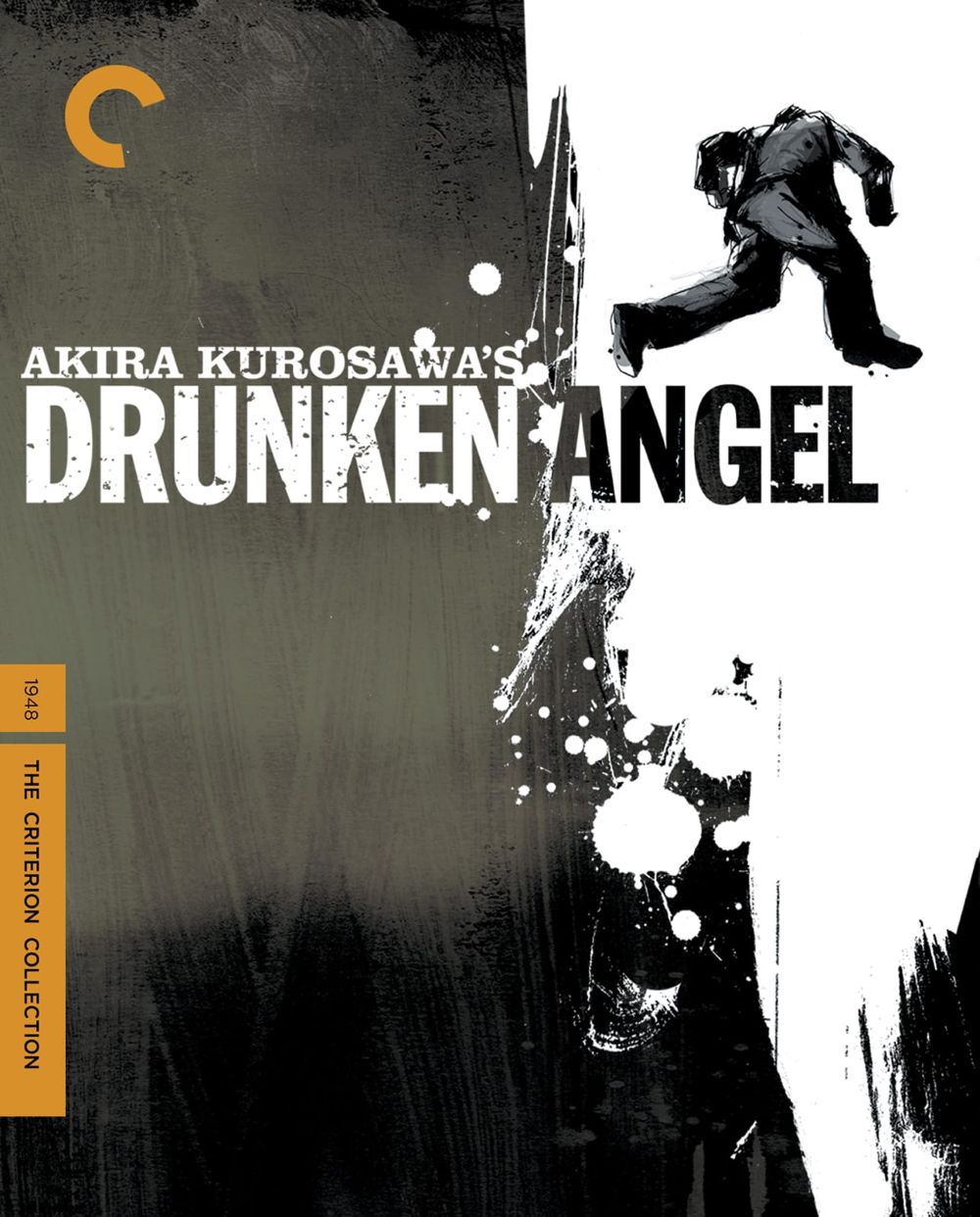
Film Review: Drunken Angel (dir. by Akira Kurosawa)


There’s nothing particularly angelic about the world of Drunken Angel. The streets are filthy, the nightlife feels desperate, and even the local doctor seems more interested in picking a fight than offering comfort. That roughness makes Akira Kurosawa’s film so compelling: it finds compassion somewhere you wouldn’t expect to find much of anything worth saving. Released in 1948, rather than 1947, it also marks the first of sixteen collaborations between Kurosawa and Toshiro Mifune. That partnership would become legendary, but this isn’t just an interesting starting point. It’s a tough, moving film that stands on its own.

The story begins with a transaction that should be simple. Matsunaga, a young gangster played by Mifune, visits a neighborhood doctor to have a bullet removed from his hand. The doctor, Sanada, played by Takashi Shimura, recognizes that his patient has a more serious problem: tuberculosis. Matsunaga doesn’t welcome the diagnosis, especially when accepting it would mean admitting that his intimidating exterior hides a vulnerable body. Sanada, meanwhile, refuses to let the matter drop. What develops is less a conventional friendship than an ongoing argument between two men who have very different ideas about what it means to stay alive.

Mifune is the immediate attraction, and it’s easy to understand why Kurosawa kept working with him. His Matsunaga makes being noticed look like a full-time occupation. The swagger, the sharp clothes, the sudden bursts of aggression: everything suggests someone performing toughness for an audience. Yet Mifune makes the performance within the performance visible. There’s fear underneath all that attitude, and his physical acting gradually exposes it. As Matsunaga’s health deteriorates, the gap between how powerful he wants to appear and how weak he actually feels becomes painful. His body starts contradicting every claim his personality makes. It’s a magnetic performance without being an especially comfortable one.

Just as important, though, is Shimura. It would be easy to describe Sanada as the decent man trying to rescue the delinquent, but that makes him sound considerably tidier than he is. He drinks heavily, loses his temper, and has little patience for the people who need his help. His compassion doesn’t come wrapped in reassuring bedside manners. That’s what makes it persuasive. Shimura gives the impression of someone who has seen enough suffering to become cynical but hasn’t managed to stop caring. Sanada’s anger often feels like the exhausted expression of a responsibility he cannot put down. He’s abrasive because the stakes matter to him.

Together, the actors give the film its unsettled rhythm. Their scenes have the energy of a fight in which neither participant will admit what the fight is really about. Sanada wants Matsunaga to accept treatment, but he also wants him to recognize that the gangster code he follows offers no meaningful protection. Matsunaga wants to dismiss the doctor, yet keeps being pulled back toward someone willing to confront him honestly. What makes their relationship interesting is that affection never quite replaces antagonism. Kurosawa lets concern emerge through irritation, stubbornness, and repeated disappointment rather than a convenient emotional breakthrough.

The setting gives that struggle a larger dimension. This is postwar Tokyo viewed from a neighborhood where recovery feels distant and survival has become an everyday negotiation. A stagnant, polluted pool sits at the center of the community, making the environment seem physically sick before anyone mentions tuberculosis. The symbolism isn’t subtle, but subtlety isn’t always the point. Kurosawa wants the connection between bodily illness and social damage to be impossible to miss. Matsunaga’s condition belongs to him, but the world around him seems to encourage the same habits of denial and neglect. The neighborhood isn’t just a backdrop; it keeps pressing into the drama.

That atmosphere also complicates the film’s gangster appeal. Matsunaga initially has the surface attractions associated with movie criminals: style, confidence, access to nightlife, and the ability to frighten people. But Drunken Angel steadily dismantles the idea that these things amount to security. His standing depends on remaining useful and looking strong, which leaves little room for illness or dependence. The return of another gangster, Okada, exposes how fragile Matsunaga’s position really is. What he treats as loyalty starts looking like an arrangement that can be canceled the moment he becomes inconvenient. His tragedy involves discovering how little the organization values him beneath the swagger.

Kurosawa’s direction keeps that downward movement from becoming visually monotonous. The film moves between cramped medical encounters and the restless energy of the surrounding entertainment district, allowing private suffering and public distraction to rub against each other. Mifune’s nightclub dancing is especially revealing: movement becomes another way for Matsunaga to insist on his vitality, even as the story makes that insistence increasingly desperate. The contrast gives the film an uneasy pulse. Pleasure never quite feels separate from danger, and stillness rarely brings relief. Even when the characters try to escape themselves, the filmmaking keeps their vulnerability close to the surface.

The film does occasionally push its ideas harder than necessary. Sanada’s moral arguments can become speeches, and the repeated connections between sickness, corruption, and personal responsibility leave relatively little interpretive breathing room. Anyone expecting the emotional restraint sometimes associated with older Japanese cinema may be surprised by how forceful this is. Still, the bluntness mostly suits the material. These are people living under pressure, not quietly arranging their feelings into elegant observations. More importantly, the performances keep the argument human. Matsunaga isn’t merely a warning about bad choices, and Sanada isn’t a flawless representative of the right ones. Their contradictions give the film room to breathe.

What ultimately makes Drunken Angel linger is its refusal to confuse caring with control. Sanada can recognize the danger, offer treatment, and argue himself hoarse, but he cannot simply make another person choose differently. That limitation gives the film its sadness without draining away its humanity. Kurosawa finds something worthwhile in the effort to help, even when the effort is ugly, exhausting, and uncertain. Mifune supplies the volatility, Shimura supplies the battered conscience, and neither lets the other settle into an easy role. As the beginning of a major filmmaking partnership, it’s fascinating. As a bruising drama about pride and the difficulty of accepting help, it remains powerful.

Horror Film Review: Godzilla Raids Again (Dir by Motoyoshi Oda)


Godzilla Raids Again begins with a plane making an emergency landing on an island near Japan.  Soon, another plane lands to help out the first plane.  The two pilots, however, are immediately stunned by the sight of Godzilla battling an armored dinosaur with a spikey back.  Rushing back to the Japan, the pilots learn that the armored dinosaur was an Ankylosaurus that has been named Anguirus.  Anguirus and Godzilla are among the many prehistoric creatures who, having once been thought extinct, have been awakened and set free by nuclear testing.  And though Godzilla and Angurius are first spotted fighting on an isolate island, there’s little doubt that they will soon make their way to Japan, where the population is still recovering from the previous Godzilla attack.

First released in Japan in 1955 and subsequently released in the United States in 1959, Godzilla Raids Again was the first sequel to Gojira and, in a nod to continuity that would become extremely rare as the series continued, it actually does provide an explanation as to how exactly Godzilla is still alive after being apparently dissolved at the end of the first film.  It’s explained that there are actually several Godzillas.  The one that previously attacked Tokyo was destroyed but now a second one is coming.  Unfortunately, the man who destroyed the first Godzilla was killed in the process and apparently, he didn’t leave behind any notes explaining how he did what he did.

Once again, Japan is attacked by a giant monster.  Once again, cites are in flames and innocent people are dying.  The main difference is that, this time, Godzilla isn’t so much trying to destroy humanity as he just doesn’t even seem to realize that humanity is there.  Godzilla is more concerned with fighting Angurius and he barely seems to notice the buildings that he’s destroying and the lives that he’s ending.  If the first Godzilla film was about the lingering trauma of the nuclear attacks on Hiroshima and Nagasaki, Godzilla Raids Again is about being a small country caught in the middle of a conflict between two nuclear superpowers.  Godzilla and Angurius are so obsessed with beating each other that they really don’t care about anyone who gets trampled underfoot.  While Godzilla Raids Again is nowhere near as dark as the nightmarish first film, it’s still considerably more sober-minded than the Godzilla films that would immediately follow.  Godzillla Raids Again may not be as powerful a film as the first one but it still has its moments.  The film is at its best when it examines how ordinary citizens react to being pawns in the middle of a war between two super-powered monsters.  Some people defy the orders to stay home and instead try to have a good time in what may be their final moments.  Others cower in fear.  Some turn to religion.  Some turn to science.  A group of criminals try to bust out of prison.  In the end, it’s the brave citizens who are willing to risk and sacrifice their lives who ultimately save the world from Godzilla’s atomic fury.

When Godzilla Raids Again was released in the United States, it was in a heavily re-edited and poorly dubbed version.  (The narrator is sure to mention that the United States is willing to help out Japan with its monster problem.)  The film was retitled Gigantis and, throughout the Americanized version, Godzilla is referred to as being “Gigantis.”  Apparently, the film’s distributor thought that audiences would stay away if they knew that this film was a sequel, despite the fact that Godzilla had been a hit with American audiences.  Since Godzilla died at the end of the first film, the distributor felt that audiences would reject the idea of the character returning from the dead.  Times certainly have changed.

Of course, Godzilla is forever.

Previous Godzilla Reviews:

  1. Godzilla, King of the Monsters (1958)
  2. King Kong vs Godzilla (1962)
  3. Mothra vs. Godzilla (1964)
  4. Ghidorah: The Three-Headed Monster (1964)
  5. Invasion of the Astro-Monster (1965)
  6. Godzilla vs. The Sea Monster (1966)
  7. Son of Godzilla (1967)
  8. Destroy All Monsters (1968)
  9. All Monsters Attack (1969)
  10. Godzilla vs Hedorah (1971)
  11. Godzilla vs Gigan (1972)
  12. Godzilla vs Megalon (1973)
  13. Godzilla vs Mechagodzilla (1974)
  14. Godzilla vs. Mothra (1992)
  15. Godzilla vs. Destoroyah (1995)
  16. Godzilla, Mothra, and King Ghidorah: Giant Monsters All-Out Attack (2001)
  17. Godzilla (2014)
  18. Godzilla: Planet of the Monsters (2017)
  19. Godzilla, King of the Monsters (2019)
  20. Godzilla vs Kong (2021)
  21. Godzilla Minus One (2023)