Film Review: The Hidden Fortress (dir. by Akira Kurosawa)


“I’ve seen their beauty and their ugliness with my own eyes.” — Princess Yuki

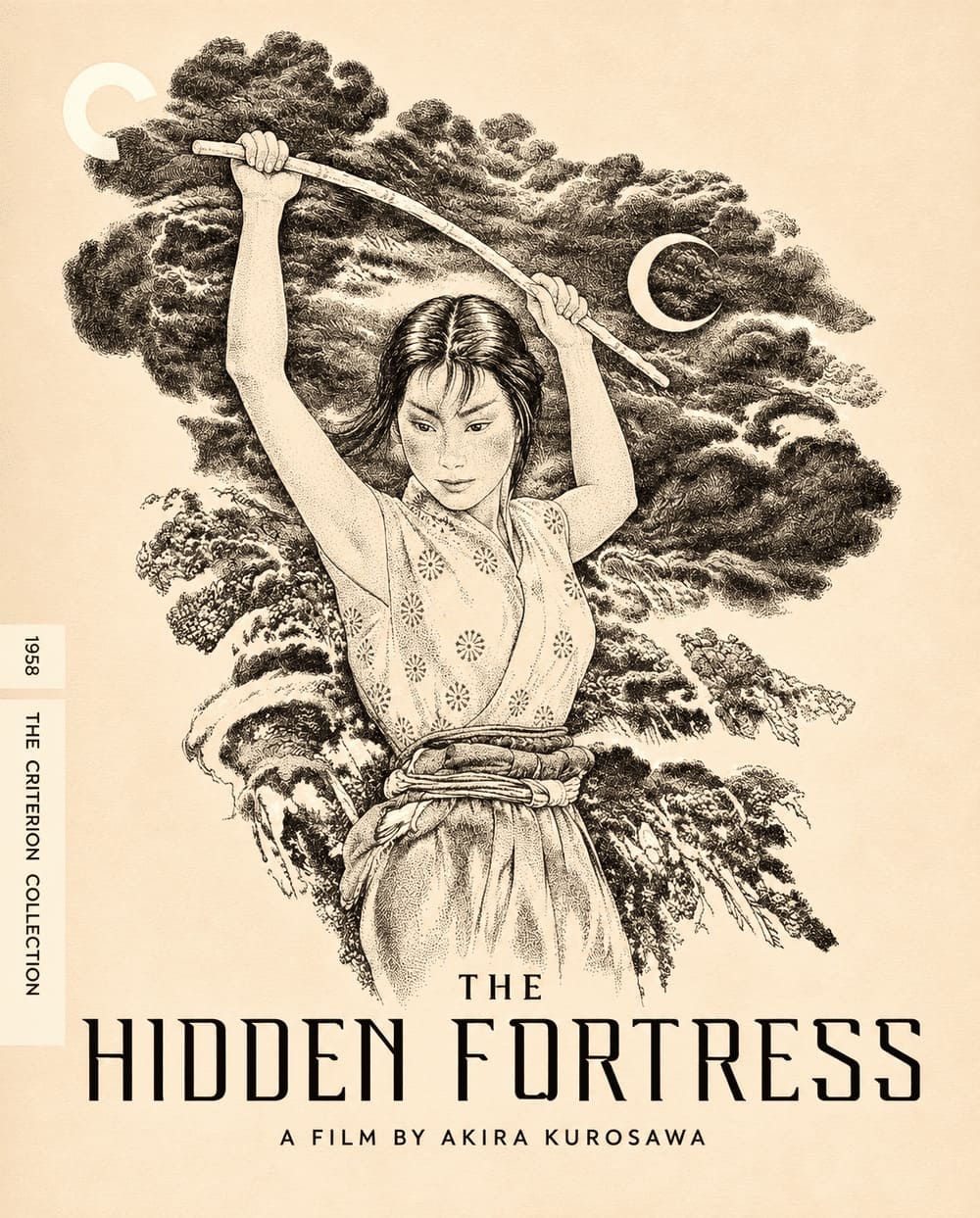
Nobody in The Hidden Fortress seems especially interested in making a heroic entrance. Its first companions are two filthy, complaining peasants who have wandered into a war hoping to make money and discovered that war is mostly terrible for business. They bicker, separate, reunite, and find fresh reasons to distrust each other. It is a wonderfully undignified way to begin an epic, and it establishes the attitude behind Akira Kurosawa’s 1958 adventure. Before offering noble sacrifice and spectacular combat, he puts us beside people wondering what they might get out of the situation. The grand adventure develops from there, but the dirt and desperation of that opening never entirely wash away.

Those unlikely companions are Tahei and Matashichi, played by Minoru Chiaki and Kamatari Fujiwara. Their fortunes become more complicated when they discover gold and encounter General Rokurota Makabe, played by Toshiro Mifune. Rokurota is escorting Princess Yuki, the heir of a defeated clan, through enemy territory while protecting the treasure needed for her people’s future. The peasants become part of the escape, although their participation involves considerably more intimidation than patriotic enthusiasm. Everyone needs the journey to succeed, but they disagree about what success should look like. Saving a royal dynasty sounds much less appealing to the peasants than leaving with its money.

That clash of priorities keeps the film moving. Rokurota thinks strategically, Yuki carries the responsibilities of her position, and the peasants keep looking for opportunities to improve their circumstances. Kurosawa makes those differences productive. A sensible military decision might seem intolerable to someone who wants a shortcut to wealth. An act of compassion might threaten the secrecy on which everyone’s survival depends. The suspense grows from the difficulty of getting these particular people to cooperate. They are not a ready-made team whose disagreements exist merely to supply amusing dialogue. Their competing interests can have dangerous consequences.

Chiaki and Fujiwara make an entertainingly unpleasant double act. Their suspicious glances, wounded pride, and endless negotiations give the journey a steady comic undertow. They are particularly funny when greed inspires teamwork, only for distrust to destroy it almost immediately. Still, the routine occasionally wears thin. Some arguments continue after the joke has landed, and their whining can become exhausting. That abrasiveness also distinguishes the film. Kurosawa does not reassure us that these men are secretly adorable. They can be cowardly, opportunistic, and mean, with desperation making their behavior understandable without necessarily making it forgivable.

Mifune’s performance is the film’s great stabilizing force. His Rokurota has the authority of someone who has assessed the situation before everybody else has finished panicking. Mifune communicates that confidence through his stance, his watchfulness, and the economical way he moves. He does not need to keep demonstrating the general’s strength because he makes the possibility of action feel constantly present. When that stillness breaks, the effect is tremendous. His physical performance has weight and speed, but also clarity: every movement seems connected to a decision. Intelligence and bodily confidence become parts of the same instinct.

He is also funny without turning Rokurota into a joke. His exchanges with the peasants suggest a capable professional whose work keeps being interrupted by assistants trying to steal the supplies. A glance can communicate an entire exhausted assessment of their behavior. Yet Mifune never makes the character merely a reassuring father figure. Rokurota intimidates and manipulates, and his dedication to duty has a hard edge. Warmth comes through selectively, which makes it persuasive. This is a commanding adventure performance because it preserves the distinction between a charismatic protector and an uncomplicatedly nice man.

Misa Uehara’s Princess Yuki supplies another kind of intensity. Her voice and bearing are imperious, sometimes almost confrontational, and the performance can initially seem rigid. That quality suits someone raised to embody authority rather than blend into ordinary life. What makes Yuki interesting is the pressure the journey places on that upbringing. Outside her protected environment, she encounters suffering that cannot be neatly absorbed into inherited ideas about duty. Her forcefulness does not disappear, but it begins responding to a broader understanding of other people. She becomes more than a royal passenger waiting for delivery.

Kurosawa’s widescreen compositions make those relationships visible. In his first widescreen feature, the expanded frame becomes a way of organizing power, vulnerability, and suspicion. Characters stand above one another, watch from a distance, or occupy separate areas until circumstances force them together. The landscapes are equally purposeful. Rocky slopes and exposed paths determine where the travelers can hide and how quickly they can escape. The scenery is beautiful, but never safely decorative. Moving through it requires effort, keeping the adventure grounded even when the storytelling takes on the simplicity of a fable.

That precision pays off in the action. The mass escape down a huge staircase turns architecture and human movement into a frightening surge. Rokurota’s mounted action has a thrilling physical directness, while his spear duel builds excitement through distance, anticipation, and controlled changes of pace. Kurosawa lets us understand the space before asking us to feel its dangers. The cutting sharpens the action rather than concealing it. The pauses become compelling because we can see what each fighter risks by advancing. It is action built around attention, and Mifune gives it tremendous bodily commitment.

The fire festival opens the film into a different emotional register. Flames, music, and collective movement briefly overwhelm the travelers’ calculations. The sequence serves the escape, but it also becomes something Yuki experiences rather than simply navigates. Its awareness of life’s brevity gives the adventure a reflective undertow without stopping it for a lecture. Moments like this complicate the film’s harsher instincts. Kurosawa recognizes cruelty and selfishness while allowing encounters that loosen the boundaries between people. His generosity feels earned because it emerges from a world that gives everyone reasons to remain guarded.

This was the Kurosawa adventure that would heavily influence a young filmmaker named George Lucas. Tahei and Matashichi helped inspire C-3PO and R2-D2 in Star Wars, particularly the decision to introduce a large conflict through two low-status, squabbling participants. The endangered princess and dangerous journey offer further connections, while Kurosawa’s wipe transitions became part of Lucas’s visual vocabulary. But The Hidden Fortress is harsher in tone and characterization. Its peasants are nastier than the droids, its protector more intimidating, and its humor less inclined to transform desperation into lovable eccentricity. The resemblance makes those differences especially revealing.

The film’s afterlife also includes Shinji Higuchi’s 2008 remake, Hidden Fortress: The Last Princess. Interestingly, that version reflects not only Kurosawa’s original but also the influence of Star Wars, bringing elements of the Hollywood spectacle it helped inspire back into a Japanese adventure. That circular exchange illustrates how film history actually works: stories cross borders, change shape, and return carrying traces of their descendants. Yet the original needs no family tree to justify its appeal. Its rhythms, performances, and uneasy mixture of comedy and cruelty remain distinctive rather than merely historically important.

What finally makes The Hidden Fortress satisfying is that its generosity never requires us to forget its roughness. Loyalty and mercy offer alternatives to the opening’s suspicion, but nobody erases the conditions that made suspicion reasonable. Even the comic characters remain recognizably themselves instead of becoming polished heroes. Mifune gives the journey its commanding center, while the surrounding friction gives it texture. Kurosawa delivers the pleasures of an escape story without sanding down the people making the escape. The result is a muscular, funny, sometimes abrasive adventure whose humanity comes from its willingness to let heroism and foolishness share the same road.

Kurosawa-Mifune Collaborations
Film Review: The Lower Depths (dir. by Akira Kurosawa)


“Who’s to say that a lie is always bad? And who’s to say that the truth is always good?” — Kahei the Pilgrim

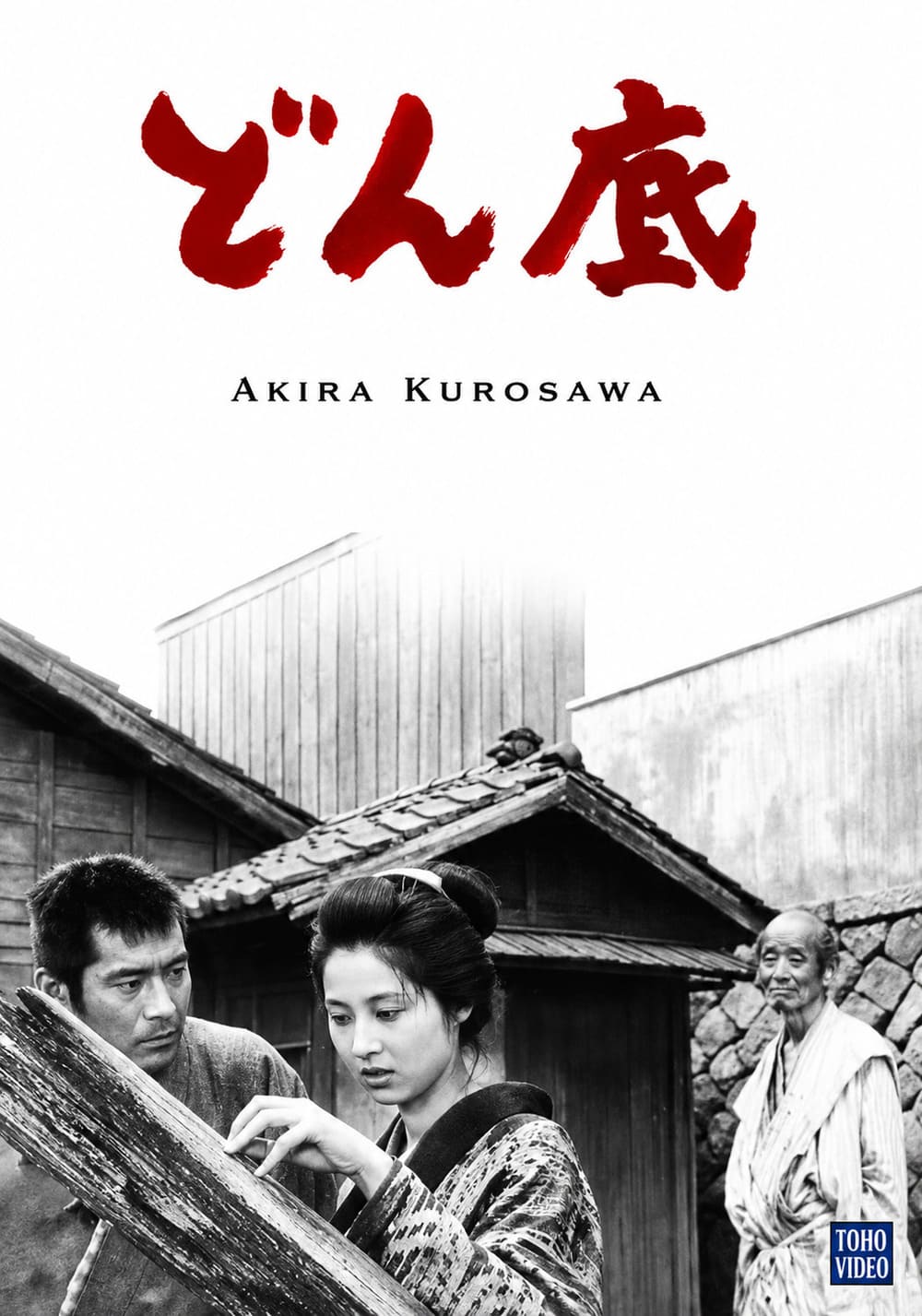
Nobody in Akira Kurosawa’s The Lower Depths (1957) seems capable of minding their own business, partly because nobody has enough space to have any. Conversations become arguments, private disappointments become public entertainment, and anyone trying to preserve a little dignity risks attracting an audience. It’s a miserable arrangement, but a terrific foundation for an ensemble film. Kurosawa turns a shabby tenement into a place where people constantly watch one another while rarely feeling understood. The surprise is how much life he finds there: not inspirational resilience, exactly, but the stubborn, funny, occasionally ugly energy of people who still have something to say.

Adapted from Maxim Gorky’s play, the film moves its setting from Russia to Edo-period Japan. Kurosawa and co-writer Hideo Oguni retain the basic situation of society’s castoffs living together, but the setting feels inhabited rather than imposed on imported material. Poverty here has a daily routine. People haggle, drink, remember better times, invent better times, and complain about whoever happens to be nearby. Before anyone starts discussing whether life has meaning, we understand what it means to live somewhere that offers almost no room for change. Philosophy grows out of the circumstances rather than arriving as an intellectual decoration.

The location does much of that work. With the tenement sitting below more respectable buildings, its residents occupy the bottom of a social order made physically visible. The presence of a temple above this misery also invites an uncomfortable question about the distance between spiritual institutions and suffering bodies. Inside, posts divide the frame, bodies crowd doorways, and people lie within earshot of conversations they supposedly aren’t part of. There’s nowhere to retreat without remaining available for comment. The place is a shelter, technically, but it can also feel like a trap everyone has learned to furnish with familiar grievances.

For a film so closely tied to the stage, The Lower Depths is remarkably alert to what a camera can reveal. Kurosawa doesn’t simply photograph whoever is speaking and then cut to the response. He arranges several points of interest within a shot, allowing reactions and secondary business to complicate the main exchange. Someone making a declaration in the foreground may have their importance quietly dismantled by a bored listener behind them. We’re not just receiving dialogue; we’re watching people decide which words deserve attention. That makes the film’s arguments feel socially alive rather than neatly packaged for our consideration.

The lack of a clear central character takes some adjustment. A thief’s romantic entanglements provide a recognizable dramatic thread, but the film keeps drifting toward other residents and other troubles. An alcoholic actor clings to fragments of his former identity. A dying woman suffers while life carries on around her. Others maintain shaky claims to status or tell stories that make their circumstances sound less humiliating. At first, the shifting focus can seem like a refusal to get going. Eventually, it becomes the point: nobody experiences their suffering as a supporting role in someone else’s more important story.

Toshiro Mifune’s thief supplies some forceful energy, though the ensemble keeps him from taking over. His hope of leaving with the woman he loves sounds modest beside the grand ambitions movies usually give their heroes. He wants a different place and a different life. Yet even that becomes an enormous demand. The romantic plot reveals how difficult an ordinary fresh start can be when desire has no dependable material support. Wanting to escape doesn’t mean knowing how, and being sincere doesn’t protect anyone from jealousy, manipulation, or the consequences of a bad decision.

Then Kahei arrives, played by Bokuzen Hidari, and introduces a different way of dealing with people. The elderly pilgrim listens. In a room where vulnerability usually invites ridicule, that alone feels significant. Hidari gives him an unhurried gentleness that changes the rhythm of his scenes without making him entirely knowable. He comforts the dying woman and tells the actor about the possibility of treatment for his drinking. These exchanges have warmth, but Kurosawa leaves an uncomfortable space between the kindness of Kahei’s intentions and the reliability of what he promises.

That tension gives the film a distinctly Nietzschean dimension, although it makes more sense to treat this as a philosophical reading than a claim that Kurosawa is illustrating Nietzsche. Nietzsche questioned religious consolation that devalues earthly existence, while also recognizing the crisis that follows when inherited beliefs lose their authority. Nihilism, in this sense, isn’t simply being gloomy; it is the collapse of the values that make life seem purposeful. The tenement offers fertile ground for those questions. When the present is intolerable, a promised elsewhere—spiritual or otherwise—can become the only thing keeping someone going.

Kahei’s reassurance sits right inside that problem. Is he helping people endure life, or encouraging them to place their hopes beyond what they can actually do? His comfort to the dying woman has a religious dimension, while his promise of treatment gives the actor a more worldly version of salvation. Neither should be reduced to a simple fraud. His attention matters, and the relief he provides is real. Still, the film asks what happens when consolation becomes a substitute for change. The actor’s renewed hope briefly restores direction to his life, but it also gives disappointment a devastating new opening.

Importantly, the alternative isn’t presented as an easy victory for hardheaded realism. The residents who see through comforting stories aren’t necessarily freer, kinder, or better equipped to live. Exposing an illusion can leave a person with nothing to replace it. This is where the film’s nihilism becomes more unsettling than a general declaration that life is terrible. Belief may be unreliable, but disbelief offers no automatic foundation for dignity. Kurosawa keeps returning to that gap, asking what people can build together once neither religious reassurance nor cynical dismissal seems sufficient.

Fortunately, the film is often funny enough to keep these questions from turning airless. The residents interrupt, embellish, and needle one another with the precision that comes from prolonged proximity. Their humor isn’t merely a tasteful pause between tragedies; it is one of the main ways they occupy the world. Yet laughter can create fellowship or turn someone into a target, sometimes within the same exchange. A few arguments become repetitive, and the characters occasionally sound like competing philosophical positions. The performances usually pull them back toward messy individuality, where a clever observation can coexist with pettiness or genuine care.

By the final scene, the tenement has become familiar enough that its sudden pleasure feels almost welcome. That makes the interruption of the residents’ merriment by news of the actor’s suicide especially bitter, as does the complaint about the ruined fun. The ending leaves open whether laughter is a defense against meaninglessness or evidence of how little another life now matters. Kurosawa doesn’t settle the question for us. The Lower Depths stays with the uncomfortable distance between sharing a room and accepting responsibility for someone in it. There is plenty of company here, but comfort—and anything sturdy enough to call belief—is much harder to find.

Kurosawa-Mifune Collaborations

Film Review: Throne of Blood (dir. by Akira Kurosawa)


“This is a wicked world. To save yourself you often first must kill.” — Lady Asaji Washizu

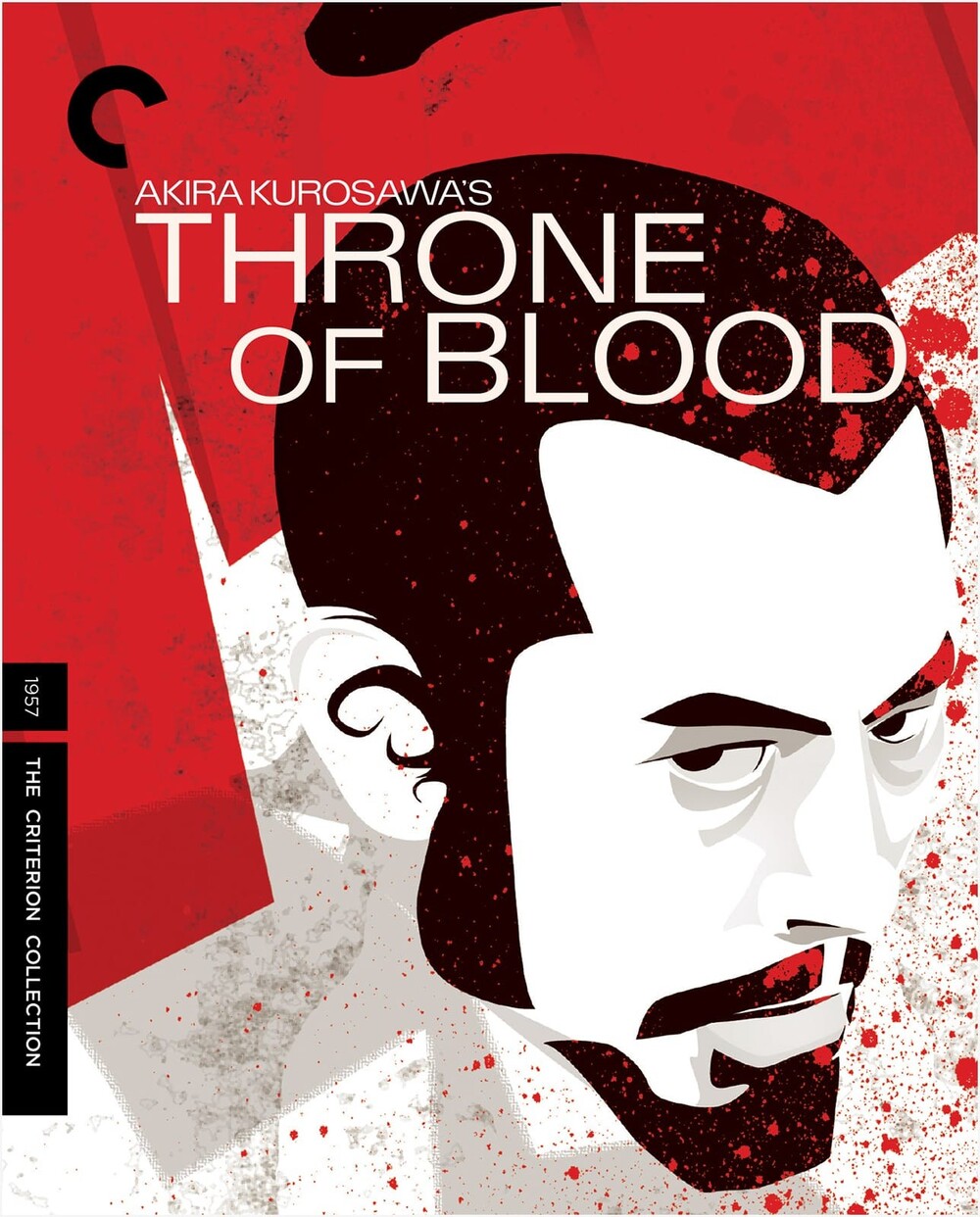
A promotion should make life easier, but in Throne of Blood, moving up in the world mostly means acquiring better reasons to panic. Akira Kurosawa’s 1957 adaptation of Macbeth understands ambition as a problem that success only makes worse. Every reward suggests another prize, every ally becomes a potential rival, and every attempt to secure the future makes the present more dangerous. Set in feudal Japan and shaped by the traditions of Noh drama, the film turns Shakespeare’s tragedy into something both culturally distinct and immediately recognizable. Beneath the armor and ceremony are people making disastrous choices for reasons they find perfectly sensible. Kurosawa makes watching those choices unfold riveting, even when we know exactly where they lead.

The trouble begins after a victory. Washizu, played by Toshiro Mifune, and his fellow commander Miki, played by Minoru Chiaki, encounter a mysterious spirit while traveling through Spider’s Web Forest. It predicts that Washizu will eventually rule Spider’s Web Castle and that Miki’s descendants will inherit its authority. When the first signs of the prophecy come true, Washizu begins wondering whether he should help the remaining predictions along. His wife, Lady Asaji Washizu, has considerably fewer reservations. Together, they turn a possibility into a justification for murder. Kurosawa preserves the essential machinery of Shakespeare’s plot while making its progression feel less like a familiar literary exercise than a series of increasingly terrible practical decisions.

Before any of that can happen, though, Washizu and Miki have to find their way out of the woods. Their disorientation is one of the film’s smartest introductions to its characters. These accomplished warriors ride through fog, struggle to identify their surroundings, and discover that confidence does not necessarily get them anywhere. Kurosawa lets the confusion stretch beyond a quick atmospheric flourish. The landscape becomes an early challenge to their belief in their own competence. They can defeat an army, but they cannot make the world reveal itself clearly. The prophecy seems to solve that problem by offering knowledge of what comes next. In reality, it gives Washizu just enough information to become dangerously certain.

The castle provides a striking contrast to the forest without offering much relief. Where the trees and fog obscure everything, the interiors are spare, orderly, and exposed. Kurosawa uses empty floor space and carefully arranged figures to turn conversations into visual contests. A character’s position in a room can reveal who holds the advantage before a line is spoken. The black-and-white photography makes the difference between these environments especially vivid, yet both leave Washizu uncomfortable. Outside, he cannot tell where he is going. Inside, he cannot escape the implications of where he has arrived. His rise brings larger rooms, but they never seem to contain more freedom.

Mifune is superb at making that contradiction physical. A longtime Kurosawa collaborator, he has the force to make Washizu convincing as a successful warrior, but he repeatedly exposes the insecurity beneath the imposing surface. His eyes search for danger, his posture hardens into defensiveness, and his anger often seems to arrive a fraction of a second after fear. The performance is big without being emotionally vague. You can see the effort involved in Washizu’s attempts to look commanding. Mifune understands that a man may be capable of extraordinary violence without possessing much control over himself. That gap becomes more apparent each time Washizu tries to solve an internal crisis through an external show of strength.

There is something almost embarrassing about his deterioration, and the film is stronger for allowing it. Mifune does not insist that Washizu remain dignified simply because he is a tragic protagonist. He can be brave, evasive, bullying, and visibly rattled within a single exchange. His authority never quite settles into place because he keeps imagining the circumstances under which it might disappear. Ambition and fear become mutually reinforcing habits: he wants more power because he feels vulnerable, then feels more vulnerable because he has more to lose. Mifune gives that cycle variety and momentum. His performance makes the tragedy feel like an exhausting way to live long before it becomes a spectacular way to die.

Isuzu Yamada delivers an equally remarkable, standout performance as Lady Asaji Washizu. Where Mifune fills the frame with restless energy, she makes restraint impossible to ignore. Her pale, mask-like face, controlled voice, and precise gestures create an impression of almost unshakable composure. Asaji does not need to compete with her husband’s volume because she knows how to direct his thinking. Yamada makes her arguments frighteningly plausible. Murder becomes a precaution, betrayal becomes self-preservation, and hesitation becomes the most dangerous choice available. She never needs to announce herself as monstrous. Her calm treatment of monstrous ideas is far more unsettling.

Their scenes together are the film’s psychological center. Washizu may occupy more physical space, but Asaji often controls the rhythm of the exchange. He reacts, she waits, and the silence gives his anxiety room to grow. Yamada makes those pauses feel purposeful without turning the character into a simple mechanism of manipulation. Asaji understands what her husband wants and what he needs to hear before admitting that he wants it. When her composure finally breaks into obsessive handwashing, the reversal is devastating. A woman who once appeared to choose every movement becomes trapped in one repeated gesture. The guilt she had treated as manageable finally overwhelms her capacity to manage anything.

Yamada’s performance also provides the clearest expression of Kurosawa’s use of traditional Noh drama. The stylized movement, mask-like expressions, spare interiors, and haunting musical textures establish a dramatic language quite different from conversational realism. Feelings emerge through posture, spacing, duration, and controlled changes in expression. At first, the formality can seem distancing, particularly alongside Mifune’s explosive physicality. Gradually, though, the contrast becomes one of the film’s great pleasures. Kurosawa teaches us to register small movements as major events. A slight shift in Yamada’s face or body can alter the balance of an entire scene.

This influence makes Throne of Blood a wholly Japanese interpretation of Shakespeare rather than a straightforward relocation of his plot. The feudal setting gives loyalty and betrayal their own social framework, while Noh offers a way to express the tragedy through Japanese theatrical tradition. None of that diminishes the Bard’s impact. The language changes, but the pressure remains: ambition disguises itself as necessity, guilt destroys the security that violence was supposed to provide, and a marriage becomes a place where destructive ideas gain strength through repetition. Kurosawa trusts the underlying drama enough to transform its surface completely. The result feels neither subordinate to Shakespeare nor anxious to prove its independence from him.

Takashi Shimura, another longtime Kurosawa collaborator, contributes a smaller but valuable performance as Noriyasu Odagura. He does not receive a showcase comparable to Mifune’s or Yamada’s, yet his grounded authority helps establish a world beyond their increasingly poisonous marriage. Shimura’s reserve suggests loyalties and judgments that exist independently of Washizu’s fears. That is an important counterweight in a film so closely aligned with its protagonist’s unraveling. Washizu may start treating everyone as a piece in his private struggle for survival, but Shimura gives the surrounding political world a firmness that resists that perspective. His performance works through economy rather than display.

Chiaki’s Miki serves a related purpose. Because he hears the same prophecy, his different response keeps Washizu’s behavior from looking inevitable. The supernatural encounter creates a temptation, not a complete set of instructions. Kurosawa maintains that distinction even as the atmosphere grows increasingly fatalistic. We feel the weight of an approaching catastrophe while still seeing the choices that help produce it. That tension keeps the film from becoming a simple demonstration of destiny. Washizu repeatedly tries to protect himself from an imagined future, and his efforts make that future more threatening. He is caught in a trap, but he also keeps tightening it.

The film’s restraint makes its violent eruptions especially effective. At the banquet, Washizu’s public authority buckles under a terror he cannot contain. In the final assault, the collapse becomes brutally physical. Arrows turn the space around him into a lethal enclosure, and Mifune’s frantic movements strip away the last suggestion of command. The sequence is spectacular without restoring any grandeur to its subject. Washizu cannot negotiate, intimidate, or strike his way out of the situation. After spending the film trying to control what comes next, he cannot even find a safe place to stand. Kurosawa makes the end feel both shockingly immediate and horribly consistent with everything that preceded it.

What finally makes Throne of Blood so affecting is the distance between the authority Washizu imagines and the life he actually creates. He wants the certainty of being untouchable; he gets a world in which every sound might announce a threat. Mifune makes that disappointment frantic and bodily, Yamada gives its rationalizations a chilling calm, and Kurosawa’s severe compositions leave neither character much room for comforting illusions. The film is grand in scale but mercilessly specific about the cost of its characters’ choices. By the end, the throne has become the least enviable seat imaginable—not because power is meaningless, but because they have destroyed everything that might have made possessing it worthwhile.

Kurosawa-Mifune Collaborations

Film Review: Godzilla (dir. by Ishirō Honda)


“Godzilla was baptized in the fire of the H-bomb and survived. What could kill it now?” — Dr. Yamane

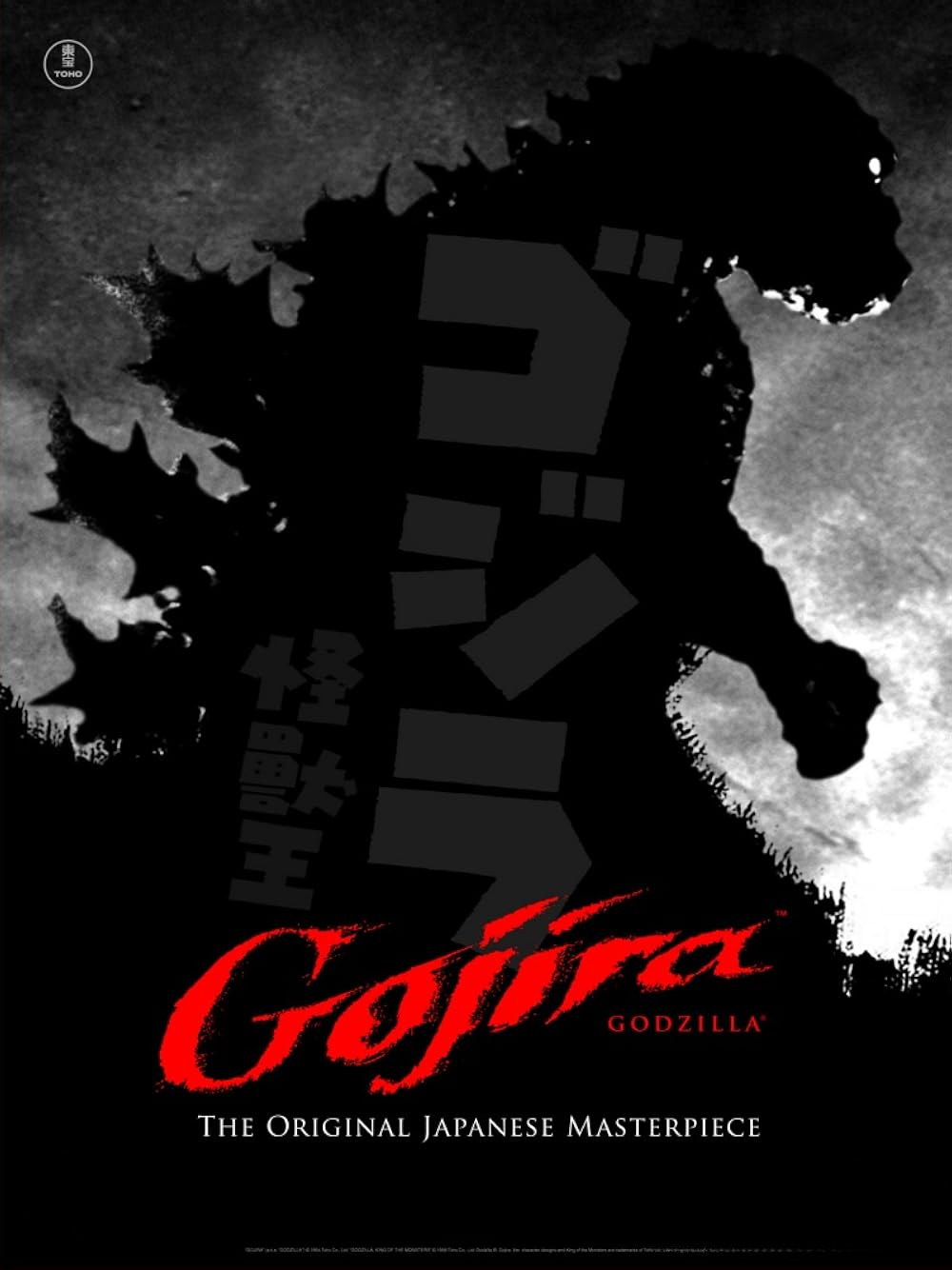
If your only exposure to Godzilla is the big guy body-slamming other monsters while kids cheer, the original 1954 Japanese Godzilla—titled Gojira in Japan—is going to hit you like a ton of bricks. Directed by Ishirō Honda, this isn’t a lighthearted monster romp. It’s a funeral procession in disguise, soaked in grief and dread, that happens to feature a radioactive giant stomping Tokyo into paste. Importantly, this is not the 1956 Americanized version, Godzilla, King of the Monsters!, which inserted newly filmed scenes of Raymond Burr as reporter Steve Martin, making him the central viewpoint character. Honda’s original is a different, heavier experience.

The setup is simple enough. Ships keep sinking, an island community connects the disasters to an old legend, and a prehistoric creature disturbed by hydrogen-bomb testing emerges from the sea. What follows builds toward one of the most devastating stretches of monster-movie filmmaking ever put to celluloid. When Godzilla attacks Tokyo, Honda shoots the rampage like a war picture, not a creature feature. There’s no wink, no reassuring invitation to laugh at the destruction. Night falls, the city burns, and civilians flee through the streets in scenes that are hard to shake. That’s clearly the point.

Here’s the thing you can’t separate from this movie: Japan was less than a decade removed from the end of World War II. Tokyo’s destruction onscreen bears an eerie resemblance to the aftermath of the American firebombing campaign of 1945, particularly the devastating March 9–10 raid. The burning neighborhoods, shattered buildings, and displaced civilians evoke a catastrophe that contemporary audiences didn’t need help imagining. Calling these sequences archival footage would go too far; they’re carefully constructed effects and dramatic scenes. But their emotional force comes partly from how closely this imagined disaster brushes against living memory. Honda makes the destruction feel remembered rather than merely invented.

The political undercurrent is what elevates Godzilla from an impressive genre exercise to something more troubling. The film is an unmistakable response to nuclear weapons and testing, made when hydrogen-bomb explosions in the Pacific were immediate public concerns. Its opening evokes the Lucky Dragon No. 5 incident, in which Japanese fishermen were exposed to radioactive fallout from an American hydrogen-bomb test at Bikini Atoll earlier that year. That wasn’t distant history to the original audience. It was the news. Godzilla turns that fear into a physical presence: something humanity has disturbed but cannot control.

The film’s concern with proliferation becomes clearest through Dr. Serizawa and his Oxygen Destroyer. He possesses a discovery that could kill Godzilla, but he understands that demonstrating its power could open the door to another arms race. The question isn’t simply whether this weapon can solve today’s emergency. It’s what happens when governments demand more of it tomorrow. That’s a sharper dilemma than the usual hunt for a monster-killing gadget. The proposed solution belongs to the same destructive cycle as the problem, and Serizawa knows that good intentions won’t keep his invention out of dangerous hands.

Dr. Yamane, played by a wonderfully grave Takashi Shimura, complicates things further by wanting Godzilla studied rather than destroyed. His position can seem maddening when people are dying, but it gives the creature an identity beyond walking target practice. Godzilla is dangerous, yet he’s also a living consequence of human interference. That doesn’t make killing him unnecessary, but it makes the victory harder to celebrate. Honda lets scientific curiosity, public safety, and moral responsibility pull against each other. The film’s strongest human conflict isn’t really about who gets the girl. It’s about what people owe one another when knowledge becomes destructive.

Special credit goes to Eiji Tsuburaya’s effects work. The creature suit, miniature buildings, and optical effects can look rough now, but dismissing them as cheap misses the ambition involved. This was a substantial production by contemporary Japanese standards, not a tiny-budget throwaway. The physical weight of the collapsing structures gives the rampage a tactile quality, while the black-and-white photography helps hold the illusion together. Akira Ifukube’s score supplies another crucial layer: those heavy rhythms and mournful passages make Godzilla feel less like an attraction than an approaching calamity. The images and music work together to give the monster tragic gravity.

Honda’s willingness to linger on suffering is even more important than the effects. A mother clutching her children and telling them they’ll soon join their father is a brutal interruption of anything resembling uncomplicated monster-movie fun. The hospital scenes refuse to let the attack end when Godzilla leaves the frame. Injured people remain, children face radiation examinations, and survival looks nothing like relief. These moments make the film’s anti-nuclear concerns inseparable from its storytelling. Honda doesn’t merely tell you that destruction is terrible. He keeps looking at the people who have to endure it.

Is the movie perfect? Not entirely. The love triangle between Emiko, Ogata, and Serizawa is more functional than riveting, and some explanatory passages slow the momentum. A few effects shots expose the gap between the filmmakers’ ambitions and their available techniques. But the sincerity carries it through. There’s no ironic safety net, and that directness becomes a strength. The same applies to the ending: Serizawa’s sacrifice is moving because it answers a moral crisis, not just a tactical one. He wants to stop the immediate catastrophe without leaving humanity another means of creating the next.

The American version deserves a little more fairness than simply calling it worthless: it retains powerful material, and Burr’s performance isn’t the problem. Still, its cuts and added viewpoint weaken the original’s political and emotional coherence. Honda’s Godzilla is the fuller experience, and one of science fiction’s enduring achievements. It helped define the modern kaiju film, but its importance goes beyond launching a franchise. Underneath the creature suit and miniature tanks is a serious film about wartime trauma, nuclear fear, and whether humanity can survive its own inventions. That’s a lot for a monster movie to carry. Honda makes it hurt.