The Brief Thrill Of The Phoenix Film Critics Nominations


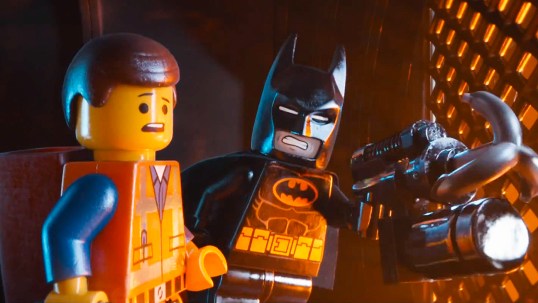
Lego MovieI have to admit that, when I first looked at the just-released Phoenix Film Critics Nominations for 2014, I got really excited.  I saw The LEGO Movie listed among the nominees for best picture and I thought to myself, “Oh my God!  Could The LEGO Movie be set to be the fourth animated film to score a best picture nomination from the Academy!?”

Seriously, my inner movie trivia lover was so excited!

Then, of course, I remembered that critical recognition doesn’t necessarily translate into Oscar nominations.  And I was forced to admit that The LEGO Movie probably will not be nominated for best picture, though it definitely remains a front runner for best animated feature.

But, for a few moments there, I was truly an excited Oscar watcher.

Anyway, here are the Phoenix Film Critics Nominations!

(h/t to Awards Circuit)

BEST PICTURE/ TOP TEN FILMS OF 2014

  • A Most Violent Year
  • Birdman
  • Boyhood
  • Gone Girl
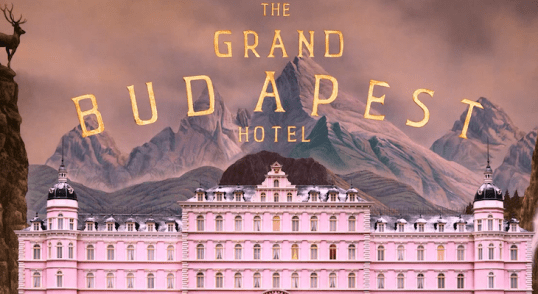
  • The Grand Budapest Hotel
  • Guardians of the Galaxy
  • The Imitation Game
  • The Lego Movie
  • The Theory of Everything
  • Whiplash

BEST DIRECTOR

  • Wes Anderson, The Grand Budapest Hotel
  • Damien Chazelle, Whiplash
  • David Fincher, Gone Girl
  • Alejandro G. Inarritu, Birdman
  • Richard Linklater, Boyhood

BEST ACTOR IN A LEADING ROLE

  • Bradley Cooper, American Sniper
  • Benedict Cumberbatch, The Imitation Game
  • Brendon Gleeson, Calvary
  • Tommy Lee Jones, The Homesman
  • Michael Keaton, Birdman
  • Eddie Redmayne, The Theory of Everything

BEST ACTRESS IN A LEADING ROLE

  • Amy Adams, Big Eyes
  • Felicity Jones, The Theory of Everything
  • Rosamund Pike, Gone Girl
  • Hilary Swank, The Homesman
  • Reese Witherspoon, Wild

BEST ACTOR IN A SUPPORTING ROLE

  • Ethan Hawke, Boyhood
  • Logan Lerman, Fury
  • Edward Norton, Birdman
  • Mark Ruffalo, Foxcatcher
  • J. K. Simmons, Whiplash

BEST ACTRESS IN A SUPPORTING ROLE

  • Patricia Arquette, Boyhood
  • Jessica Chastain, A Most Violent Year
  • Carrie Coon, Gone Girl
  • Keira Knightley, The Imitation Game
  • Emma Stone, Birdman

BEST ENSMEBLE ACTING

  • Birdman
  • The Grand Budapest Hotel
  • Guardians of the Galaxy
  • Into the Woods

BEST SCREENPLAY WRITTEN DIRECTLY FOR THE SCREEN

  • A Most Violent Year
  • Birdman
  • Boyhood
  • The Grand Budapest Hotel
  • Whiplash

BEST SCREENPLAY ADAPTED FROM ANOTHER MEDIUM

  • American Sniper
  • Gone Girl
  • The Imitation Game
  • The Theory of Everything
  • Wild

BEST LIVE ACTION FAMILY FILM

  • Alexander and the Terrible, Horrible, No Good, Very Bad Day
  • Guardians of the Galaxy
  • Into the Woods
  • Maleficent
  • Muppets Most Wanted

BEST ANIMATED FILM

  • Big Hero 6
  • The Boxtrolls
  • The Lego Movie
  • How to Train Your Dragon 2

OVERLOOKED FILM OF THE YEAR

  • Calvary
  • Edge of Tomorrow
  • Obvious Child
  • The Skeleton Twins
  • Snowpiercer

BEST FOREIGN LANGUAGE FILM

  • Force Majeure
  • IDA
  • Mood Indigo
  • The Raid 2

BEST DOCUMENTARY

  • Citizenfour
  • Glen Campbell: I’ll Be Me
  • Jodorowsky’s Dune
  • Life Itself
  • Supermensch: The Legend of Shep Gordon

BEST ORIGINAL SONG

  • Everything is Awesome, The Lego Movie
  • Immortals, Big Hero 6
  • Lost Stars, Begin Again
  • Miracles, Unbroken

BEST ORIGINAL SCORE

  • Birdman
  • Gone Girl
  • The Imitation Game
  • Interstellar
  • The Theory of Everything

BEST CINEMATOGRAPHY

  • A Most Violent Year
  • Birdman
  • Interstellar
  • Into the Woods
  • The Theory of Everything
  • Unbroken

BEST FILM EDITING

  • Birdman
  • Boyhood
  • Gone Girl
  • Interstellar
  • Into the Woods

BEST PRODUCTION DESIGN

  • The Grand Budapest Hotel
  • The Imitation Game
  • Interstellar
  • Snowpiercer

BEST COSTUME DESIGN

  • The Grand Budapest Hotel
  • Inherent Vice
  • Into the Woods
  • Maleficent
  • The Theory of Everything

BEST VISUAL EFFECTS

  • Dawn of the Planet of the Apes
  • Edge of Tomorrow
  • Guardians of the Galaxy
  • The Hobbit: The Battle of the Five Armies
  • Interstellar

BEST STUNTS

  • Dawn of the Planet of the Apes
  • Edge of Tomorrow
  • John Wick
  • Need for Speed
  • The Raid 2

BREAKTHROUGH PERFORMANCE ON CAMERA

  • Ellar Coltrane, Boyhood
  • Rosamund Pike, Gone Girl
  • Jenny Slate, Obvious Child

BREAKTHROUGH PERFORMANCE BEHIND THE CAMERA

  • Damien Chazelle, Whiplash
  • Dan Gilroy, Nightcrawler
  • Gillian Robespierre, Obvious Child
  • Jon Stewart, Rosewater

BEST PERFORMANCE BY A YOUTH – MALE

  • Ellar Coltrane, Boyhood
  • Daniel Huttlestone, Into the Woods
  • Jaeden Lieberber, St. Vincent
  • Ed Oxenbould, Alexander and the Terrible, Horrible, No Good, Very Bad Day
  • Tony Revolori, The Grand Budapest Hotel

BEST PERFORMANCE BY A YOUTH – FEMALE

  • Lilla Crawford, Into the Woods
  • Mackenzie Foy, Interstellar
  • Sterling Jerins, And So It Goes

grand-budapest-hotel

44 Days of Paranoia #36: The Fugitive (dir by Andrew Davis)


For our latest entry in the 44 Days of Paranoia, let’s take a look at the 1993 best picture nominee, The Fugitive.

We’re all familiar with the saying, “You just had to be there.”  We usually hear it as an excuse that’s uttered when a storyteller realizes that his audience isn’t as fascinated by his tale as he is.  It’s a way of assuring us that we would also be fascinated if only we had been present when the story actually took place.

I think the same holds true of a lot of movies.  You simply had to be there when the film was originally released to theaters, before it’s impact could be diluted by repetition and imitation, to understand why that movie was successful or why certain critics continue to speak so fondly of it.

Case in point: The Fugitive.

Based on an old television series, The Fugitive was a huge hit when it was first released in 1993.  It was critically acclaimed, it featured an Oscar-winning supporting performance from Tommy Lee Jones, and the film itself was even nominated for best picture of the year.  The Fugitive is still regularly cited as being one of the best action movies ever made.

And yet, last month, when I watched The Fugitive for the first time, I was left distinctly underwhelmed.

The film opens with Chicago surgeon Richard Kimble (Harrison Ford) arriving home and discovers that his wife has been murdered by a one-armed man (Andreas Katsulas).  Kimble struggles with the assailant but the man still manages to escape into the night.  The police don’t believe Kimble’s story and he ends up being arrested and subsequently convicted of his wife’s murder.  It was at this point that I shouted out, “What about DNA!?” but then I remembered that this film was probably made before DNA became a regular part of the criminal justice system.  You just had to be there…

While Kimble is being transported to death row, a fight breaks out that causes the prison bus to crash and gives Kimble a chance to escape.  Kimble is now a fugitive, trying to track down the one-armed man and clear his name.  Pursuing him is the charismatic and rather manic U.S. Marshal Sam Gerard (Tommy Lee Jones).

Every review that I’ve ever read about The Fugitive always praises two scenes.  One is the bus crash that gives Kimble his opportunity to escape.  The other is the scene where Gerard first catches up to Kimble.  Standing at the edge of a storm drain, Kimble says that he’s innocent.  Gerard calmly  replies, “I don’t care.”  Kimble then proceeds to jump over the edge and into the raging waters below.  Realistically, the fall really should have killed him but, if it had, there would be no movie.

Those two scenes are genuinely exciting and well-done.  Unfortunately, the rest of the film isn’t quite as memorable.  Kimble spends the rest of the movie running around Chicago while Gerard chases after him.  It’s all shot well enough and Tommy Lee Jones is a lot of fun to watch (the film comes to life in the scenes where Gerard interacts with the other members of his team) but, at the same time, it all feels rather predictable.  For all the scenes of Ford looking intense and running through the city, I was more excited about the chance to say, “Hey, isn’t that Julianne Moore!?” when she showed up as a sympathetic doctor.

Worst of all, the solution to the film’s mystery literally comes out of nowhere.  However, that solution does feature a Big Evil Corporation which, if nothing else, qualifies The Fugitive for inclusion in the 44 Days of Paranoia.

Watching The Fugitive, I could see how the film had influenced other action films and I think that was a large reason why the film didn’t work for me.  What was once undoubtedly seen as being thrilling and surprising now seemed rather mundane and predictable.

That’s why I imagine that, in the case of The Fugitive, you just had to be there.

Other Entries In The 44 Days of Paranoia 

  1. Clonus
  2. Executive Action
  3. Winter Kills
  4. Interview With The Assassin
  5. The Trial of Lee Harvey Oswald
  6. JFK
  7. Beyond The Doors
  8. Three Days of the Condor
  9. They Saved Hitler’s Brain
  10. The Intruder
  11. Police, Adjective
  12. Burn After Reading
  13. Quiz Show
  14. Flying Blind
  15. God Told Me To
  16. Wag the Dog
  17. Cheaters
  18. Scream and Scream Again
  19. Capricorn One
  20. Seven Days In May
  21. Broken City
  22. Suddenly
  23. Pickup on South Street
  24. The Informer
  25. Chinatown
  26. Compliance
  27. The Lives of Others
  28. The Departed
  29. A Face In The Crowd
  30. Nixon
  31. The Hunger Games: Catching Fire
  32. The Purge
  33. The Stepford Wives
  34. Saboteur
  35. A Dark Truth

44 Days of Paranoia #6: JFK (dir by Oliver Stone)


JFK-John-F-Kennedy-DVD-Yon-OLIVER-STONE__76044126_0When I first decided to do this series of reviews of conspiracy-themed films, I knew that I would eventually have to review the 1991 Oliver Stone film JFK.

JFK is one of those films that continues to divide audiences.  Those who think that John F. Kennedy was killed by a conspiracy tend to love this film and are given to describing JFK as being “one of the most important films ever made.”  Those who believe that Lee Harvey Oswald was the lone assassin dismiss Stone’s film as being left-wing propaganda.  Just check out  the message board at the imdb if you need evidence of just how worked up people get over this film and its subject matter.

It seems that very few of the people who criticize or praise JFK ever review it as a work of cinema.  Instead, they focus on the film’s politics.  If I criticize the film for wasting the talents of Sissy Spacek or featuring one of Kevin Costner’s least interesting performances then I’m running the risk of having to deal with angry conspiracy theorists telling me that I need to open my eyes to the reality of American history.  On the other hand, if I praise Tommy Lee Jones’s wonderfully decadent turn as one of the film’s conspirators, chances are that someone is going to accuse me of being a naive leftist.

Then again, perhaps that reaction is to be expected.  Oliver Stone is one of our most political and least subtle filmmakers.  His movies are specifically designed to challenge the status quo.  For that reason, it’s not surprising to discover that Stone considers JFK to be the best of all of his films.

JFK is based (rather loosely, some claim) on the true story of New Orleans District Attorney Jim Garrison (played by Kevin Costner) and how, in 1967, he charged businessman Clay Shaw (played by Tommy Lee Jones) with being a part of a conspiracy to kill John F. Kennedy.  Shaw was eventually acquitted and both Jim Garrison and his investigation remain controversial to this day.

JFK courts controversy immediately with its portrayal of Jim Garrison.  I’ve read several accounts of the Garrison investigation and the one thing that they all seem to agree on is that Jim Garrison was a flamboyant, bigger-than-life figure who enjoyed publicity.  Even among those who believe that Garrison uncovered some valuable evidence as a result of his investigation, there is a good deal of ambiguity about Garrison’s motives.  However, in Stone’s film, Jim Garrison is played by Kevin Costner and is portrayed as being an incorruptible, all-American idealist.  It’s not that Costner gives a bad performance.  Instead, it’s just a rather uninteresting one, especially when one compares Costner’s Garrison to some of the stories about the real-life Garrison.

However, as the film unfolds, it becomes obvious that Stone is using Costner’s blandness to the film’s advantage.  Over the course of three hours, JFK slowly peels back layers of secrecy and cover-ups and reveals the shadow world that, according to Stone, lurks underneath everyday reality.  Costner’s Garrison might not be interesting but he is a stable presence.  He anchors the film, giving us someone to relate to while the film itself grows more and more bizarre.

While Costner’s might give the least interesting performance of his career in this film, the same cannot be said of the rest of the cast.  JFK is full of familiar faces, many of whom are only on-screen for a few minutes but all of which play an important role in creating Stone’s shadow universe.  Kevin Bacon, Gary Oldman, Joe Pesci, Michael Rooker, Donald Sutherland, and Tommy Lee Jones; they all have small roles but every single one of them makes an undeniable impression.  Whether you agree with the film’s conclusions are not, it’s impossible not to enjoy JFK for the chance to spot a bunch of familiar faces giving memorably bizarre performances.

But ultimately, its impossible to review JFK without considering the film’s conclusions.  JFK makes the case that John F. Kennedy was killed as the result of a massive right-wing conspiracy that involved the military, business interests, the CIA, the FBI, anti-Castro Cubans, and the mafia.  By the end of the film, the question becomes less who killed JFK and more who didn’t kill JFK.

Myself, I’m not going to claim to be enough of an expert on the Kennedy assassination to argue whether JFK is accurate or if it’s just propaganda.  However, as a film reviewer, I can say that it’s a very well-made and powerful film but it’s also one of those films that works better the first time you see it than the second time.

The first time you see it, the film overwhelms you.  It leaves you convinced that yes, there was a conspiracy and yes, everyone was involved and yes, Jim Garrison was right!  It convinces you so thoroughly that you end up using exclamation points, just to make sure everyone knows how convinced you are.

However, with each subsequent time that you view JFK, you became a bit more aware of just how manipulative and one-sided it truly is.  You become a bit more aware of the technique underneath the outrage and, if you’re a smart film watcher, you remember that JFK is a recreation as opposed to being a historical document.  You become more and more aware that Stone approached the material with a destination in mind and, like any good director, he has specifically shaped the material to make sure that you reach that destination at the end of the journey.

That was certainly my experience with JFK.  I first saw it in high school and it convinced me that JFK was the victim of a conspiracy.  Then, when I was in college, I watched it for a second time and, though I still believed the film’s conclusions, I also found myself much more aware of how the film’s length and Stone’s direction were designed to beat the audience into submission.  When I saw the film a third time, I found myself resenting the film’s manipulative nature and, as a result, I found it a lot more difficult to accept Stone’s conclusions.

However, when I rewatched the film last night for this review, I was surprised to discover that JFK actually holds up pretty well.  It’s still way too long (and, unlike a lot of other reviewers, I am not impressed by the droning speech that Costner delivers at the end of film) and Stone’s lack of subtlety does backfire on a few occasions.  However, perhaps because I was finally watching the film as entertainment as opposed to judging the film on its political or historical merits, I discovered that JFK is a watchable and entertaining film, one that does a pretty good job of making Stone’s case.  If nothing else, it’s worth watching just for the chance to see the wonderfully snarky performances of Tommy Lee Jones, Kevin Bacon, and Gary Oldman.

Perhaps the best thing that I can say about JFK is that its the type of film that will inspire smart people to do their own research and come to their own conclusions, which may or may not be the same conclusions that Oliver Stone reaches.

And, honestly, isn’t that the most that we can ask of any film?

JFK

What Lisa Marie Watched Last Night #64: The 70th Annual Golden Globes


Last night, I watched the 70th Annual Golden Globe awards.  Judging from twitter, so did a lot of other people.  All I can say is that I hope my golden globes are as popular as this show when they’re 70 years old.

Why Was I Watching It?

I have to admit that I nearly didn’t watch it because I was in kind of a crappy mood on Sunday night.  Seriously,that night,  my twitter timeline was a testament to just how annoyed this little redheaded Irish girl can get.  But, in the end, I decided that I had to watch the Golden Globes because, even though I don’t care much for rich celebrities, I do love movies, I love TV, and I love award shows.  Add to that, I knew that if I didn’t watch the Golden Globes that would mean missing out on a chance to make countless references to my boobs and I just couldn’t do that to my followers on twitter.

What Was It About?

It was about celebrities getting drunk and winning awards and getting bleeped while delivering their acceptance speeches.  It was about the fact that the members of the Hollywood Foreign Press Association will do anything to get George Clooney to come hang out with them.  It was about Tommy Lee Jones glaring, Jodie Foster rambling, and Quentin Tarantino using the n-word backstage.  It was about Ben Affleck winning Best Director and Argo beating Lincoln for best film.  It was about star fucking and star mocking.  It was the best of award shows and it was the worst of award shows.  In short, it was the Golden Globes.

What Worked?

To be honest, the 70th annual Golden Globes were a lot of fun.  The show moved quickly and most of the jokes were actually funny.  The assembled stars started drinking early and I think that helped out a lot.

Among those who won Golden Globes, the best acceptance speeches were given by Lena Dunham, Christoph Waltz, Ben Affleck, and Daniel Day-Lewis.  A lot of people were critical of Anne Hathaway’s acceptance speech but I thought it was sweet and genuine.

My favorite winner was Jennifer Lawrence, mostly because she specifically started her speech by mentioning that she had beaten “Meryl.”  Some people on twitter felt that was a bit rude but, quite frankly, I’ve grown tired of Meryl Streep showing up at every awards ceremony looking like grandma in a prom dress.

(Meryl, incidentally, was not at the Golden Globes last night because she had the flu.)

I thought Will Ferrell and Kristen Wiig were funny when they did their little introduction for the Best Actress (Comedy/Musical) award but I thought Tommy Lee Jones’ annoyed glare was even funnier.

Tina Fey (who looked great) and Amy Poehler (who did not) were both great hosts and I loved Poelher’s joke about how torturous it must have been for Kathryn Bigelow to be married to James Cameron.  That’s one of the great things about the Golden Globes.  Unlike at the Oscars, people are willing to make jokes about James Cameron.

Unlike a lot of people, I found Jodie Foster’s “coming out” speech to be funny and wonderfully human.  That said, I wasn’t aware that Jodie Foster was ever in the closet.  Seriously, worst kept secret ever.

It was a genuinely exciting and nice moment when Argo was announced as the winner for Best Motion Picture (Drama), defeating the heavily favored Lincoln. While I liked both of those films, there is a definite backlash brewing against the seeming inevitability of Lincoln’s victory.

Finally, Sacha Baron Cohen was pretty annoying but, on the plus side, he did take the time to insult Russell Crowe’s singing.  As anyone who has ever watched South Park knows, this means that Crowe is going to jump in his tug boat and head off on a quest for vengeance.

And that’s the way things should be.

What Did Not Work?

A lot of people on twitter were really excited when Bill Clinton came out on stage to introduce the clip for Lincoln.  Myself, I hit mute as soon as I saw him.  I don’t watch awards shows to see redneck politicians.  Add to that, having Bill Clinton introduce Lincoln was yet another example of the nonstop hype that has led to people resenting both Steven Spielberg and his latest film.

The Golden Globes used to be a fun precursor to the actual Oscar nominations so it was hard not to be disappointed that, under this new schedule, the Golden Globes were awarded after the Oscar nominations had been announced.

“OMG!  Just like me!” Moment

"I'll show you some Golden Globes!"

“I’ll show you some Golden Globes!”

Lessons Learned

None.  I was too stubborn last night to learn any lessons.

I Got Your Golden Globes Right Here…


We’re halfway through Oscar season and that means that it’s time for the Golden Globes to weigh in.  To be honest, I think the Golden Globes are somewhat overrated as an Oscar precursor.  For the most part, the Golden Globes usually honors the films that are on everyone’s radar and then they come up with one or two nominations that nobody was expecting.  However, those surprise nominations rarely seem to translate into anything once it comes to time to announce the Oscar nominations.

So, while Salmon Fishing In The Yemen did receive a few surprise nominations (and those nominations were deserved, by the way), I doubt that we’ll see the movie mentioned on January 10th when the Oscar nominations are announced.

From the reaction that I’ve seen on the usual awards sites,  a lot of the usual suspects are upset that Beasts of the Southern Wild was completely snubbed.  Actually, they’re not just upset.  They’re about as outraged about this as they were when The Social Network lost best picture to King’s Speech.  The way they’re carrying on, you would think that someone had just informed them that David Fincher’s version of The Girl With The Dragon Tattoo was a thoroughly unneccessary rehash of an already brilliant film.  Seriously, the facade of Stone has fallen and tears are being shed.

Myself, I’m more annoyed that neither The Cabin In The Woods nor Anna Karenina are getting the love that they deserve.

Anyway, with all that in mind, here are the Golden Globe nominations!

BEST DRAMA
“Argo”
“Django Unchained”
“Life of Pi”
“Lincoln”
“Zero Dark Thirty”

BEST DRAMA ACTOR
Daniel Day-Lewis, “Lincoln”
Richard Gere, “Arbitrage”
John Hawkes, “The Sessions”
Joaquin Phoenix, “The Master”
Denzel Washington, “Flight”

BEST DRAMA ACTRESS
Marion Cotillard, “Rust and Bone”
Jessica Chastain, “Zero Dark Thirty”
Helen Mirren, “Hitchcock”
Naomi Watts, “The Impossible”
Rachel Weisz, “The Deep Blue Sea”

BEST COMEDY/MUSICAL PICTURE
“The Best Exotic Marigold Hotel”
“Les Miserables”
“Moonrise Kingdom”
“Silver Linings Playbook”
“Salmon Fishing in the Yemen”

BEST COMEDY/MUSICAL ACTOR
Jack Black, “Bernie”
Bradley Cooper, “Silver Linings Playbook,”
Hugh Jackman, “Les Miserables”
Ewan McGregor, “Salmon Fishing in the Yemen”
Bill Murray, “Hyde Park on Hudson”

BEST COMEDY/MUSICAL ACTRESS
Emily Blunt, “Salmon Fishing in the Yemen”
Jennifer Lawrence, “Silver Linings Playbook”
Judi Dench, “Best Exotic Marigold Hotel”
Maggie Smith, “Quartet”
Meryl Streep, “Hope Springs”


BEST SUPPORTING ACTOR 
Alan Arkin, “Argo”
Philip Seymour Hoffman, “The Master”
Christoph Waltz, “Django Unchained”
Leonardo DiCaprio, “Django Unchained”
Tommy Lee Jones, “Lincoln”

BEST SUPPORTING ACTRESS
Anne Hathaway, “Les Miserables”
Helen Hunt, “The Sessions”
Amy Adams, “The Master”
Sally Field, “Lincoln”
Nicole Kidman, “The Paperboy”

BEST DIRECTOR
Ben Affleck, “Argo”
Ang Lee, “Life of Pi”
Steven Spielberg, “Lincoln”
Quentin Tarantino, “Django Unchained”
Kathryn Bigelow, “Zero Dark Thirty”

BEST SCREENPLAY
“Silver Linings Playbook”
“Argo”
“Django Unchained”
“Zero Dark Thirty”
“Lincoln”

BEST ORIGINAL SCORE
“Anna Karenina”
“Life of Pi”
“Argo”
“Lincoln”
“Cloud Atlas”

BEST ORIGINAL SONG
“For You” from “Act of Valor”
Music by: Monty Powell, Keith Urban Lyrics by: Monty Powell, Keith Urban

“Not Running Anymore” from “Stand Up Guys”
Music by: Jon Bon Jovi Lyrics by: Jon Bon Jovi

“Safe and Sound” from “The Hunger Games”
Music by: Taylor Swift, John Paul White, Joy Williams, T Bone Burnett Lyrics by: Taylor Swift, John Paul White, Joy Williams, T Bone Burnett

“Skyfall” form “Skyfall”
Music by: Adele, Paul Epworth Lyrics by: Adele, Paul Epworth

“Suddenly” from “Les Miserables”
Music by: Claude-Michel Schonberg Lyrics by: Alain Boublil, Claude-Michel Schonberg

BEST ANIMATED FILM 
“Brave”
“Frankenweenie”
“Wreck-it Ralph”
“Rise of the Guardians”
“Hotel Transylvania”

BEST FOREIGN LANGUAGE FILM 
“The Intouchables”
“Amour”
“A Royal Affair”
“Rust and Bone”
“Kon-Tiki”

By the way, here are the Satellite Award Nominations…


Moonrise

In even more Oscar season news, the International Press Association announced their nominations for the Satellite Awards yesterday.  Les Miserables led with 10 nominations.

If you’re like most people who don’t obsess over film awards then chances are that you’ve never heard of the International Press Association.  And that’s okay.  The main thing to know is that it’s Oscar season and that means that everyone’s giving out an award.  The Satellites are a lot like the Golden Globes, just with less credibility.  As far as serving as a precursor is concerned, a Satellite win can help a film maintain momentum but a loss doesn’t really hurt.

That said, for the past few years, I’ve always ended up agreeing more with the Satellite Nominations than with either the Oscars or the Golden Globes.  For instance, back in 2010, the Satellites nominated Noomi Rapace for her performance in the original (and the best) version of The Girl With The Dragon Tattoo.

BEST PICTURE
“Argo”
“Beasts Of The Southern Wild”
“Life Of Pi”
“Lincoln”
“Les Misérables”
“Moonrise Kingdom”
“The Sessions”
“Silver Linings Playbook”
“Skyfall”
“Zero Dark Thirty”

BEST DIRECTOR
Ben Affleck, “Argo”
Steven Spielberg, “Lincoln”
Kim Ki-duk, “Pieta“
Ben Lewin, “The Sessions”
David O. Russell, “Silver Linings Playbook”
Kathryn Bigelow, “Zero Dark Thirty”

BEST ACTRESS
Laura Birn, “Purge”
Jessica Chastain, “Zero Dark Thirty”
Emilie Dequenne, “Our Children”
Keira Knightley, “Anna Karenina”
Jennifer Lawrence, “Silver Linings Playbook”
Laura Linney, “Hyde Park On Hudson”
Emmanuelle Riva, “Amour”

BEST ACTOR
Bradley Cooper, “Silver Linings Playbook”
Daniel Day-Lewis, “Lincoln”
John Hawkes, “The Sessions”
Hugh Jackman, “Les Misérables”
Joaquin Phoenix, “The Master”
Omar Sy, “The Intouchables”
Denzel Washington, “Flight”

BEST SUPPORTING ACTRESS
Amy Adams, “The Master”
Samantha Barks, “Les Miserables“
Judi Dench, “Skyfall”
Helene Florent, “Café De Flore”
Anne Hathaway, “Les Misérables”
Helen Hunt, “The Sessions”

BEST SUPPORTING ACTOR
Javier Bardem, “Skyfall”
Robert De Niro, “Silver Linings Playbook”
John Goodman, “Flight”
Philip Seymour Hoffman, “The Master”
Tommy Lee Jones, “Lincoln”
Eddie Redmayne, “Les Misérables”

BEST ORIGINAL SCREENPLAY
John Gatins, “Flight”
Eric Toledano and Olivier Nakache, “The Intouchables”
Paul Thomas Anderson, “The Master”
Roman Coppola and Wes Anderson, “Moonrise Kingdom”
Kim Ki-duk, “Pieta”
Mark Boal, “Zero Dark Thirty”

BEST ADAPTED SCREENPLAY
Tom Stoppard, “Anna Karenina”
Chris Terrio, “Argo”
David Magee, “Life Of Pi”
Tony Kushner, “Lincoln”
Ben Lewin, “The Sessions”
David O. Russell, “Silver Linings Playbook”

BEST FOREIGN LANGUAGE FILM
“Amour” (Austria)
“Beyond The Hills” (Romania)
“Caesar Must Die” (Italy)
“The Intouchables” (France)
“Kon-Tiki” (Norway)
“Our Children” (Belgium)
“Pieta” (South Korea)
“A Royal Affair” (Denmark)
“War Witch” (Canada)

BEST ANIMATED OR MIXED-MEDIA FILM
“Brave”
“Frankenweenie”
“Ice Age 4: Continental Drift”
“Madagascar 3: Europe’s Most Wanted”
“Paranorman”
“Rise Of The Guardians”
“Wreck-It Ralph”

BEST DOCUMENTARY FEATURE
“Ai Weiwei: Never Sorry”
“The Central Park Five”
“Chasing Ice”
“The Gatekeepers”
“Marina Abramovic: The Artist Is Present”
“The Pruitt-Igoe Myth”
“Searching For Sugar Man”
“West Of Memphis”

BEST CINEMATOGRAPHY
Seamus McGarvey, “Anna Karenina”
Ben Richardson, “Beasts Of The Southern Wild”
Claudio Miranda, “Life Of Pi”
Janusz Kaminski, “Lincoln”
Mihai Malaimare, Jr., “The Master”
Roger Deakins, “Skyfall”

BEST PRODUCTION DESIGN
Sarah Greenwood, Niall Moroney, Thomas Brown, Nick Gottschalk and Tom Still, “Anna Karenina”
Nathan Crowley, Kevin Kavanaugh, James Hambidge and Naaman Marshall, “The Dark Knight Rises”
Rick Carter, Curt Beech, David Crank and Leslie McDonald, “Lincoln”
David Crank and Jack Fisk, “The Master”
Eve Stewart and Anna Lynch-Robinson, “Les Misérables”
Niels Sejer, “A Royal Affair”

BEST COSTUME DESIGN
Jacqueline Durran, “Anna Karenina”
Kym Barrett and Pierre-Yves Gayraud, “Cloud Atlas”
Christian Gasc and Valerie Ranchoux, “Farewell, My Queen”
Paco Delgado, “Les Misérables”
Manon Rasmussen, “A Royal Affair”
Colleen Atwood, “Snow White And The Huntsman”

BEST FILM EDITING
Alexander Berner, “Cloud Atlas”
Jeremiah O’Driscoll, “Flight”
Chris Dickens, “Les Misérables”
Lisa Bromwell, “The Sessions”
Jay Cassidy, “Silver Linings Playbook”
Dylan Tichenor, “Zero Dark Thirty”

BEST ORIGINAL SCORE
Dario Marianelli, “Anna Karenina”
Alexandre Desplat, “Argo”
Dan Romer and Benh Zeitlin, “Beasts Of The Southern Wild”
John Williams, “Lincoln”
Jonny Greenwood, “The Master”
Thomas Newman, “Skyfall”

BEST ORIGINAL SONG
“Learn Me Right,” “Brave”
“Fire In The Blood/Snake Song” “Lawless”
“Love Always Comes As A Surprise,” “Madagascar 3: Europe’s Most Wanted”
“Suddenly,” “Les Misérables”
“Still Alive,” “Paul Williams: Still Alive”
“Skyfall,” “Skyfall”

BEST SOUND (EDITING AND MIXING)
“Flight”
“Les Misérables”
“Snow White And The Huntsman”
“Kon-Tiki”
“Life Of Pi”
“Prometheus”

BEST VISUAL EFFECTS
“Cloud Atlas”
“The Dark Knight Rises”
“Flight”
“Life Of Pi”
“Prometheus”
“Skyfall”

Film Review: Lincoln (dir. by Steven Spielberg)


I am a history nerd.

If you’ve read my previous reviews here on the Shattered Lens, that’s not necessarily a major revelation.  Still, before I talk about Steven Spielberg’s latest film, the sure-to-be Oscar nominated Lincoln, you should know where I’m coming from as a reviewer.  Cinema may be my number one love but history, and especially political history, runs a close second.  To me, there is nothing more fascinating than learning how those in the past both viewed and dealt with the issues that we still face in the present.  Whereas some people take pride in being able to name every player that’s ever played for the Dallas Cowboys, I take pride in the fact that I can not only name every President and Vice President in order but I can also tell you exactly who they had to defeat in order to serve in those offices.

I love history and therefore, it was hard for me not to feel as if Lincoln was a film that was made specifically for me.  Covering the final four months of the life of the 16th president, this film tells the story of Lincoln’s struggle to pass the 13th Amendment and to bring an end to the U.S. Civil War.  The film also documents Lincoln’s troubled marriage to the unstable Mary and his son’s decision to enlist in the Union Army.  Even though Spielberg and screenwriter Tony Kushner don’t include any vampires*, there’s still a lot going on in Lincoln and it is to their credit that the film remains compelling despite the fact that everyone already knows how the story is going to end.

Daniel Day-Lewis is getting a lot of critical acclaim for his performance in the title role and, for once, I actually have to agree with the critics.  Abraham Lincoln is one of the most iconic figures in American history.  He is such an icon that, at times, it’s hard to believe that this larger-than-life figure, with his stove-pipe hat and his homely face, was an actual human being who lived and breathed and died like any other human being.  It’s easier to think of him in the same way that Jesus Christ used to be represented in films like Ben-Hur, as an inspiring character who is always standing just a little bit off-camera.  The brilliance of Day-Lewis’s performance is that he makes us believe that this legendary figure could actually exist with all the rest of history’s mortals.  For lack of a better term, Day-Lewis humanizes Lincoln.  His performance contains all the bits of the Lincoln legend: the fatalistic melancholy, the steely resolve, the quick humor, and occasional flashes of self-doubt.  The genius of the performance is the way that it takes all the legendary pieces and arranges them to create a portrait of a very believable man.

Though the film is dominated by Day-Lewis’s lead performance, the film’s supporting cast does a good job at bringing to life the people around Lincoln.  Whenever one film can manage to find roles for Hal Holbrook, David Strathairn, Jared Harris, James Spader, John Hawkes, and Jackie Earle Haley, you’ve got good reason to be optimistic about what you’re about to see.  Probably the film’s showiest supporting role goes to Tommy Lee Jones, who plays the firebrand abolitionist Thaddeus Stevens.  Admittedly, Tommy Lee Jones gives a standard Tommy Lee Jones performance here but, especially when paired with Day-Lewis’s more internal acting style, the end result is still fun to watch.  Also giving a good performance is Sally Field, who plays Lincoln’s mentally unstable wife.  Historians have rarely been kind (or fair) to Mary Lincoln but Field makes her into a difficult but sympathetic figure.  Finally, even though the role of Lincoln’s son is not a challenging one, I’m always happy whenever Joseph Gordon-Levitt shows up onscreen.

Ultimately, however, Lincoln is a Steven Spielberg film.  Spielberg is a very good director but he’s also a very safe one.  The same can be said of Lincoln as a film.  The film’s cinematography, art design, and costume design are all brilliantly done and award-worthy but it’s still hard not to occasionally wish that Spielberg would have enough faith in his audience that he wouldn’t feel the need to have John Williams provide constant musical cues to let us know what we are supposed to be feeling about what we’re experiencing.  If you’re looking for hints of moral ambiguity, an unflinching examination of the rivers of blood that flowed on the Civil War battlefield, or for an in-depth portrait of Lincoln’s personal demons (and most historians agree that he had a few), you might want to look elsewhere.  This is not Martin Scorsese’s Lincoln.  This is Steven Spielberg’s Lincoln.  This is a film that is meant to be inspiring (as opposed to thought-provoking) and, for the most part, it succeeds.

I have to admit that I went into Lincoln expecting to be disappointed.  Ever since the film first went into production in 2011, websites like Awards Daily have been hyping this film to death.  Before many of them had even seen the completed film, online critics were announcing that both the film and Daniel Day-Lewis were the clear front-runners for the Oscars in 2013.  As anyone who has read my previous reviews on this site knows, nothing turns me off more than the bandwagon mentality of the critical establishment.  Often times, when a film is embraced as vehemently and as early as Lincoln has been, I feel almost honor-bound to be a hundred times more critical of it than I would be of a film like Step Up Revolution.

However, Lincoln is a rarity.  It’s a film that, for the most part, actually lives up to all the hype.

—-

*I imagine that little joke will cause a lot of confusion to anyone who, ten years in the future, happens to stumble across this review.  To you, future reader who has forgotten all about Abraham Lincoln: Vampire Hunter, I can only apologize.

Trailer: Lincoln (dir. by Steven Spielberg)


One of the films for 2012 that’s seen by many as a major player in the end of the year Awards season. Steven Spielberg’s long-delayed and gestating historical drama about Abraham Lincoln will finally make it onto the big-screen this early November. Spielberg had initially chosen Liam Neeson to play the 16th President of these United States but as the project continued to get delayed he backed out and in comes Daniel Day-Lewis to take on a very difficult role.

Lincolnis based off of Doris Kearns Goodwin’s biography of the 16th President, Team of Rivals: The Political Genius of Abraham Lincoln. With Tony Kushner tasked with finally hashing out a final draft of the screenplay the film finally went into production in 2009. The cast is an ensemble led by Day-Lewis that includes several past Academy Award and Emmy winners like Tommy Lee Jones, Sally Field and Hal Holbrook with other acting luminaries like Joseph Gordon-Levitt, Walton Goggins, David Straithairn, Jared Harris and Jackie Earle Haley.

The first trailer finally arrived today, September 13, 2012, during a Google+ hangout with Spielberg and Gordon-Levitt and reaction to the trailer seems to range from “give Daniel Day-Lewis the Oscar already” to “an Oscar-bait if there was ever one”. No matter where one sat in their reaction to this trailer it will be interesting to see if Spielberg will come out with a film that doesn’t come off as maudlin and manipulative, but deliver a film that explores and tries to explain why Lincoln became such a beloved President in his time despite making so many unpopular decisions and sitting through the worst era of American history (Civil War) and decades since his death.

Here’s to hoping that the film is less like Amistad and more like Schindler’s List in terms of tone and narrative. We know why Lincoln is seen as the greatest President we ever had. What we want to know is the why’s.

Lincoln arrives in the theaters this November 9, 2012.

Trash Film Guru Vs. The Summer Blockbusters : “Men In Black 3”


Right out of the gate, Men In Black 3 feels dated. Not like something out of the 1960s, which is when most of this film’s story is set, but like something out of the late 90s/early 2000s. Director Barry Sonnenfeld —- who’s had a hell of a time getting other projects off the ground in Hollywood despite helming up two incredibly successful “blockbuster” franchises (MIB and The Addams Family — just in case, like apparently most studio execs, you’d forgotten) — jumps into this thing with so much gusto that you’ll forget within minutes that it’s actually been 10 years since Will Smith’s Agent J and Tommy Lee Jones’ Agent K ran around chasing men from Mars (and even further afield) across the silver screen.

Oh, sure, a lot’s happened in that decade as far as the principals here are concerned — Smith’s been pretty quiet the last few years, for one thing, and Jones has aged pretty visibly and is more or less consigned to supporting roles these days (including here, given that his younger 1960s alter ego, played with impeccable precision by Josh Brolin, actually gets far more screen time than Jones’ present-day version), but it’s pretty clear that when it comes to carrying the load in big-budget brainless summer fare, neither of them has left a step — nor has Sonnenfeld, who puts his foot down on the gas immediately and never once lets up long enough to allow us to do the one thing that’s guaranteed to pulverize the credibility of any glitzy megamiilion-dollar Hollywood FX extravaganza : think.

And ya know what? I wouldn’t have it any other way. Sure, there’s some sappy “bromance”-type crap shoehorned in here, and a love-interest subplot involving the Agent Ks of both the swingin’ Sixties and the present day, but that’s all fine and good too in the limited doses tha Sonnenfeld serves them up. By and large, though, to the shock of absolutely no one, this flick is all about big, flashy, lighthearted, comedic fun, and that’s something that’s sorely been lacking in the midst of all these dour summer movies this year, like Prometheus, for instance, that take themselves just sooooooo seriously.

Men In Black 3, quite clearly, doesn’t, and that’s perhaps its greatest virtue.The plot’s pretty basic time travel stuff — J goes back in time to prevent K from being killed, various hijinks ensue — but this is one of those films that isn’t so much concerned with doing anything new as it is just doing what everybody and their brother (or sister, or cousin) knows it’s there to do and doing it well. Give us a likable cast, some cool eye-candy effects, a couple little nifty quirks like Andy Warhol actually being a “Man In Black” himself, and you know what? You’ve got the recipe for a very familiar, but nonetheless pleasant, little serving of celluloid. It’s not at all filling on an intellectual, or frankly even artistic, level, but come one — does everything absolutely need to be? Sometimes you just want to go out to the movies, shut your brain off, and have a good time. If that’s the kind of mood you’re in, there’s nothing else out there this summer that will satisfy you quite like Men In Black 3.

A Quickie With Lisa Marie: Men In Black 3 (dir. by Barry Sonnenfeld)


Men In Black 3, which was released into theaters last month, is an unexpected surprise, a genuinely entertaining film that breathes some new life into an old franchise. 

If you’ve seen the trailer then you pretty much know the plot of Men In Black 3.  An alien war criminal named Boris (played, in wonderfully over-the-top fashion, by Jermaine Clement) escapes from imprisonment on the moon.  He goes back to the year 1969 and kills the man who originally imprisoned him, Agent K.  In the present day, Agent K (played, of course, by Tommy Lee Jones) vanishes from existence.  The only person who remembers him is his longtime partner, Agent J (Will Smith).  Agent J and Agent O (played by Emma Thompson) quickly figure out what has happened (one of the best things about Men In Black 3 is that everything happens quickly — there’s very little padding) and J is sent back to 1969 where he ends up teaming up with the young Agent K (now played by Josh Brolin).  Together, J and K attempt to prevent Boris from changing history.

As I hinted at earlier, I wasn’t really expecting much from Men In Black 3.  Yes, the trailer was cute and I was looking forward to seeing Josh Brolin’s impersonation of Tommy Lee Jones but otherwise, I had no reason to suspect that this film would be anything more than a somewhat disheartening collection of CGI and superstar egos.

But you know what?

Men In Black 3 isn’t half-bad. 

Now, don’t get me wrong.  Men In Black 3 doesn’t rewrite the rules of a familiar genre (like Cabin In The Woods).  And it’s certainly not an idiosyncratic expression of one man’s personal artistic vision (like Moonrise Kingdom).  No, Men In Black 3 is pure Hollywood entertainment but, at the very least, it’s a well-made example of pure Hollywood entertainment.  This is the type of film that could easily have been made (and watched) on autopilot but director Barry Sonnenfeld and his talented cast have actually made the effort to make an entertaining film and they’ve succeeded.

Both Will Smith and Tommy Lee Jones have reached a point where they could play their roles in their sleep (and, in other movies, that’s what they both often seem to be doing) but both of them seem to be having fun in Men in Black 3 and they’ve got such a strong chemistry that they’re enjoyable to watch.  Jones even brings a sense of reality to his character’s world-weary resignation and, if Will Smith’s main talent seems to be the fact that he’s likable, he still does likeable pretty well.  The new additions to the cast — Emma Thompson, Jermaine Clement, Alice Eve, and especially Michael Stuhlbarg and Bill Hader — are all fun and interesting to watch.  The film, however, is truly stolen by Josh Brolin, who not only perfectly captures Tommy Lee Jones’ voice and mannerisms but also manages to hint at his sense of gravitas as well.  Sonnenfeld keeps the story moving quickly and, for once, the impressive CGI is used in the service of the story as opposed to just providing an excuse for that story to exist.

As usually seems to happen with franchise films, the whole thing ends on a sentimental note and, I have to admit, it actually brought tears to my eyes.

Then again, I’ve been told that I cry at anything.

Regardless of whether my tears were honestly earned or if they were just a Pavlovian response, Men In Black 3 is an entertaining film and I’m glad I saw it.