4 Or More Shots From 4 Or More Films is just what it says it is, 4 shots from 4 of our favorite films. As opposed to the reviews and recaps that we usually post, 4 Shots From 4 Films lets the visuals do the talking!
The shots below are all taken from films based on the work of Cormac McCarthy.
4 Shots From 4 Films
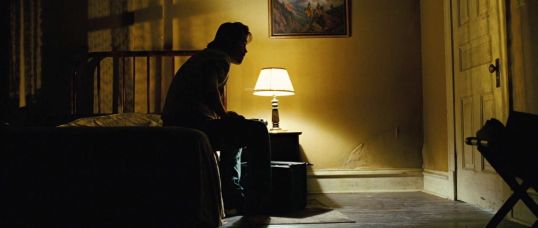
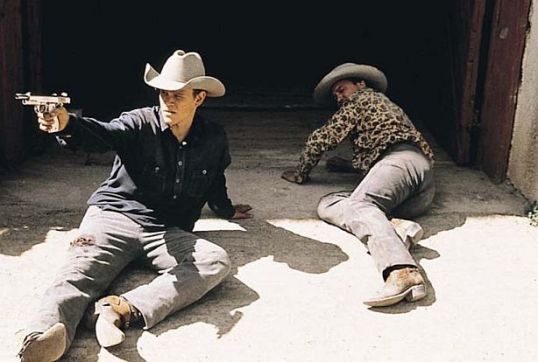
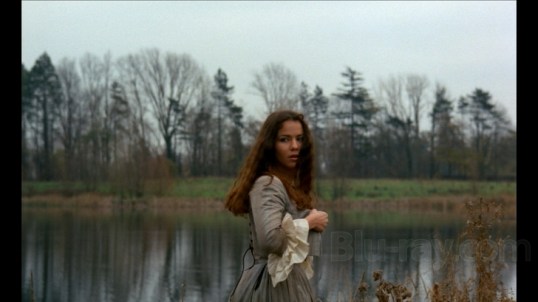
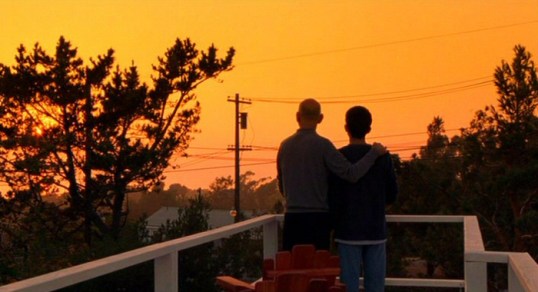
All The Pretty Horses (2000, dir by Billy Bob Thornton, DP: Barry Markowitz)
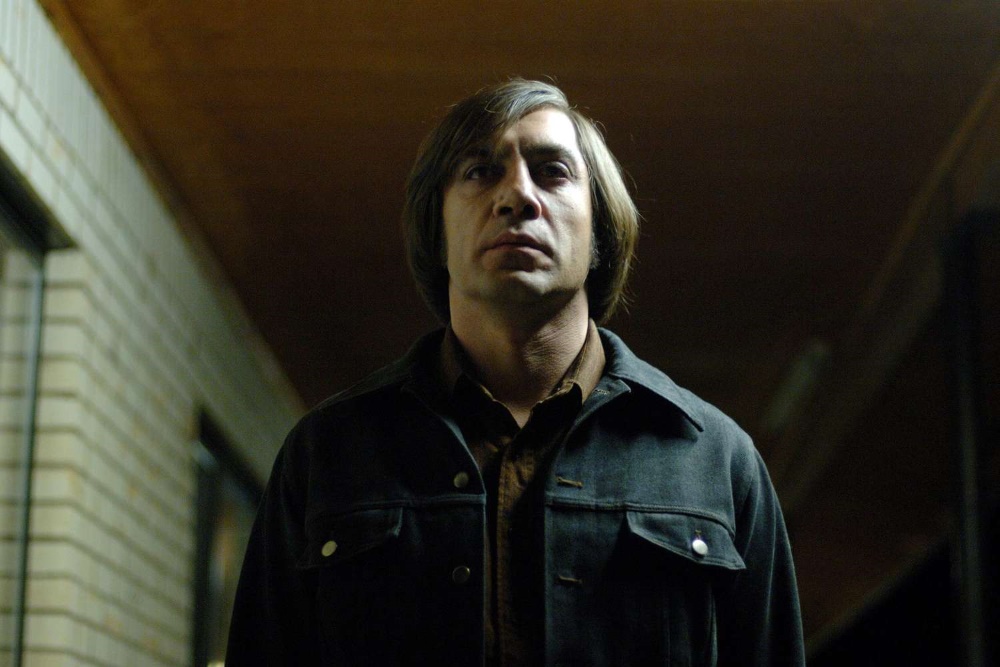
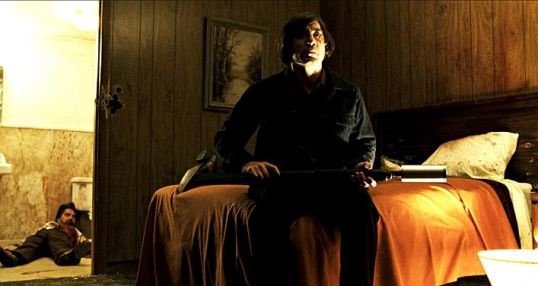
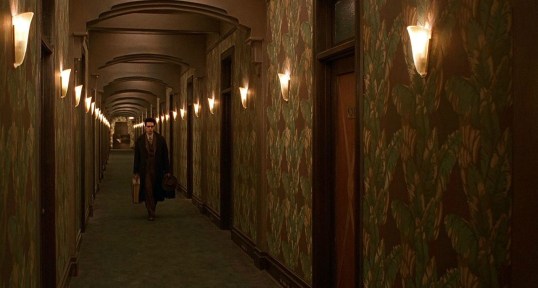
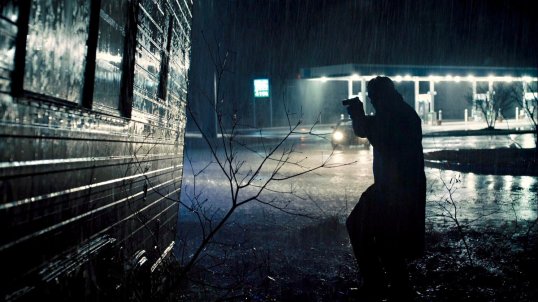
No Country For Old Men (2007, dir by Joel and Ethan Coen, DP: Roger Deakins)
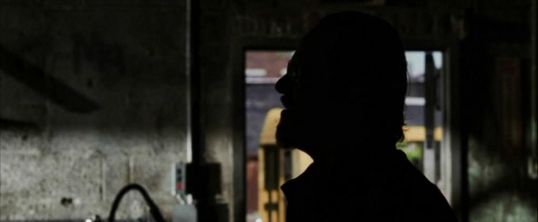
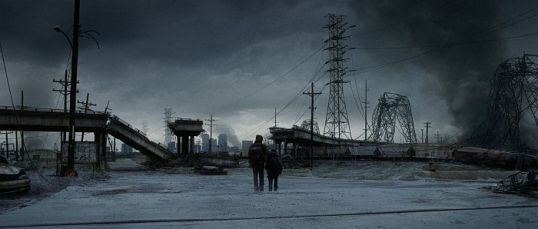
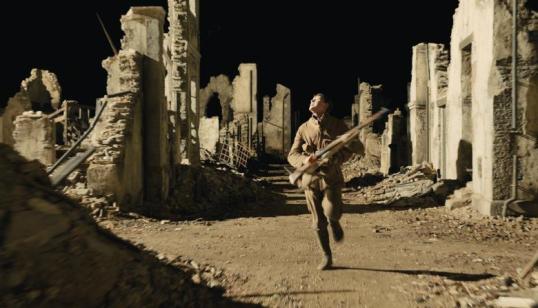
The Road (2009, dir by John Hillcoat, DP: Javier Aguirresarobe)
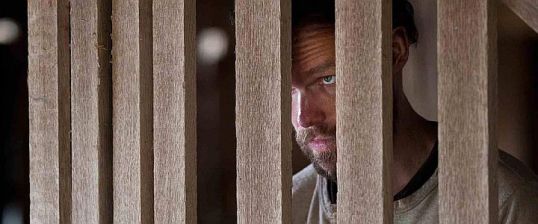
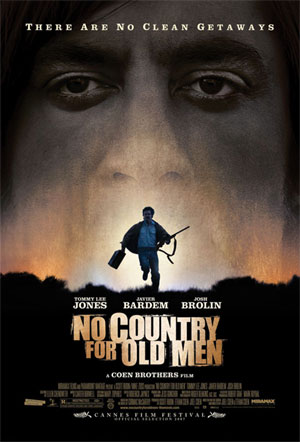
Child of God (2013, dir by James Franco, DP: Christina Varos)
What makes for a great onscreen psychopath? Is it intelligence, unpredictability, complete emotional detachment, or the ability to make audiences uncomfortable without saying very much at all? Few characters embody all of those qualities more effectively than Anton Chigurh in No Country for Old Men. From the moment he appears, there is something unnervingly controlled about him. He rarely raises his voice, almost never shows panic, and carries himself with a cold certainty that makes every interaction tense. What makes Chigurh so mesmerizing is that the film refuses to explain him away with easy psychological answers. He is not presented as a tragic antihero or a charismatic mastermind with grand speeches. Instead, he exists less as a person and more as an unfolding force of inevitability—something closer to a natural disaster than a traditional villain.
Chigurh also carries a clear literary lineage as another Cormac McCarthy creation, and he shares unsettling DNA with Judge Holden from Blood Meridian. Like Holden, Chigurh feels less like a human being and more like a presence that has stepped outside normal moral reality. Both characters operate as if they are not bound by human frameworks of empathy, guilt, or justification. In that sense, they resemble forces of nature rather than characters with inner conflict. Just as Judge Holden moves through the world with an almost mythic authority over violence and meaning, Chigurh moves with the same sense of inevitability—quiet, methodical, and indifferent to the emotional weight of his actions.
This is where the question of morality around Chigurh becomes deliberately unstable. Is he evil, or is he something beyond the concept of evil entirely? Like Judge Holden, he resists moral categorization because he does not appear to participate in the same value system as the people around him. Evil implies choice, intention, even some recognition of wrongdoing, but Chigurh operates as though he is merely enacting a set of principles that already exist independent of him. His coin toss philosophy, for instance, suggests not cruelty but submission to randomness or fate. The horror comes from the fact that human beings experience this as evil, while Chigurh seems to experience it as something closer to logic.
A major reason Chigurh leaves such a strong impression is Javier Bardem’s performance. Bardem strips the character down to the bare essentials, creating someone who feels emotionally alien without becoming cartoonish. His speech patterns are calm and deliberate, often forcing other characters into uncomfortable silence. Even simple conversations become threatening because Chigurh treats life-and-death decisions with the same tone someone else might use to discuss the weather. The famous coin toss scene perfectly captures this quality. Chigurh frames chance as something almost sacred, shifting responsibility away from himself while still remaining the instrument through which fate is delivered. That combination of politeness, inevitability, and menace makes him unforgettable.
The film also makes Chigurh especially unsettling by positioning him in contrast to Sheriff Bell’s worldview in No Country for Old Men. Bell represents an older moral framework where violence, while still real, at least had recognizable motives and boundaries. Chigurh breaks that expectation entirely. He is not driven by greed or revenge, and he does not appear to be psychologically damaged in a way that explains his actions. Instead, he behaves as though he is simply carrying out the consequences of a system that no one else fully understands. That gap between human expectation and Chigurh’s apparent indifference is where his terror truly lies.
Ultimately, Anton Chigurh endures as a villain because he refuses containment within normal storytelling or moral logic. Like Judge Holden, he reads less like a character and more like an embodiment of something larger—chaos given structure, or inevitability given form. No Country for Old Men never fully explains or defeats him because doing so would shrink him into something understandable. Instead, he remains ambiguous, almost elemental. Whether he is evil or something beyond evil is never resolved, and that uncertainty is precisely what makes him so disturbing. He becomes a figure of inevitability itself, a reminder that what humanity calls “evil” may sometimes feel indistinguishable from the indifferent mechanics of the world.
8 Shots From 8 Films is just what it says it is, 4 shots from 4 of our favorite films. As opposed to the reviews and recaps that we usually post, 8 Shots From 8 Films lets the visuals do the talking!
My list of my favorite Best Picture winners is a fluid one. There are a few — like All About Eve, It Happened One Night, the two Godfathers — that are always on the list. I love these four films with all my heart. Then there are films like No Country For Old Men that I think about and say, “Of course that’s going on the list!” There are other films that have snuck up on me. Until I was making out this list, I didn’t realize how much I truly did like Coda.
Anyway, here’s my top 8!
8 Shots From 8 Oscar-Winning Films
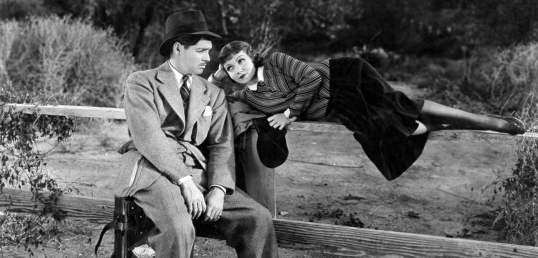
It Happened One Night (1934, dir by Frank Capra, DP: Joseph Walker)
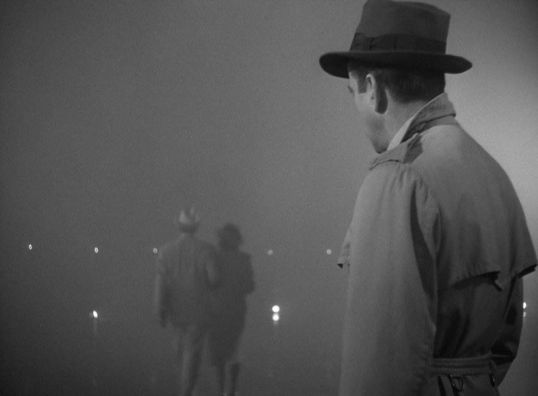
Casablanca (1942, dir by Michael Curtiz, DP: Arthur Edeson)
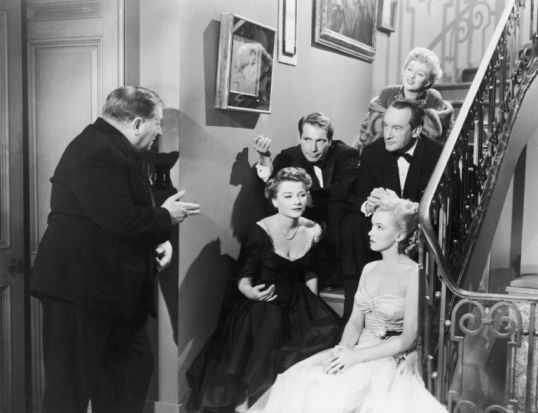
All About Eve (1950, dir by Joseph L. Mankiewicz, DP: Milton R. Krassner)
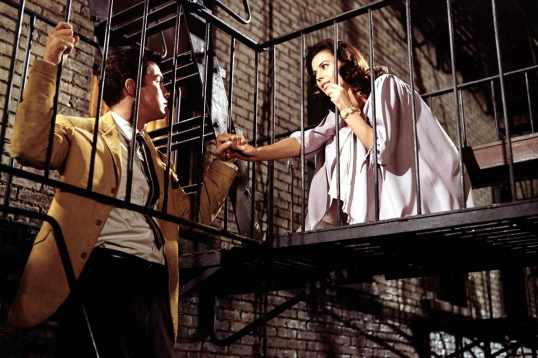
West Side Story (1961, dir by Robert Wise and Jerome Robbins, DP: Daniel L. Fapp)
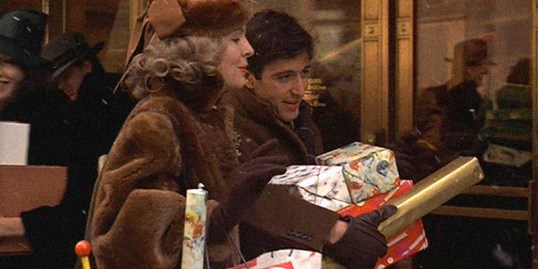
The Godfather (1972, dir by Francis Ford Coppola, DP: Gordon Willis)
The Godfather Part II (dir by Francis Ford Coppola, DP: Gordon Willis)
No Country For Old Men (2007, dir by Joel and Ethan Coen, DP: Roger Deakins)
CODA (2021, dir by Sian Heder, DP: Paula Huidobro)
4 Shots From 4 Films is just what it says it is, 4 shots from 4 of our favorite films. As opposed to the reviews and recaps that we usually post, 4 Shots From 4 Films lets the visuals do the talking!
Today is the birthday of our greatest living cinematographer, Roger Deakins! It’s time for….
4 Shots From 4 Roger Deakins Films
Nineteen Eighty-Four (1984, dir by Michael Radford, cinematography by Roger Deakins)
Fargo (1996, dir by the Coen Brothers, cinematography by Roger Deakins)
No Country For Old Men (2007, dir by the Coen Brothers, cinematography by Roger Deakins)
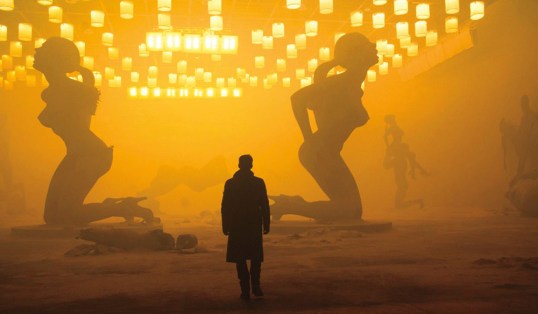
Blade Runner 2049 (2017, dir by Denis Villeneuve, cinematography by Roger Deakins)
4 Shots From 4 Films is just what it says it is, 4 shots from 4 of our favorite films. As opposed to the reviews and recaps that we usually post, 4 Shots From 4 Films lets the visuals do the talking!
Today, I’m using this feature to take a look at the history of the Academy Award for Best Picture. Decade by decade, I’m going to highlight my picks for best of the winning films. To start with, here are 4 shots from 4 Films that won Best Picture during the 2000s! Here are….
4 Shots From 4 Best Picture Winners: The 2000s
Chicago (2002, dir by Rob Marshall, DP: Dion Beebe)
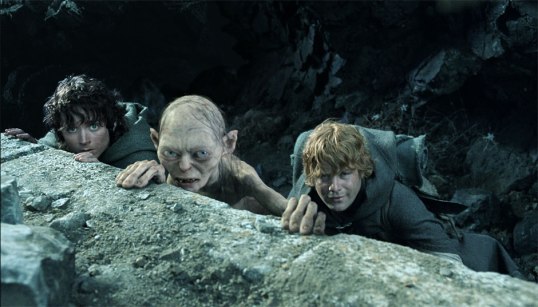
The Lord of the Rings: The Return of the King (2003, dir by Peter Jackson, DP: Andrew Lesnie)
The Departed (2006, dir by Martin Scorsese, DP: Michael Ballhaus)
No Country For Old Men (2007, dir by Joel and Ethan Coen, DP: Roger Deakins)
4 Or More Shots From 4 Or More Films is just what it says it is, 4 shots from 4 of our favorite films. As opposed to the reviews and recaps that we usually post, 4 Shots From 4 Films lets the visuals do the talking!
Today, we say goodbye to the man who was the great American novelist of his time. The shots below are all taken from films based on the work of Cormac McCarthy.
4 Shots From 4 Films
All The Pretty Horses (2000, dir by Billy Bob Thornton, DP: Barry Markowitz)
No Country For Old Men (2007, dir by Joel and Ethan Coen, DP: Roger Deakins)
The Road (2009, dir by John Hillcoat, DP: Javier Aguirresarobe)
Child of God (2013, dir by James Franco, DP: Christina Varos)
4 Shots From 4 Films is just what it says it is, 4 shots from 4 of our favorite films. As opposed to the reviews and recaps that we usually post, 4 Shots From 4 Films lets the visuals do the talking!
Usually, we only do 4 shots from 4 films but today is the birthday of our greatest living cinematographer, Roger Deakins! And it’s impossible to only pick 4 when it comes to Deakins.
So, it’s time for….
14 Shots From 14 Films
Marquis De Sade’s Justine (1977, dir by Chris Boger, cinematography by Roger Deakins)
Nineteen Eighty-Four (1984, dir by Michael Radford, cinematography by Roger Deakins)
Barton Fink (1991, dir by the Coen Brothers, cinematography by Roger Deakins)
Fargo (1996, dir by the Coen Brothers, cinematography by Roger Deakins)
Kundun (1997, dir by Martin Scorsese, cinematography by Roger Deakins)
House of Sand and Fog (2003, dir by Vadim Perelman, cinematography by Roger Deakins)
No Country For Old Men (2007, dir by the Coen Brothers, cinematography by Roger Deakins)
A Serious Man (2009, dir by the Coen Brothers, cinematography by Roger Deakins)
Skyfall (2012, dir by Sam Mendes, cinematography by Roger Deakins)
Prisoners (2013, dir by Denis Villeneuve, cinematography by Roger Deakins)
Sicario (2015, dir by Denis Villeneuve, cinematography by Roger Deakins)
Hail Caesar! (2016, dir by the Coen Brothers, cinematography by Roger Deakins)
Blade Runner 2049 (2017, dir by Denis Villeneuve, cinematography by Roger Deakins)
1917 (2019, dir by Sam Mendes. cinematography by Roger Deakins)
I love my home state of Texas and I love movies. Therefore, it has always upset me that most movies set in Texas get the state totally wrong. That’s not exactly shocking. Unlike the rest of the states, there’s actually a lot of variety to Texas. We’re a big state and we’re home to a lot of people. Unlike some place like Vermont, Texas is a world all its own and it’s not surprising that most outsiders are incapable of getting their mind around that and instead find themselves embracing simple-minded clichés and stereotypes. That’s perhaps why the best films about Texas tend to be ones that were actually made by Texans. If you want to see the real Texas — flaws and all — than I suggest watching the films of Richard Linklater or perhaps Wes Anderson’s Rushmore.
And yet, it took two outsiders to write, produce, and direct one of the best films ever made about Texas. The 2007 best picture winner No Country For Old Men was largely the work of two brothers from Minnesota, Joel and Ethan Coen. It’s not only one of the best films about my home state but it’s also one of the best films of the past decade.
Based on a novel by Cormac McCarthy, No Country For Old Men tells the story of three determined men in South Texas whose lives are interconnected despite the fact that three of them spend almost the entire movie one step behind each other. In fact, despite a few brief encounters where their paths meet, it can be argued that, at no point, do any of them truly interact with each other face-to-face.
Llewelyn Moss (Josh Brolin) is the type of person that anyone who has ever lived in Texas will have met. He’s a hard-working, plain-spoken man, the type who drives a pickup, owns a gun, and likes to begin and end the day with a beer. He lives in a trailer with his wife, Carla Jean (Kelly MacDonald, who may be Scottish but speaks here with an almost flawless Texas accent). Llewelyn’s not a bad guy but he’s not as smart as he thinks and, like a lot of folks down here, he doesn’t like the idea of being told what to do. In fact, he’d almost rather die for his trouble than admit to making a mistake. When Llewleyn comes across the aftermath of a drug deal turned violent, he takes off with a suitcase that contains $2,000,000. After barely escaping the remaining drug dealers (and the scene where Llewelyn is chased by a pit bull is a classic), Llewelyn sends Carla Jeans to stay with her sick mother and then he grabs the suitcase and heads over to the next county. It quickly becomes apparent, to the viewers at least, that Llewelyn has absolutely no idea how to get out of the mess that he’s found himself in.
And it’s quite a mess because Anton Chigurh (Javier Bardem) has been hired to track down the money. Perhaps one of the greatest movie villains of all time, Chigurh is an almost unstoppable force of death and destruction. Chigurh pursues Llewelyn across Texas, killing almost everyone who he meets along the way. Interestingly enough, just as Llewelyn continually makes excuses for his own greed, Chigurh also makes excuses for his murderous activities, seeming to obsess over the role of fate and chance. Whereas Llewelyn refuses to give up the suitcase, even though it means that he’s putting his own wife in danger, because he insists that he can figure out a way to keep the money, Chigurh occasionally dodges responsibility for his own actions by flipping a coin and putting the blame on fate.
And finally, there’s Sheriff Ed Tom Bell (Tommy Lee Jones), who is both the most decent and the most ineffectual male character to be found in the film. He’s an old-fashioned lawman, the type who, had this film been made in the 50s or the 60s, would have been played by Gary Cooper and would have both vanquished Chigurh and given Llewelyn and Carla Jean marriage advice as well. In the world of No Country For Old Men, however, Ed is almost always one step behind both Chigurh and Llewelyn. Instead of saving the day, Ed spends most of the movie shocked and saddened by the violence around him. As the film draws to its conclusion, he’s left to wonder whether any one man can make a difference. He’s left to literally wonder whether his area of South Texas has truly become no country for old men.
I recently rewatched No Country For Old Men on TCM and I was surprised to discover just how well this film holds up, even after repeat viewings. If anything, the film actually improves on repeat viewings. Once you know how the story is going to end (and, in a fashion typical of both the Coens and Cormac McCarthy, No Country For Old Men does not have a traditional ending), it’s easier to see all of the things that you may have been too overwhelmed to appreciate the first time, like Kelley McDonald’s performance as Carla Jean and Stephen Root’s cameo as Chigurh’s shady employer.
However, for me, the main reason that I appreciate No Country For Old Men is because it is one of the few films that actually manages to get South Texas right. My mom was born and grew up in South Texas, in the town of Benavides to be exact. I’ve spent a lot of time down there. The portrait that No Country For Old Man paints of South Texas is not always flattering but it is largely accurate. No County For Old Men captures both the region’s terrifying violence and its natural beauty. It’s honest about the fact that there are men like Anton Chigurh but, at the same time, you occasionally meet an Ed Tom Bell as well. And, of course, there’s a Llewelyn Moss in every town. He’s the one who you meet and you hope — often against your better instincts — that he won’t get in over his head.
The Academy named No Country For Old Men the best film of 2007. For once, the Academy was right.