Review: Wind River (dir. by Taylor Sheridan)


“Luck don’t live out here.” — Cory Lambert

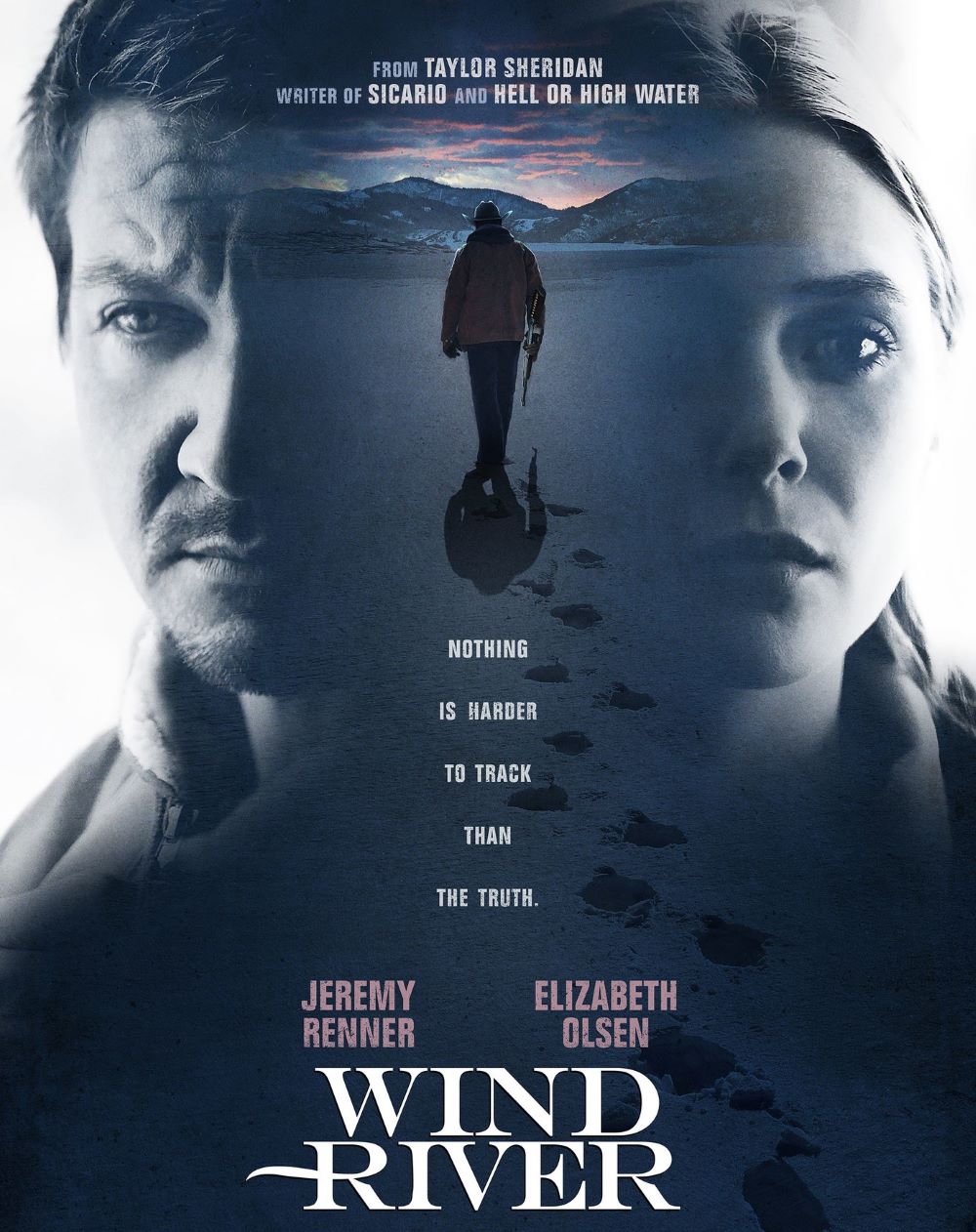
Wind River is a gripping crime thriller set against the stark, frozen backdrop of Wyoming’s Wind River Indian Reservation, where U.S. Fish and Wildlife tracker Cory Lambert teams up with rookie FBI agent Jane Banner to investigate the brutal death of a young Native American woman named Natalie Hanson. Wind River marks the third film in Taylor Sheridan’s American Frontier trilogy that he wrote—following Sicario and Hell or High Water—and it’s the first where Sheridan steps into the director’s chair himself, bringing his sharp eye for gritty realism to the helm. Clocking in at just under two hours, it delivers a mostly positive experience through strong performances, atmospheric visuals, and a script that builds suspense without unnecessary flash, though it occasionally leans on familiar tropes.

Right from the opening moments, Wind River immerses you in a world of isolation and harsh beauty. Snow-covered plains stretch endlessly under a pale sky, and the crunch of boots on ice sets an immediate tone of vulnerability. Cory, played with quiet intensity by Jeremy Renner, discovers Natalie’s frozen body while tracking a mountain lion that’s been preying on livestock. She’s barefoot, half-naked, and miles from any help—details that hit hard and underscore the film’s core mystery: what happened to her, and why does it feel like no one cares? Renner nails the role of a man haunted by his own past loss—his teenage daughter died under mysterious circumstances a few years back—making Cory a grounded everyman rather than a superheroic cowboy. His subtle grief adds layers to every scene, turning routine investigation beats into something personal and raw.

Enter Elizabeth Olsen as Jane Banner, the FBI agent flown in from Vegas who’s clearly out of her depth in sub-zero temperatures and jurisdictional limbo. Olsen brings a mix of determination and wide-eyed realism to the part, avoiding the cliché of the big-city hotshot who learns frontier wisdom overnight. She’s tough but human—hypothermic after a chase, throwing up from the cold, yet pushing through because Natalie deserves justice. The dynamic between Cory and Jane is one of the film’s highlights: no forced romance, just mutual respect born from necessity. Sheridan smartly lets their partnership evolve organically, with Cory’s local knowledge filling Jane’s gaps in protocol and reservation politics. It’s refreshing to see two leads click without sparks flying, focusing instead on shared purpose amid tragedy.

The script shines in its efficient storytelling. Sheridan wastes no time on exposition dumps; instead, he weaves backstory through quiet conversations and flashbacks that pack emotional punch. We learn about the epidemic of missing Indigenous women—thousands vanish yearly, often ignored by media and law enforcement—via stark statistics flashed on screen and through the eyes of Natalie’s family. Gil Birmingham delivers a heartbreaking performance as her father, Martin, a stoic oil rig worker whose rage simmers beneath a veneer of resignation. His scenes with Cory, especially a late-night talk by a bonfire, cut deep, exploring themes of fatherly failure and systemic neglect without preaching. Birmingham’s restrained power elevates what could have been a stock grieving parent into a standout supporting role.

Visually, Wind River is a stunner, thanks to cinematographer Ben Richardson. Those vast, snowy expanses aren’t just pretty—they mirror the characters’ emotional desolation and amplify the stakes. An early tracking sequence, with Cory following Natalie’s footprints in the snow, builds dread masterfully, the silence broken only by wind and labored breaths. The film shifts tones seamlessly: slow-burn investigation gives way to visceral action in the third act, including a raid on an oil site trailer that’s tense, realistic, and over in a flash—no prolonged shootouts or slow-mo heroics. Sound design plays a big role too; the howling wind and muffled gunshots make every moment feel immediate and unforgiving.

Sheridan’s direction keeps things taut without rushing the build-up. This is a slow-burner that earns its pace, letting tension simmer through everyday details like jurisdictional squabbles with underfunded tribal police or Cory teaching Jane to dress for the cold. Nick Cave and Warren Ellis’s score is another winner—sparse, haunting electronics that evoke loneliness rather than bombast. It underscores key scenes without overpowering them, much like the film itself avoids Hollywood excess.

That said, Wind River has its stumbles. Pacing dips in the middle, with some dialogue-heavy stretches that spell out themes a tad too explicitly—like chats about reservation poverty or ignored crimes. It can feel heavy-handed, pulling you out of the immersion. A few characters, like the bumbling FBI contingent or security guards, border on caricature, though the leads stay nuanced. The violence, while sparse and purposeful, includes a harrowing assault scene that’s tough to watch; it’s crucial to the story but might overwhelm sensitive viewers. And while the film tackles real issues facing Native communities, some critics note it centers white protagonists in a Native story, though Sheridan consulted tribal members and cast authentically.

Still, these are minor gripes in a film that largely succeeds on its own terms, especially as the capstone to Sheridan’s trilogy exploring America’s frayed edges. The ending delivers catharsis without easy answers, leaving you with a chill that lingers. Cory gets a measure of redemption, Jane gains hard-won insight, and the reservation’s harsh realities feel unflinchingly real. It’s the kind of movie that sticks because it respects your intelligence—connecting dots about corruption, indifference, and human cost without hand-holding.

What elevates Wind River above standard thrillers is its humanity. Every character, even antagonists, feels fleshed out rather than villainous stock. The oil workers aren’t cartoon evil; they’re desperate men making brutal choices in a forgotten corner of America. Sheridan, drawing from his own ranching background, captures blue-collar grit authentically—no glamour, just survival. Renner’s Cory hunts for a living, bottles his pain, and bonds with his ex-wife’s new family in tender asides that ground the procedural. Olsen’s Jane evolves from outsider to advocate, her arc subtle but satisfying.

The film’s relevance hasn’t faded since its 2017 release. With ongoing conversations around Missing and Murdered Indigenous Women (MMIW), it spotlights a crisis stats show claims over 5,000 cases annually, many unsolved due to jurisdictional messes. Wind River doesn’t solve it but demands attention, blending genre thrills with advocacy seamlessly.

In a crowded field of crime dramas, Wind River stands out for its chill factor, both literal and figurative. It’s not reinventing the wheel, but Sheridan proves he’s a triple threat: writer, director, voice for the voiceless. Renner and Olsen lead a tight ensemble, and the Wyoming wilderness becomes a character itself. If you dig thoughtful thrillers like Hell or High Water or Sicario, this one’s essential. It’s mostly positive vibes from me—intense, moving, and worth cranking up the thermostat for.

Sheridan’s ear for dialogue keeps things natural—terse exchanges crackle with subtext, like Cory’s line to Martin about enduring loss as a father that hits like a gut punch with simple words carrying profound weight. The film trusts silence too; long shots of characters staring into the void say more than monologues ever could, while technically it’s polished with editing that snaps during action and breathes during reflection. Even smaller roles shine—Kelsey Asbille as Natalie brings fire in limited screen time, and James Jordan plays an irredeemable private security contractor so well. Balanced against its preachiness, Wind River earns its emotional heft, dragging occasionally sure, but the payoff of an explosive finale and quiet closure makes it worthwhile, with power in inevitability and quiet fury as Sheridan avoids exploitative rape-revenge clichés to focus on aftermath and accountability.

Wind River delivers assured direction in Sheridan’s feature debut, memorable performances, and a compelling story that resonates. It refreshes the thriller genre with its blend of tension and substance.

Charles Bronson in DEATH HUNT (1981) – Keep warm my friends!


If you’re in Texas or Arkansas today, I hope you’re keeping as bundled up as Charles Bronson in DEATH HUNT. It’s cold out there people! Keep safe and stay home if at all possible! We don’t know how to drive in this weather!

Enjoy DEATH HUNT’s trailer below! Charles Bronson and Lee Marvin are as tough as it gets!

Lisa Marie’s Way Too Early Oscar Predictions For March


Now that the 2022 Oscars are over with, it’s time to move on to the 2023 Oscars!

Needless to say, there’s probably nothing more pointless than trying to guess which films are going to be nominated a year from now.  I can’t even guarantee that all of the films listed below are even going to be released this year.  And, even if they are released this year, I can’t guarantee that they’ll actually be any good or that the Academy will show any interest in them.  I mean, Martin Scorsese always seems like a safe bet but we all remember what happened with Silence.  For months, everyone said Silence would be the Oscar front runner.  Then it was released to respectful but not ecstatic reviews.  Audiences stayed away.  The film ended up with one technical nomination.

My point is that no one knows anything.  As much as I hate quoting William Goldman (because, seriously, quoting Goldman on a film site is such a cliché at this point), Goldman was right.

So, you may be asking, how did I come up with the nominees below?  For the most part, I guessed.  A few of them I went with because of the people who made the film.  Though shooting has wrapped, Ferrari might not even be released this year but it’s a Michael Mann film that stars Adam Driver so, for now, I have to include it.  Of course, I had to include Scorsese and Killers of the Flower Moon.  Asteroid City is there because the Academy embraced Wes Anderson once and it could always happen again.  Fair Play and Magazine Dreams‘s Jonathan Majors are listed because the Sundance Film Festival is still a recent memory.  Maestro is there because the Academy seems like to Bradley Cooper.  Dune Part Two and Oppenheimer are there because Film Twitter is convinced that they will be.

In other words, there’s no real science to these predictions.  It’s too early in the year to do anything but guess.  And for now, these are my guesses.  A year from now, they’ll be good for either bragging rights or a laugh.  Hopefully, they’ll be good for both.

Best Picture

Asteroid City

The Color Purple

Dune Part Two

Fair Play

Ferrari

The Holdovers

Killers of the Flower Moon

Maestro

Oppenheimer

Rustin

Best Director

Chloe Domont for Fair Play

Christopher Nolan for Oppenheimer

Alexander Payne for The Holdovers

Martin Scorsese for Killers of the Flower Moon

Denis Villeneuve for Dune Part Two

Best Actor

Bradley Cooper in Maestro

Colman Domingo in Rustin

Paul Giamatti in The Holdovers

Jonathan Majors in Magazine Dreams

Cillian Murphy in Oppenheimer

Best Actress

Emily Blunt in Pain Hustlers

Carey Mulligan in Maestro

Da’Vine Joy Randolph in The Holdovers

Julia Roberts in Leave the World Behind

Teyana Taylor in A Thousand and One

Best Supporting Actor

Mahershala Ali in Leave The World Behind

Willem DaFoe in Poor Things

Matt Damon in Oppenheimer

Ethan Hawke in Strange Way Of Life

Jesse Plemons in Killers of the Flower Moon

Best Supporting Actress

Emily Blunt in Oppenheimer

Tantoo Cardinal in Killers of the Flower Moon

Taraji P. Henson in The Color Purple

Florence Pugh in Oppenheimer

Tilda Swinton in Asteroid City

Lisa Marie’s Way Too Early Oscar Predictions For February


Is it too early to start talking about next year’s Oscar race?

Of course, it is!  But I’m going to do it anyway.

Below, you’ll find the installment of my monthly list of Oscar predictions, not for what will win at the end of March but instead for what we’ll see nominated next year.  Obviously, there’s a lot that we don’t know about what’s going to happen later this year.  Only a few of the movies listed below have firmly set release dates.  Needless to say, I haven’t seen any of the films below and, as a result, I’m largely going on instinct.  Who knows if the films will be as good as their plot descriptions?  As much as I hate the overused quote from William Goldman, right now, no one knows anything.  Indeed, it’s not really until Festival Season hits that we really start to get even a vaguely clear picture of the Oscar race and we’ve got a long way to go until Cannes.

(And really, it’s debatable how much of a factor Cannes really is.  If the Oscar nominations were determined by Cannes, Red Rocket and The French Dispatch would be battling it out for best picture right now.)

The predictions below are, for the most part, just random guesses.  Most of them involve people who have won Oscars in the past.  The Fabelmans is there because it’s a Spielberg film, just as Killers of the Flower Moon makes the list because it’s directed by Martin Scorsese and it stars Leonard DiCaprio and Robert De Niro.  And, of course, a lot of the predictions are just the result of wishful thinking on my part.  I think it would be kind of fun if David Lynch got an acting nomination for his role in The Fabelmans, whatever that role may be.  I also think it would be nice if Brendan Fraser got a nomination to go along with his recent comeback.  I don’t know much about The Whale, beyond the fact that Fraser plays a 600-pound man trying to reconnect with his daughter.  For now, that’s enough.

So, without further ado, here are my way too early Oscar predictions!  As always, take them with a grain of salt.

Best Picture

Babylon

The Fabelmans

The Holdovers

Killers of the Flower Moon

Kitbag

Maestro

She Said

TAR

White Noise

The Woman King

Best Director

Damien Chazelle for Babylon

Gina Prince-Bythewood for The Woman King

Martin Scorsese for Killers of the Flower Moon

Ridley Scott for Kitbag

Steven Spielberg for The Fabelmans

Best Actor

Bradley Cooper in Maestro

Brendan Fraser in The Whale

Paul Giamatti in The Holdovers

Ryan Gosling in The Actor

Brad Pitt in Babylon

Best Actress

Naomi Ackie in I Wanna Dance With Somebody

Ana de Armas in Blonde

Viola Davis in The Woman King

Cate Blanchett in TAR

Carey Mulligan in Maestro

Best Supporting Actor

Bobby Cannavale in Blonde

Robert De Niro in Killer of the Flower Moon

John Boyega in The Woman King

Tom Hanks in Elvis

David Lynch in The Fabelmans

Best Supporting Actress

Tantoo Cardinal in Killers of the Flower Moon

Laura Dern in The Son

Li Jun Li in Babylon

Da’Vine Joy Randolph in The Holdovers

Michelle Williams in The Fabelmans

Horror Review: Hold the Dark (dir. by Jeremy Saulnier)


Hold the Dark

“The dead don’t haunt the living. The living haunt themselves.” — Russell Core

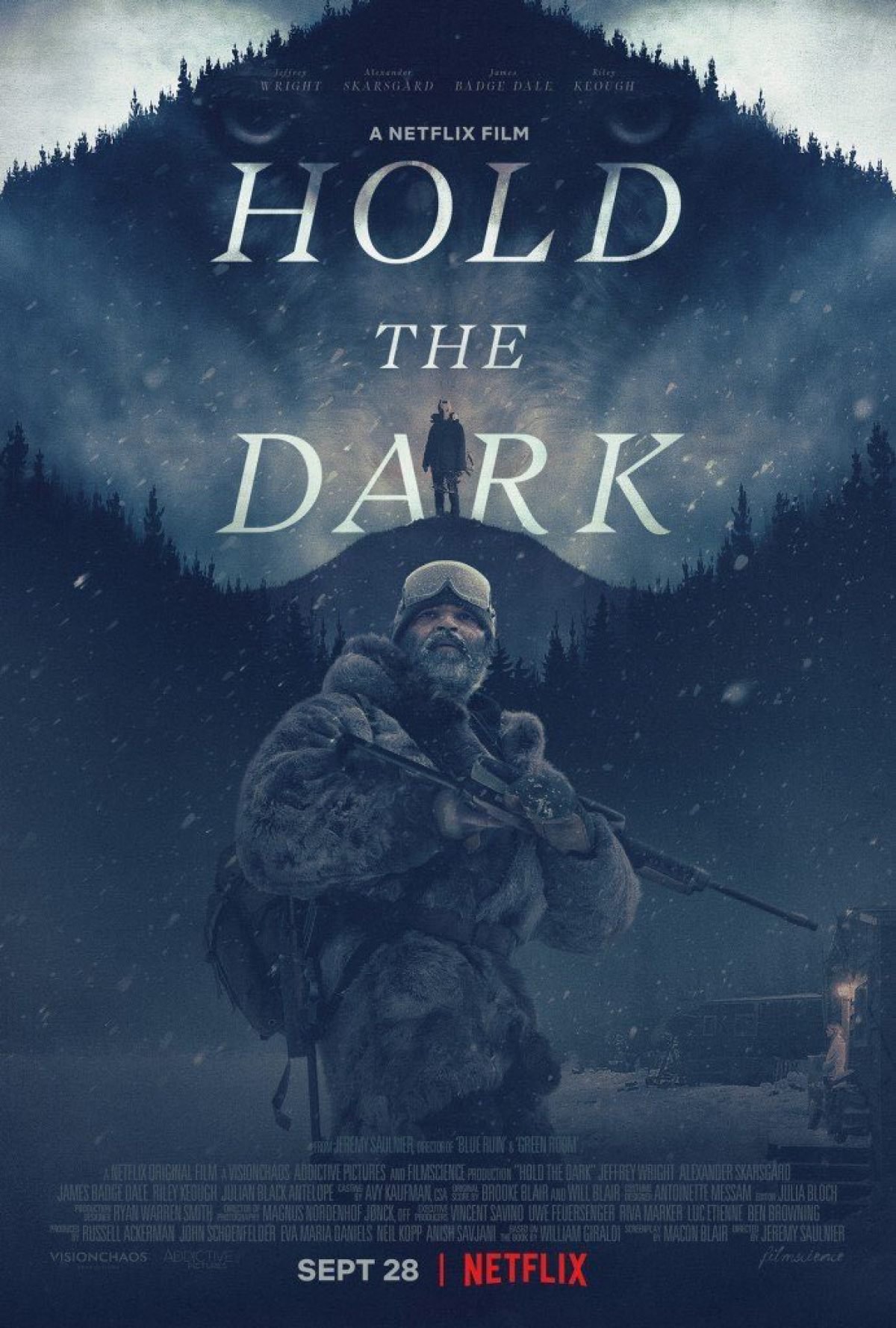
Jeremy Saulnier, writer-director of Blue Ruin and Green Room, invites the brave and the curious into his latest creation, steeped in the dark, foreboding Alaskan wilderness and tinged with supernatural folklore.

No one could accuse Saulnier of timidity when it comes to on-screen violence. While many filmmakers stage more elaborate or explosive sequences, Saulnier aligns more with Sam Peckinpah than Michael Bay. His films present violence at its most unglamorous. The brutality he depicts is neither titillating nor exploitative; instead, it’s stark, sudden, and deeply unsettling.

Saulnier views humanity’s capacity for violence as primal—an inherent trait held in check only by the thin veneer of civilization. In his films, man is not truly civilized, but rather a creature pretending to be, always closer to savagery than he’d like to admit. Whether it’s a drifter caught in a blood feud or a punk band fighting for survival against backwoods neo-Nazis, his characters are pushed to rediscover that inner, violent core—even as they try to cling to the fragile rules of civilized behavior.

With Hold the Dark, Saulnier veers away from the straightforward narratives of his previous films and ventures into something more ambiguous—closer to a haunting campfire tale than a conventional thriller. Its deliberately opaque storytelling may frustrate viewers who prefer clear protagonists, antagonists, and linear progression. Yet, like his earlier work, the film continues his fascination with moral ambiguity and the blurred line between good and evil.

The story begins with retired naturalist Russell Core (Jeffrey Wright), who is summoned by Medora Slone, a grieving mother living in the remote Alaskan village of Keelut. She believes wolves have taken her young son, along with two other children before him. Knowing Core’s experience as a wolf expert and hunter, she asks him to track and kill the animals responsible—both for justice and to provide closure for her husband, who is deployed in Iraq.

From the moment Core arrives in Keelut, the film slowly shifts from a man-versus-nature premise into something far more mythic and unsettling—a dark fairytale with no promise of a happy ending. This tonal shift will either draw viewers in, asking them to surrender to its grim, disorienting atmosphere, or leave them detached and confused, searching for concrete answers the film refuses to provide.

Like Saulnier’s previous films, Hold the Dark does not shy away from brutality. Violence erupts suddenly and with horrifying efficiency, emphasizing how fragile the human body—and psyche—really is.

The screenplay, written by frequent collaborator Macon Blair, raises compelling questions: Is violence an inherent darkness within humanity, merely suppressed by the “light” of civilization? Or is it something learned, passed down like a contagion through generations? Is it an inescapable cycle, or something that can be broken? These are questions without easy answers, and the film’s ambiguity—while potentially frustrating—is also what gives it lingering power. It invites viewers to sit with these ideas rather than resolve them.

Where the narrative may divide audiences, the performances are consistently strong. Jeffrey Wright anchors the film as Russell Core, serving as both participant and observer—mirroring the audience’s own confusion and unease. Riley Keough and Alexander Skarsgård, as Medora and Vernon Slone, add further layers of tension. Keough’s eerie stillness contrasts sharply with Skarsgård’s explosive response to his son’s death—a turn that propels the film from mystery into outright horror, complete with imagery that borders on slasher territory.

Hold the Dark may not be a direct evolution of Blue Ruin or Green Room, but it carries forward Saulnier’s thematic obsessions. It allows him to explore more esoteric territory while maintaining his signature style—raw, unflinching, and deeply primal. There’s nothing comforting or hopeful in this dark fairytale, but then again, fairytales were never meant to be. They exist to confront the darkness, to give it shape, and, perhaps, to help us endure it.

A Movie A Day #208: War Party (1988, directed by Franc Roddam)


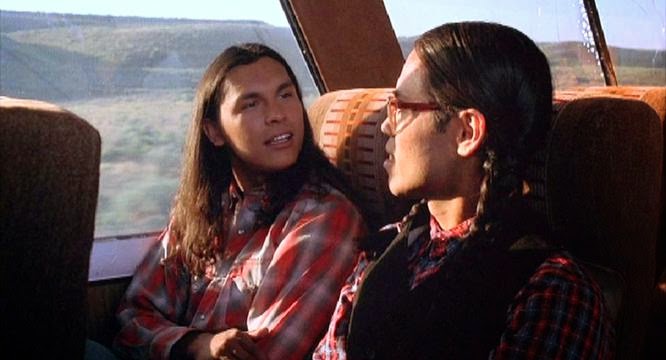
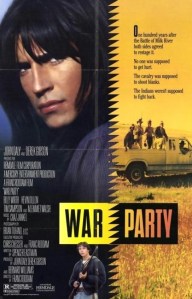
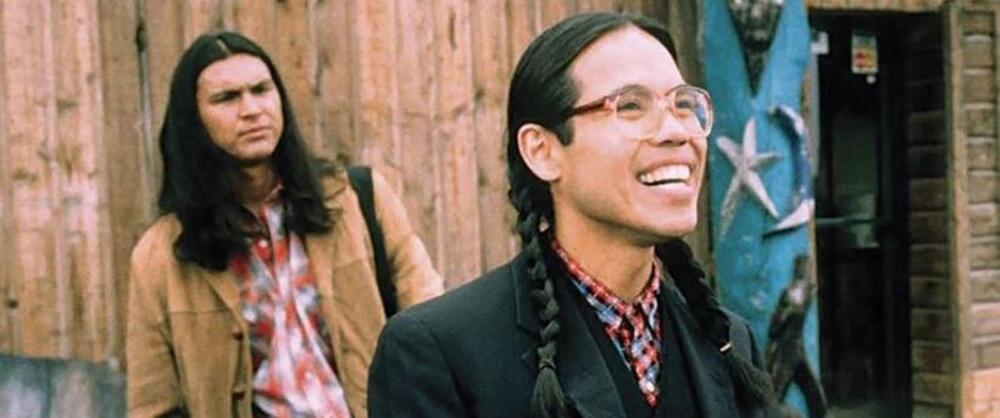
On the hundredth year anniversary of a battle between the U.S. Calvary and the Blackfeet Indians, the residents of small Montana town decide to reenact the battle and hopefully bring in some tourist dollars.  The white mayor (Bill McKinny) and the sheriff (Jerry Hardin) both think that it is a great idea.  Even the local Indian leader, Ben Cowkiller (Dennis Banks, in real-life a founder and leader of the American Indian Movement), thinks that it will be a worthwhile for the Indians to participate.  The Calvary’s guns will be full of blanks.  The Indians will play dead.  However, as the result of a bar brawl the previous night, one of the local rednecks, Calvin Morrisey (Kevyn Major Howard), shows up with a gun full of bullets.  After he shoots one of the Indians, Calvin ends up with a tomahawk buried in his head.  Three Indian teenagers, Warren (Tim Sampson), Skitty (Kevin Dillon), and Sonny (Billy Wirth), flee into the wilderness.  Thirsty for revenge, a white posse heads off in pursuit.
War Party is an underrated and surprisingly violent movie.   Franc Roddam brings the same sensitivity to his portrayal of alienated Indians that he brought to portraying alienated Mods in Quadrophenia.  Though, at first, Kevin Dillon seems miscast as an Indian, he, Wirth, and Sampson all give good performances, as does Dennis Banks.  The movie is often stolen by M. Emmett Walsh and Rodney A. Grant, playing renowned trackers who are brought in to help the posse chase down the three youths.  That Grant’s character is a member of the Crow adds a whole extra layer of meaning to his role. Even though the setup often feels contrived and heavy-handed and anyone watching should be able to easily guess how the movie is going to end, War Party still packs a punch.

Embracing the Melodrama Part II #89: Legends of the Fall (dir by Ed Zwick)


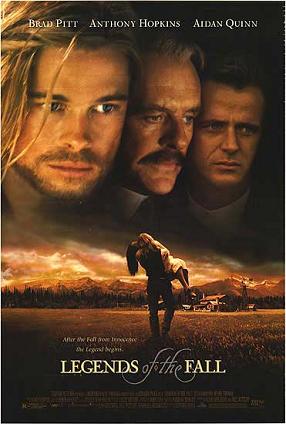
LegendsoffallposterWhen I first started to watch the 1994 film Legends of the Fall on Encore, I was a little bit concerned when I discovered that it was directed by Ed Zwick.  After all, Zwick also directed Love and Other Drugs, which is one of the worst and most insulting films of all time.  In fact, I nearly stopped watching when I saw Zwick’s name.  But, largely because I want to finish up this series of melodramatic film reviews at some point in the near future, I decided to go ahead and watch the film.

And it turned out that Legends of the Fall is not a bad film.  I probably would have enjoyed it more if I had seen it in a movie theater as opposed to on television but, considering that it was directed by Ed Zwick, Legends of the Fall is definitely watchable.  If nothing else, it’s better than Love and Other Drugs.

Legends of the Fall tells the story of the Ludlows, a family that lives on a Montana ranch at the start of the 2oth Century.  Starting with the final days of the Indian wars and proceeding through World War I and prohibition, Legends of the Fall covers a lot of historical events but does so in a very Hollywood way, which is to say that all of the main characters dress like they’re from the past but they all have very modern social attitudes.  In this case, Col. William Ludlow (Anthony Hopkins) may be a wealthy white military veteran but he’s also totally pro-Native American.  And, of course, all the local Native Americans love him, despite the fact that he’s a representative of the institutions that have destroyed their way of life.

Anyway, Col. Ludlow has three sons.  The oldest, Alfred (Aidan Quinn), is serious and responsible. The youngest, Samuel (Henry Thomas), is naive and idealistic.  And the middle child is Tristan (Brad Pitt), who is wild and rebellious and looks like Brad Pitt.  You have to wonder how the same gene pool could produce both Aidan Quinn and Brad Pitt.

As the film begins, Samuel has returned from studying at Harvard.  With him is his fiancée, Susannah (Julia Ormond, who has really pretty hair in this movie).  Though she loves Samuel, Susannah finds herself attracted to Tristan, largely because Tristan looks like Brad Pitt.  Tristan is also attracted to Susannah but he would never betray his younger brother.  In fact, when Samuel announces that he’s enlisted in the Canadian army so that he can fight in World War I, Tristan and Alfred soon do the exact same thing.

War is Hell, which is something that Samuel discovers when he’s gunned down by a bunch of German soldiers.  Tristan responds by cutting Samuel’s heart out of his body and sending it back to Montana.  He then proceeds to go a little crazy and when we next see Tristan, he’s uniform is decorated with the scalps of dead Germans.

Meanwhile, Alfred has been wounded in battle and is sent back to Montana.  Eventually, he ends up married to Susannah.  And then Tristan comes back home and…

Well, a lot of stuff happens after Tristan returns.  In fact, you could even argue that too much happens.  Zwick obviously set out to try to make Legends of the Fall into an old school Hollywood epic but far too often, it seems like he’s mostly just copying scenes from other films.  There’s a hollowness at the center of Legends of the Fall and the end result is a film that’s visually gorgeous and thematically shallow.

And yet, you should never underestimate the importance of looking good.  Legends of the Fall is a beautiful film to look at and so is Brad Pitt.  I wouldn’t necessarily say that Brad gives a particularly good performance here because, to be honest, Tristan is such an idealized character that I doubt anyone could really make him believable.  But the Brad Pitt of 1994 looked so good and had such a strong screen presence that it didn’t matter that he wasn’t as good an actor as the Brad Pitt of 2015.  Legends of The Fall is one of those movies that can get by on pure charisma and fortunately, Brad Pitt is enough of a movie star to make the film work.

Legends of the Fall is not a great film but it’s still not a bad way to waste 120 minutes.  (Of course, the film itself lasts 133 minutes but still…)