4 Shots From 4 Films: Special Harvey Keitel Edition!


4 Shots From 4 Films is just what it says it is, 4 shots from 4 of our favorite films. As opposed to the reviews and recaps that we usually post, 4 Shots From 4 Films lets the visuals do the talking!

Today is Harvey Keitel’s 86th birthday! Harvey Keitel is one of the great, fearless actors of our time (BAD LIEUTENANT, anyone). He has been working hard since 1965, and he’s still going strong today, adding up to a career that spans 60 years and counting. His work for great directors like Scorsese and Tarantino has been vital to the quality and success of those films. I really came to appreciate Keitel when he had somewhat of a career resurgence in the early 90’s when I was in my late teens. He’s just a great actor who makes everything he appears in better.

Today, in honor of Harvey Keitel’s 86th birthday, here are 4 Shots from 4 Films!

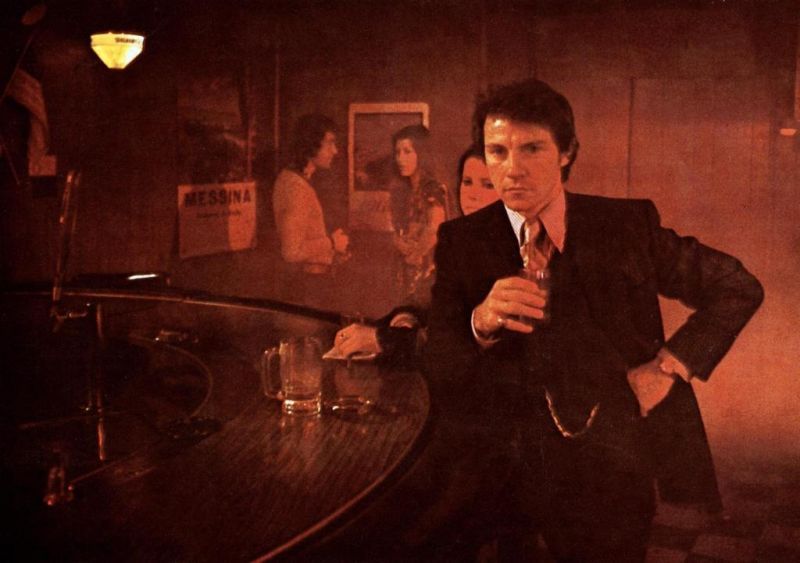
MEAN STREETS (1973)

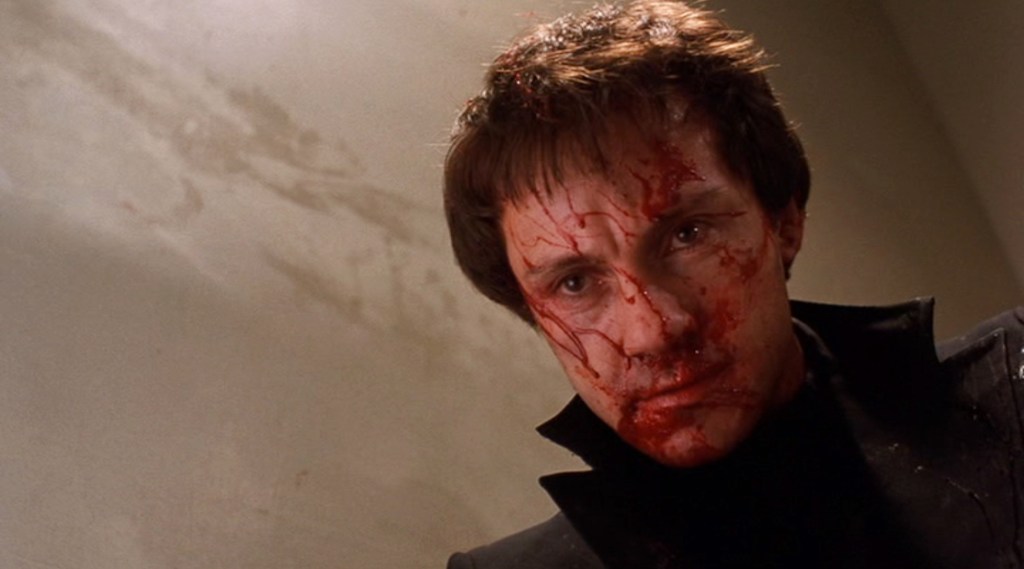
FINGERS (1978)

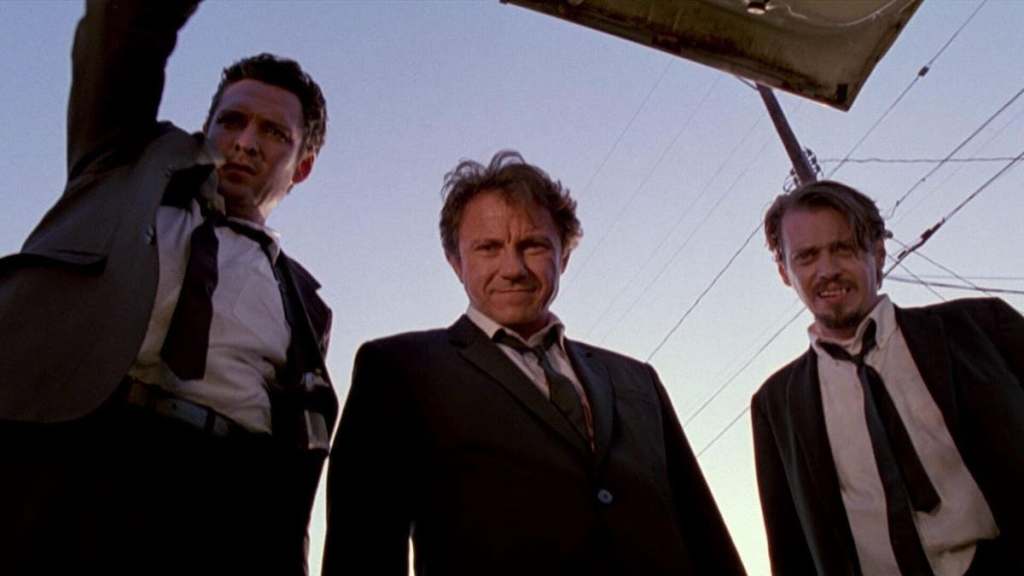
RESERVOIR DOGS (1992)

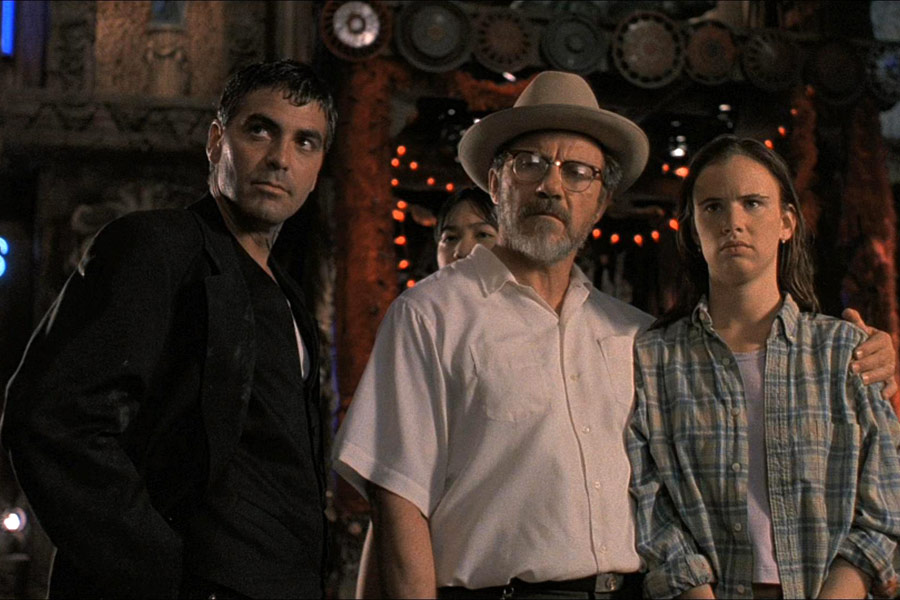
FROM DUSK TILL DAWN (1996)

Film Review: The Death of Stalin (dir by Armando Iannucci)


2017’s The Death of Stalin opens in Moscow in 1953.  Joseph Stalin (Adrian McLoughlin) calls into Radio Moscow and demands that he be sent a recording of the piano concerto that has just been performed live.  The only problem is that no one bothered to record it while it was being performed.  In a panic, the head of Radio Moscow announces that no one — not the musicians, not the exhausted conductor, and certainly not the audience — is allowed to leave until the orchestra has performed again.

Indeed, one of the recurring themes of The Death of Stalin is that everyone is terrified of their beloved dictator.  The orchestra fears being executed for failing to recreate their performance.  The members of the Central Committee fear being the next person to be purged from the ranks of Stalin’s government.  The two guards that are posted outside of Stalin’s bedroom are so terrified of interrupting Stalin and getting on his bad side that they don’t investigate when they hear Stalin collapsing to the floor.  When Stalin is found unconscious, the only doctors available are young and inexperienced because Stalin recently exiled all of the good doctors from Moscow.  Even after Stalin dies from a cerebral hemorrhage, his reign of terror continues as all the members of his household staff are promptly executed to keep anyone from learning either the exact details of Stalin’s death or the way that the members of the Central Committee responded to his passing.

The Death of Stalin is a dark comedy that follows the members of the Central Committee as they scramble to protect their own positions after Stalin’s death.  The humor comes from watching historical figures like Nikita Khrushchev, Vyacheslav Molotov, Lavrenti Beria, and Georgy Malenkov act like panicked junior executives who are desperately trying to save their own jobs during a corporate takeover.  Of course, the stakes are a bit higher.  Whoever succeeds Stalin will undoubtedly want to execute every other contender for the post.  As with so many of Armando Iannucci’s works, the humor comes from watching very powerful people act in very immature and petty ways.  While Malenkov (Jeffrey Tambor) tries to convince people that he actually is in charge, the brutal Beria (Simon Russell Beale) tries to bully his way into power and the wily Khrushchev (Steve Buscemi, giving one of his best performances) waits for his moment to strike.  (Beria, it should be noted, is one of history’s greatest monsters and the film, while a comedy, does not shy away from his depravity.)  Molotov (a hilarious Michael Palin) is so loyal to the Party that he says that Stalin was absolutely correct to have his wife executed just to then have Beria show up and reveal that Molotov’s wife is still alive.  Meanwhile, Stalin’s idiot son (Rupert Friend) claims that it’s all an American plot while the rest of the Central Committee laughs at him behind his back.  Only Georgy Zhukov (Jason Isaacs) seems to have full control of his emotions and his actions and it’s not a surprise to learn that, long after the events depicted in this film, purged from the Party.  In The Death of Stalin, the leaders of Russia are obviously scared of anyone who is too competent at their job.

The Death of Stalin is not only a satiric portrayal of petty bureaucrats.  It’s also a darkly humorous look of life in a dictatorship, where everyone is at the whim of whoever happens to be in charge at any given time.  The film is full of power-hungry narcissists who use their ideology and their nationalism as a shield for their own ambitions.  Everyone wants to control someone else.  Even as mourners pass by Stalin’s coffin, they’re given orders on how to properly grieve and move.  The film ends with a series of pictures of various people either having their faces scratched or, in some cases, just vanishing.  In a free country, failure leads to humiliation.  In a dictatorship,  it leads to non-existence as the formerly prominent are suddenly erased from a history that no longer has a place for them.  Ironically, of all the original leaders of communist Russia, it was Molotov who lived the longest.  He was 96 when he died in 1986.  If not for Stalin’s sudden death, he probably would have been purged and executed at the age of 63.

On this May Day, with so many people currently trying to rehabilitate the reputations of the 20th Century’s worst dictators, The Death of Stalin is must-watch.


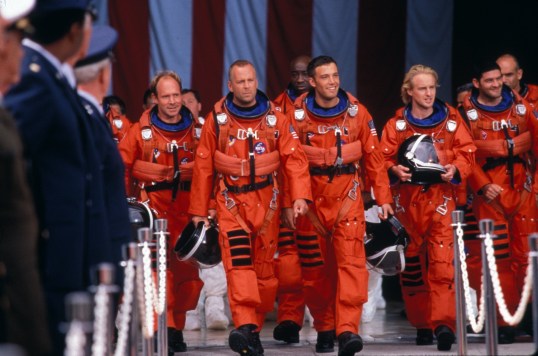
Guilty Pleasure No. 78: Armageddon (dir by Michael Bay)


Remember that time that Bruce Willis and a team of oil drillers saved all of humanity from a giant asteroid that was apparently the size of Texas?

Sure, you do!  Everyone remembers Armageddon!

1998’s Armageddon is a film that doesn’t get a lot of respect but which everyone remembers.  There’s been a lot of movies made about giant asteroids on a collision path with the Earth.  Ever since scientists announced that a collision with a comet or an asteroid probably killed the dinosaurs, there’s been a somewhat irrational fear that the same thing could happen to us.  Back in 1978, Sean Connery and Karl Malden tried to stop a Meteor (and failed).  In 1998, the same year that Armageddon came out, Morgan Freeman, Robert Duvall, and Elijah Wood tried to stop an asteroid from causing a Deep Impact (and failed).  Adam McKay made an entire film about everyone saying, “Don’t Look Up,” in an attempt to promote increased panic about climate change (and failed).  (“I’m so scared!” Leonardo DiCaprio shouted and audiences responded, “Oh, calm down.”)  And yet, it’s Armageddon — ridiculed by critics, endlessly parodied by other movies — that people use as their go-to source for commenting on the prospect of a mass extinction event.  Mostly because, in Armageddon, humanity didn’t fail.  Bruce Willis showed that asteroid who was boss!

Why do we love Armageddon?  A lot of it has to do with the cast.  Not only do you have Bruce Willis battling an asteroid but you’ve also got Steve Buscemi, Owen Wilson, Ben Affleck, Will Patton, Michael Clarke Duncan, Peter Stormare, William Fichtner, and a host of others working with him.  You’ve got Billy Bob Thornton working ground control.  You’ve got Liv Tyler, somehow managing to give a decent performance even while Ben Affleck attacks her with animal crackers.  It’s not just the cast is full of familiar and likable actors.  It’s that the members of the cast know exactly what type of film that they’re appearing in and they all give exactly the right type of performance for that film.  They deliver their lines with conviction while not making the mistake of taking themselves too seriously.  Bruce Willis announces that his crew will destroy that asteroid in return for never having to pay taxes again and he announces with just the slightest hint of a smirk, knowing that the audience is going to cheer that moment.

But really, the real reason why Armageddon has survived that test of time is because it’s just so utterly shameless.  Director Michael Bay will never be accused of being a subtle director but Bay instinctively understood that Armageddon was not a film that demanded subtlety.  Armageddon is a film that demands that constantly moving camera and all of those carefully composed scenes that were clearly made so they could be included in the trailer.  It’s a film about big moments and big emotions.  Unlike something like Deep Impact, it doesn’t get bogged down in trying to be better than it actually is.  Unlike Don’t Look Now, it doesn’t degenerate into a bunch of histrionic speeches.  Armageddon exists to make the audience cheer and it succeeds.  It takes guts to include a slow motion scene of a bunch of kids celebrating in front of a faded Kennedy For President poster but Bay is exactly the type of director who can pull that off.  Michael Bay’s style is not right for a lot of films.  But it was perfect for Armageddon.

As I sit here typing this, there are some people panicking because there’s speculation that a meteor is going approach the Earth in the 2030s.  It’ll probably miss us but who knows?  But you know what?  I’m not worried at all.  I’ve seen Armageddon.  So, on this International Earth Day, let’s remember the courageous men who saved this planet back in 1998.

Previous Guilty Pleasures

  1. Half-Baked
  2. Save The Last Dance
  3. Every Rose Has Its Thorns
  4. The Jeremy Kyle Show
  5. Invasion USA
  6. The Golden Child
  7. Final Destination 2
  8. Paparazzi
  9. The Principal
  10. The Substitute
  11. Terror In The Family
  12. Pandorum
  13. Lambada
  14. Fear
  15. Cocktail
  16. Keep Off The Grass
  17. Girls, Girls, Girls
  18. Class
  19. Tart
  20. King Kong vs. Godzilla
  21. Hawk the Slayer
  22. Battle Beyond the Stars
  23. Meridian
  24. Walk of Shame
  25. From Justin To Kelly
  26. Project Greenlight
  27. Sex Decoy: Love Stings
  28. Swimfan
  29. On the Line
  30. Wolfen
  31. Hail Caesar!
  32. It’s So Cold In The D
  33. In the Mix
  34. Healed By Grace
  35. Valley of the Dolls
  36. The Legend of Billie Jean
  37. Death Wish
  38. Shipping Wars
  39. Ghost Whisperer
  40. Parking Wars
  41. The Dead Are After Me
  42. Harper’s Island
  43. The Resurrection of Gavin Stone
  44. Paranormal State
  45. Utopia
  46. Bar Rescue
  47. The Powers of Matthew Star
  48. Spiker
  49. Heavenly Bodies
  50. Maid in Manhattan
  51. Rage and Honor
  52. Saved By The Bell 3. 21 “No Hope With Dope”
  53. Happy Gilmore
  54. Solarbabies
  55. The Dawn of Correction
  56. Once You Understand
  57. The Voyeurs 
  58. Robot Jox
  59. Teen Wolf
  60. The Running Man
  61. Double Dragon
  62. Backtrack
  63. Julie and Jack
  64. Karate Warrior
  65. Invaders From Mars
  66. Cloverfield
  67. Aerobicide 
  68. Blood Harvest
  69. Shocking Dark
  70. Face The Truth
  71. Submerged
  72. The Canyons
  73. Days of Thunder
  74. Van Helsing
  75. The Night Comes for Us
  76. Code of Silence
  77. Captain Ron

Lisa Marie Reviews An Oscar Nominee: Fargo (dir by the Coen Brothers)


Photograph by Erin Nicole

I am currently sitting in my bedroom, wrapped in several blankets and watching the snow fall on the other side of my window.  I love snow, mostly because I live in Texas and therefore, I don’t get to see it that often.  The most snow we’ve gotten down here, at least in my lifetime, was in 2021.  That was when we got hit by that blizzard and had to deal with rolling blackouts for a week straight.  That’s not a good memory but still, I love to watch the snow fall.  Even during that blizzard, I still loved the fact that I could use the snow as a nightlight as I read a Mickey Spillane book and waited for the power to come back on.

Down here in North Texas, snow is exotic.  In other parts of the country, it’s just a part of everyday life.

Like in the Dakotas for instance….

First released in 1996 and directed by the Coen Brothers, Fargo is a film that is full of arresting images.  As soon as you hear (or read) the title, those images and the sounds associated with them immediately pop into your head.  You immediately visualize the desperate car salesman Jerry Lundegaard (William H. Macy) trying to trick a customer into paying extra for the trucoat and insisting that “I’m not getting snippy here!”  You see the film’s two kidnappers, Carl Showalter (Steve Buscemi) and Gaear Grimsud (Peter Stomare), getting on each other’s nerves as they drive from one frozen location to another.  You remember heavily pregnant Marge Gunderson (Frances McDormand) investigating a snowy crime scene and gently correcting another officer’s “police work.”  You flash back to the moment when Mike Yanagita (Steve Park) suddenly breaks down in tears and tells Marge that she’s a super lady.  “And it’s a beautiful day,” Marge says at one point, wondering how so many terrible things could have happened on such a lovely day.  And she’s right.  It was a beautiful day.  It was far too beautiful a day to discover one man stuffing another into a woodchipper.

Myself, I always think of the scene where Carl attempts to find a place to hide a briefcase full of money.  It’s night.  Carl’s been shot in the face but he has the money that he’s gone through so much trouble to collect.  He runs into a field, looking for a place to hide it.  The field is covered in snow.  Every inch of the ground glows a bright white.  Everything looks the same.  But Carl still runs around desperately before picking a place to bury the suitcase.  It doesn’t seem to occur to Carl that there’s no visible landmarks or anything that would ever help him to find the money again.  He’s blinded, by the snow, by the pain of the bullet, and, like most of the characters in this movie, by his own greed.

Of course, Fargo is not a film about people behaving in intelligent ways.  Greed, loneliness, and desperation all lead to people doing some pretty stupid things.  Jerry thinks that the best way to pay off his debts and raise the money for a real estate deal is to arrange for his wife to be kidnapped so his wealthy father-in-law (Harve Presnell) will pay the ransom.  His father-in-law, who obviously despises Jerry and would be happy for him to just go away, is convinced that he’ll be able to both get back his daughter and recover his money.  (If Jerry had just spent a moment really thinking about his plan before going through with it, he would have realized his father-in-law would never just part with his money.)  Carl thinks that it’s a good idea to partner up with the obviously sociopathic Grimsud.  When a cop pulls over Carl and Grimsud’s car, Grimsud ignores the fact that Carl was talking his way out of the ticket and instead kills the policeman and then kills several eyewitnesses.  (“I told you not to stop.”)  Marge figures out what is going on but even she puts her life in danger by investigating a cabin without proper backup.  The characters in Fargo frequently behave in ludicrous ways and almost all of them speak with an exaggerated regional dialect (All together now: “Oh yeah,”) but they also feel incredibly real.  The sad truth of the matter is that there are people as greedy, dumb, and hapless in the world as Jerry.  There are people like Carl and Grimsud.  Even Jerry’s fearsome father-in-law is a very familiar type of character.  People do thing without thinking and inevitably, they make things worse the more overwhelmed they become.  Common sense (not to mention decency) is frequently the last thing that anyone considers.  Fortunately, Marge is believable too.  Marge at times almost seems so gentle and polite (“No, why don’t you sit over there?” she sweetly tells Mike when he attempts to get too close to her.) that the viewer worries about what’s going to happen to her when she gets closer and closer to figuring out what’s going on.  Fortunately, Marge turns out to be much stronger than anyone, even the viewer, expected.  The world of Fargo can be a terrible place but there’s moments of kindness and hope as well.

Fargo is both a comedy and a drama.  The opening title card says that the film is based on a true story, which is a typical Coen Brothers joke.  (The film was loosely inspired by several similar crimes but the story itself is fictional.)  Carter Burwell’s dramatic score is both appropriately grand and also gently satiric.  Jerry does some terrible things but William H. Macy plays him as being so naive and desperate and ultimately overwhelmed that it’s hard not to have a little sympathy for him.  Jerry truly thought it would be so simple to pull off a complicated crime.  (The poor guy can’t even get the ice off of his windshield.)  As played by Steve Buscemi, Carl Showalter talks nonstop and he makes you laugh despite yourself.  His shock at how poorly everything goes is one of the film’s highlights.  It’s a funny film but it’s also a sad one.  I always worry about what’s going to happen to Jerry’s son.  Ultimately, of course, the film belongs to Frances McDormand, who gives a wonderful performance as Marge.  She’s the heart of the film, the one who reminds the viewer that there are good people in the world.

Considering the film’s cultural impact, it’s always somewhat shocking to remember that Fargo did not win the Oscar for Best Picture.  It lost to The English Patient, a film about a homewrecker who helps the Nazis.  Personally, I prefer Fargo.

Fargo (1996, dir by the Coen Brothers, DP: Roger Deakins)

Retro Television Review: Miami Vice 3.7 “El Viejo”


Welcome to Retro Television Reviews, a feature where we review some of our favorite and least favorite shows of the past!  On Mondays, I will be reviewing Miami Vice, which ran on NBC from 1984 to 1989.  The entire show can be purchased on Prime!

This week, Willie Nelson and Steve Buscemi guest star!

Episode 3.7 “El Viejo”

(Dir by Aaron Lipstadt, originally aired on November 7th, 1986)

Using their undercover identities of Burnett and Cooper, Crockett and Tubbs are attempting to take down a Bolivian drug lord named Mendez (Anwar Zayden).  Unfortunately, Crockett’s first attempt to bust Mendez does not go so well.  Their meeting, which is being held at a museum for some reason, is interrupted by a security guard.  In the resulting shootout, the security guard is killed and a green briefcase that’s full of cocaine is stolen by an old man named Jake Pierson (Willie Nelson).  Soon, Jake is attempting to contact Mendez himself, offering to bring him the briefcase.  Jake’s actions also bring him to the attention of Crockett and Tubbs, who both wonder why a 66 year-old Texan with no criminal record is suddenly trying to get involved in their drug deal.

Jake, it turns out, is a former Texas Ranger.  When he was younger, he was a legend.  He and his partner took down criminals like Bonnie and Clyde and protected Texas from Mexican revolutionaries who were preying on the border towns.  It’s been a while since Jack retired.  Now, he lives in a tiny apartment and spends most of his time thinking about the past.  He’s still a killer shot with a gun and knows how to handle himself in a fight.  But he also has a heart condition and, in fact, he would have died early on in the episode if Tubbs hadn’t given him his pills.  Crockett, for his part, idolizes the Texas Rangers, to an extent that almost seems out-of-character when you consider how cynical Crockett is usually portrayed as being.  Crockett is stunned that a former Ranger would be involved with running drugs.  Even though he’s pretending to be career criminal Sonny Burnett, Crockett still asks Jake about all of his adventures as a Ranger and does little to hide how impressed he is.

So, why has Jake gone over to the bad side?  Well, he really hasn’t.  It turns out that the son of his former partner was murdered by Mendez and Jake is looking to get revenge.  It all leads to a number of shoot-outs, including an exciting one that occurs on a Miami highway and an explosive finale at a cemetery.  Jake kills Mendez and his men but, in typical Miami Vice fashion, he takes a bullet himself and dies right after he reveals that he knew Crockett was a cop all along.

This episode features two notable guest stars.  Along with Willie Nelson, Steve Buscemi shows up in a small but memorable role as Rickles, who serves as a go-between for Crockett and Mendez.  Buscemi is as wonderfully weaselly as ever and, even though he’s a bit stiff as an actor, Nelson still brings a lot of Texas authenticity to the character of Jake Pierson.  Of course, in real life, Vice would have stopped Willie and searched his tour bus as soon as he entered the Miami city limits.  This is a pretty dark episode but it’s still amusing to watch iconic hippie stoner Willie Nelson play a cop, even if Jake is retired.

This was a good episode.  That Don Johnson and Willie Nelson were friends in real life is easy to deduce from witnessing how easily they play off of each other in this episode.  This is another episode where the bad guys are defeated but at the cost of a good guy.  Mendez will soon be replaced by another drug lord but no one will ever replace Jake Pierson.


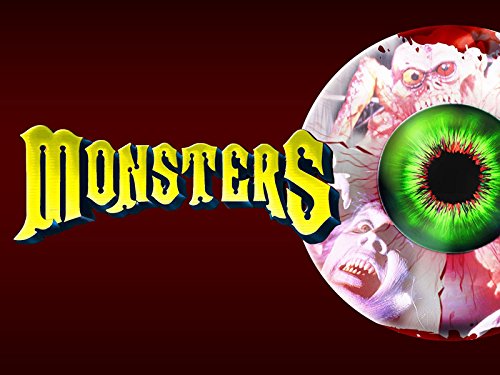
Late Night Retro Television Review: Monsters 2.14 “Bed and Boar”


Welcome to Late Night Retro Television Reviews, a feature where we review some of our favorite and least favorite shows of the past! On Wednesdays, I will be reviewing Monsters, which aired in syndication from 1988 to 1991. The entire series is streaming on YouTube.

Episode 2.14 “Bed and Boar”

(Dir by Sara Driver, originally aired on January 21st, 1990)

Traveling salesman John Dennis (a young Steve Buscemi) just wants to get a good night’s rest in a sleazy motel but, unfortunately, the couple in the room next to his is making a racket.  A woman and a man are fighting and yelling at each other.  “Bitch!  Bitch!” the man seems to be yelling.  Finally, the woman (Jodie Markell) leaves her room, runs through the stormy night, and ends up in John’s room.

John take one look at the woman in her white nightgown (which has gotten soaked in the rain) and decides that he has absolutely no problem with her staying in his room.  He has no problem with her removing her wet nightgown and wrapping herself in the sheets of his bed.  The only problem that John has is with her husband (Charles Kay-Hune), who not only tries to break into the room but also has the head of a boar.

You would think that would be enough to convince John to find another motel but instead, after chasing off the board husband, John spends the night with the woman.  John declares that he’s falling in love with the woman.  When her husband literally tears down a wall to get at them, John fights off and kills the woman’s boar-headed husband.

And it’s only then that it occurs to John that the woman might be a witch (“He wasn’t yelling bitch, he was yelling….”) and that maybe she was the one responsible for turning her husband into a pig.  (Someone has obviously never read The Odyssey.)  Of course, by this point, John is himself starting to turn into a pig.

The good thing about this episode is that it features a young Steve Buscemi, playing one of his trademark quirky characters who never knows when to stop talking.  The bad thing is that the episode doesn’t really give Buscemi much to do, other than be an idiot.  Since it was obvious, to me, that the woman was a witch and that she was the one who turned her husband into a boar, I spent the entire episode waiting for some sort of a surprise twist.  I was waiting for John to reveal that he was a warlock or a werewolf or a vampire or anything other than just a salesman in a motel room.  But that never happened.  As a result, the whole story felt rather pointless.

On the plus side, the husband was frightening.  The show did a good job with the boar makeup because I I did jump a little when that thing came bursting into the room.  This was a case where the monster was better than the story.

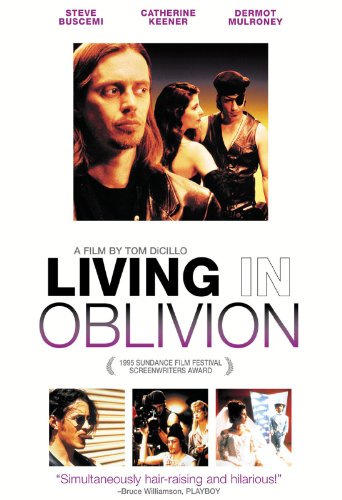
Ghosts of Sundance Past: Living in Oblivion (dir by Tom DiCillo)


As we all know, this year’s Sundance Film Festival started yesterday.

To me, Sundance has always signified the official start of a new cinematic year.  Not only is it the first of the major festivals but it’s also when we first learn about some of the films that we’ll be looking forward to seeing all year.  It seems like every year, there’s at least one successful (or nearly successful) Oscar campaign that gets it start at Sundance.  For instance, it is probable that Past Lives will receive an Oscar nomination for Best Picture on Tuesday and its campaign started with how it was received at the 2023 Sundance Film Festival.

My plan for this year is to spend the last few days of January looking at some of the films that have won awards or otherwise created a splash at previous Sundance Film Festivals.

Like 1995’s Living in Oblivion for example….

Living in Oblivion centers around the filming of an independent movie called, appropriately enough, Living in Oblivion.  The film is being directed by Nick Reve (a youngish and, I’ll just say it, hot Steve Buscemi), a filmmaker whose indie cred does not protect him from the difficulties of shooting a movie with next to no budget.  His cinematographer is Wolf (Dermot Mulroney), who is talented but pretentious and who is dating the first assistant director, Wanda (Danielle von Zerneck).  The film stars Nicole (Catherine Keener), a struggling actress who is best known for appearing in a shower scene in a Richard Gere movie.  Also appearing in the movie is Chad Palomino (James LeGros), an up-and-coming star who is appearing in Nick’s film to build up his critical reputation.  (He also assumes that Nick is friends with Quentin Tarantino.)

We don’t really learn much about the plot of the film-within-a-film.  It appears that Nicole is playing Ellen, a woman who is trying to come to terms with her abusive childhood and her romantic feelings towards her friend, Damien (played by Chad Polomino).  The scenes of the film that we see alternate between being insightful, melodramatic, and pretentious.  We see Ellen confronting her mother about her abusive childhood but we also see a dream sequence in which Ellen, who is dressed as a bride, attempts to grab an apple from Tito, a person with dwarfism (played, in his film debut, by Peter Dinklage).

To talk too much about the film’s narrative structure would be to spoil one of Living In Oblivion‘s most clever twists.  What I can safely say is that, much as with Truffaut’s Day For Night, Living In Oblivion is more concerned with the production than the film that’s being shot.  Nick struggles to keep his cool.  Nicole struggles with her fear that she’ll always just be known as the “shower girl” and with the difficulty of keeping her performance fresh through multiple retakes.  Wolf makes a point of wearing an eyepatch after claiming Wanda injured his eye and turns sullen when Nick says he doesn’t want to shoot a scene with a hand-held.  A smoke machine first produces too little smoke and then too much.  When Chad does show up on set, he is passive-aggressively tries to change the blocking of one of the film’s most important scenes.  As for the dream sequence, it’s threatened when Tito denounces the scene and his role in it as being an indie film cliche.  Throughout, director Tom DiCillo contrasts the studied structure of a finished film with the chaotic reality that goes into shooting.

Living In Oblivion is an affectionate satire, one that pokes fun at the indie film scene while also celebrating all of the hard work and different personalities that are involved in making a movie.  Steve Buscemi and Catherine Keener give heartfelt performances as two people who understand that every movie could be their last while Dermot Mulroney scores some of the biggest laughs as the self-important Wolf.  James LeGros is hilariously shallow and vain as a character who is rumored to be based on one of the biggest movie stars of the past 30 years.  (“I want an eyepatch!” Chad declares while looking at Wolf.)  Living In Oblivion is a movie that celebrates the beautiful madness of trying to shoot an important film for next to no money in a grubby warehouse.  Throughout the film, the film’s crew is forced to compromise but, at the same time, there are also the small and unexpected moments that make it all worth it.

Living In Oblivion‘s witty script deservedly won the Waldo Salt Screenwriting Award at the 1995 Sundance Film Festival.  Living in Oblivion is a celebration of both cinema and independence.

Horror Film Review: Tales From The Darkside: The Movie (dir by John Harrison)


First released in 1990 and based on a horror-themed television series that was created by the one-and-only George Romero, Tales From The Darkside: The Movie is an anthology film.  Usually, I can’t stand anthology films because it seems like the viewer only gets one good story and has to sit through two or three mediocre stories to get to the worthwhile stuff.  However, I have to say that I really enjoyed all of the stories featured in Tales From The Darkside: The Movie.

The film opens with a wrap-around story, featuring Timmy (Matthew Lawrence), a young boy who is chained up in a pantry and who a local witch named Betty (Debbie Harry) is planning on cooking for a dinner party.  Timmy tries to distract Betty from her kitchen duties by telling her three stories.

The first story features Steve Buscemi as a nerdy college student named Edward Bellingham.  On the verge of getting a much-needed scholarship, Edward is framed for theft by two of his classmates (one of whom is played by Julianne Moore) and loses the scholarship.  Edward responds by doing what anyone would do.  He unrolls an ancient parchment and brings to life a mummy who kills his rivals.  A very preppy Christian Slater plays Andy, the smug brother of one of the victims who seeks revenge against Bellingham.  In a surprise twist, Bellingham is able to get some vengeance of his own.

The second story features William Hickey as Drogan, an annoying old man who is convinced that he is being stalked by an evil black cat.  Drogan hires a hitman (David Johansen) to kill the cat but, as we all know, black cats are far more clever than anyone realizes.  The story ends on a notably grisly note because cats rule!

Finally, the third story features James Remar as a struggling artist who, one night, discovers that the stone gargoyle that sits atop of his apartment building is actually alive.  After witnessing the gargoyle kill someone, the artist promises never to reveal that the gargoyle exists.  “Cross your heart?” the gargoyle asks before flying away.  Later, the artist meets a mysterious woman (Rae Dawn Chong) who helps him to become a success on the art scene.  However, even after he marries the woman and they start a family, Remar is still haunted by his memories of the gargoyle.

As I said at the start of this review, I’m not a huge fan of anthology films but I really liked Tales From The Darkside: The Movie.  All three of the stories are equally good and there’s really not a slow spot to be found.  This is a horror anthology that manages to balance scares and laughs without becoming too silly or forgetting that the movie is meant to be a horror story.  Steve Buscemi, Christian Slater, and James Remar are stand-outs amongst the cast.  Even the wrap-around story had a good ending!

If you’re going to watch an anthology film for Halloween, allow me to recommend Tales From The Darkside: The Movie!

10 Oscar Snubs From the 1990s


Ah, the 90s. Some would say that this was the last good decade that the world would ever experience. It was certainly a good decade for films!  Still, there were some notable Oscar snubs during this decade.  Here are ten of them.

1990: Ray Liotta Is Not Nominated For Goodfellas

The fact that Ray Liotta did not even receive a nomination for playing Henry Hill in Goodfellas will always astound me.  While the film did receive several nominations (and really, it should have won the majority of them), Ray Liotta was snubbed despite the fact that it was his performance that pretty much held the film together.  Alec Baldwin, Tom Cruise, and Val Kilmer were among those who were considered for the role before Liotta received it.  They’re all fine actors but it’s hard to imagine any of them bringing Henry to life quite as well as Ray Liotta.

1991: John Goodman is Not Nominated for Barton Fink

“I WILL SHOW YOU THE LIFE OF THE MIND!”

It’s a little bit amazing that John Goodman has never received an Oscar nomination.  I don’t think he’s ever been scarier (and, in his way, more poignant) than when he played Charley “Mad Man Mundt” Meadows in Barton Fink.

1993: The Age of Innocence Is Not Nominated For Best Picture

While we’re on the subject of Scorsese films that were snubbed by the Academy, it’s amazing to me that Scorsese’s witty, smart, and visually stunning adaptation of The Age of Innocence did not receive a Best Picture nomination.
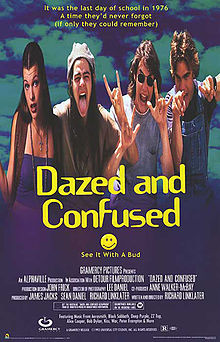
1993: Dazed and Confused Is Completely Snubbed

Okay, maybe this one isn’t as surprising as the Academy snubbing as Scorsese picture.  Even today, it’s doubtful that the Academy would embrace a film about a bunch of stoned Texas high school kids.  Still, it bothers me that Dazed and Confused received not a single nomination.  It’s certainly better remembered than many of the films that were nominated that year.

1995: Heat Is Completely Ignored

Considering that the film is now regularly cited as one of the best crime films ever made, it’s interesting to note that the Academy totally ignored Heat.  The film received no acting nominations.  Michael Mann was not nominated for his skill in juggling several different storylines.  The film didn’t even receive any technical nominations.  The cinematography was ignored.  You would think that the massive shoot-out would have gotten the film a nomination for Best Sound Editing but, even in that category, Heat was ignored.

Needless to say, Heat was not nominated for Best Picture.  The 1995 Best Picture line-up has always seemed like an odd mix of films, with Babe, Apollo 13, Sense and Sensibility, and Il Postino all losing out to Mel Gibson’s Braveheart.  Apollo 13 and Sense and Sensibility didn’t even receive nominations for their directors, Ron Howard and Ang Lee.  It was an odd year, I guess.  Heat was not the only acclaimed film to miss out on a Best Picture nomination but at least Casino, Leaving Las Vegas, and Dead Man Walking still received nominations in other categories.  Heat was totally snubbed.

1996: Steve Buscemi Is Not Nominated For Fargo

Despite being a cultural institution, Steve Buscemi has never received an Oscar nomination.  I would have nominated him for Fargo.
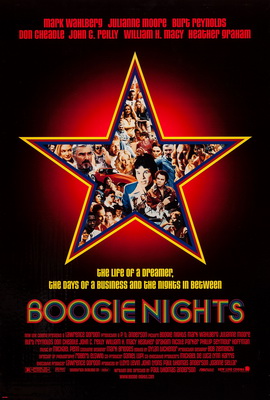
1997: Boogie Nights Is Not Nominated For Best Picture, Best Director, or Best Actor

Despite receiving two acting nominations for Burt Reynolds and Julianne Moore and a screenplay nomination, Boogie Nights missed out on the big award.  To be honest, I have a feeling that the film would have been nominated if it had been released today.  But, in the year of Titanic, the Academy may not have been ready to embrace a film about the Golden Age of Porn.  And they certainly weren’t ready to embrace Mark Wahlberg, despite his award-worthy performance of The Touch.  Given a choice, the Academy will always embrace the James Camerons of the world before it embraces the Jack Horners.  That said, as we saw in the film, Dirk and Angels Live In My Town swept the AFAA awaards and that’s the important things.

1997: Billy Zane Is Not Nominated For Titanic

C’mon, he was the best thing about the movie!  If Billy Zane can’t receive a nomination for shouting, “I hope you’ll be very happy together!” while chasing Leo and Kate through a sinking ship, what is the point of even having the Oscars?

1999: Reese Witherspoon Is Not Nominated For Best Actress For Election

Reese Witherspoon’s performance as Tracey Flick is iconic precisely because it feels so real.  Everyone has known as Tracey Flick.  Everyone has been annoyed by a Tracey Flick.  Everyone has hoped for a Tracey Flick to fail.  And everyone has inwardly lost a little faith in karma as the Tracey Flicks of the world have continued to find work as mid-level bureaucrats.  In fact, I imagine that might be the reason why Reese Witherspoon was not nominated for her outstanding performance in Election.  No one wanted to reward Tracey Flick.

1999: Bruce Willis Is Not Nominated For Best Actor For The Sixth Sense

Seriously, everyone really took him for granted.  Just try to imagine The Sixth Sense with someone else in his role.

Agree?  Disagree?  Do you have an Oscar snub that you think is even worse than the 10 listed here?  Let us know in the comments!

Up next: A new century brings new snubs!

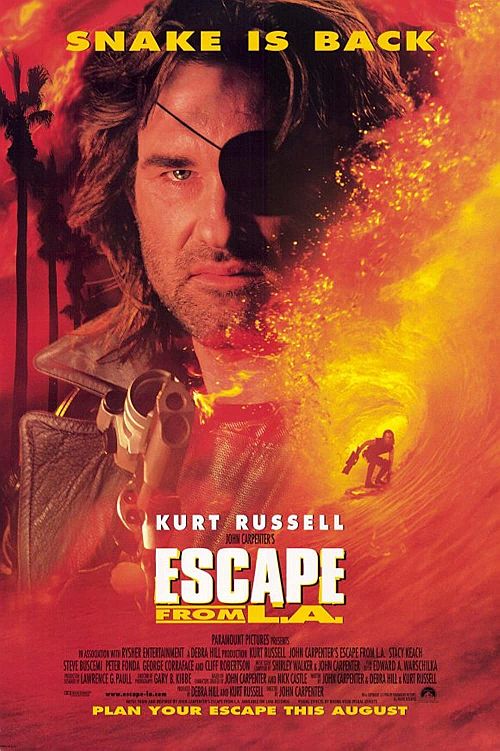
Live Tweet Alert: Join #FridayNightFlix for Escape From L.A.!


As some of our regular readers undoubtedly know, I am involved in a few weekly live tweets on twitter.  I host #FridayNightFlix every Friday, I co-host #ScarySocial on Saturday, and I am one of the five hosts of #MondayActionMovie!  Every week, we get together.  We watch a movie.  We tweet our way through it.

Tonight, at 10 pm et, I will be hosting #FridayNightFlix!  The movie? 1996’s Escape From L.A.!

Director John Carpenter reunites with Kurt Russell and Peter Fonda, Steve Buscemi, Bruce Campbell, and Cliff Robertson are along for the ride!

If you want to join us this Friday, just hop onto twitter, start the movie at 10 pm et, and use the #FridayNightFlix hashtag!  I’ll be there tweeting and I imagine some other members of the TSL Crew will be there as well.  It’s a friendly group and welcoming of newcomers so don’t be shy.

Escape From L.A. is available on Prime and Paramount!  See you there!