Late Night Retro Television Review: Hunter 1.1 “Hunter”


Welcome to Late Night Retro Television Reviews, a feature where we review some of our favorite and least favorite shows of the past!  On Thursdays, I will be reviewing Hunter, which aired on NBC from 1984 to 1991.  The entire show is currently streaming on Tubi and several other services!
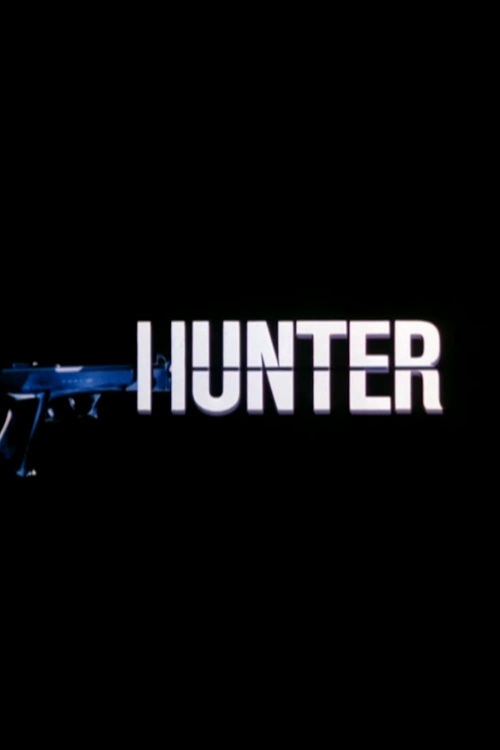
Today, we start a new series.

Episode 1.1 “Hunter”

(Dir by Ron Satlof, originally aired on September 18th, 1984)

Ah, Hunter.

Hunter is one of those shows that, up unitl now, I’ve never really specifically felt the need to track down and binge but I’ve still seen a handful episodes.  Some of that is because Hunter is a mainstay on the nostalgia channels.  If you fall asleep while watching an old episode of Fantasy Island, there’s a good chance that you’re going to wake up to an episode of HunterHunter is also a mainstay on both Prime and Tubi.  Again, if you fall asleep watching your favorite Eric Roberts movie, there’s a decent chance that you’re going to wake up to an episode of Hunter.

I have to admit that every episode I’ve seen has been entertaining.  It’s the epitome of an 80s cop show, in all of its action-filled, simplistically-plotted glory.  Rick Hunter (played by former football player Fred Dryer) is a cop who gets results by doing things his way.  “His way” typically involves shooting a lot of people.  (Hunter’s catch phrase?  “Works for me.”)  Hunter’s partner is Dee Dee McCall (Stepfanie Kramer), a cop who gets results by doing things her way.  “Her way” typically involves going undercover and …. uhmm, shooting a lot of people.  And while I am certainly aware of the dangers of police overreach and I generally don’t support shooting anyone without just cause, it’s still fun to watch Hunter and McCall break every regulation in the book.  In almost every episode that I’ve seen, Hunter and McCall end up shooting so many people that the action ends up verging on self-parody.  Fortunately, both Dryer and Kramer appeared to be in on the joke.

(From what I’ve seen, I should also mention that Fred Dryer appears to have been a slightly better actor than some of the other former pro athletes who have decided to go into acting.  He may not have had a huge amount of range but he was still better than most of the basketball players who showed up on Hang Time.  If nothing else, he was better at showing emotion than OJ Simpson.)

With Highway To Heaven completed, I decided that it was time to finally take a look at Hunter.

Hunter premiered with a 90-minute made-for-television movie.  The action starts with Los Angeles Police Detective Rick Hunter crammed into a beat-up car that has definitely seen better days.  Because Hunter is the son of a mobster, he’s not totally trusted by his fellow detectives.  Because he’s a cop, he’s not totally trusted by the mob.  And because he’s a shoot-first renegade, all of his partners end up going to the hospital.  Captain Cain (Michael Cavanaugh) is trying to get him to quit the force and that means only allowing him to drive the department’s worst cars, not allowing Hunter to respond to most calls, and trying to partner him up with bowtie wearing moron, Bernie Terwilliger (James Whitmore, Jr.)

Hunter knows that LAPD regulations will allow him to pick his own partner if he can find someone willing to work with him.  The problem is that no one wants to put their life on the line.  Finally, Hunter tracks down Sgt. Dee Dee McCall, the widow of a fallen officer.  Nicknamed the “Brass Cupake” (cringe!), Dee Dee is currently working undercover as a prostitute and is trying to take down Los Angeles’s biggest pimp, King Hayes (Steven Williams).  Hunter has a proposition for her.  Since neither wants a partner and they both prefer shooting first and asking questions later, why not pretend to work together?  They’ll check in  and out at the station together but, otherwise, they’ll separate and work their own cases once they hit the streets.  McCall agrees.

Unfortunately, Captain Cain is not dumb.  He figures out exactly what they’re doing and he tells them that he will have people watching them to make sure that they are actually working together.  Luckily, McCall has just arrested King Hayes.  Hunter shows up as McCall is handcuffing Hayes and immediately sees that Hayes’s bodyguard is driving his car straight at them.

“You want this guy?” Hunter asks.

“That would be nice,” McCall replies.

Hunter, much like Dirty Harry, proceeds to fire several bullets into the car windshield, causing the car to flip over.

With King Hayes and his bodyguard now taken care of, it’s time for Hunter and McCall to investigate the murders of two blonde women who both enjoyed hanging out at country western bars.  McCall puts on a blonde wig and goes undercover at a honky tonk.  Hunter is shocked to see that she is being stalked by Dr. Bolin (Brian Dennehy), the psychiatrist who the LAPD brought in to examine all of their detectives.  As a viewer, I was not particularly surprised to discover that Dr. Bolin was the killer.  You’re not going to cast an actor like Brian Dennehy on a show like Hunter and then just have him spend the entire episode sitting in his office.  McCall and Hunter work together to stop Bolin before he kills again.

The pilot of Hunter was actually a lot of fun.  The pilot may have been violent but it still had a sense of humor.  The show understood that the sight of 6’6 Fred Dryer crammed into a dented station wagon would not only make the viewer smile but it would also go a long way towards humanizing Hunter as a character.  He may be big and cocky and quick to shoot people but he also has terrible luck when it comes to cars, police radios, and bystanders.  At one point, he even gets pepper-sprayed by Dee Dee’s neighbor.  As for Dee Dee, I liked the fact that she was capable and tough without being a stereotypical action girl.  I also appreciated that she and Hunter chose to work together.  I feared, initially, that the pilot would be full of scenes featuring Hunter whining about having to work with a woman and I appreciated that the show went the opposite direction.  From the start, Hunter respects Dee Dee as a cop and it’s made clear that she has nothing to prove to him.  If anything, Hunter has to earn her respect.

Of course, the main appeal of Hunter is that both Dryer and Kramer looked good holding a gun and yelling at people to “freeze!”  As opposed to the wishy washy police procedurals of today, the pilot of Hunter was absolutely shameless about giving the viewers what they wanted as far as bullets and car chases were concerned.

This was a good pilot.  Watching it, I could understand why the show ended up running for 8 seasons.  And, every Thursday, I’ll be reviewing Hunter.  I look forward to the action!

Retro Television Review: Miami Vice 5.17 “Freefall”


Welcome to Retro Television Reviews, a feature where we review some of our favorite and least favorite shows of the past!  On Mondays, I will be reviewing Miami Vice, which ran on NBC from 1984 to 1989.  The entire show can be purchased on Prime!

This week, Crockett and Tubbs are burned out.

Episode 17 “Freefall”

(Dir by Russ Mayberry, originally aired on May 12th, 1989)

As this episode begins, we find Crockett and Tubbs at their most cynical.  After five years as partners, they’ve seen a lot of bad guys go down.  They’ve seen a lot of innocent people die.  Larry Zito was killed by drug dealers.  Switek has developed a gambling addiction.  Gina has shot numerous men in cold blood.  Trudy was kidnapped by aliens.  Castillo has never once smiled.  None of it seems to make any difference.

When the government approaches them and orders Crockett and Tubbs to go into a war-torn island country and smuggle out dictator General Manuel Borbon (Ian McShane), Crockett is not happy about the assignment.  Tubbs, however, believes that the government is telling the truth about Borbon having information that could take down the world’s biggest drug cartel.  The government, for their part, think that Crockett and Tubbs have the undercover experience to pull off the operation.  Has the government not noticed that Crockett and Tubbs have had their covers blown in nearly every episode?

Of course, it turns out that the government is lying.  They just wanted Borbon out of the country so he wouldn’t reveal what he knows about American intelligence’s activities in Central America.  Crockett and Tubbs manage to get Borbon to Miami but they then find themselves under constant attack from the drug gangs that want Borbon dead.  Borbon proves to be untrustworthy.  Because of his gambling addiction, Castillo suspects that Switek may have sold out his partners.  Switek responds by tracking down three hitmen and gunning them down.  Did Switek sell out Crockett and Tubbs?  The answer isn’t clear but it does seem like his time as a detective is coming to an end.

Finally, Tubbs and Crocket do what they have to do.  They go on a “suicide” mission that involves them firing their weapons at Borbon’s sea plane until it explodes.  Borbon is killed and so are several of his American associates.  When the CIA man in charge of the operation threatens to have their badges, Crockett and Tubbs toss their badges on the ground.  Castillo offers to back them up if they chose to stay on the force.  Tubbs says thanks but no thanks.  Tubbs is going back to New York.  Crockett is heading further south, presumably to live in the Florida everglades.

And so, Miami Vice ends.

Except it doesn’t!  There were four so-called “lost episodes” that aired in syndication.  We’ll take a look at them over the next four weeks.

As for Freefall, it’s not a terrible conclusion to the story of Crockett and Tubbs.  It stays true to the cynicism that ran though the entire series.  Crockett and Tubbs finally admit that the War on Drugs is a sham and they quit.  It’s a shame that Gina and Trudy didn’t get to do much in the finale.  I wasn’t happy with the idea of Switek being a traitor but it actually did work for his character.  Switek had been spiraling ever since Zito was killed.  This episode has a lot of surprisingly violent action, the show’s trademark political subtext, and Johnson and Thomas bringing their characters to life one last time.

Apparently, this episode was originally envisioned as ending with both Crockett and Tubbs dying.  That actually would have been a totally appropriate ending as both characters have often seemed as if they had a death wish.  However, the network turned down that idea because they were hoping to do a spin-off series.  Crockett and Tubbs were spared by the higher-ups.  The series ends — or it would end if not for the four extra episodes — with Crockett and Tubbs speeding through the streets of Miami and it’s had not to feel that’s the way it should be.

The Films Of 2025: Train Dreams (dir by Clint Bentley)


My house sits near two cemeteries.

To the East, there’s a cemetery that sits near a bus stop.  It’s surrounded by a fence and, judging from the gravestones that I’ve seen, it was last used in 1917.  It was a private cemetery, one that functioned as the final resting place for the members of one of the families who founded my hometown.  To the west, there’s a park that is home to another private cemetery.  It’s also surrounded by a fence.  That fence wasn’t always there but it went up a few years ago because people were vandalizing the tomb stones and breaking the statues that had stood there for over a hundred years.  How sick to do you have to be vandalize a graveyard?

Occasionally, when I’m near either one of the two cemeteries, I’ll take some time to look at the names on the headstones.  The names are of people who I will never know.  I’ll never know what they were like to live with or to eat dinner with.  I’ll never know what hobbies occupied their time.  I’ll never know what books they read.  I’ll never know who they were.  But I will always know that someone cared enough to erect a tombstone to let the world that person had once been alive.  I will always know that, at some point, they were alive and they were a part of society.

I thought about those two cemeteries as I watched Train Dreams.  Based on the award-winning novella by Denis Johnson, Train Dreams stars Joel Edgerton as Robert Grainier.  At the start of the film, the narrator (Will Patton) tells us that Grainier lived for 80 years and he spent most of his life in Idaho.  He never saw the ocean.  He was an orphan who never learned who his parents were, when he was born, or how he came to be placed on a train in the late 19th century.  The film follows Grainier as he goes from dropping out of school to working as a logger to marrying Gladys (Felicity Jones).  He builds a cabin for Gladys to live in while he’s away looking for work.  He and Gladys have a daughter named Kate.

Growing up at a time when the frontier had only recently been tamed and when death was considered to be acceptable risk for the men cutting down trees and laying down railroad tracks, Robert sees his share of disturbing things.  As a child, he comes across as a mountain man who is slowly dying.  Working for the railroad, he watches as one of his co-workers is casually tossed off a bridge.  Later, the elderly and kind-hearted Arn Peebles (William H. Macy) is mortally injured in a random accident.  When loggers die, their boots are hammered into a tree.  Years, later those same trees are cut down and the boots are forgotten.  And yet, for all the danger in Robert’s life, there are the moments that make it all worth it.  Robert always returns home to his cabin and to the embrace of Gladys and the sight of his daughter growing up.  He always returns to his family until he can’t anymore.  As he ages, Robert isolates himself from civilization and becomes semi-legendary in the nearby town.  But, as always, legends are eventually forgotten.

Visually, it’s a hauntingly beautiful film.  The scenery is stunning, even while Robert and his fellow loggers are busy changing it by chopping down trees.  But there’s always a hint of danger hiding behind the beauty.  A forest fire brings an eerie, orange tint to the sky but it also destroys many lives and dreams.  Joel Edgerton gives a strong performance as Robert, proving once again that he’s one of the few actors who can star in a period piece without looking out-of-place.  Edgerton’s performance gives the film the humanity needed to keep it from becoming purely a film about visuals.  As Robert, Edgerton rarely yells or shows much emotion at all.  But his eyes tell us everything that we need to know.

With its stunning visuals, its narration, and its emphasis on nature, Train Dreams owes an obvious debt to Terence Malick.  That said, it’s not quite as thematically deep as Malick’s best films.  Whereas Malick would have been concerned about Robert’s place in both the universe and the afterlife, Train Dreams is more content to focus on Robert’s 80 years in Idaho (and occasionally Spokane).  Whereas Malick often seems to be daring his audience to walk out, Train Dreams is very much about keeping you watching as Robert grows old.  That’s not necessarily a criticism, of course.  It’s just an acknowledgment that Train Dreams is the rarest of all creatures, an arthouse film that’s also a crowd pleaser.  It doesn’t alienate its audience but it does so at the cost of the risks that make Malick’s later films so fascinating, if occasionally frustrating.  That said, Train Dreams does stick with you.  I’ll be thinking about the final 20 minutes for quite some time.

Train Dreams tells the story of a man — one of many — who may have been forgotten by history but who mattered during his 80 years on this Earth.  In the end, Robert Grainier serves as a stand-in for all the people who lived their lives as American rapidly changed from being a frontier to being a superpower.  The world may forget him but the viewer never will.

Mind Ripper (1995, directed by Joe Gayton)


In a base hidden away in the desert, a group of government scientists reanimate the corpse of a recent suicide victim with radiation.  They bring Thor (Dan Blom) back to life but it turns out that Thor just wants to kill all of them.

Mind-numbingly dull, Mind Ripper is the same as a hundred other horror films with the same plot.  Lance Henriksen plays the lead scientist and it’s always a pleasure to see him in even the worst movies but Mind Ripper underutilizes him in favor of Giovanni Ribisi, of all people.

Mind Ripper was executive produced by Wes Craven and sold in some markets as Wes Craven Presents Mind Ripper.  Wes’s son, Jonathan Craven, did write the script and the movie was originally planned as being the third Hills Have Eyes movie.  Wes Craven’s name undoubtedly helped this film get into production but the thing to remember is that Craven may have been the executive producer and his son may have written but Wes Craven did not direct the movie and that makes all the difference.  Maybe Wes Craven could have done something with the limp story and the uninteresting characters.  My guess is that Wes Craven was smart enough not to even try.

Don’t let this movie rip your mind.  It’s not worth it.

Retro Television Review: Miami Vice 4.20 “A Bullet For Crockett”


Welcome to Retro Television Reviews, a feature where we review some of our favorite and least favorite shows of the past!  On Mondays, I will be reviewing Miami Vice, which ran on NBC from 1984 to 1989.  The entire show can be purchased on Prime!

This week, in honor episode 4.20, Cockett and Tubbs get high.

Just kidding!  Instead, Crockett takes a bullet and Phil Collins sings Something In The Air tonight.

Episode 4.20 “A Bullet For Crockett”

(Dir by Donald L. Gold, originally aired on April 15th, 1988)

After Crockett is shot by a drug dealer’s girlfriend, he fights for his life while the other members of the Vice Squad hover nearby.  Crockett remembers past moments.  The other members of the Vice Squad remember past moments….

Hey, it a clip show!

Usually. I hate clip shows but I’ll defend this one because it was well-edited and it reminded me of how good this show was before season 4 started.  Plus, the episode made good use of Something In The Air Tonight.

The important thing is that, after all the memories were shared, Tubbs took down the shooter and Crockett woke up.  Let’s not worry too much about why Crockett’s new wife never came to the hospital.  She at least appeared in flashback.

What doe it say about Season 4 that the best episode was probably the clip show?

Film Review: Stargate (dir by Roland Emmerich)


In 1994’s Stargate, James Spader plays Daniel Jackson, a nerdy Egyptologist who is recruited to decipher some hieroglyphics on some ancient stones that are being studied in a secret government facility in Colorado.  Kurt Russell plays Colonel Jack O’Neill, a Special Operations officer who has been suicidal ever since the accidental death of his son.  (He shot himself with Jack’s gun.  Yikes!)

Together …. they solve crimes!

Well, no, not really.  Instead, by deciphering the hieroglyphics, Daniel discovers how to open up a stargate, a wormhole that leads to another planet.  Daniel, Jack, and a group of soldiers go through the stargate to see where it leads.  Daniel is interested in discovering a new world and perhaps coming to understand how the pyramids were built.  Jack just wants to get things over with.  He’s been given a nuclear bomb and told to blow things up if the stargate leads to a hostile world.  Jack doesn’t care if he lives or dies.

That changes once everyone finds themselves on a desert planet where the inhabitants are being exploited by Ra (Jaye Davidson)!  It turns out that Ra actually does exist.  Rather than being the God that the ancient Egyptians believed him to be, Ra is actually an alien who feeds off of the life forces of others.  Every sacrifice that is performed for him allows Ra to extend his life.  When Ra discovers that Daniel and Jack are on the planet and that Jack has a nuclear warhead with him, Ra takes that as a sign of aggression.  He decides to make the warhead even more powerful and send it back through the stargate so that it can blow up the Earth.  Normally, Jack wouldn’t care but fighting for the planet’s oppressed inhabitants has filled him with a renewed purpose.

Stargate is a film that I like almost despite myself.  There’s a lot of reasons why Stargate would seem like the type of film that I would normally dislike.  With the exception of a few films (Starcrash, the Guardians of the Galaxy trilogy), I’m not normally a huge fan of science fiction.  I’m not really a fan of anything that takes place in the desert because I know I would be miserable if I was there.  (Redhead don’t tan, we burn.)  I’m not really a fan of Roland Emmerich as a director.  I’ll never forgive him for Anonymous, which I realize was made decades after Stargate but it was still annoying all the same.

And yet, I do like Stargate.  I like that James Spader gets to play something other than a sinister creep for once.  Nerdy Spader is a very appealing Spader.  I like that Kurt Russell gives a fully committed performance, even if the film itself is somewhat silly.  He doesn’t just go through the motions with his role, that I’m sure the temptation was there to do so.  When Jack is depressed, you believe it.  I like that Jaye Davidson gives an enjoyably bizarre performance as Ra.  (Davidson, who was offered the role after The Crying Game and was shocked when the producers agreed to pay him a million dollars to play Ra, retired from acting after this film.)  I liked the fact that, for once, the aliens truly seemed like aliens as opposed to coming across like stuffy Earthlings in a flying saucer.  And I appreciated that, with this film, Emmerich actually seemed to be having fun with the story as opposed to just stolidly moving the action from one trailer-ready moment to another.

Stargate is silly.  Wow, is it ever silly!  But it’s silly in an enjoyable and entertaining way.  James Spader, Kurt Russell, and Jaye Davidson make the film worth watching.

Madhouse (1990, directed by Tom Ropelewski)


Mark (John Larroquette) and Jessa Bannister (Kirstie Alley) have a perfect yuppie lifestyle going until their respective family members show up at their California home and refuse to leave.  First, it’s Mark cousin (John Diehl) and his wife (Jessica Lundy).  Then it’s Jessa’s sister, Claudia (Alison LaPlaca), who has just left her husband and now has to find a new man to support her lifestyle.  Mark and Jessa just want some time alone but instead, they have to deal with a cat who is frequently mistaken for dead, broken marriages, a shipment of cocaine, and a neighbor (Robert Ginty) who builds weird bed frames.  Mark has a big contract to land and Jessa is trying to succeed as a television news reporter but it’s not easy when you’re living in a madhouse.

There are some films that you just like despite yourself and that’s the way I feel about Madhouse.  It’s very much an 80s film, with its emphasis on material goods and achieving the perfect lifestyle.  (The appearance of Dennis Miller as Mark’s co-worker only reminds us of just how much a product of its era that Madhouse is.)  There are a lot of jokes that don’t work and some, like the cat that is continually mistaken for dead, that shouldn’t work but do.  It’s a sitcom transferred to the movies and the humor rarely rises above that level.  It ever stars two of the decade’s biggest sitcom stars, John Larroquette and Kirstie Alley.  Larroquette shows us why he was better suited for television while Alley shows how tragic it was that she didn’t have a bigger film career.  Kirstie Alley gives such a dedicated and fearless performance as someone who has been driven to the end of her rope that it keeps you interested in the film.  Alley, like the great comedic actresses of Hollywood’s golden age, was an actress who could mix physical comedy with barbed one-liners and who was undeniably appealing as she moved from one disaster to the next.  In Madhouse, she was beautiful, frantic, sexy, neurotic, relatable, and funny all at the same time.  By the end of this movie, you really do wish she had gotten more and better opportunities to show off her talents in the years after Cheers went off the air.

Madhouse is nothing special.  It’s a generic comedy about unwanted family guests.  But I’ll always appreciate it for Kirstie Alley.

Stripes (1981, directed by Ivan Reitman)


Bill Murray and Harold Ramis join the army.

Wait, that can’t be right, can it?  Bill Murray and Harold Ramis were cinematic anarchists.  Early in his career, Bill Murray was the ultimate smart aleck slacker who did not have any respect for authority.  Harold Ramis was hardly a slacker but he came across as someone more likely to be marching on the Pentagon than guarding it.  Stripes is one of the ultimate examples of a comedy where the laughs come from things  that don’t seem to go together suddenly going together.

John Winger (Murray) at least has a reason to join the army.  He has a dead end job.  He has just broken up with his girlfriend.  The country appears to be at peace so why not spend four years in the Army?  It’s harder to understand why John’s friend, Russell (Ramis), also decides to enlist, other than to hang out with John.  Along with Ox (John Candy), Cruiser (John Diehl), Psycho (Conrad Dunn), and Elm0 (Judge Reinhold), they enlist and go through basic training under the watchful eye of Sgt. Hulka (Warren Oates).  John and Russell go from treating everything like a joke to invading East Germany in a tank that’s disguised as an RV.  They also meet the two sexiest and friendliest MPs in the service, Stella (P.J. Soles) and Louise (Sean Young).  Russell goes from being an proto-hippie who teaches ESL to asking John if he thinks he would make a good officer.  John goes from not taking anything seriously to picking up a machine gun and rescuing his fellow soldiers.

It’s a comedy that shouldn’t work but it does.  It’s actually one of my favorite comedies, full of memorable lines (“Lighten up, Frances.”), and stupidly funny situations.  The cast is full of future comedy legends and P.J. Soles shows that she deserved to be a bigger star.  This was early in Bill Murray’s film career and he was still largely getting by on his SNL persona but, in his confrontations with Hulka, Murray got a chance to show that he could handle drama.  With all the comedic talent in the film, it’s Warren Oates who gets the biggest laughs because he largely plays his role straight.  Sgt. Hulka is a drill sergeant who cares about his men and who knows how to inspire and teach  but that doesn’t mean he’s happy about having to deal with a collection of misfits.  (Watch his face when Cruiser says he enlisted so he wouldn’t get drafted.)

The movie does get strange when the action goes from the U.S. to Germany.  What starts out as Animal-House-In-The-Army instead becomes an almost straight action movie and the movie itself sometimes feels like a recruiting video.  Join the Army and maybe you’ll get to steal an RV with PJ Soles.  That would have been enough to get me to enlist back in the day.  But the combination of Murray, Ramis, and Oates makes Stripes a comedy that can be watched over and over again.

Retro Television Review: Miami Vice 3.12 “Down For The Count: Part One”


Welcome to Retro Television Reviews, a feature where we review some of our favorite and least favorite shows of the past!  On Mondays, I will be reviewing Miami Vice, which ran on NBC from 1984 to 1989.  The entire show can be purchased on Prime!

This week, Miami Vice says goodbye to a friend.

Episode 3.12 “Down For The Count: Part One”

(Dir by Richard Compton, originally aired on January 9th, 1987)

Larry Zito finally gets his own episode!

Played by John Diehl, Larry Zito was a part of the show from the very beginning.  Occasionally, it’s easy to forget that Diehl was a part of the ensemble because his character was rarely given anything to do and we rarely learned that much about Zito.  He was Switek’s partner and he seemed to have a quirky sense of humor.  Occasionally, he had long hair and a beard and he seemed to enjoy wearing elaborate disguises while working undercover.  That said, Zito was always a bit of an enigma.  Even the rare episodes that centered on the Switek/Zito partnership seemed to feature Zito mostly in the background.

In this episode, though, we finally learn a bit about Zito.  We learn that he has a background as a boxer and he’s good at training other fighters.  We learn that he takes it seriously whenever he hears about a crooked promoter manipulating a boxer.  We learn that Zito is a recovering alcoholic.  In this episode, we learn that Zito is more than just goofy comic relief.  He’s got a heart as gold.  When the Vice Squad investigates a crooked promoter named Guzman (Pepe Serna), Zito takes it upon himself to train an up-and-coming boxer named Bobby Sykes (Mark Breland).  Bobby’s previous trainer (played by Randall “Tex” Cobb) was a friend of Zito’s and was murdered by Guzman.  For Zito, this case is personal.  He even helps Bobby win a championship.  Yay, Zito!  That’s not bad for a supporting character!

Unfortunately, this also leads to Zito dying.  After the fight, Zito is confronted by Guzman and his men.  Switek later finds Zito’s body in the gym with a hypodermic needle sticking out of his arm.  Guzman gave Zito a fatal overdose of heroin.

This really depressed me!  I mean, Zito finally gets a chance to handle a serious case and, even more importantly, John Diehl finally gets a chance to show off the fact that he’s a very good actor and then, at the end of the episode, Zito’s dead!  Poor Zito!

(From what I’ve read, John Diehl wanted off the show because he felt his role was underwritten and he also preferred doing theater to weekly television.  That’s understandable.  At least he got one turn in the spotlight before he was written off the show.)

Needless to say, this episode is dominated by the death of Zito.  The scene with a tearful Switek cradling Zito’s dead body makes such an impression that it’s easy to forget that this episode also featured the odd spectacle of Don King playing Mr. Cash, an ex-con turned honest fight promoter who disapproves of Guzman’s tactics.  Somehow, Don King being the voice of integrity makes sense in the topsy-turvy world of Miami Vice.  King says that Guzman is in Miami because it’s a brand new territory and a place where anyone can make it rich.  That’s been one of the recurring themes of this show since it began.  Anything can happen in Miami.  Including Larry Zito dying….

Give me a moment to wipe away the tears.  Seriously, the end of this episode really depressed me!

Next week, Switek is out for revenge.  I hope he gets it!

Retro Television Review: Miami Vice 3.11 “Forgive Us Our Debts”


Welcome to Retro Television Reviews, a feature where we review some of our favorite and least favorite shows of the past!  On Mondays, I will be reviewing Miami Vice, which ran on NBC from 1984 to 1989.  The entire show can be purchased on Prime!

This week’s episode took me by surprise!

Episode 3.11 “Forgive Us Our Debts”

(Dir by Jan Eliasberg, originally aired on December 12th, 1986)

Frank Hackman (Guy Boyd) has a date with Florida’s electric chair.  Even though he claims that he’s innocent of killing one of Sonny Crockett’s former partners, Hackman says that he’s guilty of killing others and, having become a Christian while on Death Row, he is prepared to pay the ultimate price.  He even suggests that his execution should be televised.

At first, Sonny is all for Hackman being executed.  But then, a priest calls the Vice Squad and tells them that one of his parishioners confessed to having evidence that could prove that Hackman was actually in Vegas when the murder occurred.  Sonny and the Squad track down Gus Albierro (Val Bisoglio), an auto mechanic who is dying of cancer and who says that he’s telling the truth to clear his conscience.   Not long after Gus talks to Crockett, Gus is executed in his garage.

Convinced that Hackman is innocent, Sonny and Tubbs have one day to find the other person who was with Gus and Hackman in Vegas.  That man turns out to be in the witness protection agency and, at first, he refuses to talk.  Then Crockett takes him outside and beats him up.

Long story short: After having had his head shaved for his date with the electric chair, Hackman’s life is saved and he leaves prison a free man….

Now, up until this point, I felt that this episode was just another rather heavy-handed diatribe against the death penalty.  Miami Vice, as a show, always leaned towards the Left and this episode features two smarmy Florida politicians who are eager to prove how tough they are on crime.  I thought the whole episode was a bit too obvious in its storytelling and I thought my review would focus on the hypocrisy of Miami Vice criticizing the death penalty when almost every episode has ended with the bad guys being taken down in a hail of bullets.

(On a personal note, I’m against the death penalty because I think there is too much of a risk of an innocent person being executed.  But, still, I’m not a fan of heavy-handed storytelling, regardless of whether I agree with the larger point or not.)

But this episode had one final twist waiting up its sleeve.  Hackman steps out of prison and sees Sonny waiting for him.  Sonny is feeling pretty proud of himself.  He saved an innocent man, right?  Wrong!  Hackman proceeds to tell Sonny that he actually did kill Sonny’s former partner and that Gus lied in return for Hackman’s friends sending money to his family.  That guy in witness protection who, at first, refused to testify?  He was working with Hackman, too.

“I won’t need this anymore,” Hackman says, yanking off the cross that was hanging out around his neck.

And that’s how the episode ends!  The bad guys triumph and it’s pretty much all Sonny’s fault!  This was the most cynical episode of Miami Vice yet.  The ending totally took me by surprise and it made me realize that, rather than being a heavy-handed and polemical, this episode was actually extremely clever and perfectly put together.  Just as Hackman fooled Sonny, Miami Vice fooled the viewer (in this case, me).  This turned out to be an excellent episode and certainly the best of season 3 so far.

Because of the holidays, this is my last Miami Vice review of 2024.  My reviews of Miami Vice will resume on January 6th, 2025!