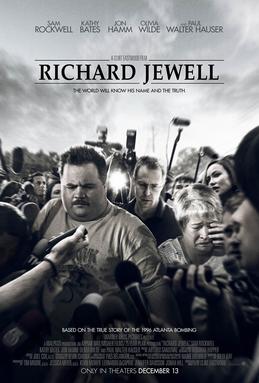
 In 1996, a security guard named Richard Jewell should have been proclaimed a hero. He spotted an abandoned backpack in Centennial Park during the Atlanta Summer Olympics. Thinking that it could be a bomb, Jewell, insisting the proper security protocols be followed even though there was a concert going on, moved as many people as he could away from the backpack before it exploded. Two people died as a result of the explosion and 111 were injured. The number would have been much more catastrophic if not for Jewell’s actions.
Jewell saved lives but he soon found himself the number one suspect. Overweight, a little bit nerdy, Southern accented and possessing a spotty work history, Richard Jewell did not fit the popular conception of a hero. After the FBI leaked that Jewell was their number one suspect, the press literally reported as if Jewell’s arrest was imminent. I’m old enough to remember the way that, for a month, the nightly news seemed like the counting the days until Jewell was charged. Jewell, however, was never arrested and eventually, he sued several media outlets for libel. After anti-abortion fanatic Eric Rudolph emerged as the number one suspect in the bombing, the three FBI agents who attempted to railroad Jewell were disciplined. One was suspended for five days without pay, which seems a light punishment for ruining a man’s life.
Clint Eastwood’s Richard Jewell was about the persecution of the title character, with Paul Walter Hauser playing Jewell, Kathy Bates playing his mother, Jon Hamm playing the arrogant FBI agent, Olivia Wilde playing the unethical journalist who first reported that Jewell was a suspect, and Sam Rockwell playing Jewell’s attorney. When Richard Jewell was released in 2019, there was a lot of debate about the way it presented both the media and the FBI. This was during the first Trump presidency and many critics felt that it was not the right time for a film about an irresponsible reporter and a corrupt FBI agent. But Eastwood’s film isn’t about the reporter or the FBI. Instead, like many of his films, it’s about a loner who does the right thing, refuses to compromise, and suffers for it. If the FBI and the media didn’t want to be presented as being villains in a movie about Richard Jewell, they should have thought twice before announcing to the the world that they thought he was a murderer.
Because of the controversy, Richard Jewell is one of Eastwood’s unfairly overlooked films. Along with directing in his usual straightforward manner, Eastwood gets a great performance out of Paul Walter Hauser and reminds us that not every hero looks like the Man With No Name. Even more importantly, Eastwood pays tribute to a man who deserved better than he was given by the world. Richard Jewell died 12 years before the film that was named after him was released. A lot of people wanted to sweep what happened to Richard Jewell under the rug. Eastwood, in one of the best of his later films, refused to let that happen.

Paul Walter Hauser and Clint Eastwood


 Through the Shattered Lens