Lisa Reviews An Oscar Nominee: Prizzi’s Honor (dir by John Huston)


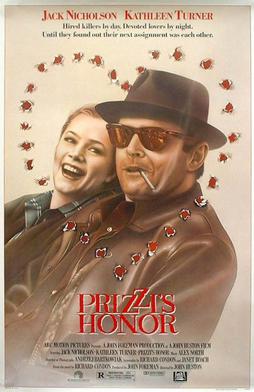
First released in 1985, Prizzi’s Honor tells the story of Charley Partanna (Jack Nicholson), a blue collar guy who lives in Brooklyn and who is a hard-working hit man for the Prizzi crime family.  Charley is the son of Angelo (John Randolph), who is the right-hand man to the family’s elderly but still ruthless Don (William Hickey).  In the past, Charley came close to marrying the Don’s daughter, Maerose Prizzi (Anjelica Huston), and he is almost as much a member of the family as the Don’s two sons, Eduardo (Robert Loggia) and Dominic (Lee Richardson).

While attending a family wedding, Charley meets and is immediately infatuated with a woman named Irene Walker (Kathleen Turner).  Later, when Charley is sent to California to kill a man who robbed one of the family’s Vegas casinos, he is shocked to discover that the man is Irene’s husband.  Irene swears that she didn’t have anything to do with the casino theft and, after a whirlwind courtship, Charley and Irene get married in Mexico.  What Charley doesn’t know (but eventually discovers) is that Irene is herself a professional killer.  While Charley and Irene try to balance work and love, Maerose conspires to turn the family against Irene and win Charley back.

Directed by the legendary John Huston, Prizzi’s Honor is pitch black comedy about two hard-working people who kill for a living.  (The film’s big set piece is an extended sequence in which Charley and Irene’s attempt to pull a job together goes wrong in every way and they end up arguing about their relationship while dragging dead bodies from one room to another.)  Though Prizzi’s Honor was released long before the series premiered on HBO, the film feels almost like a companion piece to The Sopranos, full of mobsters who are not as clever as they think they are and who struggle to uphold the old ways in an increasingly complicated world.  Particularly when compared to the gangster who populate a film like The Godfather, the Prizzis are defined by their pettiness.  If Don Corleone epitomized wisdom and honor, Don Prizzi epitomizes someone who holds onto power solely for power’s sake.

Prizzi’s Honor is one of those films that probably seemed a bit more revolutionary when it was first released than it does today.  At this point, we’ve seen so many films about hired killers who have quirky conversations while carrying out their work that the mix of violence and dark humor can feel almost like a cliché.  As well, there are certain parts of the film, like the opening wedding sequence, that feel as if they go on for just a few minutes too long, as if John Huston himself was not always comfortable with the balance between the dark drama and the comedy of mob manners.  That said, Jack Nicholson, Kathleen Turner (who gives a performance worthy of the great femme fatales of film noir), Anjelica Huston, John Randolph, and especially William Hickey all give strong enough performances to hold the audience’s attention and the film’s finale cuts to the point in such a way that it leaves you reconsidering everything that you’ve previously seen.  Prizzi’s Honor has its flaws but Nicholson and Turner have such chemistry that the film’s ending sticks with you.

Prizzi’s Honor was nominated for 8 Oscars, including Best Picture, Best Director, Best Actor, and Best Supporting Actor for William Hickey.  (Oddly, Kathleen Turner was not nominated for playing Irene.)  In the end, it only won one Oscar that year, for supporting actress Anjelica Huston.  The Oscars that year were dominated by a far more convention love story, Out of Africa.

10 Oscar Snubs From the 1970s


Ah, the 70s. The decade started with the collapse of the studio system and the rise of the so-called movie brats. For the first half of the decade, Hollywood was producing the type of challenging films on which they would never again be willing to take the risk. The 70s were indeed a second cinematic golden age, full of anti-heroes and dark endings. Then, in 1977, Star Wars changed all of that and ushered in the era of the blockbuster. The 1970s gave the world disco, The Godfather, and some of the best Oscar winners ever.  It also gave us more than a few snubs.

1971: Dirty Harry Is Totally Ignored

Dirty Harry may be one of the most influential films ever made but the Academy totally snubbed it.  My guess is that, with The French Connection coming out that same year, the Academy only had room for one morally amibiguous cop film in its heart.  Still, Dirty Harry has certainly held up better than the nominated Nicholas and Alexandra.  Both Clint Eastwood and Andrew Robinson gave performances that were award-worthy as well.  Say what you will about Eastwood’s range, I defy anyone not to smile at the way Harry snarls when he discovers that the man he’s talking to teaches a constitutional law course at Berkley.

1971: Gimme Shelter Is Not Nominated For Best Documentary Feature

Considering that Woodstock won the Documentary Oscar the previous year, it only seems appropriate the Gimme Shelter should have won the following year.  In the end, the Academy decided to celebrate the best of the 60s while snubbing the worst of it.

1972: Burt Reynolds Is Not Nominated For Deliverance

If you’ve ever seen Deliverance, you know how important a character Lewis Medlock (played by Burt Reynolds) was.  Not only was he the one who persuaded everyone to spend the weekend risking their lives on a canoeing trip but he also set the standard for “manlinness” that the rest of his friends tried to live up to.  When Lewis ends up getting a compound fracture and is forced to spend the rest of the film deliriously lying in a canoe, it’s a reminder that nature and fate don’t care how confident or outspoken you are.  Reynolds was perfectly cast.  1972 was a strong year with a lot of worthwhile nominations and, to be honest, there’s really not a bad or an unworthy performance to be found among the acting nominees.  Still, it’s hard not to feel that the Academy should have found some room for Burt Reynolds.

1974: John Huston Is Not Nominated For Chinatown

In the role of Chinatown‘s Noah Cross, John Huston gave one of the great villainous performances.  Cross represented pure avarice and moral decay, a man who committed terrible crimes but who, the film suggested, was also responsible for creating not only modern Los Angeles but also providing a home for Hollywood.  Admittedly, there were a lot of good performances to choose from and I certainly can’t complain that the Academy awarded the Oscar for Best Supporting Actor to Robert De Niro, who deserved it.  Still, in retrospect, John Huston’s evil turn was at least as strong as Fred Astaire’s likable (and nominated) turn in The Towering Inferno.

1974 and 1975: John Cazale Is Not Nominated For Best Supporting Actor

John Cazale had a brief but legendary career.  A noted stage actor, Cazale made his film debut in 1972 with The Godfather.  He played Fredo, the Corleone son who couldn’t get any respect.  He final film, released after his early death from cancer, was 1978’s The Deer Hunter.  Cazale appeared in a total of five films, every one of which was nominated for Best Picture.  That this talented actor was never nominated for an Oscar just doesn’t seem right.  But for which film should he have been nominated?

Godfather Part II received three nominations for Best Supporting Actor: Robert De Niro, Lee Strasberg, and Michael V. Gazzo.  Personally, I would probably replace Gazzo with Cazale.  Cazale’s performance as Fredo was one of the strongest parts of Godfather Part II.  Who can forget Fredo’s legendary meltdown about always being overlooked?  I would also say that Cazale deserved a nomination for his performance in Dog Day Afternoon, in which he played Sal and provided the film with some of its saddest and funniest moments.  Neither Fredo nor Sal survive their films and, in both cases, it’s impossible not to feel that they deserved better than the world gave them.

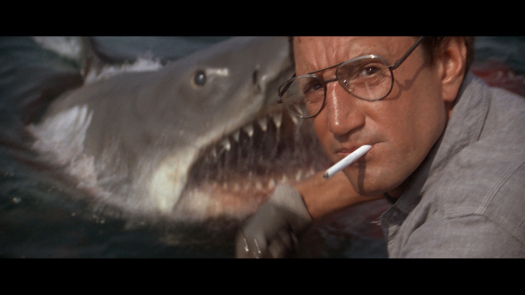
1975: Steven Spielberg Is Not Nominated For Jaws

Seriously, what the Heck?  Jaws totally reinvented the movies.  It received a deserved nomination for Best Picture but the true star of the film, Steven Spielberg, was somehow not nominated.

1976: Martin Scorsese is Not Nominates For Taxi Driver

Seriously, what the Heck?  Taxi Driver totally reinvented the movies.  It received a deserved nomination for Best Picture but the true star of the film, Martin Scorsese, was somehow not nominated.

1977: Harrison Ford Is Not Nominates For Star Wars

Harrison Ford, despite having had the type of career for which most actors would sacrifice their soul, has never had much success with the Oscars.  He’s been nominated exactly once, for Witness.  That he’s never won an Oscar just feels wrong.  The fact that he wasn’t even nominated for playing either Han Solo or Indiana Jones feels even more wrong.  In the role of Solo, Ford bring some much needed cynicism to Star Wars.  His decision to return and help the Rebels destroy the Death Star is one of the best moments in the film.

1978: National Lampoon’s Animal House Is Totally Ignored

This film deserved a nomination just for the scene in which John Belushi destroyed that annoying folk singer’s guitar.  Seriously, though, this is another film that, more or less, defined an era.  I’m not saying it deserved to win but it at least deserved a few nominations.

1979: Dawn of the Dead Is Not Nominated For Best Picture

Considering the Academy’s general resistance to honoring horror, it’s not really a shock that Dawn of the Dead was not nominated for Best Picture but still, it would have been nice if it had happened.

Agree?  Disagree?  Do you have an Oscar snub that you think is even worse than the 10 listed here?  Let us know in the comments!

Up next: The 80s arrive and the snubs continue!

Dawn of the Dead (1978, dir by George Romero)

4 Shots From 4 Films: Special John Huston Edition


4 Or More Shots From 4 Or More Films is just what it says it is, 4 shots from 4 of our favorite films. As opposed to the reviews and recaps that we usually post, 4 Shots From 4 Films lets the visuals do the talking!

116 years ago today, the writer/director/actor John Huston was born in Nevada, Missouri.  Today, we honor his life and films with….

4 Shots from 4 John Huston Films

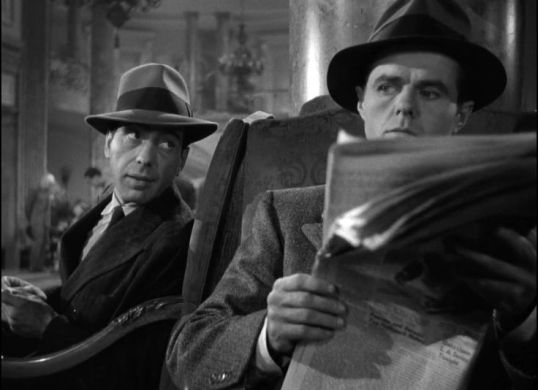
The Maltese Falcon (1941, dir by John Huston, DP: Arthur Edeson)


The Misfits (1961, dir by John Huston, DP: Russell Metty)


The Night of the Iguana (1964, dir by John Huston, DP: Gabriel Figueroa)


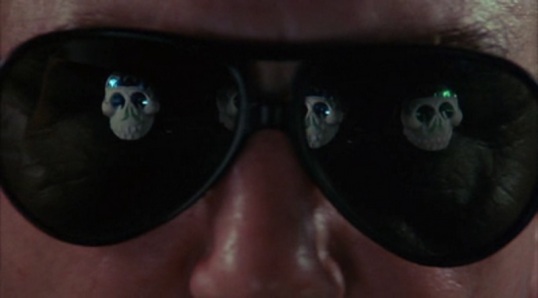
Under the Volcano (1984, dir by John Huston, DP: Gabriel Figueroa)


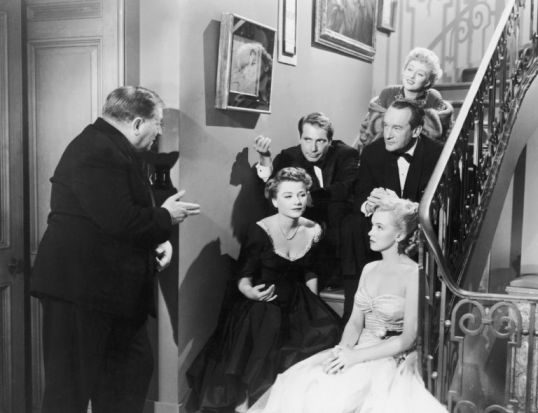
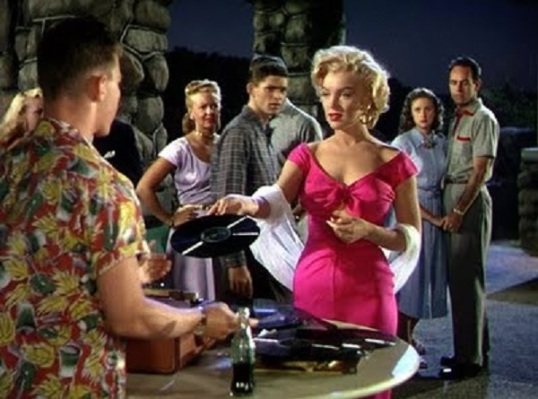
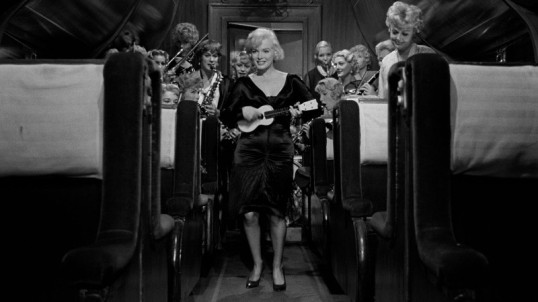
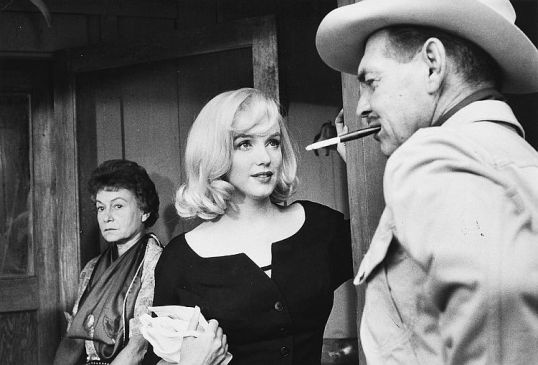
4 Shots From 4 Films: Special Marilyn Monroe Edition


4 Or More Shots From 4 Or More Films is just what it says it is, 4 shots from 4 of our favorite films. As opposed to the reviews and recaps that we usually post, 4 Shots From 4 Films lets the visuals do the talking!

Marilyn Monroe would have been 96 years old today.  Sixty years after her mysterious death, Marilyn Monroe continues to intrigue film lovers and conspiracy theorists alike.  Her legacy is such that, ever since her death, directors have been trying to recreate her life with biopics and actresses have been trying to recapture Marilyn’s magic.  The latest to try will be Andrew Dominick and Ana de Armas with Blonde later this year.

While I wish them luck, Marilyn Monroe was an original and not someone whose talent and charisma can be easily duplicated.  Needless to say, it’s time for….

4 Shots From 4 Marilyn Monroe Films

All About Eve (1950, dir by Joseph L. Mankiewicz, DP: Milton R. Krassner)

Niagara (1953, dir by Henry Hathaway, DP: Joseph MacDonald)

Some Like It Hot (1959, dir by Billy Wilder, DP: Charles Lang)

The Misfits (1961, dir by John Huston, DP: Russell Metty)

The Life and Times of Judge Roy Bean (1972, directed by John Huston)


During the lawless day of the old west, a drifter named Roy Bean (Paul Newman) wanders into the desolate town of Vinegaroon, Texas.  When he enters the local saloon, he meets the vagrants who run the town.  They beat him, they rob him, and they tie him to the back of his horse and leave him to die.

Bean, however, does not die.  Instead, he’s nursed back to health by a beautiful young woman named Maria Elena (Victoria Principal).  Carrying a gun, Bean reenters the saloon and promptly kills nearly everyone who previously attacked him.  (“I’m not done killing you yet!” Bean yells at one fleeing woman.)  Bean sits down in front of the saloon and waits for justice.  Instead, he’s visited by a lecherous traveling preacher (Anthony Perkins), who buries the dead and gives Bean absolution.  Bean declares that he is now the “law of the West Pecos.”  As the preacher leaves, he looks at the audience and says that he never visited Bean again and later died of dysentery in Mexico.  He hasn’t seen Bean since dying so the preacher is sure that, wherever Bean went, it wasn’t Heaven.

Judge Roy Bean dispenses rough and hard justice from his saloon and renames the town Langtry, after the actress Lillie Langtry.  Bean has never met Langtry or even seen her perform but he writes to her regularly and pictures of her decorate the walls of his saloon.  Bean hires outlaws to serve as his town marshals and sentences prostitutes to remain in town and marry the citizens.  Lawbreakers are left hanging outside of the saloon.  Bean enters into a common law marriage with Maria and, for a while, they even own a bear, who drinks beer and helps Bean maintain order in the court.  Bean may be crazy but his methods clean up the town and Langtry starts to grow.  As Langtry becomes more civilized and an attorney named Arthur Gass (Roddy McDowall) grows more powerful, it starts to become apparent that there may no longer be a place for a man like Judge Roy Bean.

The real-life Judge Roy Bean did hold court in a saloon and he did name the town after Lilly Langtry.  It’s debatable whether or not he was really a hanging judge.  Because he didn’t have a jail, the maximum punishment that he could hand out was a fine and usually that fine was the same amount of however much money the accused had on him at the time of his arrest.  Because of his eccentricities and his reputation for being the “only law west of the Pecos,” Roy Bean became a legendary figure.  The Life and Times of Judge Roy Bean acknowledges from the start that it’s not a historically accurate, with a title card that reads, “Maybe this isn’t the way it was… it’s the way it should have been.”

Based on a script by John Milius and directed by Hollywood veteran John Huston, The Life and Times of Judge Roy Bean is one of the strangest westerns to ever be released by a major studio.  Featuring multiple narrators who occasionally speak directly to the camera, The Life and Times of Judge Roy Bean is an episodic mix of low comedy, graphic violence, and syrupy romance.  (The film’s sole Oscar nomination was for the song that played over scenes of Bean and Maria going on a romantic picnic with their pet bear.)  Familiar faces show up in small roles.  Along with Perkins and McDowall, Tab Hunter, Ned Beatty, Jacqueline Bissett, Ava Gardner, and Anthony Zerbe all play supporting roles.  Even a heavily made-up Stacy Keach makes an appearance as an albino outlaw named Bad Bob.

Jacqueline Bisset in The Life and Times of Judge Roy Bean

Milius has gone on the record as calling The Life and Times of Judge Roy Bean a “Beverly Hills western” and he has a point.  He envisioned the script as starring Warren Oates as a less likable and much more morally ambiguous version of Judge Roy Bean and he was not happy that his original ending was replaced by a more showy pyrotechnic spectacle.  Milius envisioned the film as a low-budget spaghetti western but Huston instead made a Hollywood epic, complete with celebrity cameos and a theme song from Maurice Jarre and Marilyn Bergman.  Milius said that his experience with The Life and Times of Judge Roy Bean is what led to him deciding to direct his own films.

Again, Milius has a point but John Huston’s version of The Life and Times of Judge Roy Bean has its strengths as well.  Though he may not be the madman that Milius originally envisioned, Paul Newman gives a good, grizzled performance as Roy Bean and the role served as a precursor for the type of aging but determined characters that Newman would specialize in during the final phase of his career.  Due to its episodic structure, the film is uneven but it works more often than it doesn’t.  The chaotic early scenes reflect a time when the west was actually wild while the later scenes are more cohesive, as society moves into Langtry and threatens to make formerly indispensable men like Roy Ban obsolete.  Even the cameo performances fit in well with the film’s overall scheme, with Anthony Perkins standing out as the odd preacher.  Finally, the young Victoria Principal is perfectly cast as the only woman that Roy Bean loved as much as Lily Langtry.

Though it’s impossible not to wonder what Warren Oates would have done with the title role, The Life and Times of Judge Roy Bean is a good end-of-the-west western.

Lisa Reviews An Oscar Nominee: The Treasure of the Sierra Madre (dir by John Huston)


Last night, for the first time, I watched the 1948 Best Picture nominee, The Treasure of the Sierra Madre.

Directed by the legendary John Huston and featuring a wonderful performance from the equally legendary Humphrey Bogart, The Treasure of the Sierra Madre has a reputation for being one of the greatest films ever made.  It’s a reputation that is more than deserved.  That makes the film a pleasure to watch but, unfortunately, it also makes it somewhat intimidating to write about.

(In the past, Leonard and I have discussed how it’s so much more difficult to write a review of a good film than it is to write a review of a bad film.  Sad to say, it’s often easier to be negative than it is to be positive.  Writing a review of a bad film only requires the ability to be snarky.  Writing a review of a good, much less a great film, is far more difficult.  It’s one thing to realize a film is good.  It’s another thing to try to explain why.)

The Treasure of Sierra Madre tells the story of three Americans in Mexico, drifters living on the edge of society.  Fred C. Dobbs (Humphrey Bogart) and Bob Curtin (Tim Holt) spend their days begging for spare change and taking whatever work they can find.  When they meet an eccentric but wise prospector named Howard (Walter Huston), the three of them end up going on a quest for gold.  It’s not a spoiler to tell you that the three men find their gold, though Dobbs is shocked to discover that gold dust can easily be mistaken for sand and doesn’t naturally shine in the sun.  Just as Howard warned would happen, the three men start to grow paranoid about their newfound wealth.  Meanwhile, others — including a pushy American named Cody (Bruce Bennett) and an outlaw known as Gold Hat (Alfonso Bedoya) — show up near the camp, leaving the men to wonder how far each of them will go to protect their shares of the treasure.

When the three of them first meet in a dirty flophouse, Howard warns Dobbs and Curtin that gold will drive a man to insanity.  Howard says that he knows because it’s happened to him more than once.  Still, as we watch the three prospectors descend further into paranoia with each new bag they fill with gold dust, we can’t help but wonder if the gold is driving them crazy or if it’s just causing them to reveal their true selves.  From the minute we first see Dobbs on a street in a Mexican city, begging for money and snarling at a child (played, incidentally, by a very young Robert Blake) who tries to sell him a lottery ticket, it’s obvious that Dobbs is desperate, angry, and resentful.  Finding the gold doesn’t do anything to alleviate the anger that Dobbs feels towards the world as much as it just gives him an excuse to indulge in it fully.  Whereas, in the past, Dobbs always had to hold back his anger in hope of getting another handout, the gold allows him to fully embrace his seething resentment.  Compared to Dobbs, Howard and Curtin don’t seem to change quite as much.  Of course, it should be remembered that Howard is an old man who knows that he doesn’t have much time left.  Meanwhile, Curtin is often too busy reacting to Dobbs’s anger to truly indulge in his own.  Watching the film, you have to wonder how things would have gone if Dobbs hadn’t been there.  Without the distracting of Dobbs’s growing instability, would Curtin have remained the sane member of the group?  The scene where Curtin first meets Cody suggests that, on his own, Curtin is just as capable of being as paranoid as Dobbs.

Indeed, though greed is certainly a motivating force in The Treasure of the Sierra Madre, it’s not the film’s main subject.  Instead, this film is a study of men living on the fringes of society.  We learn surprisingly little about how Dobbs and Curtin came to be two beggars living in Mexico.  We learn a bit more about Howard’s background, largely because Howard likes to talk.  But again, we don’t really learn that much about who Howard was before he became a prospector.  Howard, Curtin and Dobbs are forgotten men, without any real friends or family.  They’ve got each other, though that bond doesn’t always appear to be a particularly strong one.  Howard and Curtin have managed to find some sort of peace with their existence.  Dobbs has not.  While the film may partially be a portrait of the corrosive effects of greed, it’s also a character study of three men who have been forgotten and abandoned and how they deal with living outside of the world that everyone else takes for granted.

There’s much to love in The Treasure of the Sierra Madre, from John Huston’s powerful direction to the dark humor that runs through some of the film’s best moments.  Houston fills the film with little details that make it feel authentic.  (My favorite little moment came towards the end when a man facing a firing squad makes sure that he’s wearing his hat before he’s shot.)  Walter Huston, Tim Holt, Bruce Bennett and Alfonso Bedoya all give strong performances, though the film is dominated by Humphrey Bogart.  Walter Huston won a (deserved) Academy Award for his performance but one of Bogart’s best performances somehow went unnominated.  Bogart gives a ferocious and never less than compelling performance as Dobbs.  At his worst, Dobbs is almost like a trapped animal, roaming the cage of his existence and snapping at anyone who gets too close.  At the same time, Dobbs’s naked desperation makes it impossible not to feel some sympathy for him.  Bogart was never more vulnerable than when Dobbs was begging for money and never more frightening than after he got it.

The Treasure of the Sierra Madre is a classic, one that has been endlessly imitated but which will probably never be equaled.  Nominated for four Oscars, The Treasure of the Sierra Madre won three (for John Huston’s direction and screenplay and for Walter Huston’s performance as Howard) but it lost best picture to Laurence Olivier’s Hamlet.  As much as I like Hamlet, this is a case where the Academy made a mistake.

4 Shots From 4 Films: Special Humphrey Bogart Edition


4 Shots From 4 Films is just what it says it is, 4 shots from 4 of our favorite films. As opposed to the reviews and recaps that we usually post, 4 Shots From 4 Films lets the visuals do the talking.

Today is not just Christmas!  It is also Humphrey Bogart’s birthday!  Bogart was born 121 years ago, today!  And that means that it’s time for….

4 Shots From 4 Films

Dead End (1937, dir by William Wyler)

Casablanca (1943, dir by Michael Curtiz)

The Big Sleep (1946, dir by Howard Hawks)

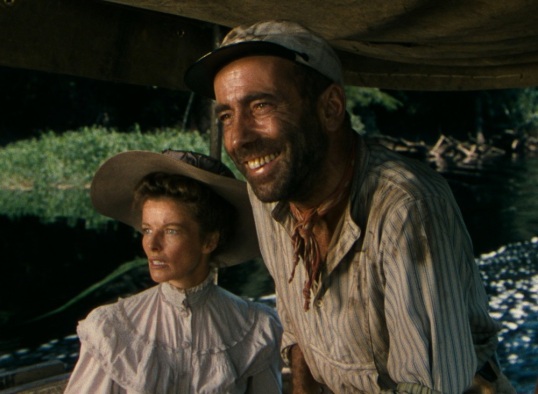
The African Queen (1951, dir by John Huston)

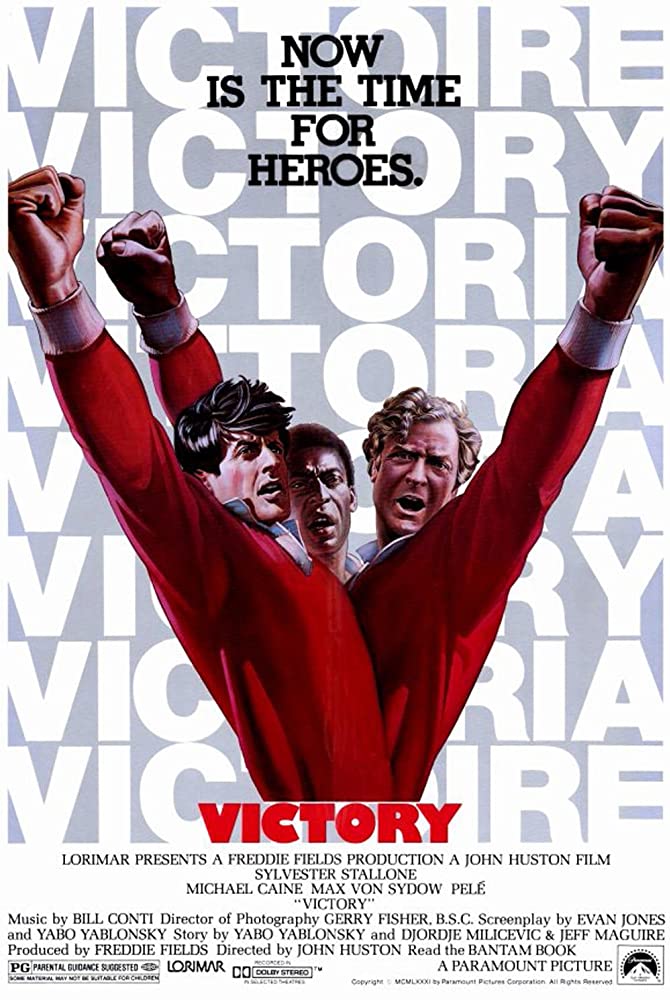
Escape to Victory (1981, directed by John Huston)


In 1942, during the height of World War II, Nazi Major Karl von Steiner (Max von Sydow) is surprised to discover that professional English footballer John Colby (Michael Caine) is a prisoner of war in France and that he has formed his own soccer league with his fellow POWs.  Seeing a chance for a propaganda coup, von Steiner arranges for a team led by Colby to be travel to occupied Pairs where they will play a match against the German national team.

Colby agrees, on the condition that it be a real game and that the teams not just be made up of officers.  At the insistence of his senior officers, Colby also allows an American prisoner named Robert Hatch (Sylvester Stallone) to serve as the team’s trainer.  Hatch is plotting to use the match as a cover for his own escape.  When it appears that there’s a chance for the entire team to escape during the match, Colby and his team are forced to choose between defeating the German team or making a run for freedom.

I think that, for most people, that wouldn’t be too difficult of a decision to make.  If I have to choose between escaping a POW camp or winning a match, I’m going to go down the tunnel and do what I have to do to make it across the English channel.  In the movie, though, it’s a matter of pride and I think Michael Caine is probably the only actor who could make such a conflict feel credible.  Though Stallone got both top billing and a romantic subplot with a member of the Resistance, it’s Michael Caine’s movie all the way through.  From the minute he demands to know “what the bloody hell” is going on, Michael Caine owns Escape to Victory.

Escape to Victory is an old-fashioned war film.  Think of it as being The Great Escape with tons of soccer kicked in.  Fans of the game will probably enjoy seeing legendary players like Pele and Bobby Moore cast as the POWs who make up Colby’s team.  The movie has some slow spots but it’s ultimately a rousing adventure, featuring good performances from Caine, von Sydow, and Sylvester Stallone.  It’s interesting to see Stallone cast as someone who isn’t automatically the best player on the field.

The film is based on a true story, one that sadly did not share this film’s happy ending.  In 1942, a group of Ukrainian POWs played an exhibition match against their German captors.  When the POWs won the match, the Germans responded by executing the majority of the players.  The true story of the Death Match (as it was later called) was told in 1962, in a Hungarian film called Two Half Times In Hell.

4 Shots From 4 Bloody Films: Special Michael Caine Edition


4 Shots From 4 Films is just what it says it is, 4 shots from 4 of our favorite films. As opposed to the reviews and recaps that we usually post, 4 Shots From 4 Films lets the visuals do the talking!

Today is the 87th birthday of the great actor and icon of all things British, Michael Caine!

Caine is famously prolific and, when it comes to picking shots from his films, it’s hard to narrow them down to just four.  At a certain point in his career, the big joke about Michael Caine was that he would appear in literally everything.  He even missed accepting his first Oscar in person because he was busy filming Jaws: The Revenge.  Not surprisingly, it was after Jaws: The Revenge that Caine started to become more discriminating when it came to picking his films.

Despite the fact that he’s now a bit more careful about picking roles that allow him to show off his considerable talent as opposed to just supplying him with an easy paycheck, Caine remains a busy actor.  In his autobiography, Blowing the Bloody Doors Off, Caine wrote that he plans to keep acting as long as he is physically and mentally able to do so.  I look forward to seeing what future, great performances Michael Caine is going to give us.

For now, here are:

4 Shots From 4 Films

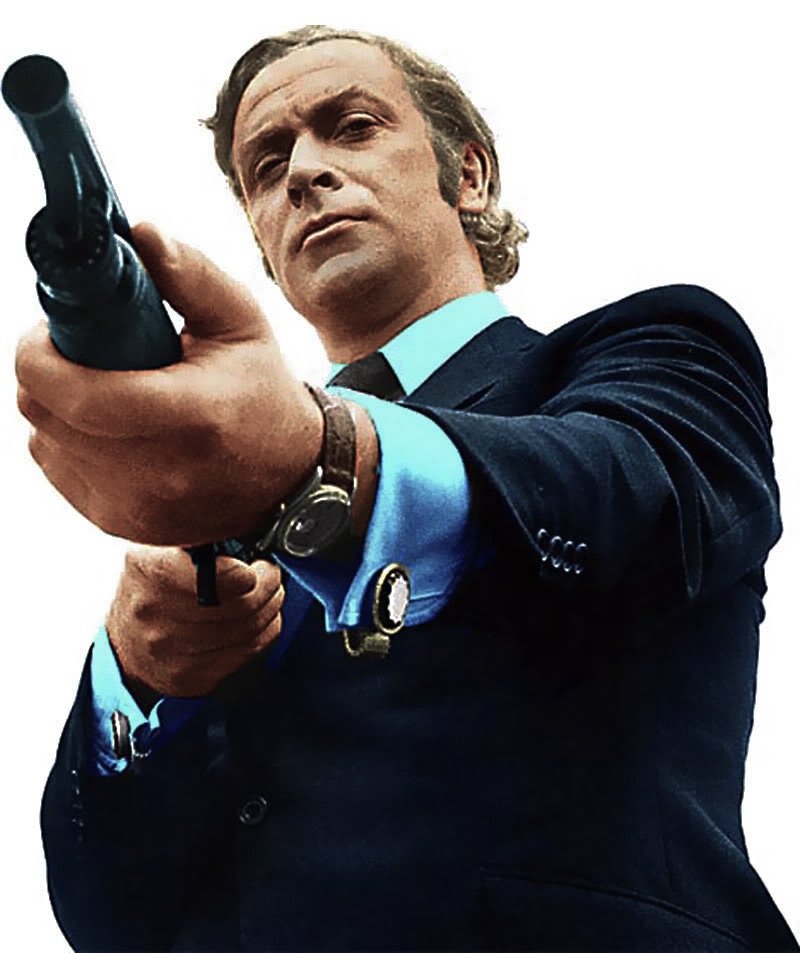
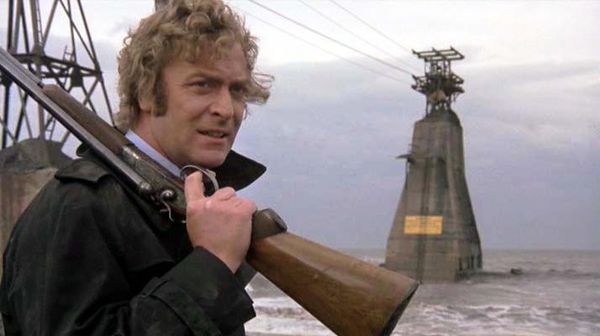
Get Carter (1971, directed by Mike Hodges)

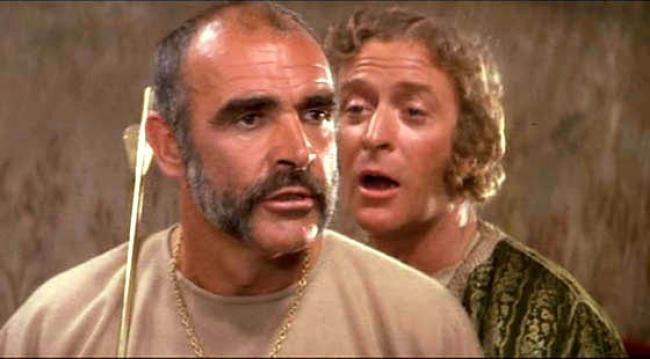
The Man Who Would Be King (1975, directed by John Huston)

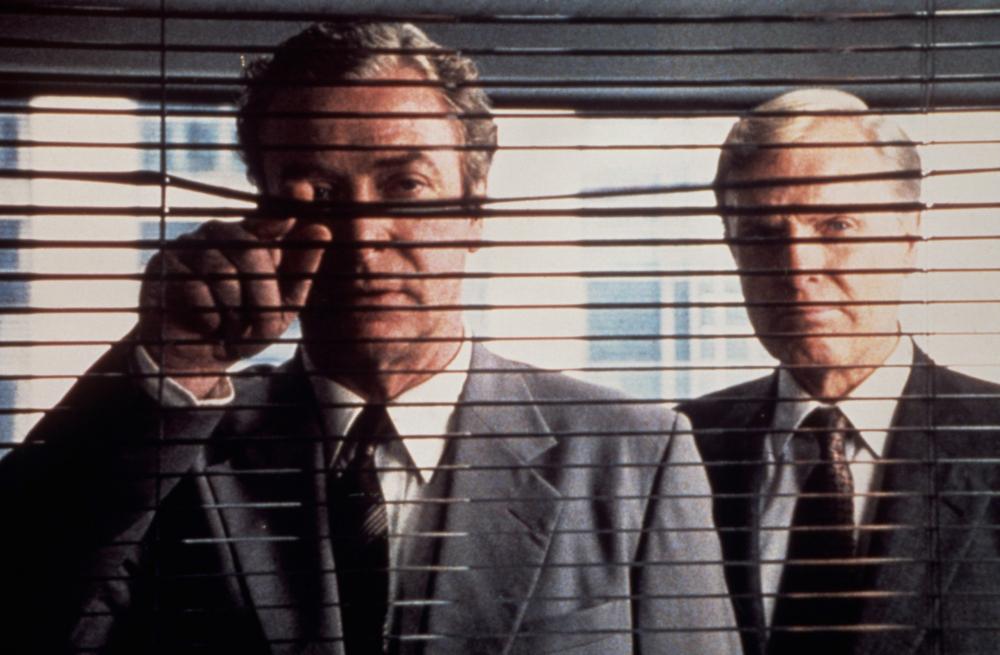
A Shock to the System (1990, directed by Jan Egleson)

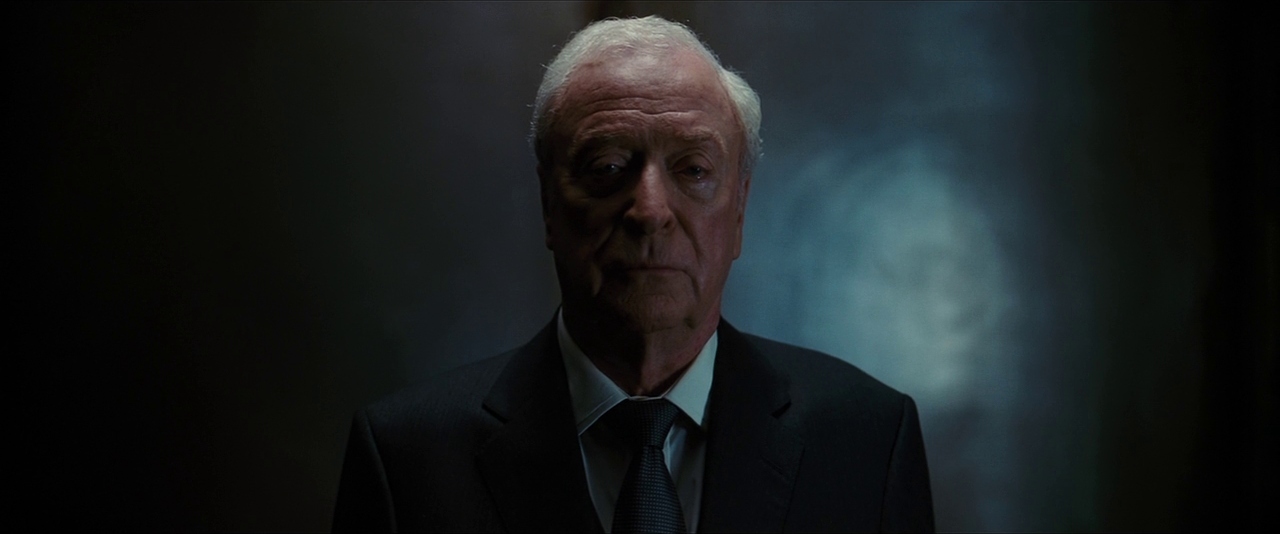
The Dark Knight Rises (2012, directed by Christopher Nolan)


THE MALTESE FALCON is the Stuff Film Noir Dreams Are Made Of (Warner Brothers 1941)


gary loggins's avatarcracked rear viewer

1941’s THE MALTESE FALCON may not be the first film noir (most people agree that honor goes to 1940’s STRANGER ON THE THIRD FLOOR ). It’s not even the first version of Dashiell Hammett’s 1930 detective story – there was a Pre Code film with Ricardo Cortez as Sam Spade that’s pretty good, and a 1936 remake titled SATAN MET A LADY with Warren William that’s not. But first-time director John Huston’s seminal shamus tale (Huston also wrote the amazingly intricate screenplay) virtually created many of the tropes that have become so familiar to fans of this dark stylistic genre:

THE HARD-BOILED DETECTIVE – Private investigators had been around since the dawn of cinema, from Sherlock Holmes to Philo Vance to Charlie Chan, but none quite like Humphrey Bogart’s Sam Spade. Both Cortez and William played the character as flippant skirt-chasers, but in Bogie’s hands, Sam Spade is a harder…

View original post 667 more words