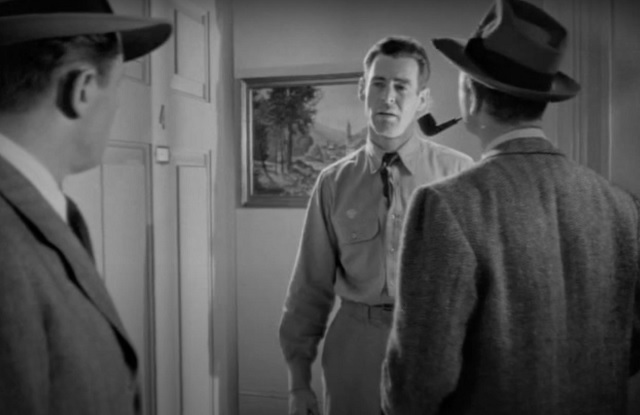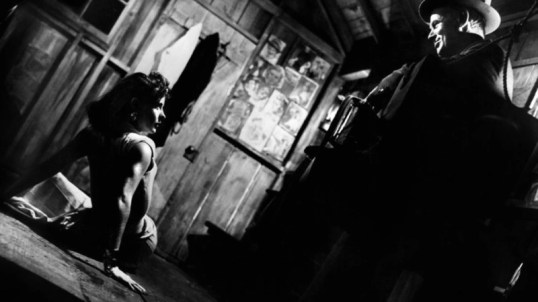
“So you’re a Red, who cares? Your money’s as good as anybody else’s.” — Skip McCoy
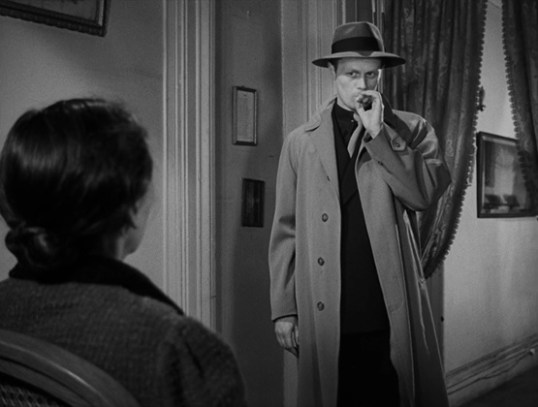
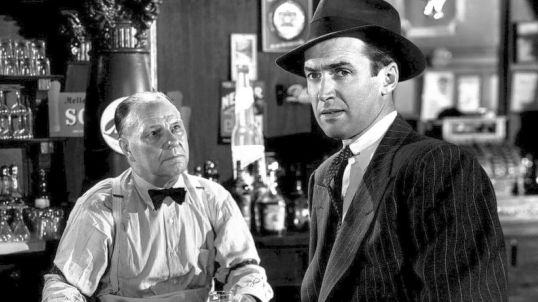
The best thing about Pickup on South Street is that its hero is a real pain in the neck. Skip McCoy does not want to save the country, help the police, or become a better man. He wants to know what is in it for him, preferably before anyone finishes explaining the danger. That stubborn selfishness gives Samuel Fuller’s 1953 thriller its bite. Under Sam Fuller’s direction, a story about stolen government secrets becomes a scrappy clash of personalities. The espionage matters, but the real attraction is watching people bargain, bluff, and occasionally discover feelings they would rather keep out of the deal.
Richard Widmark plays Skip, whose latest subway theft turns out to be considerably more complicated than expected. His target is Candy, played by Jean Peters, a woman carrying an envelope for her former boyfriend, Joey. Unknown to her, it contains microfilm meant for a Communist spy operation. Government agents are watching Candy when Skip steals her wallet, leaving both sides scrambling to recover something he initially regards as an ordinary score. Everyone wants the same object for different reasons. Skip’s refusal to accept anyone else’s priorities keeps the plot moving, while his growing awareness of its value makes him increasingly difficult to handle.
Fuller’s direction makes the opening theft an immediate grabber. Rather than explaining who everyone is, he draws our attention to faces, hands, and the opportunities created by a crowded subway car. Skip’s concentration is almost intimate, while Candy remains unaware of what his closeness means. The sequence makes watching feel active: we study the same movements he does, waiting to see whether anyone notices. Fuller establishes suspense through physical behavior before dialogue takes over. It is economical filmmaking, but it never feels merely efficient. The scene has a sly, uncomfortable energy that introduces the movie’s overlapping interests in desire, deception, and invasion of privacy.
Widmark makes Skip entertaining without pretending he is harmless. His smile has a taunting quality, as though he has already spotted the weakness in whatever argument someone is making. He particularly enjoys refusing people who expect obedience. That could become a performance built entirely around attitude, but Widmark gives the defiance a practical foundation. Skip protects himself by withholding information and trusting almost nobody. Fuller allows that unpleasantness to remain, resisting the temptation to make his leading man immediately lovable. We keep watching because Skip is unpredictable, not because the film promises that every selfish gesture conceals a heart of gold.
Candy has the difficult job of getting past those defenses, and Peters keeps her from becoming merely the woman assigned to soften the leading man. She gives Candy a mixture of determination and emotional weariness. Here is someone capable of standing her ground who nevertheless keeps investing her feelings in men who offer little security. Her involvement with Joey leaves her exposed, and her attraction to Skip hardly promises a peaceful alternative. Peters makes the contradiction believable. Candy can recognize danger without being immune to loneliness, and her toughness does not cancel out her need to believe another person might care.
Their relationship is the film’s most uneven element. Attraction develops amid suspicion and physical aggression, and the shift toward affection sometimes happens faster than the characters have earned. Fuller’s direction favors impact over delicacy here, which gives their encounters force but occasionally shortchanges their emotional development. Widmark and Peters nevertheless generate a charged, unsettled chemistry. Their scenes work best when affection seems to escape against their better judgment. They work less well when the screenplay appears to assume that rough handling can serve as romantic groundwork. The movie’s abrasive approach is part of its identity, but that does not make every choice equally convincing.
Thelma Ritter provides a different emotional register as Moe, a necktie seller who also earns money by passing information to the police. She knows the neighborhood’s crooks, understands their routines, and treats that knowledge as something she has every right to sell. Ritter makes her funny, observant, and exhausted, often within the same exchange. Moe’s determination to save for a decent burial initially sounds like colorful characterization. Gradually, it becomes the clearest expression of what she wants: some assurance that she will not disappear without dignity. Fuller gives Ritter room to let that fear emerge without turning it into an oversized appeal for sympathy.
His handling of Moe shows how much tenderness exists beneath the movie’s tough surface. Fuller does not soften her occupation or suggest that hardship automatically makes her noble. Instead, he lets practical self-interest coexist with affection and personal limits. Informing on someone can be part of an understood arrangement rather than evidence of complete moral emptiness. These characters exploit one another, but they still recognize differences between making a living and committing a deeper betrayal. The direction stays close enough to their individual concerns that those distinctions matter. What might have been a convenient supporting character becomes the person who gives the film its emotional weight.
Fuller is just as effective at making the settings express the characters’ circumstances. Skip’s waterfront shack offers independence without comfort or stability, an appropriate home for someone who prefers being difficult to reach. Elsewhere, tight framing and sudden movement make conversations feel like contests over territory. People lean in, crowd one another, and turn ordinary exchanges into confrontations. The Cold War plot adds urgency, but Fuller keeps returning to immediate, personal pressures. Skip’s indifference to patriotic appeals disrupts the expected moral certainty. National duty means little to someone accustomed to treating survival as an individual responsibility, and the film gets considerable mileage out of that friction.
By the end, the question is less whether Skip will become respectable than whether he can stop treating every human connection as a transaction. That is where Pickup on South Street finds its lasting appeal. Some of the romance remains unpersuasive, and the espionage villains are simpler than the people surrounding them. But Sam Fuller’s direction holds the mixture together through sharp visual storytelling, restless pacing, and a willingness to let sentiment surface without washing away the grime. Widmark supplies the insolence, Peters the vulnerability, and Ritter the ache that lingers afterward. For a movie driven by something stolen, its finest moments come when someone finally gives something freely.