Film Review: Allied (dir by Robert Zemeckis)


allied_film

Earlier today, after deciding to take a break from watching the Lifetime films that have been steadily accumulating on my DVR, I went down to the Alamo Drafthouse with my BFF Evelyn and we watched the new World War II romantic adventure film, Allied.

Now, you should understand that I’m an Alamo Victory member and one of the benefits of my membership is that I get a free movie for my birthday!  (My birthday was on November 9th.  The offer’s good for up to a month after the big day.  Pretty nice, no?)  I have to admit that there’s a reason why I wanted to see Allied for free.  I knew that, since this big movie with big stars and a big director was being released at the start of Oscar season, I would have to see it eventually.  Add to that, Allied is current somewhat infamous for being the movie that contributed to the divorce of Brad Pitt and Angelina Jolie.  Apparently, Brad had an affair with Marion Cotillard while making this movie.  I knew I had to see Allied but I didn’t want to pay for it because, quite frankly, I wasn’t expecting it to be very good.

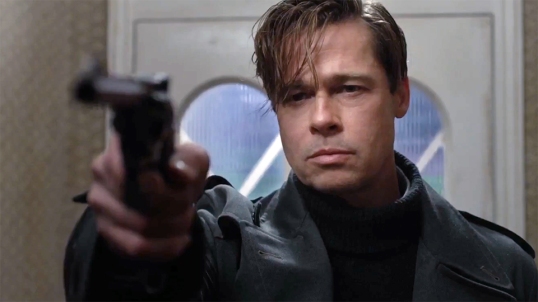
I mean, the trailer looked awful!  The trailer was a collection of war film clichés and, as happy as I was to see Brad without that raggedyass beard that he tends to have whenever he’s trying to be a serious actor, it was still hard to ignore that he essentially looked like a wax figure.  Then you had Marion Cotillard, looking as if she’d rather be playing Lady MacBeth.  Judging from the trailer, Allied just didn’t look very good.

Having now seen Allied, I can say that the trailer does the film a great disservice.  Not only is Allied far more entertaining than the trailer suggests but the trailer also gives away the film’s big twist!  Seriously, this twist occurs about 75 minutes into a 120 minute film and, if it was sprung on you without warning, it would totally blow you away.  It would leave you reeling and reconsidering everything that you had previously seen.  But since the twist is highlighted in the trailer, you instead spend the first half of the movie impatiently waiting for it.

You probably already know the twist.  But I’m still not going to reveal it because maybe there’s one or two of you out there who have managed to avoid the trailer.  Instead, I’ll tell you that Allied is a World War II romance.  It opens in Casablanca, with Canadian secret agent Max Batan (Brad Pitt) working with Marianne Beausojour (Marion Cotillard).  Marianne is a legendary member of the French Resistance.  It doesn’t take long for Max and Marianne to fall in love and soon, they’re having sex in the middle of the desert, making love in a car while a sandstorm rages all around them.  Max eventually marries Marianne and they have a daughter.  But around them, the war continues and both of them find themselves struggling to determine who they can and cannot trust.

allied-brad-pitt-marion-cotillard

As directed by Robert Zemeckis, Allied is a big movie, one that is frequently entertaining and yet occasionally and frustratingly uneven.  Allied feels like its less about recreating history and more about paying homage to the World War II and espionage films that Zemeckis watched when he was growing up.  It’s a technical marvel, featuring not only sandstorm sex but crashing airplanes and a painstaking recreation of Europe in the 1940s.   The film is full of seemingly random details, many of which don’t add much to the narrative but they do contribute to Allied‘s oddly dreamlike feel.  This is the type of film where espionage is discreetly discussed at a party while Gershwin plays on the soundtrack and British airmen casually snort cocaine in the background.  When Marianne gives birth to Anna, she does it outside while bombs explode around her.  When the baby is finally delivered, a group of nurses applaud.  It’s all wonderfully over the top but, occasionally, the narrative lags.  Zemeckis sometimes seems to be torn as to whether or not he’s paying homage to or deconstructing the genre.  As a result, some scenes work better than others.  (There’s a lengthy sequence involving a note containing false information.  It’s obvious that Zemeckis is trying to pay homage to Hitchcock’s Notorious but he never quite manages to pull it off.)

Despite what I previously assumed as a result of seeing the trailer, both Brad Pitt and Marion Cotillard are well-cast.  Cotillard is one of the few actresses who feels at home in a throwback film like this one and she does a good job keeping the audience guessing.  (Of course, if we accept that Allied is essentially Zemeckis’s cinematic dream of World War II, Cotillard serves to remind us of Inception and its multiple layers of dream logic.)  Brad Pitt, meanwhile, should consider playing more roles without his beard.  After watching Daniel Craig sulk through four James Bond films, it’s nice to be reminded that, occasionally, an actor can actually have fun while playing a secret agent.

Allied is uneven but entertaining.  Don’t let the trailer fool you.
brad-pitt-allied-trailer-3-01

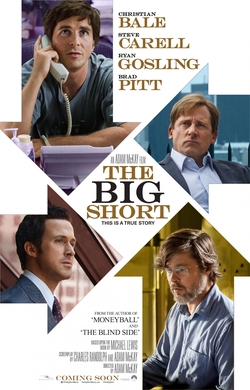
Playing Catch-Up: The Big Short (dir by Adam McKay)


The_Big_Short_teaser_poster

The Big Short is a film that is so critically acclaimed and that has been so passionately embraced by those who enjoyed it that it’s a bit intimidating to admit that it really didn’t do much for me.  (It’s even more intimidating for me to admit that I nearly included it on my list of the 16 worst films of 2015.)  It’s a big, angry movie and, even though it’s not really that good, it definitely taps into the zeitgeist.  It captures the anger, the frustration, and the fears that people (including me) are feeling right now.  It didn’t do much for me but I can understand why others have so passionately embraced it.

As for the film itself, it’s about the housing collapse and the financial crisis of 2008.  The main characters are all people who realized that the economy was about to collapse and who managed to make a profit off of the crisis.  For the most part, everyone gets at least two scenes where they get to rail about how angry they are that they’re making a profit off of other people’s misery.  However, they all still collect their money at the end of the film.

For the most part, our main characters are the type of quirky eccentrics who always tend to pop up in ensemble films like this.  They’re all played by recognizable actors and they all have an identifiable trait or two so we can keep them straight.  For instance, Christian Bale has trouble relating to people socially, plays drums, and looks like he probably has terrible body odor.  Steve Carell has a bad haircut and spends a lot of time yelling at people.  He’s also haunted by the suicide of his brother and he’s married to Marisa Tomei but she only gets to appear in two scenes and doesn’t really do much because this is a film about menfolk, dagnabit.  (I love Steve Carell but this is probably the least interesting performance that he’s ever given.)  John Magaro and Finn Wittrock are two young investors and they especially get upset when they realize that the economy is about to collapse.  Their mentor is played by Brad Pitt.  Since this is an important film, Brad Pitt plays his role with his important actor beard.

And then there’s Ryan Gosling.  Gosling plays a trader and he also narrates the film.  And really, Gosling probably gives the best performance in the film, perhaps because his character is the only one who is actually allowed to enjoy making money.  I think we’re supposed to be outraged when he brags about making money while people lose their houses but Gosling’s so charismatic and the character is so cheerful that it’s hard to dislike him.

(Of course, listening to Gosling’s narration, it’s impossible not to be reminded of The Wolf of Wall Street.  And it’s appropriate because The Big Short is kind of like The Wolf of Wall Street for people who don’t want to have to deal with ambiguity or nuance.)

The film has gotten a lot of attention for Adam McKay’s direction, which is flashy and always watchable but, at the same time, also rather shallow.  For the most part, McKay’s directorial tricks only served to remind me of other movies.  The narration, of course, made me think about The Wolf of Wall Street.  The scenes where characters look straight at the camera and say, “This isn’t the way it really happened,” only reminded me of how much more effective it was when the same thing happened in Michael Winterbottom’s 24 Hour Party People.

And then there’s the celebrity cameos.  These are the scenes where a special guest celebrity is brought on screen to explain to us how Wall Street actually works.  The first time, it’s Margot Robbie in a bubble bath and it works well because it admits the debt that The Big Short owes to Wolf of Wall Street.  (Plus, it ends with Robbie telling the viewers to “fuck off,” which is probably what I would do if a huge group of strangers interrupted my bubble bath.)  If McKay had limited himself to just doing it once, it would have been brilliant.  But McKay drags out three more celebs and, with repeated use, the technique gets less and less interesting.

But I guess it’s debatable whether any of that matters.  The Big Short taps into the way people are feeling now.  It’s a zeitgeist film.  People are rightfully angry and The Big Short is all about that anger.  A decade from now, it’ll probably be as forgotten as Gabriel Over The White House.  But for now, it’s definitely the film of the moment.

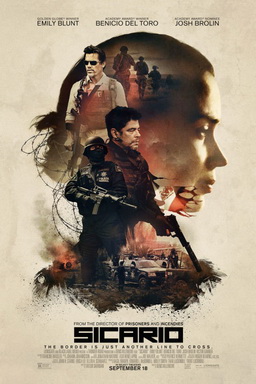
The PGA Gives New Life To Sicario and Straight Outta Compton!


Sicario_poster

The Producers Guild of America announced their nominees today and guess what?  Ex MachinaSicario and Straight Outta Compton made the cut!  In general, the PGA is a good precursor for the actual Oscar nominations so that’s good news for both of those films.  (Among the films snubbed: Star Wars: The Force Awakens and Carol!)

Here are the nominees:

The Darryl F. Zanuck Award for Outstanding Producer of Theatrical Motion Pictures:

Ø  The Big Short

Producers: Brad Pitt & Dede Gardner, Jeremy Kleiner

Ø  Bridge of Spies

Producers: Steven Spielberg, Marc Platt, Kristie Macosko Krieger

Ø  Brooklyn

Producers: Finola Dwyer & Amanda Posey

Ø  Ex Machina

This film is in the process of being vetted for producer eligibility

Ø  Mad Max: Fury Road

Producers: Doug Mitchell & George Miller

Ø  The Martian

Producers: Simon Kinberg, Ridley Scott, Michael Schaefer, Mark Huffam

Ø  The Revenant

Producers: Arnon Milchan, Steve Golin, Alejandro G. Iñárritu, Mary Parent, Keith Redmon

Ø  Sicario

Producers: Basil Iwanyk, Edward L. McDonnell, Molly Smith

Ø  Spotlight

Producers: Michael Sugar & Steve Golin,

Straight Outta Compton


The Award for Outstanding Producer of Animated Theatrical Motion Pictures:

Ø  Anomalisa

Producers: Rosa Tran, Duke Johnson, Charlie Kaufman

Ø  The Good Dinosaur

Producer: Denise Ream

Ø  Inside Out

Producer: Jonas Rivera

Ø  Minions

Producers: Chris Meledandri, Janet Healy

Ø  The Peanuts Movie

Producers: Craig Schulz, Michael J. Travers

straightouttacompton

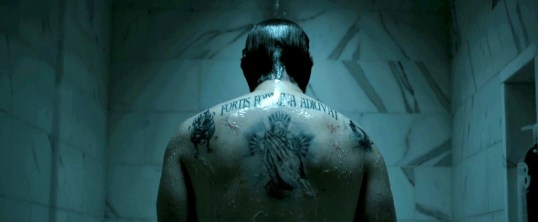
4 Shots From 4 Films: Sabotage, The Raid 2, John Wick, Fury


2014 had it’s share of very good action films and here are four that I was particularly drawn to. While the film themselves were of varying degrees of quality in terms of storytelling. These 4 films all had one thing that I enjoyed despite their films’ flaws. They all had action scenes that I thought were quite excellent.

You have gritty present-day action thriller, an operatic gangster epic, a revenge thriller and a war film. One stars an aging action star back from playing politician. Another a foreign film whose filmmaker and star have set the bar for all action films for years to come. Then there’s the stunt coordinators and 2nd unit directors finally making their mark with their first feature-length film. Lastly, a war film that brings the brutality of World War II tank warfare to the forefront.

4 SHOTS FROM 4 FILMS

Sabotage (dir. by David Ayer)

Sabotage (dir. by David Ayer)

John Wick (dir. by Chad Stahelski & David Leitch)

John Wick (dir. by Chad Stahelski & David Leitch)

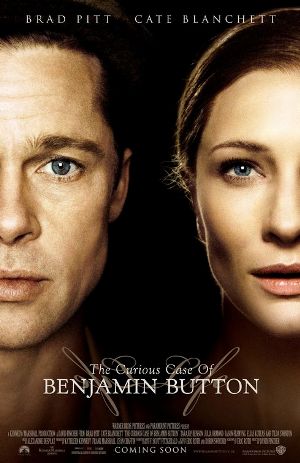
Embracing the Melodrama Part II #112: The Curious Case of Benjamin Button (dir by David Fincher)


Curious_case_of_benjamin_button_ver32010 will always be considered, by many of us, to be the year that Oscar journalism first jumped the shark.  That was the year that a group of self-styled award divas (which Awards Daily’s Sasha Stone being the most obnoxious culprit) went batshit crazy over a film called The Social Network.  

From the minute that David Fincher-directed film premiered, the Sasha Stones in the world not only declared it to be the greatest film ever made but also insinuated that anyone who disagreed had to be stupid, crazy, and evil.  It actually got rather silly after a while.  That is until The Social Network lost best picture to The King’s Speech.  Suddenly, what was once merely enthusiastic advocacy transformed into fascistic fanaticism.  Suddenly, these people started to view the 2010 Oscar race (and each subsequent Oscar race) as a rather tedious battle between good and evil.  For these people, David Fincher represented the forces of good.  And Tom Hooper, the director of The King’s Speech, represented all that was evil.  They took this to such an absurd extreme that they not only subsequently heaped undeserved praise on Fincher’s bastardization of The Girl With The Dragon Tattoo but also unnecessary scorn on Hooper’s Les Miserables.

Of course, what was forgotten in all of that drama was that — before Hooper and The King’s Speech came along, the 2010 Oscar race was predicted be some to be a rematch between Fincher and Danny Boyle (whose 2010 film, 127 Hours, was indeed nominated for best picture, alongside The Social Network, King’s Speech, and Black Swan).  When Fincher and Boyle previously competed during the 2008 Oscar race, Danny Boyle’s Slumdog Millionaire defeated Fincher’s The Curious Case of Benjamin Button.

And indeed, the case of Benjamin Button was curious one!

Loosely based on a short story by F. Scott Fitzgerald, The Curious Case of Benjamin Button told the story of a man who aged in reverse.  When Benjamin is a baby, he has the wrinkled face of an elderly man.  When he’s a teenager, he’s walking with a cane.  When he’s middle-aged, he looks like Brad Pitt in Legends of the Fall.  (In that regard, it helps that Benjamin is played by Brad Pitt.)  And when he’s an old man, he’s a baby.  Though the film, wisely, refrains from offering up a definite reason why Benjamin ages in reverse, it hints that it could have something to do with a clock that was built to run backwards as an anti-war statement.

Benjamin is born in New Orleans in 1918 and raised in a nursing home by Queenie (Oscar nominee and future Empire star Taraji P. Henson).  The love of Benjamin’s life is Daisy Fuller (Elle Fanning when young, Cate Blanchett as an adult), a dancer who also loves Benjamin but who, unlike him, is not aging in reverse.  For this reason, Benjamin and Daisy cannot be together.  That’s the way tragic love works.

The film itself features a framing device.  Daisy, now an elderly woman, is dying and gives her estranged daughter, Caroline (Julia Ormond), the diary of Benjamin Button.  As Caroline reads, Hurricane Katrina rages outside.  I’ve never really been comfortable with the way that the film uses Katrina as a plot point, for much the same reason that it bothered me when Hereafter used the real-life Thailand typhoon and London terrorist bombings to tell its story.  The real-life tragedy of Katrina feels out-of-place in a story about Brad Pitt aging backwards.

As for the rest of the film, The Curious Case of Benjamin Button is … well, it’s a curious film.  Visually, it’s definitely a David Fincher film but, at the same time, there’s something curiously impersonal about it.  You almost get the feeling that this was Fincher’s attempt to show that he was capable of making a standard big budget Hollywood film without getting too Fincheresque about it.  Brad Pitt and Cate Blanchett have chemistry and they look good together but Fincher has never been a sentimental director and his heart never truly seems to be in their love story.  (Ben Affleck and Rosamund Pike in Gone Girl feel more like a natural couple than Brad Pitt and Cate Blanchett do in this film.)  There’s only a few scenes, mostly dealing with the more morbid aspects of Benjamin’s odd condition, towards which Fincher really seems to feel any commitment.

As a result, The Curious Case of Benjamin Button becomes a curious misfire.  It’s a film that struggles with the big picture but is occasionally redeemed by some of its smaller moments.  (The scenes with the elderly Benjamin as a dementia-stricken baby are haunting and unforgettable.)  Ultimately, The Curious Case of Benjamin Button is probably the weakest of the five 2008 films nominated for best picture but it’s still an interesting film to watch.

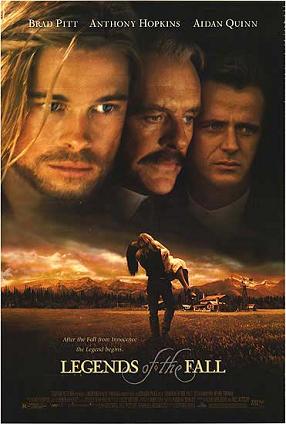
Embracing the Melodrama Part II #89: Legends of the Fall (dir by Ed Zwick)


LegendsoffallposterWhen I first started to watch the 1994 film Legends of the Fall on Encore, I was a little bit concerned when I discovered that it was directed by Ed Zwick.  After all, Zwick also directed Love and Other Drugs, which is one of the worst and most insulting films of all time.  In fact, I nearly stopped watching when I saw Zwick’s name.  But, largely because I want to finish up this series of melodramatic film reviews at some point in the near future, I decided to go ahead and watch the film.

And it turned out that Legends of the Fall is not a bad film.  I probably would have enjoyed it more if I had seen it in a movie theater as opposed to on television but, considering that it was directed by Ed Zwick, Legends of the Fall is definitely watchable.  If nothing else, it’s better than Love and Other Drugs.

Legends of the Fall tells the story of the Ludlows, a family that lives on a Montana ranch at the start of the 2oth Century.  Starting with the final days of the Indian wars and proceeding through World War I and prohibition, Legends of the Fall covers a lot of historical events but does so in a very Hollywood way, which is to say that all of the main characters dress like they’re from the past but they all have very modern social attitudes.  In this case, Col. William Ludlow (Anthony Hopkins) may be a wealthy white military veteran but he’s also totally pro-Native American.  And, of course, all the local Native Americans love him, despite the fact that he’s a representative of the institutions that have destroyed their way of life.

Anyway, Col. Ludlow has three sons.  The oldest, Alfred (Aidan Quinn), is serious and responsible. The youngest, Samuel (Henry Thomas), is naive and idealistic.  And the middle child is Tristan (Brad Pitt), who is wild and rebellious and looks like Brad Pitt.  You have to wonder how the same gene pool could produce both Aidan Quinn and Brad Pitt.

As the film begins, Samuel has returned from studying at Harvard.  With him is his fiancée, Susannah (Julia Ormond, who has really pretty hair in this movie).  Though she loves Samuel, Susannah finds herself attracted to Tristan, largely because Tristan looks like Brad Pitt.  Tristan is also attracted to Susannah but he would never betray his younger brother.  In fact, when Samuel announces that he’s enlisted in the Canadian army so that he can fight in World War I, Tristan and Alfred soon do the exact same thing.

War is Hell, which is something that Samuel discovers when he’s gunned down by a bunch of German soldiers.  Tristan responds by cutting Samuel’s heart out of his body and sending it back to Montana.  He then proceeds to go a little crazy and when we next see Tristan, he’s uniform is decorated with the scalps of dead Germans.

Meanwhile, Alfred has been wounded in battle and is sent back to Montana.  Eventually, he ends up married to Susannah.  And then Tristan comes back home and…

Well, a lot of stuff happens after Tristan returns.  In fact, you could even argue that too much happens.  Zwick obviously set out to try to make Legends of the Fall into an old school Hollywood epic but far too often, it seems like he’s mostly just copying scenes from other films.  There’s a hollowness at the center of Legends of the Fall and the end result is a film that’s visually gorgeous and thematically shallow.

And yet, you should never underestimate the importance of looking good.  Legends of the Fall is a beautiful film to look at and so is Brad Pitt.  I wouldn’t necessarily say that Brad gives a particularly good performance here because, to be honest, Tristan is such an idealized character that I doubt anyone could really make him believable.  But the Brad Pitt of 1994 looked so good and had such a strong screen presence that it didn’t matter that he wasn’t as good an actor as the Brad Pitt of 2015.  Legends of The Fall is one of those movies that can get by on pure charisma and fortunately, Brad Pitt is enough of a movie star to make the film work.

Legends of the Fall is not a great film but it’s still not a bad way to waste 120 minutes.  (Of course, the film itself lasts 133 minutes but still…)

Here Are The Golden Globe Nominees!


214053-the-2013-golden-globe-award-nominations

The Golden Globe nominations were announced this morning and the big news is that Angelina Jolie’s Unbroken was totally and completely snubbed.  Knowing the Hollywood Foreign Press Association, I figured that they’d nominate Jolie just to get her and Brad Pitt on the show.

(Does anyone remember when they nominated The Tourist for Best Comedy Film of 2010?  For that matter, does anyone remember The Tourist?)

Also, it’s interesting to note that David Fincher was nominated for best director for Gone Girl but Gone Girl itself did not receive a nomination for best picture.

(As of this writing, Sasha Stone has yet to post her analysis on Awards Daily but I’m sure when she does, it will be depressing.)

Anyway, below you can find the Golden Globe nominations for the best films of 2014.  (If you want to see a complete list with all of the television nominations, you can click here.)

BEST DRAMA FILM
“Boyhood”
“Foxcatcher”
“The Imitation Game”
“Selma”
“The Theory of Everything”

BEST DRAMA ACTOR
Steve Carell, “Foxcatcher”
Benedict Cumberbatch, “The Imitation Game”
Jake Gyllenhaal, “Nightcrawler”
David Oyelowo, “Selma”
Eddie Redmayne, “The Theory of Everything”

BEST DRAMA ACTRESS
Jennifer Aniston, “Cake”
Felicity Jones, “The Theory of Everything”
Julianne Moore, “Still Alice”
Rosamund Pike, “Gone Girl”
Reese Witherspoon, “Wild”

BEST MUSICAL/COMEDY FILM
“Birdman”
“The Grand Budapest Hotel”
“Into the Woods”
“Pride”
“St. Vincent”

BEST MUSICAL/COMEDY ACTOR
Ralph Fiennes, “The Grand Budapest Hotel”
Michael Keaton, “Birdman”
Bill Murray, “St. Vincent”
Joaquin Phoenix, “Inherent Vice”
Christoph Waltz, “Big Eyes”

BEST MUSICAL/COMEDY ACTRESS
Amy Adams, “Big Eyes”
Emily Blunt, “Into the Woods”
Helen Mirren, “The Hundred-Foot Journey”
Julianne Moore, “Maps to the Stars”
Quvenzhane Wallis, “Annie”

BEST FILM SUPPORTING ACTOR
Robert Duvall, “The Judge”
Ethan Hawke, “Boyhood”
Edward Norton, “Birdman”
Mark Ruffalo, “Foxcatcher”
J.K. Simmons, “Whiplash”

BEST FILM SUPPORTING ACTRESS
Patricia Arquette, “Boyhood”
Jessica Chastain, “A Most Violent Year”
Keira Knightley, “The Imitation Game”
Emma Stone, “Birdman”
Meryl Streep, “Into the Woods”

BEST DIRECTOR
Wes Anderson, “The Grand Budapest Hotel”
Ava Duvernay, “Selma”
David Fincher, “Gone Girl”
Alejandro Gonzalez Inarritu, “Birdman”
Richard Linklater, “Boyhood”

BEST SCREENPLAY
“Birdman”
“Boyhood”
“Gone Girl”
“The Grand Budapest Hotel”
“The Imitation Game”

BEST ANIMATED FEATURE
“Big Hero 6”
“The Book of Life”
“The Boxtrolls”
“How to Train Your Dragon 2”
“The Lego Movie”

BEST SCORE
“Birdman”
“Gone Girl”
“The Imitation Game”
“Interstellar”
“The Theory of Everything”

BEST SONG
“Big Eyes” from “Big Eyes” (Lana Del Ray)
“Glory” from “Selma” (John Legend, COmmon)
“Mercy Is” from “Noah” (Patty SMith, Lenny kaye)
“Opportunity” from “Annie”
“Yellow Flicker Beat” from “The Hunger Games, Mockingjay Part 1” (Lorde)

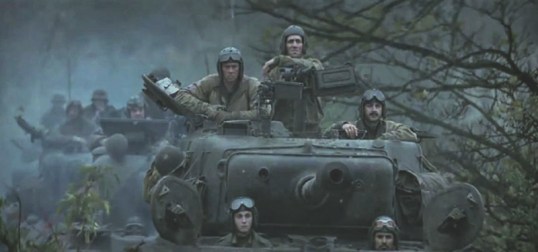
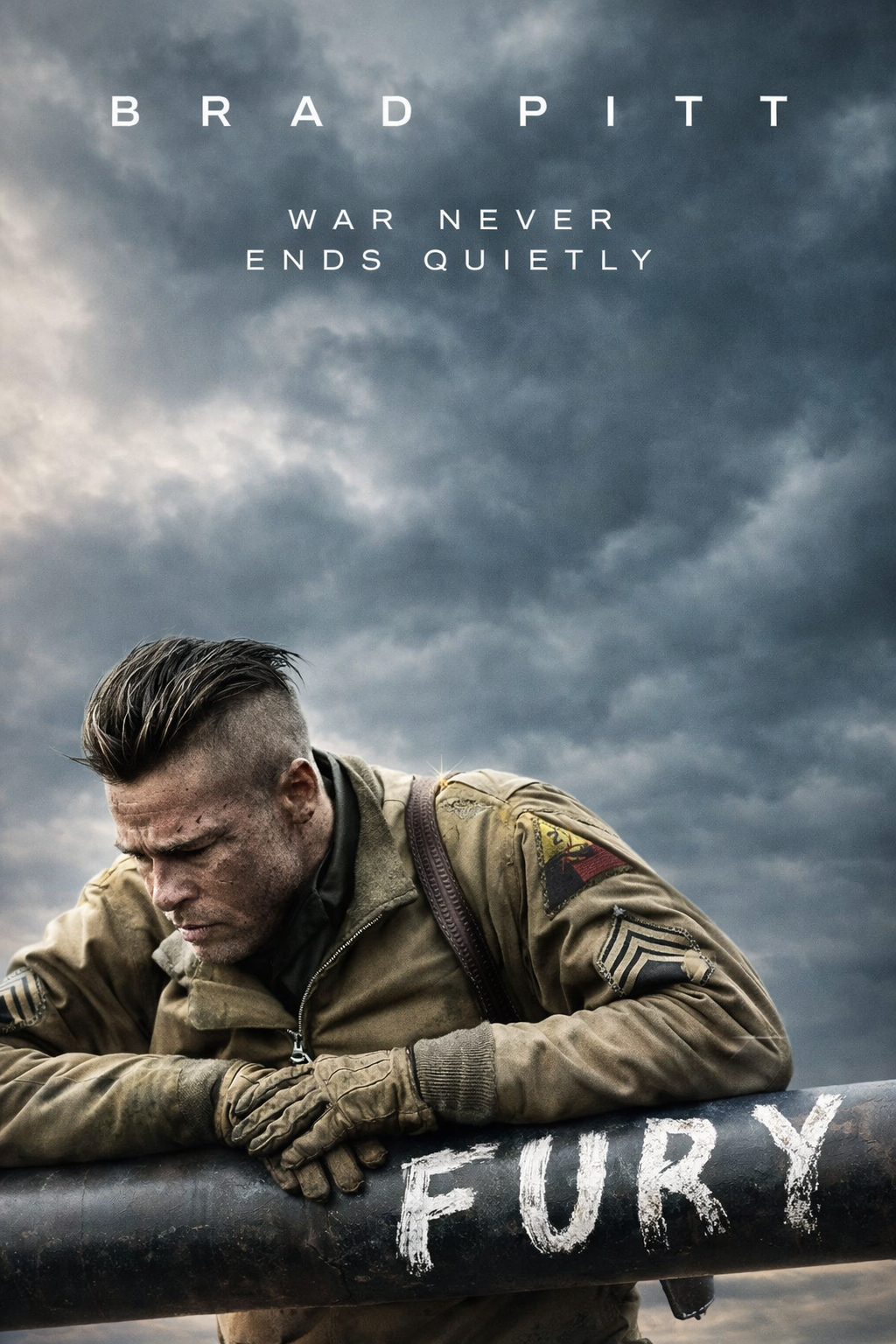
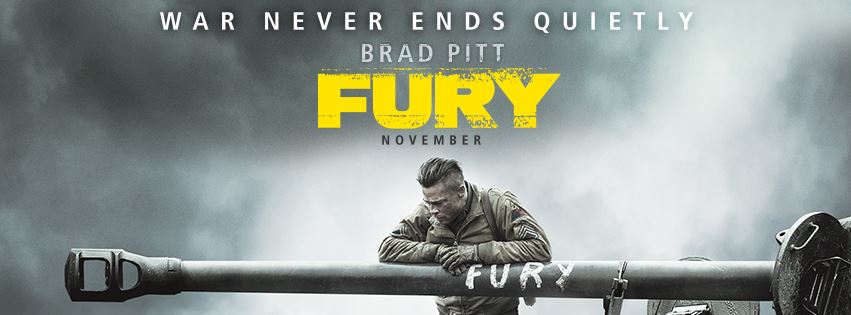
Review: Fury (dir. by David Ayer)


“Ideals are peaceful. History is violent.”

You know that feeling when a war movie tries so hard to be gritty that it forgets to be anything else? Fury, directed by David Ayer, flirts with that problem but mostly stays on the right side of the line. Released in 2014, this WWII drama follows a five-man American tank crew as they push deeper into Nazi Germany in April 1945. The war is almost over, but as the film constantly reminds us, that only makes the fighting more desperate and meaningless. Ayer, who wrote Training Day and directed End of Watch, clearly wanted to make a grimy, claustrophobic, and visceral experience—not a clean, heroic adventure. And for the most part, he succeeds. But the movie is also uneven, sometimes brilliant, and occasionally frustrating. One thing becomes clear early on: Ayer is not just making a war movie. He is trying to out-war the war movie that changed everything. Saving Private Ryan raised the bar for realistic combat violence in 1998, and ever since, directors have been chasing that opening Omaha Beach sequence. Fury spends its entire runtime trying to shove that bar even higher, especially in its final act, where the violence tips over from realistic into something almost performative—as if Ayer is daring you to look away.

The plot is simple. We meet Don “Wardaddy” Collier, played by Brad Pitt, as the seasoned commander of a Sherman tank nicknamed “Fury.” His crew includes Boyd “Bible” Swan (Shia LaBeouf), the religious gunner; Coon-Ass (Jon Bernthal), the volatile loader; and Grady (also Bernthal, though the character is actually Grady “Coon-Ass” Travis; the movie gives everyone a nickname). The crew loses their assistant driver in the opening scene, and they get a replacement: Norman Ellison (Logan Lerman), a young typist who has never fired a gun and has no intention of killing anyone. The rest of the film is basically a crash course in how war turns gentle men into monsters—or at least into effective killers.

What works best in Fury is the sense of being trapped inside a steel coffin. Ayer films almost everything from inside the tank or right next to it. You hear every shell clank, every engine strain, every bullet ping off the hull. The sound design is incredible—it’s the kind of movie where you feel the bass in your chest during combat scenes. And the tank battles are brutally realistic. There’s no slick choreography here. When a German Tiger tank shows up, the fight becomes static, clumsy, and terrifying. The Sherman isn’t some superhero; it’s outgunned and out-armored, and the crew wins only because they’re desperate and lucky. That sequence alone is worth the price of admission. You can feel Ayer’s respect for Saving Private Ryan in those moments—the same handheld cameras, the same sudden death, the same sense that no one is safe. But then the film goes further.

Brad Pitt gives one of his tougher, quieter performances. Wardaddy isn’t a philosopher or a hero. He’s a tired man who has seen too much and made too many compromises. He forces Norman to execute a German prisoner, not out of cruelty but out of a cold, broken logic: if Norman can’t kill, he’ll get the whole crew killed. Pitt sells the weight of that decision without grand speeches. Shia LaBeouf is surprisingly restrained as Bible, a character who prays before each battle but never preaches. The real surprise is Logan Lerman. He starts as a scared kid who vomits at the sight of corpses and ends the film doing things that would ruin anyone’s soul. His transformation is uncomfortable to watch, but that’s the point.

However, the movie has some clunky moments. One extended scene has Wardaddy and Norman sharing a meal with two German women in an abandoned apartment. It’s supposed to show a brief flash of normal life—eggs, music, a soft bed—but it feels oddly staged. The women are just props. They have no real personality except to be gentle and then get killed offscreen. It’s a rare moment where Ayer’s macho instincts flatten the story instead of deepening it. But the real problem is the final act. The crew holds a crossroads against an entire SS battalion of about 200 men, doing it with a broken-down tank that cannot move. Realistically, they’d be dead in minutes. But Ayer turns it into a grim last stand that feels more like a Western than a WWII movie. The Germans attack in waves like idiots, running straight into machine-gun fire. And here is where you sense Ayer’s real intention: he is not trying to be realistic anymore. He is trying to one-up Saving Private Ryan by making the violence not just brutal but excessive, almost numbing. Limbs fly. Faces get torn open. The camera lingers on wounds long past the point of necessary storytelling. It feels like Ayer is saying, “You thought Spielberg was intense? Watch this.” But instead of adding emotional weight, the violence starts to feel like a dare. The movie becomes less about these five men and more about proving it can stomach more than any other war film.

Thematically, Fury is about how institutions crush individuality. Norman was a decent person who typed letters and likely never hurt anyone. By the end, he is sitting in the commander’s seat, pulling triggers without hesitation. The movie doesn’t celebrate this—it presents it as a tragedy. But the final act undercuts that tragedy because it becomes so cartoonishly violent that you stop feeling for the characters and just wait for the bloodshed to end. Unlike Saving Private Ryan, which uses its famous opening sequence to establish horror and then pulls back for character moments, Fury seems to think that more gore equals more truth. It doesn’t. It just equals more gore.

If you’re looking for a clean story with clear good guys and bad guys, this isn’t it. The Germans are offscreen most of the time, and the real enemy is the war itself. Wardaddy even says, “The only thing that separates us from them is this uniform.” That’s a heavy line, and the film never really resolves it. It just lets it hang there. Some critics called Fury shallow because it raises moral questions without answering them. I’d argue that’s the point. War doesn’t come with footnotes. You just survive or you don’t. But the film’s desperate need to prove it is tougher than its predecessors does make it feel, at times, like a younger brother showing off.

On a technical level, the cinematography by Roman Vasyanov is beautiful in a grim way. Colors are desaturated—browns, grays, washed-out greens. Mud and blood look the same. The camera shakes when it needs to, but it’s not the hyperactive Bourne style. It’s controlled chaos. And the final shot, where the camera slowly pulls back from the dead tank, is haunting. It stays with you.

So, final verdict? Fury is a solid, often great war film that trips over its own ambitions in the last thirty minutes. It wants to be a small, character-driven horror show, then pivots to a heroic last stand that feels like it belongs in a different movie—one that cares more about shocking you than moving you. The comparison to Saving Private Ryan is unavoidable, and Fury clearly wants to be mentioned in the same breath. But where Spielberg used violence as a doorway into human cost, Ayer sometimes uses it as a blunt instrument. The performances are strong, the tank combat is second to none, and the atmosphere is suffocating in the best way. It’s not Come and See, but it’s also not Pearl Harbor. If you can handle the tonal whiplash and the occasional macho posturing, you’ll find a movie that respects its audience enough to leave them feeling dirty. Just don’t expect a clean exit—and don’t expect it to earn every drop of blood it spills.

Trailer: Fury (International)


Fury-2014-Movie-Banner-Poster

I must admit that World War II films are a favorite of mine. Even bad ones I tend to enjoy. Whether it’s alternate fantasy fares like Tarantino’s Inglourious Basterds or something that combines historical accuracy with dramatic license like Spielberg’s Saving Private Ryan, the World War II genre always manage to hit straight and true to my film wheelhouse.

This October there looks to be another World War II film that seems almost tailor-fit for me. I’m talking about David Ayer’s follow-up to his underappreciated film End of Watch. This follow-up is Fury and tells the story of an American tank crew in the waning days of World War II in Europe. Just from the two trailer released I already know that I’m seeing this. Ayer looks to be exploring the bond of a tank crew that has seen war from the deserts of Africa and now to the urban and forested landscapes of Germany.

The film is already getting major buzz as a major contender for the upcoming awards season and I, for one, hope that it’s a well-deserved buzz. Even with Shia LaBeouf being part of the cast is not dampening my excitement for this film. Even if it doesn’t live up to the hype I know that I’ll probably still end up enjoying it.

This trailer looks to be selling the utter brutality and carnage of World War II’s final days in Europe when German forces were literally fighting for their homeland and that makes for a desperate enemy (who still had weapons and soldiers that were still hands down better than what the Allies had one-on-one).

On a side note, I like the fact that the tracers in the film actually look like tracers which means they look like freakin’ laser blasts. That’s how tracers behave.

Fury is set to hit theaters on October 17, 2014 in the United States and October 22, 2014 internationally.

Here’s The Trailer for Fury!


Fury

If you’re a fan of movies about the military, like Arleigh or Erin, you will probably be excited by the first trailer for the upcoming World War II film Fury.  I have to admit that I’m not particularly a fan of war movies but I still think that the Fury trailer is undeniably effective.  I don’t know if I’ve quite bought into the idea that Fury is going to be an Oscar contender (as some Oscar bloggers are suggesting) but the trailer still suggests that Fury will, at the very least, be better than The Monuments Men.