Welcome to Retro Television Reviews, a feature where we review some of our favorite and least favorite shows of the past! On Fridays, I will be reviewing St. Elsewhere, a medical show which ran on NBC from 1982 to 1988. The show can be found on Daily Motion.
This week, it’s a busy few days in Boston.
Episode 4.5 “Slice O’Life”
(Dir by Eric Laneuville, originally aired on November 6th, 1985)
Oh, the drama!
Elliot is still struggling to lose weight.
Fiscus is having an early midlife crisis, especially when a cancer patient (Todd Susman) philosophically accepts that the treatment is going to leave him impotent. The patient has lived a life with meaning. What has Fiscus done?
Dr. Craig finally admits to Ellen that he knows he was too hard on their now dead son. They are both preparing to raise their granddaughter, Barbara, in their home. However, Yvonne’s parents (Ramon Bieri and K Callan) arrive in Boston for a visit. They are so blue collar and, in Dr. Craig’s eyes, unsophisticated that they almost seems like caricatures of what the rich think the poor are like. They reveal that Stephen and Yvonne asked them to serve as Barbara’s legal guardians in case anything happened. At first, Ellen refuses to let them take Barbara. “Get your wife in check,” Yvonne’s father says. “I’ll see you in court,” Dr. Craig replies.
After complaining about feeling like he has a cold and then getting upset about the Hospital Board not immediately approving all of his projects, Dr. Westphall collapses in the St. Eligius stairwell. It turns out that he has Malaria. Apparently, a self-righteous attitude and a bunch of impractical ideas were not the only things Westphall brought home from Ethiopia.
Finally, Bobby spends another weekend up at Cape Cod. He picks up a local woman. They have what Bobby is probably expecting to be just another one night stand. The woman, however, has a razor blade that she’s hidden under her tongue (yikes!) and proceeds to slice Bobby across his face.
AGCK!
Up until that ending, this was a fairly typical episode of St. Elsewhere. It looked like the big drama was going to be the Craigs temporarily losing Barbara. Instead, the drama is that Bobby might be dead!
Oh, poor Mark Harmon. When he first started playing the role on this show, Bobby was portrayed as being a nice guy who was a little boring. The show really had no idea what to do with him, other than have him occasionally take his shirt off. For the fourth season, the show’s writers turned him into an arrogant hedonist. On the one hand, I’m sure there are a lot of doctors like Bobby Caldwell. On the other hand, the change really does seem to have come out of nowhere. And now, he might be dead. I guess the lesson here is to stay away from Cape Cod!
The attack on Bobby ultimately overshadows everything else that happened in this episode. I will say that, before Bobby got attacked, I was enjoying Dr. Craig’s rather snobbish reaction to Yvonne’s parents. As for Dr. Westphall …. eh. Westphall’s kind of become a one trick pony. He’s depressed and he wants the world to know it. I know quite a few people like Dr. Westphall in real life, which is probably why I get so annoyed with his character on the show.
DMX’s debut album, It’s Dark and Hell Is Hot, is a raw, unfiltered masterpiece that announced Earl Simmons as a force to be reckoned with in the late 90s hip-hop scene. Released in 1998, the album didn’t just introduce DMX to the world—it thrust him into the spotlight as one of the most compelling and uncompromising voices in rap. At a time when hip-hop was oscillating between commercial polish and underground grit, DMX’s voice cut through with a raw intensity that felt both primal and poetic. His aggressive, dark lyricism and unfiltered delivery, often compared to the ferocity of a junkyard dog, drew immediate comparisons to Tupac Shakur. But DMX wasn’t just following in Pac’s footsteps; he was forging his own path, one that was as spiritually conflicted as it was street-savvy.
The undeniable centerpiece of It’s Dark and Hell Is Hot is Damien, a track that transcends the typical album intro. More than just a skit, Damien is a chilling, theatrical exploration of DMX’s internal struggles. From the moment the track begins, you’re pulled into a world where the line between reality and the supernatural blurs. DMX plays both himself and the demonic voice taunting him, creating a dialogue that feels as real as it is haunting. The track sets the tone for the entire album, framing DMX as a man at war with his own demons, his past, and forces beyond his control. It’s not just an introduction—it’s the emotional and thematic foundation of the album, a raw, unfiltered look into the mind of an artist who refuses to sugarcoat his pain. Damien isn’t just a highlight; it’s the heart of It’s Dark and Hell Is Hot, the moment where DMX’s genius for blending street narratives with deep introspection is on full display.
From the shadow of Damien emerges Ruff Ryders’ Anthem, the album’s lead single and a track that solidified DMX’s place in hip-hop history. Produced by Swizz Beatz, the beat is minimal but devastatingly effective, providing the perfect backdrop for DMX’s gravelly, commanding voice. Lines like “Stop being selfish / It’s dark and hell is hot” aren’t just catchy—they’re a mission statement, echoing the themes of struggle and redemption introduced in Damien. The song became an instant anthem, a rallying cry for the Ruff Ryders collective and a declaration to the hip-hop world that DMX was here to stay. But what makes Ruff Ryders’ Anthem truly special is how it balances raw aggression with moments of vulnerability. DMX isn’t just flexing; he’s baring his soul, and that duality is what makes the track resonate so deeply.
Get At Me Dog takes the energy of Ruff Ryders’ Anthem and amplifies it, doubling down on DMX’s signature aggression. The beat is menacing, and DMX’s flow is relentless, with every line delivered like a punch to the chest. Yet, beneath the bravado, there’s an undercurrent of pain, a reminder that DMX’s music is as much about survival as it is about dominance. The track’s hook, “You can’t get at me, dog,” is as much a defiant taunt as it is a declaration of resilience. It’s a perfect example of how DMX could blend street toughness with emotional depth, a theme that Damien introduces so powerfully.
Stop Being Greedy offers a moment of reflection amidst the album’s intensity. Over a hypnotic, bass-heavy beat, DMX delivers a sermon on loyalty and the dangers of avarice. The track feels like a street-level public service announcement, with DMX playing the role of both the sinner and the preacher. It’s a testament to his ability to weave moral lessons into his music without ever sounding preachy. Instead, he sounds like a man who’s lived through the fire and emerged with hard-earned wisdom, much like the lessons learned in the spiritual battle depicted in Damien.
The album’s introspective side shines on tracks like How’s It Goin’ Down and Look Thru My Eyes. These songs slow the tempo, allowing DMX to flex his melodic muscles and showcase his range as an artist. How’s It Goin’ Down is a masterclass in storytelling, with DMX painting vivid pictures of street life with a smooth yet raw delivery. It’s a reminder that DMX wasn’t just a one-dimensional artist; he could navigate different emotional landscapes while staying true to the dark, introspective themes that define It’s Dark and Hell Is Hot. These tracks feel like natural extensions of the internal conflict introduced in Damien, further solidifying the album’s emotional depth.
For My Dogs is another standout, blending street narratives with themes of brotherhood and survival. The beat is somber, almost mournful, and DMX’s lyrics match the mood, rapping about loss, betrayal, and the unbreakable bonds of loyalty. The track feels both personal and universal, a tribute to the crew that stood by him through the darkest times. It’s a theme that ties back to Damien, where the struggle for redemption and connection is so central.
No discussion of It’s Dark and Hell Is Hot would be complete without diving into The Convo and I Can Feel It. These tracks take the spiritual and psychological themes introduced in Damien even further. The Convo is a chilling depiction of a dialogue with the devil, with DMX playing both roles in a performance that’s as theatrical as it is raw. It’s a bold, unflinching look at the battle between good and evil within himself. I Can Feel It, on the other hand, is a haunting, introspective cut where DMX grapples with his own mortality and the weight of his sins. The vulnerability here is staggering, and it’s a testament to DMX’s fearlessness as an artist. He wasn’t afraid to show his scars, and that honesty is what made him so relatable to fans.
The production on It’s Dark and Hell Is Hot is another key element of its success. DMX worked with producers like Swizz Beatz, Dame Grease, and PK, who crafted beats that complemented his dark, atmospheric style. The production is stripped-down but hard-hitting, with heavy basslines and eerie melodies that enhance the album’s mood. There’s a rawness to the sound that mirrors DMX’s own approach to rapping, resulting in an album that feels cohesive and immersive. The beats serve as the perfect backdrop for DMX’s lyrics, amplifying the themes of struggle and redemption that Damien introduces so powerfully.
Lyrically, DMX was in a league of his own. His ability to weave complex themes into his verses without sacrificing his signature aggression was unmatched. He could go from barking like a madman to delivering a poignant one-liner in the span of a few bars, and it never felt forced. His wordplay was sharp, his metaphors vivid, and his delivery so full of emotion that it was impossible not to be drawn in. Whether he was rapping about street life, spiritual struggles, or personal demons, DMX had a way of making you feel like you were right there with him, experiencing every high and low. This is never more evident than in Damien, where his internal conflict is laid bare with a rawness that’s as captivating as it is unsettling.
The impact of It’s Dark and Hell Is Hot on the hip-hop landscape cannot be overstated. In an era dominated by polished, commercial sounds, DMX’s debut was a breath of fresh air—raw, unfiltered, and unapologetically real. The album not only put DMX on the map as one of the rising stars of hip-hop, but it also cemented his place as one of the greats. His ability to blend street narratives with deep introspection set him apart from his peers and earned him a dedicated fanbase that would follow him throughout his career. The comparisons to Tupac were inevitable, as both artists had a rare ability to convey emotion in their music and tackle dark, complex themes. But where Pac was often seen as a revolutionary, DMX was more like a prophet of the streets, a man who had seen the worst of life and was determined to share his story, no matter how ugly. His music was a reflection of his own struggles, and that authenticity resonated with listeners in a way that few artists could match. Damien embodies this authenticity, standing as the emotional core of the album and a testament to DMX’s uncompromising vision.
It’s Dark and Hell Is Hot wasn’t just an album; it was a movement. It gave a voice to the voiceless and provided a soundtrack for those who felt like they were fighting their own personal battles. DMX’s debut was a statement of intent, a declaration that he was here to stay and that he wasn’t going to compromise his vision for anyone. The album’s success—both critically and commercially—proved that there was a hunger for real, unfiltered hip-hop, and DMX was more than happy to feed that hunger. Damien symbolizes this uncompromising vision, standing as a testament to the album’s enduring power.
In the years since its release, It’s Dark and Hell Is Hot has only grown in stature. It’s now widely regarded as one of the greatest debut albums in hip-hop history, and for good reason. From start to finish, the album is a masterclass in storytelling, lyricism, and raw emotion. DMX’s performance is electrifying, and the production provides the perfect backdrop for his dark, introspective lyrics. But more than that, the album is a testament to the power of authenticity. DMX didn’t try to be anyone else; he was unapologetically himself, and that’s what made It’s Dark and Hell Is Hot so special. Damien remains the highlight, a track that encapsulates everything that makes the album great—its rawness, its honesty, and its unflinching look at the darker side of the human experience.
Even now, more than two decades after its release, the album still feels fresh and relevant. Its themes of struggle, redemption, and survival are timeless, and DMX’s delivery ensures that every word hits with the same force it did back in 1998. It’s Dark and Hell Is Hot isn’t just a classic; it’s a blueprint for how to make an album that’s both commercially successful and artistically daring. DMX set the bar high with his debut, and he spent the rest of his career trying to live up to it—a testament to the enduring power of this remarkable record. For fans of hip-hop, It’s Dark and Hell Is Hot is essential listening, with Damien standing as its crowning achievement, the track that defines the album’s legacy.
As some of our regular readers undoubtedly know, I am involved in a few weekly watch parties. On Twitter, I host #FridayNightFlix every Friday and I co-host #ScarySocial on Saturday. On Mastodon, I am one of the five hosts of #MondayActionMovie! Every week, we get together. We watch a movie. We tweet our way through it.
Tonight, at 10 pm et, I will be hosting #FridayNightFlix! The movie? 1995’s Judge Dredd!
If you want to join us this Friday, just hop onto twitter, find Judge Dredd on Prime, start the movie at 10 pm et, and use the #FridayNightFlix hashtag! I’ll be there happily tweeting. It’s a friendly group and welcoming of newcomers so don’t be shy.
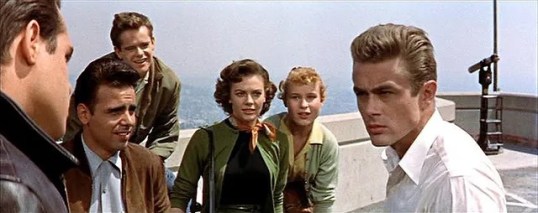
Since today is Nicholas Ray’s birthday, it seems appropriate to share a scene from Ray’s best-known film, 1955’s Rebel Without A Cause. In this scene, a group of teens who can barely find happiness or peace on their own planet are asked to consider the wonders of the universe.
4 Or More Shots From 4 Or More Films is just what it says it is, 4 shots from 4 of our favorite films. As opposed to the reviews and recaps that we usually post, 4 Shots From 4 Films lets the visuals do the talking!
Director and screenwriter Nicholas Ray was born 115 years ago today, in Galesville, Wisconsin. He would go on to become one of the most influential American directors of all time, making independently-minded films that celebrated rebels and iconoclasts. The directors of the French New Wave loved him and for good reason.
Today, we celebrate the life and legacy of Nicholas Ray with….
4 Shots From 4 Nicholas Ray Films
In A Lonely Place (1950, dir by Nicholas Ray, DP: Burnett Guffey)
Rebel Without A Cause (1955, dir by Nicholas Ray, DP: Ernest Haller)
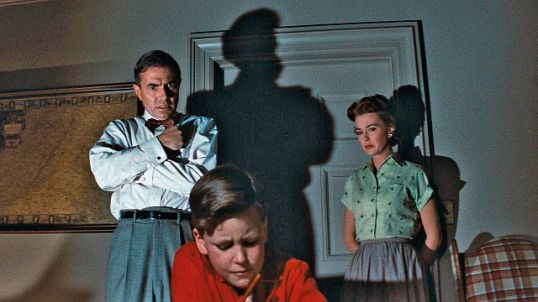
Bigger Than Life (1956, dir by Nicholas Ray, DP: Joseph MacDonald)
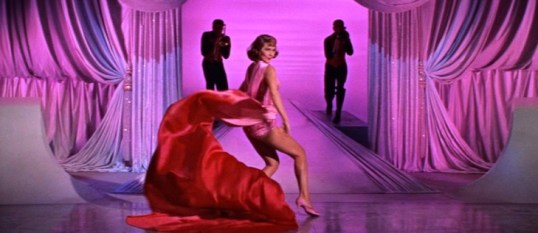
Party Girl (1958, dir by Nicholas Ray, DP: Robert J. Bronner)
This video was directed by Johan Renck, who performed under the name “Stakka Bo.” This video has been overshadowed by the video for Here We Go but, as far as I’m concerned, they’re both good videos that deserve more attention.
Welcome to Late Night Retro Television Reviews, a feature where we review some of our favorite and least favorite shows of the past! On Thursdays, I will be reviewing Hunter, which aired on NBC from 1984 to 1991. The entire show is currently streaming on Tubi and several other services!
This week, someone is killing criminals in Los Angeles and, for once, it’s not Rick Hunter!
Episode 1,15 “The Beach Boy”
(Dir by Richard Colla, originally aired on April 6th, 1985)
A Hawaiian drug lord is angered when five Los Angeles drug dealers decide to stop dealing his product. So, he sends his main assassin — Wes “Beach Boy” Kapano (Brett Clark) — to L.A. to kill all five of them. Hunter and McCall find themselves in the strange position of providing productive custody to the dealers while trying to stop Kapano.
This was a typical “chase-em-and-shoot-em” episode of Hunter. Dee Dee even managed to get shot for the second time this season. (And, once again, it didn’t seem to actually hurt her. “I’m fine!”) For the first season, at least, Hunter kept things simple. In between the flirtatious Hunter/McCall banter, there would be at least one car chase and three shootings.
What sets this episode apart is that Hunter and McCall are protecting drug dealers. While McCall makes it clear that she doesn’t actually care what happens to the dealers, Hunter’s feelings are a bit more ambivalent. He’s been chasing the dealers for so long that he’s developed a grudging affection for them. When one of them is killed while helping the police, Hunter’s actually upset about it.
The other thing that sets this episode apart was Brett Clark’s intimidating turn as the assassin. The Beach Boy, as he’s called, doesn’t waste too much time with conversations. He doesn’t brag about how clever he is or go to a lot of trouble trying to fool anyone. Instead, he just shows up and starts firing. He wears a bulletproof vest, as well. McCall shoots him twice and he barely flinches. He’s a scary dude!
That said, Hunter still manages to kill him. How many people have been killed by Rick Hunter so far? I’ve lost track. Most officers are suspended after a shooting so that the shooting board can rule whether or not it was justified. Hunter is always back on the streets within an hour of killing someone. Considering how quick he is with a gun, I probably wouldn’t want to tell him he was suspended either.
Much like Hunter and McCall, this episode was brutal and efficient.
Welcome to Retro Television Reviews, a feature where we review some of our favorite and least favorite shows of the past! This Thursdays, I will be reviewing America 2100, which aired its only episode on ABC in 1979. The show can be found on YouTube!
Episode 1.1 “Pilot”
(Directed by Joel Zwick, originally aired on July 24th, 1979)
In 1979, it appears that the comedy team of Chester Barnes (Jon Cutler) and Phil Kreese (Mark King) are on the verge of breaking up. Tired of not finding success and struggling to pay the bills, Chester is thinking of moving home and working for his uncle’s refrigeration company. Phil begs Chester to reconsider. Chester finally agrees to sleep on it. To help him sleep, Phil suggests warm milk and sleeping pills. Chester and Phil go to bed in their small apartment….
….and wake up in 2100!
As the cheery Dr. Karen Harland (Karen Valentine) explains, Chester and Phil died in 1979 but, through the use of science, they’ve been brought back to life! What is 2100 like?
It’s a lot like the 70s, just a little bit tackier.
The Future!
At first, Chester and Phil claim that there were the leaders of America in 1979. When Karen says that the mysterious Max takes a dim view of lying, Chester and Phil admit that they were two unemployed losers. When they ask who Max is, Karen explains that Max is in charge and that everyone has to do what Max is.
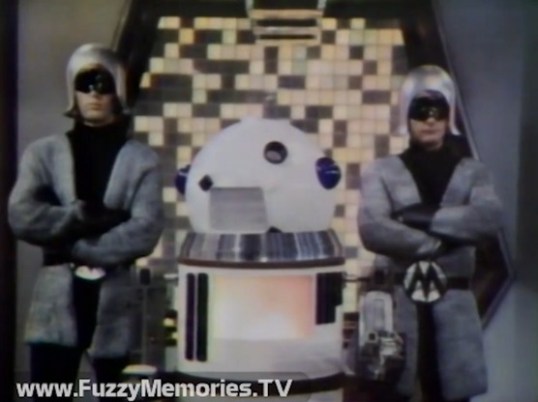
Max is a robot, though it’s not a good idea to call him that. He prefers to be called a — wait for it — “computer.” Max speaks with the voice of Sid Caesar. Every child is brought before Max and told what they’re going to do with the rest of your life. “You’ll be a microbiologist,” Max says to one child. “You’ll be a female impersonator,” he says to another. Eventually, Chester and Phil are brought before Max.
“You two will be museum exhibits,” Max says.
Chester and Phil are not happy about that. They want to be in show business! Back at their apartment, they explain to Karen that she’s living a life where there is no freedom and, without free will, life is meaningless. Karen admits that she secretly wants to be a tap dancer. She then shows off a few of her tap dancing moves and the audiences goes wild and the end credits roll.
Wow, I wonder what type of wacky adventures Chest and Phil had in the future!?
Well, they didn’t have any adventures. This pilot aired once and it didn’t lead to a series. Watching the pilot, I could see why the show didn’t work. The two leads were miscast and they both played their roles very broadly. When you’ve already got Sid Caesar providing the voice of a rolling computer, you really don’t need anyone else in the cast to go overboard. It also didn’t help that Chester and Phil seemed to be pretty much interchangeable as characters. The only thing that really distinguished one from the other was that Chester was the one with dark hair.
That said, I am a big believer in personal freedom and I appreciated that this show attempted to make the case for allowing people to be creative and to even screw up occasionally. An America where everyone compliantly takes orders from a computer may have seemed unbelievable in 1979 but it’s a bit more plausible in 2026. Max is basically a less cranky version of Bernie Sanders so it was fun to see someone tell him off, even if it was just Chester and Phil.