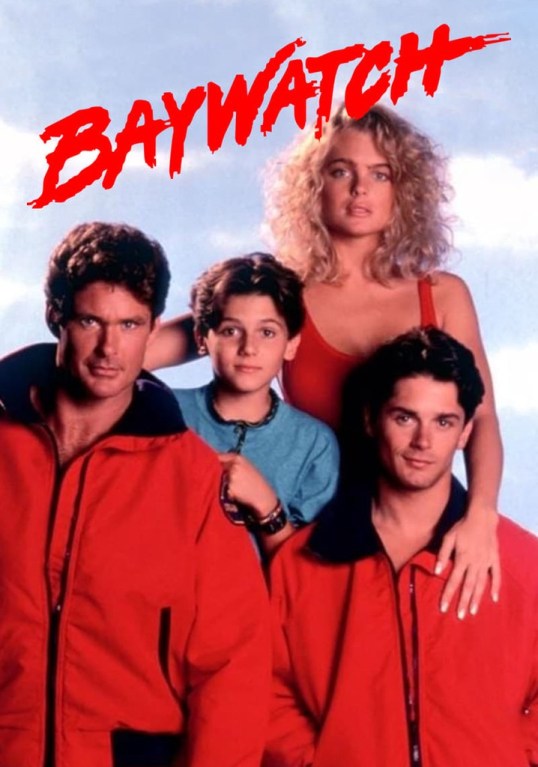
Welcome to Retro Television Reviews, a feature where we review some of our favorite and least favorite shows of the past! On Saturdays, I will be reviewing Baywatch, which ran on NBC and then in syndication from 1989 to 2001. The entire show can be viewed on Tubi.
This week, some people stand in the darkness, afraid to move into the light.
Episode 2.14 “War of Nerves”
(Dir by Douglas Schwartz, originally aired on February 3rd, 1992)
Drug lord Mason Sato (Cary-Hiroyuki Tagawa) has just gotten out of prison and he wants revenge of Mitch. For reasons that aren’t really explained beyond a shot of a newspaper headline that reads, “Hero Lifeguard Helps Police Take Down Drug Lord,” Mason blames Mitch for his arrest, Do lifeguards make arrests?
Mason stalks Mitch, Hobie, and Mitch’s girlfriend, Kaye (Pamela Bach). At first, Mitch doesn’t tell either Hobie or Kaye what’s going on. But when Mason asks Hobie to teach him how to use a boogie board, Mitch loses it and punches Mason out. Mason later kidnaps both Hobie and Kaye. This leads to a fight in an abandoned warehouse. Once the fight moves into the ocean, Mason nearly drowns but Mitch saves his life so he can go back to prison.
Meanwhile, Shauni asks Ben to teacher her how to surf. We never actually see Ben teaching her anything but we do get a lengthy montage as Ben remembers his days as a surfing lifeguard. Myself, I’m wondering how Ben, who we’ve been told can no longer swim because of a leg injury, suddenly stops limping in this episode.
Cary-Hiroyuki Tagawa was a magnetic villain but otherwise, this was Baywatch at its cheapest. The plot was by-the-book and it mostly seemed to exist so that Hasselhoff could play the action hero. This episode felt like a dry run for the first, non-supernatural season of Baywatch Nights. How many lifelong enemies has Mitch managed to make?
Today, the Shattered Lens wishes a happy birthday to the legendary Dustin Hoffman. This scene that I love comes from 1967’s The Graduate and it features Hoffman delivering one of the greatest lines of all time.
Today, the Shattered Lens wishes a happy birthday to the actor and musician Keith Carradine. Our song of the day is a song that Carradine wrote for and performed in the 1975 film, Nashville.
4 Or More Shots From 4 Or More Films is just what it says it is, 4 shots from 4 of our favorite films. As opposed to the reviews and recaps that we usually post, 4 Shots From 4 Films lets the visuals do the talking!
Today, we pay tribute to the year 1978! It’s time for….
4 Shots From 4 1978 Films
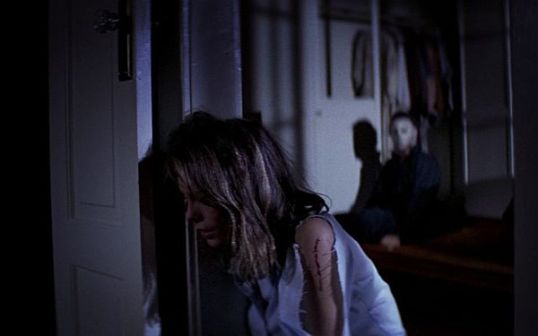
Halloween (1978, dir by John Carpenter. DP: Dean Cundey)
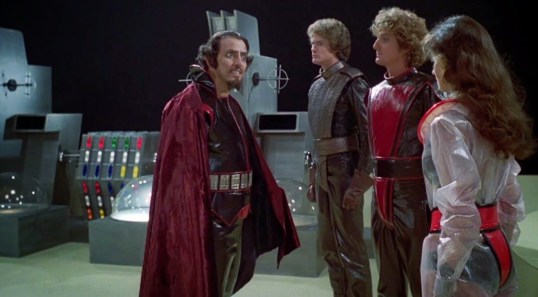
Starcrash (1978, dir by Luigi Cozzi, DP: Paul Beeson and Roberto D’Ettorre Piazzoli)
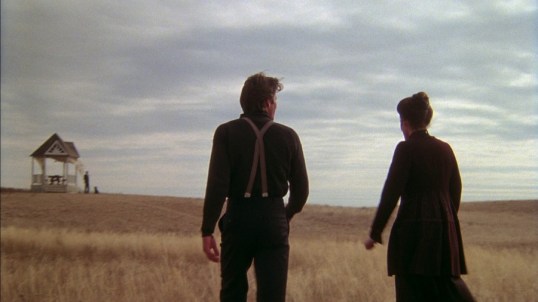
Days of Heaven (1978, dir by Terrence Malick, DP: Nestor Almendros)
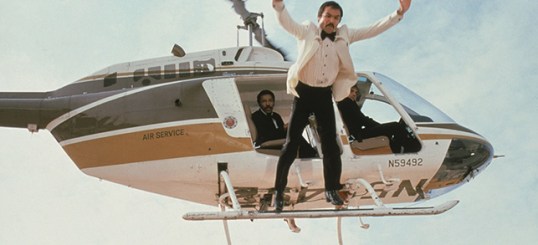
Hooper (1978, dir by Hal Needham, DP: Bobby Byrne)
As some of our regular readers undoubtedly know, I am involved in a few weekly live tweets on Twitter and Mastodon. I host #FridayNightFlix every Friday, I co-host #ScarySocial on Saturday, and I am one of the five hosts of #MondayActionMovie! Every week, we get together. We watch a movie. We tweet our way through it.
Tonight, at 10 pm et, #ScarySocial presents Sleepaway Camp 2!
If you want to join us this Saturday, just hop onto twitter, start the movie at 10 pm et, and use the #ScarySocial hashtag! It’s a friendly group and welcoming of newcomers so don’t be shy.
Sleepaway Camp 2 is available on Prime! See you there!
In 1989, Richard Marx was so busy touring that director Jim Yukich was forced to go with a simple approach to the video for Right Here Waiting. The footage of Marx performing the song in an empty auditorium was filmed in Los Angeles during a soundcheck. Black-and-white tour footage was then added to turn that soundcheck into a music video. Though the video was simple by necessity, it also captured the loneliness of being on the road and separated from your significant other.
Right Here Waiting was the second single off of Marx’s second studio album, Repeat Offender. He wrote the song for his then-wife Cynthia Rhodes, who was shooting a film in South Africa. It went on to become one of Marx’s biggest hits and is still regularly covered by other artists.
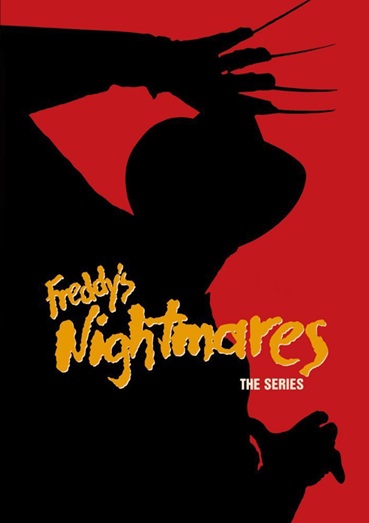
Welcome to Late Night Retro Television Reviews, a feature where we review some of our favorite and least favorite shows of the past! On Fridays, I will be reviewing Freddy’s Nightmares, a horror anthology show which ran in syndication from 1988 to 1990. The entire series can be found on Tubi!
This week, we finish up Freddy’s Nightmares.
Episode 2.22 “Life Sentence”
(Dir by Anita W. Addison, originally aired on March 11th, 1990)
The final episode of Freddy’s Nightmares is also one of the most boring.
Just as with last week’s snoozefest, this episode takes place at the local prison. Andy (George De La Pena) is due to be released. Everyone knows that he killed a guard during an armored truck robbery but Andy blamed his accomplice Bruno (Ron Troncatty) and got away with a plea bargain. Andy can’t wait to get out of jail. He brags to the guy in the next cell about how he knows where all the money is hidden.
Uh-oh, it looks like the prison’s psychiatrist, Elaine Alamo (Penny Johnson Jerald), is trying to keep Andy imprisoned. What does Andy care? Sure, everyone hates him but Bruno’s in another prison and Andy’s got all that money waiting for him. However, when Andy finds out that Bruno has escaped, Andy no longer feels safe on the outside. However, Elaine has changed her mind about keeping Andy in jail because she wants Bruno to kill Andy because the guard the Andy killed was her father. So, Andy kills Elaine so he can stay in prison. But then Bruno gets captured and becomes Andy’s new cellmate. That’s the first story.
The second story features the prison’s warden, Hendler (John Milford), running for sheriff. He’s behind in the polls so he uses an experimental truth serum on Andy. Andy hallucinates that the Warden is Bruno and Andy tells him where the money is hidden. Then Andy dies from a heart attack. The Warden calls a press conference to announce that he’s found the money but Dr. Redman (Glynn Turman), the inventor of the serum, spikes the Warden’s drink and the Warden confesses to killing Andy.
Freddy doesn’t do anything in either one of these stories, other than appear in three host segments and tell a joke about dropping the soap.
This episode was incredibly dull. The low-budget was extremely obvious. (The Warden holds his press conference in the prison, presumably because the show couldn’t afford to dress another set.) Penny Johnson Jerald does a good job with her role but otherwise, this was a poorly acted episode that featured dull characters. Andy was unlikable. The Warden was unlikable. This episode was sad note for this show to go out on.
Of course, it’s not a shock that Freddy’s Nightmares ended with a bad episode. It wasn’t a very good show to begin with, There were a few above average episodes during the second season and the first season features some memorably grotesque moments but otherwise, Freddy’s Nightmares was too constrained by the standards of television to really live up to the legacy of A Nightmare on Elm Street. The best episode were the ones the featured Freddy getting involved in the plot but those were few and far between.
Freddy’s Nightmares did not get a grand finale. Instead, it just got a forgettable final episode. Unlike the Friday the 13th series, Freddy’s Nightmares never found a consistent tone or a compelling reason for existing.
Oh well. Next week, we’ll have a new show in this time slot. See you then!
“Because we’re here, lad. Nobody else. Just us. — Color Sergeant Frank Bourne
Cy Endfield’s Zulu is one of those old-fashioned war films that earns its epic reputation less through grand speeches or sentimental manipulation than through patience, physical detail, and an almost brutally simple premise: a small British force at Rorke’s Drift must hold its position against a vastly larger Zulu army. Released in 1964 and set during the Anglo-Zulu War of 1879, the film takes a historical event that could easily have become a stiff patriotic pageant and turns it into something tense, visually overwhelming, and surprisingly measured for its era. It is certainly built around British soldiers as its main point of identification, and it cannot fully escape the colonial framing of its story, but it gives the Zulu fighters a degree of discipline, courage, and humanity that many comparable films of the period would have denied them.
The opening has a deliberately sober quality. Before the siege gets underway, Endfield establishes the aftermath of the British disaster at Isandlwana, an event that hangs heavily over every decision made at the isolated mission station. Lieutenant John Chard, played by Stanley Baker, is not introduced as an obvious hero. He is an engineer officer who finds himself unexpectedly in command, unsure of what authority he truly has and visibly aware that the situation may be hopeless. Michael Caine, in one of his early major roles, plays Lieutenant Gonville Bromhead as the more aristocratic and initially dismissive counterpart. Their relationship is a familiar clash of temperaments, but the actors keep it from becoming too cartoonish. Baker gives Chard a practical, weary steadiness, while Caine makes Bromhead’s pride feel like both a weakness and a defense mechanism.
What makes Zulu work so well is how clearly it understands the mechanics of a siege. The film takes time to show men sorting supplies, moving mealie bags, organizing firing lines, reinforcing walls, and deciding which buildings can or cannot be held. That attention to logistics gives the action real weight. When the Zulu army finally appears along the hillsides, it is not just a cue for spectacle. It is the moment when every earlier decision becomes frighteningly important. The defenders are not winning through superhuman skill; they are surviving because they build, adapt, reload, retreat, and improvise faster than the situation can collapse around them.
Endfield’s command of scale is still impressive. The broad South African landscapes make the station seem tiny and exposed, while the formations of Zulu warriors moving across the terrain have a force that CGI-heavy battle scenes often struggle to recreate. The action is not especially graphic by contemporary standards, but it is physically convincing. Bodies fall, rifles jam, ammunition runs low, and the walls that seemed secure a few minutes earlier suddenly look inadequate. The battles have a clean visual geography as well. You can generally understand where the soldiers are positioned, where the attacks are coming from, and why a breach in one area threatens everyone else. That clarity is a major reason the film remains so watchable.
The Zulu warriors are filmed with genuine awe. They are the opposition in a military sense, but the movie rarely treats them as faceless monsters. Their attacks are coordinated, their persistence is formidable, and the British soldiers repeatedly acknowledge their courage. One of the film’s strongest ideas is that the men on both sides are forced to recognize the ability of the other. The final exchange of salutes is still powerful because it does not feel like a cheap declaration that war is noble. Instead, it feels like exhausted recognition after a catastrophe that has demanded terrible losses from everyone involved.
The film deserves credit for this, particularly considering the era in which it was made, although it still gives the Zulu perspective far less interiority than the British one. Individual British soldiers receive backstories, doubts, comic beats, and personal arcs; the Zulu fighters are mainly presented as a collective force. That limitation matters because the actual Anglo-Zulu War was not simply a neutral contest between two equally situated military forces. It occurred within the larger reality of British colonial expansion, and the film only lightly touches the political forces that made the battle possible. Zulu is more respectful than many older war movies, but it is not free of the assumptions of its time.
The historical side of Zulu is one of its most interesting qualities. The film does a very good job at historical accuracy, which is a rarity for films depicting real-life historical events, especially in the way it presents the basic structure of the defense at Rorke’s Drift: a badly outnumbered British garrison fortifying the station and enduring repeated Zulu assaults. Its investment in terrain, formations, material conditions, and the general progression of the battle makes the event feel researched rather than casually invented. The staging has a sense of military procedure that helps sell the defense as something grounded in a real crisis rather than merely a legend inflated for the screen.
That said, the characterization of the historical people involved was not as accurate, which is where the dramatic license comes in. The most famous example is Private Henry Hook, played with rough comic energy by James Booth. In the film, Hook begins as an unruly alcoholic and apparent coward before proving himself under fire. The real Henry Hook was a disciplined soldier and a teetotaler, making the movie version an almost total reinvention built around the satisfying “unlikely hero” arc. Bromhead is also simplified into a more inexperienced upper-class officer than the historical man appears to have been, while Colour Sergeant Bourne is made into a weathered older veteran despite having been only 24 at the time. These choices make sense as storytelling devices, but they are worth recognizing because they shape the viewer’s emotional understanding of the people involved.
There are other liberties that are harder to overlook once you know the history. The film presents the 24th Regiment as strongly Welsh and builds toward the memorable use of “Men of Harlech,” even though the regiment was not formally the South Wales Borderers at the time and the song was not its regimental song during the battle. The famous singing exchange between the defenders and the Zulus is also pure cinema rather than a recorded historical occurrence. It is a great scene on its own terms—moving, tense, and an effective pause before the final strain of the battle—but it also shows how Zulu turns history into myth. The movie is at its best when its embellishments intensify the human stakes without pretending that they are literal fact.
The performances throughout are solid, even when the writing leans into broad types. Stanley Baker holds the center with quiet authority, avoiding the temptation to make Chard a conventionally inspirational leader. Michael Caine is more visibly theatrical, but that suits Bromhead’s gradual shift from aloofness to responsibility. Jack Hawkins brings warmth and moral conviction to Reverend Witt, while Nigel Green’s Colour Sergeant Bourne provides the hard military backbone of the defense. James Booth is entertaining as Hook, even if the character’s historical distortion is unfortunate. The ensemble works because the film makes room for fear, resentment, class tension, and stubborn professionalism. These men do not suddenly become perfect comrades; they simply realize they have no choice but to depend on one another.
John Barry’s score deserves mention too. The music has the grandeur expected from a film of this size, but it does not overwhelm every scene with triumph. It often emphasizes rhythm and mounting pressure instead, helping the battle feel like a sustained ordeal. The sound of rifle fire, shouted commands, and the Zulu war chants combines with the score to create an atmosphere that is both stirring and unnerving. Even viewers who know the outcome can feel the uncertainty of each new attack because the film never lets the defense seem comfortably under control.
Ultimately, Zulu is a compelling and visually magnificent war film that remains worth watching precisely because it is not as simple as its reputation might suggest. It can be thrilling without being entirely celebratory, respectful without being fully equitable, and historically attentive without being historically pure. Its battle reconstruction is unusually convincing, while its treatment of real individuals often bends the truth to create clearer dramatic roles. That tension is part of what makes the film so fascinating. It is a classic piece of large-scale filmmaking, anchored by memorable performances and superb action staging, but it is also a reminder that even a relatively careful historical movie can turn real people and complex colonial history into a more streamlined story. Zulu does not offer the final word on Rorke’s Drift, but as cinema, it remains tough, exciting, and far more thoughtful than a standard war spectacle.
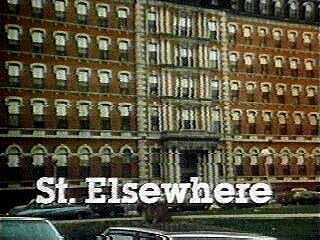
Welcome to Retro Television Reviews, a feature where we review some of our favorite and least favorite shows of the past! On Fridays, I will be reviewing St. Elsewhere, a medical show which ran on NBC from 1982 to 1988. The show can be found on Daily Motion.
This week, it’s a busy few days in Boston.
Episode 4.5 “Slice O’Life”
(Dir by Eric Laneuville, originally aired on November 6th, 1985)
Oh, the drama!
Elliot is still struggling to lose weight.
Fiscus is having an early midlife crisis, especially when a cancer patient (Todd Susman) philosophically accepts that the treatment is going to leave him impotent. The patient has lived a life with meaning. What has Fiscus done?
Dr. Craig finally admits to Ellen that he knows he was too hard on their now dead son. They are both preparing to raise their granddaughter, Barbara, in their home. However, Yvonne’s parents (Ramon Bieri and K Callan) arrive in Boston for a visit. They are so blue collar and, in Dr. Craig’s eyes, unsophisticated that they almost seems like caricatures of what the rich think the poor are like. They reveal that Stephen and Yvonne asked them to serve as Barbara’s legal guardians in case anything happened. At first, Ellen refuses to let them take Barbara. “Get your wife in check,” Yvonne’s father says. “I’ll see you in court,” Dr. Craig replies.
After complaining about feeling like he has a cold and then getting upset about the Hospital Board not immediately approving all of his projects, Dr. Westphall collapses in the St. Eligius stairwell. It turns out that he has Malaria. Apparently, a self-righteous attitude and a bunch of impractical ideas were not the only things Westphall brought home from Ethiopia.
Finally, Bobby spends another weekend up at Cape Cod. He picks up a local woman. They have what Bobby is probably expecting to be just another one night stand. The woman, however, has a razor blade that she’s hidden under her tongue (yikes!) and proceeds to slice Bobby across his face.
AGCK!
Up until that ending, this was a fairly typical episode of St. Elsewhere. It looked like the big drama was going to be the Craigs temporarily losing Barbara. Instead, the drama is that Bobby might be dead!
Oh, poor Mark Harmon. When he first started playing the role on this show, Bobby was portrayed as being a nice guy who was a little boring. The show really had no idea what to do with him, other than have him occasionally take his shirt off. For the fourth season, the show’s writers turned him into an arrogant hedonist. On the one hand, I’m sure there are a lot of doctors like Bobby Caldwell. On the other hand, the change really does seem to have come out of nowhere. And now, he might be dead. I guess the lesson here is to stay away from Cape Cod!
The attack on Bobby ultimately overshadows everything else that happened in this episode. I will say that, before Bobby got attacked, I was enjoying Dr. Craig’s rather snobbish reaction to Yvonne’s parents. As for Dr. Westphall …. eh. Westphall’s kind of become a one trick pony. He’s depressed and he wants the world to know it. I know quite a few people like Dr. Westphall in real life, which is probably why I get so annoyed with his character on the show.