Monday Live Tweet Alert: Join Us For Nails!


As some of our regular readers undoubtedly know, I am involved in hosting a few weekly live tweets on twitter and occasionally Mastodon.  I host #FridayNightFlix every Friday, I co-host #ScarySocial on Saturday, and I am one of the five hosts of Mastodon’s #MondayActionMovie!  Every week, we get together.  We watch a movie.  We snark our way through it.

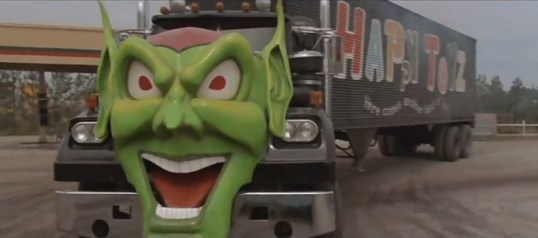
Tonight, for #MondayActionMovie, the film will be 1992’s Nails!


It should make for a night of fun viewing and I invite all of you to join in.  If you want to join the live tweets, just hop onto Mastodon, find the movie on YouTube and hit play at 8 pm et, and use the #MondayActionMovie hashtag!  The  watch party community is a friendly group and welcoming of newcomers so don’t be shy.   

See you soon!

4 Shots From 4 Films: Special Underwater Menace Edition


4 Shots From 4 Films is just what it says it is, 4 shots from 4 of our favorite films.  As opposed to the reviews and recaps that we usually post, 4 Shots From 4 Films is all about letting the visuals do the talking.

Jaws is 51 years old!

It’s time for….

4 Shots From 4 Underwater Menace Films

Jaws (1975, dir. by Steven Spielberg)

Orca (1977, dir by Michael Anderson)

The Last Shark (1981, dir by Enzo G. Castellari)

Super Shark (2011, dir by Fred Olen Ray)

Review: Wandering Earth (dir. by Frant Gwo)


“Regardless of the outcome for the history of mankind, we have decided to choose hope!” — MOSS

When The Wandering Earth hit theaters in 2019, it wasn’t just another blockbuster; it was a massive cultural event that announced Chinese cinema had arrived on the global sci-fi stage. Directed by Frant Gwo and based on a novella by Cixin Liu, the film presents an apocalyptic scenario that makes most Western disaster movies look like minor neighborhood inconveniences. The sun is dying and rapidly expanding, threatening to swallow the Earth. Instead of building a fleet of spaceships to escape—an approach familiar to fans of Interstellar or WALL-E—humanity decides to strap ten thousand massive thrusters to the planet and physically fly the entire Earth to a new solar system. It is a wildly ambitious concept, and the film matches that ambition with a scale that is genuinely jaw-dropping, even if the execution sometimes stumbles under its own weight.

The core premise of The Wandering Earth is where the film’s most fascinating positives lie. In Western sci-fi, the go-to survival strategy usually involves a chosen few hopping onto a ship, leaving a doomed Earth behind. Gwo’s film flips that script entirely. Taking the whole planet with you is a deeply rooted cultural metaphor. It speaks to a connection to the land, an ancestral tie to home that cannot be easily severed. In layman’s terms, if your house is flooding, you don’t just grab a life raft and leave; you try to put the whole house on stilts and float away. This collectivist approach to survival sets the tone for the entire movie. The hero isn’t a single maverick saving the day through individual brilliance; it is a massive, coordinated effort of thousands of engineers, astronauts, and rescue workers. This thematic freshness is a massive point in the film’s favor.

Visually, the movie is an absolute triumph, which is another major positive. The production design is stunning, especially considering it was a trailblazer for high-budget Chinese sci-fi. The planetary engines are these colossal, monolithic structures that make humans look like ants, perfectly capturing the sheer engineering scale required to move a planet. The surface of the Earth, frozen solid as the planet moves away from the sun, is rendered in bleak, atmospheric blues and whites. You really feel the bitter, unforgiving cold of a world that has been abandoned by its star. Sure, if you look closely, some of the CGI can look a little video-gamey, particularly in the faster action sequences. But the overall aesthetic is so dense and imaginative that it’s easy to forgive the moments where the digital effects stretch a bit thin. The design of the rugged transport vehicles, the claustrophobic underground cities, and the menacing, swirling red eye of Jupiter when the Earth gets caught in its gravity—all of it creates a visually cohesive and immersive world.

However, when we shift from the macro to the micro, the film’s flaws become glaringly apparent, starting with its pacing and narrative structure. The plot essentially operates as a relentless series of escalating, life-or-death obstacles. As soon as the characters solve one problem, another, bigger problem immediately pops up. It is an exhausting, breathless way to tell a story, which keeps the adrenaline high but leaves very little room to breathe. The Earth gets caught in Jupiter’s gravitational pull, the planetary thrusters fail, a rescue team has to transport a lighting device across a frozen wasteland, and so on. For a casual viewer, this makes for an exciting, edge-of-your-seat experience. Analytically, however, it exposes a script that relies heavily on convenience and last-minute problem-solving. The characters are constantly shouting scientific jargon to explain why the newest disaster is happening and how they can fix it, which sometimes feels less like organic storytelling and more like a frantic physics lecture you didn’t study for.

The human element is another area where the film struggles with significant flaws. The story centers on the fractured relationship between astronaut Liu Peiqiang, who is stationed on a navigating space station, and his rebellious teenage son Liu Qi, who sneaks out to the frozen surface with his adopted sister. The family dynamic is meant to be the emotional anchor of the film, and there are genuinely poignant moments regarding sacrifice and the lengths parents will go to protect their children. Unfortunately, these emotional beats are often delivered with a very heavy hand. The dialogue can be quite melodramatic, and the characters fall into recognizable archetypes—the angry young man, the stoic mentor, the plucky comic relief. The acting and line delivery can feel over-the-top and stilted. While Western audiences might find this jarring, it fits comfortably within the stylistic norms of Chinese dramatic cinema. Even so, broad emotional strokes and underdeveloped side characters hold the script back from achieving true narrative greatness.

Despite these narrative and emotional flaws, what redeems The Wandering Earth and makes it so compelling is how it leans into its thematic positives. In a standard Hollywood disaster film like Armageddon or 2012, you can bet that one charismatic hero will defy orders, punch a villain, and save the day in the final seconds. Here, the protagonists fail. A lot. Their plans don’t work, and it takes the combined, synchronized effort of rescue teams from all over the globe—including characters we never even meet—to push the story forward. There is a specific, powerful sequence where a group of international rescue workers are pushing a heavy vehicle up a slope, and one by one they fall from exhaustion, only to be immediately replaced by others stepping in to take their place. It is a brilliant, simple visual metaphor for collective endurance. The film argues that humanity survives not through individual heroism, but through shared suffering and mutual sacrifice, which ultimately elevates the flawed script.

Ultimately, The Wandering Earth is a milestone film that demands respect, warts and all. Frant Gwo managed to craft a spectacle that rivals anything coming out of Hollywood, while infusing it with a distinctly Chinese cultural identity. It is not a perfect movie. The pacing is exhausting, the exposition can be clunky, the science is often baffling, and the emotional resonance relies heavily on the audience’s willingness to accept melodramatic family tropes. Yet, the sheer audacity of the concept, the incredible world-building, and the thematic focus on communal survival make it a deeply rewarding watch. The positives of its visual ambition and unique cultural perspective heavily outweigh the flaws of its script and pacing. It is a film that asks what it means to save the world, and boldly answers that it takes the whole world to do it.

Lifetime Film Review: I Killed Him In My Sleep (dir by Katie Boland)


Kelty Crawford (Abigail Breslin) is thirty years old and troubled.  She’s the epitome of almost every Generation Z cliche imaginable.  Haunted by a terrible accident and various guilt and mental issues, she currently has few career prospects, little money, and an upcoming wedding that is going to cost her a fortune.

She’s also having trouble sleeping.  She sleepwalks and, when she does wake up, she’s doing strange things like eating the toothpaste straight out of the tube.  Both to make some extra cash and to try to find out what is at the root of her sleepwalking, Kelty agrees to take part in a sleep study that is being conducted by the rather shady Dr. Baylour (Michael Eklund).  Baylour gives her a shot of a powerful drug.  Kelty falls into a deep sleep and she immediately has dreams about killing a man that she doesn’t know.

During her waking hours, Kelty is shocked to sees a news story about how the body of the man she dreamed of killing has recently been discovered.  Kelty fears that she killed the man in her sleep.  Kelty is also shocked when Dr. Baylour vanishes without paying her for taking part in his sleep study.  Hey, Dr. Baylour — she’s got a wedding to pay for!

I had high hopes for I Killed Him In My Sleep.  Abigail Breslin, who was just ten years old when she was nominated for an Oscar for her performance in Little Miss Sunshine, has developed into a good actress and she especially seems to be well-cast as people who are dealing with dark secrets.  The film’s premise sounded intriguing.  It sounded like I Killed Him In My Sleep would embrace the melodrama, much in the same way that Doug Campbell and Eric Roberts did with the Stalked By My Doctor series.  (Remember Stalked By My Doctor: A Sleepwalker’s Nightmare?  That was a classic!)  And, to give credit where credit is due, this film did feature one twist that actually did take me by surprise.

And yet, with all that in mind, I Killed Him In My Sleep fell flat for me.  A lot of it is because, instead of fully embracing the melodrama and cheerfully celebrating the excess that goes along with it, the film moves very slowly and seems to take itself very seriously.  With its muted cinematography and its overly talky characters, this is a film that tries so hard to be naturalistic that it instead ends up feeling even more fake than usual.  Abigail Breslin is a good actress and she probably does about as well as anyone could have with this role.  Unfortunately, her dialogue sounds more like a series of social media posts than an actual human being.  Kelty may not be a typical Lifetime heroine but that she’s also just not that interesting.

That said, the plot had potential and the nightmare scenes were well-directed.   The film captured the feeling of waking up disorientated and not being quite sure what you’ve just spent the last few hours doing.  A few nights ago, I dreamt that I had a job at a retirement community and that I did so well that everyone living there was happier than they had ever been.  That was a nice dream and far better than killing people.

Runaway (1984, directed by Michael Crichton)


The year is 1991 and humans are using robots for everyday tasks.  Because the budget is low and Michael Crichton had already done Westworld, none of the robots are humanoid or capable of original thought.  The majority of them are boxy and they look harmless until they malfunction.  All police departments now have a division of cops trained to deal with robots.  Being a part of the “runaway squad” is not prestigious but it’s perfect for Sgt. Jack Ramsey (Tom Selleck), a good cop who suffers from a crippling fear of heights.

Ramsey and his new partner, Karen Thompson (Cynthia Rhodes), investigate a murder that was apparently committed by a robot.  Their investigation leads them to Jackie Rogers (Kirstie Alley) and her boyfriend, renegade scientist Charles Luther (Gene Simmons).  Luther has not only programmed robots to kill but he’s also designed smart bullets that can lock onto a target’s unique body heat.

It’s hard to resist Runaway.  Stalwart Tom Selleck vs an overacting Gene Simmons?  Kirstie Alley as a neurotic femme fatale?  Robots spiders that inject acid into their victims?  Remote control smart bombs that chase cars down the highway?  Countless point-of-view shots of the smart bullets tracking their victims?  It’s an entertaining B-movie, no matter what you may think of the plot or some of the acting.  I don’t know what logic led to Michael Crichton casting Gene Simmons as a crazed computer scientist but I’m glad that he did.  Watching a movie like this, you can see why Tom Selleck remains a television star.  He doesn’t have the bigger-than-life persona of a movie star.  But Selleck’s mild persona works perfectly when matched up with Gene Simmons acting like the phantom of the park.  And then there’s Kirstie Alley, playing a dangerous secretary with the right mix of sexiness and humor.  Cynthia Rhodes may have been the female lead but Kristie Alley is the one who stole the movie.

When Runaway was first released in 1984, it was expected to be a hit but it was instead overshadowed by another film about killer future robots, The Terminator.   Needless to say, the simple heroics of Runaway can’t compete with intense action of The Terminator and even Gene Simmons at his most unhinged can’t beat Arnold Schwarzenegger saying, “I’ll be back,” but Michael Crichton’s vision of a future full of killer roombas still feels prescient today.

I Watched Blood, Sweat and Cheer (2023, Dir. by Traci Hayes)


Divorcee Renee (Tammin Sursok) is so upset when her teenage daughter Cherie (Monroe Cline) moves in with her father that, despite being nearly 40, Renee enrolls in high school and becomes a cheerleader.

PARENTS!  DO NOT DO THIS!

This was based on a true story.  A 30 year-old mother imitated her 13 year-old daughter, enrolled in a middle school and spent a day there, posting to social media.  She was eventually arrested for trespassing and tampering with government records.  She said she was doing it to make a point about school’s not being secure enough and she certainly did that.  But, even if the real mother did make her point, I repeat:

PARENTS!  DO NOT DO THIS!

DO NOT EVER EVER DO THIS!

Your children will never forgive you if you do.  High school is not your place.  Your place is drinking wine and talking to your girlfriends about how much you love Andy Cohen.

In this film, Renee looks a lot older than 30 and she also manages to stay enrolled in the school for nearly an entire semester.  She becomes a cheerleader!  She dates a student!  A teacher get uncomfortable when she flirts with him because she’s too young.  She kills people to hide her secret because she’s having so much fun in school.  But she looks like she’s closer to 50 than 40.  It takes more than getting bangs to erase those age lines.  Is everyone at the school blind?

It’s not a very plausible movie but, when I was a cheerleader in high school, there were a lot of cheer moms who would have loved to have enrolled in the school and taken their daughter’s place on the squad.  None of them were crazy enough to try it, though.  Instead, they would just sit in on practice and make everyone uncomfortable.

Luckily, this movie is a comedy and it made me laugh enough for me recommend it.  Renee just went to such extremes to try to reclaim her high school years.  Cheer moms are crazy.  You have to laugh.

Visiting Charles Bronson’s Vermont… and a chance encounter I’ll never forget – Taking my love of movies on down the road (Part 5)!!


For most of my life, I’ve wanted to visit the state of Vermont. It started because I loved the 80’s sitcom NEWHART when I was a kid. In the show, Bob Newhart and his wife were innkeepers in rural Vermont so I just knew it had to be beautiful. And then, as Charles Bronson’s biggest fan, I learned that his favorite place on earth was his horse farm in Vermont, which was named Zuleika Farm after his daughter with Jill Ireland. This became the place that he would escape to as his filming schedule allowed. He is even buried there at the Brownsville Cemetery at the foot of Mount Ascutney. Visiting that area of Vermont that sits close to the New Hampshire border became the ultimate Charles Bronson “bucket list” item for me. In 2026, at the ripe old age of 52, I was able to mark this off my list, as my wife and I spent a few days in West Windsor, VT. 

But first, if we were going to drive all the way to Vermont, I decided we should stop off in Philadelphia and see Eric Todd, the host of the THIS WEEK IN CHARLES BRONSON podcast. Eric’s vision to create a podcast dedicated to keeping Bronson’s memory alive has been so special to me. Thanks to Eric, who has allowed me to be his co-host on multiple occasions, I have met several actors who worked with Charles Bronson, and even some of his own family. Although we talk and text almost every day, this was our first time to meet in person. We had the best time over dinner, and we enjoyed meeting Eric’s wife Tina and his son Noah as well. Eric has truly become one of my very best friends!

Brad and Eric in our Bronson shirts, and a sweet puppy who just wants to be loved!

Once we arrived in Vermont the next day, our first stop was at “Bronson Road” in West Windsor, VT. This road went right through Bronson’s farm property. It’s a private road now so we couldn’t drive down it, but we did get a couple of pictures from the corner of Morrison and Bronson! 

Zuleika Farm is no longer there, but it’s memory lives on!
My beautiful travel companion took a pose at the entrance of the property Charles Bronson once loved!

After that, we made our way to the Brownsville Cemetery and paid our respects to the film icon and legendary action star. It’s hard to put into words exactly how I felt that day. I wasn’t there as just a fan. I was there as a person who has spent the majority of his life with a healthy obsession for the man and his work. I’ll just say it was a beautiful experience. On an interesting note, a man from Alabama stopped by to pay his respects while we were there as well. It makes me happy that Charles Bronson is still beloved over 20 years after his death. 

Charles Bronson’s gravesite in the Brownsville Cemetery.
The view from Bronson’s gravesite is beautiful Mount Ascutney!

One of the perks of being a co-host of the THIS WEEK IN CHARLES BRONSON podcast, is the fact that I’ve been able to meet Charles Bronson’s niece, Lindsay Ireland. She used to spend summers in Vermont with the Bronson’s when she was a teenager. She told me about some of Bronson’s favorite places to eat. We were able to eat at The Woodstock Inn, which was kind of fancy for Bronson’s personal tastes, but the food was great.

The beautiful entrance to The Woodstock Inn. The restaurant there is called “The Red Rooster.”

The place he really loved to eat was the Skunk Hollow Tavern, which is about 5 miles from the farm. I made us a reservation for “open mic” night at the Skunk Hollow Tavern on Wednesday, June 17th. Little did I know that Bronson’s stepson, Val McCallum, would be sitting in with the band that night. An incredible professional guitar player on his own, Val has been Jackson Browne’s lead guitarist going back to the early 2000’s. He also helped compose the film scores for the Bronson films MURPHY’S LAW, DEATH WISH 4, and ASSASSINATION back in the late 80’s. We got to meet him, and he even played a couple of songs for us, including “Charlie’s Coal,” an amazing song of love and respect for his “daddy.” It was a lucky and unexpected meeting I’ll never forget!

Val McCallum sitting in with the band on Open Mic night at the Skunk Hollow Tavern!
Val McCallum, son of David McCallum and stepson of Charles Bronson, graciously taking a picture with yours truly!

Our trip to Vermont was truly incredible, exceeding every expectation I had. I can’t wait to see where my next “movie trip” takes us. I just know it will be hard to top this one!

The TSL Grindhouse: The Student Nurses (dir by Stephanie Rothman)


When my mom was dying in 2008 and then when my Dad was in hospice care in 2024, I learned just how important nurses were.

While the doctors that I dealt with were often brusque and overworked, the nurses were the ones who always took the time to answer my questions.  While the doctors took an attitude of, “Death happens,” the nurses were the ones who were willing to show compassion.  They were the ones who seemed to understand the pain that both myself and my sisters were going through.  The nurses were the ones who seemed to care.  Even when it comes to something simple like getting my ADHD prescription renewed, I always feel more relaxed when I’m dealing with a nurse than dealing with a doctor.

(Don’t get me wrong.  I understand why doctors so often avoid a personal connection with their patients.  As Doctor Warshaw (Richard Stahl) puts it in 1970’s The Young Doctors, “mourning is reserved for loved ones.”  It may sound cold but it’s the truth.)

When my Dad was in home hospice, we had a nurse the came by the house every day.  She was cool and professional but still always seemed to care.  She was also a chain-smoker and there were more than a few days that I stepped outside with her.  She always had an extra cigarette for me.  Usually, I don’t smoke because I have asthma but, at that time, I was so stressed that the calming effect of smoking made the risk worth it.  Knowing that the nurse would always arrive early in the morning helped me deal with a very difficult time.  At a time when everything felt like it was spinning out of control, the nurse was someone upon whom I could depend.  After my father died, I struggled to adjust to a lot of things, including the absence of the nurse.  I discovered I missed the nurse’s professional presence.  I missed talking about my feelings while burning a cigarette down to its filter.

In short, I have a lot of respect for nurses.  They have a difficult job, one that I certainly could not do.  But I’m thankful for all that they’ve done for me, my family, and other people’s families.

With all that in mind, I watched 1970’s The Student Nurses earlier today.

The Student Nurses tells the story of four women who are studying to be nurses while working at the local hospital.  Phred (Karen Carlson) is introduced when she’s attacked by a crazed patient.  Later, she falls for a doctor named Jim (Lawrence P. Casey).  Sharon (Elaine Giftos) grows close to a terminally ill patient (Darrell Larson) and discovers the wisdom of Dr. Warshaw’s admonition about mourning.  Priscilla (Barbara Leigh), who is regularly admonished for the length of her skirt and for never wearing a bra, meets a charismatic drug dealer named Les (Richard Rust).  Les is all about dropping the acid on the beach but he’s not about sticking around when his girlfriend gets pregnant.  And finally, Lynn (Brioni Farrell) meets a Latino political activist named Victor Charlie (Reni Santoni) and discovers that some people just aren’t rich enough to go to the hospital.  When Victor shoots a cop during a raid on his headquarters, Lynn is forced to make a difficult decision.

The Young Nurses is almost legendary because of its status as a politically-themed exploitation film.  It’s a Roger Corman production so there’s a lot of nudity.  But director Stephanie Rothman used the genre to explore themes of class conflict and feminism.  All four of the nurses are portrayed as being strong and independent women who have sex because they want to and who feel no shame about their decisions.  For a 1970 film, that was a big deal.  Interestingly, considering the film’s reputation, it’s actually fairly even-handed when it comes to the differing worldviews of the nurses.  One of the nurses decides that she wants to serve in the Army Nurse Corps, even if that means going to Vietnam.  Another ends up bragging about the gun that she’s carrying in her glove compartment, just in case anyone tries to stand in the way of the revolution.  The film treats both of their decisions with respect.  The important thing, the film seems to be saying, is that all of them are in control of their own future.

It’s an exploitation film, make no doubt about it.  Today, we might talk about the film’s politics and its feminist subtext but I kind of doubt that’s what made the film a box office success in 1970.  That said, Stephen Rothman brings some imagination to even the film’s most exploitive scenes.  When Priscilla drops acid on the beach, Rothman slowly introduces more and more people to the scene, leaving us to wonder, just as Priscilla does, whether they’re real or their just a part of her trip.  All four of the lead actresses are well-cast and fans of great character actors will probably enjoy seeing Reni Santoni playing someone other than a cop or a doctor.

Finally, like so many exploitation films, The Student Nurses is a true time capsule.  The music, the clothes, the groovy slang, this is a film that proudly announces that it was made in 1970.  We may not have time machines but at least we have the movies.

I have no idea if The Student Nurses is a realistic portrayal of what it was like to be a student nurse in 1970.  That said, it’s an entertaining film and, in its grindhouse way, a tribute to the nurses who do so much.


The Films of 2026: Stepfather (dir by Chris Stokes)


At first glance, Darnell (Taye Diggs) appears to be a nice and charming guy.

He appears to have a good job.  He’s confident.  He’s seems to be all about family.  He’s the guy who tells his stepdaughter’s boyfriend to look him in the eyes because “that’s showing respect,” but he somehow manages to do it without coming across as being a complete jerk.  Darnell spends a lot of time talking about the correct way to show respect and how to act like a man and his wife, Asia (Tamar Braxton), appreciates it.  Her ex-husband, Tim (TJ Shaw), was irresponsible and hurtful.  Her teen daughter, Melanie (Jessica Jarrell), is going through that rebellious phase and Asia is happy to have someone who can back her up when it comes to being a parent.  And Darnell …. well, Darnell is all about family.  In fact, one might even say that he’s a bit obsessed with finding the perfect family….

Of course, Darnell’s name isn’t really Darnell.  He’s used many different names over the years and he’s been a part of many different families.  Though Darnell might seem nice and polite on the surface, he regularly has fantasies where he loses control.  When he’s alone, he talks to his other personalities.  He also remembers how he murdered his last family and went on the run.,..

Stepfather, as you already guessed, is an uncredited remake of the classic 1987 thriller, The Stepfather.  Taye Diggs steps into the role that was previously played by Terry O’Quinn, Robert Wightman, and Dylan Walsh.  (Wightman played the role in Stepfather III while Walsh took over for the 2009 remake that literally no one remembers.)  Is this latest version of Stepfather any good?

Define good.

I say that because this is a Tubi original and I think you can very much argue that, when compared to other Tubi originals, Stepfather isn’t bad.  The film is in focus.  You can hear the dialogue.  The pacing sometimes feels a bit off and the scenes of two detectives searching for Darnell often feel like filler but, for what it is, Stepfather is an entertaining film.  I watched it on Friday while it was raining outside and I enjoyed it.  It can’t really compare to the original film because the original film was as much a satire as it was a thriller.  The remake does have a few moments where Darnell’s attempts to be a “perfect father” seem to comment on all the psychobabble about “respect” that was sold by the television shows that Darnell probably watched as a youth.  But, for the most part, Stepfather is a straight-forward thriller.  There aren’t a lot of surprises, especially if you’re someone who has watched a lot of Lifetime films.  But the film still holds your attention.

Not surprisingly, the strongest thing about the film was the memorably unhinged performance of Taye Diggs.  If the original film was made all the more effective by Terry O’Quinn’s initial blandness as the title character, this version wastes no time in establishing that Darnell is a bit unstable.  After murdering his previous family, he dances.  When he meets Asia in a grocery store, he delivers every line like a charming wolf on the hunt.  When he argues with his other personalities, Diggs does a good job of establishing each personality as an individual character.  Diggs shows what a good actor can do with familiar material.

Stepfather is available on Tubi.