October Positivity: Cancel Me Not (dir by Jason Campbell)


Over the past decade, Cancel Culture was has gone though an interesting evolution.  Whether or not its exists often seems to depend on who you ask or whether or not they feel that they’re the ones getting canceled.

Before 2016, it was agreed that Cancel Culture was real but it was viewed as largely being an internet meme.  On Twitter, people would announce that “so-and-so is canceled” because that person had failed to mouth the right political platitudes or they were friends with someone else who had been canceled.  Cancel Culture was around but few took it seriously because the main advocates were anonymous social media users who spent way too much time obsessing on Glee.

During the 2016 election and the year 2017, the Right claimed that the Left was trying to cancel anyone who voted Republican.  This led to the Left declaring that Cancel Culture was a myth and that the Right was just being whiny.

In 2018, when Al Franken resigned from the Senate, the Left briefly decided that Cancel Culture was real and it was a bad thing if it led to someone that they liked getting in trouble.  Once the Right started calling them out on this, the Left went back to saying that Cancel Culture was a myth but it was still bad in that it caused Al Franken to have resigned.  And that’s why Kirsten Gillibrand will never be President.

In 2020, the Left decided that Cancel Culture was fine as long as the only people being canceled were people who didn’t wear masks or who had doubts about the lockdowns.  However, at the same time, it was also decided that anyone who lost a job opportunity due to Cancel Culture would have lost that opportunity anyway because of …. reasons.  It doesn’t matter if, like Gina Carano, you were one of the most popular actors on a show that was, for the moment, capturing the pop culture zeitgeist.  The message seemed to be, “Yes, we’re cancelling people but it’s not anybody truly important so what do you care?”

Then, from 2022 to roughly 2026, the mainstream once again decided that Cancel Culture didn’t actually exist, except for when people like Eric Swalwell and Graham Platner were the ones getting canceled and that it was hypocritical of those who were previously canceled for tweeting a joke to take any joy over people being canceled for sexual assault.

In other words, Cancel Culture doesn’t exist except for when it does and hey, why do you care?  Are you looking to get canceled?

As you can probably guess from the title, 2024’s Cancel Me Not is a film about Cancel Culture.  Actor Chase Murray (Eddie McClintock) is accused of sexual harassment and assault by an actor who just wants to further their career.  Chase is acquitted by a jury of his peers but after spending a year being relentless attacked online, he’s  not ready to return to the spotlight.  He travels to Florida, where he finds himself staying next door to Heather Campbell (Jana Lee Hamilton), who has just left her husband.  Heather’s daughter, Emma (Arabella Weaver), is attending a college where the dean refers to the students as being his “children.”  When Emma is harassed for being a Christian, it looks like it’s time for Chase to go to the school and give a speech at an assembly.

Cancel Me Not is another low-budget, faith-based film from Jason Campbell.  On a technical level, the sound recording is often muddy and, despite only running for a little over an hour, it still feels a bit overlong.  On the plus side, while it’s not a film that’s likely to change anyone’s mind about Cancel Culture, it is a film that is specifically designed to annoy those who claim that it doesn’t exist.  It’s a “let’s tick off the other side” film and, when it works, it’s in a “Oh, I can’t wait to trick my Bernie-loving, DSA cousin into sitting through this” sort of way.  There’s nothing subtle about it but it’s entertaining as long as you already agree with the film’s conclusions.
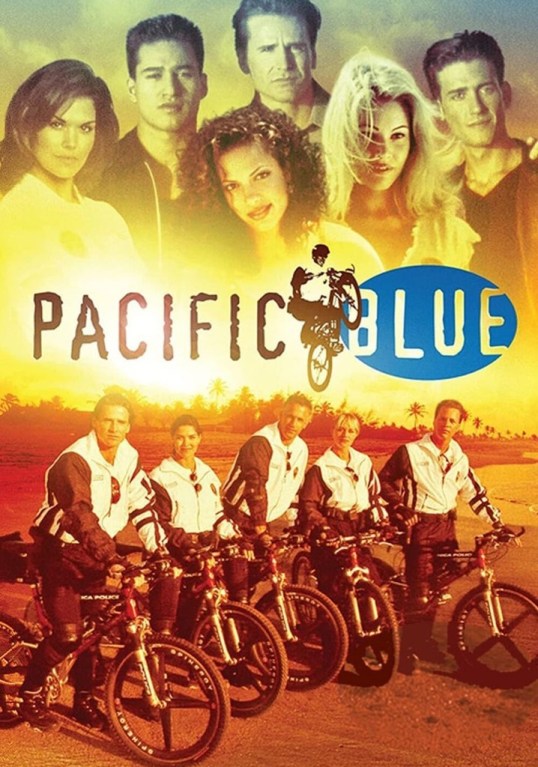
Late Night Retro Television Review: Pacific Blue 4.22 “The Right Thing”


Welcome to Late Night Retro Television Reviews, a feature where we review some of our favorite and least favorite shows of the past! On Tuesdays, I will be reviewing Pacific Blue, a cop show that aired from 1996 to 2000 on the USA Network!  It’s currently streaming everywhere, though I’m watching it on Tubi.

This week, the fourth season comes to a close.

Episode 4.22 “The Right Thing”

(Dir by John B. Moranville, originally aired on April 25th, 1999)

Businessman John Patrone (Fred Saldone) has negotiated a peace treaty between two gangs, one black and one Latino.  Finally, there will be peace in Santa Monica!  However, at a rally to celebrate the treaty, a sniper shoots Patrone dead.  At first, I was amazed that the police didn’t have anyone on those rooftops to prevent something like this from happening.  Then I realized that security for the rally was being provided solely by Pacific Blue.  Of course, the bicycle cops would screw this up.

Despite the fact that John Patrone was a major figure in Santa Monica, we never see any Homicide detectives working the case.  Instead, it somehow falls to the bicycle cops to investigate.  What they discover is that, despite his altruistic image, Patrone was actually a monster who sold weapons and drugs to the gangs and who raped and impregnated the daughter of Bruce Best (Kevin McClatchey).  Bruce’s daughter killed herself and that’s why Bruce assassinated Patrone.

Bruce doesn’t make any effort to disguise the fact that he killed Patrone.  He admits it to Bobby, Granger, Jamie, and Monica.  However, the four rookie cops are convinced that Patrone deserved to die and that Bruce did “the right thing” by shooting him.  In a move that is totally out-of-character for him, Bobby decides to throw all of the evidence implicating Bruce into harbor.  Unfortunately, Bobby is being watched by Susan Jessup (Holly Gagnier) of Internal Affairs.  Susan goes to TC and offers to let Bobby off the hook in exchange for sex.  (As ludicrous a character as Susan may be, Holly Gagnier’s wonderfully unhinged performance was the highlight of the episode.)  TC replies that he will arrest Bobby and Bruce personally.  This episode ends with a cliffhanger as all four of our rookies pose for their mugshots.

Meanwhile, Chris and Cory deal with a teenager who wants to shoot himself out of a cannon.  It’s a bit odd that the bike patrol’s two most experienced cops aren’t working the Patrone murder but whatever.  I’ve given up on trying to follow Pacific Blue logic.

We’ll find out the fates of Bobby, Jamie, Granger, and Monica next week, when we start the final season of Pacific Blue.  I really can’t wait for all this to be over with!

Horror On TV: Fear Itself 1.6 “New Year’s Day” (dir by Darren Lynn Bousman)


Tonight’s episode of Fear Itself is a macabre zombie story that takes place on New Year’s Day and which features a twist ending!  Watch this one with the lights off.

The episode originally aired on July 17th, 2008.  Director Darren Lynn Bousman is best-known for his Saw films.  Personally, I’m a fan of his 2010 thriller, Mother’s Day.

October Hacks: The Bye Bye Man (dir by Stacy Title)


There are certain films that have scenes that make you laugh even though you really shouldn’t. When I finally got around to watching 2017’s The Bye Bye Man earlier this year, there was one scene that almost caused me to fall off my couch from excessive giggling.

It really shouldn’t have made me laugh, but I couldn’t help it. It’s hard for me to explain what was so funny about it, but I’ll try. One of the film’s characters is standing in the middle of some train tracks. A train is rapidly approaching. Yikes! Nothing funny about that. The character does not move. She fully intends to get struck by the train. We get a close-up of the character on the tracks, and then we get a close-up of the train’s engineer suddenly realizing that she’s standing in front of his train.

“NO!” he says.

It’s the “No!” that gets me. He doesn’t yell, “Get out of the way!” He doesn’t yell, “STOP THE TRAIN!” In fact, as far as I can tell, he doesn’t even try to stop the train, and seeing as how he’s the engineer, one would think that would be something he would know how to do. Instead, he sees her and he goes, “NO!” When he says it, he uses the same tone of voice that I use when I’m telling a cat not to sharpen its claws on the furniture. He’s not saying, “No, this can’t be happening!” He’s not saying, “Oh God, NO!” Instead, he’s saying, “No, don’t you stand on those tracks!” It’s such a fake and awkward moment that I couldn’t help but laugh. Later, I couldn’t help but wonder why no one was willing to say, “Well, let’s just leave that NO! on the cutting room floor. It’s not like it really adds anything to the film.”

That’s the type of film that The Bye Bye Man is. It’s inept in almost every way, from the acting to the script to the editing to …. well, everything. It’s a film that was obviously meant to launch a franchise. The Bye Bye Man was meant to be the type of evil presence who would haunt the nightmares of a generation of filmgoers. If you don’t want The Bye Bye Man to come after you, all you have to do is not say or think his name. But as soon as you see that name, that’s all you can think about. He’s kind of like Candyman, just without any sort of subtext. One has to wonder how he ended up with a name like Bye Bye Man. Maybe it’s explained in the film and I was too busy laughing at that awkward “NO!” to notice. It’s entirely possible.

I may have also been busy wondering what Faye Dunaway was doing in this film. She only has a small role. It’s really more of a glorified cameo than anything else. She plays the widow of a reporter who, years earlier, discovered the existence of The Bye Bye Man. This film came out a month or so before Dunaway and Warren Beatty accidentally gave the Best Picture Oscar to the wrong film at the 89th Annual Academy Awards. I’d like to think that was her getting revenge on Hollywood for not giving her better roles.

The Bye Bye Man did not lead to a franchise, which is a shame. I would pay money to see the future adventures of that engineer.


SOV Horror Review: Vampire Time Travelers (dir by Les Sekely)


First released in 1998, Vampire Time Travelers is not an easy film to describe.

The film opens with a title crawl that informs us that, years ago, a vampire stalked the members of a sorority but fortunately, the vampire was defeated.  In fact, vampire Lorelei (Jillien Weisz) was forced into a coffin.  A cross was put on the coffin, trapping her there.  This was all apparently engineered by her sister, Natalia, who is never fully seen but who is often heard.  In the five years between Lorelei getting put in the coffin and the rest of the film, Natalia is killed by a sorority girl named …. wait for it …. Buffy.  Now, Buffy’s younger sister, Susan Ann Marie (J.J. Rodgers), is pledging to the same sorority and Natalia’s spirt wants revenge.  A man in a hood whispers to two kids that there’s copies of “Pet House” stashed in the coffin.  (Both boys look directly at the camera as a guitar riff plays on the soundtrack.)  The boy remove the cross and Lorelei is set free.

Sam — as Susan Ann Marie prefers to be called — is attending a sorority initiation at a professor’s house.  Also at the initiation is bitchy Vaughn (Lynne Baker), former tennis star Heidi (Ali Elk), surprisingly tall Jenna (Micky Roth), and aspiring rock star Zoe (Kat Facchino).  Natalia attempts to bite Sam’s neck while she’s sleeping but it turns out that she’s not strong enough.  She has to drink the blood of the other sorority sisters first.  But since she can’t find the strength to pierce anyone neck, she has to bite a different location.  “Bite her in the butt!” a bearded man says.  “Ewww, gross!” Lorelei says.  I agree!

Lorelei is not the only monster lurking in this film.  There’s also the Man Who Lives In The Closet (JC Grigg), who represents the childhood fear of something hiding in the …. well, the closet.  And then there’s The Man Who Won’t Call Back (played by the film’s director, Les Sekely), who haunts Zoe’s nightmares.  While Lorelei is forced to undergo remedial vampire training, Zoe bonds with The Man Who Lives In The Closet and Heidi seeks revenge against those who she blames for ending her tennis career.

Got all that?

There’s a lot going on in this 69-minute film and none of it is meant to be taken seriously.  Vampire Time Travelers is a SOV horror film that cheerfully sends up all of the cliches that one associates with SOV filmmaking.  The acting is intentionally over-the-top.  The dialogue is full of deliberately bad puns.  The plot is so twisty that it’s impossible to follow.  Usually, all of this would be a problem but, in this film, the incoherence is the point.  It’s not supposed to make sense.  Instead, the film is about tossing out one joke after another and seeing how many of them work.  For every joke that falls flat, there’s one that works wonderfully.  I laughed a lot more than I thought I would.  This movie may be crude but it’s also surprisingly clever.

Vampire Time Travelers is an effective SOV mix of horror and comedy.  It took me totally by surprise.

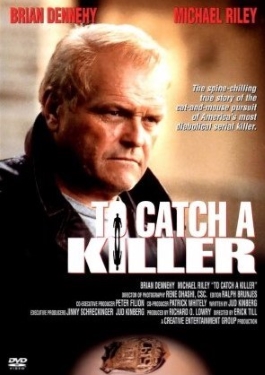
October True Crime: To Catch A Killer (dir by Eric Till)


Brian Dennehy was one of the great American character actors.

Rugged and exuding a sense of weariness, as if he were someone who had seen it all, Brian Dennehy cut a uniquely American figure. He was one of those actors who could play a New York fireman as easily as he could play a Tennessee farmer. He had those eyes that said, “Don’t mess with me,” but also the manner that made you feel everyone was welcome in his house as long as they didn’t think they were better than anyone else. He was one of those actors who could be both likable and intimidating. He was perfectly cast as Sheriff Teasle in First Blood because, even if he was a bit too hard on John Rambo when he first picked him up, it was still easy to see that Teasle didn’t mean to be a jerk. He was just doing his job. He thought he was keeping his town safe. Dennehy was just as credible playing a benevolent alien in Cocoon, a western outlaw in Silverado, or a burned-out cop in F/X. When Dennehy played a hero, you felt safe whenever he was onscreen. When he played a bad guy, he was absolutely terrifying.

Dennehy played one of the worst of the real-life bad guys in the 1992 television film To Catch a Killer. He plays John Wayne Gacy, a contractor considered a pillar of his community in the suburbs of Chicago. He runs a successful business. He hires young men who really need the money. He has a big smile. He’s involved in local politics and even has a framed picture of himself with President Jimmy Carter’s wife. In his spare time, he dresses up like a clown and entertains the children at the local hospital. He uses the name Pogo and paints sharp points at the corners of his mouth, giving him a somewhat sinister appearance. Everyone seems to like him. Of course, most people don’t know that Gacy is an ex-con who did time for sexually assaulting a 15-year-old boy in Iowa. This film takes place in the late ’70s, before anyone could just hop online and look up public records.

To Catch a Killer follows Detective Joe Kozenczak (Michael Riley) as he investigates the disappearance of a young man last seen being offered a job by Gacy. Joe suspects Gacy from the start, but he’s continually told that Gacy is a pillar of the community. What makes this film so effective is that Brian Dennehy plays Gacy as someone so arrogant he barely bothers to hide his guilt, but also as someone with such a victim complex that he won’t stop whining about being suspected of doing something he definitely did. The scene where Gacy demonstrates a handcuff trick is frightening because Gacy seems so desperate for companionship, and so goofy, even while he’s preparing to murder someone. Personally, I prefer it when Dennehy is playing a good guy (or, at the very least, a misguided bad guy like in First Blood), but that doesn’t change the fact that he was frighteningly believable as John Wayne Gacy. Dennehy was Emmy-nominated for his performance here.

As for the real John Wayne Gacy, he killed at least 33 people before he was apprehended in 1978. (It’s thought that the actual number is much higher.) He was executed in 1994, two years after this film aired. Reportedly, his last words were, “Kiss my ass.”

The TSL Horror Grindhouse: Back From The Dead (dir by Charles Marquis Warren)


In 1958’s Back From The Dead, pregnant Mandy Anthony (Peggie Castle) is on a California vacation with her husband Dick (Arthur Franz) and her sister, Kate (Marsha Hunt).

While staying at Dick’s vacation home (which overlooks the ocean), a tired Mandy grimaces when Dick starts playing a record.  Dick insists that it’s her favorite record but Mandy’s reaction would seem to indicate the opposite.  While the droning orchestral music plays, Mandy has a sudden seizure and passes out.  Dick rushes her to the bedroom while Kate smashes the record.  A doctor (Ned Glass) comes to check on Mandy and announces that she’s had both an epileptic seizure and a miscarriage.  When Mandy wakes up, she’s suddenly demanding to be called Felecia and referring to Dick by an odd nickname, “Deacon.”  Dick rushes out of the bedroom and refuses to reenter.  When Kate demands to know what’s wrong, Dick reveals that Mandy is actually his second wife.  His first wife was named Felecia and she always used to call him “Deacon.”

Soon, Mandy is demanding to be taken to see “her” parents, who are actually Felecia’s parents.  Felecia’s mother (Ada Bradley) is revealed to be some sort of witch who apparently cast a spell that caused Felicia’s spirit to possess Mandy as soon as she entered the vacation home.  (It turns out that terrible record that Dick insisted on playing was Felecia’s favorite.)  Along with Dick’s neighbor (Marianne Stewart), Felecia’s mother is a member of a Satanic cult that is led by the mysterious Renault (Otto Reichow)  The possessed Mandy is soon threatening not only Dick but also all of Dick’s friends.  She even murders Dick’s dog.  (Boo!)

There’s an interesting subtext to Back From The Dead, though I’m not sure it was intentional on the part of the filmmakers.  Even before Mandy is possessed, Dick is hardly the model husband.  He comes across as being cold and uncommunicative and when both Mandy and Kate say that they don’t want to listen to the record, he ignores them and insists that they both love it.  Dick also doesn’t seem to be particularly upset by the loss of the baby.  As well, he’s never even told his wife that he was married before.  The only time that Dick really shows emotion is when he realizes that he can no longer control Mandy.  Mandy spends the entire film either being ordered around by Dick or being possessed by Dick’s dead first wife.  In the end, it isn’t Dick or any of the other men in the film who fights for Mandy’s freedom.  Instead, it’s Kate, Mandy’s sister.  Kate is the only person in the film who seems to care that Mandy has basically lost control over her own life.  In the end, the film becomes about just how far one sister will go to protect the other.  Kate fights to give Mandy back her life but it’s hard not to feel that it’s not much of a life to begin with.  Much like Nicholas Ray’s Bigger Than Life, Back From The Dead ends with a false sense of happiness.  For Mandy and Dick and Kate, nothing is ever going to be truly the same again.

Now, I should note that Back From The Dead is definitely a B-movie.  It has the look of a well-produced episode of a 50s anthology show.  All it really needed was Boris Karloff to host.  Arthur Franz is a bit on the dull side as Dick but that’s largely the fault of a script that doesn’t allow him to do much other than seethe and glower.  The film’s heart belongs to Masha Hunt’s fierce performance as Kate.  Kate is a fighter and a protector and it’s impossible not to root for her.  I can only hope to be as good as a sister as Kate but, then again, I don’t think any of my sisters are going to be possessed this holiday season.  Let’s hope not!

The film has its slow spots but, for the most part, Back From The Dead is a 50s B-movie that holds your interest.  You’ll never want to listen to vinyl record again.

Film Review: Voices From Beyond (dir by Lucio Fulci)


Wealthy businessman Giorgio Minardi (Duilio Del Prete) dies of a massive internal hemorrhage. His last words are “Why?” Even though he dies surrounded by his family, none of them seem to be particularly upset about his passing. Every one of them — from his much younger wife to his stepmother to his son — is more concerned with who is going to get Giorgio’s money than the fact that someone murdered him by grinding up glass and putting it into his food. The only person who truly seems to be upset by Giorgio’s passing is his daughter, Rosie (Karina Huff). Even though Giorgio is dead and soon buried, his spirit remains and soon, he is showing up in Rosie’s dreams and imploring her to help him discover who murdered him.

Released in 1991, Voices From Beyond is one of the films that Lucio Fulci made for television towards the end of his career. By this point, Fulci was not doing well, personally or professionally. After the box office failure of films like Manhattan Baby and Murder Rock, Fulci found himself struggling to raise the money to produce the type of films that he wanted to make. Also, his critical reputation never recovered from the controversy surrounding the violence in The New York Ripper. There’s an undeniable bitterness at the heart of Voices From Beyond. Though the film features several close-ups of Giorgio’s decaying corpse and a few surreal dream sequences, the true horror comes from the way that the family reacts to Giorgio’s sudden death. No one cares that he died. No one cares that he was murdered. They just want what’s left of his estate. Giorgio, trapped in spirit form, discovers just how unloved he was. Watching the film, one gets the feeling that Fulci saw a lot of himself in Giorgio. The family becomes a stand-in for everyone who deserted Fulci during the final years of his life.

I’ve seen Voices From Beyond advertised with a rather tacky pull quote — “The last good movie Fulci made!” While the quote is accurate in that the film is better than most of Fulci’s later films (even if it can’t match the delirious heights of Zombi 2, the Beyond Trilogy, or even The New York Ripper), to call it the last good film that Fulci made is to do the director a great disservice. Even Fulci’s lesser films were uniquely his own and, as a result, they were all good Fulci films regardless of whether or not they were good on any other level. To his credit, Fulci never really sold out. He did the best with what he had. Even this made-for-TV movie manages to open with a threesome and a rather gory knifing. The film features Fulci’s characteristic touches. The camera tracks through the darkness with style. Where it suffers is with a plot that makes the identity of the killer far too obvious and also with a less-than-inspired cast. Del Prete, unfortunately, doesn’t really have the charisma necessary to make us want to stick with Giorgio even after he’s died.

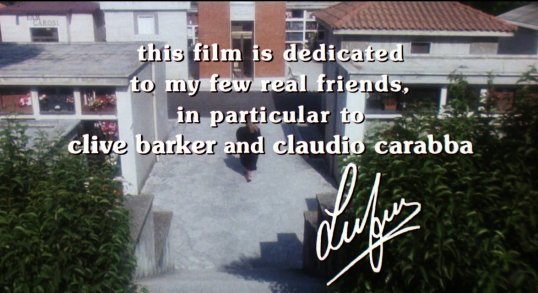
In the end, Voices From Beyond is interesting as a personal statement. It’s Fulci’s way of letting audiences know what he thought of those who had deserted him. The film ends with a dedication that is pure Fulci in both its spite and its vulnerability. Rest in peace to the maestro.

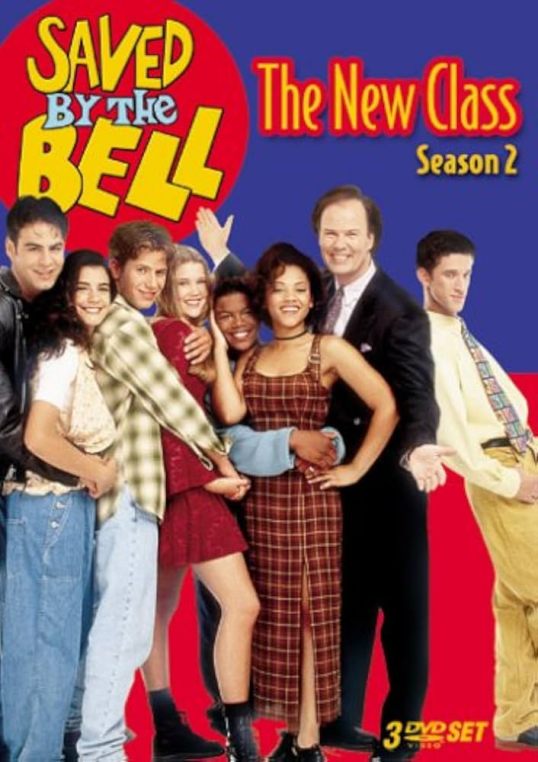
Retro Television Review: Saved By The Bell: The New Class 2.21 “Feuding Friends”


Welcome to Retro Television Reviews, a feature where we review some of our favorite and least favorite shows of the past!  On Tuesdays, I will be reviewing Saved By The Bell: The New Class, which ran on NBC from 1993 to 2o00.  The show is currently on Prime.

We’re back at the ski lodge!

Episode 2.21 “Feuding Friends”

(Dir by Don Barnhart, originally aired on November 26th, 1994)

At the ski lodge, Mr. Belding’s sprained ankle appears to have healed.  However, Tommy still has a broken leg and it’s strange to me that he’s still even at the ski lodge.  I mean, this is a school trip and a broken leg is not a minor injury.  It seems like most school trips would be abruptly cancelled if a student got drunk and suffered a serious injury as a result.  Has anyone called Tommy’s parents?

While everyone else is enjoying the slopes, Megan stays behind and keeps Tommy company.  Soon, Megan and Tommy realize that they like each other and they decide to have dinner together.  Lindsay freaks out.  How dare Megan date her ex-boyfriend!?  Bobby gets mad too.  How dare Tommy go out with the girl that Bobby likes!?  At first, Rachel is neutral but then Lindsay suggests that Megan would date Brian if he ever broke up with Rachel.  Rachel gets mad at Megan for something she hasn’t done yet.  Brian tries to remain neutral (“I’m swiss,” he says) and Rachel calls him a wimp.

Meanwhile, a snooty fashion photographer sees Screech on the slope and takes a lot of pictures of him.  How will Screech take it when he discovers that the photographer is planning to use him as an example of how not to look?

This episode …. actually, I enjoyed this episode.  Yes, the whole thing with the photographer and Screech was pretty stupid.  But, when it came to everyone getting mad at each other, I could actually relate to that.  When Rachel got mad over something that hadn’t happened but which could happen, I felt very seen.  In its undeniably Saved By The Bell way, this episode captured the dynamic of what often happens with people who have been friends forever.  You fight over stupid stuff but, in the end, you always make up.

This was a good episode.  I’m as shocked as anyone.

That said, I’ll be even more shocked if the Tommy/Megan romance is ever mentioned again.  Saved By The Bell always has a way of creating couples and then forgetting about them one episode later.

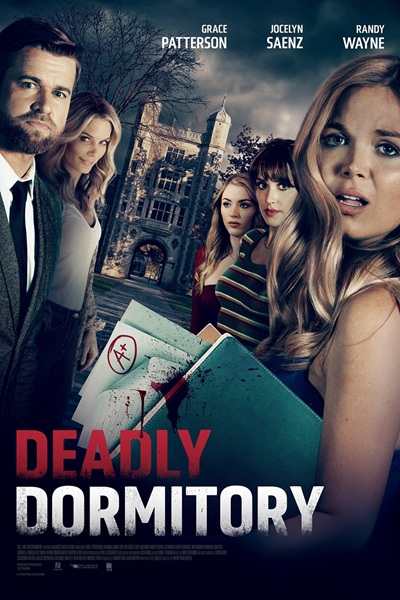
Lifetime For October: Deadly Dorm (dir by Brent Ryan Green)


This is one of those Lifetime films that has several different titles. The poster says Deadly Dormitory. Letterboxd claims that the title is Deadly Dorm. If you want to watch this film on Prime, you’ll have to look up College Professor Obsession. Me, I’m going to go with Deadly Dorm because that’s the easiest to say and the quickest title to type.

First aired in 2021, Deadly Dorm tells the story of Jenny Willis (Grace Patterson), a high school track star who is recovering from a knee injury. She’s finally well enough to accept a partial scholarship to an exclusive college. She tells her parents that she’s willing to go to a state school, but her parents insist that they will be able to pay for college. The whole opening of the movie reminded me of that old commercial they would show where recent high school graduates would record themselves saying, “I am going to college,” as if that was some sort of rare thing. I remember one guy who said, “It’s oh-fish-ee-al,” and I was just like, “Maybe don’t say it like that once you’re on campus.”

Anyway, Jenny enrolls in the college and moves into the dorm. Everyone she meets acts shocked when they hear which dorm room she’ll be moving into. It turns out that the room was previously occupied by a girl who died under mysterious circumstances. She was on the roof of the dorm, and she either fell, was pushed, or jumped. Jenny freaks out when she realizes that she’s going to be sleeping in the dead girl’s bed. Seriously, Jenny, just buy some new sheets and calm down.

Jenny is scandalized when her psychology professor (Randy Wayne) tells her that, if she wants to get better grades, she should try dressing a little better and showing off her legs and cleavage when she comes to class. Jenny is upset, and she has every right to be, even though I do agree that Jenny’s wardrobe is a bit on the frumpy side. Jenny’s roommate and new best friend, Beth (Johanna Liauw), says that the professor is a jerk but he also has tenure, so maybe it would be a good idea for Jenny to just give him what he wants.

Jenny starts to investigate on her own, and she soon comes to believe that the dead girl was also harassed by the professor. What if the professor killed the girl who used to live in Jenny’s dorm room? What if the professor has killed several people on campus? Does tenure cover that? It probably does at a private institution like this one. Jenny really should have gone to a state school.

On the one hand, I appreciated that this film had a lot of twists and turns in the plot. It embraced the melodrama, and I support that. I have to admit, though, that Jenny and her overprotective mother (Jocelyn Saenz) both kind of got on my nerves. Jenny was such a generic character that I actually felt sorry for her roommates. One character ends up seriously injured as a result of helping out Jenny, and it was hard not to notice that Jenny didn’t really seem to feel much guilt about that. When it came to college friendships, my firm rule was that I didn’t want to be dragged into anyone else’s drama, and Jenny doesn’t seem like she would have respected that.

The best scene in the film was when Jenny tried to stand up to her professor in the middle of class and the professor responded by announcing that she had borderline personality disorder and all of the other students just nodded in agreement. That felt like the most realistic scene in the film, as it captured how people will believe anything as long as it’s said by someone in authority.